You are currently browsing the category archive for the ‘Innovation Blog’ category.
Capitalism’s Fatal Flaw: Wealth Makes Us Selfish (and Unhappy)
By Shlomo Maital
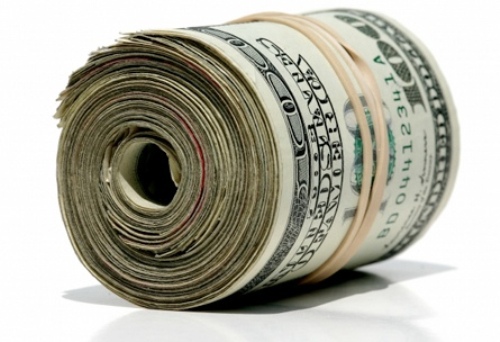
I’ve always suspected it. Now I know. Capitalism’s fatal flaw is that wealth makes us nastier, more selfish, less ethical and less happy. (Thanks to Facebook Friend Vic Nurcombe’s post, directing me to this material.)
In his 2012 article published in the prestigious Proceedings of the National Academy of Sciences *, Berkeley Scholar Paul Piff (and associates) find the following, based on extensive experimental research:
“Seven studies using experimental and naturalistic methods reveal that upper-class individuals behave more unethically than lower-class individuals. In studies 1 and 2, upper-class individuals were more likely to break the law while driving, relative to lower-class individuals. In follow-up laboratory studies, upper-class individuals were more likely to exhibit unethical decision-making tendencies (study 3), take valued goods from others (study 4), lie in a negotiation (study 5), cheat to increase their chances of winning a prize (study 6), and endorse unethical behavior at work (study 7) than were lower-class individuals. Mediator and moderator data demonstrated that upper-class individuals’ unethical tendencies are accounted for, in part, by their more favorable attitudes toward greed.
Piff even found that wealth causes people to literally take candy from a baby (from a dish on a table, said by the experimenter to be for “children in a later experiment”). Those who drive a BMW are far less likely to stop for pedestrians at a cross-walk than those who drive a Kia.
And the key cause of all this? Something known for many years, from behavioral economics. The causality fallacy. Human beings need to understand the world and how it works. So THEY ATTRIBUTE CAUSALITY TO THINGS THAT ARE INHERENTLY RANDOM. A great deal of wealth is due to luck. Was Facebook founder Mark Zuckerburg super-brilliant (he was), super-astute, super-creative, or did he have a great deal of luck in the viral manner in which Facebook spread, from a local Harvard class project to a global world-changing phenomenon? People who are wealthy attribute their wealth to their own brains, creativity, energy, innovativeness (even though a huge portion of wealth is simply inherited); so naturally, they attribute the plight of poor people to the inadequacies of the poor (they are dumb, lazy, stupid, lack hard work, and in general are worthless). Even in Monopoly game situations, this effect occurs. Those given favored wealthy positions in Monopoly behave AS IF they were wealthy in real life. Those given disadvantaged positions in Monopoly behave far more generously and altruistically.
Everyone knows that poor people tend to help one another a whole lot more than do wealthy people. Now we begin to understand why.
And the ultimate irony? As Piff notes, those who are generous and altruistic are happier and live longer. So all that “greed is good” stuff makes society more fractious, less cohesive, and makes the wealthy less happy.
This is the fatal flaw in capitalism. Either wealthy people need to change their DNA, or we need to find a much better ‘hybrid’ system. I urge you, dear readers, to download and read the original article in full.
——————-
* Paul K. Piff, Daniel M. Stancatoa, Stéphane Côté, Rodolfo Mendoza-Dentona, and Dacher Keltner. “Higher social class predicts increased unethical behavior”. March 13, 2012.
Amar Bose, 1929-2013
By Shlomo Maital
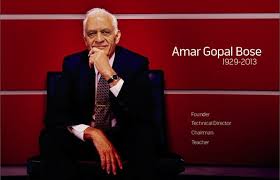
We can all learn many things from Amar Bose, founder of the speaker and earphone company, who just passed away at the age of 84.
1. In a 2004 interview with Popular Science, he said: “I would have been fired a hundred times at a company run by M.B.A.’s. But I never went into business to make money. I went into business so that I could do interesting things that hadn’t been done before.”
2. Build the change you seek. Dr. Bose (he holds 3 degrees from M.I.T.) was disappointed by the bad sound of a costly stereo system he bought when an M.I.T. engineering student in the 1950s. He realized 80 percent of the sound in a concert hall bounced off walls and ceilings before reaching the audience. This was the basis of his research. In the early 1960s, Dr. Bose invented a new type of stereo speaker based on psychoacoustics, the study of sound perception: many small speakers aimed at the surrounding walls, rather than directly at the listener.
In 1964, his mentor M.I.T., Dr. Y. W. Lee urged him to found his company, The Bose Corporation.
3. Persist! his first speakers fell short of expectations, but Dr. Bose kept at it. In 1968, he introduced the Bose 901 Direct/Reflecting speaker system, which became a best seller for more than 25 years and made Bose a leader in a highly competitive audio components marketplace; the 901s used a blend of direct and reflected sound. Later Bose Wave radio and the Bose noise-canceling headphones became market and technological leaders.
4. Give back. Dr. Bose had a passion for teaching. He returned from a Fulbright scholarship in New Delhi and joined the M.I.T. faculty in 1956. He taught there for more than 45 years. In 2011, he donated a majority of his company’s shares to the school. (Bose never ‘went public’, in order not to lose control of his company’s direction). The gift provides M.I.T. with annual cash dividends. M.I.T. cannot sell the shares. Bose got a lot from MIT – mainly its culture that drives graduates to start businesses. And he gave back a lot too.
TWINKIES are Back!
By Shlomo Maital
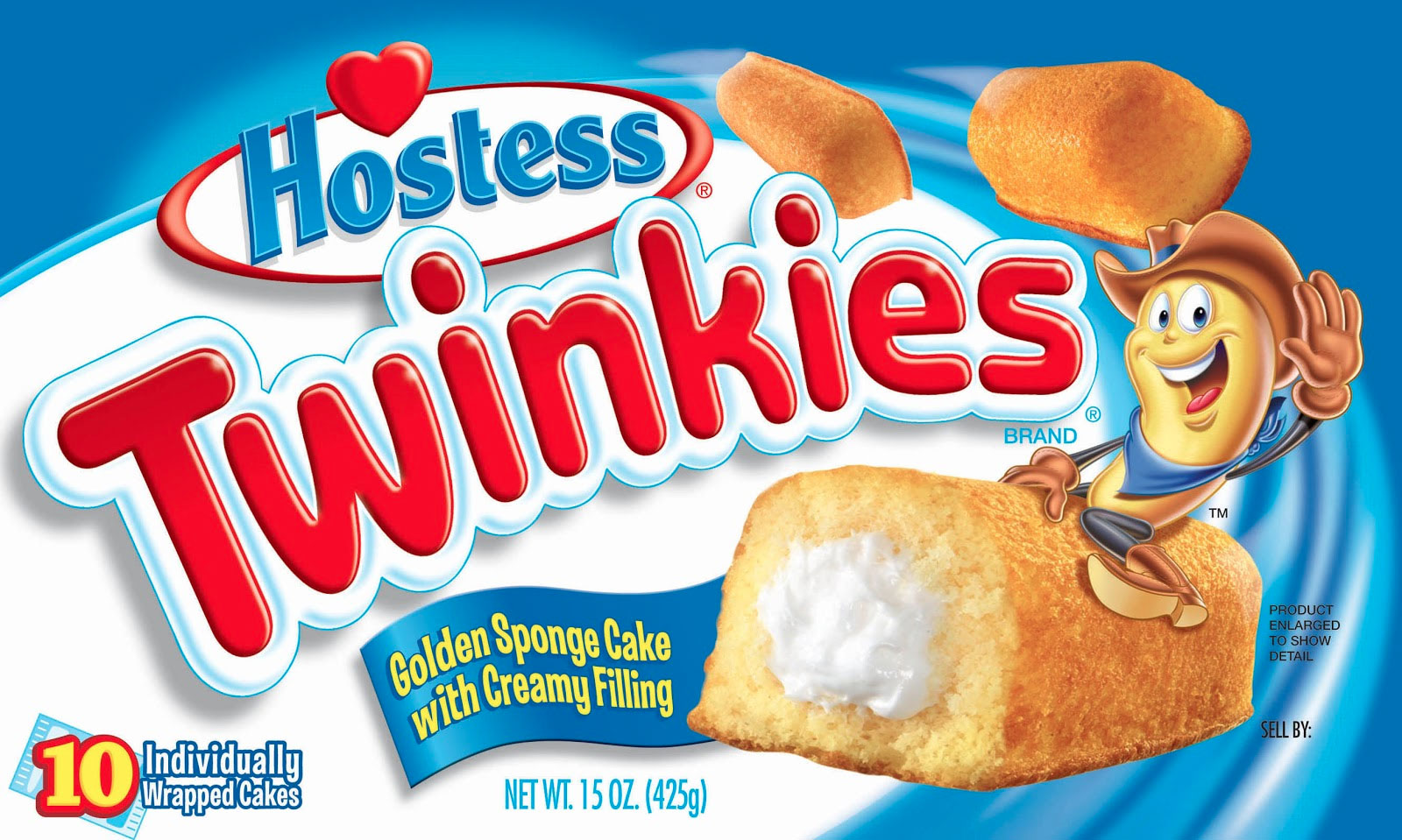
Yes, it’s official! USAToday (July 13), p 7A, informs us that as of July 15, 2013, Twinkies are back! And with a bang! There is a giant billboard of a Twinkie in Times Square. A new Hostess website with a countdown clock… A social media campaign in which people share their love of Twinkies. And a huge chocolate CupCake sign on the side of the Los Angeles Figueroa Hotel.
The Hostess Facebook page has 440,000 likes!
“It’s the same Hostess, but with a different attitude,” says Dave Lubeck, executive director for client services at Bernstein-Bein Advertising, which created the ad concept.
A truck tour is on the way. Promoters will travel the country passing out free Twinkies. It starts at Times Square on Monday. You will see Twinkie the Kid, the mascot, on the tour. Street teams are handing out “prepare your cake face” T shirts and “I saved the Twinkie” buttons.
Life can’t be all bad, if Twinkies are back. Which would YOU choose? Austerity? Or Twinkies? Maybe we should send a few dozen to the sourpusses who run our governments.
Why Bubbles Burst, Why Creativity Withers
By Shlomo Maital
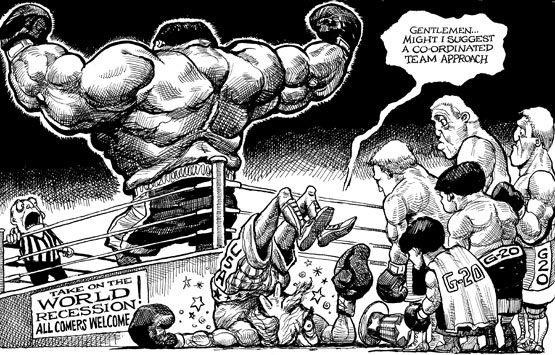
In the latest edition of BBC’s Global Business, Peter Day chats with UK economist Paul Ormerod, who knows what’s wrong with economics and why it has failed. If you don’t want to read this long blog account of their conversation – here is the essence.
In 2003 Nobel Laureate Robert Lucas (he won it in 1995) said this: “Macroeconomics … has succeeded. Its central problem of depression prevention has been solved, for all practical purposes, and has in fact been solved for many decades.” Really? Is the global Depression that started with the Lehman Bros. bankruptcy in 2008, and is still ongoing, chopped liver? If it is solved, Nobelist Lucas, why did former European Central Bank Governor Jean Claude Trichet say, “at the time of crisis policy-makers felt abandoned by economic theory, which was of no use whatever”. Why did Ben Bernanke recently say that economic theory is wonderfully good only at explaining why we made mistakes in the past…. Why would an intelligent human being EVER say any complex social problem was solved forever? So what is wrong with economics? Ormerod, in his new book Positive Linking: How Networks and Incentives can Revolutionize the World, explains it simply. Economics ignores other people. Decisions are made by one rational, highly rational, person. In reality, we copy others. We do what they do. That means that there are persistent bubbles, because people do what other people do, as all of us belong to networks, groups of persons who influence one another. That’s why so many people destroyed themselves and their companies by investing in credit default swaps and mortgage-backed securities. Everybody else was doing it. So the lesson here is, while you are copying others, THINK INDEPENDENTLY. And if you want to remain creative, reserve part of your brain for creating NEW CHOICES, rather than just blindly going with existing ones everyone favors.
This is an account of the conversation between Peter Day and Paul Ormerod:
“ What on earth is wrong with economics? Storm clouds, the boom comes to an end, economies fall, companies fail, banks go bust, and despair, uncertainty and turmoil affect ordinary people caught up in a Depression. It happened in 2008; the effects are still with us. Were the people in power steering by the wrong stars? Paul Ormerod’s first book, 20 years ago, was The Death of Economics; next he wrote Why most Things Fail. Recently : Positive Linking: How Networks and Incentives can Revolutionize the World. (“Network” here refers not just to the Internet, but to all forms of social communities – any grouping of humans who influence each other’s behavior). Ormerod says: “There are serious limitations in the way conventional economics is taught and written about. Most serious: It treats people as if they were operating in complete isolation from each other. You make choices solely based on your own views, as if you were Robinson Crusoe. With the development of the Internet, it is a poor description of the world. Macroeconomics models weren’t just academic, they had traction among Central Bankers, based on the idea of a single individual. When the financial crisis came, it was a NETWORK problem; the financial viability of one bank impacted on others, we worried about the cascade effect. Economists’ models omitted from the models this network effect. Big companies have rebuilt their balance sheets. They’re sitting on cash. Nobody wants to be the first one to move. As soon as one starts spending, others will follow– we’ll get an investment boom. But when???“
“When we think of any market where there is popularity, e.g. fashion, books (e.g. 50 Shades of Grey –not a great book, but it became popular because it WAS popular…), Crowd effects. We are like sheep. Investment markets behave like this. The book The Madness of Crowds was written 172 years ago! (Charles Mackay, 1841!). Keynes called it ‘animal spirits’. This governs how the economy performs. It is the job of policymakers to intervene, to counteract animal spirits when they go bad. How do you make people more optimistic? The analysis here is psychological.”
“Herbert Simon, Nobel Laureate in Economics, was at his peak in the 1950’s. The essence: He observed how firms really took decisions. He developed an alternative theory – he is the founder of the behavioral economics school. In 1955 his article built the foundation for it. In general, firms do not behave as economists say, rationality. The world is too complex. They use some reasonable rules and use them until they fail. Jean Claude Trichet, former ECB governor, said, “at the time of crisis policy-makers felt abandoned by economic theory, which was of no use whatever”.
“Rational copying person: should replace the rational economic agent. Copying is the way the network effect works. The number of choices available today are phenomenal. McKinsey (consulting firm) says: on any single day, in NYC a consumer faces 10 billion potential choices! That cannot be done in an economically rational way. You cannot gather information on all these 10 b. choices. So you do what Herbert Simon said, you form short-cuts, heuristics, simple rules. If you choose a restaurant, you ask your friends. Copy what they do. It’s a short-cut to deal with the world’s complexity. Get a group of people whose opinion you trust, and you copy them. There is a lot of this on the internet. It is visible now: “those who like this, bought that…” This is left out of conventional macroeconomics. In the macro model, one person makes decisions, a representative agent. He/she represents the entire economy. They have to take rational decisions.
“In the U.S. choice is regarded as a badge of freedom. A part of democracy. But this bewilders people. Choice has now exploded, grown exponentially. In the 1950s, Simon discussed this – there are so many alternatives, how can I decide? Even looking back, in most situations I can never know if I have made the best decision. All I can do is to hope to make a reasonable decision. The way to do that is to copy people’s behaviors whom I respect.
“Mid-price laptops in the German market: There are 3,500 possibilities. How can you possibly choose? How do you choose a smartphone? Ask a couple of young people, what’s yours, and …I’ll have that. More sensible than trying to evaluate 3,500 possibilities. When people copy, when their behavior is driven by networks and social effects, we get cascades, bubbles…and sometimes collapse.”
Deficit, Shmeficit: Get People Back to Work
By Shlomo Maital
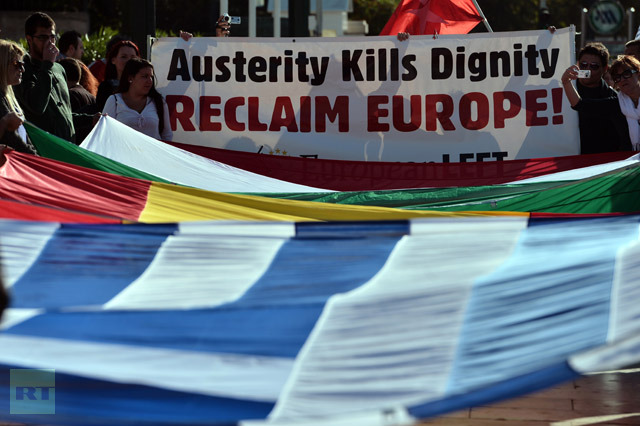
Tomorrow night my wife and I leave for a conference in Portugal. Lately, social protests in that country have recurred, the finance and foreign ministers quit, and Prime Minister Coelho faced a disintegrating government. He managed to avert it, narrowly. The sign in the photograph tells it all. Austerity kills dignity. It is also killing Europe.
Today’s Global New York Times reports that “fewer than 10 per cent of people surveyed in the European countries hardest hit by the region’s debt crisis say that their leaders are doing a good job at fighting corruption”, according to Transparency International. “The results reflect a crisis of faith in government”, the report continues. Half of the 114,000 people surveyed viewed political parties as the most corrupt institutions; half thought their governments are run by “special interest groups”.
According to the Portuguese member of the Transparency Intenational board, “the near unraveling of the Coelho government is an example of how focusing solely on the fiscal aspect of Portugal’s problems led to public frustration”.
According to the TI report, “19 of 25 European countries do not regulate lobbying at all.” Big money buys big lobbies, which protect the moneyed interests. And the people lose faith.
The macroeconomics of austerity is truly simple. People, without jobs or hope, stop spending. Businesses, as a consequence, also stop investing. Exports are down, as nations try to protect their home markets to export unemployment and their imports decline. Result: The only source of growing demand is government spending. But under austerity, that too disappears. It’s like all the air is let out of the GDP balloon, because there is no source of strong demand.
Deficit, Shmeficit. As Keynes said in 1936, in a Depression, governments must supply the demand. When they do, confidence resumes, unemployment falls, and the economy picks up. Governments can THEN tackle the deficit problem, which by the way cures itself as growth spurs tax revenues. It’s so simple. WHY don’t the rich European nations (i.e. Germany) get it?
Deficits can be fixed. But destruction of people’s faith in their leaders is much much harder to repair. And without such faith, the low-key Depression, as Paul Krugman calls it, will go on, in Europe and in America. And the people will continue to suffer and protest.
* Melissa Eddy, “Weary Europeans Lose Faith in Government,” Global New York Times, July 10/2013, p. 13.
Back to the Future with Mick Jagger
By Shlomo Maital
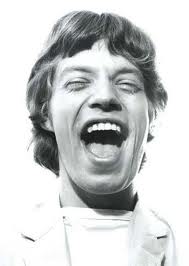 Young Mick
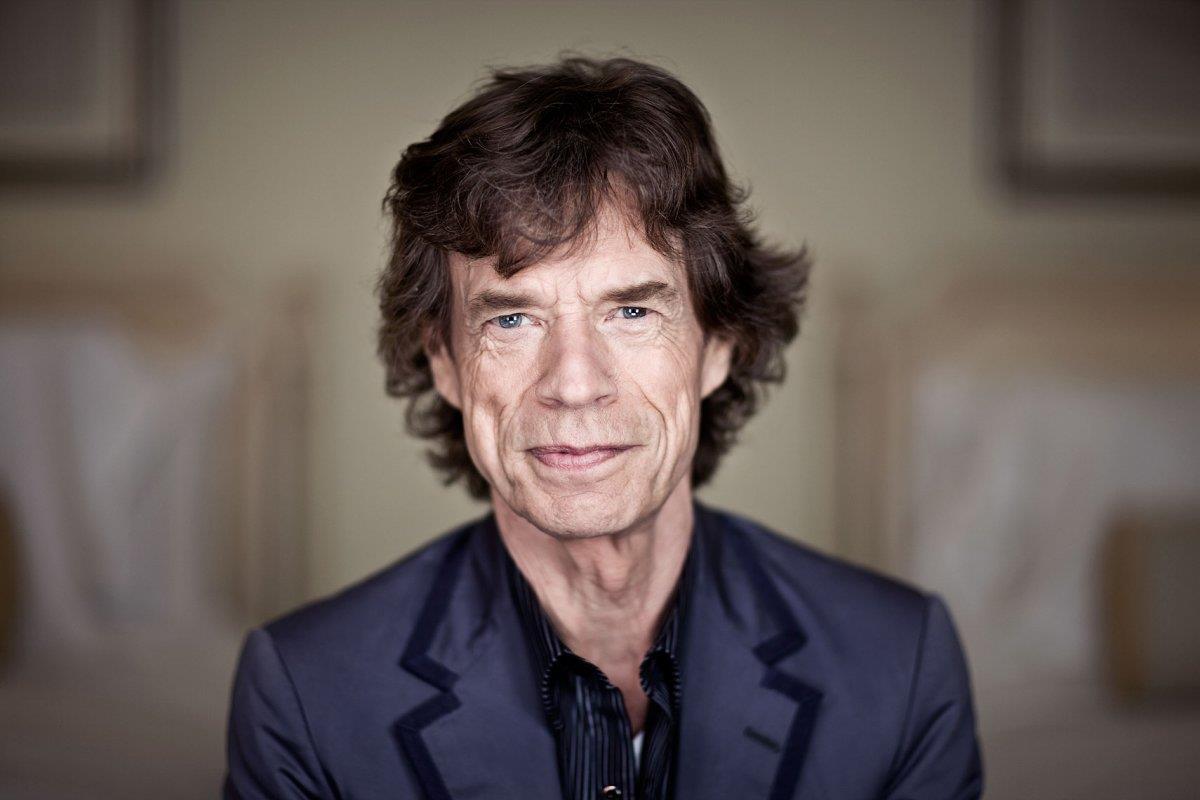 Mick age 70
On July 26, Mick Jagger will turn 70! You wouldn’t know it from his tours and stage appearances. It’s the same Mick/Rolling Stone as they were in the 1960’s, when they were a counterculture bad-boy opposite to the clean-cut Beatles.
One of my all-time favorite columnists is Financial Times’ Lucy Kellaway, who always has a unique, and sometimes funny, perspective on things. Here is her ‘take’ on what we can learn from Mick Jagger. I would add: He was an economists student, around the time when I was too. But he did what Nietzsche recommended: “Become who you are!”. (He became a rocker). I did not. Alas.
“There they all were, ginormous and wearing just the sort of clothes the Stones ought to wear and playing “Gimme Shelter” just as it sounds on the 1969 LP Let It Bleed. It’s true that you could also see the deep furrows on their faces – but those merely served to mark time and make the lack of any other change all the more remarkable. The Stones’ tour should be made into a business school case study on when change is called for – and when it isn’t. Change is good if it means being better, faster, cheaper – if it leads to clearer sound and cleaner images. But in anything that touches our emotions, change is a very bad thing indeed. This applies to rock bands – and it applies to chocolate. The other day I bought an Orange Club biscuit and felt a similar surge of gratitude on finding it identical to the ones I used to have in my packed lunchbox. Equally, when I went to a Clarks shoe shop recently and found the original blonde desert boots with the same orangey stitching and white soles, I would have bought them on the spot, only my feet – like Jagger’s face – seem to have collapsed and spread out and so they no longer fit. We notice when the things of our youth are tampered with, as that was a time when our memories functioned perfectly. Every word of every Stones song is preserved forever in the aspic of my cerebrum – unlike, say, my newest computer password which never seems to get purchase at all. The Stones wisely don’t mess with our memories, unlike Bob Dylan, who spitefully and perversely performs his old songs as if defying anyone to recognise them.”
How to Get a Child to Intensive Care Fast? Check Out Formula 1
By Shlomo Maital
 Red Bull Formula 1 Pit Stop
If you wanted to benchmark world-class best-practice teamwork under time pressure – where would you look?
How about Formula 1 racing, where a pit stop to change tires can take …only 40 seconds (all four tires) or less? Check out:
In today’s Global New York Times (July 8: Global Manager – The importance of being imperfect), Julia Werdigier interviews Jan Filochowski, who heads one of the world’s greatest children’s hospitals, Great Ormond St. Hospital, London.
He had a problem: How to transfer kids, after open-heart surgery, from the operating theatre to intensive care, super-fast (this transition is the riskiest part of the whole procedure). Here is how he defines the problem, and his innovative solution:
“In order to operate on the heart, we have to take the heart offline and operate on it for a while. It’s incredibly risky, and the riskiest time is the transfer from the operating theater to intensive care. Everyone had done everything they could to get that riskiest moment down to 9.5 minutes, but they were thinking that this still was too risky. Then one of the staff said, “Let’s look in a different area altogether. I love motor racing and Formula 1, where they manage to change all tires in a pit stop in 40 seconds.” So we invited Ferrari and McLaren (two Formula 1 car racing teams), and they came and looked at our procedures. As a result, we reduced our change-around time by another 1.5 minutes to 8 minutes. It was very exciting. It turned out that everybody needs a very precise task that they do without any variation whatsoever. By applying those techniques, we were able to do something that was impossible.”
This is creative thinking. Ask, how can we do this differently? Better? Faster? Who can help us? Look WAY beyond your nose, way beyond hospitals, to …race tracks! Look for places where seconds are absolutely crucial (a Formula 1 race can be won by only a second or two).
No, you don’t need to invent the wheel to be creative. Sometimes you just need to learn how experts change them.
The Great Innovation Race: Where Is Your Country?
By Shlomo Maital
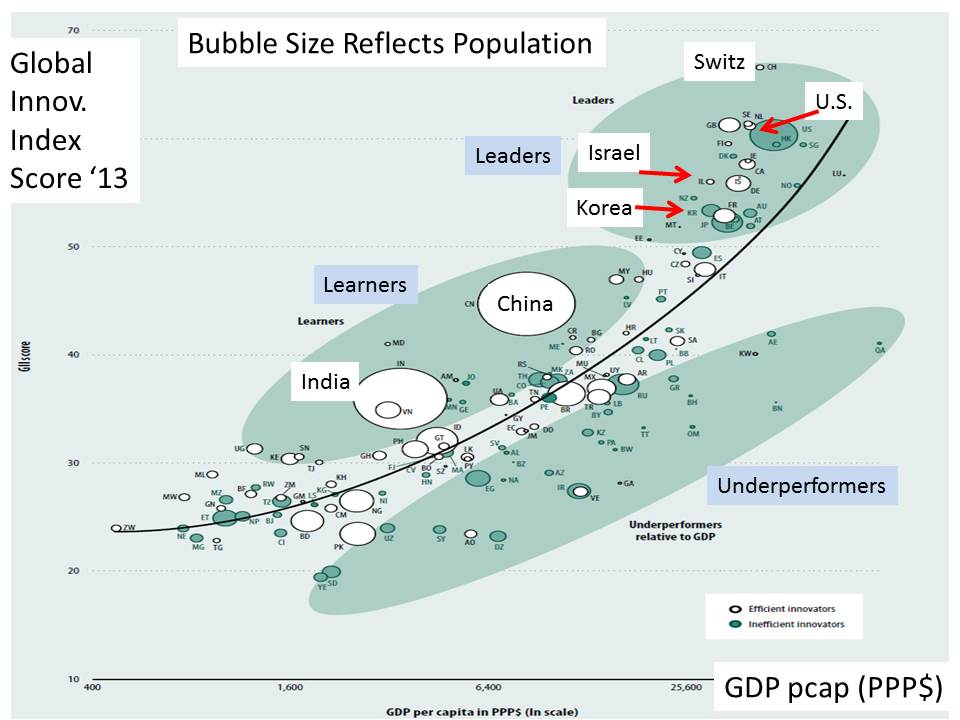
Every summer, the French business school INSEAD, together with Cornell University and WIPO (World Intellectual Property Organization) publishes the Global Innovation Index – a massive database ranking some 142 nations on ‘innovation’, based on 93 separate indices and variables. Download it at http://globalinnovationindex.org
In the new 2013 edition, countries are grouped into “leaders” (those who innovation index score, relative to GDP per capita, and per capita GDP are both high; “learners” (those whose innovation index is high, and whose GDP per capita is likely to grow in future as a result); and “underperformers” (those whose innovation performance is below par, relative to what their GDP per capita should generate. The results are shown in the diagram above. The ‘y’ axis shows the weighted-average Innovation index score. The ‘x’ axis shows GDP per capita, in dollars, measured in true, purchasing power exchange rates. (For your convenience: the two-letter country codes along with the full country name are shown below).
Switzerland, U.S. and Korea all are among the leaders. Switzerland ranks #1 in global innovation. Few countries have Swiss stability, discipline and order – but all countries can learn from it anyway.
The size of the circle measures population size. Note that the shading of the circle is significant: white means “efficient” (innovation resources are used efficiently to generate innovation outputs) while blue means “inefficient”. The U.S. circle is shaded blue, as is that of Japan and Hong Kong.
Pakistan (PK) is a major underperformer. Malaysia (MY) is about to join the “leaders”. Indonesia (ID) is on the border of the ‘learners’.
This graph reminds us of an important fact. “Look back, because – they are gaining on you.” In the economic value chain, there are nations below your country, who want to rise. If you don’t move up, they will catch you. You need to emulate the Red Queen in Alice in Wonderland, who ran faster and faster just to stay in the same place.
And – this applies to businesses, and even to MBA’s, as well. They too compete in a Great Innovation Race, even if they don’t always realize it.
| A2 AF AL DZ AS AD AO AI AQ AG AR AM BE IO CF CK DO FO GE GN IN KZ LS MY FM NR NF PH KN SL LK TW TM UZ |
A3 AFG ALB DZA ASM AND AGO AIA ATA ATG ARG ARM BEL IOT CAF COK DOM FRO GEO GIN IND KAZ LSO MYS FSM NRU NFK PHL KNA SLE LKA TWN TKM UZB |
NUM 004 008 012 016 020 024 660 010 028 032 051 056 086 140 184 214 234 268 324 356 398 426 458 583 520 574 608 659 694 144 158 795 860 |
COUNTRY AFGHANISTAN ALBANIA ALGERIA AMERICAN SAMOA ANDORRA ANGOLA ANGUILLA ANTARCTICA ANTIGUA AND BARBUDA ARGENTINA ARMENIA BELGIUM BRITISH INDIAN OCEAN TERRITORY CENTRAL AFRICAN REPUBLIC COOK ISLANDS DOMINICAN REPUBLIC FAROE ISLANDS GEORGIA GUINEA INDIA KAZAKHSTAN LESOTHO MALAYSIA MICRONESIA, FEDERATED STATES OF NAURU NORFOLK ISLAND PHILIPPINES SAINT KITTS AND NEVIS SIERRA LEONE SRI LANKA TAIWAN, PROVINCE OF CHINA TURKMENISTAN UZBEKISTAN |
How to Comfort Newtown, CT Kids: Doggies!
By Shlomo Maital

How in the world does one help schoolchildren, staff members and families, from the Sandy Hook Community, Newton, CT, where last December many children and teachers were shot by a deranged killer? How do you help them on their first day back at school?
According to the National Association of School Psychologists’ Communique (June 2013), you send them doggies. A caring Lutheran Church charity ministry from Addison, IL, sent K-9 Comfort Dogs and their handlers. “When the kids arrived at school their first day back, we were the first ones they saw. …Some kids came to just lie on a dog or cry on a dog. Others had shut down. They couldn’t talk at all, but they just kept petting the dogs. Then, you could see their demeanor change and they were able to return to the classroom,” reports one of the handlers.
There is no complex theory behind why comfort dogs comfort. Dogs are pure love and unrestrained affection (apart from Rotweilers and pitbulls trained by evil humans to do harm – this is a human failing, not a canine one). In a world full of evil, dogs bring us good, and good feelings. Can anything rival a warm puppy, to convey a feeling of ‘all is well’ in the morning – as my wife and I get from our mongrel Yorkshire, Pixie, every morning, with her wake-up licks?
Israel has a version of comfort dogs – soft toy dogs called “Chibuki”, (“hugs” in Hebrew), that wrap snugly around kids’ necks and just feel good. But I think the real thing is much better.
Special thanks to the caring people of Addison, IL Lutheran Church. Let’s hope the idea of comfort dogs will spread everywhere, wherever children and adults need friends, warm fur and a happy lick.
The Crux of the Problem: Global Mess, Local Politics
By Shlomo Maital

Why is it taking the world (G7, G8, G20, G284) so long to sort out the financial and economic woes afflicting it? Here is one very simple explanation:
Global troubles. Local politics.
Each country pursues its own interests, ignoring mostly the interests and troubles of other nations. Why? In order to get re-elected, which is the primary goal of politicians.
Take for instance Chancellor Angela Merkel. She is up for re-election in September. She will doubtless win a third term. Why? Today’s Global New York Times (“Germany comes first for Merkel as vote nears”, June 28, p. 1) quotes a German expert:
“…political circles, particularly in the ministries and the Chancellery, say, ‘We know what the financial markets expect of us—but we are not elected by them…..what the Bundestag, or German Parliament, permits, is what we execute.”
And the German Parliament permits what the German voters want, which is – fewer or no bailouts for incompetent spendthrift irresponsible budget-busting southern European governments.
Don’t blame Merkel and Germany. America and Obama do precisely the same, as does Cameron and Britain, Hollande and France (in growing disagreement with their German neighbors), and every government I know, except those headed by the late Mother Teresa, and there are no such governments.
Global woes, local politics. Is there any way to resolve this dilemma?
..
CALL it a trifecta
One could quibble with the details (why 7% and not 7.1% or 6.9%) but there is an underlying logic that is easy to appreciate.
Bill White was warning about the dangers of this approach at the BIS well before the crisis; he has an excellent update here.