You are currently browsing the category archive for the ‘Innovation Blog’ category.
Spinach is a Myth! But How Did It Start?
By Shlomo Maital
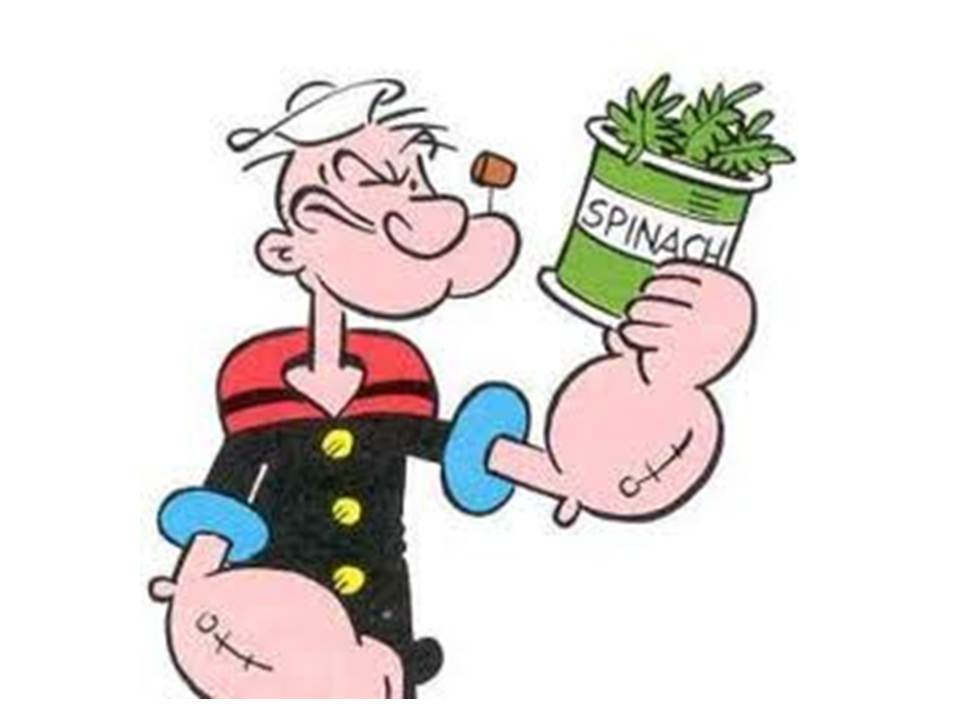
Don’t make your kids eat spinach. There is no reason. Here is why.
In 1929 a cartoon character called Popeye appeared. It was the brainchild of a cartoonist named Elzie Crislar Segar. According to Wikipedia, Segar began drawing Thimble Theatre for the New York Journal on December 19, 1919, featuring the characters Olive Oyl, Castor Oyl and Horace Hamgravy, whose name was quickly shortened in the strip to simply “Ham Gravy”.
In January 1929, when Castor Oyl needed a mariner to navigate his ship to Dice Island, Castor picked up an old salt down by the docks named Popeye. Popeye’s first line in the strip, upon being asked if he was a sailor, was “‘Ja think I’m a cowboy?” The character stole the show and Popeye became the permanent star of the strip.
Segar had Popeye eat spinach whenever he needed energy and strength. He did this, because he learned that spinach has a lot of vitamin A that young people needed. But over time, it came to be believed, based (apparently) on the finding of a German scientist named von Wolf, that spinach has a huge amount of iron. Turns out that Wolf’s ‘incinerated plant ash method’ contaminated the results and exaggerated the amount of iron in spinach. Other fruits and vegetables have more iron, including Swiss chard and, yum, melon. Von Wolf overestimated spinach’s iron content by 10 times!
So generations of parents tortured their children and made them eat yucky spinach, for nothing. And Popeye became the chief propagandist. It was all a fraud.
In atonement, we should all make big donations to UNICEF, or something.
I wonder if there is any area where people believe so many scientific ‘truths’ that change so rapidly, so quickly, that one cannot keep up with them, than food. Did you know that scientists once recommended smoking as healthful (in the 1950’s)? And red meat?
The story of Popeye and the great spinach fraud is recounted in a great magazine article in the Israeli newspaper Haaretz, by science historian Oren Harman. He in turn bases his account on an article by Mike Sutton in a Best Science blog, “The Spinach, Popeye, Iron, Decimal Error Myth is Finally Busted”
The Great Digital Divide: Were the Machine-Smashers Right?
By Shlomo Maital
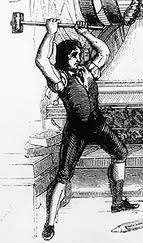
In the early days of the British Industrial Revolution, the “Luddites” went around smashing machines that they thought were replacing workers and impoverishing them.
Turns out, they were wrong. For the past two centuries, note two MIT scholars, “productivity, median income and employment all tracked each other nicely.” Machines and technology created jobs, rather than destroyed them.
However, Erik Brynjolfsson and Andrew McAfee note in their new book “Race Against the Machine: How the Digital Revolution is Accelerating Innovation, Driving Productivity and Irreversibly Transforming Employment and the Economy”, this may no longer be true.
The digital revolution, they note (summarized in a Tom Friedman NYT column), has three effects: * those with more education earn a whole lot more than those without it, * those with money to buy and operate digital machines earn far more than those who sell just their labor, and * those with global superstar skills, who can reach global markets, earn far more than those with slightly less, local talent.
So what is going on? In America, perhaps it is not JUST the business cycle that is at work, but a deep structural shift – “we Americans have record productivity, wealth and innovation, yet median incomes are falling, inequality is rising and unemployment remains persistent.”
Should America emerge from its recession and begin to grow, there is no guarantee that the bulk of Americans will share in the gains and be better off. This is true of other modern Western nations as well.
For individuals, and for students, the implications are clear. It’s going to be a tougher world out there. It already is. Make sure you have, or acquire, a special talent that is needed, and above all, make sure you have the ability to quickly acquire NEW skills and talents when the ones you have are appropriated by a digital device and make you obsolete. We don’t need to smash the machines, like the Luddites. But if Ray Kurzweil is right, if they take over the world in 2045, we need to be smart enough to fight back.
Whole Foods: The Way Forward for Capitalism?
By Shlomo Maital

John Mackey is co-chief executive officer and co-founder of a great company called Whole Foods Market. Whole Foods was founded 32 years ago, and today has a market cap of $18 b., with a market-leading position in the retailing of organic and health foods in the U.S. The gross margin of 35 per cent is unheard of in this line of business. So when Mackey speaks, we should listen. And he has now spoken, in his new book Conscious Capitalism: Liberating the Heroic Spirit of Business.
The book is reviewed by Luke Johnson in the Financial Times. Johnson recalls that Mackey was investigated by the Securities Exchange Commission for “anonymous posting on bulletin boards”).
What are the key points in the book? Small government, free markets are great, unions aren’t, Hayek and von Mises are heroes. But, don’t give up yet.
Mackey says that “happier and better-trained staffs are more productive”. No surprise there. “A constructive corporate culture helps generate innovation and growth”. Hmmm. “A pay ratio of no more than 19 between top and bottom is wise.” Question is, bottom of what? The management pay scale? The cleaning staff? Mackey’s pay is irrelevant, since he owns billions of dollars worth of stock.
Everyone knows we need to re-evaluate capitalism. But few capitalists have tried. So kudos to Mackey for trying. But apparently, he offers little that is original or deep. In a book review in The Huffington Post, the reviewer notes:
Surprisingly, the book ignores two specific actions by Whole Foods that demonstrate how a company can do good with its market power. Last year, Whole Foods removed Scharffen Berger chocolate from its shelves following concerns about child labor in its supply chain. The move prompted Hershey’s, which owns Scharffen Berger, to commit to third-party audits of 100 percent of its farms. In 2008, Whole Foods partnered with the Coalition of Immokalee Workers to address exploitation of tomato pickers in Florida.
No, Conscious Capitalism is not the way forward for capitalism. We’re still waiting for a really thoughtful capitalist to innovate the way free markets work.
Store Your Data in DNA: Cool, or What?
By Shlomo Maital
Science magazine reports that Harvard scientists, led by Prof. George Church, have managed to store information in DNA. This could well help solve the difficult problem of how to store the exponentially growing mass of information, that doubles every few years. Silicon just won’t do the job in a few years.
How does this work? Computer code converts information into binary 0,1 code. Then a computer program converts the 0’s and 1’s into DNA letters A, C, G and T. Those correspond to the four chemical bases that make up DNA. (See diagram: the double helix). A machine then uses the A,C,G,T information to make DNA (it looks like a speck of dust – very very small). Then the DNA goes into a DNA sequencing machine, the kind that Craig Venter and his Genome project helped develop. The sequencing machine reads back the DNA fragments as the letters A,C,G and T. Finally, a computer translates the A,C,G and T letters back into 0,1 code (binary) – and presto, the data is recovered and restored.
According to the Wall St. Journal, which reported the breakthrough, a cupful of DNA could store 100 million hours of video, and it could last for thousands of years.
Right now, the process is expensive. But it will become cheaper. Perhaps one day, Harry (biology) really will meet, and mate with, Sally (physics), for the benefit of humanity. Perhaps one day, our pet salamander will actually store the family’s financial data in its liver. Well, perhaps not – if the cat eats it, there goes our wealth.
Eternal Life – It’s Possible! Ask the Medusa!
By Shlomo Maital
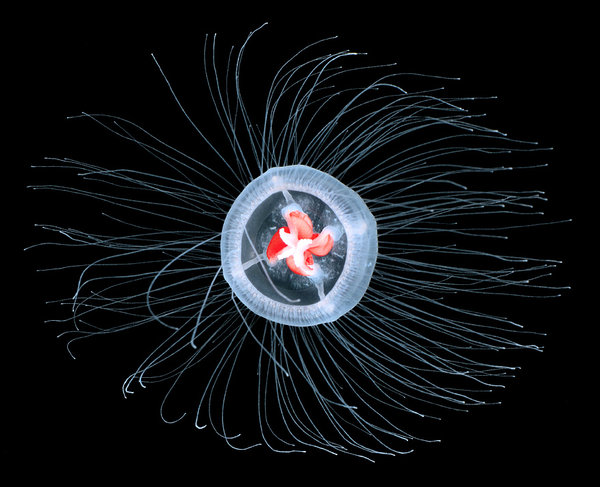
An article in the New York Times (Nov. 28/2012) * describes sea creatures, like one form of jellyfish, or Medusa, that have learned an amazing secret, one currently far beyond humans: Eternal life. Scientists studying these creatures could one day unlock the secret, so that we humans too could live forever. But – would we want to?
Here is the crux of the article:
A German marine-biology student named Gerhard Sommer went snorkeling in the turquoise water off the cliffs of Portofino each morning. Among the hundreds of organisms he collected was a tiny, relatively obscure species known to biologists as Turritopsis dohrnii. Today it is more commonly known as the immortal jellyfish.
Sommer kept his hydrozoans in petri dishes and observed their reproduction habits. After several days he noticed that his Turritopsis dohrnii was behaving in a very peculiar manner, for which he could hypothesize no earthly explanation. Plainly speaking, it refused to die. It appeared to age in reverse, growing younger and younger until it reached its earliest stage of development, at which point it began its life cycle anew. in 1996 a group of scientists published a paper called “Reversing the Life Cycle.” The scientists described how the species — at any stage of its development — could transform itself back to a polyp, the organism’s earliest stage of life, “thus escaping death and achieving potential immortality.” This finding appeared to debunk the most fundamental law of the natural world — you are born, and then you die.
Remember F. Scott Fitzgerald’s short story about the baby born old who then grew younger, made into a movie in 2008 with Brad Pitt and Cate Blanchett (The Curious Case of Benjamin Button)? Could it yet come true? Some hydrozoans (highly primitive creatures, with no eyes, no head) are mainly stem cells that rejuvenate continually. With stem cells, could we reach, say, 70 (my current age), and then, rejuvenate, reverse the aging process and become, say, 25 (the age my wife and I married)?
The scientists working on this topic, including a Japanese expert named Shin Kubota, who works in Shirahama, a beach resort town four hours south of Kyoto, Japan, are dubious. Kubota thinks human culture and emotions are not yet ready for immortality. I agree.
And it poses a problem for religion. If we are asked to behave well in order to go to heaven, well, what if you never go to heaven? And if you are told that believing in an Eternal Spirit will give us eternal life, what if you get eternal life anyway? Food for thought.
So – would YOU like to live forever? Under what conditions?
* Nathaniel Rich. “Can a Jellyfish Unlock the Secret of Immortality?” New York Times Magazine, Nov. 28, 2012.
Choosing a Mate? Trust Your Gut…Trust Me!
By Shlomo Maital

Few personal decisions rival in importance our choice of a mate. And few decisions are as random. At an age when hormones rage, we date a few times and then pick a mate, hoping for the best. If it doesn’t work out too well, we try again.
What do we know about this process that can possibly help young people make better mating decisions? With divorce rates very high in most countries, this is definitely a problem.
Now comes research by a team from UCLA, showing what I’ve believed for a long time (and written about before in this blog). * Listen to your gut! When choosing a mate, listen to your intuition, your inner voice, If it tells you, No!, tell your hormones to sit down and shut up.
Justin Lavner and colleagues asked 464 recently married spouses whether “they had ever been uncertain about getting married” and then compared 4-year divorce rates and marital satisfaction trajectories among those partners with and without premarital doubts. Doubts were reported by at least one partner in two thirds of couples. Women with premarital doubts had significantly higher 4-year divorce rates, even when controlling for many or all other factors. Among intact couples, “doubts predicted less satisfied marital trajectories”. They conclude: “Valid [in your gut] precursors of marital distress are evident during couples’ engagement”.
In all decisions, not just choosing a mate, we should try to listen carefully to our inner voices. When our hormones are jamming the airwaves with urgent ‘yes’ messages, it’s often tough to hear that whispered intuitive ‘no’. It works both ways. A whispered ‘yes’ may be hard to hear, too. Let’s treat our guts as more than a place where food is processed. Let’s try to listen.
* Justin A. Lavner, Benjamin R. karney and Thomas N. Bradbury. “Do Cold Feet Warn of Trouble Ahead? Premarital Uncertainty and Four-year Marital Outcomes”. Journal of Family Psychology, 26 (6), 2012, 1012-1017.
You Are What You Believe – So, Believe You Can Change & Grow
By Shlomo Maital
Carol Dweck is a Stanford Univ. psychologist who has an important message for us all, with evidence to back it up. * Here is her finding, in her words:
“It matters whether people believe that their core qualities are fixed by nature (fixed mindset) or whether they believe that their qualities can be developed (growth mindset). …An emphasis on growth not only increases intellectual achievement but can also advance conflict resolution between long-standing adversaries.”
Who we are is not built in, Dweck says, and shows. “The hallmark of human nature is each person’s great capacity to adapt, to change, and to grow….according to the world you find yourself in.”
She uses a principle by social psychologist Karl Lewin (the proof of a theory is not data but whether you use it successfully to create change), to show that ‘teaching a growth mindset to students can boost their motivation and achievement…and can help prevent negative stereotypes from undermining achievement”.
What this means for you and for me is this. If we believe we are fixed, and cannot change, then we are. Because we will never seek to use our potential to change and grow. But if we believe we can change and grow, if that is our mindset, then we can, because the belief itself can spur us to do difficult things that in the end pay off.
Dweck has used her Mindset principle to change tough embedded bitter stereotypes between Israelis and Palestinians. I find this very hopeful. Tomorrow Israel holds national elections. Every poll predicts a right-wing victory. This bodes ill for our future. Those on the right of the political spectrum have, in my view, a fixed mindset. The ‘bad guys’ in their eyes will remain bad forever. We are all the ‘good guys’ and always will be, no matter what we do. Those on the center and left, have a growth mindset. How can we either migrate voters toward the center and left, or somehow, induce a growth mindset in those tough stubborn aggressive and sometimes hate-filled rightwingers?
* Carol Dweck. Mindset: The New Psychology of Success. How We Can Learn to Fulfill Our Potential. Ballantine Books; (December 26, 2007). And “Mindset and Human Nature: Promoting change in the Middle east, the Schoolyard, the Racial Divide and Willpower”. American Psychologist, Nov. 2012, p. 614-622.
What We Can Take Home From Jerry Seinfeld—Apart From Laughter
By Shlomo Maital

A recent New York Times magazine article profiles Jerry Seinfeld, star of the long-running Seinfeld TV show. Seinfeld will be 59 next April. His sitcom Seinfeld ran for 9 years; he co-wrote it with comic Larry David. Seinfeld basically invented, and in fact nearly owns, a brand of comedy known as observational humor, focusing on personal relationships and uncomfortable social obligations. If you do a Google search on “Seinfeld quotes”, you’ll come up with hugely funny lines from Seinfeld in a wide variety of social situations; here are just a few — The Visa, The Pothole , The Wink , The Deal , The Ticket , The Ex-Girlfriend , The Parking Spot , The Abstinence , The Heart Attack , The Baby Shower , The Stranded , The Cheever Letters , The Watch , The Note , The Pen , The Cadillac …the list is endless.
According to The New York Times, Seinfeld is worth $800 m. ! Syndication fees for Seinfeld are enormous and will go on forever. They are profitable, because once you make the show, there are no more expenses…you simply cash the checks and clip the coupons. Seinfeld has a huge collection of Porsche’s, several dozen, and he lives in a sumptuous New York dwelling right off Central Park. He has a wife and three children.
So – what does Seinfeld do with his time? And what can we learn from him?
He writes stand-up scripts and jokes, catalogs them, polishes them, endlessly revises them, and then goes often unannounced to bars (like Gotham), where he tries out his routines for 20 minutes or so. He does them, prior to taking his road show out around the whole U.S., to play in front of huge audiences of 3,000 or more. Sometimes the audiences laugh. Sometimes they don’t.
Why in the world does he do this? Because, well, Seinfeld is a stand-up comedian, that is what he does, he does situation or observational comedy, and he does it because he loves it, he truly loves doing it, he did it from an early age, and because his father Kalman, who fought as a U.S. soldier in the Pacific, used to tell jokes as a way of keeping his sanity during a bitter war. Seinfeld is the polar opposite of Woody Allen. Allen made a fortune out of his neuroses. (“I’m not afraid of dying, I just don’t want to be there when it happens.”). Seinfeld made a fortune out of his normality – out of the normal relationships he had with Elaine, with Kramer, and others, that were entirely normal and immensely funny, because all of us have had similar encounters.
What I learn from Jerry Seinfeld is really simple and clear. Find what it is you are meant to do on this Earth. Do it with excellence and with passion. (Seinfeld writes out every routine he does, even the shortest, files it, catalogs it, and analyzes it; he is brutally honest with himself.). Keep doing it as long as you can, even when you don’t have to do it any more. But if you’re doing something you’re tired of, even if you’re good at it, if you’re just going through the motions, then quit. Quit now! Try something else. Because you’re wasting your time. And time is the most precious resource any of us own.
By the way, Seinfeld does not accept the standard view that Seinfeld was about “nothing”. “I don’t think the subjects in Seinfeld were trivial,” he says. And I agree. How we relate to others is not trivial. It is not nothing, it is everything, and it is universal. The essence of comedy lies in everyday situations perceived in a different way. Count on Jerry Seinfeld to see things in a different way. Like the way he sees the dog Farfel. Elaine: “Dogs taken to the pound are put to sleep, when nobody claims them. It’s a shame.” Seinfeld: (looking at Farfel): “How late are they open?”.
Innovation is Stagnating. Does Anyone Care?
By Shlomo Maital
A faithful reader has alerted me to a blog by Reena Jana in Smart Planet * , who cites a cover article in The Economist, which argues something I’ve felt for a long time: Innovation is stagnating. What we call innovation today is very incremental, minor, tweaks of existing things. There are several reasons. First, perhaps we’ve already invented all of the really life-changing devices (TV, stoves, computers, toilets). Second, maybe true breakthroughs like electricity are simply hard acts to follow. Notes Jana:
Compare the experiences of cooking at home in 1900 versus 1970: it’s a difference of using ice blocks delivered by horse-drawn carriages versus a fridge and freezer. Planes and cars are pretty much the same as they were nearly half a century ago. But we can update our statuses on Facebook.
The Economist cites a paper by veteran economist Robert Gordon, who is still turning out wonderful insightful research. Gordon wonders whether US economic growth is actually over? (See Figure below).
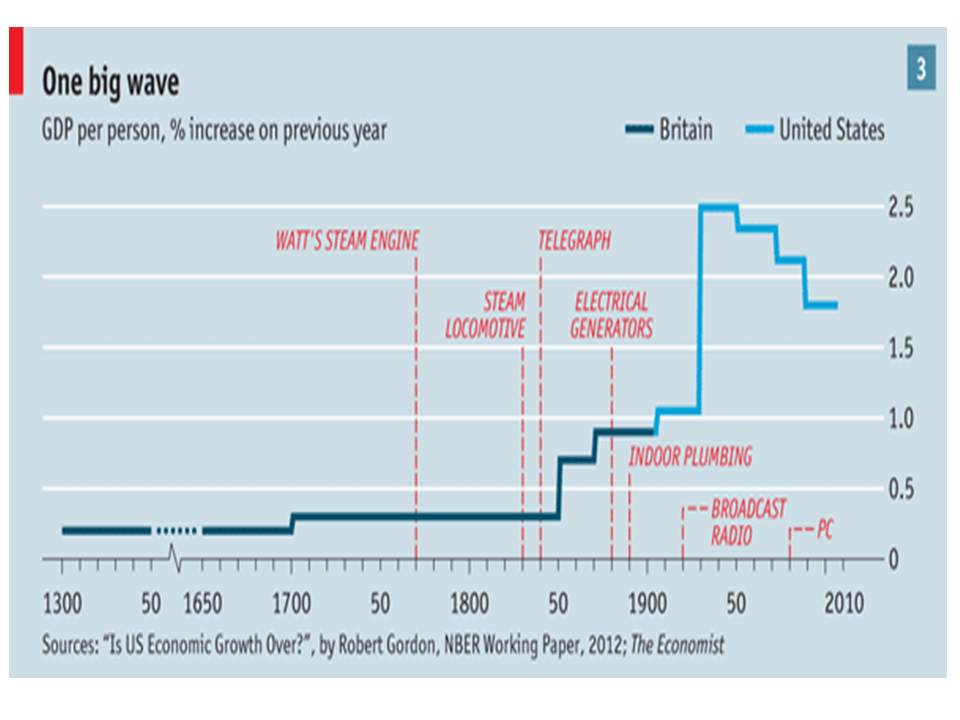
This is based on pessimism over the lack of breakthrough innovations that in the past contributed greatly to GDP growth, first in Britain during the First and Second Industrial Revolutions, and then in the U.S., in what we may regard as the Third Industrial Revolution.
My own pessimism is fueled by experiences working with students and managers all over the world. Working in large organizations, they frequently become frustrated when their ideas are simply not even heard. The number of organizations that pay lip service to innovation, yet do everything possible to destroy it internally is staggering. Until we smash the internal contradiction between the aspiration for economies of scale, and the destruction scale wreaks on creativity, we will see no breakthrough innovations.
* http://www.smartplanet.com/blog/bulletin/is-innovation-stagnating/10517
Crabs Say Ouch! Let’s End the Cruelty
By Shlomo Maital
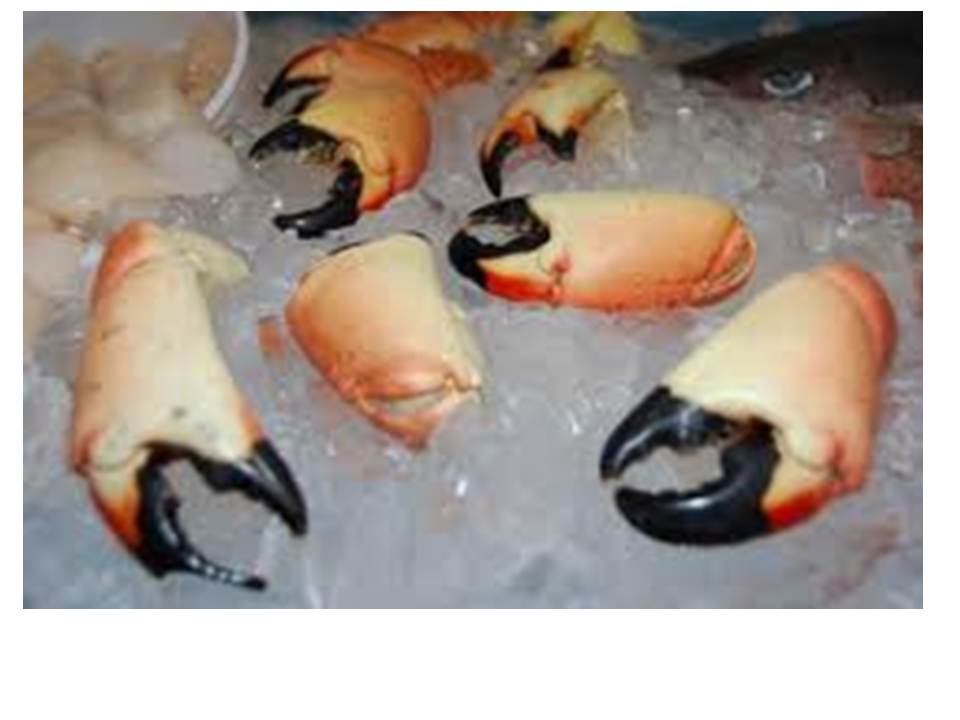
All over the world, restaurants dump live lobsters into boiling water and tear claws off live crabs. So? They’re just crustaceans. They can’t feel anything, right? They’re like..well, stones.
You may have suspected for years that living things DO feel pain. But the question is, how do you prove it? According to the BBC World Service’s excellent program Science in Action, a scholar at Queen’s U., Belfast, Ireland, named Bob Elwood has indeed shown that crabs feel pain. It results from a chance encounter between Elwood and a top chef, Rick Stein, who asked Elwood about whether crabs feel pain. Here is how Elwood proved it. His study was peer-reviewed and published in the Journal of Experimental Biology.
Ninety crabs were put individually in a tank with two dark shelters and some were given electric shocks after they chose one. This process was repeated and by the third time most shocked crabs went to the alternative safe shelter. “Having experienced two rounds of shocks the crabs learned to avoid the shelter where they received the shock,” Professor Elwood said. “They were willing to give up their hideaway in order to avoid the source of their probable pain.”
The mild shock of 10 volts was sufficiently aversive for crabs to make them avoid a safe shelter. Crab psychology is such that a safe shelter is worth, well, its weight in gold. So if a mild 10 volt shock is aversive enough to change crab behavior, what would tearing off the crabs’ limbs feel like?
There is a simple point here. We should respect all living creatures, even crustaceans. We should not cause them pain, because there is a thin line between hurting creatures and hurting humans. The Indian religious sect Jain obsessively avoids hurting any creature, even ants, and some Jains sweep in front of them with broom to avoid stepping on insects. We don’t have to go that far. But how can you enjoy a gourmet meal when it comes at a price of causing a living thing pain, perhaps extreme pain? Especially when it is not necessary.