
You are currently browsing the category archive for the ‘Uncategorized’ category.
Travis Hunter Goes Both Ways
By Shlomo Maital
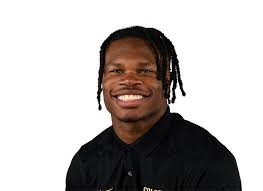
Travis Hunter
Travis Hunter has just won the Heisman Trophy, for the outstanding college football player of the year. Usually it goes to quarterbacks. But not this year.
Hunter is unusual. Most highly-paid football players play either offense or defense. That alone is hard enough. Football players suffer injuries constantly, and many end their careers with CTE — chronic traumatic encephalopathy — brain damage incurred through repeated blows to the head and concussions.
Travis plays both offense and defense. The 21-year-old athlete played for Colorado. He caught 92 passes for 1,152 yards on offense, with 14 touchdowns. On defense, as a corner linebacker, he made 32 tackles, 4 interceptions and 7 pass breakups. He helped his team shift from a big time loser to a 9-3 record this year, under coach Deion Sanders. In the season finale, his team routed Oklahoma State 52-0, and Hunter caught three touchdown passes.
Once upon a time, football players played both offense and defense. No longer, In fact, many players are platooned – they play one down, then are taken out to rest. A typical NFL team has 53 players on the roster – divided into three groups, offense, defense and special teams (who handle kickoffs and punts).
Travis Hunter broke the mold. When he is drafted for the professional NFL, I doubt he will be allowed to play both ways. He calls to mind the incredible Shohei Ohtani, Japanese baseball player who both pitches and hits and excels at both for the Los Angeles Dodgers.
G7 vs BRICS: Lose Lose.
By Shlomo Maital

As Donald Trump prepares to be inaugurated as US President on January 20, a rather bleak picture emerges of a wrestling contest between two teams: BRICS and G7. And it will not end well, at least not initially.
BRICS is the group of anti-US anti-West countries: Brazil, Russia, India, China, South Africa. According to recent figures, their total Gross Domestic Product, measured by the true dollar value of their currency rather than the distorted market value, is $62 trillion.
Facing off against them is the G7: the group of pro-West economies led by the US. Their GDP comes in total to $53 trillion. (Note: China’s GDP, in $, is $33 trillion, more than $4 trillion above that of the US, at $29 trillion).
Together, these two groups command $120 trillion of the world’s $138 trillion GDP.
Trump plans to impose tariffs, including on key trading partners such as Canada and Mexico. They and others will doubtless retaliate. This will reduce the volume of world trade, which since the 1944 Bretton Woods agreement has made many poor countries much wealthier.
We have seen this movie before. In the 1930’s Depression, the US imposed a heavy tariff on imports, the Smoot-Hawley tariff, and its trading partners retaliated. In just a few years, world trade all but disappeared, making the Depression worse for all.
Somehow, humanity seems to have to relive its mistakes again and again, and relearn their consequences. “I can make you poorer, at my expense,” says country A, and country B says, “so can I”.
And they’re both right.
When Stuff Happens: Try Plan B
By Shlomo Maital

Stuff happens. You miss your flight. Or it is cancelled. You have a doctor’s appointment and can’t get a taxi to save your life. You prepare a great supper – and burn the rice.
Stuff happens. These days, a whole lot of stuff happens. Some of it is small stuff, personal or family things, some of it is big stuff, national and global politics. Not much can be done about the latter – but you can use Plan B on the small stuff.
Lacking a taxi I used Plan B – a 2 kms. (1.2 miles) walk uphill to the doctor. I had that in my mind from the start. In case stuff happens – plan B. It helped toward fitness, and felt good. A good walk.
If you have a Plan B mentality, you never need to sweat the small stuff, which can accumulate and cause big-time stress. If stuff happens, have a plan B in the back of your mind. Just having it reduces stress. You usually don’t need it. But when you do, it can come in handy. And remember – there is ALWAYS a Plan B. The more you use it, the better you get at it.
And guess what. Sometimes, Plan B is a lot better than Plan A. So you don’t need stuff to happen, you can embrace Plan B and make it Plan A.
Sound reasonable?
Your 8-Country Chaos Tour
By Shlomo Maital
Caution: This blog is rather long.
Welcome to our First Annual Chaos Tour – first-hand inside look at wild unprecedented chaos in North and East Africa and the Mideast. Please join us as we tour eight chaotic countries, comprising 144.1 million hapless people.
Libya: This nation of 6.9 million rose up against the murderous whacky dictatorship of Muammar Gaddafi, who flees and is caught and killed. NATO airpower aids the rebels. The result: This oil-rich country becomes a non-country, fragmented into cantons led by local militias, part of them Islamic State. Small indicator of chaos: In October 2023, two poorly maintained dams collapse and cause catastrophic floods that smash into the city of Derna, destroying much of the city.
Yemen: A country of 34 million is torn apart by an eight-year conflict between a Saudi-led government military coalition and Houthi rebels supported by Iran. There is widespread hunger, disease, and attacks on civilians, leading to what is said to be the world’s worst humanitarian crisis – until it was superseded by the disaster in Sudan and South Sudan.
Sudan and South Sudan: Sudan, population 48 million and South Sudan, population 11 million, are torn apart by an ongoing power struggle between the Sudanese Armed Forces and the Rapid Support Forces, which began in April 2023 and is causing enormous mass displacement, hunger, and a collapse of health services. More than 11 million people have had to leave their homes, as the crisis adds to what was already a growing humanitarian famine and disaster – “the largest displacement crisis in the world”, affecting 15.8 million people in desperate need of aid.
Iraq: Largely forgotten, the US invasion of Iraq in 2003, 21 years ago, was a huge catastrophe for this country and its 45.5 million people. The invasion has plunged the country into decades of chaos. The BBC reports that “the political system that the Americans instigated, which divides power along ethnic and sectarian lines, offered prodigious chances for corruption.” Amounts stolen from this country with oil resources: Some $320 b. Iraqis face power cuts, theft, bad water and inadequate medical care, in hospitals once thought as good as those in Europe. Children beg in the streets, when Iraq once had one of the best educational systems in the Mideast.
Somalia: This nation of 18.1 million suffers as an ongoing Islamic rebellion by Al-Shabab wreaks havoc in the country; US airstrikes in support of the Somali army are ineffective. Some 650,000 Somalis have fled the conflict. The European Union halted funding for the UN World Food program temporarily, as an investigation revealed widespread theft and diversion of assistance.
Syria: This nation of 23.2 million has suffered under the rule of Hafez Asad and his son Bashaar Asad for 50 years. A London-trained ophthalmologist, Bashar Asad responded to a rebellion about a dozen years ago by dropping barrel bombs on civilians and by using chemical weapons to kill thousands and impose fear and terror. His Damascus prison was infamous for killing and torturing thousands. Rebels have taken over Syria and Asad and family have fled. The Spectator website cautions that chaos could return to Syria once again. Millions of Syrians fled their country, many to Lebanon. The country is now divided between Kurdish enclaves in the North, rebel controlled areas around Irbid, Alawi towns on the coast, and former Asad-controlled territory around Damascus. Like Lebanon, Iraq, and Yemen, Syria is a once unified country now fragmented into cantons controlled by militias.
Lebanon, 5.4 million people, once the jewel of the Mideast, financial capital where oil-rich sheikhs came to spend the summer in the cool foothills of Lebanon. An enormous disastrous explosion of nitrate fertilizer in Lebanon’s port in 2020 killed 218 and injured 7,000. Hezbollah, an Iranian proxy, has dragged once-peaceful Lebanon into a disastrous conflict with Israel, bringing mass destruction. Lebanon has no real government, nor a President, and is bankrupt; many educated Lebanese have migrated.
And then, there’s Gaza.
True, there is chaos elsewhere in the world. But it pales in comparison to what we see in Gaza and the other eight North and East Africa and Mideast countries.
My word count is already bordering on illegal. So – can you find common sources for this chaos? Can you see ways to resolve it? And do you perceive why the West has caused more chaos than helped resolve it? Finally – Is there a way to help feed starving people in these countries, when their humanitarian needs surpass the resources available to meet them?
Elon Musk: Dr. Jekyll and Mr. Hyde?
By Shlomo Maital

In Robert Louis Stevenson’s 1886 Gothic novel, a London lawyer, Gabriel John Utterson, investigates strange happenings with his old friend, Dr. Henry Jekyll, and a murderous criminal named Edward Hyde. Hyde and Jekyll – they are different apparitions of the same person.
So is Elon Musk. Musk/Dr. Jekyll is a brilliant systems engineer and entrepreneur, who has figured out process design and simplification. Unlike most engineers, who take what exists and add to it, Musk has taken what exists and removed stuff – like the internal combustion engine from cars and trucks. (Tesla). Or – the idea of reusing rockets instead of discarding them and building new ones after each launch (SpaceX).
Musk/Mr. Hyde? In his blog, former CBS anchor Dan Rather writes that Musk spent $277 million to help elect Trump, more than “any individual has ever spent on a single election”. Musk’s net worth is estimated at $354 billion – so the huge sum he spent on Trump amounts to less than one tenth of one per cent of his wealth. It bought him Trump’s “first buddy”, and ubiquitous presence at Mara Lago, and even, the inauguration of rebuilt Notre Dame. He will now preside over making government more efficient – vowing that “it will cause average Americans hardship”. Rather says Musk “isn’t just guarding the proverbial hen house [as a fox], he bought it, chicken coop and all. “
The parade of Mr. Hyde billionaires to Trump’s bandwagon is sickening. It is clearly driven by self-interest — Trump suddenly loves crypto and flings ambassadorships at his wealthy supporters. Like son in law Kushner’s dad Charles, who will be ambassador to France, without knowing a word of French. Great choice.
As Trump begins his vendetta to dismantle American democracy, all the billionaires who now line up to support him are culpable. We will remember Musk and the others for Mr. Hyde, and their cynical opportunism, not for their Dr. Jekyll’s.
The Tragedy of Okinawa: A Lesson for the World
By Shlomo Maital

Consider Okinawa, a Japanese island. A sad natural experiment is underway. A natural experiment is when without intervention of scholars, changes occur that enable us to gain major insights.
Once, Okinawa was a ‘blue zone’, a region where the elderly lived very long lives in good health. But… no longer. As a scholar reports to the German Deutsche Welt website: “An influx of foreign influences, ranging from fast food to less exercise, the stress of modern life, as well as a loss of the traditional sense of ‘ikigai’ in younger people are all to blame.”
“For generations, the people of Okinawa prefecture in Japan have enjoyed the reputation of being among the longest-lived humans on the planet. Medical experts and gerontologists have flocked to these semi-tropical islands off southern Japan in search of the secret to the local population’s longevity, with most concluding it was a combination of a nutritious diet, regular exercise and the support of family and the broader community.”
But then? US military bases in Okinawa began exposing young people to fast food and American diets. And then…
“The life expectancy of the people of Okinawa is coming down quite rapidly and we believe the problem is that younger people have failed to follow in the footsteps of earlier generations,” said a part time as a clinical cardiologist and is joint-founder of the Naha-based Okinawa Research Center for Longevity Sciences. “The people of Okinawa have been influenced by the food and lifestyle choices of other societies, particularly that of the United States.”
“Since Japan’s surrender at the end of World War II in 1945, Okinawa has remained home to a large number of US military bases and tens of thousands of troops. A culture of fast food and television over physical exercise has rubbed off on local people, he said, and the results can now be seen.”
And “ikigai”? An 89-year-old Japanese man, Suzuki, recounts: “”I believe the concept of ‘ikigai’ is important to our lives, especially in older people,” Suzuki said, referring to the traditional idea of the reason a person has for living. “My job at the hospital is very busy and that is my ikigai,” he said. “It is important for me to help people who are sick and I do not consider them my patients, I see them as my friends. But being with them also helps me as isolation and loneliness are very dangerous for old people.
Diet. Activity. Exercise. Purpose in life. As Okinawa replaces its own culture with that of the US and the West – people live shorter lives, and perhaps, less fulfilled ones.
Is there a lesson here?
If the US Economy is So Good – Why Is It Perceived as Bad?
By Shlomo Maital
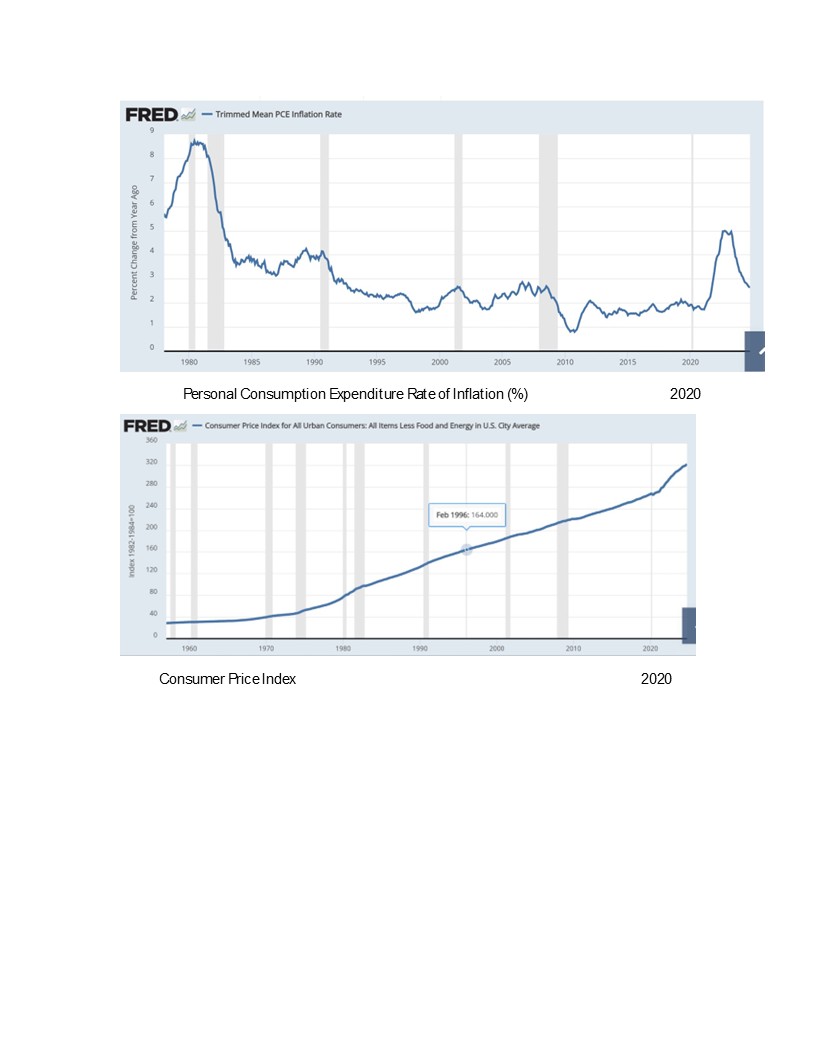
Many experts – and Democrat strategists – fretted, worried, puzzled, pontificated and blustered over why the US economy did so well, by the numbers, and was perceived as so bad by working people.
The above two graphs, thanks to the St. Louis Fed’s superb software “FRED”, provides an explanation.
In 2020 inflation (measured by the year to year percentage change in the personal consumption expenditure price index, which measures the price of what people buy) peaked at over 4% — and then fell sharply to around 2 per cent, leading the Fed to slash interest rates. See the top graph.
Good news, right?
In October 2024, just before the US Presidential election, the consumer price index was 321.7, up from April 2020’s level of 265.7. That is an increase of 21.7%. That means – what people bought just before the election was 21.7% more expensive than in April 2020, just before Biden won the election. During that time, the wages of low-income working people did not come close to rising by 21.7%. That means, a lot of people were struggling in 2024 to buy what they bought relatively easily in 2020. See the bottom graph.
The difference is simply this: Some measure inflation by the rate of change But ordinary people measure it by what they can buy at the supermarket. Good work for bringing down the rate of inflation! But – did you fix the damage the inflation did before you got it under control? Raised the national minimum wage to $15? No? Then – you will lose the election.
The Cost of Losing Human Interaction
By Shlomo Maital

Last night on Israeli TV news, three small children were shown sitting in kindergarten chairs next to one another; each was playing a game on his or her tablet. Someone came in with a tray of their favorite candy and put it on the table right in front of them. None of the three lifted their eyes from the tablet. When they were invited to come to the table and enjoy the candy (with their tablets), they were told that they had to turn off their tablets in order to partake. Two of the three refused, choosing to continue playing with their tablets rather than enjoy the candy. Normally, three kids sitting together begin to talk and interact. Not these three, absorbed with their plasma screens.
Do we really understand the hypnotic power that plasma screens have over us?
In today’s New York Times, Jessica Grose reports on some disturbing research. The title is: Human Interaction is now a luxury good. The key point: As AI and digital software are increasingly employed to boost productivity and cut costs, human services become a high cost luxury item only the wealthy can afford.
Grose cites a new book “The Last Human Job,” by the sociologist Allison Pugh. She spent five years following teachers, doctors, community organizers and hairdressers — more than 100 people in total who perform what she calls “connective labor,” which is work that requires an “emotional understanding” with another person. Even when human services are indeed offered and provided, the bureaucratic tangle that requires them to account for what they do digitally, constantly, is a huge butden and interferes with human interaction. (Ask doctors who fill out Medicare forms).
“Pugh explains that increasingly, people in these jobs have to use technology to obsessively monitor and standardize their work, so that they might be more productive and theoretically have better (or at least more profitable) outcomes.”
A vivid example in Pugh’s book was the hospital chaplain, who provided crucial spiritual comfort – but still had to report online, endlessly, in detail — because God too is an accounting cost.
Conclusion: A paradox. As we are addicted to plasma screens at an early age, we come both to rely on them and to distrust them, because …. The services they provide are inhuman, non-human. And it is this, perhaps, that can help account for the collapse in trust in such institutions as doctors, public health, police, judges, and more than ever, the political democratic system. Real human interaction becomes a luxury good only the rich can afford.
I don’t know how to escape this quandary. As far right politicians ascend, and attack government and slash budgets, evermore services will be digitized and non-humanized, leading to further loss of trust.
Something has to break this spiral.
Global Chaos – Without Precedent. Why?
By Shlomo Maital

All this has happened in just a month:
Nov. 5 Trump-led Republicans win the US Presidency, House and Senate majority. Trump nominees seek to overturn the existing order. Expect chaos.
Nov. 6. BERLIN — Germany’s governing coalition collapsed Wednesday, as Chancellor Olaf Scholz fired his finance minister and announced a confidence vote that is widely expected to fail and to pave the way to early elections in the spring.
Dec 4 (Reuters) – Romanians vote in a presidential election runoff on Sunday that could see Calin Georgescu, a far-right critic of NATO, defeat pro-European centrist Elena Lasconi, an outcome that might isolate Romania in the West and erode its support for Ukraine.
Dec. 5 In an event unprecedented in the last 60 years, the French National Assembly approved a motion of censure against Michel Barnier’s government on Wednesday, which has only been in office for three months. This motion, initiated by the radical left, received crucial support from Marine Le Pen’s National Front party, triggering a major political crisis. French Prime Minister Michel Barnier has resigned. President Macro will try to cobble together a new government, a Mission Impossible given the split between far right and far left in the French Parliament.
Dec. 5. South Korea’s president, Yoon Suk Yeol, on Tuesday declared martial law, blasting the opposition as “anti-state forces” threatening the country’s democracy. The unexpected move from Yoon, marking the first time martial law has been declared in South Korea in more than four decades, alarmed the US and other allies. Six hours later he backed down, lifting the order in the face of united opposition.
Dec. 5 Brussels –Violence returns to the streets of Tbilisi following the official announcement by the ruling Georgian Dream party to stop the process of joining the European Union, leading to thousands of citizens pouring into the capital to protest what they see as the country sliding toward the Russian orbit. While tensions resurfaced after seemingly subsiding in recent weeks, the European Parliament in Strasbourg recognized as illegitimate last month’s elections and called on Georgian authorities to repeat the vote
…Shall I go on?
Is there a short clear explanation for this chaos? There is. Migration leads to backlash among those opposing it and who perceive they are hurt by it. Leading to far-right electoral gains. Autocratic leaders riding a wave of right-wing popularity seek to sow chaos in their neighbors, to overturn democratic forces.
This could have been prevented, had the obscene gap between very rich, rich, and poor within countries and among countries been addressed properly — helping migrants in their home countries, and low-wage workers domestically.
Liberals might say, who knew?
It was handwriting on the wall.
ERRP: Equality of Realized Recognized Potential
By Shlomo Maital

My previous blog asked, why is the world in such a mess? And used the 7-why approach to suggest an answer. The cause: Vast growing inequality in income and wealth. Wasted human potential. Marginalized masses who vote for populist autocrats.
But this was about causes.
What about remedies?
A conversation with a brilliant friend suggested the following: (Talking things over with smart friends is both enjoyable, enlightening and often, highly productive! Try it often!).
In short: ERRP. Equality of Realized Recognized Opportunity.
Here is the idea. In Jewish tradition, beginning with Abraham, everyone human being on this planet, all 8.025 billion, and all 109 billion people who have ever lived, over the past 50,000 years, were put here to “be a blessing”. To create value for others.
But how? What do I know, what talents do I have, that can be a blessing to others?
Many of us have no idea. Many don’t even get to asking the question. Me? It took me decades. And I’m still not quite sure.
There is massive inequality in the world. And 2,700 billionaires, who use their wealth to perpetuate it by buying political influence. This is wreaking havoc.
Here is the plan. We know a whole lot about how to evaluate children’s and youths’ talents and skills. Gather the top experts and build a system for doing this, age 7 to 15. The goal: Find and recognize potential and help each person realize it. No compulsion here? Simply information. A youth may be told he has musical talent – and chooses to study medicine. But the fundamental paradox here is: We make life/career choices at 18, at a time when we are least able to do so and least informed about who we really are.
Equality of realized recognized potential. ERRP. Because – once this is done, and once the young person decides to embrace what is recommended – resources need to be provided to implement it. Not only recognized potential, but help to realize it.
How? You guessed it. Taxing some of the huge wealth of the billionaires, piled up through our sweat and blood.
We each can be a blessing to the world. But how? Can we use our vast knowledge of social science to help provide young people with answers, at a time when they lack them? And then, most crucial, implement what they wish.

 TIMnovate