
You are currently browsing the category archive for the ‘Uncategorized’ category.
The Sun, The Moon, and a Coincidence
By Shlomo Maital

How’s this for a coincidence?
The sun is 400 times larger than the moon (in terms of the size of the sun’s and moon’s circles).
The sun is nearly exactly 400 times farther away from Earth than the moon. Moon: 238,855 miles, sun 93,000,000 miles.
Because of this ‘400’ coincidence: The moon almost perfectly blots out the sun during an eclipse. 400 times bigger but 400 times farther away.
Coincidence?
Exercise Helps Your Brain
By Shlomo Maital

My mother, Sally Malt, lived to 105. She was sound of mind to the end. She had an exercise machine that she used without fail every day — a treadmill with handles for upper body exercise.
When I used to visit her, I would watch her work out – and then do my own workout. And I follow her model. I work out in the Technion fitness room, focusing on abs and upper body and legs, and do a 3 km. walk regularly down and up a steep hill.
Dana Smith, writing in the New York Times, explains why exercise for seniors can be important for the health of their brains. Here is what she writes: *
* NYT. How Exercise Strengthens Your Brain. April 2, 2024.
“Physical activity improves cognitive and mental health in all sorts of ways. Here’s why, and how to reap the benefits.
“Exercise offers short-term boosts in cognition. Studies show that immediately after a bout of physical activity, people perform better on tests of working memory and other executive functions. This may be in part because movement increases the release of neurotransmitters in the brain, most notably epinephrine and norepinephrine.
The neurotransmitters dopamine and serotonin are also released with exercise, which is thought to be a main reason people often feel so good after going for a run or a long bike ride.
“The brain benefits really start to emerge, though, when we work out consistently over time. Studies show that people who work out several times a week have higher cognitive test scores, on average, than people who are more sedentary. Other research has found that a person’s cognition tends to improve after participating in a new aerobic exercise program for several months.
“Perhaps most remarkable, exercise offers protection against neurodegenerative diseases. “Physical activity is one of the health behaviors that’s shown to be the most beneficial for cognitive function and reducing risk of Alzheimer’s and dementia,” said Michelle Voss, an associate professor of psychological and brain sciences at the University of Iowa.
“How does exercise do all that?
“It starts with the muscles. When we work out, they release molecules that travel through the blood up to the brain. Some, like a hormone called irisin, have “neuroprotective” qualities and have been shown to be linked to the cognitive health benefits of exercise, said Christiane Wrann, an associate professor of medicine at Massachusetts General Hospital and Harvard Medical School who studies irisin. (Dr. Wrann is also a consultant for a pharmaceutical company, Aevum Therapeutics, hoping to harness irisin’s effects into a drug.)
“Good blood flow is essential to obtain the benefits of physical activity. And conveniently, exercise improves circulation and stimulates the growth of new blood vessels in the brain. “It’s not just that there’s increased blood flow,” Dr. Voss said. “It’s that there’s a greater chance, then, for signaling molecules that are coming from the muscle to get delivered to the brain.”
“ Once these signals are in the brain, other chemicals are released locally. The star of the show is a hormone called brain-derived neurotrophic factor, or B.D.N.F., that is essential for neuron health and creating new connections — called synapses — between neurons. “It’s like a fertilizer for brain cells to recover from damage,” Dr. Voss said. “And also for synapses on nerve cells to connect with each other and sustain those connections.”
“A greater number of blood vessels and connections between neurons can actually increase the size of different brain areas. This effect is especially noticeable in older adults because it can offset the loss of brain volume that happens with age. The hippocampus, an area important for memory and mood, is particularly affected. “We know that it shrinks with age,” Dr. Roig said. “And we know that if we exercise regularly, we can prevent this decline.”
“Exercise’s effect on the hippocampus may be one way it helps protect against Alzheimer’s disease, which is associated with significant changes to that part of the brain. The same goes for depression; the hippocampus is smaller in people who are depressed, and effective treatments for depression, including medications and exercise, increase the size of the region.”
Putin & Russia: Big Time Losers
By Shlomo Maital

It is a rare event when the head of the CIA publishes a long article. When it happens – it is worth paying close attention. Because as head of the CIA, he knows a great deal more than you and I.
William Burns has published a long thoughtful article in the March-April issue of Foreign Affairs.* It is about how he is shifting the CIA’s abilities and activities, to meet the challenge of the Russia-China-Iran axis of evil. But it is also about Russia’s massive failure in Ukraine.
Here is the essence, paraphrased.
The extensive casualties and material losses suffered by the Russian military are a testament to the miscalculations that underpinned the invasion. Putin’s initial strategy, predicated on a quick and decisive victory, has unraveled, revealing the limitations of Russian military power and the effectiveness of Ukrainian tactics, supported by Western military aid. The destruction of a significant portion of Russia’s pre-war tank inventory and the exposure of its flawed military modernization efforts underscore the strategic and tactical failures of the Russian command.
Economically, Russia faces a dire future, with long-term repercussions from the war exacerbating its status as a subordinate economic partner to China. The strategic blunders of Putin have not only inflicted immediate economic damage but have also compelled Russia into a dependent relationship with China, undermining its global standing. The strengthening of NATO, contrary to Putin’s intentions, marks another strategic miscalculation, as the alliance has emerged more cohesive and determined in the face of Russian aggression.
Internally, the war has eroded Putin’s authority, with the rebellion led by Yevgeny Prigozhin exposing the cracks within the Russian political facade. This internal turmoil raises questions about Putin’s grip on power and the sustainability of his authoritarian regime. The challenges facing Putin domestically are compounded by the resilience of the Ukrainian people and the international community’s support for Ukraine, challenging the narrative of Russian invincibility.
In this context, Putin’s reliance on defense production and alliances with China, Iran, and North Korea reflects a desperate bid to regain the initiative. However, this strategy overlooks the enduring resolve of Ukraine and its allies, underestimating the costs of continued aggression and the international resolve to support Ukraine’s sovereignty.
– – – – – – –
A New York Times report states that Russia has received crucial supplies of weapons from North Korea. Add to this the Iranian drones. Russia is now a vassal state of China, crucially dependent on China’s purchase of Russian oil.
Would you invest in a country whose future is crucially dependent on China, North Korea and Iran? Putin has no future. Russia’s future is bleak.
* William Burns. Spycraft and Statecraft: Transforming the CIA for an age of competition. Foreign Affairs March-April 2024.
Daniel Kahneman 1934-2024
By Shlomo Maital

Daniel Kahneman passed away in Princeton, NJ, yesterday (Wednesday), three weeks after his birthday. He was 90 years old. In 2002 Kahneman, an Israeli psychologist, won the Nobel Prize for Economics, together with Vernon Smith.
And therein, lies a story. How in the world can a psychologist win a Nobel Prize in a discipline distant from his own, as day is distant from night?
In 2003, I wrote a review article on Kahneman (and his sidekick Amos Tversky, who died of cancer in 1995 – otherwise, he would have shared the Nobel with Kahneman).
I wrote: “There are two ways to research how people make judgments under uncertainty. One is mathematics. Define a minimum set of axioms necessary to obtain analytical solutions for equilibrium. Examine that equilibrium’s efficiency, optimality, stability and uniqueness.” For 150 years, this is how economists did research, largely, creating La-La Land theories and ‘verifying’ them by crunching numbers.
But there is another way. “A second approach is behavioral. Offer people (surgeons, statisticians, psychologists, ordinary people) a series of pair choices. Would you prefer—
A. 50% chance to win a 3-week tour of England, France, and Italy or B. (100% certain) 1-week tour of England. Observe their behavior carefully and generalize.”
Surprise! Turns out that people are more complex in their behavior (toward risk, toward EVERYthing!) than economists’ math models. It took two Israeli psychologists, who amazingly published their keystone 1979 paper in the leading theoretical, mathematical journal, Econometrica AND SPOKE TO ECONOMISTS IN THEIR LANGUAGE, BUT SINGING A COMPLETELY DIFFERENT TUNE! They presented their psychological theory of behavior toward risk, “Prospect Theory”, as a mathematical model – with behavioral evidence.
Perhaps Kahneman’s most influential book is 2011 Thinking, Fast and Slow. The book’s main thesis is that we have two modes of thought: “System 1”, fast, instinctive and emotional; “System 2”, slower, more deliberative, and more logical. A lot of what we do is driven by System 1 and the emotional, limbic part of our brain. (That’s how I chose, at age 18, to study Economics. System 1. Bad move! ) .
Economics today has changed its DNA, from mathematics to behavior. In large part, thanks to Kahneman.
If you have patience for a few hundred more words, read below how Kahneman gained crucial insights about behavior, from Israeli pilots:
Daniel Kahneman gave a lecture to Israeli fighter pilots about effective training practices. During his talk, Kahneman discussed the well-supported concept that rewarding good performance is more effective than punishing poor performance. An incredulous senior Air Force instructor confronted Kahneman and said that criticising his trainee pilots for poor execution of aerial manoeuvers worked. How did he know? The instructor had noticed that when he criticized trainees after they poorly executed a manoeuver, they almost always improved on their next attempt. Sharp criticism works.
Kahneman drew a chalk target on the floor, had the officers turn their backs to the target and try to hit the target with two no-look coin throws. Officers who were far from the target on their first throw improved on the second throw; officers who were close to the target on their first throw did worse on their second throw.
Kahneman showed how we conflate ‘effective feedback’—either positive or negative—with regression to the mean. Did poorly on the maneuver? Chances are, the next try will be better. Did great? Maybe next time will be less great. Behavior tends to the mean.
I often wonder how different the world might be today, if economists had not taken a wrong turn, from Adam Smith in 1776, through Afred Marshall in 1880, to large-scale black-box econometric models in the 1960s. And just did a simple pivot, as Kahneman and Tversky did — get out of your office and study real people.
Rest in peace, Daniel Kahneman. You can say what few others can – as a researcher, your work really did change the world and changed the way we think and act and choose. For the better.
What Happens to Billionaires?
By Shlomo Maital

What in the world happens to billionaires, after they begin as entrepreneurs out to change the world for the better, and end up ruining the world, for the worse?
Mark Zuckerberg started at Harvard, with an idea to produce an online class yearbook, in place of the old-fashioned print book. It was a success – other universities wanted to copy it..and the result was Facebook (Meta), market cap $1.26 trillion! Zuckerberg is worth $177 billion.
According to a lawsuit filed by New York State, and other state governments: “Kids and teenagers are suffering from record levels of poor mental health, and social media companies like Meta are to blame. Meta has profited from children’s pain by intentionally designing its platforms with manipulative features that make children addicted to their platforms while lowering their self-esteem.”
The worst part is, Facebook insider whistleblowers say Facebook has research that shows they know they are deeply harming kids. But – hey, bottom line, fellas. Capitalism. We have shareholders, you know.
Zuckerberg?
Elon Musk, against the odds, built a massive global electric car company, now worth $556 billion. His personal wealth: $194 billion. Musk has pioneered SpaceX, and brain implants for paraplegics. News reports now claim: Long considered non-identifiable ideologically, Musk’s politics are now hardline right wing as he uses his platform (now called X) to stoke the themes cherished by Fox News, conservative talk radio and far right movements across the West.
Jeff Yass, a pauper, worth only $27.5 billion, is a cofounder of Susquehanna, a huge global Wall St. trading firm. He first became a pro gambler, then began trading on the Philadelphia Stock Exchange in 1981 backed by billionaire Israel Englander. In 1987, he cofounded Susquehanna with a handful of partners; it’s now a giant in options trading and making markets, with 2,000 employees worldwide.
Yass funded an Israeli right-wing think tank, Kohelet, which powered and funded the far-right Netanyahu government’s anti-democratic initiative, causing 10 months of wild street protests, culminating in the October 7 massacre by Hamas, perhaps tempted by fractious Israeli politics. Yass was an early investor in TikTok, a social medium that originated in China, that has caused Israel massive harm and damaged the lives of young people in the US and elsewhere. (Trump originally supported Biden Administration efforts to make Bytedance divest TikTok – then did a sharp U-turn when Yass, a big Trump supporter and donor, whispered in his ear).
The list is endless. Massive wealth seems to push good people to the right and far right, where they use their billions to do huge damage.
We need an inheritance tax, so that the billionaires do not bequeath their malice and money to the young generation. Laurene Powell Jobs, Steve Jobs’ widow, told NPR she intends to give away her wealth, rather than bequeath it, and already has donated billions.
Power corrupts, the saying goes. Money corrupts even more. Warren Buffett organized a large group of billionaires who committed to giving away their wealth. Buffett, the Omaha wizard, never lost his folksy demeanor or common-people values. But many other billionaires have lost their way.
Shame.
Trump Goes Public
By Shlomo Maital
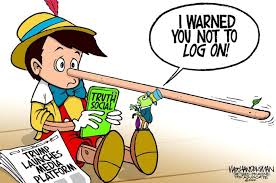
Here is the story of how a man, leading polls in the Presidential race, who may become President of the US in November, has engineered a legal swindle, that may cost unwitting innocents much cash, because he needs money to pay his mounting legal bills and bail bonds.
Here’s how a man running for President uses legal means to turn $3.7 million into $3.5 billion [“Trump Media booked $3.7 million in revenue in the first nine months of 2023 and “expects to incur significant losses into the foreseeable future,” according to a regulatory filing. Unless it can rapidly boost its revenue or turn a profit, it could have difficulty maintaining its lofty valuation, experts said.]. This man, Trump, will likely have between 75 and 80 million Americans who vote for him in November. Really.
This is from CBS News: (and you could not make it up if you tried):
“Former President Donald Trump could soon receive a windfall valued as much as $3.5 billion, with shareholders of a publicly traded funding partner voting Friday on whether to merge with his Trump Media & Technology Group. The vote is taking place about one month after the two companies received regulatory approval to proceed with the long-delayed merger. If shareholders of Digital World Acquisition Corp. (DWAC) approve, the businesses could combine soon afterward, putting the former president’s Truth Social social media platform on the stock market. Trump created Truth Social as a conservative-focused social media service after he was banned from Twitter, now known as X, and other platforms following the January 6th riot.”
This is a back-door Initial Public Offering of stock, bypassing the normal tough SEC regulations.
“Digital World is a special purpose acquisition company, or SPAC, a shell company that is created to take a private business public without conducting an initial public offering. The new company would be renamed Trump Media & Technology Group Corp. and trade under the stock ticker DJT, the same letters as Trump’s initials, according to regulatory filings.”
SPACs have long gone out of fashion. Trump is using SPAC to make a quick buck, leveraging his MAGA supporters who will buy anything with the stock ticker DJT (Donald J Trump, get it?).
“Trump stands to make a fortune from the pending deal, given that he would control 78.8 million shares of the newly merged company, or about 58% of the business. Based on DWAC’s current stock price, that stake could be worth as much as $3.5 billion.”
No, Trump can’t flip his stocks and sell them at once. He’s limited by law to hold them for six months. Can he borrow against them? No. “Trump likely won’t be able to use the stock to get a loan, either. That’s because the DWAC regulatory filing states that founding investors can’t sell, lend, donate or encumber their shares for six months after the deal closes.” [a ‘lock-up agreement’].
“It’s possible that Digital World could waive the lock-up agreement before the deal closes. Or, in what some legal experts say would be a more likely path, the new company’s board could decide to alter the lock-up agreement after the deal closes. Such a decision by the new board could open those directors up to legal scrutiny, however. They would need to show they’re doing it to benefit shareholders.”
Look for cynical Wall St. pros to buy shares in the new company, then sell them a day or two later, profiting from the expected enthusiastic, naïve purchases of Trump supporters (it seems they will buy anything, including fabrications, lies, untruths and worthless shares, as long as they have the initials DJT on them). Those supporters will buy high, and in the end, sell low.
Will they blame the MAGA fraud? No. They never do.
Some of DWAC’s shareholders appear to be Trump followers, as one group on Truth Social includes more than 7,850 users who have been communicating about the stock and its prospects. That raises the possibility that DWAC’s shares are currently getting a lift from Trump’s supporters at a time when Trump is moving closer to securing the GOP nomination for president.
That windfall could land in Trump’s lap at a time when his financial pressures are ratcheting up. For one, Trump’s lawyers have said he’s been unable to secure a bond to appeal a judgement of more than $460 million in his civil fraud case. If he can’t pony up the money by March 25, New York state could seize property from Trump to satisfy the ruling.
Trump is also facing hefty legal bills in the other court cases against him, including more than $8.5 million in legal expenses so far in 2024 alone. His political action committees last year spent more than it raised, partly due to almost $50 million in legal fees for the president’s ongoing legal defenses.
But while a $3.5 billion stake in a publicly traded company could help relieve some of those financial pressures, it’s unlikely to immediately help Trump. That’s because he and other big shareholders are subject to a so-called “lock-up” provision that bars him from selling his stock for at least six months.
Here’s what to know.
Why can’t Trump immediately sell his stake in Trump Media?
That’s due to a lock-up provision for major shareholders, according to a DWAC regulatory filing.
Lock-up provisions are a common restriction on Wall Street designed to keep big investors from dumping their shares in a company soon after the company goes public. If they were to occur, such large stock sales could cause a company’s shares to tank.
Legal experts say “encumber” is a powerful word that could prevent Trump from using the stock as collateral to raise cash before six months have elapsed.
Could Trump sell before the lock-up expires?
Could Trump sell his stock after the six months are over?
Yes, but typically major shareholders don’t sell their entire stake in one sale. That’s because such a big transaction could undermine other investors’ faith in the stability of the company as well as flood the market with available shares, potentially leading to a plunge in the company’s share price.
Major stockholders and company founders usually sell their shares in smaller amounts over time to avoid destabilizing the stock price.
Is Trump’s stake really worth $3.5 billion?
That figure is based on the current trading price of DWAC and the number of shares that Trump will own after the merger closes.
But any publicly traded investment comes with risks, including the possibility that the shares could lose value. Once publicly traded, the Trump Media Group could face more scrutiny from a wider pool of investors, who might not see the same value in it as DWAC’s current shareholder base.
“In the short term, if a lot of people say, ‘I don’t really care what it’s worth, I’m just gonna keep buying it, and I’m gonna keep propping it up,’ you can do that for a reasonable period of time,” said Harry Kraemer, a professor specializing mergers and acquisitions at Northwestern University’s Kellogg School of Management. That “almost defies economic logic, but there we are,” he added.
For one, the Trump Media Group’s main asset is Truth Social, which is lagging far behind rival social media platforms such as Facebook, X and Instagram in both users and advertisers. Truth Social is filled with advertisements for faux-medical cures, Trump-themed merchandise and right-wing companies.
“Given the fact that their sales last year were less than $5 million, and they’re losing significant money, it is hard to believe that the long-term economic value of this company could even be as high as $100 million,” Kraemer said. “So talking about billions is absolutely ridiculous from an economic standpoint.”
Again, Trump also faces risks if he sells stock once the lock-up provision is expired. For instance, if he sells a large stake, the value of the stock could decline, which would then lower the value of his remaining shares at a time when he may need more money to pay legal bills or fund his campaign.
“As soon as people know he’s gonna sell the stock, they’re gonna want to sell the stock, and the stock is going to crater,” Kraemer predicted.
Robert Card: The Tragedy of His Brain
By Shlomo Maital
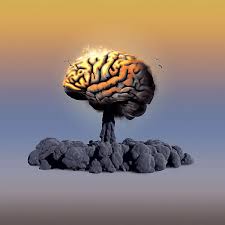
Last October, a terrible tragedy unfolded in little Lewiston, Maine. Robert Card, 40-year-old Army reservist and veteran, shot and killed 18 people! Then he committed suicide.
The shooting was especially lethal, because Card was a certified Army firearms instructor.
Why?????
Unlike many such mass shootings (by the way – they are the #1 cause of death now, among children!), this one had a clear explanation. The BBC reported on its website:
“… doctors said on Wednesday that he may have suffered brain injuries during military drills. Card was a long-time instructor at an Army hand grenade training range, according to a statement released by the Concussion Legacy Foundation on Wednesday. During that time he was exposed to “thousands of low-level blasts”, the organization said. Dr Ann McKee from Boston University’s CTE [Chronic Traumatic Encephalopathy] Center, who conducted the study of Card’s brain, said that nerve fibres in Card’s brain showed “significant degeneration… inflammation” and “small blood vessel injury”.“ (CTE is what many retired National Football League players suffer, after repeated blows to the head, even when protected by high-tech helmets).
In a typical training session for West Point cadets, Card would supervise over a thousand cadets, each of whom would throw two grenades on a firing range. One session – 2,000 explosions. Many such sessions – many thousands of explosions.
Card told people he heard voices, that said terrible things about him – that he was a pedophile. Those repeated explosions literally scrambled his brain. The damaged nerve fibers are the ‘wires’ that connect brain cells and transmit messages.
In my army service, in a reserve artillery unit, my job was to scout future placements. I generally was far from the blasts themselves. But what about the gun crews? And what about all the kids who play Pop Warner football? And the football players in college? And in the NFL?
It is time we showed new respect for our delicate brains. If avoidable, we need to guard them from blasts, blows or other harmful things. Robert Card was not to blame. His army service scrambled his brain. How many others suffer from similar damage?
Voyager 1: Rest in Peace
By Shlomo Maital

Voyager 1 is a space probe launched by NASA on September 5, 1977, as part of the Voyager program to study the outer Solar System and the interstellar space beyond the Sun’s heliosphere.[1]
It is now 15.2 billion mi. (24.3 billion kms.) from Earth as of January 2024. And it is the most distant human-made object from Earth. Radio messages take 22 hours, 33 minutes and 35.0785 seconds to travel from Voyager 1 and arrive to us – round trip, that’s 45 hours! Say “hi!” to Voyager… and it will respond, “Hawarye?” back two days later.
Voyager was designed to send data for just a few years. But it has lasted… so far, for nearly 47 years! It’s data computer is 1970 technology. I did my Ph.D. on a Princeton mainframe in 1967, using punch cards to feed in data, and received printouts on big rolls of hole-punch paper.
Voyager is suffering from dementia. Yes, space probes, too, get addled brains. The data Voyager is sending back is just… gibberish. NASA engineers have tried turning it off and back on – doesn’t help. Voyager is way to far from the sun to use solar panels – it has nuclear batteries, amazing ones, that have lasted for 47 years. But they too will run out of juice soon.
Voyager, it seems, was built to last. Unlike stuff made to day, which is made to break – so we have to buy more of them. Or made to throw away, because it is too expensive to repair.
From 15 billion miles away, Voyager is sending a message.
Hey, planet. Keep using the old stuff. No, you don’t need iPhone 16, iPhone 12 is perfectly good. (Like mine). Look at me. I’m still (barely) alive. You don’t need to stuff your closet with stuff. You don’t need to respond puppet-like when the fashion gurus say, baggy pants today, tight pants tomorrow. Pink today, beige tomorrow. You don’t need to buy a heavy expensive SUV, just to drive to the corner store.
Thanks Voyager. Who knows? Maybe one day you will bump into an alien life form, maybe they will capture and revive you…and send us back an incredible ‘hello, Earth’. Just don’t say, Take me to your leader. Because…well, we really don’t have one at the moment.
[1] Source: Wikipedia
TB Vaccine Prevents Alzheimers
By Shlomo Maital
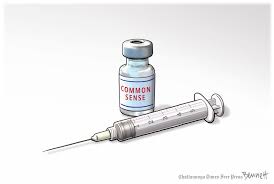
Science reporter Ruth Schuster, writing in the daily Haaretz, reports on new research, showing that a Tuberculosis vaccine – an old one – may prevent dementia! This is promising, hopeful – and crucial, because we don’t know how to reverse Alzheimer’s, or cure it, nor even diagnose it for certain until autopsy (after death).
What is the vaccine? It is called BCG – Bacillus Calmette-Guerin, developed to fight tuberculosis in the early 1900’s! It is a live vaccine, a weakened strain of bovine (non-human) TB. The vaccine has generalized immune-system-stimulating characteristics and is even used today for treating superficial bladder cancer. Researchers have found that bladder cancer survivors treated with BCG had lower rates of Alzheimer’s and even Parkinson’s.
Dementia is a huge problem. The WHO says 55 million people were diagnosed with dementia as of 2020 – and that’s a huge underestimate. It may double by 2050.
Two researchers – Prof. emeritus Charles Greenblatt, Hebrew University of Jerusalem, and Prof. Richard Lathe, Univ. of Edinburgh Medical School, have published two key papers in the Journal of Alzheimer’s Disease (so far, just the abstracts have been in print).
The authors review research and state: “Once one gets a BCG shot against TB as a kiddie, one has diminished risk of Alzheimer’s in old age”.
Think prevention! the authors state. Apparently, the weakened bacillus sticks around in our brains, from childhood, and helps the body fight off the amyloid plaque that gums up our brains and causes dementia. A small piece of evidence: Alzheimer’s rates are lower in the developing world, where the BCG vaccine is still widely used, than in the developed world, where BCG has been replaced by more modern TB vaccines.
Hamas Tunnels: An Expert’s Analysis
By Shlomo Maital
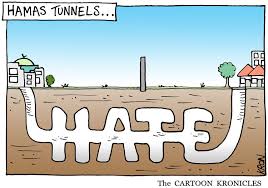
For five months, Israel has been battling Hamas, and its network of tunnels. No army has faced such an extensive array of underground tunnels, comprising hundreds of kilometers, in a strip of land only 40 kms. long.
As an Israeli, I have a rather biased view of the tunnels. So, instead of my views, here is the analysis of a fairly objective expert, John Spencer *. His essay was published in Modern Warfare on January 18.
On the massive extent of the tunnels: “New estimates also indicate the construction of this subterranean network could have cost Hamas as much as a billion dollars. The group has poured resources over fifteen years not just into constructing tunnel passages, but for blast doors, workshops, sleeping quarters, toilets, kitchens, and all the ventilation, electricity, and phone lines to support what amount to underground cities. As much as 6,000 tons of concrete and 1,800 tons of metals have been used in this subterranean construction. The sheer size of Hamas’s underground networks may, once fully discovered, be beyond anything a modern military has ever faced. The new estimates say the network may include between 350 and 450 miles of tunnels, with close to 5,700 separate shafts descending into hell.”
On the political function of the tunnels: “For the first time in the history of tunnel warfare, however, Hamas has built a tunnel network to gain not just a military advantage, but a political advantage, as well. Its underground world serves all of the military functions described above, but also an entirely different one. Hamas weaved its vast tunnel networks into the society on the surface. Destroying the tunnels is virtually impossible without adversely impacting the population living in Gaza. Consequently, they put the modern laws of war at the center of the conflict’s conduct. These laws restrict the use of military force and methods or tactics that a military can use against protected populations and sites such as hospitals, churches, schools, and United Nations facilities.
Civilian Deaths and Buying Time: “Almost all of Hamas’s tunnels are built into civilian and protected sites in densely populated urban areas. Much of the infrastructure providing access to the tunnels is in protected sites. This complicates discriminating between military targets and civilian locations—if not rendering it entirely impossible—because Hamas does not have military sites separate from civilian sites. Hamas’s strategy is also not to hold terrain or defeat an attacking force. Its strategy is about time. It is about creating time for international pressure on Israel to stop its military operation to mount.
The Huge Challenge for Israel Defense Forces: “The tactical challenges Hamas tunnels present to Israel are thereby compounded by strategic challenges. To deal with tunnels at the tactical level, Israel has demonstrated some of the world’s most advanced units, methods, and capabilities to find, exploit, and destroy tunnels. From specialized engineer capabilities and canine units to the use of robots, flooding to clear tunnels, and both aerial-delivered and ground-emplaced explosives, to include liquid explosives, to destroy them. Arguably, no military in the world is as well prepared for subterranean tactical challenges as the IDF. But the strategic challenge is entirely different. To destroy many of the deep-buried tunnels, the IDF has required bunker-busting bombs, which Israel is criticized for using. And most importantly it has required time to find and destroy the tunnels in a conflict in which Hamas’s strategy is aimed at limiting the time available to Israel to conduct its campaign. Hamas’s strategy, then, is founded on tunnels and time. This war, more so than any other, is about the underground and not the surface. It is time based rather than terrain or enemy based. Hamas is in the tunnels. Its leaders and weapons are in the tunnels. The Israeli hostages are in the tunnels. And Hamas’s strategy is founded on its conviction that, for Israel, the critical resource of time will run out in the tunnels.”
“We Are Proud to Sacrifice Martyrs”. “Hamas is globally known for using human shields, which is the practice of using civilians to restrict the attacker in a military operation. The group wants as many civilians as possible to be harmed by Israeli military action—as one of its officials put it, “We are proud to sacrifice martyrs.” It wants the world’s attention on the question of whether the IDF campaign is violating the laws of war in attacking Hamas tunnels that are tightly connected to civilian and protected sites. It wants to buy as much time as is needed to cause the international community to stop Israel. Its entire strategy is built on tunnels.”
– – – – – – – –
And my own view: The Hamas strategy is working. The US has lost patience with Israel, as Israel’s self-centered Prime Minister plays in Hamas hands by refusing to define a clear end-of-war strategy. Biden is losing the Muslim vote in Michigan. The world has lost patience. Israel is ending up facing two billion Muslims, and a Western world that is increasingly hostile to the Gaza operation by IDF.
The young Israeli generation that many of us seniors felt was hopeless, unpatriotic, selfish, has shown incredible sacrifice, motivation and heroism, fighting to save our country. When they return from months of combat, they find a gaggle of incompetent politicians maneuvering to escape the popular judgment, that they bear responsibility for the October 7 disaster and must leave office at once. Experts believe we are headed for a new civil conflict, as popular demands for the government’s resignation face the Prime Minister’s stubborn desperate efforts to stay in power and thus perhaps avoid jail.
* John Spencer is chair of urban warfare studies at the Modern War Institute, codirector of MWI’s Urban Warfare Project, and host of the Urban Warfare Project Podcast. He is also a founding member of the International Working Group on Subterranean Warfare. He served twenty-five years as an infantry soldier, which included two combat tours in Iraq. He is the author of the book Connected Soldiers: Life, Leadership, and Social Connection in Modern War and coauthor of Understanding Urban Warfare.
 TIMnovate