
You are currently browsing the category archive for the ‘Uncategorized’ category.
Innovation Blog
Cut! Print it! That’s A Wrap! Business Innovation in the Film Industry
By Shlomo Maital

The entertainment business is hugely important for California’s slumping economy, bringing over $30 b. annually in revenues. But now, Hollywood is in big trouble. Movie producing is in big trouble.
Writing in the Washington Post, business columnist Steven Pearlstein noted last year:
“….what entertainment also shares with other sectors is a history of almost unbroken success. Things have been so good for so long, and the companies have been so successful in fending off competitive threats, that it has grown incredibly fat and happy. From superstar actors, their agents and business managers to gaffers and on-set caterers, the money people make is vastly out of proportion to what similarly skilled people make in most other industries. And, even allowing for the process of trial and error inherent in any creative process, its ways of doing business remain stubbornly inefficient. Now, however, there is a sense that it may all be coming to an end, that the threat this time is real and that the old business models can’t survive. With the rise of legal and illegal downloading, the Internet has already decimated the music business, and it is just beginning to overturn the economic foundations of the movies, television and electronic gaming as well. Financing is drying up, once-sacred expenses are being cut, whole layers of management eliminated and work shifted elsewhere.”
Now, a report in today’s Global New York Times [1] reveals that sharp declines in DVD sales (owing to movie downloads, mostly illegal) have slashed movie revenues. Producers are scrambling to innovate their business models, as movie studios slash the number of movies they produce, and half the independent movie distributors in the U.S. have folded in the past 2 years.
As with all businesses whose business design quickly became obsolete (it happened to the music business, almost precisely in the same way), only the nimble will survive. One of them is Michael Simpson. He found new ways to arrange financing. He ‘tweaked’ the order in which tiers of investors get paid. He embraced streaming and video-on-demand services.
“Some of the most experienced studio producers don’t understand the new environment”, he notes. Average age of the 4,200 Producers Guild members is 60. No wonder they don’t get it. They live in the glorious past, rather than the innovative risky future. This is up from only 43, some 5 years ago. Younger producers have bailed out. Older ones failed to keep up with the changing times.
Had movie producers benchmarked music producers and the music business years ago, perhaps they would have been better prepared for the rapid change that the Internet has brought. The Internet was not a strategic surprise, like Pearl Harbor. It proclaimed its arrival long in advance. But very few seemed to have picked up the phone.
[1] Brooks Barnes, “Facing crisis, Hollywood producers turn skills to survival”, May 24/2010, p. 15.
Innovation Blog
The Big Short: How Wall Street Screwed Us and Itself
By Shlomo Maital
 Michael Lewis
Sorry for the vulgar language — but, it fits the subject and it accurately reflects the views of someone far wiser than me: Michael Lewis, author of the new book The Big Short, about the global financial crisis of 2007-9.
Interviewed on the CBS News program 60 Minutes, by Steve Croft, Lewis succinctly nailed the root causes of the crisis. “Mass delusion!” Here is a summary of the interview:
“Our culture will come to the conclusion that everybody (on Wall St.) is a criminal. But the story is much more interesting. There is mass delusion.”
A handful of people saw it coming. Dr. Michael Berry, a medical doctor with Asperger’s Disease (and one blind eye, from a bout with cancer) saw it. [Ironic, someone with one eye saw things those with two good eyes failed to!]. He started a hedge fund in Cupertino, CA., and in 2005 foresaw the 2007 crisis in sub-prime mortgages. He invested in CDS (credit default swaps, insurance against bond default), betting on default — and made $720 m. ! How? He took the trouble to read the sub-prime mortgage documents, while others did not. He saw through the scam, in which Goldman Sachs investment bank persuaded AIG to issue CDS’s in the amount of $20 b., and later, another $30 b., without understanding at all what they were insuring (not a 1 in 1,000 event, but a 100% certainty of collapse, owing to the nature of the subprime mortgages). Why didn’t others on Wall St. see it? “Wall St. is paid to delude itself,” he says. Berry explains why the bonuses are so huge. “The top people there want to be paid huge sums, so they have to pay people below them very large sums,” he explains. Berry thought, when he bought up CDS’s, that others would copy him, eliminating the profit. But they did not. Perhaps 10 or 20 people acted like him, seeing the looming crisis coming.
Lewis told Croft: Wall St., in its present form, cannot be sustained. It is getting subsidized credit from the Fed, paying zero interest, then lending and investing at higher interest, and making billions. This cannot be sustained. “The (Wall St.) leaders have lost their sense of responsibility to society”, he observes. “Wall St. has become disconnected from reality, from real productivity”. It was an elegant form of theft, he believes. Wall St. bankers paid themselves $20 b. in bonuses in 2009 — after the crisis! In 2007, they paid even more: $33 b. in bonuses!
But the worst part, the least believable part? Nothing has been fixed. The bond rating agencies that rated junk as AAA (Moody’s, S&P) are still paid by the folks who issue and sell the bonds — the investment banks. And Credit Default Swaps? Well, they still are unregulated, and nobody knows to this day how much they total or what they are worth? And the icing on the cake? The same ‘experts’ who caused the crisis — are now cashing in, with huge consulting constracts for the government, because they are the only ones who really understand the garbage paper they inflicted on society. “A neat trick Wall St. does often,” Lewis notes, “charging fortunes for cleaning up the messes it created in the first place.”
What did the broadcaster Beale say, on the 1976 film Network: “I’m mad as hell and I’m not going to take this any more!”. Well, we are mad as hell — and we are, alas, taking it every single day.
Is there any consolation? Lewis has been right so far. He thinks Wall St. in its present form is unsustainable…it will disappear. Let’s hope he is right.
Global Crisis Blog
Rashomon & the Global Crisis 2007-9
By Shlomo Maital
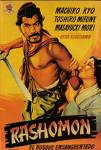
Expectedly, a spate of books is appearing, interpreting the causes, nature and effects of the global crisis 2007-9. My own book (which leverages the crisis to explain why and how managers must now think for themselves, and never again rely solely on economists) will appear in June. (Global Risk/Global Opportunity: SAGE, 2010).
It is hard to sift through the various perspectives, to find the real truth. It is much like the legendary 1950 Japanese movie Rashomon, which depicts the rape of a woman and murder of her samurai husband, through the eyes of the wife, the bandit, the samurai and the woodcutter — each account being very different, each account truly believed by the teller. As I have learned during recent study groups, even the Bible is not exempt from the ‘victor’s syndrome’ (the victor tells the ultimate story, even if it is false). The Book of Kings is written in a biased manner in favor of the Kings of Judah, severely distorting historical truth, against the Kings of Israel (the northern tribes that split away from Judah).
The latest entry is The End of Wall Street, by Roger Lowenstein, a top (the top?) Wall Street reporter. (Penguin: 2010). Reviewed by equally sharp financial reporter Joe Nocera, in the Global New York Times (April 4), Lowenstein’s book (which follows one he wrote on Long Term Capital Management) avoids clichés and focuses on the “business theories that led to grievous destructive miscalculations” (the idea that a world of highly interconnected financial systems makes regulation unnecessary and smoothes away business cycles or bubbles). My guess is The End of Wall Street will be the definitive book on the crisis, at least for many years, until the focus of time helps us overcome the Rashomon effect and truly understand cause and effect.
Global Crisis Blog
The Future of Capitalism…As Seen by Anthropologists
Does Fairness Convey Evolutionary Advantage?
By Shlomo Maital
As the dust from the 2007-9 global crisis clear, it dawns on the world that the global crisis has not ended but simply changed its form (from financial crisis to recession to sovereign debt crisis, a la Greece, Spain, Portugal, Ireland). Some have begun to think about how to reinvent capitalism. Don’t ask economists. They are still shell-shocked. As David Brooks notes in his New York Times column today, economics needs an entirely new paradigm. But building one will take a long time, because today’s economists have a huge human capital investment in the existing one.
Let’s then turn to the anthropologists. Unlike the economists, they ask really good questions, and answer them by studying a wide variety of 15 different human societies. The latest such study is led by Joseph Henrich, published in SCIENCE magazine. [1] Henrich and his team ask: “why do ‘strangers regularly engage in mutually beneficial transactions'”? In other words: Why doesn’t everybody act like the Wall St. money-grubbers who destroyed the world for their own short-term gains and bonuses? Why are some societies characterized by pro-social behavior?
They study 15 different societies, including a group of people in Missouri, United States. What they find offers much hope for human society.
The researchers use the Dictator Game to study values. In this game, two players are given a sum of money. Player 1 must decide how to divide this sum between himself and Player 2. Player 2 receives the allocation (offer) and the game ends. Player 1’s offer provides a measure of Player 1’s behavioral fairness.
They find that the larger and more ‘modern’ societies are, the higher the “mean dictator offer” (as a percentage of the ‘stake’, or sum of money). In Missouri, U.S., the stake approaches 47 per cent, nearly half. They find a correlation between the modernity, complexity and size of the population, and also the degree of religiosity, and the percentage of the stake offered to Player 2.
Why does such pro-social behavior emerge, and thrive? Two possible reasons, Henrich and his team say, are, a) ‘innate social psychology calibrated to life as it was in tiny family groups in Paleolithic ancestors’, and b) pro-social behavior enables large complex societies to do better than societies characterized by selfish it’s-all-about-me behavior. They conclude in favor of (b).
What this implies, then, is that the global crisis caused by rapacious greedy behavior by a handful of traders, speculators and bankers on Wall St. is not a norm but an aberration, and the society that encouraged or tolerated it will, in the long run, lose out to societies that are more pro-social and respect fairness.
Apparently, fairness does convey evolutionary advantage, to societies (and to companies?), by generating social cohesiveness that makes societies resilient, high-performing, motivated and long-run stable.
Thanks, anthropologists, for giving us the answer that economists repudiated for centuries.
[1] Joseph Henrich, et al., “Markets, religion, community size, and the evolution of fairness and punishment”, SCIENCE, 19 March 2010, pp. 1480-1484.
Innovation Blog
How to Start Up HR in a Startup
By Shlomo Maital
(with Sarah Karu)
(this blog is based on a short piece published in Israel’s on-line HR journal, Mashabei Enosh, vol. 265-266, Jan-Feb. 2010).
“You get one chance!”
This is what legendary entrepreneur Kenneth Levy told us, when we brought a group of Israeli startup managers to visit the company he founded, KLA Tencor, in Silicon Valley.
What he meant was: The corporate culture, the organization’s “DNA”, is set on day one, when the company is founded. After that, it is very difficult to change it, just as it is difficult to change more than one or two of a human being’s 23,000 genes.
What principles should be followed, in choosing and directing a startup’s human resources? Here are seven principles my colleague Sarah Karu and I have identified:
* Use the term Human Capital (HC) instead of Human Resources: Great startups invest in their people from the outset, and make sure each has a Personal Development Plan. By using the term Human Capital, this is more likely to be sustained.
* Align Human Capital with strategy: Make sure the people who run human capital have business experience, and not just degrees in organizational psychology. Otherwise they will not be able to align human capital with the business strategy of the company.
* Build culture and values from day one: Decide what your core values are, from the start. Google did this only three years after their launch. The result was “Don’t Be Evil”. Google no longer emphasizes that mantra. It proved unworkable….
* Get the right people on the bus: Nothing is more important for a startup than the 3rd, 4th and 10th hires. They set the tone. But why should a startup entrepreneur trained in bits and bytes know how to interview or ‘read’ people? Find someone who does. This is crucial. For Israel’s global firewall company Checkpoint, the three founders were brilliant — but the fourth hire, whom I spoke with this week, was the key; he linked the company’s technology with its marketing. And almost no-one has heard of him.
* Build HC measures of success: Treat human capital management the same as you treat profit centers. Give them measures of success, and run HC as a business, with a bottom line. This is possible. Make them measure the ROI for investment in training programs.
* Align structure with strategy: Make sure the organizational structure of your company exists solely to implement the strategy. And make sure this structure is flexible and changes rapidly to match changes in strategy. Again, HC people must understand business strategy well in order to do this.
* Lead change processes: Like growing snakes, startups shed their ‘skins’ many times. This change process is vital and exceedingly difficult. Only if HC people know how to manage change effectively can they succeed. The CEO alone cannot in general do this.
——————
Roughly the same time our piece appeared, another excellent piece on a related subject appeared in Business Week’s excellent Entrepreneur’s Journal, February 23, 2010, by Caterina Fake. She is a social media pioneer and co-founder of the photo-sharing service Flickr; she led the technology development group at Yahoo (YHOO) after it acquired her company in 2005. In 2008 she left Yahoo and joined Hunch as co-founder. And she’s only 40 years old!
Here is her ‘take’:
“… the idea is just the starting point, just the first step. You also have to find the right people to help you do it. No successful company has have ever been the product of just one person. As an example, there were probably about 100 companies that were doing a YouTube-like video sharing service in 2005-07. But the reason YouTube succeeded is it had all the essential elements together: the right team, the right product, the right location in Silicon Valley, the right execution. The entrepreneurs were able to raise the capital they needed to build and scale it. Obviously, it was a good idea, but the combination decided who the winner was. The combination of the idea and who is doing it can’t be emphasized enough. Obviously, lots of factors go into the success of a company, but in my experience, those two are the most significant. You have to be building the right thing, first of all. And the right people can figure out how to build it, how to market it, and how to make it a winner.”
Innovation Blog
Super Bowl Leadership: Deeds, Not Just Words
By Shlomo Maital
 Sean Payton
Sports legends are full of stories about inspiring half-time speeches by coaches, that energize his players and lead to victory. The most famous is Notre Dame coach Knute Rockne’s “win one for the gipper” speech.
George Gipp was a Notre Dame football All-American player, a star, who died tragically at age 25 of a strep throat infection. Today, he would have been treated with antibiotics routinely. Rockne asked his players to win the game in memory of “The Gipper”. They did. The speech was immortalized by a B-movie actor named Ronald Reagan, in the film biography of Rockne. Reagan went on to become U.S. President.
In this year’s Super Bowl NFL championship football game played in Miami, New Orleans coach did not make a stirring speech at half time, even though his team trailed Indianapolis 10-6 and looked outplayed and defeated. Instead he made a risky decision. Here is how the press (NY Daily News) described it:
Sean Payton coached one of the most aggressive games in Super Bowl history against Peyton Manning and the Colts and succeeded with perhaps the riskiest coaching decision ever in the championship game, an onside kick by a rookie punter to start the second half.
Payton came to New Orleans after the Katrina disaster, in which the New Orleans SuperDome was used to house many thousands of homeless refugees, and was badly damaged. For at least a season, his team could not play their home games at home. They were once the worst team in the NFL, known by their fans as the New Orleans “aint’s” (rather than the Saints). It became a fad to wear paper bags over your head (to signal the need for anonymity, as someone dumb enough to root for the team). He rebuilt the team, bringing in a visionary quarterback named Drew Brees, who was motivated like Payton by the need to raise New Orleans’ morale.
At the start of the second half, with New Orleans trailing 10-6, Payton chose to do an “onside kick”. This means that instead of New Orleans’ kicker kicking the ball deep into the opponents’ end zone, he kicked it (as a strategic surprise) very short, bouncing the ball of the helmet of a Colts player, and then having the ball recovered by New Orleans, giving them possession.
This was a hugely risky decision. Most onside kicks fail. If this one had failed, Colts would have had huge momentum. They would have gotten the ball close to midfield, and may well have marched downfield to score, boosting their lead to 17-6.
Why did Payton do this? As a powerful signal to his team: We’re here to win, we’re going to do everything possible to win, I’m willing to put my own neck on the line with a decision that, if it fails, will have me tarred and feathered. And if I want to win so much, well, perhaps so should you.
His actions spoke louder than his words. His players got the message. They outplayed the Colts in the second half by a wide margin and ended up winning 31-17. It was a remarkable shift in the momentum of the game, caused in large part by an inspired coach.
And– by the way. The team had practiced onside kicks intensively for two whole weeks before the game. Innovation? Sure — but, make sure you know what you are doing.
Innovation Blog
Oldiepreneurs: Gold Among Those Silver Threads
By Shlomo Maital
Darling, we are growing old, silver threads among the gold…
Darling, we are growing old, this will make us far more bold…
The first line is real, from a familiar song anyone over 80 years old will know. The second line…I made it up. But it reflects a trend, discussed in Peter Day’s BBC Global Business program. Because of demographic aging, young people are scarce in Japan, Europe and even increasingly in China (because of the one-child policy). As a result, countries will increasingly have to look elsewhere for entrepreneurial energy — perhaps to the oldies.
Day notes that in Britain, some estimates show as many as one-fourth of all new startups are launched by people 55 or older. In my own experience, one of Israel’s most successful serial entrepreneurs, Shimon Ekhouse, retired from a leading government high-tech company at age 48, and began launching the first of (ultimately) nine successful startups (he’s on his ninth right now).
I think older people have many advantages as entrepreneurs. They have oodles of life experience. They have time, if they are pensioners. They have their pension, which provide security if they go bust, and some basic cash flow to start out. They have many friends and contacts. And they have intimate knowledge of a new, rich and promising market — oldies themselves!
The main obstacle? I think it is simply mindset. Pensioners simply do not think about the possibility of launching a business. But they should. And society should help them. What about starting a VC fund dedicated solely to funding startups launched by oldies?
What about building a system, where young entrepreneurs are partnered with silver-haired oldies, combining youthful energy with senior life-experience?
There is definitely gold in those silver-haired oldies. But gold has to be mined. Countries that do such mining with persistence and wisdom will gain an important new resource.
Innovation Blog
Steve Wozniak’s EUREKA moment: How Color Came to Apple Computers:
* with thanks to Blog reader Yoav Medan, Insightec, for drawing my attention to this Eureka moment: Steve Wozniak:
” Nobody expected color to come into computers, at the time it cost $1,000 and it took tons of chips. I figured out how to do it with one little $1 chip. I was without sleep for four days and nights, because [Steve] Jobs and I got a project to design a game for Atari, it was called BREAKOUT and we needed the money. I worked four days and nights without sleep. Games in those days were hardware — chips and voltage. I didn’t think it was possible to do it in four days, but we did, we designed the whole thing in four days. When you go without sleep, and then when you’re going to fall asleep, your head goes into a state of creativity, you are not restricted to normal thoughts. That day, my head was in this floating state. Now on the Atari floor, Atari was only B&W, but they had this thing going across the TV screen changing colors, and they used little strips of Mylar (thin plastic) on the TV screen to do it, I thought it was so beautiful, Steve was wiring up the board for Atari, and I started drifting, you know , thinking that signals from color TVs go up and down, so I thought, what if you made a signal that went up and down at different rates, would it look like color? Then, oh my gosh, Eureka! I figured out how 0,1 bits circling around, up and down, and red would become blue, different patterns, I had 16 patterns (2 to the fourth power), lighter, darker, color! Finally I wired it up a year later, and brought Steve [Jobs] over, that was Eureka! It worked! We knew this was a big change in the world.
Sometimes you are not sure if something will work, and we did not follow all the methodology, all the science in the book, but the idea was similar enough so that it might work..and it did..”
Source; gizmodo.com/5465212/steve-wozniak-describes-the-eureka-moment-tha
Innovation Blog
Innovating by Defining (and Sticking to) the Rules
By Shlomo Maital
More than once, in this space, I’ve defined innovation as breaking the rules.
Dr. Atul Gawande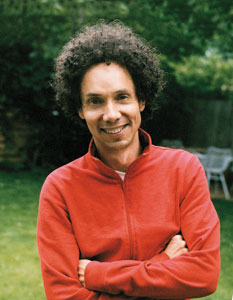 Well, here is an innovation that focuses on obsessively defining and sticking to the rules — one that saves lives.
Dr. Atul Gawande is a Harvard Medical School professor, practicing surgeon, New Yorker staff writer and brilliant author. His new book is called The Checklist Manifesto (Metropolitan Books: 2009).
Here is what Steven Levitt (author of Freakonomics) says about the book in his New York Times blog:
” It is the best book I’ve read in ages. The book’s main point is simple: no matter how expert you may be, well-designed check lists can improve outcomes (even for Gawande’s own surgical team). The best-known use of checklists is by airplane pilots. Among the many interesting stories in the book is how this dedication to checklists arose among pilots.”
And here is what author Malcolm Gladwell (author of The Tipping Point and Blink) says about it:
” Gawande begins by making a distinction between errors of ignorance (mistakes we make because we don’t know enough), and errors of ineptitude (mistakes we made because we don’t make proper use of what we know). Failure in the modern world, he writes, is really about the second of these errors, and he walks us through a series of examples from medicine showing how the routine tasks of surgeons have now become so incredibly complicated that mistakes of one kind or another are virtually inevitable: it’s just too easy for an otherwise competent doctor to miss a step, or forget to ask a key question or, in the stress and pressure of the moment, to fail to plan properly for every eventuality. Gawande then visits with pilots and the people who build skyscrapers and comes back with a solution. “
“Experts need checklists–literally–written guides that walk them through the key steps in any complex procedure. In the last section of the book, Gawande shows how his research team has taken this idea, developed a safe surgery checklist, and applied it around the world, with staggering success.”
Management educators teach that business success requires three essential disciplines: innovativeness, operational excellence and customer intimacy. They stress that these disciplines are closely related. Innovation succeeds only when combined with operational skill. Operational skill, in turn, may require adherence to a checklist, as Gawande suggests.
The trick is, how to combine chaotic rule-defying creativity with the rule-adhering Prussian discipline of checklists.
Great innovators succeed.
Innovation Blog
“No Excuses” vs. “Nothing Can Be Done”
By Shlomo Maital

Consider Hyundai, the Korean car company.
A decade ago, Hyundai was at the bottom of J.D. Powers’ Initial Quality rankings (defining the quality of new cars within 90 days of purchase). Everyone knew this. The fact that Hyundai was cheap but defective made its future as a global car brand very doubtful.
Hyundai’s Korean managers knew this. They did two things. Hyundai was restyled, so that today it looks as sleek, modern and well-designed as any of its competitors.
But they did something else. They set as their goal, making Hyundai top-rated in the J.D. Powers’ rankings. Not “good”. Not “very good”. Tops. Better than Honda. Better than Toyota.
Laughable? Impossible stretch goal? Perhaps. But Hyundai leadership did something else. They insisted on “no excuses”. There will be no acceptable excuse for anything but top quality in the manufacture and production of Hyundai motor cars — the “Accent” and the “Elantra”.
They did not say: Nothing can be done. It is impossible to achieve the quality standards of Toyota and Honda, because (a) (b) (c) (d), etc. They said, no excuses.
In one of the most dramatic changes in the automobile industry, here are the results for J.D. Powers’ June 2009 Initial Quality rankings:
Best Subcompact Toyota Yaris;
close behind: Hyundai Accent, Honda Fit
Best Compact Hyundai Elantra;
close behind: Toyota Prius, Honda Civic.
If you know people who own a Hyundai, ask them if they’re happy. I have. Chances are, the answers will be highly favorable.
“No excuses” is a powerful part of a company’s culture. Singapore has built an entire wealthy nation on it. Define the best practice benchmark. Aim for it. And accept no excuses. It is as simple as that.

 TIMnovate