
You are currently browsing the category archive for the ‘Uncategorized’ category.
A special Business Week Report on “Innovation in Recession” (July 22/2009) contains excellent tips for managers, and mini-case studies to support them, on how to sustain and strengthen innovation despite the global downturn. Here are a few excerpts:
• Realism: 60% of 1,430 global managers surveyed by Bain & Co. believe that the current recession will last through 2010. Be wary of pronouncements about ‘green shoots’ — those making them have an interest in persuading you to spend. Now is the time to prepare your product launches for the recovery, a crucial time when market leaders can lose ground to upstart incumbents.
• Prioritize: Evaluate your innovation portfolio and prune it, slash what is not crucially necessary. Despite temptation, do not slash long-run projects for those that yield big first-year revenues. An avoid-this example: Vanilla Coke, a line extension that took sales away from other Coke products. A to-do example: Google, which used technology for long-run search engine leadership, then found ways to make money out of it.
• NPV: Avoid it! Existing NPV (Net Present Value) templates use conventional assumptions about the organization’s business model. But the recession will certainly make many of those assumptions obsolete. Moreover, NPV ignores option value: Will the innovation build expertise in new fields, that can later be leveraged to open doors not even reached, were it not for the innovation? Option value of innovation is crucial during a recovery, because every industry features paradigm shifts.
• Employees: Drive Their Creativity! MasterCard has copied IBM’s Innovation Jam, which since 2006 uses 90-hour round-the-clock brainstorming sessions on-line. MasterCard CEO Robert Selander led a Webcast of his company’s 5,500 employees, down to the lowliest intern, based on a long search process done by seven senior executives who comprise an internal international task force. Recession is the perfect time for this — employees all understand the vital need for innovation, which could save their own jobs.
• Involve your customers: Caterpillar is launching its D7E this October, despite the downturn. Its price tag is $603,000, $100,000 more than the older D7R. It’s a hybrid, 30 % more fuel efficient and 10% less expensive to operate, meaning that the $100k price differential is paid back within 30 months. Caterpillar has in the past made many development mistakes; this time it involves its customers far earlier in the development process, to make sure what it brings to market meets their needs. Caterpillar thinks customers will pay higher prices if customers get superior products.
• Five Questions: A new HBS book by Scott D. Anthony (The Silver Lining: An Innovation Playbook for Uncertain Times) suggests a five-question template for evaluating downturn innovations: What is the upside potential? How much risk remains? What resources are needed to reach the next learning milestone? How well does the idea fit important qualitative criteria (e.g. the value innovation profile)? How much does the idea contribute to the overall [innovation] portfolio’s balance?
Economists never were great communicators. As managers struggle to read the data and seek signs of the recovery, economists’ messages continue to baffle. Here are excerpts from the latest Business Week article on the subject, along with translation into simple English:
Real gross domestic product declined at a pace of just 1% in the second quarter, after a 6.4% decline in the first quarter, the Commerce Department said July 31. The Commerce Department also released multiyear revisions in the GDP that showed the recession was deeper in 2008 than originally reported. Here’s a selection from analyst reactions to the report:
GDP data are revised, often a year or more later. The 2008 US recession was, it seems far deeper than the original numbers showed.
Action Economics: The Q2 figures extend the pattern of a skewing in 2009 economic weakness toward the business from the consumer sector.
Initially, lower consumer spending was the key cause of the recession. Now it is business investment, both in buildings and in machines. Consumer spending is making a slow recovery in the U.S.
Paul Ashworth, Capital Economics: We expect GDP to post a modest increase in the third quarter, as the pace of inventory liquidation slows and government spending enjoys another big fiscal-related surge.
In every recession, inventories grow when businesses sell less to consumers than they had planned and expected. So businesses cut back production, lay off workers and stop investing, to reduce inventories. Ashworth expects “the pace of inventory liquidation” to slow, a good sign, meaning that businesses may go back to producing for current sale. Managers should watch inventories closely, they are an important indicator.
One other key indicator that managers should track: jobs. The early signs of some recovery in the US economy do not include unemployment, job creation and jobless numbers. Desperate cost-cutting on the part of most businesses means that even if GDP and spending numbers recover somewhat, this may not be reflected in the job market. There may be a ‘disconnect’ between the goods market and the jobs market, and this could lead to a scenario of ‘double dip’ — workers whose incomes and jobs are weak again slash spending, leading to a second round of inflation.
Exactly one hundred years ago, a French pilot named Louis Bleriot flew across the English Channel (or La Manche, as the French prefer to call it) for the first time. He flew in a rickety monoplane with a tiny engine, held together by spit and paste. Bleriot himself had been injured in an accident two weeks earlier and was limping. And he had no instruments, not even a compass.
Clearly the attempt was foolhardly. Had he ditched in the cold choppy waters, he would not have lasted long, even if he had survived the crash. The plane was flimsy. Its axle was no thicker than a broomstick. Bleriot flew successfully from Calais to Dover. After that, orders for the planes he built poured in, mainly from countries’ armies.
Many years later, Charles Lindbergh flew solo across the Atlantic Ocean, in the Spirit of St. Louis. It was a far longer and riskier flight. But Bleriot paved the way.
There is a direct line from Bleriot the daring pilot to today’s innovators. Bleriot risked his life to do something no-one had done before. There was a reason. By stretching the limits of aviation, Bleriot encouraged innovators to stretch them even further.
Today’s innovators also take bold risks. While they usually do not risk their lives, they risk years of effort and their careers, facing high odds of failure, just as Bleriot did. The same innovative spirit that drove Bleriot to fly across the English Channel drives today’s innovators, as they seek to identify unmet needs and satisfy them. As we celebrate the 100th anniversary of Bleriot’s daring flight, we can draw inspiration from him and others who pioneered and pushed the boundaries of human achievement.
Global managers are religious about reading at least one financial daily every day. Miss an issue, and you miss key trends. Today’s issue of Financial Times is proof. In this one issue, once can find many of the key trends going on in the world today.
Pp. 1, 2. Solar power drive. “China plans to offer subsidies to solar power projects”. China has been behind the curve in clean/green tech, but is battling fast to catch up, and will offer subsidies of 50-70 % for solar projects, especially in Western regions.
P.1. “Goodyear will not be Temasek’s chief”. Chip Goodyear ran BHP Billiton, and a year ago was hired, after a long wooing, to run Temasek, Singapore’s semi-Sovereign Fund. Today it was announced he is leaving, even before he really started. Why? This issue highlights the dramatically important new role sovereign funds will play in capital markets, as they recover, and the strategies they will follow. Goodyear probably wanted to invest in resources. But did Temasek’s Board?
P. 1. “Treasury yields fall on Fed strategy”. Exit strategies apply to VC investments — how do we get our money out? But they also apply to Federal Reserve strategies. How will the Fed turn around its low-interest-rate policy, and hike rates again, and when will the Fed do this? Bernanke’s recent pronouncement on this issue — perhaps to keep his job, as he is up for reappointment next year and some Dinosaur Democrats want Larry Sommers instead — hints that an ‘exit’ and rising rates will not come soon. Treasuries reacted by seeing their yields fall.
P. 1. “China to deploy forex reserves in push to speed overseas expansion”. Chinese Prime Minister Wen Jiabao said “we should hasten the implementation of our ‘going out’ strategy and combine the utilization of foreign exchange reserves with the ‘going out’ of our enterprises”.
Say again? Pardon?
Loose translation: China should begin shifting its $2 trillion dollar asset reserves from paper assets into real assets (companies, resources), thus encouraging its enterprises in ‘going out’ (i.e. globalizing), using China’s vast resources to do so. This is a key trend. What companies will China seek to buy? Where? When? The answer will have vast impact on world markets.
P. 9 “Asia keeps the West’s betrayed faith”. While many Western populations are becoming wary of globalization (realizing, at last, that they have on the whole lost out from it), Asian societies continue to support it (because they have been the big winners). What will the final outcome be — more globalization, less, or the same?
P. 9. “Research conflict point way for ratings agencies.” Remember the ratings agency scandal — S&P or Moody’s rating toxic mortgage-backed securities as AAA when they are B minus? Research now shows, if you pay analysts based on the accuracy of their recommendations, their research quality improves. Why not do the same for ratings agencies?
P. 9. “Warring economists are carried along by the crowd.” “There can be little doubt. The science of macroeconomics is in deep trouble. The beset and the brightest in the field fight over the most basic problems.” Macro-economists disagree. Macroeconomists cannot agree on creative ideas regarding how to deal with the global downturn. I am a macroeconomist. My my. Why am I not surprised?….
…and we are only on page 9. 16 more pages to go….
This is the oldest example of innovation I’ve ever encountered.
Jørn Harald Hurum (born November 4, 1967) is a Norwegian paleontologist and popularizer of science. He is a vertebrate paleontologist and holds a position at the Geological Museum of the University of Oslo. He has studied dinosaurs, primitive mammals and plesiosaurs.
According to the BBC, on May 19, 2009 he announced the acquisition and scientific description of a 47 million year old, 95% complete skeleton of a primitive primate, Darwinius masillae, that had been in the private possession of an amateur fossil collector for 25 years. Hurum named the specimen “Ida”, after his daughter. The Latin name was in honor of Darwin’s 200th birthday. The fossil is the oldest complete fossil by far, of a primate. Ida looks like a lemur, but in fact belongs to the monkey genus and may shed light on the evolution of humans. Hurum assembled a ‘dream team’ of 10 world-leading paleontologists. The result of their study of the fossil was published on 19 May in the online journal PLoS One.
Hurum has aroused great controversy because he is also a populizer, and has made a BBC documentary, built an IDA website and appeared on the History Channel. He rejects the extravagant claims that the fossil is ‘the missing link’ and an ‘extraordinary breakthrough’, but does think it will shed light on how humans evolved.
How does one become a paleontologist? Hurum recounts that when he was 6 years old, his mother read him a story about a little boy who picks up and throws stone. One stone, the story recounts, spoke to the little boy. “Don’t throw me away!” it yells. “I can tell you a story”. And the stone, containing a fossil, tells a story of a creature that lived millions of years ago.
That story led Jørn Hurum to collect fossils and ultimately to become a paleontologist. I find this significant; by reading to our young children, we can plant passions and ideas that much later become powerful motivators.
Because he is also a ‘populizer’, and moderates a weekly TV program for children, Hurum has been attacked by other scientists. I believe this is unfair. Hurum published his article, along with his colleagues, in a reputable journal. The article was ’embargoed’ (i.e. forbidden for distribution prior to publication) as is common practice. Nonetheless, as a result, NATURE, a leading journal, attacked Hurum (even though NATURE does the same embargo). Many scientists make their careers by acquiring pre-prints and attacking the article and its findings even before it appears. SCIENCE and NATURE did this with Hurum’s study. Scientists who take the trouble to explain, carefully and accurately, what they are doing and what it means to ordinary people should be praised, not attacked.
Innovators should not find the attacks on Hurum unusual. If you cannot innovate yourself, you can attack others who do.

IDA – 47 million years young. She has fingernails, not claws, and the contents of her last meal (fruit and leaves) are still in her stomach! She has been preserved in polymer plastic. Hurum’s Institute paid something approaching $1 m. for her from a fossil dealer.
(based on a talk given at the Rotman School of Business, Univ. of Toronto)
There is a strong, logical connection between the TV series Star Trek, its inventor Gene Rodenberry, da Vinci, Picasso, Einstein, Edison, the pre-frontal cortex (part of the brain), and psychologist Daniel Gilbert. The links are obvious, once you know them.
Star Trek was a successful TV series, and later movie and sequels. Its theme: the Starship Enterprise “to go where no man has ever gone before”. This is the principle of innovation. The inventor of Star Trek was Gene Rodenberry. He was an Air Corps pilot, flew bombers in World War II (over 80 missions), later became a Pan Am pilot and saved his passengers with a brilliant desert crash landing in the Syrian desert. His dream and passion: to be a TV writer and producer. He quit his job as a pilot, moved with his family to Los Angeles and became a policeman for 7 years, to support his family while he pursued his dream. He sold several TV scripts, finally selling and producing Star Trek. The network wanted to cancel it, but its dedicated fans staged a write-in campaign and saved it.
How many of us would have followed Rodenberry’s path, quit a great job to pursue a dream and passion? What keeps most of us from doing this?
The answer is: our pre-frontal cortex. This part of the brain, according to Harvard psychologist Daniel Gilbert, is our ‘simulator’, our imagination. With it we can simulate future events and experience them before they happen. Only humans can. Animals lack this ability. But the pre-frontal cortex, which has developed only over the past 2 million years, is limited. It has ‘hedonic bias’. That is — it overestimates the happiness we think we will derive from future events (mostly things we buy) and overestimates the pain and suffering we think we will sustain from bad things that may occur. We fail to pursue our dreams, perhaps, because we think about failure, overestimate the pain it will cause — and never try to pursue our dreams and our passions. We come up with ‘excuses’ — reasons why we never even tried.
The world’s great inventors and innovators avoided this trap. Da Vinci had every reason in the world not to amount to anything. He was born out of wedlock, in the 15th C., when the Church controlled every facet of life. Had he been born in wedlock, he would have become a notary, like his father, and been trapped by the life of a Guild member. As an illegitimate child, he had the freedom to pursue anything he chose — and he did. Picasso lived during a turbulent 9 decades, experienced war, Nazi occupation of Paris, a ban on sculpture and painting — and never missed a day in his studio, producing amazing works of art, fearlessly innovating, producing an astonishing total of 50,000 works! If I know what I am going to do, he once said, why bother doing it? Einstein finished his Ph.D. and could not get a university post, because his professor had been insulted by him and failed to recommend him. Because he was only a lowly Swiss patent office clerk, he had the time to write three revolutionary papers, on relativity, the atomic structure of matter and E=MC2. All of this, in one year, 1905. He changed the world. Edison, as a child, was booted out of school. He was hard of hearing and had ADHD (attention deficit hyperactivity disorder). His mother home-schooled him and he taught himself by reading. He invented the phonograph, because of his deafness — he sensed vibrations through his fingers and realized that sound was something real, something physical, that could be captured and stored.
What is your dream? Your passion? What are you doing to achieve it, to implement it? What are your excuses for not doing so? Can you learn from Edison, Einstein, Picasso, and da Vinci, and turn your constraints into creativity levers? Can you emulate Gene Rodenberry and pursue your dream no matter what? Can you learn from Daniel Gilbert and sharpen your pre-frontal cortex?
Here is a small exercise that may help. Create a digital camera. It is a very special one. It takes a photograph 5 years into the future. Picture yourself in 2014. What do you see? What are you wearing? What does the room look like? Picture every detail. Imagine it. Now — think ahead backward — what will you do today to make that photograph come true in five years? I believe Gene Rodenberry did this. Try it. List all your excuses for not following your dream — and then turn each of them into a reason to pursue it passionately.
Weizman, Darwin and the Birth of Israel
By: Shlomo Maital*
Can you find a connection between the following: Chaim Weizmann, U.S. Patent No. 1315585, the bacterium Clostridium acetobutylicum, Louis Pasteur, Arthur Balfour, Winston Churchill, the global biotechnology industry, the birth of Israel, and Charles Darwin, whose 200th birthday was celebrated last Feb. 12?
Here is the story in full. Chaim Weizmann was born in 1874 in the tiny shtetl of Motol, near Pinsk, in Western Russia (today, Belarus). He wanted to study science but as a Jew, was not allowed. He studied chemistry at the University of Fribourg, in Switzerland, then taught at the Univ. of Geneva. He emigrated to England in 1904. There, he joined the staff of the University of Manchester. In 1910 the U.K. Home Secretary named Winston Churchill signed Weizmann’s citizenship papers.
Not long after arriving in Manchester, in 1906, Weizmann met a dynamic politician named Arthur Balfour while Balfour was politicking in Manchester for his Unionist Party. It was shortly after Uganda had been mooted as a possible homeland for the displaced Jews. Balfour asked Weizmann why Palestine—and Palestine alone—could be the basis for Zionism.
“Anything else would be idolatry”, Weizmann protested, adding: “Mr. Balfour, supposing I were to offer you Paris instead of London, would you take it?”
“But Dr. Weizmann”, Balfour retorted, “we have London”, to which Weizmann rejoined, “That is true, but we had Jerusalem when London was a marsh.”
Balfour was visibly surprised.
‘Are there many Jews who think like you?’ he asked.
‘I believe I speak for millions of Jews,’ replied Weizmann.
‘It is curious’ Balfour remarked, ‘The Jews I meet are quite different.’
”Mr Balfour” said Weizmann, ‘You meet the wrong kind of Jews.” **
Weizmann and Balfour were later to meet again, with fateful results.
In World War I Britain was battling Germany. The British needed an explosive known as cordite to propel shells for the 12-inch guns of its fearsome Dreadnought battleship. Cordite was made of nitroglycerine mixed with acetone. When the acetone dried, it formed explosive ‘cords’.
Acetone was very scarce. It was feared that the lack of acetone would force the British to modify the Dreadnought’s guns.
In August 1914, Weizman writes, he found a circular on his desk from the War Office, inviting scientists to report any discovery of military value. Perhaps, Weizmann thought, I can ‘ferment’ acetone. Weizmann offered the War Office his fermentation processes. There was no response. But later, the editor of the Manchester Guardian, C.P. Scott, who had heard of Weizmann’s scientific prowess, contacted a Welsh politician, David Lloyd George, then Minister of Munitions. Weizmann and Lloyd George met.
Perhaps I can find a microbe in nature, able to synthesize acetone, Weizmann theorized. In a few weeks, he found it, after studying bacteria occurring in soils, able to turn cereal starch into acetone and butyl alcohol. It was Clostridium acetobutylicum.
A young politician named Winston Churchill, then First Lord of the Admiralty, summoned Weizman and spoke with Churchillian bluntness.
As Weizmann relates in his autobiography, “[Churchill’s first words were] Well, Dr. Weizmann, we need 30,000 tons of acetone. Can you make it?”
“I was so terrified by this lordly request that I almost turned tail,” Weizmann wrote later. But fortunately, he did not.
“Once the bacteriology of the process is established,” he said, “it is only a question of brewing.”
A huge acetone plant was soon set up, using Weizmann’s bacterial fermentation process. There was a wartime shortage of grain. So Weizmann and the Ministry of Munitions had schoolchildren collect horse chestnuts instead, fermented in six huge silos. United States Patent Office lists patent number 1315585, filed Dec. 26, 1916, issued to “Charles Weizmann” on Sept. 1919, for the acetone process. Weizmann’s process was replicated in huge plants in Canada and in America. New versions of Weizmann’s original process are used today to produce biofuels, making Weizmann arguably one of the fathers of biotechnology.
David Lloyd George became Prime Minister of Great Britain late in 1916. When he asked Weizmann what payment he chose for his crucial wartime synthesis of acetone, Weizmann declined any payment, just asking for (according to Lloyd George) “the rights to Palestine.” As a result, Arthur Balfour (who was then Foreign Minister) issued the famous Declaration on Nov. 2, 1917, stating that “His Majesty’s government view with favour the establishment in Palestine of a national home for the Jewish people”, in a letter to Baron Rothschild. It is plausible, therefore, to argue that the birth of Israel arose directly from Balfour’s declaration, and the little bacterium Clostridium acetobutylicum directly responsible for it.
And Charles Darwin? Where does he enter our story? Trial and error is, of course, a capsule description of Darwin’s theory of natural selection. Nature does millions of trial-and-error ‘experiments’ — accidental mutations that create new traits (“trials”). Most are unsuccessful (“errors”). A few help the species survive to procreate, and hence endure.
Weizmann’s biography is titled Trial and Error***. Trial and error describes how Weizmann, as a scientist, sought a way to harness fermentation to synthesize acetone, finally hitting upon Clostridium acetobutylicum.
Weizmann himself has the last word. “From the beginning,” he writes in Trial and Error, “I looked upon Zionism as a force for life and creativeness residing in the Jewish masses, [not solely] the blind need of an exiled people for a home of its own.” He got his wish. Weizmann would have been pleased to see how, in the 21st C., the creativity of Israel’s scientists and engineers — including several hundred biotechnology startups — have made Israel a world high-tech power.
And it all started with a clever little bacterium.
_______
*Prof.(emeritus) and Academic Director, Technion Institute of Management.
**See Geoffrey Lewis, The Zionist, the Zealot and the Declaration Which Changed the World (Hambledon, London: 2009).
***Chaim Weizmann. Trial and Error. Hamish Hamilton: London, 1949.

Clostridium acetobutylicum
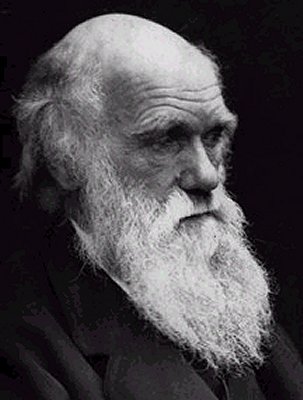
Charles Darwin
Weizmann & Balfour
Like my fellow economists, I am good at dripping Doom and Gloom. No, it’s not a recession, I’ve been writing — it’s a Global Depression. World stock prices have fallen much faster and steeper than in 1929. GDP is collapsing in Japan, U.S. and Europe. Unemployment is soaring. Israel is plunging into a deep recession.
But, if the economy is so depressed, why aren’t people depressed? During a recent visit to London, I found this amazing city bursting with energy and vitality. Same for Toronto. Same for downtown Tel Aviv. Of course, I know many people who are suffering — high tech engineers who lost their job and can’t find another, retired people who lost half their savings in declining capital markets — but I also know people whose lives and wellbeing show no evidence of the global crisis or its impact, even though they have suffered losses.
Why?
I found the explanation in the work of a brilliant Harvard University cognitive and social psychologist, Daniel Gilbert. To sum up his findings, in a single phrase: Synthetic happiness is real.
What does that mean?
Natural happiness is what happens when we get what we want. We want cars, houses, TV’s, clothes — and when we get them, we are allegedly happy.
Synthetic happiness, according to Gilbert (in his wonderful new book Stumbling on Happiness: Knopf, New York, 2008) is how we adapt and adjust, when we do not get what we want, when we get, sometimes, the worst outcome rather than the best.
Natural happiness is what life gives us. Synthetic happiness is what we make of it. Guess which is more important?
Natural happiness generally disappoints. We tend, Gilbert shows, to exaggerate the happiness that ‘stuff’ will bring us. A huge costly mechanism — the foundation of capitalism, known as ‘marketing’ — exists, only to persuade us that more new ‘stuff’ will make us happy when deep down we know it will not, and inevitably find it out does not. I think this is the fundamental fallacy of economics — that more is better than less. Often it is not.
Synthetic happiness is real. That is, people have incredible abilities to adapt to their circumstances, even awful ones, and to make the best of what they have. We have the ability to make ourselves happy, ‘synthetically’, even when we should be miserable.
The most striking research in this area, cited by Gilbert, was done over 30 years ago, by Brickman, Coates and Janoff-Bulman*. They showed that a year after winning, lottery winners are no happier than paraplegics (those whose limbs are paralyzed), a year after the paralysis. Why? Natural happiness disappoints. Lottery winners take less pleasure in ‘ordinary’ daily pleasures because they pale compared to the ‘high’ of the lottery win, and because of habituation — the pleasure of buying new stuff quickly dissipates. Paraplegics learn to accept their circumstance and adapt to it, taking pleasures in ‘mundane’ daily life.
A key part of synthetic happiness is what I call the Stalinist brain. Under Stalin, history was rewritten in U.S.S.R. encyclopedias to conform with Communist doctrine. Our brains do the same. Suppose I ask you to rank your preferences for six Monet prints, best to worst. Then I give you your worst choice. A day or two later, when asked again to rank the paintings, guess what? The one you got, ranked worst, comes up as your first choice. We have rewritten history. We have adapted.
What emerges from Gilbert’s work is a powerful conclusion — the secret to happiness. Not, accumulate more wealth, clothes, assets, houses, cars, and stuff. But rather, build your skill at synthesizing happiness — allowing what you have to make you happy in new and wonderful ways.
Gross Domestic Happiness, it seems, may easily move up though Gross Domestic Product moves down.
*”Lottery winners and accident victims: Is Happiness relative?”, P. Brickman, D. Coates, R. Janoff-Bulman, J. of Personality and Social Psychology, 1978 (36, 8, pp. 917-927).
Iceland suffered by far the worst financial and economic collapse of any European country, because of its banking system’s disastrous risk management and credit policies. Recently, BBC journalist Peter Day, who spearheads the BBC program Global Business, interviewed two remarkable Icelandic women, Halla Tomasdottir, Chairwoman, and Kristin Petursdottir, Chief executive officer, Audur Capital, who founded a private investment firm in Reykjavik, Iceland, at the precise moment the global financial markets collapsed. Here is what they told him, in their own words.
We founded our company to incorporate feminine values in the world of finance. Women will represent a formidable financial force in the future. We want to unlock the potential value in women. This opportunity is too good to miss.
We did not like the bonus culture of modern financial institutions. Regulation should come from within, from the internal ethical values of the business. We believe in market forces tempered by humanity. Women will have a big role in restoring balance to the wreckage of the financial system. Much of the credit crunch crisis came from masculine attitudes. Men were responsible because they sold things they did not understand.
Overwhelmingly, it’s been men at the decision-making tables. If it had been women, the troubles would not have been as big. Token women have no choice but to behave as the rest of the group. If you had several women in senior management, with greater diversity, the decision-making quality would have been better. Women think differently. We are not the same as men. We bring different things. They should be valued. A business that does not take advantage of women in boardrooms or key executive teams is missing an opportunity. A world with only women would be equally imbalanced. We need the balance, it brings healthier debates and decisions.
It’s not the role of women to clean up the mess. We are saying, it’s so important to have a system where men and women work together. Women tend to bring a lot of things to the table. They are risk aware, not risk averse. Men tend to be risk takers. Women think more long term. They think about the team, not only themselves. They think more about the people. Women see other business opportunities than men do. I’m saying that women on the Board will look at more things than just financial profits. They will ask different questions, they will consider more stakeholders. It’s about the wellbeing of the employees. It’s not about the narrow definition of shareholder value. Women are ready to ask stupid questions. That was not allowed any more. Risk awareness means you won’t take risk you don’t understand. So you will ask questions. Tokenism isn’t helping. One woman on a 10-person board is not helpful. As tokens, you can either belong by behaving like men, or be marginalized. Behave like men, women are told. But to be yourself? You need the support of one or two more women. Three is a critical number. Three women is much better.
In Iceland, banks were taken over by people with little experience in banking. There was a great influx of people seeking higher returns, there was an orgy of extravagant lending, at home and abroad.
It was a group of alpha males that caused this crisis. In general, most women in Iceland work outside the home, over 80 %. We have well-educated women, but on an executive or Board level, we are male-dominated. It is slowly changing, but not fast enough.
I don’t think it is right that women should clean up the mess. The men should clean up the mess after themselves. We will take part. But it’s not our job to clean up, and then they come back and start the party all over again. It has to be balanced, we have to do it with the men.
Career vs. family: There is a stage in women’s life where they take a break in their career. But now we have paternity leave, where the fathers take up to 3 months leave. That has changed a lot. It is equal: 3 months for men, 3 for women, and they can choose. That made a huge difference.
The crisis we are going through now can be an eye-opener, men will understand we need something else. It is such a good example of when you have homogeneous decision-making, a group of only alpha males, city bankers, men on Wall St., — business have to realize the value of diversity. I hope this crisis will make people come to their senses.
In a way women have gained authority because men have messed up. We are listened to. We have a stronger voice. What we are saying makes a lot of sense. Men told us, we were nuts, when we started a company. Why would we choose to be in the world of women? Here we are, 6 months after the crash, and we are one of two companies alive and doing well, and not accepting government aid. I am worried that it will be a glass cliff situation for women. A trap. It can break off so easily, and then she will never rise again. Look at all the men that went belly-up, and they will rise back to glory after too long, many are still in complete denial about the need to change the ways of doing business, they are scrambling to get back into the game just as the played it before.
Peter Day: “The fantastic talent of women is not being properly used, it is being wasted”. Halla and Kristin: We should tell women, they are OK the way they are, we should tell men their demands for pay packages and bonuses are excessive. Women should not adopt male ways of doing things to advance. We should talk to men and women how to create healthier organizations, with a broader definition of bottom line that benefits society and the world, to build a capitalist system that will not fail the way this one did.
Auder Capital: What was it like to launch a new financial services company so close to disaster? We founded the company two years ago. It took time to get shareholders in. We didn’t get our license until May 2008. The cracks were beginning to show. The system was about to tumble. We were risk aware. We saw the risks. Everywhere you look, assets are being shredded. But this is a buying opportunity. We can buy at the rock-bottom prices you are seeing. If you are risk-aware, and wait out the situation, we are careful when we enter into investments, at a slow pace.
Our values are indeed different. Human financial services provider – we are more human, we value different things than typical financial services. For instance, we do not due typical due diligence. We do an emotional due diligence. You can present anything in Excel. It is down to the people, their culture, their values. What is a good investor? Just money? A good investor brings more than money. Also, emotional capital. You can squeeze the blood out of a turnip, but it is better if you can make something flourish. We use both our rational minds and our EQ, to release value from our investments. It is smarter, and more long-term. The soft side of the business is actually the hard side of the business.
We find investment opportunities based on our emotional due diligence.
Female values: Our values got us through the crisis. We tripled our wealth management business during the crisis, when others were losing business. One of our values is straight talk. We told our clients things that were not spoken honestly elsewhere. We believe in being authentic. It is in our DNA. Some will love it. Others will not. We are not worried. We are the place for those who want that kind of value-driven business that will build relationships on long-term thinking.
P.S. Iceland has now chosen a female Prime Minister to lead it out of the crisis.
The utter bankruptcy of Economics, during the current global crisis, is as obvious as the crash and bankruptcy (virtual or real) of AIG, Lloyd’s, Citigroup or Lehman Brothers. Economists, including Nobel Laureates, are unable to say when the global recovery will begin, nor devise innovative policies to initiate it.
Why?
It is not because of a lack of historical evidence. According to the National Bureau of Economic Research, based in Cambridge, MA., since 1854, there have been 32 recessions, or boom-bust cycles. We have a great many cycles to study.
The average peak-to-peak duration of the cycle was 55 months. But in recent years, the duration of ‘boom’ periods has lengthened.
• The boom period from the trough in November 2001 to the peak in December 2007 lasted 73 months, or more than six years.
• Before that, the previous boom period lasted 120 months, or ten years, from March 1991 to March 2001.
Perhaps, for this reason, managers were lulled into a false sense of security, and economists lost interest in the business cycle.
Whatever the reason, the current global downturn is unique, unlike any other, and vastly different from the Great Depression of 1929-1939, in the severity of the decline, its global nature and its speed.
Woody Allen once joked: The world faces two alternatives: we can destroy the world in a nuclear holocaust, or we can ruin the world with pollution and environmental collapse. May we choose wisely!
Today the world faces a rather similar dilemma, and it’s not funny. The key question policymakers now face is, I believe, the choice between fiscal suicide, or criminal complacency:
Fiscal suicide: Excessive irresponsible spending programs to stimulate collapsing economies, creating enormous debt burdens that cripple future generations, or
Criminal complacency: Trimming budget deficits and slashing spending, in the face of declining tax revenues, to avoid future debts, thus failing to create jobs and allowing unemployment to reach levels above 10 per cent that destabilize society and create enormous human suffering.
Can policymakers steer the ship of state between these two disastrous reefs?
I do not know the answer. Nor do my fellow economists. The best I can do is to try to define the issue clearly.
* Fiscal suicide: America’s Obama administration inherited a $1.2 trillion deficit, quickly added $600 b. to it, and now runs a deficit equal to $1.8 trillion, or 13 per cent of America’s GDP! This requires America to sell huge sums of Treasury Bonds to China, creating a national debt of $11 trillion, almost as large as GDP. Future interest payments alone on the national debt are projected to be $806 b. yearly. Future generations of Americans will pay dearly for this fiscal irresponsibility.
* Criminal complacency: With world trade declining faster than it did in 1929, the world is no longer ‘flat’. Countries are adopting measures to keep jobs at home, restrict imports and favor domestic production. As consumer spending declines, and business investment disappears, the only demand component left to drive growth is public consumption. This makes it absolutely essential that the government ignore its deficits and pump demand into the economy to prevent disastrous unemployment of 10 per cent or more of the labor force. To do otherwise is criminal complacency. Yet many governments plead ‘fiscal responsibility’ and ‘what will the bond-grading agencies say?’, and avoid such programs.
Israel’s budget deficit is projected at 6 per cent in 2009. Unemployment will exceed 10 per cent by year’s end. Is the Netanyahu Government’s fiscal stimulus sufficient? Suicidal? Or criminally complacent? How can we know in advance?
Somewhere between the two extremes of fiscal suicide and criminal complacency, there is a reasonable, optimal tradeoff. But where? My own preference is more toward ‘fiscal suicide’ than ‘criminal complacency’. But I can’t prove this is optimal.
Perhaps in a decade, a new generation of young economists will create tools that provide answers. Right now, when answers are needed, we have no such tools. Members of my profession are fiercely divided on this issue, right at the point in time when politicians seek answers.

 TIMnovate