A New Miracle Drug called “Give Thanks”

By Shlomo  Maital

thank you

Sosa

                                                                                          Mercedes Sosa

   This morning, I awoke at an early hour and as I often do, I listened to one of the least popular Israeli radio stations, despite (or because) of it being the most informative. 

The person interviewed was a family doctor named Dvorah.  She had practiced for many years, loved what she did, but was overweight and slightly discontent.  On a trip to Barcelona, to the Picasso Museum, she saw a painting of a doctor and a patient, titled something like ‘compassion’.   It led her to rethink her life, and reinvent it, because she felt there were pharmacies in medicine, and ten-minute consults, but no true compassion.

The result was a book, and a method, to help people become healthy and remain healthy, in what today is known as Positive Psychology.   This new discipline is built in part on two very long medical terms. One is “neuroplasticity” – the incredible ability of the brain to change itself, for the good.  The second is the daunting word, “psychoneuroendocrinology”,  which simply means that our thinking stimulates hormones that affect our bodies and our health.

Dvorah’s message, simplified into 15 minutes for listeners, was this:  Give thanks.  Each day, give thanks for your blessings.  Believe it or not, it is proven medically and clinically that doing so can lower blood pressure, stress and even LDL (bad cholesterol).  And we have many blessings to give thanks for, especially the ones we take for granted (like,  life itself, having all our limbs, our sight, hearing, etc.). 

    [Do you love, as I do, the Mercedes Sosa song, Gracias a la Vida? Thank you for Life!   Now, we know that it is therapeutic!]

   Dvorah recommends that families have dinner together each evening, and do a small ritual. Let each person thank someone else in the family for some small kindness done during the day.  The result strengthens family bonds, and family bonds simply make us all healthier and happier.

   It’s that simple.

  Here are the words (in English) to the last verses of Gracias a la Vida….it sounds far better in Spanish…

 THANKS TO THE LIFE THAT HAS GIVEN ME SO MUCH IT HAS GIVEN STRENGTH TO MY TIRED FEET WITH THEM I WALKED CITIES AND PUDDLES BEACHES AND DESSERTS, MOUNTAINS AND PLANES AND YOUR HOUSE, YOUR STREET AND YOUR COURTYARD

THANKS TO THE LIFE THAT HAS GIVEN ME SO MUCH I GAVE MY BEATING HEART WHEN I LOOK AT THE FRUIT OF THE HUMAN BRAIN WHEN I LOOK AT THE GOOD SO FAR FROM THE BAD WHEN I LOOK INSIDE YOUR CLEAR EYES

THANKS TO THE LIFE THAT HAS GIVEN ME SO MUCH IT GAVE THE LAUGHTER AND THE CRIYING SO I CAN DISTINGUISH HAPPINESS FROM SADNESS BOTH MATERIALS THAT FORM MY SONG AND YOUR SONG THAT IS MINE TOO AND THE SONG OF ALL WHICH IS MY OWN SONG THANKS TO THE LIFE THAT HAS GIVEN ME SO MUCH


Piketty Is Alive & Well – in London:

Why the Billionaires Worry Me

By Shlomo  Maital

Usmanov 

Alisher Usmanov

  Chances are, you’ve never heard of a man named Alisher Usmanov.  He is an Uzbekistan-born Russian billionaire who lives in London.  His fortune is estimated at $18.6 b.  He built it through metal and mining operations and investments.  He owns, among other things, two football clubs, Arsenal and Dynamo Moscow.  Usmanov is Muslim, and is married to Irina, who is Jewish.  And despite his wealth, he is only London’s second richest billionaire (the richest are the Hinduja brothers, Sri and Gopa, who have interests in oil, banking, cars, property and media). 

   Why London?  Because London is home to more sterling (pound) billionaires than any other city in the world – 72 of them, in fact, ahead of Moscow, which has ‘only’ 48.    Why?  Because British tax laws are highly favorable to the super-rich, and because London, in many ways the world’s financial capital (huge forex trading volumes, for instance), attracts money like a magnet.  Prime Minister Cameron fails to loudly, clearly condemn Putin’s Crimea grab?  Two guesses why – Russian billionaires with piles of cash in London. 

    Thomas Piketty’s book (see my recent blog) has drawn attention to the enormous and growing gap between rich and poor.  London, and Britain, are an extreme case. According to the London think-tank NIESR  Britain’s per capita GDP is still well below its 2008 peak and won’t return to it before 2017.  Yet Britain’s 104 sterling billionaires now have a total wealth of ₤ 301 billion  (US $500 billion); last year there were only 88 British billionaires, and their combined wealth was ₤55 b. less.  The billionaires grow richer; the poor get poorer. Piketty explained why. Billionaires double their money every decade. The poor fall behind every decade.

     A British food bank network reports that nearly a million people approached it for emergency food aid in the year ending in March, more than double last year’s tally. 

    Why don’t the poor (whom, as the saying, God loves very much, because he made so many of them) rise up and take back their country politically, democratically, from the billionaires? 

     Here is why.    A new study by   scholars Martin Gilens (Princeton) and Benjamin Page (Northwestern) shows:  * 

   “…. rich people and organizations representing business interests have a powerful grip on U.S. government policy. After examining differences in public opinion across income groups on a wide variety of issues [1,779 cases, from 1982 through 2001] , the political scientists  Gilens  and   Page   found that the preferences of rich people had a much bigger impact on subsequent policy decisions than the views of middle-income and poor Americans. Indeed, the opinions of lower-income groups, and the interest groups that represent them, appear to have little or no independent impact on policy.”

     LITTLE OR NO INDEPENDENT IMPACT ON POLICY!   In America.   And doubtless, in Britain, too, and anywhere that billionaires park their yachts. 

     The rich are growing richer. And they are using their wealth to tilt policies in their favor, including tax breaks.   

      That is why the billionaires worry me.   Because they are taking control of our democratic system.   Perhaps it is too late – perhaps we no longer have true democracy anywhere. 

       Never has Edmund Burke’s dictum, “for evil to triumph, it is enough for good people to do nothing”  been more poignant.   We ordinary people have to take action.  

     But how?

     Readers —  ideas!    Action!   This is intolerable.

* See John Cassidy’s excellent New Yorker post,  “Is America an Oligarchy?”, April 18, 2014

Yes, I Can!  Why We Should Act, Not Gripe!

By Shlomo  Maital    

Germain Christophe & wife

   In our new book Cracking the Creativity Code (forthcoming, SAGE India, late Fall),  we offer 10 ‘exercises’ for stimulating the brain’s creative thinking.  The very first, perhaps the most important, is “Act – don’t just Gripe!”.     Once in a while, when there is a problem that angers or saddens us, we have to take action, and not just wring our hands and complain.  Find a creative solution to a problem, then…do it! Adapt Obama’s slogan (which he stole from an African-American woman, who used it to empower black women) and  transform it to  first person SINGULAR: Yes I can!   At least once in a while.       A post on Facebook drew my attention to this:     France’s parliament has passed a law allowing workers to give some of their days off to a colleague with a seriously ill child. The idea came from the case of a man whose colleagues donated 170 days while his son was battling cancer.    The man is Christophe Germain.  He works at the Badoit water plant, in France. When his son fell ill with cancer, his fellow workers ‘donated’ 170 work days to him, so he could be home with his dying son.     Now, the Member of the General Assembly for Christophe’s district has sponsored a law in Parliament, to enable any worker to donate work days for a fellow worker who needs compassion leave.  And the law passed!     Congratulations to the French General Assembly!  Congratulations to the Member of Parliament (from a right wing party, by the way!).   And congratulations to France, a nation that has a heart and is unafraid to let it guide its legislation.        Act, don’t just gripe.  A handful of good people did, in France, and have changed their country, and perhaps the world.   Yes, I can!    Try it.      The little boy died in 2011.   Christophe attended the Assembly debate on the proposed law.  The Socialists opposed it.  Shame on them.   If socialists oppose a law just because a right-wing party proposed it, they deserve our scorn.

Is Money the New Morality?

It is – And That’s Good!

By Shlomo  Maital

Russia capital flight

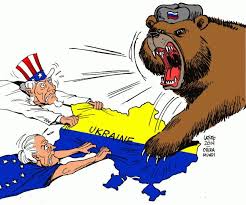
Really bad things are happening in the world today – and good people seem powerless to do anything about it.  Syria’s Assad bombs civilians.  Russia’s Putin grabs Crimea.  Unspeakable crimes occur in Central African Republic.  And that’s just a start.  The United Nations?  Deadlocked.  Obama?  Words, no deeds.  European Union?  Russia’s gas and Russian oligarchs’ money parked in London dominate. 

    But guess what.  Where good people fail, money succeeds.  Here is how.  When countries like Russia do bad things, money flees.  When money flees, the currency declines, inflation rises and economic growth plummets.  This is happening to Russia, according to the World Bank.  Putin is paying the price — not because of Obama sanctions, but because of market economics.  Here are the figures:

    “… the (World)  bank said Russia’s gross domestic product (GDP) might shrink by 1.8 percent in 2014. …. The Economy Ministry estimates net capital outflow (out of Russia) at up to $70 billion in the first quarter alone, compared with $63 billion in the whole of last year.  … the World Bank envisages capital outflow at $150 billion this year and $80 billion in 2015. This year’s forecast exceeds the $120 billion in capital flight that Russia saw in 2008 during the global financial crisis. … The outflow of money will put further pressure on the rouble, which despite its recent firming is still 7 percent down against the dollar this year.   The weakening of the currency is likely to put upward pressure on inflation, which the World Bank sees at 5.5 percent in 2014, higher than the upper end of the central bank’s targeted range of 4.0-5.0 percent.”  

    So, it’s very simple.  When countries’ leaders do bad things, money flees.  Flight of capital trashes the economy.  People suffer.  They protest.  And eventually, the bad leader leaves, is removed, flees, or is forced to adopt repressive measures, which ultimately fail.  Russia cannot afford to lose $150 b.

   This is the new morality.  Money and capital keep leaders in line, not ethics, values or Obama.   It’s the new ethics of globalization.

    Is it so bad?   The message is:  Run your country properly, treat your people well, or, the money will leave and go elsewhere, where leaders are smarter and more ethical.     And every country needs to keep its capital at home, rather than flee abroad.

    The morality of the new global system is money.  Let’s watch Russia closely to see if it really works.  

Piketty: The Super-Rich Will Own Us

By Shlomo  Maital

Piketty

Thomas Piketty’s new book Capital in the 21st C. (Harvard/Belknap) should get him the Nobel Prize. It won’t because it is basically just carefully-built data.  But the data are shocking. And it took a French economist to do it; except for Paul Krugman it seems that the collective brains of the American economic establishment have shut down for good. 

  Piketty’s book is 700 pages long. Few will actually read it.  But the fierce and growing inequality he documents has already drawn huge media attention, and even the IMF is in on the act, with Christiane Lagarde (IMF Director-General) announcing that the IMF believes inequality is bad for growth, and pro-equality policies can actually stimulate economic growth.

    I will save my readers the time and effort of reading this huge book, by summarizing it.  Piketty says, there is “an oligarchic type of divergence, in which the rich countries would come to be owned by their own billionaires…or in which ALL countries would come to be owned by the planet’s multi-millionaires and billionaires…. All the ingredients are in place for the top centile and thousandth of the global wealth distribution to pull farther and farther ahead of the rest.”

    This has already happened, to a large degree.  Oligarchs run Russia.  They own the media in my country, Israel. They are powerful in America.  They are powerful in China.

     Why is this happening? Simple.  If you have great wealth, you can earn on average 6.8 per cent annual return (above inflation).  This doubles your wealth every decade, without your having to really do anything.  And you can keep the profits, because the wealthy easily find tax havens.  If you have little wealth, you earn maybe 1 per cent, and then you get taxed.    When the wealthy double their wealth every decade, in 30 years it is 8 times what it was at the start.  Great wealth confers huge political power. You can buy the media, you can buy lobbyists, and you can, yes, you can buy politicians. 

     Karl Marx got one thing right, and one thing wrong. He said that wealth would become more and more concentrated, under capitalism.  Right.  He said that the people (the government) should confiscate national assets and run them.  Wrong. Governments can’t run businesses.  

  Piketty’s solution is very French – perfect, optimal and utterly impractical. Impose a global wealth tax.  What are the chances this will happen, when the oligarchs already wield immense political power?  If one country does it, the money will flee to another, happy to welcome it by offering tax havens. 

   Either there will be enormous social upheaval, to bring the oligarchic wealth back to where it belongs, and decades of suffering and instability,  or we the people will find some clever way to deal with this ‘doom loop’, which is leading us to destruction.    The current situation cannot continue.  And Occupy Wall Street was largely ineffective, like the Arab Spring, because it brought passionate protest, it brought attention to a critical problem – but offered no creative solutions. 

     The solution?   To be presented in a future blog.  


 Hug a Stranger?

By Shlomo  Maital

Happy Money

  I’ve blogged before about the book by UBC social psychologist Elizabeth Dunn and Harvard Business School marketing expert Michael Norton, “Happy Money: The Science of Smarter Spending.”  In their New York Times Op-Ed, the two scholars report on an interesting experiment done by one of their students, Gillian M. Sandstrom.  The idea was to test the hypothesis that what matters most to us is our closest ties (with spouses and close relatives), not  interactions with minor random strangers.   It’s an extension of their work that shows how badly we spend our money, and how it often fails to bring us happiness.

    She had her subjects carry clickers, one red, one black, all day.  They clicked the red one when they interacted with someone close to them.  They clicked the black one when they interacted with someone they didn’t know.

    Her finding?  Introverts and extroverts alike felt happier on days when they had more social interactions.  Not surprising.  But  she also found that “interactions with [strangers] correlated at least as highly with happiness as interactions with strong ties [ our loved ones].”  

   “Even the bit players in our lives may influence our well-being,” they note.

  So – you may not quite be up to hugging a stranger, and the results may not be great if you do,   but,  why not chat with a stranger?  In an age when people are increasingly alienated, alone, isolated, even with Facebook and Twitter (or perhaps because of them),   a face-to-face conversation with a stranger can sometimes provide great comfort.

     In the end, human beings are highly social animals.  Technology seems bent on making us over into go-it-alone individuals.  Time to fight back.

What’s In a Name? Holy Crap! Almost Everything

By Shlomo   Maital

 Holy Crap

  In teaching innovation, and in guiding my students’ wet/dry simulations of launching new startups, I always stress the crucial importance of names – what you call your new product or service.  A strong catchy name can mean the difference between success and failure.  Shakespeare’s rhetorical, “what’s in a name? A rose is a rose by any other name” is just wrong.  Rainbow rose (see my blog, April 9, 2012), for instance, is far better than “multi-colored rose”.   

    John Grossman confirms this view in his New York Times article (April 25), “Risqué, funny  …and flying off shelves”.  He tells a wonderful story about Corin and Brian Mullins, whose debut product was a non-allergenic high-fiber breakfast cereal.  They called it Hapi Food.    Really bad name.  But an ecstatic client called up to praise the product’s effectiveness.   “Holy crap!” the client said, on the phone.

    The Mullins laughed…and cooked up a new batch.  Brian had worked in marketing communications.  He knew he needed a new name for his product.

    Why not call it Holy Crap?

    Sales grew to $5.5 m. in the first four years, partly because of the name.

    More and more products are choosing sassy, risqué, even pornographic names.  You can buy wines called Sassy Bitch and Fat Bastard.  You can buy a Kickass Cupcake.  You can have breakfast at an LA restaurant called Eggslut.   According to Eli Altman, author of “Don’t Call It That”,  “it’s significantly more risky to have a boring name than to have a risqué one”. 

    Carey Smith began making industrial fans. He called his firm HVLS Fan Co., for High Volume Low Speed.  Dull.  His clients began asking about his oversize Big Ass fans.  Eventually he changed the name of the company to Big Ass Fans.  But the City Council in Lexington KY., a bible belt city, thought about forcing Smith to remove its name from the side of its building.  The resulting PR was worth a fortune.   True, Big Ass Fans got blocked by anti-spam…but lately, anti-spam is based more on reputation-filters and less on offensive words.

    So – innovator!  Choose a memorable, cheeky name!   You may have a fantastic product.  But how will people know about it?  To get your product talked about, a risqué name can help.  Like, the name of a Tampa Fla. Shop called Master Bait & Tackle.    Get it?  Or the Toronto construction company, newly named Mammoth Erection, which came with a picture of a woolly mammoth.  The phones rang off the hook. 

 Man Against Fly – So Far, It’s Tsetse 2, Mankind 0

By Shlomo  Maital       

tsetse

  It has just been announced that the genome of the tsetse fly (prounced: Te-tzee) has been decoded, by an international team of scientists.   Like some international fashion model, the ugly fly has made the cover of Science magazine. 

  The tsetse fly is the scourge of Africa.  It lives on human blood, and unlike the mosquito (only the female drinks human blood), both male and female tsetse flies imbibe human and animal blood.  The tsetse fly spreads human encephalitis (sleeping sickness) and a disease that afflicts cattle.  The suffering and economic losses are huge.

    Evolution has created some amazing innovations in the tsetse fly.  For one, unlike other flies and insects, the tsetse fly gives birth to live offspring, only about 8 of them.  The female tsetse fly deposits eggs in its ovaries, and then secretes a milk-like substance to feed them.  When the tiny flies are ready, they are born, full-fledged.

    So far, efforts to combat this scourge in Africa have been unsuccessful.  But now that the tsetse genome has been decoded, scientists can look for a weak point, perhaps genetically altering a gene to hamper reproduction.

    So far, however, it is tsetse fly 2,  mankind zero.   In this battle, mankind against the wisdom of evolution,  mankind is definitely the underdog. 

Gabriel Garcia Marquez: The Farewell He Never Wrote

By Shlomo Maital

Marquez

One of the world’s greatest writers, Gabriel Garcia Marquez, has died, age 86. He wrote 100 Years of Solitude,   and my favorite, Chronicle of a Death Foretold, an amazingly creative mixture of journalism and fiction. Marquez himself was a journalist, at times, and was born in Colombia in 1928. He set Chronicle in a Colombia village.

After his death, Marquez’ poem The Puppet, written after he was diagnosed with supposedly fatal cancer in 1997, was widely quoted.   However, it turns out that he never wrote it. Instead it was written by a Mexican ventriloquist named Johnny Welch.

   I think Marquez would have loved the irony of the world’s press quoting a poem he never wrote, as a tribute to his writing skill.

   Here is the full poem. Marquez could well have written it, or better, if he so chose. It’s worth reading and heeding.

                                                   The Puppet

“ If for a moment God would forget that I am a rag doll and give me a scrap of life, possibly I would not say everything that I think, but I would definitely think everything that I say. I would value things not for how much they are worth but rather for what they mean. I would sleep little, dream more. I know that for each minute that we close our eyes we lose sixty seconds of light. I would walk when the others loiter; I would awaken when the others sleep.  I would listen when the others speak, and how I would enjoy a good chocolate ice cream. If God would bestow on me a scrap of life, I would dress simply, I would throw myself flat under the sun, exposing not only my body but also my soul.    My God, if I had a heart, I would write my hatred on ice and wait for the sun to come out. With a dream of Van Gogh I would paint on the stars a poem by Benedetti, and a song by Serrat would be my serenade to the moon. 

    With my tears I would water the roses, to feel the pain of their thorns and the incarnated kiss of their petals…My God, if I only had a scrap of life… I wouldn’t let a single day go by without saying to people I love, that I love them.  I would convince each woman or man that they are my favourites and I would live in love with love. I would prove to the men how mistaken they are in thinking that they no longer fall in love when they grow old–not knowing that they grow old when they stop falling in love. To a child I would give wings, but I would let him learn how to fly by himself. To the old I would teach that death comes not with old age but with forgetting. I have learned so much from you men…. I have learned that everybody wants to live at the top of the mountain without realizing that true happiness lies in the way we climb the slope.  I have learned that when a newborn first squeezes his father’s finger in his tiny fist, he has caught him forever. I have learned that a man only has the right to look down on another man when it is to help him to stand up. I have learned so many things from you, but in the end most of it will be no use because when they put me inside that suitcase, unfortunately I will be dying.”

Benchmarking Germany: Job Creation a la Merkel

By Shlomo Maital

job creation

proporiton with jobs

change in proportion of people ages 15-64 with jobs, since 2007

Floyd Norris’ “Off the Charts” feature in the New York Times finds clever ways to present complex data in clear, meaningful visual ways. In his latest effort, today (April 19-20), he charts the “proportion of people with jobs”, by age group, dating from 2007.

This is a much better statistic than the unemployment rate, because when the poll person knocks on your door and asks you, “are you working now?”, if you say “no”, the next question is, “have you been actively seeking work in the past 2 weeks?” If the answer is no again, you are not unemployed, because, you are not even in the labor force. So “proportion of people with jobs” is a good statistic to track.

   Norris’ charts show that both America and the EU (excluding Germany) are abysmal; nearly 5 per cent fewer people aged 15-64 have jobs today than in 2007, and this is after the two biggest economies in the world have ‘recovered’.   Britain is nearly back to what it was in 2007; the Conservative government under Cameron is taking credit for this, giving credit to its austerity program.  I think the job recovery was in spite of austerity, not because of it.  Britain’s pound sterling has dropped a lot, helping its exports, like Germany. 

   But the stellar performer is Germany! Germany has 4 percentage points MORE people working, ages 15-64, than in 2007.    

     Why?

     I have some explanations. Germany has benefited from the plummeting euro, and boosted its exports. Germany has succeeded in boosting exports to China. Germany maintained wage restraint and restrained social benefits, and its unions have been highly responsible.   Germany avoided shedding excess labor during the downturn and hence preserved the high skills of veteran workers, often the first to be dumped.

     But this is not my point. When job creation is the #1 key issue almost everywhere, and when one country outperforms all the rest by a huge margin, should the decision-makers not be beating a path to its door to find out the secret?   I see no evidence this is happening.

     Obama – Send your civil servants to Berlin. Tell them to stay there until they come home with a strong plan to boost job creation, and reduce the huge numbers of discouraged workers, who do not appear in unemployment stats and hence who are invisible. Tell them to get to the bottom of Germany’s success.   And while they’re there, ask them to discover why Chanceller Angela Merkel is an effective competent leader, while you, Obama, seem unable to organize a paper bag (or a simple website).

Blog entries written by Prof. Shlomo Maital

Shlomo Maital

Pages