Do human beings still evolve?

By Shlomo Maital
 evolution

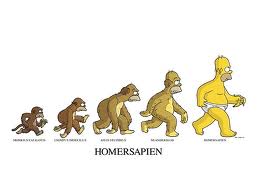
   Pick up a 2-week-old copy of TIME magazine, and it’s worse than stale, like week-old fish. Pick up a 4-year-old copy of Scientific American, as I did recently, and it’s still fresh as a daisy. In the October 2010 issue, Jonathan Pritchard writes about human evolution. The question is, are humans still evolving, through survival of the fittest, as plants and animals are? The answer is: Yes, but very very slowly.

   Pritchard cites a gene that exists in Tibetans, that took 3,000 years to entrench itself. This gene adjusts red blood cell production and helps Tibetans survive and thrive in the low oxygen levels of the Tibetan plateau. But this seems to be an example that disproves the rule. “The classic natural selection scenario in which a single beneficial mutation spreads like wildfire through a population has occurred relatively rarely in humans in the past 60,000 years.”

     Want to believe, for instance, that gene implants can give you NBA-tall babies? Studies show that there are over 50 different genes that influence human height. Even if tall people procreated more than short ones, natural selection would take a long time to muster all those genes and spread them.

   The bad news? Viruses, like HIV, evolve far far faster than humans do. We stand no chance of having natural selection evolve HIV-immune humans, before the HIV virus itself evolves to counteract such resistance. Vaccines are the only hope.

     The good news?   There is also ‘social selection’, the competition for survival among different prototypes of social organization. We have America, with its dysfunctional Republican-vs.-Democrat paralyzed government. We have Europe, with its dysfunctional can’t-agree-on-anything ‘unity’; we have Russia, with its corrupt oligarchic dictatorship and a newly born Cold War relic at its head.   And so on… They are all in competition. So, out of all this vast variety of dysfunctional social and political systems, one of them will evolve to endure and prevail, and lead the other systems to imitate it?

     Won’t it???

Can Facebook Innovate?

By Shlomo Maital

Facebook

This cartoon ran in a German newspaper; it was accused of anti-Semitism, because its portrayal of Mark Zuckerberg, Facebook founder, who is Jewish, with a long hooked nose, recalls anti-Semitic literature.

Actually Facebook and Zuckerberg do have a problem. But it is NOT anti-Semitism. It is innovation – how to remain innovative, even though Facebook is not that old. When startups grow to global size, almost invariably they lose the creative spark. And Facebook is no exception. Facebook has been forced to acquire its innovation, rather than initiate it internally. Its innovations like Home and Graphsearch failed; and it paid huge sums for Instagram and WhatsApp.

   In an interview with New York Times writer Farhad Manjoo (April 17, “Can Facebook Innovate?”), Zuckerberg describes Creative Labs, an effort to unbundle the “one big blue app” that migrated Facebook to mobile phones.   Creative Labs will try to create a wide variety of Facebook spinoffs, with specific features users seek, some of them not even branded as Facebook. It should not be that hard. People spend 20 per cent of their mobile time, on average, on Facebook. This is amazing, considering Facebook migrated to phones not that long ago. But – how to sustain this 20 percent? It already seems to be eroding.

   Why is it so hard for companies to innovate, as they grow large? Zuckerberg’s answer:

“Understanding who you serve is always a very important problem, and it only gets harder the more people that you serve,” says Mark Zuckerberg.

Big companies become isolated from their customers. Senior management sits in their 30th floor corner offices, and never speak to a real customer from one year to the next. And when customer preferences change rapidly, daily, hourly, this isolation from customers and clients is almost fatal. Zuckerberg is struggling to keep in touch with Facebook users.

   Will he succeed?   Stay tuned. Meanwhile, let’s learn from Facebook. As your startup grows,  do everything possible to keep decision-makers in touch. Have them make sales calls. Get them out of their offices at least two days a week.   Have them answer the customer service phones for a few hours a week. and have them bring regional executives and sales personnel back home frequently, for informal chats. It is the sales people who really know what is going on with customers.

     Another key issue: Wealthy senior management live lives totally different from those of their customers, and soon grow out of touch with reality. Zuckerberg says: “ .. my life is so different from the person who’s going to be getting Internet in two years. One of the things that we do is ask product managers to go travel to an emerging-market country to see how people who are getting on the Internet use it. They learn the most interesting things. People ask questions like, ‘It says here I’m supposed to put in my password — what’s a password?’ For us, that’s a mind-boggling thing.”

     Startup entrepreneurs must make a point of trying to live more or less ordinary lives, if they are to remain in contact with real people. Pretty hard, when your net worth is several billion dollars.


Let the Sunshine In!

By Shlomo Maital

Rjukan

   “Somewhere, inside something there is a rush of Greatness, who knows what stands in front of our lives, Let the sunshine, let the sunshine in, The sunshine In, Let the sunshine, let the sunshine in, the sunshine in…”

   Those are the words of a song from the musical Hair. According to Suzanne Daley, writing in today’s The New York Times, a small Norwegian factory town, Rjukan, has taken those words seriously.   Rjukan is nestled in the Norwegian mountains and once was the site of the world’s first modern fertilizer factory, in 1906.   Because of its northerly location, and because of the mountains, for six months of the year Rjukan residents do not see the sun – at all. [The sun rises and sets quickly, and never gets high enough to rise over the surrounding mountains]. But they’ve found a solution, that made this little town famous all over the world.

   Three huge solar-power and wind-powered mirrors move in concert with the sun, and focus a beam of sunlight on the town square. Thousands of people come to the square, wearing sunglasses and carrying beach chairs. Suddenly the town became more social.  After church on Sunday, people flock to the square, enjoy the sunshine and converse and chat.

   “It’s been a great contribution to life here,” said Annette Oien.

   What can we all learn from Rjukan? I am blessed to live in a country with sunshine nearly every day, often strong sunshine. One philosopher even claimed that three great religions were born in the Mideast because of that strong sun, whose powerful stark shadows of dark and light remind us of the sharp contrast between good and bad, right and wrong.

   But even here, in bright sunlight, there is much darkness. People who are ill, lonely, depressed, who live in poverty.

     Can we learn from the people of Rjukan, and MAKE sunlight, in our own lives and in the lives of others – where there is only darkness? It’s not that hard. A smile, a kind word, some encouragement, a pat on the shoulder…..   It’s worth a try.  

Passover & Easter: The Story of a Miracle

By Shlomo Maital  

Bendiner

  Christians and Jews are about to celebrate Passover and Easter. They always fall together, because the Jewish calendar is lunar and Easter is always determined according to the lunar calendar.

   Both Passover and Easter cause us all to reflect about miracles – in the case of Passover, the miracle of the people of Israel, abject slaves, fleeing Egypt and becoming a strong, free independent people.

     The story below was sent to me by a friend. It too is about a miracle, involving Jews and Christians.   Each of us, all of us, can literally save the lives of others, even those we don’t even know… This story is confirmed in Elmer Bendiner’s book, The Fall of Fortresses. *

*Sometimes, it’s not really just luck.*

  Elmer Bendiner was a navigator in a B-17 during WW II. He tells this story of a World War II bombing run over Kassel, Germany, and the unexpected result of a direct hit on their gas tanks. “Our B-17, the Tondelayo, was barraged by flak from Nazi antiaircraft guns. That was not unusual, but on this particular occasion our gas tanks were hit.  Later, as I reflected on the miracle of a 20 millimeter shell piercing the fuel tank without touching off an explosion, our pilot, Bohn Fawkes, told me it was not quite that simple. “On the morning following the raid, Bohn had gone down to ask our crew chief for that shell as a souvenir of unbelievable luck.

     The crew chief told Bohn that not just one shell but 11 had been found in the gas tanks. 11 unexploded shells where only one was sufficient to blast us out of the sky. It was as if the sea had been parted for us. A near-miracle, I thought.

     Even after 35 years, so awesome an event leaves me shaken, especially after I heard the rest of the story from Bohn. “He was told that the shells had been sent to the armorers to be defused. The armorers told him that Intelligence had picked them up. They could not say why at the time, but Bohn eventually sought out the answer. “Apparently when the armorers opened each of those shells, they found no explosive charge. They were as clean and harmless.

     Empty? Not all of them! One contained a carefully rolled piece of paper. On it was a scrawl in Czech. The Intelligence people scoured our base for a man who could read Czech. Eventually they found one to decipher the note. It set us marveling. Translated, the note read:

    “This is all we can do for you now…

      Using Jewish slave labor is never a good idea.”

Benchmarking: Why You Have to Look Far Afield

By Shlomo Maital

benchmark

   As academic director of Technion Institute of Management (TIM), I helped organize about 25 international benchmarking trips for senior Israeli managers. We visited other countries – China, Taiwan, Finland, Switzerland, Estonia, UK, U.S. – and benchmarked great global companies and their leadership first hand. The learning was immense, far beyond what was possible in a classroom.

   On one of our trips with a global high-tech firm, we held a workshop in a Mariott Hotel in South Boston. We sent our managers out of the classroom, in pairs, to benchmark hotel service. (The bar was a highly popular venue – everyone wanted to benchmark it). There was great resistance. What can a high-tech software company learn about customer service from a hotel? Is there any similarity at all between hotel services and software?

     The experience was enlightening. The teams came back with valuable information and learning about customer service. The hotel was running 13 events simultaneously, and all ran smoothly without incident. When one of our group asked the concierge where he could buy a tie, because he had forgotten to pack some, the concierge removed his own tie and gave it to him (for keeps!). THAT is great service.

   Writing in the New York Times, April 8, p. 17, Sydney Ember describes how Conde Nast, a publisher, learned from a luxury hotel. Bill Wackerman, VP and publisher of Conde Nast Traveller magazine, interned at the opulent Carlyle Hotel. “We need to learn better service,” Wackerman said. “We have got to get back to that human touch to understand, because that is what really is the key to driving success.”

He is so right. Don’t let the impersonal Internet/smartphone connectivity fool you. They put walls between you and your customer. Break them down. You have to have some face to face, as in the hotel business.

   There is a powerful lesson here. All good companies benchmark. One company I worked with had a firm rule, set by the CEO – benchmark ONLY firms within our own industry. What a dumb rule!   You learn nothing from firms in your industry, because you are all watching one another and copying one another. You are all Bobbsy Twins, same DNA.

     Escape your industry. Roam far afield. Benchmark other industries, as different from yours as possible. Only then will you learn unusual ideas, that can give you a unique strategic differentiator.

 How to Fix America’s Health Care Problems: Experiment!

By Shlomo Maital

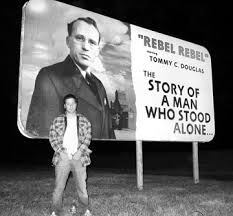
                                            DouglasTommy Douglas: He Stood Alone

President Barack Obama: I apologize. In this space, I criticized you fiercely for incompetence, for the inability to even set up a simple website. Sorry. Turns out it wasn’t so simple. Reforming health care, within a completely broken existing system, is tough. You now have 7 million people signed up for ObamaCare. This is a big achievement.

But it’s only a start. America still spends 18 % (!!) of its GDP on health care, a vastly inflated sum, with little to show (life expectancy is below that of countries that spend less than half that).

   In today’s New York Times, Molly Worthen describes an experiment in Vermont (Live Free!), the state of independent-minded voters. It’s called Green Mountain Care. The idea came from a third party, the Vermont Progressive Party. It’s a single-payer system, which regulates doctor’s fees (translation: keeps doctors from inflating them) and covers all Vermonters’ medical bills. The system could spread to other states.

   This is how to resolve social problems. Let each of the 51 American states try its own system. Check which of them work and then replicate them across America.

   How do I know this works? It worked in Canada. I grew up in Regina Saskatchewan. In 1959 Premier Tommy Douglas proposed a medicare plan to give all residents of Saskatchewan free medical care. Douglas was a socialist, head of the CCF party. He was tiny, a boxer, a fighter, and my family knew him personally – his daughter Shirley went to high school in Regina with my sister Estelle. In July of 1962, the Saskatchewan doctors all went on strike, to protest. It was a bitter strike. Imagine – no doctors, no medical care. The strike lasted three weeks. Douglas fought hard and even began importing doctors from Britain.  Douglas stood alone, against fierce attacks from doctors, hospitals, federal politicians, Saskatchewan voters.  He persisted.

    Tommy Douglas won. The strike ended around July 21, 1962, with the doctors’ submission. And the idea spread from Saskatchewan across Canada, with the federal government mandating national health insurance – a program America needs but somehow cannot seem to attain.  It is thanks to little Tommy Douglas that Canada has a workable, effective health insurance system that America needs so badly but can’t seem to attain. 

    Many Americans are scornful of Canada – but they would do well to look North and benchmark.  Canada does have ideas that work, that America can use.  It’s worth a try.   If there were more social experiments in America, there might be more wellbeing for its citizens.


         How IBM’s Executive School Fostered Creativity

by Shlomo Maital

   MobleyLouis Mobley

Almost 60 years ago, in 1956, Louis R. Mobley built the IBM Executive School to make IBM senior managers more creative. He used 6 key principles. They are highly relevant today – they made IBM a great company. I found this on a blog called Creativity at Work, in turn citing a Forbes article by August Turakk.

     Try these principles on yourself. Build your own personal Executive School.

   1. Traditional teaching methods (reading, lecturing, testing, memorizing) are worse than useless; they are counter productive, they build ‘boxes’.

2. Becoming creative is an UNLEARNINg process, not learning – you need to abandon, discard, destroy and trash beloved assumptions.

3. You don’t learn to become creative. Instead, you BECOME a creative person behaviorally, by your actions. You transform yourself. By action learning, constant effort and practice, you find solutions to problems that are totally unobvious. You become a creative person through practice, like a piano player learning to play the Minute Waltz.

4. The fastest way to become creative is to hang around with creative people. Creativity is infectious. If you hang around dullards, you will soon be one.

5. Creativity is highly correlated with self-knowledge. If you don’t know what your own inner biases are, you cannot overcome them. Mobley’s school was one “big mirror”.

6. Creative people give themselves permission, and others, TO BE WRONG.   Fail fast to succeed early, is the principle. There are no bad ideas, only building blocks to good ideas, as Edison believes and practiced.

Jeff Bezos Follows the Money

By Shlomo Maital

 Bezos

 Have you been following Jeff Bezos’ remarkable reinvention of Amazon? Ignore his purchase of a new toy, The Washington Post – that isn’t part of the reinvention.

   Bezos is doing what many successful companies fail to do.   As Peter Drucker explained decades ago, companies fail not because they do things wrong, but because they do the wrong things… they do the right things for too long until they BECOME wrong. Amazon became a market leader in on-line book sales, then broadened to selling everything, was highly successful – and while it was successful, Bezos is reinventing it, a highly difficult task. (“If it ain’t broke, why fix it? How many CEO’s believe that, and die with their company).  

   According to David Streitfeld (NYT April 4, p. 15), Amazon Fire TV “is part of a multi-billion-dollar effort by Amazon to move from selling goods produced by others, (low margin), to presiding over the entire process of creation and consumption (downloads and streaming).”  

Amazon is now selling a device, Amazon Fire TV, that lets consumers watch Amazon’s video library, as well as play games, on their TV sets.

   Recall that very quietly, Bezos positioned Amazon as a major supplier of cloud services, leaving Microsoft, IBM and other huge technology companies behind.

   Bezos is using what Bain & Co.’s Orit Gadiesh called “profit pools” – a tool that shows profit margins at each stage of the value chain, and asks senior managers to ask, ‘where is the money [today]?’ and ‘where will the money be in 5 years?’?   This is precisely what Bezos asked. His answer: creating download content. And he is able to move Amazon, with alacrity and skill, to where the money will be.

     Bezos may well slip and fall in future. But until now, his strategic moves have been alacritous and visionary. And risky – he is not afraid to risk billions.

     He’s worth watching carefully, to learn how to innovate tomorrow even when what you innovated yesterday is a big success.

Can We Feed 9 Billion People?

By Shlomo Maital

hunger  FAO Food Price

The new United Nations report on climate change * is very disturbing. It shows climate change is far worse than we had feared, with average temperatures liable to rise by as much as four full degrees, flooding coastal cities and creating turbulent weather.

   Today, in the New York Times, Eduardo Porter invokes the ghost of Thomas Malthus, who wrote two centuries ago that population growth would generate famine, starvation, plagues and war. It didn’t happen – yet. Could it?

   In case you haven’t noticed, the FAO global food price index rose from 100 in the year 2000 to 160 today, 2014. This is nearly as high as it was in 1970, when the world faced rapid food price inflation.  

   The IPCC report refutes the idea that climate change will help food production by making food-growing areas warmer. Apparently, faster photosynthesis caused by more carbon dioxide in the area helps weeds more than crops, while ozone and high temperatures actually reduces yields of major grains, according to the report.

   To feed over 9 billion people worldwide in 2050 will require 70 per cent more calories than the world consumes today. That’s a huge increase. Where will it come from? Or will we see growing numbers of hungry people?

   We’d better tackle the problem right now. Because, Malthus forecasted in 1800, hungry people go to war, desperately, to feed their kids. Especially when half the world overconsumes and grows obese, while half the world goes hungry. There must be a better way.


* U.N. Intergovernmental Panel on Climate Change (UN IPCC), report issued Monday.

* Eduardo Poter, “a forecast of famine, revisited”, International NYT April 3, p. 16.


How High Frequency Traders Ripped Us Off:

Michael Lewis Exposes Wall Street – Again!

By Shlomo Maital

Flash Boys

I should always read a book before I blog about it, and generally do. But permit me, just this once, an exception. Michael Lewis’ new book Flash Boys is just too important.

   Lewis is an author, age 53, whose books (Liar’s Poker, The New New Thing, Moneyball: The Art of Winning an Unfair Game, The Blind) expose Wall Street. He worked on Wall St. in the 1980’s, made a big salary, thought the salary was unjustified, quit, wrote a book about it exposing Wall St.’s fraudulence in the 1980s, — and it became a best-seller, as all the MBA students bought the book not to understand the fraud but to learn how to make big bucks fraudulently.

   Flash Boys exposes how ‘high frequency trading’ rips us off. Here is how Michael Baram explains it, and links it to ‘dark pools’ [off-stock-exchange markets] (in the International Business Times website):

   “High-frequency trading is the controversial practice in which firms use sophisticated computer algorithms to trade securities in milliseconds. On Wall Street, information is the coin of the realm and anyone who has an inside track on a large fund’s trades can exploit that knowledge — a pension fund trying to buy 100,000 shares of Microsoft at a certain price range may prefer to hide that order inside the dark pool instead of trading it on a public exchange such as the Nasdaq. But by paying for a special connection to the dark pool, high-frequency traders are able to find that pension fund’s order, go over to the Nasdaq and buy it at a lower price, and then quickly sell it to the buyer in the dark pool at a higher price.”

   For years, I have known that foreign exchange traders do this practice, also known as front-running.   A big client asks to buy 100 m. yen. The trader buys the yen for his own ‘nostrum’ account at a cheap price, the price of yen (in terms of dollars) rises,   he buys the yen for the client at a higher price, then at once quickly sells the yen he bought and ‘flips’ a quick profit. If you do this daily, hourly, soon you make billions, for your bank and for your bonus. It’s unethical, immoral, maybe illegal, but – who knows? And who can prove it? Nobody ever went to jail for front-running.

   Now Michael Lewis and his quality research show us that high-frequency traders are doing the same thing. They use their inside information to make money at the expense of pension funds and the public. Dark pools account for 12-15 per cent of all stocks trade in the United States.

     As Lewis writes:   “The hidden passages and trapdoors that riddled the exchanges enabled a handful of players to exploit everyone else…   [Like casinos] You invite a few to start Texas Hold ‘Em by telling them that the deck doesn’t have any jacks or queens and that they won’t tell that info to other people joining the game … By 2013, the world’s financial markets were designed to maximize the number of collisions between ordinary investors and high-frequency traders – at the expense of ordinary investors.”

   There seems to be no end to the Wall Street perfidy. The regulators are always a dozen steps behind. If and when the high frequency ‘dark pool’ loophole is closed, by then there will be a new and profitable one.   Lewis cites a Royal Bank of Canada employee, Bradley Katsuyama, who fought back by trying to create an honest level-playing-field stock exchange.

     The big central stock exchanges, like NYSE, have broken up into many smaller electronic exchanges. This has made it far easier to hide unethical practices that rip us off. Lewis has exposed them. But as we speak, count on it, they’re working on new and better ways to steal. Because, it’s all about money, and for those involved, doing the right thing is for dumb suckers, like you and me.  

Blog entries written by Prof. Shlomo Maital

Shlomo Maital

Pages