How to Choose People to Hire

By Shlomo Maital

evangelist

   Hiring people for either a startup or established company is one of the most crucial decisions senior managers make. And in my experience, many mistakes are made.

   Whom should you hire? How should you hire? David Brooks writes about it in his New York Times column today, “the employer’s creed”.  

   Here are some of his rules, and I’ve added a few of my own.

   Avoid people with “a high talent for social conformity”. You want to have people to tell you what you DON’T want to hear, not what you do want to hear. There are enough of the latter already.

   Don’t favor people with high GPA’s.  I’ve found that the grade-grubbers (hey, I WAS one once, damaged my brain permanently) are not the creative mavericks you want to hire.

   Reward honesty.  Choose people who write honest applications, rather than sugar-coated ones with chocolate icing. You want honesty above all. Beware of the liars, even little white lies.

   Hire infected people – evangelists. This comes from Guy Kawasaki, the Macintosh guru. He was a psychology grad, jewellery business person, no tech experience – and he made the Mac a big success. Why? Because he was ‘infected’, an evangelist (in Greek – someone who brings the good news). Hire people who share your passion, not those looking to flip their options. 

   Hire diverse people. If you have a diverse workforce, you are more likely to get good ideas. Your range of people, their personalities, skills, passions, need to be wide, so that you can do ‘zoom out’ on new ideas far wider and better.

   Invest a lot of time and effort in hiring. I know a CEO of a Canadian company, who hangs out with potential management hires for a whole day, lunches with them, plays squash with them…   to get to know them. That will save you a whole lot of trouble in the future. If you make a bad hire, by the time you realize it much damage may have happened.

   Never ever abandon hiring solely to your HR people. They hire according to the book they learned in college. Sometimes, when you hire, you need to throw the book away. Make hiring your own key responsibility.


From Idea to Product: Crossing the Chasm

By Shlomo Maital

Noceramatroshka

    When I teach entrepreneurship and innovation, I do a bit of theatre. I show my class a ‘matryoshka’ Russian nested doll set, and one by one assemble each doll, nested inside a larger one. I do this until I have 9 dolls on the table, down to the tiniest one. Then, I tell the story how one year, a sharp-eyed student asked, why nine? Instead of ten?, and I discovered a tenth tiny-tiny doll, much smaller than a pinky fingernail.

      I had been unaware of its existence, inside the 9th doll, for years.    See this? I hold it up to the students. This is the idea. This is the fun part. This is the easy part. The hard part? Implementing the idea. Building a business around it – the other 9 dolls. Without that, that tiny ‘idea doll’ is of no value.   

    Prof. Daniel Nocera, Harvard University, is an example. He has developed an artificial leaf. It’s an invention that generates energy the way a tree or a plant does. “Light strikes a container of water, and out bubbles hydrogen, an energy source, as the light breaks H2O into hydrogen and oxygen.” How does this work? Writes Jack Hittmarch (NYT March 29): “A silicon strip coated with catalysts breaks down the water molecule [using sunlight].”      Wow! Hydrogen! You could use all that hydrogen to power fuel cells, which are devices that convert the chemical energy from a fuel into electricity through a chemical reaction with oxygen or another oxidizing agent. Hydrogen is the most common ‘fuel’ for fuel cells.   

    Big wow! But the discovery was made years ago. Nocera says his system is very safe. “My system is based on water, so if there was a catastrophe we’d just need a mop.”   However, hydrogen is highly flammable, and highly explosive.    So turning the Artificial Leaf into usable energy means surmounting many obstacles. Create viable fuel cell technology. Solve safety issues, in storing hydrogen. Get consumers accustomed to using fuel cells. There are many cheap reliable nonpolluting energy sources. The issue, it seems, is not the invention. It’s how to make it desirable and usable for consumers. And THAT is a huge problem.   

   Nocera says that fracking and cheap natural gas is “killing” his artificial leaf invention.   But one day fracking may actually help. Fracking can produce hydrogen, at a cost of carbon dioxide. If such hydrogen production becomes widespread, so will the infrastructure to use it. And then, Nocera’s artificial leaf will be popular, because it can produce hydrogen (to feed the infrastructure) without generating carbon dioxide. It will defeat fracking.    To sum up: There are loads of great new technologies that ‘solve’ our problems. But there is a lack of wise capable entrepreneurs who know how to commercialize them fast, cheap, good, friendly, easy…. And governments willing to supply the needed infrastructure.  

    Innovators should bone up on these technologies and invest creativity not in new ideas but in how to implement old ones and diffuse them widely.    Long ago, Geoffrey Moore taught us how important it is to ‘cross the chasm’ between early adopters of innovation and mass-market buyers. There is a different chasm, equally hard to cross – the chasm between a great idea based on sound technology, and a widespread commercial product or service used and loved by all. There is as much or more need for creativity in crossing this chasm as there is in inventing new technologies.

How America Buried Its Future in Its Defense Budget

By Shlomo Maital

USS NEw Mexico

   In Thomas Friedman’s New York Times column, March 31, he writes about his cruise on the U.S.S. New Mexico, a modern nuclear attack submarine, underneath the Arctic ice cap.

   He describes: “Excellence…if anyone turns one knob the wrong way on the reactor or leaves a vent open, it can be death for everyone. …As one officer put it: ‘You become addicted to integrity’. There is zero tolerance for hiding any mistake. The sense of ownership and mutuality and accountability is palpable.”

   How many American companies would LOVE to be able to describe themselves as Friedman describes the U.S. Navy submariners? How many would LOVE to have world-class cutting-edge technology, like the U.S. Navy, far beyond that of other companies?   Why don’t they? Because the U.S. defense budget in 2014, despite cuts, will total $526.6 b., or 4 per cent of America’s GDP. This is fully one-third of all the world’s defense spending in 2014, or $1.538 trillion, up from $1.538 trillion in 2013, the first rise in global defense spending in a decade. America is burying its economy in those costly nuclear subs.  

   Years ago, I visited an aircraft carrier, the U.S.S. Theodore Roosevelt. 11 decks of amazing technology and 5,000 superbly trained 18-year old or 20-year-old sailors. Planes launched and retrieved, at night, in darkness, simultaneously. Microsoft, IBM, eat your heart out.

   America’s chief rival, China, spends only $132 b. a year on defense, or one-fourth that of America. And NATO? The 28 NATO nations have agreed they should spend 2 per cent of GDP on defense (half of America’s level), but none except the U.K. (2.4 per cent) actually do.  

   And Russia? Russia will boost its military spending by 44 per cent in the next three years, to fulfill Putin’s vision of a Great Russia (“bring back the U.S.S.R.!”).

   So to sum up: The world is again in an arms race, defense spending is rising, and we are wasting huge sums on things like nuclear subs. Europe, as always, is sheltering under America’s defense spending, and has nothing to face Russia with. America has sunk its economy in military technology, which despite myths does not translate into cool civilian technology, for the most part.

   * What purpose do those superb Navy subs and aircraft carriers serve, when the main threat to America is Taliban terror, al Qaida fighters armed with AK-47’s and home-made improvised explosive devices?  

   * Would the world be a better place if America’s economy were made stronger by diverting defense spending into infrastructure and civilian technology and education?

   * Should Europe quit sponging off America and spend to defend itself?

   * Is Russia again going to impoverish itself by putting billions into defense rather than rebuilding its flagging civilian economy, just as the U.S.S.R. did, fatally? Russia’s Siberia oil production is declining because Russia simply is not maintaining its oil infrastructure there – this, despite piles of cash in the bank. Simple incompetence.

   Stay tuned.

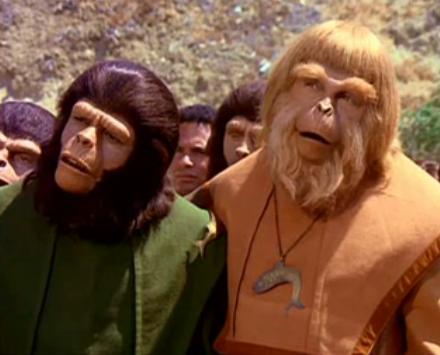
How We Humans Can Learn from Chimpanzees

By Shlomo Maital

Apes

   BBC World Service’s Science Hour program is outstanding. On March 30, one of the topics was animal behavior. It was recalled how Jane Goodall saw chimps use twigs to get ants from inside anthills, and proved that animals know how to use tools. Then broadcaster Adam Hart asked, do animals think like humans? Do they have moral principles?

     The fascinating research by Emory University researcher Frans De Wall, a Dutch primatologist, was mentioned.  He studies whether animals empathize, i.e. understand and sympathize with other animals? They do indeed. Chimpanzees go over to chimps who lost a fight, and put an arm around them to comfort them. Yawn contagion is a predictor of empathy (if someone else yawns, causing you too to yawn, you are empathic). Chimps who saw videos of yawning chimps were likely to yawn themselves if they knew the chimp involved, i.e. had a reason for empathy.  

     But do animals have a sense of equality and fairness? De Wall reports:  “We did experiments with capuchin monkeys.  They are very sensitive to who gets what.  In our experiments we had 2 monkeys side by side. We gave them pebbles and they had to give them back to us, to get a reward. If both got the same reward, they perform this task 25 times in a row without fail. But If one gets a grape, another gets some cucumber, and grapes are far better rewards, the chimp who gets cucumber gets upset, protests, throws away the food (similar to human reactions), and goes into protest mode, or strike.  No more returning pebbles!”

     With The Economist’s cover story on Crony Capitalism, new attention is being focused on the obscene salaries capitalist managers pay themselves, especially those in banks, insurance companies, hedge funds and financial services.   The animal studies reveal a key point. It is part of our evolutionary DNA that societies should be fair. Fair societies are cohesive, and thus survive better and longer than selfish unequal ones. This began with primates, chimps and apes, and has transferred to human society too.   Crony unfair unequal capitalism, where a handful rip off the majority of working people, will simply not survive. One way or another, the people will find a way to put a stop to it, just like De Wall’s chimps.

   Check out De Wall’s books: Our Inner Ape, and Chimp Politics. In many ways, chimp society is more advanced than our own human society in the age of rip-off capitalism.

Internet for the World: Facebook & Drones!

By Shlomo Maital

Drone facebook

Hard to believe, but the World Wide Web is only about 23 years old. In 1993, only 20 million people were on the Internet. In 1999 only four per cent of the world’s population of 6 billion people, or 240 m., were Internet-linked. Today 40 percent of the world’s population of over 7 billion people, or some 2.8 billion people, is Internet-connected! The Internet has changed our lives massively and permanently. That is – those of us who are connected.

   But what about the remaining 4.2 billion, or 60 per cent of the world? Google and Facebook are both racing to find ways to connect them. It is not easy. Most of those 4.2 billion people live in countries with minimal infrastructure. How can it be done?

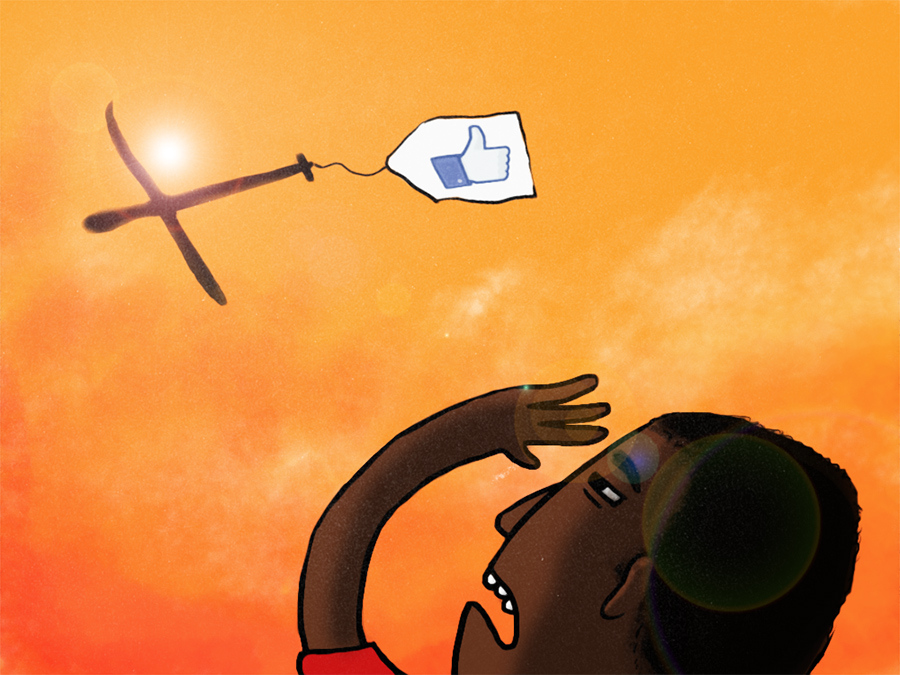
   According to Vindu Goel, writing in today’s New York Times, Facebook is pulling an “Amazon” (remember Jeff Bezos’ recent pitch, that Amazon will deliver packages with drones) and is hiring as many as 50 aeronautical engineers and space scientists, to “figure out how to beam Internet access down from solar-powered drones and other ‘connectivity aircraft’.”   This will be done in a new Facebook Connectivity lab and a project called Internet.org. Part of Mark Zuckerberg’s goal, apparently, is to make (and keep) Facebook the most cool, interesting place to work.  He is fighting against the curse of scale – big companies lose their creative drive, and their creative people, as they scale up and bureaucratize.

   Earlier, Google too announced a drive to connect those unconnected 4.2 billion. Google’s approach currently focuses on high-flying balloons.  Facebook is also working on compressing Internet data, cutting the cost of Internet mobile phones and finding ways to hook up remote areas.

   Neither Facebook nor Google seem to have a clear business model in mind for their balloons or drones. The advertising model probably won’t work, because most of those unconnected 4.2 billion people are quite poor – although the late C.K. Prahalad pointed out, in his book, Fortunes at the Bottom of the Pyramid, that collectively, they form a huge market.

   Many analysts are very critical of both Google and Facebook for their ‘connect everyone’ efforts.

   Maybe we are missing the point. Maybe Google, and Facebook, are trying to connect everybody, because – it’s just the right thing to do. Maybe this is a new face of capitalism? Could it possibly be?   Maybe an exlusive  capitalism that leaves out over half the world will eventually crumble, taking Google and Facebook with it..and maybe Sergei Brin, Larry Page and Mark Zuckerberg realize it?  Maybe inclusive capitalism is cool?!

All That’s Wrong With Democracy:

Roger Cohen Gets It Right!

By Shlomo Maital

democracy brandeis

Roger Cohen, the New York Times columnist, is a fierce critic of my country Israel – sometimes deservedly, sometimes excessively. But lately he’s been a fierce critic of U.S. President Obama, and this time, it’s richly deserved.   In today’s New York Times, he tears a strip off Obama for his weak wishy-washy speech in Europe on how to stand up to Russia.   The problem is, Cohen says, that Western democracies are “failing to deliver”, while despots like Putin actually have been performing rather well.

   The proof? Soaring unemployment in Europe (3 m. unemployed in France, for instance), rising fascist right-wing parties (Marine LePen and the Front Nationale did well in France’s municipal elections last Sunday), European integration is stalled and Europe is internally divided and at odds, the EU is overly bureaucratic and undemocratic; income disparities in Europe and the U.S. are huge and growing; there is “spreading middle-class dystopia”; money has skewed fairness on both sides of the Atlantic, corrupting democracy. Scorched earth Republicans devote their politics to obstruction. “A CEO can earn $80 m. for a few weeks of work while incomes for most Americans are stagnant.” Many young people have lost the sense of possibility and hope.

   Concludes Cohen: “Unless Western societies find a way to shake their moroseness, level the playing field and rediscover [equality], they are going to have a hard time winning the contest of ideas (against the despots)”.

   “Now is not a time for bluster,” intoned Obama. And that is precisely what he provided in his speech – empty words. Saudi Arabia has given up on the U.S.   Israel may soon have to do the same. And Vladimir Putin is laughing up his sleeve.

   A full century ago, Louis Brandeis, U.S. Supreme Court Justice, said that you can’t have both democracy and great concentrated wealth. Israel just passed a law to try to mitigate that concentration. Before the U.S. and Europe can confront Russia, they need to look in the mirror and confront their own problems.

Is France Missing the Boat?

How to Exile Your Youth

By Shlomo Maital

France food

   Ah, France, home of Paris, great cuisine, culture, the inspiring French Revolution, relaxed lifestyle…!   Alas, France – your most important recipe, how to inspire your youth and keep them from leaving the country, has failed. And the results are disastrous.

   Entrepreneurs are leaving France, according to Liz Alderman, writing in the New York Times (March 22). Here is how she begins her piece:

  “Guillaume Santacruz is among many French entrepreneurs now using London as their base. He said of his native France, “The economy is not going well, and if you want to get ahead or run your own business, the environment is not good.”   Guillaume Santacruz, an aspiring French entrepreneur, brushed the rain from his black sweater and skinny jeans and headed down to a cavernous basement inside Campus London, a seven-story hive run by Google in the city’s East End. It was late on a September morning, and the space was crowded with people hunched over laptops at wooden cafe tables or sprawled on low blue couches, working on plans to create the next Facebook or LinkedIn. The hiss of a milk steamer broke through the low buzz of conversation as a man in a red flannel shirt brewed cappuccino at a food bar.    A year earlier, Mr. Santacruz, who has two degrees in finance, was living in Paris near the Place de la Madeleine, working in a boutique finance firm. He had taken that job after his attempt to start a business in Marseille foundered under a pile of government regulations and a seemingly endless parade of taxes. The episode left him wary of starting any new projects in France. Yet he still hungered to be his own boss.

   He decided that he would try again. Just not in his own country.”

Every country, including my own Israel, must understand this: Entrepreneurship is global. Entrepreneurs will start their business elsewhere, if you do not create the right conditions for them. Make it easy to start a business, and most important, easy to close a business if it fails. Make it easy to get a small amount of startup zero-stage money. Make it easy to hire, and to fire. Make it easy to find experienced management advice.   Lots of countries do.

   France just had local elections. Everyone is preoccupied by the rise of LePen and the right-wing nationalists. This is a problem. But it is trivial compared to the cost of losing bright young people who if they stayed would create new businesses and many new jobs for other young people. France is 41st (!!) in the world in ‘ease of starting a business), and about 149th in ease of registering property. Why? Blind dumb bureaucracy that could be eliminated in one day. Wake up France! You have the world’s best schools of engineering and some of the world’s best engineers.   Keep them at home, help them start businesses. If you don’t, they’ll leave – and France will never be the same. And that applies to all countries, Greece, Spain, Italy – and my own Israel. Ever notice how many foreigners (from India, Israel, etc.) are in Silicon Valley, starting businesses?

 A Cure for Alzheimer’s?!

By Shlomo  Maital

         Alzheimer's

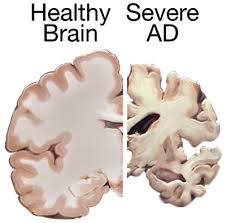
  I’ve been closely tracking research on Alzheimer’s, as researchers try to identify the cause,  diagnose the illness earlier and above all, find a possible cure.  The photograph above shows just how awful an illness it is, literally shrinking and damaging our brain, messing up neural connections with ugly protein tangles, and damaging our lives and those of our loved ones who care for sufferers.  By one estimate, there will be 75 million sufferers in 2030 and 135 million in 2050.  So, Alzheimer’s must become a top priority for medical research.

   On Wednesday a major new breakthrough by Harvard researchers was published in the journal Nature.  Here is how the Boston Globe described it:

 “… scientists identified a protein called REST that flips genes on and off and naturally increases during aging. REST, they found, represses genes involved in Alzheimer’s disease, and its levels are reduced in key brain areas of people diagnosed with Alzheimer’s or the mild cognitive impairment that precedes dementia.  In laboratory tests, REST protected brain cells from dying when exposed to a number of stresses, including the beta amyloid protein that accumulates in the brains of Alzheimer’s patients. … “What I love about this study, first and foremost, is it’s some good news for Alzheimer’s, and it connects that good news with an immediate therapeutic strategy,”Scripps Institute researcher Jeffrey  Kelly said. “There aren’t a lot of steps between this” and the development of experimental drugs.”

    The Harvard researchers took a new approach to Alzheimer’s, and found amazingly that there is a protein, created at birth, that can repress genes related to Alzheimer’s and other stresses.   Alzheimer’s patients seem to have too little of it.  The natural next step is to create a drug based on the REST protein.

    I think there is an important, hidden point to be made here.  Harvard Univ. has massive funds for research, flowing from its enormous endowment, and from other funding sources including those from industry.  Modern research is very expensive.  And availability of funds enables Harvard to attract and retain the very best research talent.   There are still Nobel winners out there who succeed with little money and poor equipment.  But that is becoming increasingly more difficult.   

It’s Now a Fact!  There WAS a Big Bang!

By Shlomo  Maital      

            Big Bang

It is not often that a scientific discovery in astronomy hits the New York Times front pages.  “Seeing back to the start of it all” (Tuesday March 18) reports that, “reaching back across 13.8 billion years..with telescopes at the South Pole, a team..led by John M. Kovac (Harvard-Smithsonian) detected …gravitational waves, the signature of a universe being wrenched violently apart when it was roughly a trillionth of a trillionth of a trillionth of a second old.”

   The new finding that detected gravitational waves confirms a theory known as “inflation”,  the theory that the expansion of space in the early universe happened at a rate much faster than the speed of light.   Following the inflationary period, the universe continued to expand, but at a slower rate.  “Inflation” is a theory expounded first by Dr. Alan Guth at Stanford, late at night in 1979.  It was a “eureka” moment.  “Spectacular realization!” Guth wrote then.   Guth broke the physics rule, that the speed of light is an upper limit.  What if it isn’t?  he asked. And that led to a conceptual breakthrough, that on Monday, was confirmed. 

   The radio telescopes were sited at the South Pole, because the atmosphere is thinner there and there is far less background ‘noise’ to interfere. 

    How did human life happen?  In one sentence:  the Big Bang scattered hydrogen molecules, which clumped into stars, which exploded, scattering matter (formed in the belly of stars by fusing hydrogen atoms into heavier matter) which clumped into planets, and in soupy seas chemicals formed ribonucleic acid, then DNA, and a reptile that evolved from a single-cell creature went onto land and learned to breath air…and when a huge asteroid hit the earth and the resulting dust cloud obscured the sun, the cold-blooded dinosaurs all died, leaving the world to the mammals..and humans.  

    How arrogant are we humans?  The Creator took 13.8 billion years to shape the universe as it is today.  If those 13.8 b. years were represented as one year, 365 days,  human life has existed for only the last 14 seconds of December 31,  or, just about 50,000 years.  So people – you are just the early early stage of an experiment, and alas, it just doesn’t seem to be working too well. 

Senior Brain:  ‘Googling’ Expands Your Mind – Honest!

By Shlomo  Maital     

             Google brain

  An article in the American Journal of Geriatric Psychiatry (Feb. 2009) by Small, Moody, Siddarth and Bookheimer,  is titled “Your Brain on Google:  Patterns of Cerebral Activation during Internet Searching”.  It confirms something I personally have felt and believed – Google-ing is good for your brain and expands your mind.

   First the experiment. The authors took 24 subjects, 12 of whom had  minimal Internet search engine experience, and 12 of whom had extensive experience.  Ages were 55 to 76 years.  They used functional MRI scanning to study brain activity when subjects “performed a novel Internet search task, or a control task of reading text on a computer screen, formatted to simulate a printed book”. In both cases, the content was precisely matched. 

   Now, the results.  “Internet searching may engage a greater extent of neural circuitry not activated while reading text pages,  but only in people with prior computer and Internet search experience.”    They conclude:  “In older adults, prior experience with Internet searching may alter the brain’s responsiveness in neural circuits controlling decision making and complex reasoning”. 

     What this suggests is, perhaps, that Google-ing stuff is good for your brain.  When you Google a subject, you scan through a large number of pages of material, fairly quickly, and your brain works hard to spot precisely what you need and what is relevant.  And the more you do this, the better your brain gets at it – it’s a kind of exercise.   It is a skill that is not developed when you simply read a printed page. 

    In general, modern technology clearly alters our brains.  The way our children think, work and make decisions may become very different from the way we older-generation people think and decide.  In fact, the differences already exist.  Perhaps a good way for us Gen Senior to understand Gen Y is simply to make more use of the technology that they use.      

Blog entries written by Prof. Shlomo Maital

Shlomo Maital

Pages