It’s Not How Much You Earn, It’s How You Spend it!

By Shlomo Maital

           Help Others

   As an aging economist (Ph.D. 1967), I want to propose a vote of thanks to the psychologists.  They have saved my discipline from total irrelevance.

   We economists for years asked, how can people, and countries, earn more and grow wealthier?  How can we make more money?

    Alas, it turns out, I and my colleagues were asking the wrong question.  We ruined our planet by striving for continual economic growth, and created massive inequality in wealth and income distribution that is destabilizing nations and the world, by preaching extreme free-market theory that contributed to the 2008 financial collapse.  Good work, economists. 

    So, what is the right question?

    How can we SPEND our money better, both as individuals, as families, and as nations?  Not how can we make more of it.

    And a strong answer comes from solid research by psychologists Elizabeth Dunn, Lara Aknin and Michael Norton (U.B.C., Simon Fraser, and Harvard, respectively). *

     They begin by asking, if you dug into a jacket pocket stored since winter, and found $20, would you spend it on yourself, give to a homeless person, or buy your partner a bouquet of tulips?  They ask this, because “how people spend their money may be at least as important (for their happiness) as the amount of money they have”.

   In their experiment, they gave people on a university campus $5, or $20, and asked them to spend it by the end of day.  Half of the participants were told to spend the money on themselves.  Half were told to spend the money on somone else (prosocial spending). 

   That evening,  “people who had been assigned to spend the money on someone else reported happier moods over the course of the day than did those people assigned to spend the money on themselves”.  And the amount of money the participants received had no bearing on their perceived happiness.

   Interestingly, the economists’ fallacy prevails in our perceptions.  “When we described the experiment to other participants, …they believed that they would be happier spending more money ($20 rather than $5) and that they would be happier spending it on themselves.”  

  In other words:  We believe that selfishness promotes our happiness, and we believe that more (money) is better than less,  two of the axioms of economic theory.

   And we are wrong.

   So, thanks psychologists!   At the end of the day, just before I fall asleep, I review my day and what I achieved.  Invariably, a day when I did something good for someone – family, friends, strangers – is one that leaves me falling asleep smiling.  And when I wake, I remind myself to do things that will create that feeling later that evening. 

    Give it a try!  

*  Dunn, Aknin and Norton. “Prosocial spending and happiness: using money to benefit others pays off”.    Current Directions in Psychological Science, vol. 23, 1,  pp. 41-47,  2014. 

Survival:  An Extreme Case

By Shlomo  Maital

          Jose Ivan Morales

Jose Ivan Morales

  The Guardian, BBC and other media report the strange story of Jose Ivan Morales, a Mexican fisherman, who with two companions went to sea in a small 24 ft.  boat …and ended up 16 months later in the Marshall Islands, 8,000 miles away from Mexico.

    The fishermen left Mexico in September 2012.  Apparently there was a technical failure – the propellers fell off.  The two companions ostensibly died during the journey.

    How did Jose Ivan survive?   According to The Guardian, “Ivan indicated … that he survived by eating turtles, birds and fish and drinking turtle blood when there was no rain. No fishing gear was on the boat and Ivan suggested he caught turtles and birds with his bare hands. There was a turtle on the boat when it landed at Ebon.”

     One of my favorite programs on the Discovery channel is Bear Grylls’ program on survival. Grylls, who served for years in the British special forces,  dives into icy Arctic water,  tumbles down slopes, is buried in an avalanche, and in general shows us how to eat anything available, and build shelter, to continue to stay alive.  The key principle?  Never, ever give up.  Never quit.  People die of lack of hope, more than anything.

     Jose Ivan has taught us that you can survive in impossible conditions, if you improvise, act, and continue to hope.   I wish all those who lose hope and take their own lives could receive this message somehow. 

The Daniel Arm:   Act! Don’t Just Fret!

By Shlomo  Maital

 Daniel Omar

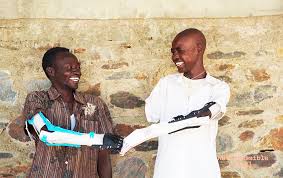
Daniel Omar (right) and his 3D Printed Prosthetic Arm

   In our new book The Imagination Elevator,  the first of 10 key principles for structured creativity is this:   Act, Don’t Just Gripe.  Take action to right a wrong, rather than just talk about it – at least some of the time.

  Writing in The Guardian, Jan. 19,  Emma Bryce recounts how Mike Ebeling, a Los Angeles resident and entrepreneur, did just this. 

     As the  founder of an American startup called Not Impossible Labs, an organisation that builds open-access devices to assist people facing seemingly insurmountable physical challenges,  Ebeling recounts how TIME magazine wrote about Daniel Omar, South Sudan, who in March 2012, at the age of 14, “embraced a tree trunk to shield himself from a bomb’s blow, and stepped away without his hands. Aware of the burden he would place on his family, in 2012 Omar told a Time reporter that he would rather have died when the government’s Antonov aircraft dropped its lethal cargo.”   [This brings to mind the current Syrian Government’s policy of dropping oil drums filled with explosives on civilian buildings in Aleppo, killing thousands].   

    Seeing this declaration on paper shocked Mick Ebeling.    Ebeling read this and thought,  “I’ve got three little boys…   It was hard for me to read a story about a young boy who had lost his arms.”

    Here is what he did, according to Bryce.    “In November 2013, Ebeling travelled to Sudan for a month, hoping to find Daniel and build him an arm. He took with him printers, spools of plastic and cables. The 3D printers that create the prosthetic’s plastic parts make the device seem hi-tech, but the resulting arm is really just a simple, mechanical device. The arm works by using movement to trigger cables, threaded throughout the plastic structure like ligaments. When the user flexes and bends the remaining portion of their arm, this motion tenses the cables, which in turn curl and uncurl the fingers at the tip.”

      “Since Ebeling has returned home, one prosthetic a week has been printed, thanks to two 3D printers he left behind. The machines sit humming industriously – mostly at night when it’s cool enough for them to work. The printed parts are then collected by eight local people trained to operate the machines, assemble the arms, and customize them for recipients.”

     Ebeling identified an unmet need, one he was passionate about; thought creatively about simple, inexpensive solutions (the prosthetic arm costs a total of $100, a fraction of conventional prosthetics),  and took action, getting on a plane and going to the site.  

    If only more of us would do the same. 

Can the “Social Interaction Hormone” Help Cure Autism?
By Shlomo Maital

Oxytocin

   Writing in the Scientific American blog “LiveScience”, Dec. 2, 2013, Bahar Gholipour shares an interesting new development in the treatment of autism.
[ Autism (properly known as autism spectrum disorder, ASD) is almost 5 times more common among boys (1 in 54) than among girls (1 in 252). Autism overall afflicts one child in about 150. But a study in South Korea revealed a higher incidence, 2.6 percent; and autism does seem to be on the rise. No one knows what causes it, nor why it is increasing. ]
    Apparently, there is a hormone secreted by the body that controls social interaction, known as oxytocin.
According to Gohlipour, “although the hormone didn’t change children’s social skills in the study, its boosting effect on the brain’s social areas suggests that using oxytocin nasal sprays immediately before behavioral therapies could boost the effects of those treatments …. Oxytocin temporarily normalized brain regions responsible for the social deficits seen in children with autism, said study researcher Ilanit Gordon, a neuroscientist at Yale University in New Haven, Conn.
        But when children received oxytocin they showed greater activity in the “social brain,” which includes regions that process social information and are linked to reward, social perception and emotional awareness.”
How exactly does oxytocin work? “It remains unclear how the hormone affects the brain and leads to better social processing. One possibility is that oxytocin makes social stimuli more rewarding to children with autism, the researchers said. It is also possible that the hormone makes the information pertaining to humans stand out from the background information consisting of objects and, in turn, helps social information to become salient to people with autism, the researchers said.”

Unemployment – It’s How You Measure It!

By Shlomo  Maital

            unemployed  unemployed 2

       Writing in the Los Angeles Times, my friend Clyde Prestowitz, formerly senior trade policy advisor to President Reagan, explains the mystery of unemployment rates – if the U.S. job market is so bad, why is the unemployment rate so low? (6.7 per cent)? 

    Here is the answer, according to Clyde:

      “ Although the Federal Reserve Bank says we’re in the midst of a recovery, and the official unemployment rate has fallen below 7%, the economy is far from being out of the woods. That official rate – technically known as U-3 – doesn’t begin to tell the real story.  It is only one of six unemployment measures kept by the U.S. government and counts all those who say they are unemployed and looking for work.   

      But it does not include those discouraged unemployed workers who have given up looking for a job or those who would like to work full time but are only able to find part-time work. The rate that includes all those people – U-6 – is about 13%.    Granted, that is below the 17% of 2010, but it is still far above the 8% of 2007, as we navigate what is being called a recovery – albeit an abnormally slow one.”

         Americans who have a job, the fortunate ones, but fear they could lose it, and those who lack a job,  and are seeking one or who have given up [discouraged workers], should be defined as “unemployed or at risk of unemployment”.  THAT rate is over 50 per cent. And that is the relevant measure, and it is not included in U1 through U6. 

     U.S. President Barack Obama has just given his State of the Union address.  He mentioned the job problem, but gave no specifics.  This should become his top priority.  It’s a tough nut to crack.  Companies like Facebook, with a stock market cap of some $160 b., generate relatively little employment.  Companies like Apple create jobs in China.   Small businesses face impossible competition from shopping centers and chain stories like Wal-Mart.  So, President Obama, start with the SME’s, small and medium-size enterprises.  Help them a bit.  Nothing could help create jobs more.  And silence the big lobbyists, who drown out the weak voices of those SME’s.    

Goodbye, Pete! Thanks for Everything!

By Shlomo  Maital  

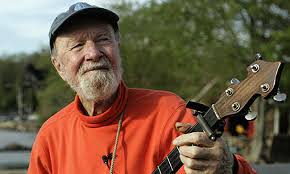
        Seeger

 The beloved American folksinger Pete Singer died on Jan. 27. He was 94.

 Seeger sang, wrote songs, protested and performed for over 70 years.  I remember hearing him in concert, in Ottawa, 50 years ago.  He sang “The Bells of Rhymney”, accompanied himself on the 12-string guitar.  That guitar, hard to play, sounded like an entire orchestra, and amazingly, like the Bells of Rhymney.

   Seeger once belonged to the Communist Party. That won him a blacklist in the U.S., during the McCarthy era, and kept him off TV. But in the end that was a benefit.  He toured college campuses widely, and became an icon.

    He and Joan Baez made the song “We Shall Overcome” the anthem of the civil rights protest movement in the 1960’s.   Amazing what a difference one word makes. The initial lyrics were, “we will overcome”.  Seeger changed it to “we SHALL overcome”.  Why?  “Shall” is assertive, definitive, emphatic.  We SHALL do it. 

   As a member of The Weavers, Seeger recorded “Good night, Irene”, which made it to the top of the charts in the 1950s.

    Seeger wrote great songs, like “If I had a hammer”,  “Where have all the flowers gone,”  and my favorite, “Turn, turn, turn” – the song they played when I first met my future wife,  at Princeton Hillel. 

    Bye, Pete. We’ll miss you. We’re glad you sang and performed to the end, and that you had only a brief illness.   Basically, you died with your boots on,  singing and performing, playing that wonderful banjo, sometimes the 12-string.  You taught us that there are many ways to protest, and singing is one of the most powerful.   

Wawrinka and Samuel Beckett: On Failure

By Shlomo  Maital  

Beckett       Wawrinka

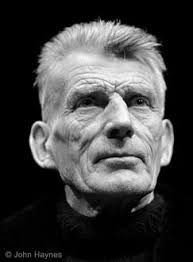
                                                               Samuel Beckett                                                             Stan Wawrinka


  There is  a very interesting connnection  between Swiss tennis star Stan Wawrinka, #3 in the world and winner of the Australian Open, and author and playwright Samuel Beckett, Irish-French, author of Waiting for Godot.     

   Wawrinka just won the Australian Open Grand Slam, unexpectedly defeating Rafael Nadal,  to whom he had repeatedly (at least 12 times in Grand Slam events) lost in the past.  His win was decisive, in four sets, and Wawrinka at times (according to the New York Times) bullied Nadal, something that Nadal usually does himself with fierce ground strokes and serves. 

    Wawrinka himself found it hard to believe; and it is rare that a number 8 ranked player wins over the Big Four (Murray, Federer, Djokovic, Nadal). 

    What is his secret?   According to Greg Bishop (Global New York Times, Jan. 28),  last March Wawrinka had the following words, written by Beckett, tattooed on his left forearm: “Ever tried. Ever failed. No matter. Try again. Fail again. Fail better!”  (from his play Westward Ho!, 1983).

   Before Sunday’s Australian Open final,  the Big Four players had won 34 of the 35 major titles.  That means, if you’re not one of the big four, you have a one in 35 chance to win, or less than three per cent.  But, if you try to fail better (that means, try your absolute best, facing huge odds, battle with everything you have, leave it all on the court, and walk off with dignity and pride even if you lose),  one day you will win.  Or, you will “fail to fail”, as Bishop puts it nicely, which means you will succeed. 

   Wawrinka offers us a big lesson in life.  And it was fun to see how he himself could hardly believe he had won. 

Mary Barra at GM: First Sure Steps

“Don’t Confuse Progress with Winning”

By Shlomo  Maital      

     Barra

    I’m following new GM CEO Mary T. Barra closely, after she took over the company on Jan. 15 from Daniel Akerson.  Akerson was appointed by the U.S. Government, which bailed out GM, and saved it from bankruptcy, then sold its GM shares at a profit.  Akerson spent his four years as CEO “cajoling the company to shed its hidebound culture”, according to  Bill Vlasic, New York Times (Jan. 25-26, p. 11).  But Mary Barra has a different message. Speaking to top GM executives at a two-day meeting, her message struck just the right tone. 

   “There is no destination here, this is a continuous improvement journey.  Don’t confuse progress with winning.”

    Barra is a trained engineer and brings shop floor experience to the CEO job.  And she ‘get’s it!’.  The car business is all about building beautiful, sexy, powerful, appealing, attractive, safe, cost-effective fuel-efficient cars and trucks.  It’s not a sport. 

  “Even when you’re leading in a segment, that’s only for the moment,” she cautions.  “You have to continually keep raising the bar for yourself.”

   That’s a powerful message for GM.  It is doing well in the U.S. and China.  U.S. sales rose 7.3 per cent last year, but the car industry itself overall grew by 7.6 per cent.   GM has an 18 per cent market share in the U.S. and has struggled to maintain it.  It lost the global lead to Toyota, which sold 10 m. vehicles last year, more than any other company. 

    Barra is far far less standoffish than her predecessors.  She travels the world, holds small ‘town meetings’ with GM employees, and she is a good listener.  She is also tough.  “If you have a problem you better solve it. Because if you don’t, you won’t be here or the company won’t be here,”  she says.  She has set two ambitious goals for GM – 10 per cent net pre-tax profit margin in North America and breakeven in GM’s losing European operations,  both by 2015. 

     My parents once bought a beautiful coral Oldsmobile with a white vinyl hardtop. It was a beautiful car that not only a mother could love.  GM lost its way when it was led by a series of beancounters who cared nothing about cars.  Can it reinvent itself, and its culture, under Barra?   Could be.  It’s fun to watch her in action.   The future may indeed belong to women managers… see how Marissa Mayer has turned around Yahoo’s fortunes!  And Janet Yellen, who will decide the fate of the dollar, and the U.S. economy.  

Bolsa Familia: Welfare Payments That Work

By Shlomo  Maital   

           Bolsa Familiar 1

                        Bolsa Familiar graph                         

  As the super-rich and powerful of the world gather at Davos, Switzerland, the amount of hypocrisy spoken there about battling poverty could sink a mid-sized country.  The super-rich wring their hands…and the next moment, use both of them to grasp more and more assets. 

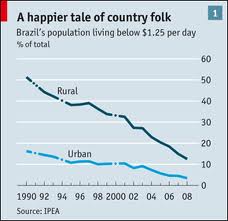
   Right under our noses is one possible solution.  Theory doesn’t help.  We need to see what works.  Check out Brazil.   “Bolsa Família (formerly Bolsa Escola) started in the 1990s and expanded rapidly in 2001 and 2002. It provides monthly cash payments to poor households if their school-aged children (between the ages of 6 and 15) are enrolled in school, and if their younger children (under age 6) have received vaccinations.”  In other words – attach the welfare conditionally to actions that will help get the NEXT generation out of poverty, through good health and good education and schooling.

   The result?   Look at the graph above.  Since Bolsa Famliar was introduced rural poverty declined steeply, and urban poverty declined impressively,  where poverty is measured as living on under $1.25 daily.    There is still severe poverty in Brazil – but Bolsa Familiar is helping to battle it. 

  The basic idea is so simple.  To survive, poor families have to send kids out to work sometime.   Offer them help – but condition it on sending the kids to school.  Now, if the super-rich at Davos could take a moment from the ski slopes and fancy restaurants, perhaps they might consider investing some of the trillions they have in a large-scale pilot project, for very poor countries, along the lines of Bolsa Familia.  That might diminish slightly the cynical hypocritical atmosphere that is so evident. 


Root for the Jamaican Bobsled Team at Sochi

(Remember ‘Cool Running’?)

By Shlomo  Maital   


Jamaican bobsled team 2002

   Remember the legendary Jamaican Olympic bobsled team, in the 1993 movie Cool Running?  Well, they’re back, big time!    

    Thanks to an outpouring of support for its online crowdfunding campaign, the Jamaican bobsled team is heading to Sochi with over $120,000 — and a dream 12 years in the making.   On Monday, the members of the underdog team from the island nation learned they had qualified for the two-man bobsled competition for their first appearance in the Winter Olympics since 2002. That elation has been followed by overwhelming gratitude from the team toward its fans, after a crowdfunding campaign exceeded their target goal of $100,000 in a matter of days.

  Team member Winston Watts said,  “the team has stopped accepting funds as of Tuesday after hitting its financial target.”   A campaign on the crowd-funding site Crowdtilt.com, combined with another campaign involving the virtual currency Dogecoin, has raised more than $125,000. Another campaign on the site Indiegogo has raised more than $43,000.

   This is Watts’ fourth Olympics!  He competed in 1994, 1998 and 2002.   He and his team are an inspiration for Israel’s ice hockey team. 

   Today, thanks to crowdfunding, if you have an inspiring idea and can communicate it well, you can fund projects that otherwise would die.  Zach Braff directed the hit cult movie “Garden State” a decade ago.  He managed to crowdfund his new movie “Wish I Was Here” on Kickstarter last April, raising $2 million in 48 hours and $3 m. overall, from over 40,000 people!   It made it possible for him to make his new movie without the dictates of investors.  

      Jamaica’s bobsled team may finish last.  But Watts and the team embody the Olympic spirit, which is that competing is the goal, not just winning gold.   Go Jamaica!  Run cool. 

Blog entries written by Prof. Shlomo Maital

Shlomo Maital

Pages