Three Cheers for Uruguay

By Shlomo  Maital

 

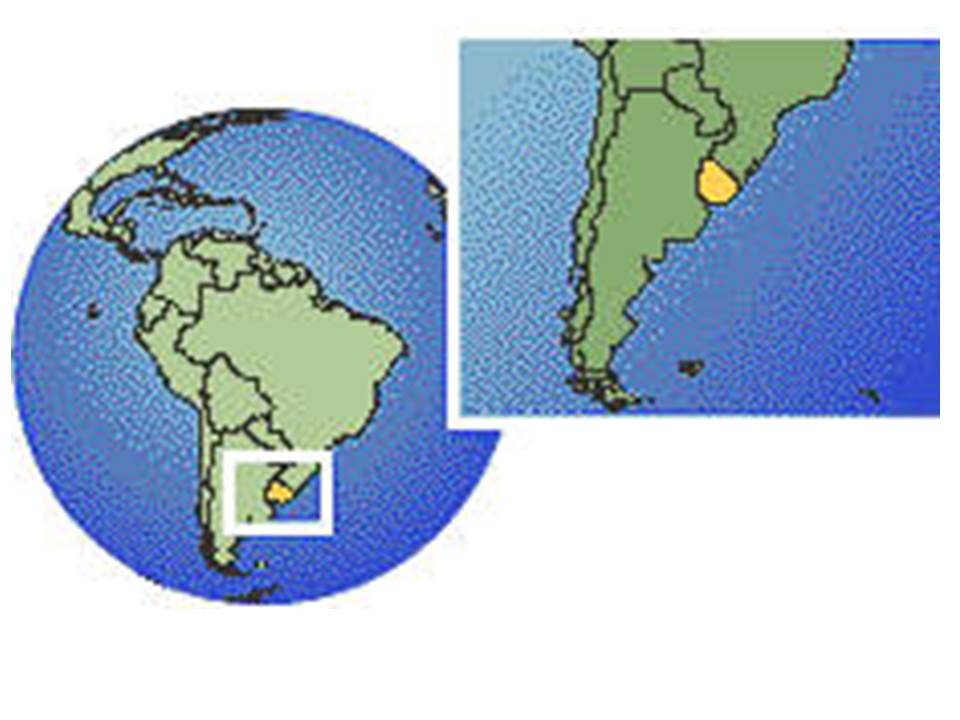
Uruguay 1 

 Uruguay 2


   Each year, with much fanfare, TIME magazine chooses its Person of the Year.  This year’s choice is justifiably, Pope Francis, who by changing the Catholic world may change the whole world.  He has just announced his plans to visit the Holy Land and celebrate mass in Bethlehem.  We welcome this humble and courageous man.

    Less noticed is The Economist’s choice of The Country of the Year.  South Sudan was among the candidates; as the world’s newest country, its GDP has risen, but alas, lately, it has hit a bump in the road, with the recently-fired Vice-President challenging the President (with what the President calls a failed attempted coup), and gunfire echoes in the capital, Juba. 

    But The Economist’s choice is… Uruguay!  Great choice.  This tiny country of 3.4 m. people, which suffers collateral damage when its neighbor Argentina implodes (once a decade at least), is strong economically, and has won the World Cup in football twice, and played in the finals several times.    Here is why The Economist chose Uruguary for 2013:

   “ Uruguay, uniquely, passed a law to legalise and regulate the production, sale and consumption of cannabis. This is a change so obviously sensible, squeezing out the crooks and allowing the authorities to concentrate on graver crimes, that no other country has made it. If others followed suit, and other narcotics were included, the damage such drugs wreak on the world would be drastically reduced.

    Better yet, the man at the top, President José Mujica, is admirably self-effacing. With unusual frankness for a politician, he referred to the new law as an experiment. He lives in a humble cottage, drives himself to work in a Volkswagen Beetle and flies economy class. Modest yet bold, liberal and fun-loving, Uruguay is our country of the year.”

   Congratulations Uruguary!  Let people from other countries come visit you and learn from you. I plan to do so in the coming months, with my wife.  

Rebuilding America – Literally!   It’s Really Simple

By Shlomo  Maital


Image  Singapore’s Changi Airport


Image  A Crowded American airport

     It has been six years since America’s recession began, at the end of 2007, and as New York Times columnist Floyd Norris notes, the U.S. still has fewer jobs than it did then.  

   Why?

   The answer is simple.  The U.S. labor-intensive construction industry has not recovered.  In the spring of 2006 construction employment was 7,476,000;  today, it is 5,851,000.   Nearly 1.7 million jobs were lost in construction.   This has deeply hurt the U.S. economy’s recovery, because construction jobs pay quite well, and underpin a lot of consumer spending.   The housing bubble not only claimed financial victims, from sub-prime mortgages and related assets; it threw many workers out of a job and has not brought them back.  Construction is a major, perhaps the main, drag on the recovery.

   The solution is really simple.  America’s infrastructure is ragged.  The interstate highway system was built in the 1950’s, 60 years ago, under President Eisenhower. It needs investment.  American airports are old, incredibly crowded (see the photo), and need renewal.  Been to JFK lately?  Thousands of American bridges are rusting and crumbling and need replacement.  Many roads inside cities have huge potholes.  Schools need new modern buildings. 

   If government spending were increased and focused on infrastructure investment, the construction industry could recover and lead a general economic recovery. This in turn would help the rest of the world, too.  Such spending is not wasteful, nor harmful, even if it temporarily increased the budget deficit, because it has been proven that infrastructure investment pays a high rate of return.  Will it work?  China proves it does.  China massively invested in construction and investment, when its economic growth flagged during the global economic crisis,  building railroads and highways, and quickly restored its rapid growth.

    But alas, it is unlikely to happen.  There is a Republican-Democrat budget compromise on the table that may avert another U.S. government shutdown, but it includes very small restoration of cuts made under the previous ‘sequestration’ legislation.   And it won’t help construction one bit. 

    America needs rebuilding – its infrastructure, and its society and political system as well.  It has the resources to do it.  But does it have the will?  It seems not.


Mandela’s Legacy: What the World Needs Now

By Shlomo  Maital   

Mandela Invictus

 Morgan Freeman as Mandela

    New York Times columnist Thomas Friedman used the death of Nelson Mandela to diagnose precisely what the world’s core problem is, regarding leadership. 

    Mandela trusted his people with the truth, rather than what they wanted to hear. Leaders today tell people niceties. They think this is the road to re-election. It is not. It is the road to mistrust.  We deeply distrust leaders who sugarcoat, who do not tell us the truth.  Mandela asked the whites in South Africa to cede power. This was hard for them.  But he also asked his people, the blacks, to forego revenge. This was equally hard.  De Klerk, white leader, told his people to give up power. Mandela told his to forgive.  Friedman notes, “Mandela’s leadership genius was his ability to enlist a critical mass of South Africans to elevate, to go to a new place, not just shift a few votes at the margin.”

     Today, Friedman observes, millions of people all over the world are newly empowered by Twitter and Facebook to gather in public squares, to demonstrate against leaders, sometimes legitimately elected ones.  These protests are seemingly a renewal of democracy. The problem is, they are just that, protests.  Israel youth staged enormous protests in 2011 against social inequality.  Others created the Occupy Wall Street movement, that demonstrated worldwide.  But in order for protests to achieve anything,  effective leaders have to emerge who gain election and who know how to act.  This has not happened.  Facebook has half the ingredients of social reform. The other half, Mandela-like leaders, is missing.  To create change, you need the whole, not just the half. And it has not emerged from the Facebook,  Tahrir-Square protests. Nor can it.  In Israel a handful of the Social Protest leaders turned to politics, a very few are Knesset members, and the whole protest movement has sputtered and died. 

     The Ukraine will be a key test.  Vitali Klitschko is emerging as a protest leader, and he may take the protest to the next step.  As a champion boxer, he learned discipline, patience, endurance and strategy – and he has a Ph.D.  There are signs the Ukraine President is already backing down and is ready to sign the EU trade pact.  Let’s see if Klitschko really does emerge, to fulfill the Mandela half of the Facebook revolution.


GM Chooses a Woman to Lead It:

What’s Good for GM is Good for America

By Shlomo  Maital

             Barra

Mary Barra

  Just hours ago,  General Motors chose its new CEO, to replace retiring Dan Akerson.  Akerson’s wife is battling cancer and Akerson chose nobly to resign, to join her in her battle. 

     The new CEO is Mary Barra and she joins a handful of women who are now leading top global firms:  Xerox, Yahoo, HP and IBM.   Barra’s style is friendly and low-key.  She previously served as VP.    Barra is an engineer, and at long last, finally places a ‘car person’ and engineer at the head of GM, instead of bean-counting financial experts who loved balance sheets more than Pontiacs (a brand that, alas, was killed by such bean-counters).  She understands a simple principle that GM assembly line workers (her father was one) have known for years:  GM will succeed by building great cars, not by managing costs.

    Margaret Thatcher once said famously, “if you want something said, ask a man. If you want something done, ask a woman.”  GM has done just that.

   After Obama and the US Treasury bailed out GM, a highly controversial decision, GM has emerged from bankruptcy.   According to an analyst,  “The bankruptcy transformed the balance sheet, but the transformation of the company is still a work in progress …..only time will tell whether Barra, who has spent her entire career at GM, is the change agent as touted by Akerson.”

   Barra’s specialty is product development and she reorganized GM’s chaotic global car development process.  She now has to stop the bleeding in GM’s Europe division, restore competitiveness for GM in China (Buick has lots leadership to VW there)  and above all, create beautiful reliable sexy cars for people who love cars. 

     Alfred Sloan created GM by stitching together small independent car companies: Cadillac, Chevrolet, Buick, Oldsmobile, Pontiac, and keeping them lean, flexible and competitive (even with one another). GM lost that culture.  Can Mary Barra restore it?  Let’s hope. A lot of jobs depend on it. 

    Barra is only 51, and some feel she lacks experience to run a huge sprawling troubled company like GM.   I strongly disagree.   The old-age pensioners who’ve been running GM have not been outstanding.  Let’s give youth, and women, and engineers, a chance; Barra has those three qualities. 

    This could work for the US Presidency.  Remember Hillary?  Could she have done a lot better than the bumbling Barack?    Sometimes,  indeed, what’s good for GM really is good for America.        

Bitcoin: Toward a World Currency?

A Guide for the Perplexed

By Shlomo  Maital  

       Bitcoin

Bitcoin 2

   What is bitcoin?

     It is a virtual digital currency and person-to-person payment network developed by “Satoshi Nakamoto” (not a real name).  It uses cryptography to secure funds.  When you pay in bitcoins, the money is transferred between Bitcoin addresses that are encoded.   You can store bitcoin addresses in an online “wallet”.

    Bitcoins’ use is growing though it is still small relative to total on-line payments. Bitcoins’ value relative to dollars is set by supply and demand.  Contrary to popular belief, there is actually a physical bitcoin.  You can buy a physical bitcoin, which can be broken open to reveal  a piece of paper with the private code or key to a bitcoin wallet with bitcoins in it.

    Is this real money?

     In a sense yes.  Bitcoin is no more ‘virtual’ than dollars, yuan or euros.  Most money is not paper, but instead takes the form of bank deposits.  Bank deposits are created by a stroke of a bank manager’s pen, when he or she lends money. If the bank goes bankrupt, all those deposits disappear.  What could be more ‘virtual’ than that?

  What determines the value of bitcoins?

  The same thing that determines conventional money’s value – willingness of people to hold it and to give up real goods and services in exchange for it. 

   What do we learn from bitcoins?

  A simple powerful lesson.  America today is  endangering the world’s economy and trading system by printing massive amounts of dollars.  This erodes our trust in the dollar; without a secure currency, we cannot run a global economy. And 80% of foreign trade transactions are still done in dollars.  (Note: The yuan, or renminbi, has just taken over as #2!).   Bitcoins’ amount is more or less fixed.  So their value cannot be destroyed by overprinting.  The value does fluctuate a lot, because of speculation; it started at $50, rose to over $1200, is now done to just over $600….

   Can you, say, travel the world and pay only in bitcoins?

Yes, one couple did.  But it was really really difficult.

    Could bitcoins take over from conventional money?

    No, but – perhaps they should.  In 1944, at the Bretton Woods conference, Keynes suggested a world money, bancor, issued by a world central bank.  This world money would be issued in just the right amount to finance global trade and investment, avoiding both inflation and deflation.  Bitcoin is kind of similar.  It does show that we could, if we wished, create a virtual world money, solely for global trade and finance.  It would avoid the perils of being dependent on the irresponsibly-managed U.S. dollar.  Perhaps we will have to have another serious world collapse to make this happen; even then, America is unlikely to agree.   

 Toyota’s Innovation Process:

What We Can Learn from the Prius

By Shlomo  Maital  

            Prius

Prius 2014

  How did Toyota develop and build the Prius  in record time?  How has Toyota developed and sold 40 million Corollas? (We have one, it has over 300,000 kms. or 180,000 miles and is going strong). 

   I learned a lot from an advertisement, perhaps the first time an ad in TIME was more interesting than the editorial copy.  The ad was an article by Mitsuhisa Kato, Toyota’s VP for R&D.  Here is a summary of what he said:

   * Get your R&D people out into the world and out of their darn labs:   “Seeing people drive so fast on rough roads where I would have slowed to a crawl [front-wheel drive Corollas in nations with unpaved roads] was eye-opening.  It highlighted for me the importance of venturing out into the marketplace to see things firsthand.”

  * Organize around technologies, not features:  “We launched the first-generation Prius in 1997. That was only two years after we formally initiated the development process! (Project head) Takeshi Uchiyamada (now Chair of Toyota) got inspiration from NASA’s Apollo program.  Its managers identified the technologies they needed, and assigned a development team to each technology, enduring each team met its target and deadline. We adopted a similar tack. 

Get your engineers to talk across disciplines:  “We moved the mechanical engineers and the electrical engineers onto the same office floor.  Their face-to-face interchange raised our technical discourse to a new dimension and brought important progress.”

Innovation is not rigidly bound by tradition but driven by it: “A renowned Japanese potter quote Auguste Rodin to me —  Tradition is not inheriting the skeletons of the past, it is inheriting the SPIRIT of the past.  We at Toyota honor the spirit of the joy of mobility. 

Is America Truly a Land of Opportunity? 

By Shlomo  Maital   

       Alger

   Horatio Alger, Jr.  was a  19th-century American author who wrote many juvenile novels about boys who rose from poverty and humble backgrounds to middle-class security and comfort through hard work, determination, courage, and honesty.  He helped create the mythology of America as a land of unlimited rags-to-riches opportunity for everyone – a myth that was once partly true, but no longer is.  Today, Horatio Alger is science fiction. How do I know?

   As witness for the prosecution, I call on President Obama.  He claims he will make upward mobility, and lower inequality, “the defining challenge of our time”, as his main goal for the remainder of his presidency.  Here are some facts he cited, in an important speech:

* An American child born into the lowest 20 per cent income level has less than a 1-in-20 chance of making it to the top – while a child born into the top 20 per cent has a 2-in-3 chance of staying there.  So much for Horatio Alger.

* The top 10 per cent of income earners gets half of all national income, up from only a third in 1979, and matching the inequality in Jamaica and Argentina.

   Obama’s speech even won praise from New York Times columnist Paul Krugman, who loved Obama’s statement that fiscal deficits are a lesser threat compared with a “relentlessly growing deficit of opportunity”. 

    Nice speech, Obama.  But once again, you spin words without deeds. Because you forgot to mention the one thing that could truly revive the middle class – in-sourcing,  bringing home all the well-paying middle-class manufacturing jobs that America blithely sent abroad in outsourcing.   Only 9 per cent of America’s workforce is employed in manufacturing. Less than 12 per cent of GDP originates in manufacturing.  Not that long ago, it was fully 21 per cent (in 1980).   The U.S. share of world manufacturing production has declined from 31 percent in 1980 to 24 percent in 2008. 

    By outsourcing manufacturing jobs, America has given up two pillars of the middle class — $20/hr. wages (more than double what Wal-Mart pays),  and the productivity gains that accompany manufacturing technology, now being reaped mainly by China.  No country can truly prosper unless it makes things. 

    A few key changes in America’s tax laws could be a good start.  But forget that – Republicans will never support anything that damages the privileges of the wealthy.  What is hard to understand is why so many of the lowest 20% of the income distribution vote for them.

Nicholas Negroponte: Where Do Ideas Come From?

By Shlomo  Maital    

Negroponte


MIT Media Lab

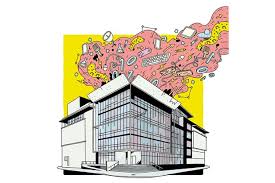
   MIT Prof. Nicholas Negroponte was the featured speaker at the 20th anniversary event of the MIT Enterprise Forum of Israel, an organization I helped found in 1994,  and now run by Ayla Matalon.  Negroponte spoke about how and why he started the Media Lab, together with MIT President Jerome Wiesner.  His plan was to create a place for outsiders, for those whose radical innovative ideas would never be accepted in conventional MIT faculties.   For 30 years the Media Lab has been a fountain of radically new ideas built on strong research foundations, with corporations lining up to pay fortunes just to gain access to those ideas.  

     “Where do new ideas come from?”  Negroponte asked the audience, rhetorically.   In one word:  “From differences.”  From people who think differently. 

     I think this explains why so few really new ideas emerge from universities, places where creativity is supposed to live but never does,  and from big corporations, which pay lip service to innovation but do everything to stamp it out.

     Universities reproduce ideas, by having students do research that in tiny incremental steps extends the research of their advisors, and generally affirms it.  Imagine a thesis that disproved the central theories of the advisor!   Tenure is gained fastest and easiest by publishing mainstream research that irritates no-one and ruffles the fewest feathers.   

    Businesses grow to global scale by operational discipline, in which people are well paid to do the same thing, again and again, with excellence and discipline.  Imagine a manager who tells his CEO that the company’s most profitable product line is becoming commoditized and should be sold or closed. 

    Neither universities nor large multinationals want their people to think differently. Nor do they hire people who are different.   This, despite the well-known finding that it is the most diverse teams that are the most innovative, and the rule that you should include a non-expert in every team, to ask the ‘dumb’ questions.

    I strongly urge my students to respond to job interviews with their own interviews. Interview the interviewer.  Find out if they really do want your creative ideas.  Find out if they celebrate failure, and welcome diversity.  Do this BEFORE you get put into the corporate blender and emerge as bland conventional porridge, instead of remaining a spicy jalapena pepper. 

Nelson Mandela:  The Power of Forgiveness

By Shlomo  Maital  

      Mandela

Mandela’s Robben Island prison cell

  If you yourself had been incarcerated for 27 years in the tiny cell shown above, and then released,  how willing and eager would you be to forgive your captors? 

   Nelson Mandela forgave.  Elected President of South Africa, his personal stature and charisma led fellow black South Africans to studiously avoid a campaign of vengeance and violence, that seemed almost inevitable, against the white community that had imposed apartheid on them.  And his campaign began with his own personal forgiveness. 

     Mandela kept South Africa from descending into rage and violence and allowed its citizens to build and rebuild. 

     We can all learn a simple powerful lesson.   Amnesia is a necessary condition for peacemaking.  France and Germany harbored bitter memories and in three terrible wars,  Franco-Prussian, WWI and WWII, sought vengeance.   Only by joining in the European Union and burying the hatchet, have such wars been ended.   China has bitter memories of Japan’s brutal occupation in WWII.  Those memories may keep Asia from building its own economic union and are leading Japan and China into a confrontation neither wants nor can afford.  Israelis and Palestinians each harbor deep grudges, going back 100 years.  But as an expert recently noted, the long memories in the Mideast are a huge obstacle to making peace.  We need to forget, to forgive and move on.  History is simply a sunk cost. And sunk costs are irrelevant in making rational decisions.

     We could all learn much from Mandela.  I hope all those who praise him, and eulogize him, pay close attention to what he taught us – forgive and forget.  There is no other way to live in peace.      

US GDP Growth: The REAL Story

By Shlomo  Maital   

             inventory             

Inventory of unsold automobiles

   New estimates for U.S. economic growth in the 3rd quarter of 2013 have just been published by the Bureau of Economic Statistics, Dept. of Commerce.  They reveal two key facts.

   * First, never ever just read the headline and lead paragraph, which is what most of us do.  The lead is:  the annualized GDP growth rate in Q3 2013 was a torrid 3.6 per cent!  This is an adjustment of the initial estimate, which was only 2.8 per cent, and a big jump from Q2 2013,  2.5 per cent.

   But if you dig down to around the 12th paragraph of the BEA release, you find this:   “The change in real private inventories added 1.68 percentage points to the third-quarter change in real GDP, after adding 0.41 percentage point to the second-quarter change.  Private businesses increased inventories $116.5 billion in the third quarter, following increases of $56.6 billion in the second quarter and $42.2 billion in the first.”

    What does this mean?  It means that  the increase in GDP, the stuff PRODUCED in Q3, was far bigger than the increase in final sales, the stuff people actually BOUGHT in Q3.  Final sales rose by only 2.1 per cent.  This is because businesses were overly optimistic about the ‘recovery’, produced too many cars, refrigerators, TV’s and cell phones, and ended up dumping them into the warehouse instead of selling them.  This has happened now for three straight quarters.

     This is bad news. It means that in Q4 and next year, 2014, businesses will cut production to sell off their inventories. That will reduce GDP growth, reduce job growth and weaken the recovery.  Always ALWAYS check the inventory numbers, not just the GDP numbers.

    * Second,  short term business cycles are alive and well. And they are always caused by human emotion.  We become overly optimistic, produce too much, fail to sell it, then have to cut back because inventories are expensive and stored goods soon become unsellable.  So the boom-bust cycle is permanently with us, because economies are driven by human beings and human beings jump from excessive hope to excessive despair and back again. 

     Prof. Robert Lucas’ statement in 1995 that the business cycle had been forever smoothed was simply, like Mark Twain’s description of his death,  “premature”.

Blog entries written by Prof. Shlomo Maital

Shlomo Maital

Pages