China’s Miracle

By Shlomo  Maital  

         China

                                                                            1970                        2001

CHINA adjusted for inflation   (rmb b.)                  

Gross domestic product (GDP)    Q           225.3                        9,593

   Exports of goods and services   X            4.1                          2,478

   Imports of goods and services  IM         4.2                          2,246

   Household consumption expenditure   C  142.6                  4,409

   General government consumption expenditure   17.5       1,314

   Gross capital formation  Ig                            65.4                          3,638


  I’ve been reviewing macroeconomic data for China, 1970-2001.  And the numbers are astounding.  The world’s most populous nation has moved from a country disconnected from world trade, with almost no exports or imports, and abysmal poverty, a Cultural Revolution in which millions starved, in which backyard furnaces tried and failed to make steel – to a nation that has grown by an average of 10% yearly.  GDP has risen by almost 45 times, doubling five times..and then some.  Exports have risen by 600 times, which is 8 doublings!   And investment (capital formation)?   That rose almost 60 times, or almost 8 doublings!

   This has never happened in history. No country has come close, let alone with the world’s most populous country. 

   How did all this happen?  A leader named Deng Xiao Ping was placed under house arrest, during the Cultural Revolution, and had a lot of time on his hands.  He looked around the world, saw countries that were rich and growing, and countries that were poor and stagnant – and decided that ‘rich’ was better than ‘ideology’.  The rest is history.

   Lots of people seem to believe the ‘bubble’ will burst, and even wish it would, complaining about civil rights, human rights, etc.  China will soon be the world’s biggest economy. We all should wish China well – because if China’s growth slows, so will all of Asia, and then all of the world.  Ask not for whom the bell tolls…..
Plutocrats, out!  Populists, in!  Good for Us!

By Shlomo  Maital

                     cynthia_freeland      Cynthia Freeland

   Writing in the New York Times Op-Ed (Nov. 1), “Plutocrats vs. Populists”, Cynthia Freeland makes an optimistic observation:  the plutocrats (the powerful and wealthy, who use their money to buy political influence and advance their self-interest) are losing out in America, and the populists, those who represent us ordinary folks,  are winning.

   How do the plutocrats gain power?  Two ways, she notes. 

   “….political lobbying strictly focused on the defense or expansion of their economic interests. This is very specific work, with each company or, at most, narrowly defined industry group advocating its self-interest: the hedge fund industry protecting the carried-interest tax loophole from which it benefits, or agribusiness pushing for continued subsidies. Often, these are fights for lower taxes and less regulation, but they are motivated by the bottom line, not by strictly political ideals, and they benefit very specific business people and companies, not the business community as a whole.” 

The lobbying industry is enormous and virtually out of control in the US Congress.

       “The second way today’s plutocrats flex their political muscle is more novel. Matthew Bishop and Michael Green, a pair of business writers, have called this approach “philanthrocapitalism” — activist engagement with public policy and social problems.   Philanthrocapitalism is a more self-consciously innovative and entrepreneurial effort to tackle the world’s most urgent social problems; philanthrocapitalists deploy not merely the fortunes they accumulated, but also the skills, energy and ambition they used to amass those fortunes in the first place. At its best, this form of plutocratic political power offers the tantalizing possibility of policy practiced at the highest professional level with none of the messiness and deal making and venality of traditional politics. You might call it the Silicon Valley school of politics — a technocratic, data-based, objective search for solutions to our problems, uncorrupted by vested interests or, when it comes to issues like smoking or soft drinks, our own self-indulgence.   But the same economic forces that have made this technocratic version of plutocratic politics possible — particularly the winner-take-all spiral that has increased inequality — have also helped define its limits.   Plutocrats are no more likely to send their own children to the charter schools they champion than they are to need the malaria cures they support.”

   How are the populists winning?  Bill de Blasio will be New York’s next mayor, replacing plutocrat par excellence Mayor Michael Bloomberg, who was popular and who, I believe, did a fine job.  Here is Freeland’s “take” – populists win when they represent the losers and give them a voice:

    “The Tea Party was able to steer the Republican Party away from its traditional country-club base because its anti-establishment rage resonated better with all of the grass-roots Republican voters who are part of the squeezed middle class. Mr. de Blasio will be the next mayor of New York because he built a constituency among those who are losing out and those who sympathize with them. Politics in the winner-take-all economy don’t have to be extremist and nasty, but they have to grow out of, and speak for, the 99 percent. The pop-up political movements that come so naturally to the plutocrats won’t be enough.”

   Her column is based on her new book.  She is Canadian, and is a Liberal candidate for Canada’s Parliament.     

Globalize Misery? Or Love?  What Riace Teaches Us

By Shlomo Maital      

       Lampedusa

                        Riace

 Pope Francis recently captured a bitter world dilemma in just a few words.  We need to transform the globalization of misery, he said, into the globalization of love.  What he meant was, the globalization of misery sends migrants from countries where they are oppressed, persecuted, killed, jailed and tortured, to countries where they have hope for better lives.  The journey is perilous, across tossing seas in tiny boats, and many die on the way. But still they come.  When they do survive, and arrive at places like the Italian island of Lampedusa, they often meet not love but hatred.  Pope Francis believes the migrants should be treated as human beings, with love. 

   In the BBC Program Heart & Soul, John Laurenson visits Riace, Italy, to explore the Globalization of Love, in a small but significant case study.  A report in The Guardian offers further details.

    Riace is a small village in Calabria, Italy,  sited 5 miles inland from the coast for safety from pirates, right at the ‘instep’ of the boot of Italy.  Its mayor Domenico has spent a decade trying to help African migrants. In doing so he has greatly helped his village.  “We need to show it that it has touched us all,” said  Lucano, “but we mustn’t just weep – that is not enough.”

  What Riace does is offer African migrants homes, jobs, and financial aid. The aid comes from the EU.  But it often comes late. So Riace prints its own money, with Gandhi and Martin Luther King on the face, gives it to the migrants, they buy food and shelter, and then, when the EU aid arrives, shopkeepers exchange Riace money for real euros.  Why does Riace welcome migrants when other countries and cities reject them?  Riace’s young people have left.  Industry has gone.  People are not having children.  So the migrants have revived Riace’s economy and social life.  Many of them (some are women from Afghanistan, who fled when the Taliban wanted them to marry off their daughters, at age 12!) learn crafts and revive Riace’s craft industries.  Muslims and Christians get along perfectly and together celebrate the Festival of “Id” (marking the near-sacrifice of Isaac by Abraham).     Riace, in short, has done good, but has also done well for itself.   The sign, shown above, by the way, says, Riace – a Place of Welcome. 

    I was born and raised in Canada.  Canada was built by immigrants, including my parents.  I then moved to Israel. Israel exists because millions of Jewish immigrants came when they faced persecution, or survived the Holocaust and had nowhere to go.  A million immigrants from the former USSR built Israel’s high-tech industry.    

      Why do countries fail to understand that immigrants bring energy and aspiration, seek to do jobs that locals would never touch, and bring vibrant new cultures and customs?   If Europe has stopped having babies, the only alternative to becoming a huge Old Folks’ Home is welcoming migrants. 

Hands in the Cookie Jar:  The Banks Again!

By Shlomo Maital      

       cookie_jar

 The banks are at it again!   If you loved the LIBOR scam – British and American banks conspired to fiddle the LIBOR London Interbank Offered Rate (of interest), to move it in directions favorable to their trades and to make profit —  now comes the FOREX scam.  Again, the banks  (RBS, Barclays, UBS and Citigroup) have their hand in the cookie jar.

    Here is how it works.  London is the world’s biggest foreign exchange market.  Daily,  $5 trillion changes hands in the world forex market, of which fully $2 trillion changes hands in the London market.  This means that the total US GDP changes hands, in forex trading, every three days.  It is a huge market – and a market where banks’ forex traders make fortunes, with insider trading. (There is no ‘insider’ information in forex trading – and rumors, many untrue, are rife). 

   Every trading day, the banks together set the benchmark forex exchange rates (dollar-euro, dollar-yen, etc.) at 4 pm.   During a minute or two of trading, they take the average – and publish the results.  This benchmark is crucial for a great many forex contracts, including options. 

    A Grade Five child can immediately see the vast opportunities for putting your hand in the cookie jar here.  You have an option to sell $100 m. worth of yen.  So at 3:59 pm you buy yen, to push the rate up.   Then you exercise your contract at 4:01…and munch on the cookies.  This is not legal, because it is not legal to manipulate the 4 pm benchmark rate. But it is just so tempting, and those cookies are so so SOOOOO  tasty.  And that Christmas bonus is on the way! 

    Are we beginning to get the idea that the big banks have not yet learned anything about ethical behavior?  And that they continue to make fools of each of us, and especially of the regulators?  JP Morgan Chase recently was fined a few billion dollars.  I imagine they are amused.  Because the extent of their profits is far larger. 

     It is going to take the banks a very long time to earn back our trust.  Meanwhile, the cookie jar forex episode shows that our trust in the banks is still declining, rather than rising.     

Pierre Omidyar: from eBay to Philanthropy

By Shlomo Maital   

       Omidyar

Pierre Omidyar is well known as the pioneering founder of eBay.  That company, after it was acquired, made him immensely wealthy; by the time he was 30 he was a billionaire.  Today, he is 46,  and he is deploying fully $1 b. of his fortune for philanthropy.  But unlike Jeff Bezos, founder of Amazon, who spent $250 m. to buy the Washington Post,  Omidyar is spending $250 m. to revolutionize the media.

  According to the Economist (the Schumpeter column),  “… in 2004 Mr Omidyar replaced his foundation with a new organisation, Omidyar Network, which sees itself as an active investor, not a passive donor, and is free to put money equally into for-profit and non-profit ventures. Almost half of the 300 or so outfits it has backed aimed to make money—though Mr Omidyar has said that any profits will be recycled, with none going back to him.”  

   The Economist continues:   “With the non-profits it backs, ranging from Kiva, a microfinance website, to the Sunlight Foundation, which promotes open government, Omidyar Network practises “venture philanthropy”—developing a non-profit start-up in the same way as a new business venture, except for not expecting it to make money one day. Typically, foundations have given funds for a specific project rather than to build the capabilities of the charity itself, which makes it hard for the charity to hire and retain talented people. In contrast, the network not only provides money for its charities’ general budget, it has a human-resources department that helps them find good staff. This service seems to be universally appreciated by the charities Mr Omidyar backs, some of which say it is more valuable than the money they get. Although there are several other successful venture-philanthropy organisations, such as New Profit Inc (which helped develop the Teach for America charity), none comes close to the scale of Omidyar Network, which makes it the crucial test case for the idea.”

      Omidyar ‘invented’ on-line commerce. Now he seeks to reinvent philanthropy.   He seems to have put his finger on a key failing of many social enterprises – good management, proper staffing.  We wish him well.


From Basic Biological Science to Market Success:

How Bob Langer Changes the World

By Shlomo Maital   

          Langer             

Bob Langer is a renowned MIT scientist.  His famous lab has generated an endless stream of inventions that benefit mankind, including radical new methods for controlled-release drug delivery.  This is important – when we swallow a pill, the concentration of the drug in our blood rises, then falls, then rises again when we take another.  Controlled-release technology keeps the level of the drug constant, in our blood stream, so that it is more effective. 

   Prof. Langer shared his ‘secret of success’ in a recent article in Nature Biotechnology, 31 (6), June 2013.  It includes 3  “P’s”:   platform, paper, patent.

   * Platform:  develop a technology that can be used over and over in different applications and technologies. E.g., his method for controlled release drug delivery systems also found use in microspheres for food applications, e.g. fat substitutes.

   *  Paper:  Publish your results in a high profile journal;  “peer review validates the idea”.  You can of course file for a patent within a year of publishing the paper.

   *  Patent:  “ideally, file a blocking patent, that protects the platform, and all the ways it can be used and applied”. 

    Platform, paper and patent – all persuade investors of the validity of the idea.  Add to this two more P’s:   P of P,  proof of principle —   show the technology is viable.   Speed is vital, adds Langer; the more rapidly you can get to clinical trials, the better.  And you need a champion.  Langer’s champions are his doctoral students, who develop technologies in their Ph.D. theses, then go on to found companies. Langer often serves on the board, makes introductions, helps get financing.  Langer himself is a bench scientist, and focuses exclusively on scientific research.  But his vision has led to many many spin-off companies emerging from his lab.  At a time when many biotech startups fail, Langer appears to have developed a winning formula.  If I were in biotech, I would study the Langer Lab formula closely.

Can We Believe Scientific Results?

By Shlomo Maital

          Lab

  The Oct. 19 issue of The Economist has “How Science Goes Wrong” on its cover. It contains a worrisome article that leads off with a quote from Nobel Economics Laureate Daniel Kahneman: “I see a train wreck coming”.  The article deals with the very foundation of credible scientific research: The ability to replicate (repeat) scientific experiments, to verify that the results are true.   It turns out, most scientific publications cannot be replicated.  The Economist reports:

     An American drug company Amgen tried to replicate 53 studies that they considered landmarks in the basic science of cancer.  They were able to replicate the original results in just six.

   What is the problem?  Why can results be reproduced?

   Here is a rather difficult explanation, by The Economist, based on work by Stanford statistician John Ioannidis, an epidemiologist.   Suppose 1 in 10 hypotheses are true.  Consider tests of 1,000 hypotheses, of which 100 are true.  These tests have a 5% false positive rate (5 times in 100, a test says a hypothesis is true when it is false).  So of 900 false hypotheses, 5% x 900 = 45 are proved true. 

    Most tests have a statistical ‘power’ of 0.8, meaning 8 of 10 true hypotheses are proven true.  So only 80 of the 100 true hypotheses are proven true.  This means there are 20 false negatives (true hypotheses proven false). 

     Summary:  80 true hypotheses are proven true; 45 false hypotheses are also proven true.  So 45/120  false hypotheses are said to be true, fully one third. 

   Ironically:  the negative results are far more reliable. But journals hate to publish negative results (i.e. no, broccoli is NOT great for your prostate). 

      At a festive dinner here in Paris for Technion I sat next to a researcher who runs a medical research lab with a one billion euro budget.  He told me of rising pressure to attain results, and collapsing budgets.  There is huge pressure on scientists to publish results, under the threat of grant cancellation.  One of this year’s Nobel Chemistry Laureates said he got no results at all for five years, and if he were repeating this work today, he would have lost his NSF grant long ago.

     Many journalists report scientific research, especially related to food, and many of us take it seriously.  We drink more or less coffee, eat more or less broccoli, based on it.  Perhaps we should stop and just eat and drink what we like.  Why forego coffee for twenty years just to learn the original research was erroneous?


Practical Economics from Ray Dalio

By Shlomo Maital

          Dalio       Ray Dalio

  As an academic economist, I am highly critical of myself and my colleagues, whose theories offer no help or guidance to practical policymakers trying to make our lives better.  A recent NYT op-ed defends the common anomaly of Nobel Prizes awarded for conflicting theories, by saying that, well, economics is tough, we can’t do lab experiments. 

   In his “Dealbook” column, NYT writer Andrew Ross Sorkin (always worth reading) cites a new viral video on “practical economics”,  Dalio 101, by Ray Dalio, founder of Bridgewater Associates, the world’s biggest hedge fund ($150 b.), the man worth $13 b. who saw the financial crisis of 2008 coming and also saw the recovery coming.  Check out his 31-minute YouTube video (search on Ray Dalio  on YouTube).   Here are a few insights:

     Austerity:  why it doesn’t work.  When borrowers stop borrowing and pay off debt, debt increases, because spending falls; since one man’s spending is another man’s income, incomes fall, and the debt burden rises.  Simple?

    Borrowing:  why we get into trouble.    Borrowing is a way of pulling spending forward in time.  To buy something you can’t afford today, you borrow from your future self.  In doing so you create  a time in future when you need to spend less than you earn in order to pay it back.  But if you’re addicted to debt, that becomes hard to do.  (Compare: America the ever-borrowing country). 

   Lost decade:  It takes roughly a decade or more for debt burdens to fall and economic activity to get back to normal – hence the term ‘lost decade’. 

   Monetarism and Milton Friedman:  If money M times velocity V equals a price index P and real GDP Q,  then if velocity is constant, when you boost money, either P or Q or both must rise, increasing economic momentum.   The reason this doesn’t work, is that today there isn’t much velocity, it has slowed, and only we the people control velocity (the rate at which money circulates).  It doesn’t help to create piles of money if it those piles just sit there, with banks not lending and businesses not borrowing.

     Dalio 101.    You have to listen to someone who has used simple economics to make $150 b.


You Are Subsidizing McDonald’s – Why?

By Shlomo Maital

     Big Mac

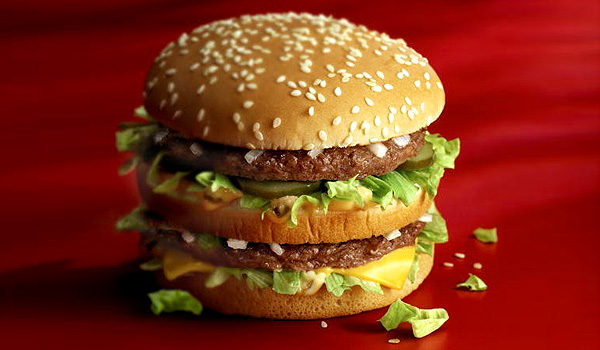
  You may be unaware, but – Huffington Post (Oct. 15) informs us, citing a study by the National Employment Law Project (NELP), that “Taxpayers are shelling out $1.2 billion a year to help pay workers at McDonald’s”. 

   McDonald’s is a highly profitable company, with 2012 revenues of $27.6 b. and net income (profit) of $5.5 b.   Why should taxpayers subsidize McDonald’s workers? 

   And it’s not only McDonald’s.  The government subsidizes the entire fast food industry to the tune of  about $3.8 billion per year, according to a a study by University of California-Berkeley and University of Illinois at Urbana-Champaign.

    How does this work?  McDonald’s Wendy’s, KFC and other companies pay very low wages, close to minimum wage.  Workers then apply for public assistance, and receive food stamps.  They can survive on McDonald’s jobs, only if they get help from the government.  McDonald’s can pay rock bottom wages only because their workers are on food stamps – a program that costs the US about $78 b. a year.   Half of food industry workers are on public assistance, compared with one worker in four for the whole US economy.  According to the experts, “in many cases, it’s not just teenagers working fast food jobs for some extra cash. These low-wage workers are often older — and in many cases are the breadwinners for their families.”

   Fast food companies say they operate on slim margins. Really?  $5 b. in profit on $28 b. in revenue?   About 18 per cent net margin?    SLIM?????  That $1.2 b. subsidy goes directly to the shareholders’ pockets.

   How could this be fixed?  Raise the minimum wage.  Make companies pay living wages.      

   McDonald’s says it provides hundreds of thousands of jobs.   This is true – however, the jobs are largely part-time, low-paying and even though those who have such a job are employed, hence not part of the unemployment statistics, they struggle to make a living. 

   Add that $3.8 b. fast-food subsidy to the enormous costs that fast food impose on health care, through obesity, diabetes, etc., and you have a strange system in which our taxpayer money is used to subsidize an industry that causes health problems that use even more taxpayer money. 


Fama’s right. Shiller is right.  They Can’t BOTH be right?  You’re right too!

By Shlomo Maital      

         Fama Shiller

Eugene Fama & Robert Shiller

 Univ. of Chicago Economics Professor Eugene Fama has won the Nobel Prize for Economics this year, for his research proving that capital markets are fully efficient and rational.

  Yale Univ. Professor Robert Shiller has also won the Nobel Prize in Economics this year, for his research proving that capital markets are irrational and inefficient.

   Wait.  Yet again?  Two economists win the Nobel Prize for proving the diametric opposite?  You say, they can’t BOTH be right?

   Well – you’re right, too.  Everybody is right.  And that’s what’s wrong with economics. 

   Sure, you can finesse this mess. You can say, well, capital markets are usually rational, but sometimes they’re not. 

   Not helpful.  When are they NOT?  When are there bubbles?  How do you know? 

   These diametrically opposite Nobel Prizes for Economics would be impossible in Chemistry or Physics.  There, you have to show clear results.  Higgs won it, for Physics, because at CERN they found strong proof that the particle Higgs theorized actually existed.  They didn’t give the prize simultaneously to someone who proved it did NOT exist.

   Economics is in a sorry state.  The Nobel awards simply reveal that.

Blog entries written by Prof. Shlomo Maital

Shlomo Maital

Pages