Back to the Future with Mick Jagger

By Shlomo  Maital  

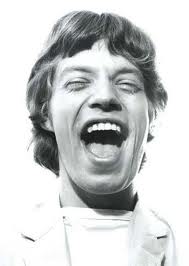
                  Mick Jagger young        Young Mick

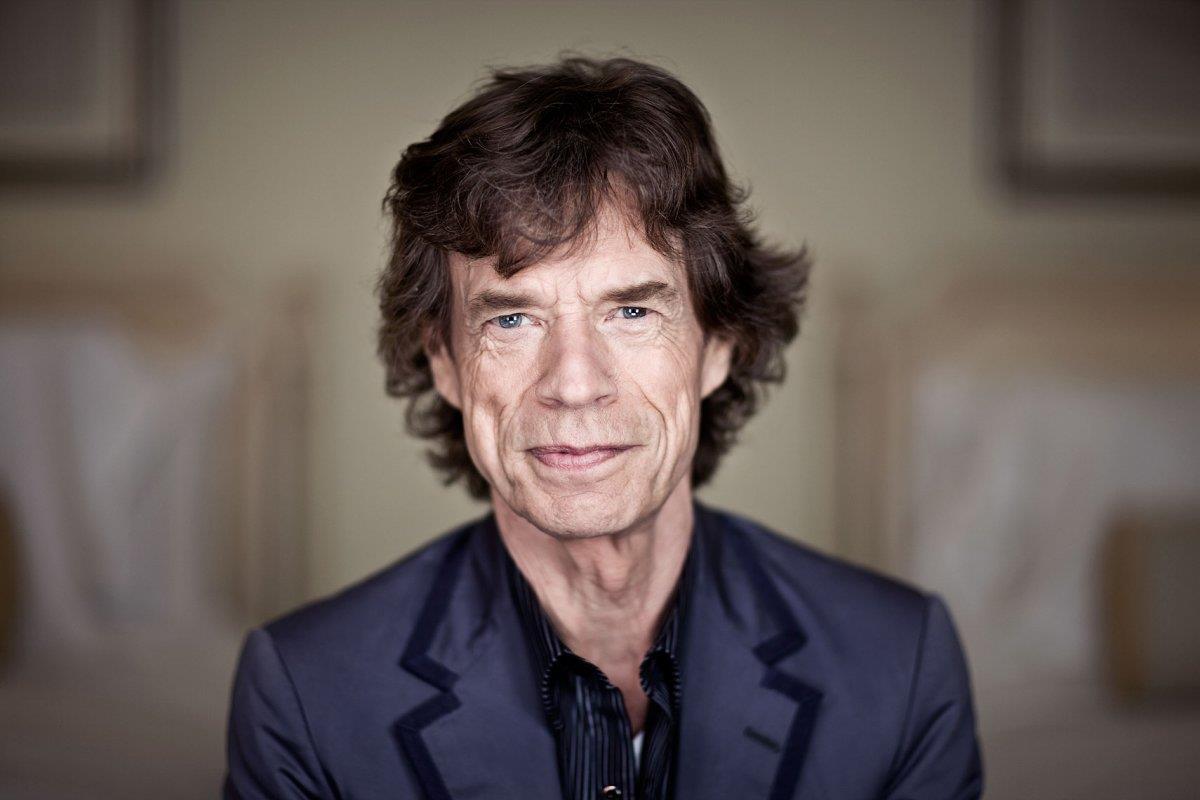
Mick Jagger old Mick age 70

 On July 26, Mick Jagger will turn 70!    You wouldn’t know it from his tours and stage appearances.  It’s the same Mick/Rolling Stone as they were in the 1960’s, when they were a counterculture bad-boy opposite to the clean-cut Beatles.  

   One of my all-time favorite columnists is Financial Times’ Lucy Kellaway, who always has a unique, and sometimes funny, perspective on things.  Here is her ‘take’ on what we can learn from Mick Jagger.   I would add:  He was an economists student, around the time when I was too.  But he did what Nietzsche recommended: “Become who you are!”.   (He became a rocker).    I did not.    Alas. 

     “There they all were, ginormous and wearing just the sort of clothes the Stones ought to wear and playing “Gimme Shelter” just as it sounds on the 1969 LP Let It Bleed. It’s true that you could also see the deep furrows on their faces – but those merely served to mark time and make the lack of any other change all the more remarkable.   The Stones’ tour should be made into a business school case study on when change is called for – and when it isn’t. Change is good if it means being better, faster, cheaper – if it leads to clearer sound and cleaner images. But in anything that touches our emotions, change is a very bad thing indeed.  This applies to rock bands – and it applies to chocolate. The other day I bought an Orange Club biscuit and felt a similar surge of gratitude on finding it identical to the ones I used to have in my packed lunchbox. Equally, when I went to a Clarks shoe shop recently and found the original blonde desert boots with the same orangey stitching and white soles, I would have bought them on the spot, only my feet – like Jagger’s face – seem to have collapsed and spread out and so they no longer fit.   We notice when the things of our youth are tampered with, as that was a time when our memories functioned perfectly. Every word of every Stones song is preserved forever in the aspic of my cerebrum – unlike, say, my newest computer password which never seems to get purchase at all. The Stones wisely don’t mess with our memories, unlike Bob Dylan, who spitefully and perversely performs his old songs as if defying anyone to recognise them.”


How to Get a Child to Intensive Care Fast?  Check Out Formula 1

By Shlomo  Maital  

                       CHINESE GRAND PRIX F1/2008 -  SHANGHAI 18/10/2008  Red Bull Formula 1 Pit Stop

    If you wanted to benchmark world-class best-practice teamwork under time pressure – where would you look?

   How about Formula 1 racing, where a pit stop to change tires can take …only 40 seconds (all four tires) or less?   Check out:

         http://youtu.be/wZAw8cG9ZKs

   In today’s Global New York Times (July 8:  Global Manager – The importance of being imperfect), Julia Werdigier interviews Jan Filochowski, who heads one of the world’s greatest children’s hospitals, Great Ormond St. Hospital, London. 

    He had a problem: How to transfer kids, after open-heart surgery, from the operating theatre to intensive care, super-fast (this transition is the riskiest part of the whole procedure).  Here is how he defines the problem, and his innovative solution:

    “In order to operate on the heart, we have to take the heart offline and operate on it for a while. It’s incredibly risky, and the riskiest time is the transfer from the operating theater to intensive care. Everyone had done everything they could to get that riskiest moment down to 9.5 minutes, but they were thinking that this still was too risky. Then one of the staff said, “Let’s look in a different area altogether. I love motor racing and Formula 1, where they manage to change all tires in a pit stop in 40 seconds.” So we invited Ferrari and McLaren (two Formula 1 car racing teams), and they came and looked at our procedures. As a result, we reduced our change-around time by another 1.5 minutes to 8 minutes. It was very exciting. It turned out that everybody needs a very precise task that they do without any variation whatsoever. By applying those techniques, we were able to do something that was impossible.”

    This is creative thinking.  Ask, how can we do this differently?  Better? Faster? Who can help us?  Look WAY beyond your nose, way beyond hospitals, to …race tracks!   Look for places where seconds are absolutely crucial (a Formula 1 race can be won by only a second or two). 

    No, you don’t need to invent the wheel to be creative.  Sometimes you just need to learn how experts change them.

The Great Innovation Race: Where Is Your Country?

By Shlomo  Maital

  GII Index

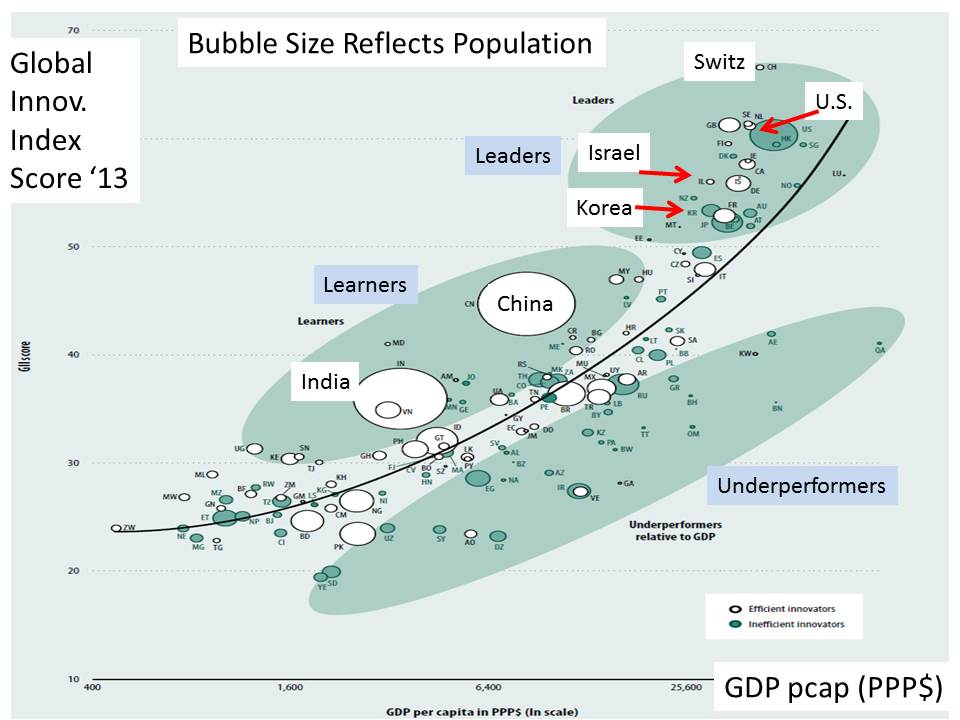
Every summer, the French business school INSEAD, together with Cornell University and WIPO (World Intellectual Property Organization) publishes the Global Innovation Index – a massive database ranking some 142 nations on ‘innovation’, based on 93 separate indices and variables.  Download it at http://globalinnovationindex.org

    In the new 2013 edition, countries are grouped into “leaders” (those who innovation index score, relative to GDP per capita, and per capita GDP are both  high;  “learners” (those whose innovation index is high, and whose GDP per capita is likely to grow in future as a result);   and “underperformers” (those whose innovation performance is below par, relative to what their GDP per capita should generate.    The results are shown in the diagram above.  The ‘y’ axis shows the weighted-average Innovation index score.  The ‘x’ axis shows GDP per capita, in dollars, measured in true, purchasing power exchange rates.  (For your convenience: the two-letter country codes along with the full country name are shown below).

   Switzerland, U.S. and Korea all are among the leaders.  Switzerland ranks #1 in global innovation.  Few countries have Swiss stability, discipline and order – but all countries can learn from it anyway. 

   The size of the circle measures population size. Note that the shading of the circle is significant:  white means “efficient” (innovation resources are used efficiently to generate innovation outputs) while blue means “inefficient”.  The U.S. circle is shaded blue, as is that of Japan and Hong Kong. 

   Pakistan (PK) is a major underperformer.  Malaysia (MY) is about to join the “leaders”.  Indonesia (ID) is on the border of the ‘learners’. 

   This graph reminds us of an important fact.  “Look back, because – they are gaining on you.”  In the economic value chain, there are nations below your country, who want to rise.  If you don’t move up, they will catch you.  You need to emulate the Red Queen in Alice in Wonderland,  who ran faster and faster just to stay in the same place.

    And – this applies to businesses, and even to MBA’s, as well.    They too compete in a Great Innovation Race, even if they don’t always realize it.

A2
AF
AL
DZ
AS
AD
AO
AI
AQ
AG
AR

AM
AW
AU
AT
AZ
BS
BH
BD
BB
BY

BE
BZ
BJ
BM
BT
BO
BA
BW
BV
BR

IO
BN
BG
BF
BI
KH
CM
CA
CV
KY

CF
TD
CL
CN
CX
CC
CO
KM
CG
CD

CK
CR
CI
HR
CU
CY
CZ
DK
DJ
DM

DO
TP
EC
EG
SV
GQ
ER
EE
ET
FK

FO
FJ
FI
FR
FX
GF
PF
TF
GA
GM

GE
DE
GH
GI
GR
GL
GD
GP
GU
GT

GN
GW
GY
HT
HM
VA
HN
HK
HU
IS

IN
ID
IR
IQ
IE
IL
IT
JM
JP
JO

KZ
KE
KI
KP
KR
KW
KG
LA
LV
LB

LS
LR
LY
LI
LT
LU
MO
MK
MG
MW

MY
MV
ML
MT
MH
MQ
MR
MU
YT
MX

FM
MD
MC
MN
ME
MS
MA
MZ
MM
NA

NR
NP
NL
AN
NC
NZ
NI
NE
NG
NU

NF
MP
NO
OM
PK
PW
PA
PG
PY
PE

PH
PN
PL
PT
PR
QA
RE
RO
RU
RW

KN
LC
VC
WS
SM
ST
SA
SN
RS
SC

SL
SG
SK
SI
SB
SO
ZA
SS
GS
ES

LK
SH
PM
SD
SR
SJ
SZ
SE
CH
SY

TW
TJ
TZ
TH
TG
TK
TO
TT
TN
TR

TM
TC
TV
UG
UA
AE
GB
US
UM
UY

UZ
VU
VE
VN
VG
VI
WF
EH
YE
ZM
ZW

A3
AFG
ALB
DZA
ASM
AND
AGO
AIA
ATA
ATG
ARG

ARM
ABW
AUS
AUT
AZE
BHS
BHR
BGD
BRB
BLR

BEL
BLZ
BEN
BMU
BTN
BOL
BIH
BWA
BVT
BRA

IOT
BRN
BGR
BFA
BDI
KHM
CMR
CAN
CPV
CYM

CAF
TCD
CHL
CHN
CXR
CCK
COL
COM
COG
COD

COK
CRI
CIV
HRV
CUB
CYP
CZE
DNK
DJI
DMA

DOM
TMP
ECU
EGY
SLV
GNQ
ERI
EST
ETH
FLK

FRO
FJI
FIN
FRA
FXX
GUF
PYF
ATF
GAB
GMB

GEO
DEU
GHA
GIB
GRC
GRL
GRD
GLP
GUM
GTM

GIN
GNB
GUY
HTI
HMD
VAT
HND
HKG
HUN
ISL

IND
IDN
IRN
IRQ
IRL
ISR
ITA
JAM
JPN
JOR

KAZ
KEN
KIR
PRK
KOR
KWT
KGZ
LAO
LVA
LBN

LSO
LBR
LBY
LIE
LTU
LUX
MAC
MKD
MDG
MWI

MYS
MDV
MLI
MLT
MHL
MTQ
MRT
MUS
MYT
MEX

FSM
MDA
MCO
MNG
MNE
MSR
MAR
MOZ
MMR
NAM

NRU
NPL
NLD
ANT
NCL
NZL
NIC
NER
NGA
NIU

NFK
MNP
NOR
OMN
PAK
PLW
PAN
PNG
PRY
PER

PHL
PCN
POL
PRT
PRI
QAT
REU
ROM
RUS
RWA

KNA
LCA
VCT
WSM
SMR
STP
SAU
SEN
SRB
SYC

SLE
SGP
SVK
SVN
SLB
SOM
ZAF
SSD
SGS
ESP

LKA
SHN
SPM
SDN
SUR
SJM
SWZ
SWE
CHE
SYR

TWN
TJK
TZA
THA
TGO
TKL
TON
TTO
TUN
TUR

TKM
TCA
TUV
UGA
UKR
ARE
GBR
USA
UMI
URY

UZB
VUT
VEN
VNM
VGB
VIR
WLF
ESH
YEM
ZMB
ZWE

NUM
004
008
012
016
020
024
660
010
028
032

051
533
036
040
031
044
048
050
052
112

056
084
204
060
064
068
070
072
074
076

086
096
100
854
108
116
120
124
132
136

140
148
152
156
162
166
170
174
178
180

184
188
384
191
192
196
203
208
262
212

214
626
218
818
222
226
232
233
231
238

234
242
246
250
249
254
258
260
266
270

268
276
288
292
300
304
308
312
316
320

324
624
328
332
334
336
340
344
348
352

356
360
364
368
372
376
380
388
392
400

398
404
296
408
410
414
417
418
428
422

426
430
434
438
440
442
446
807
450
454

458
462
466
470
584
474
478
480
175
484

583
498
492
496
499
500
504
508
104
516

520
524
528
530
540
554
558
562
566
570

574
580
578
512
586
585
591
598
600
604

608
612
616
620
630
634
638
642
643
646

659
662
670
882
674
678
682
686
688
690

694
702
703
705
090
706
729
710
239
724

144
654
666
736
740
744
748
752
756
760

158
762
834
764
768
772
776
780
788
792

795
796
798
800
804
784
826
840
581
858

860
548
862
704
092
850
876
732
887
894
716

COUNTRY
AFGHANISTAN
ALBANIA
ALGERIA
AMERICAN SAMOA
ANDORRA
ANGOLA
ANGUILLA
ANTARCTICA
ANTIGUA AND BARBUDA
ARGENTINA

ARMENIA
ARUBA
AUSTRALIA
AUSTRIA
AZERBAIJAN
BAHAMAS
BAHRAIN
BANGLADESH
BARBADOS
BELARUS

BELGIUM
BELIZE
BENIN
BERMUDA
BHUTAN
BOLIVIA
BOSNIA AND HERZEGOWINA
BOTSWANA
BOUVET ISLAND
BRAZIL

BRITISH INDIAN OCEAN TERRITORY
BRUNEI DARUSSALAM
BULGARIA
BURKINA FASO
BURUNDI
CAMBODIA
CAMEROON
CANADA
CAPE VERDE
CAYMAN ISLANDS

CENTRAL AFRICAN REPUBLIC
CHAD
CHILE
CHINA
CHRISTMAS ISLAND
COCOS (KEELING) ISLANDS
COLOMBIA
COMOROS
CONGO
CONGO, THE DRC

COOK ISLANDS
COSTA RICA
COTE D’IVOIRE
CROATIA (local name: Hrvatska)
CUBA
CYPRUS
CZECH REPUBLIC
DENMARK
DJIBOUTI
DOMINICA

DOMINICAN REPUBLIC
EAST TIMOR
ECUADOR
EGYPT
EL SALVADOR
EQUATORIAL GUINEA
ERITREA
ESTONIA
ETHIOPIA
FALKLAND ISLANDS (MALVINAS)

FAROE ISLANDS
FIJI
FINLAND
FRANCE
FRANCE, METROPOLITAN
FRENCH GUIANA
FRENCH POLYNESIA
FRENCH SOUTHERN TERRITORIES
GABON
GAMBIA

GEORGIA
GERMANY
GHANA
GIBRALTAR
GREECE
GREENLAND
GRENADA
GUADELOUPE
GUAM
GUATEMALA

GUINEA
GUINEA-BISSAU
GUYANA
HAITI
HEARD AND MC DONALD ISLANDS
HOLY SEE (VATICAN CITY STATE)
HONDURAS
HONG KONG
HUNGARY
ICELAND

INDIA
INDONESIA
IRAN (ISLAMIC REPUBLIC OF)
IRAQ
IRELAND
ISRAEL
ITALY
JAMAICA
JAPAN
JORDAN

KAZAKHSTAN
KENYA
KIRIBATI
KOREA, D.P.R.O.
KOREA, REPUBLIC OF
KUWAIT
KYRGYZSTAN
LAOS
LATVIA
LEBANON

LESOTHO
LIBERIA
LIBYAN ARAB JAMAHIRIYA
LIECHTENSTEIN
LITHUANIA
LUXEMBOURG
MACAU
MACEDONIA
MADAGASCAR
MALAWI

MALAYSIA
MALDIVES
MALI
MALTA
MARSHALL ISLANDS
MARTINIQUE
MAURITANIA
MAURITIUS
MAYOTTE
MEXICO

MICRONESIA, FEDERATED STATES OF
MOLDOVA, REPUBLIC OF
MONACO
MONGOLIA
MONTENEGRO
MONTSERRAT
MOROCCO
MOZAMBIQUE
MYANMAR (Burma)
NAMIBIA

NAURU
NEPAL
NETHERLANDS
NETHERLANDS ANTILLES
NEW CALEDONIA
NEW ZEALAND
NICARAGUA
NIGER
NIGERIA
NIUE

NORFOLK ISLAND
NORTHERN MARIANA ISLANDS
NORWAY
OMAN
PAKISTAN
PALAU
PANAMA
PAPUA NEW GUINEA
PARAGUAY
PERU

PHILIPPINES
PITCAIRN
POLAND
PORTUGAL
PUERTO RICO
QATAR
REUNION
ROMANIA
RUSSIAN FEDERATION
RWANDA

SAINT KITTS AND NEVIS
SAINT LUCIA
SAINT VINCENT AND THE GRENADINES
SAMOA
SAN MARINO
SAO TOME AND PRINCIPE
SAUDI ARABIA
SENEGAL
SERBIA
SEYCHELLES

SIERRA LEONE
SINGAPORE
SLOVAKIA (Slovak Republic)
SLOVENIA
SOLOMON ISLANDS
SOMALIA
SOUTH AFRICA
SOUTH SUDAN
SOUTH GEORGIA AND SOUTH S.S.
SPAIN

SRI LANKA
ST. HELENA
ST. PIERRE AND MIQUELON
SUDAN
SURINAME
SVALBARD AND JAN MAYEN ISLANDS
SWAZILAND
SWEDEN
SWITZERLAND
SYRIAN ARAB REPUBLIC

TAIWAN, PROVINCE OF CHINA
TAJIKISTAN
TANZANIA, UNITED REPUBLIC OF
THAILAND
TOGO
TOKELAU
TONGA
TRINIDAD AND TOBAGO
TUNISIA
TURKEY

TURKMENISTAN
TURKS AND CAICOS ISLANDS
TUVALU
UGANDA
UKRAINE
UNITED ARAB EMIRATES
UNITED KINGDOM
UNITED STATES
U.S. MINOR ISLANDS
URUGUAY

UZBEKISTAN
VANUATU
VENEZUELA
VIET NAM
VIRGIN ISLANDS (BRITISH)
VIRGIN ISLANDS (U.S.)
WALLIS AND FUTUNA ISLANDS
WESTERN SAHARA
YEMEN
ZAMBIA
ZIMBABWE


How to Comfort Newtown, CT Kids:  Doggies!

By Shlomo  Maital  

 Comfort Dogs

     How in the world does one help schoolchildren, staff members and families, from the Sandy Hook Community, Newton, CT, where last December many children and teachers were shot by a deranged killer?   How do you help them on their  first day back at school?

   According to the National Association of School Psychologists’ Communique (June 2013), you send them doggies.  A caring Lutheran Church charity ministry from Addison, IL, sent K-9 Comfort Dogs and their handlers.  “When the kids arrived at school their first day back, we were the first ones they saw.  …Some kids came to just lie on a dog or cry on a dog. Others had shut down. They couldn’t talk at all, but they just kept petting the dogs.  Then, you could see their demeanor change and they were able to return to the classroom,”  reports one of the handlers. 

    There is no complex theory behind why comfort dogs comfort.  Dogs are pure love and unrestrained affection (apart from Rotweilers and pitbulls trained by evil humans to do harm – this is a human failing, not a canine one).  In a world full of evil, dogs bring us good, and good feelings.  Can anything rival a warm puppy, to convey a feeling of ‘all is well’ in the morning – as my wife and I get from our mongrel Yorkshire, Pixie, every morning, with her wake-up licks? 

    Israel has a version of comfort dogs – soft toy dogs called “Chibuki”,  (“hugs” in Hebrew), that wrap snugly around kids’ necks and just feel good.   But I think the real thing is much better.

   Special thanks to the caring people of Addison, IL  Lutheran Church.   Let’s hope the idea of comfort dogs will spread everywhere,   wherever children and adults need friends, warm fur and a happy lick. 

The Crux of the Problem: Global Mess, Local Politics

By Shlomo  Maital

Angela Merkel

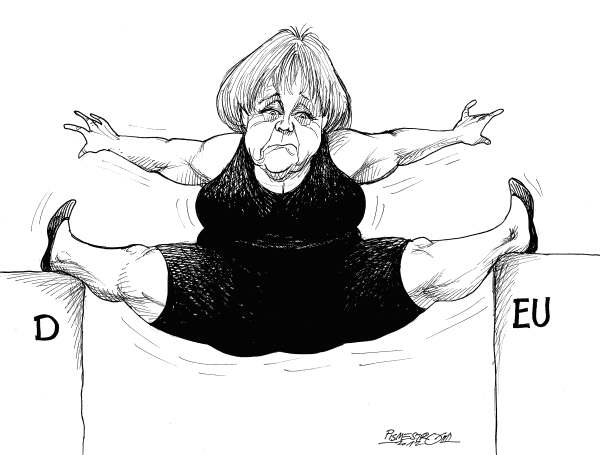
   Why is it taking the world  (G7, G8, G20,  G284) so long to sort out the financial and economic woes afflicting it?  Here is one very simple explanation:

     Global troubles.  Local politics.

   Each country pursues its own interests, ignoring mostly the interests and troubles of other nations.  Why?  In order to get re-elected, which is the primary goal of politicians.

   Take for instance Chancellor Angela Merkel.  She is up for re-election in September. She will doubtless win a third term.    Why?  Today’s Global New York Times (“Germany comes first for Merkel as vote nears”, June 28, p. 1) quotes a German expert:

   “…political circles, particularly in the ministries and the Chancellery, say, ‘We know what the financial markets expect of us—but we are not elected by them…..what the Bundestag, or German Parliament, permits, is what we execute.” 

   And the German Parliament permits what the German voters want, which is – fewer or no bailouts for incompetent spendthrift irresponsible budget-busting southern European governments.

    Don’t blame Merkel and Germany.  America and Obama do precisely the same, as does Cameron and Britain,  Hollande and France (in growing disagreement with their German neighbors), and every government I know, except those headed by the late Mother Teresa, and there are no such governments. 

     Global woes, local politics.  Is there any way to resolve this dilemma?    

..

CALL it a trifecta

One could quibble with the details (why 7% and not 7.1% or 6.9%) but there is an underlying logic that is easy to appreciate.

Bill White was warning about the dangers of this approach at the BIS well before the crisis; he has an excellent update here.    

Are the Rich Addicted to Cheap Money? 

By Shlomo  Maital

       Trifecta

  According to Wikipedia,  “in horse racing terminology, a trifecta is a parimutuel bet in which the bettor must predict which horses will finish first, second, and third in exact order.”

  According to The Economist columnist Buttonwood, (“The long goodbye”,   Economist, June 20th 2013)  June 19 saw an unusual “trifecta”:  

   “After the Fed announcement yesterday,

*  the Dow fell 200 points (and European equities are down 2% this morning, June 20),

* the 10-year Treasury bond yield rose to 2.38% and

* gold is down more than 4% to a two-and-a-half-year low. It takes a remarkable piece of news to send all three markets lower. “

  What in the world could drove stocks, bonds AND gold down, all three at the same time? A rare ‘trifecta’?

    It was Ben Bernanke’s announcement that the U.S. Fed would begin a 3-stage policy:   1. tapering (the slowing of asset purchases) which will start later this year if the economic improvement continues;  2. the ending of asset purchases (when unemployment falls to 7%, perhaps next year); and3.  a return to normal monetary policy (which could involve higher rates or an unwinding of QE) which would require unemployment to fall to 6.5%.

   The Economist comments:  “Investors reacted  like trust fund kids being told that daddy is going to cut their monthly allowance. How are they going to cope without the Fed’s largesse?    It is a sad state of affairs that the supposed “masters of the universe” who pride themselves on their Darwinian skills in beating the market should be so dependent on [the Fed].   As has been pointed out before, the rich have done very well out of QE [Quantitative Easing – massive purchases of bonds by the Fed, injecting huge amounts of money and lowering interest rates];  never mind “welfare queens”, these are the welfare kings.”

  Sorry, Masters of the Universe.  You may actually have to pay reasonable interest rates for your borrowing.  There are great institutions that can help you overcome your addiction to cheap money.  And hey, if you like the addiction, you can keep on blasting the Fed for its wrongheaded policies, while you continue to make fortunes from the piles of very very cheap money it creates.  Why leave the party if the music is still playing?      

                         Creativity Is Breaking the Rules:  Two Examples

By Shlomo  Maital

            Mowgli

 Creativity is widening the range of choices, often by breaking the rules – by doing things differently than everyone else.  It takes courage and mental flexibility just to conceive of creative choices.  Here are two case studies.

   1.  Disney Theatrical Group is initiating and investing in a Broadway musical production of The Jungle Book, first published by Rudyard Kipling as a series of stories in magazines in 1893-94, and now a Disney property (like Winnie the Pooh).   

     As director, Disney chose a MacArthur ‘genius’ grantee, Mary Zimmerman.  Here is how she is building the musical.  According to Rob Weinert-Kendt (New York Times, June 25),

    “…she starts rehearsals without a script, then works on writing one up until opening night…”!       The new show opens July 1.  It has already aroused controversy, because Zimmerman’s setting is India, and she has been accused of (wait for it…)  “cultural colonialism” (appropriating India’s culture for capitalist profit)!  

     Those who produce Broadway musicals invest millions of dollars in high-risk ventures.  Disney has shareholders who track everything the company does.  When millions are invested in a new show, without even having a script at the start of rehearsals…   this is definitely breaking the rules.   

    I wish Mary Zimmerman success, and hope my blog readers, some of them, will emulate her.   


                                                         TIME


2.  Magazines have covers. TIME magazine has a different cover for each issue.  New issue, new cover.  That’s the rule.

   Why?

   Why not multiple covers for the same issue?  Why not, say, four different covers for the July 1 print issue of TIME – one new cover for each of four consecutive days?

   This is TIME’s innovation, in desperately struggling to gain new readers and keep old ones, in an era when young people get their news on-line.   

  Other magazines follow suit. Fitness magazine ran multiple covers for its July-August 2012 issue. 

     The point here is,  ask yourself, what are the key assumptions?  How does EVERYONE do something?  Then ask, why is this so?  How can we widen the range of choices, for ourselves and four our clients?  Always, the point is not to do something new, but to do something better, to add value for clients.

    The difficulty is, people are used to old familiar things, and often resist anything new, anything changed. It takes courage to be an innovator, to widen the choices, to break the rules, and you have to be prepared to fail, sometimes massively.  TIME knows this. So does Mary Zimmerman.  We wish both great success.

Becoming Jack Dorsey..How and Why You Should

By Shlomo  Maital

                    dorsey1     Jack Dorsey

  Jack Dorsey, born in St. Louis,  is 36 years old.  He is the founder of Twitter, which has changed the way the world communicates.  How?  Here is his story, as told to the CBS program 60 Minutes.

  As a child, Dorsey had a speech impediment and partly as a result was extremely shy.  He found solace in computers, and taught himself to program before he was 12.  He dreamed of working in New York City and got a job with a package delivery firm there by hacking their website, then offering to show them how to fix it. 

   In St. Louis, he amused himself by listening to 911 emergency dispatchers on a police frequency scanner. He noticed that all their messages were very short.  Who am I.  Where am I.  What am I doing. Where am I going.   Seven years ago, he launched Twitter on that basis —  simple, short messages.  So that everyone in the world “who owns a $5 cell phone could communicate with the world” – how I feel, what I’m doing, where I’m going. 

   Dorsey understands that technology should disappear.  It should be so simple for users that they are unaware of it.  This principle is usually forgotten – look at how complex it is, for instance, to set up a home router – something I’ve been struggling with.   He was awarded by the Wall St. Journal the “Technology Inventor of the Year” award.

   Dorsey was kicked out of Twitter by other founders and the Board of Directors.  He calls it “a punch in the gut”.   Like Jobs, also kicked out of Apple, later, he was invited back.  He says he does not bear a grudge.   Meanwhile he has founded another pathbreaking company that is changing the world, called Square.  Plug a dongle (white square) into the earphone plug,  and you have a way to start a business and accept payment.  The idea came from his friend Jim McAlvy, a nerd and artist, who lost a sale of a piece of art because he could not accept a credit card.  Square is now used by many small businesses and has $12 b. turnover yearly.   When you enter, say, a café, the iPad of the owner identifies you instantly (through GPS), your face appears on the screen, and two touches charges you for the coffee and sends you a receipt.  Simple. Transparent. Easy. 

    Dorsey is highly self aware.  He knows his faults. Here is how he describes them:   “I like to think about things myself. And then.come out with a decision. I can be silent at times, this unsettles people.   Biggest thing I’ve learned, I need to communicate more, be more vocal.”

  At Square, he has no office or even a desk.  Everything is on his iPad.  He walks around and constantly talks to the workers.

He is now considering running for Mayor of New York, to replace Michael Bloomberg, who will soon complete his final term of office. 

   If I could, I’d vote for him. 

   Why should we become like Jack Dorsey?  And how?   Honesty.  Transparency.   Simplicity.  Self-awareness.  And modesty.    And superb marshaling of creativity to tackle unmet social needs. One person can indeed change the world, hugely – and more than once. 


The Earth’s Economic Center of Gravity: The Two Thousand Year Loop

By Shlomo  Maital

          Center of Gravity

   A brilliant study by McKinsey Global Research scholars did the following:  Let a country’s GDP be its ‘weight’.  Calculate the world’s “center of gravity” based on the weight of each country.  Do this for the past 2000 years. 

   The results are shown above.  In AD 1, and in the year 1000, the center of gravity of the world, in terms of economics and wealth, was in Asia.  This was mainly because of China, which had technologies no other nation could even dream of. But the Chinese emperor decided to destroy them, fearing what they would do to his traditional society. (In retrospect, he was perhaps somewhat wise).   As Britain led the First Industrial Revolution, the center of gravity rapidly shifted West, to Europe.  Then, after World War II, it shifted again rapidly, to the West,  to the United States.

   From 1950 to 2000, the world’s center of gravity shifted again, this time back to the East – first northeast, as Europe grew and expanded, and then, rapidly, back to the Southeast,  toward China.  By 2025,  the world’s center of gravity will be solidly in Asia,  essentially in China, as China becomes the world’s largest economy.

   And the 2,000-year loop will be complete.

   Each of us can draw his or her own conclusions.  

Why Phil Mickelson Is a True Winner!

By Shlomo  Maital

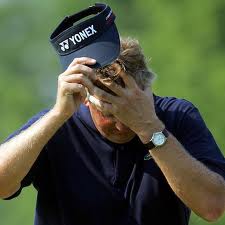
       Mickelson

     It’s official.  For the sixth (!!!) time, golf pro Phil Mickelson has been runner-up at the US Open.  Yes, Phil came second again.  After leading up to the final round, he bogeyed the shortest hole,  and finished four over par, shot a 74 on the final round, and lost by two strokes to Justin Rose, a British player, who ‘aced’ that final round, cool as a British cucumber.

  Mickelson lost the US Open again – on his 43rd birthday. It was ‘heartbreaking’, he said to the press, signing autographs as he always did even long after dark.  He has broken the record for second-place finishes. 

 Four years ago, in 2009,   I wrote a blog about Mickelson, writing:

   Professional golfer Phil Mickelson is one of golf’s great athletes.   Recently, his wife Amy was diagnosed with cancer, and his mother as well.  Mickelson took time off from the Professional Golfers’ Association tour to care for them.    Amy survived.  Mickelson was there for her.

   Now four years later, Mickelson flew to attend his daughter’s graduation from college,  flying back to play in the US open just the night before it began, losing valuable days of practice.  For Phil, his family comes first. 

  So, for this reason, I believe Phil Mickelson is a real winner, not a runner-up.  He is clearly a loving caring person. Perhaps some of that emotion rattles his putter and driver on the course.  But it also makes him a great human being and role model,  father and husband.

   You’re a winner, Phil.  You are in first place in my books, forever. 

Blog entries written by Prof. Shlomo Maital

Shlomo Maital

Pages