Why Dreams Make You Happy…Until They Come True

By Shlomo Maital

        Dreams

 The lovely blog called Babbage, on science and technology, in The Economist, wrote on April 5 about a neat piece of behavioral research.  It is by a team led by Eugene Caruso, Univ. of Chicago, and will appear in Psychological Science.

    Here is the experiment: “323 volunteers [recruited through Mechanical Turk, amazon’s micro-job portal] were divided into two groups. For one group, a week before Valentine’s Day (Feb. 14), they were asked how they planned to celebrate it.   A week after Feb. 14, the second group reported how they HAD celebrated. “

   Both groups had to describe how near the day they felt, on a scale of one to seven.

    Those describing future plans were far more likely to report it as “a short time from now”.   Those who already experienced it tended to report “a long time ago”.

    Conclusion: “Something happening in one month feels psychological closer than something that happened a month ago”.

     Does this jibe with YOUR experience?  Do you get much enjoyment out of anticipating future pleasures, like vacations, purchases, family events?  Do past events, purchases, etc., somehow feel distant and perhaps a bit ho-hum? 

    Caruso speculates that depression may occur because people who feel the past as being closer may ruminate about the bad things that occurred to them.   Babbage thinks politicians should talk more about future plans than about the past. (I think they already do this, but boringly).  

     For individuals: Perhaps we should emulate the Japanese.  Americans, when they buy something on-line, want it NOW!  Japanese don’t mind waiting two weeks, because they like to anticipate the purchase’s arrival during the waiting period.   It’s pretty simple.  Keep a host of pleasant future events lined up in your mind, and replenish the list from time to time; take the list out when you’re a bit down, and go over it in your mind.  Reap the sunshine it brings.  Don’t count on all the old stuff you bought to keep you happy; it fades quickly.   Dreams themselves make us happy; once they come true, well —  perhaps they fade a little.   So—dream on!   
  

When Is Less Personal Freedom Better than More?

By Shlomo Maital

       chains

   Personal freedom – the right, nay the OBLIGATION, to find personal fulfillment, pleasure and happiness – is a dominant social trend – on a “nearly uninterrupted 40 year winning streak”, as NYT columnist David Brooks notes (April 3/2013).  We have seen enormous expansions of social and lifestyle freedom, in the 1960s,  and economic freedom, in the 1980’s.  Personal freedom has become the highest ideal.  In undemocratic nations, where people are enslaved, this remains true.  But Brooks asks, have we overdone the value of personal freedom [in democratic nations]?  Has it actually begun to make us less happy rather than more? 

      His brilliant perspective on the gay marriage firestorm in America, involving the Supreme Court, is this – Gays are abandoning personal freedom (the right to make and dissolve unions, at will, instantly) for ‘chains’ of marriage.  They are fighting hard for those chains, and they believe it will make them happier. And it will. 

      Things that constrain our freedom sometimes help, rather than hinder.  Brooks quotes Edmund Burke: “…men are qualified for civil liberty in exact proportion to their disposition to put moral chains upon their own appetites…society cannot exist unless a controlling power upon will and appetite be placed somewhere, and the less there is within, the more there must be without”.   Our own internal constraints on our need for instant gratification (“within”) have become greatly weakened. Result:  obesity, divorce, drugs, etc.   We need more “do without”, “do with less”, “give it up”. 

       In the past 45 years, I wrote and published many academic research papers.  Very few of them are worth anything. But perhaps one of them is.  Economists claim that the more choice we have, the better. I provided theory and evidence,  in a rather obscure journal,  that sometimes, we are better off when we constrain ourselves, put chains on ourself.  As,  when I make myself finish revising a chapter, before going for a pleasant run along the beach.  No-one paid attention to the article, but I kind of like it.  Here is the reference, on the off chance someone might want to dig it up [“Prometheus Rebound:  On welfare-improving constraints”, Eastern Economic Journal, XII (3), July 1986, 337-344.]

     If people have a psychological tendency to prefer instant immediate gratification over deferred gratification, then things that constrain this ‘quick buck’ appetite can be very helpful and make us better off.  If society doesn’t provide these ‘chains’, perhaps we can invent our own.  We should understand, if Brooks is right, that “the balance between freedom and restraint has been thrown out of whack”. 

What Is Your Own Personal “Exodus”?

By Shlomo Maital

         Moses

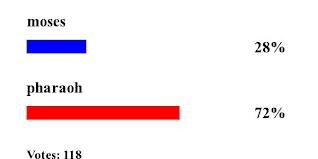
Survey of the Children of Israel, 3000 years ago:  +/- 3% random error,

“Should we leave or stay?”

 Today is the seventh and last day of the Jewish religious festival, Passover. It coincides with Easter, because the Jewish religious calendar is lunar and Easter too is determined by the lunar calendar (The Last Supper was the Passover Seder).  

   During Passover, we recount the story of the Jews’ Exodus from Egypt.  Today, in synagogue, we read the Song of the Sea, a Biblical passage that extols how G-d saved the Jews by parting the Red Sea, then drowning the Egyptian King and his soldiers.  My wife and I struggle with that passage (which is also read in daily prayers), because we do not think Jewish values condone exulting when people die, even if it’s your fiercest enemy sworn to kill you.  So, here is how I deal with it.

     Every nation has a legend about how it was born.  The Exodus from Egypt, from slavery to freedom in our own land, is that of the Jewish people.  This story, about defying impossible odds, confronting Pharaoh, persuading the majority of doubters, and making a 40-year dry-as-dust sojourn through the Sinai Desert to reach the Promised Land, is seminal.   It led Israel’s leaders to declare statehood, in 1948, when every sane advisor advised not to and when the entire population of Israel was less than the rounding error of surrounding Arab nations.  It leads young Israelis to launch startups, against impossible odds.   The story of the Exodus had to be dramatic enough to burn itself into the culture and consciousness of a people and to stick there for 3,000 years.  And it doesn’t matter if it happened or if it didn’t.  It achieved its goal – to shape and sustain a people, even through the Holocaust. 

     Every person has a legend.  A personal legend is about what happened to you in the past,  what is happening to you now, and what will happen to you in the future.  You own your legend. You have EVERY right to interpret the past, as you wish, to alter it, to shape your consciousness and behavior. And for sure, you have the right to make an Exodus – to examine where you are, coldly and objectively, and if you are not where you wish to be, make your own Exodus, lead yourself out of bondage, and into the freedom you seek.  Make your own legend. And do it now!

    I did.  After prostate cancer, I chose to take early retirement (Exodus) from an uncomfortable university professorship (comfortable in every way except the useless research I was churning out), and since then have produced books and textbooks that I hope are useful for managers and students of management.  My latest book, due out soon, is about creativity and how to strengthen it.   I have my own personal legend – breaking the invisible chains of tenure to do only what is productive and useful and meaningful, to find meaning. 

    What is your Exodus?  What is your personal legend?  What will you tell yourself, ten years from now, about what you are living today?   Is it a legend you love?  If not, what will you do about it?  What excuses are you making to avoid your Exodus, and will you be Moses or  Dumbo?  Are you making meaning? Or money?

     Don’t listen to your internal pro-Pharaoh voice.  Defy it.      

When Banks are Bigger Than Countries – Beware!

By Shlomo Maital

                   Credit to GDP      

    (For June 2011, post-crisis)

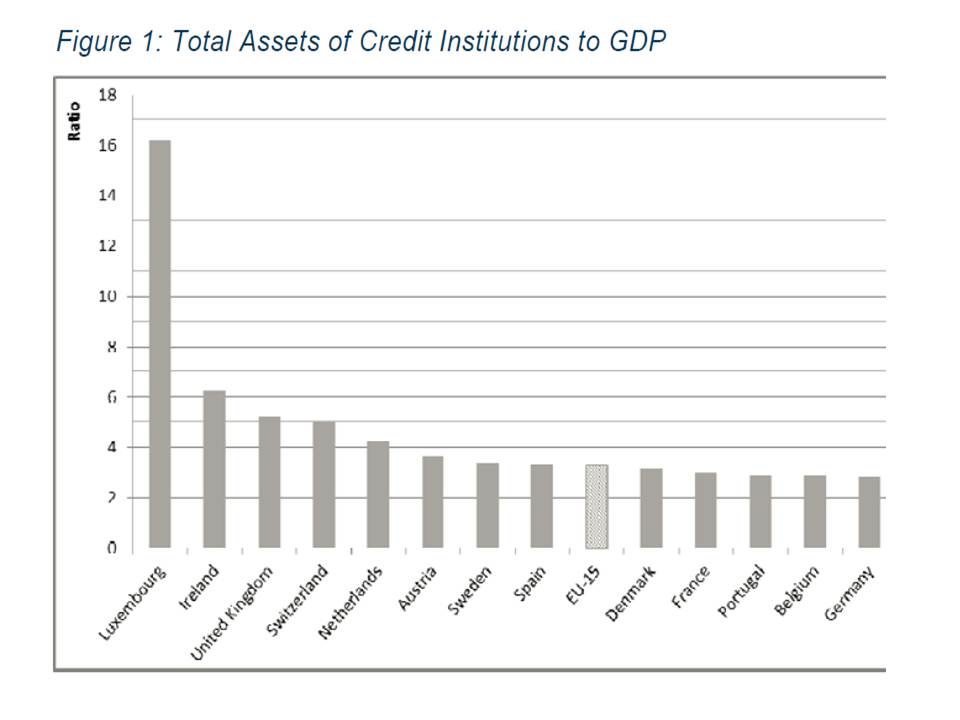
   You know you are in trouble when the tail starts wagging your dog.   And – when the banks are much bigger than the countries in which they reside.  The chart above * shows bank assets as a fraction of the GDP of the nation in which they function.   Not shown are: Cyprus (7.2 times GDP) and Malta (7.9 times GDP).    

   Luxembourg, a favored tax haven, has bank assets 16 times its GDP. But this is an anomaly – investors are unlike to pull their money out, because there are no safer havens for underground money.  According to taxhavens.biz, “…As a tax haven Luxembourg does not tax the interest gained by offshore bank accounts. Offshore bank accounts in the tax haven of Luxembourg are a guaranteed means of increasing capitals whilst at the same time receiving quality asset protection. In the tax haven of Luxembourg offshore bank accounts are very easy to establish and maintain.”   But the other countries with very high bank-asset-to-GDP ratios are in trouble or have been:  Britain (a financial center), Ireland, Switzerland, Netherlands, Spain.   And of course, lately, Cyprus.  Is Malta next in line?  ?Are banks too big even in France and Germany?

     The problem?  It is easy to make a fortune attracting hot money, most of it black.  But to get that money, you have to make it as easy for it to leave as it is to enter. That means, you can lose it in an instant, as Cyprus lost most of its Russian laundered money just moments before, on March 16, it tried to lower the boom on its depositors and freeze their accounts, under EU pressure. (Someone at Cyprus’ Central Bank apparently leaked the news to oligarch Russian depositors, who bailed out electronically just in the nick of time).   The message to nations: Avoid making a quick buck on quick bucks.  They are unstable, and when they leave, it will take years of pain and suffering to clean up the mess, as has happened to Cyprus.  When hot money leaves, your banks are bankrupt, in an instant.  Cyprus has now imposed restrictions on moving money out, against EU laws and far far too late. 

   I am very fond of Cyprus, and even co-authored a book on it,  Reinventing Cyprus.  One of my friends in Cyprus served for years on the Board of one of Cyprus’ leading banks, and kept it out of hot water by insisting it avoid the money laundering no-questions-asked deals that Luxembourg and Switzerland love.  He saved the savings of many Cypriots by his courage.  Why then weren’t other ‘wise men’ able to do the same, in Cyprus, UK and elsewhere? 

   When banks get bigger than the countries they operate in, beware.  Banks are meant to finance industry, rather than vice versa.  It seems we have learned little or nothing from the 2008-12 global financial crisis.  The banks are still obese and unwilling to diet; and they have enough money to influence the political leadership, at will.   

     It is time we put an end to the ugly bank tails wagging us all, just because they sit on pots of money.  After all, it’s OUR money.   

* What is the Appropriate Size of the Banking System? Dirk Schoenmaker, Dewi Werkhoven, Duisenberg School of Finance, October 2012.


Tiger Woods: Perseverance Through Adversity

By Shlomo Maital

                     Woods

 At the peak of his career, Tiger Woods crashed, when sordid details of his marriage and family life emerged.  In November 2011, he hit bottom – he dropped to #58 in the world professional golf rankings, from a former #1.  

  But on Monday, with a victory at the Arnold Palmer Invitational, Woods returned to the #1 slot, for the first time since 2010.  With his win, Woods supplanted Brandt Snedeker, as the favorite for the upcoming Master’s.

    Woods is now 37 years old.  He passed Jack Nicklaus, last year, with his 74th title, and he is only five titles from equaling Sam Snead’s career victory total of 82.  It took Snead almost 30 years to achieve that. 

    Woods has suffered injuries, had to retool his stroke, been attacked viciously in the media for his philandering, went through a tough divorce, and at times played terribly.  Many of his ‘wounds’ were self-inflicted.  Perhaps we can forgive him, because as a star athlete from an early age, he may not have had the time nor the opportunity to learn how to  live; he was too busy playing golf, learning to drive and putt.  He is not the first, nor the last athlete, to screw up his personal life.  But through it all, he never gave up. 

   Tiger Woods is back.  Let’s all of us learn from his perseverance.  If you love what you’re doing, keep at it, no matter what, eventually, if you persist, you will triumph.   Character and determination play a far bigger role in achievement than does genius. 

   And, p.s. Nike – no, “winning does not take care of everything”.  Sometimes winning takes care of nothing.  Being a decent human being takes care of most things.   Tiger learned this the hard way.  Too bad his sponsor hasn’t. 

At Passover: We Empathize With the Exodus of Eritreans

By Shlomo Maital

              Eritrea

   At our Passover Seder, we basked in the warm glow of our family, grandchildren and guests.  We enjoyed our two sons’ gourmet cooking (leg of lamb, done to a turn), and our youngest granddaughter Eliana’s wonderful smile and disposition.  We told the story of the Exodus, how the Jewish people became free from the bondage of Egyptian slavery some 3,000 years ago. 

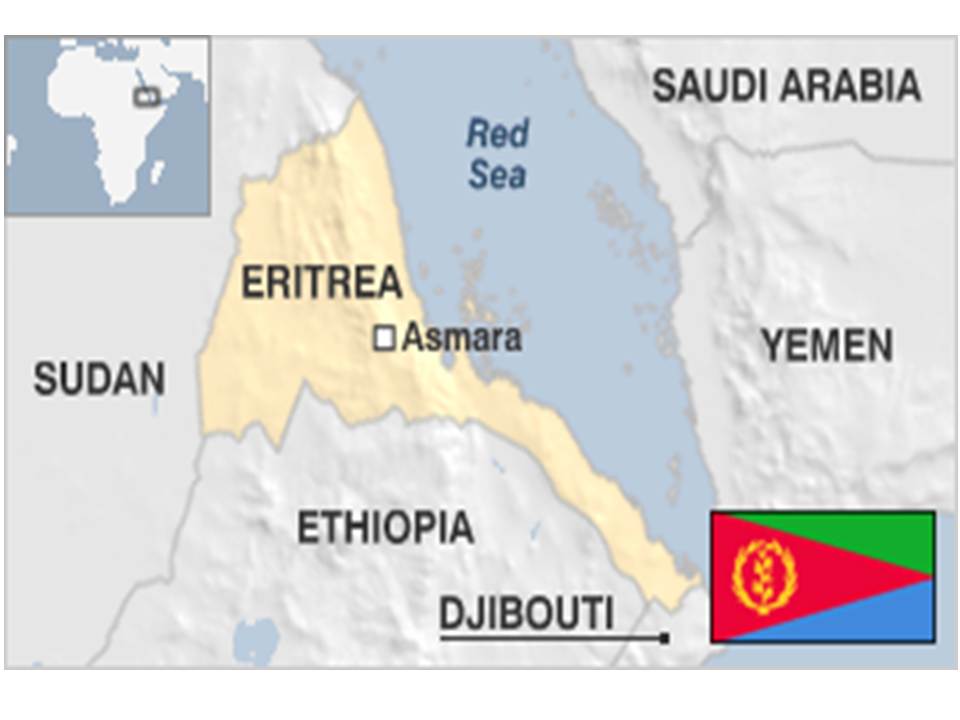
   But we also heard about a new Exodus, from Eritrea, from our two Eritrean guests, who some years ago made their way at great danger and difficulty across Sudan to Egypt, across the Sinai Desert, to an unwelcoming Israel.   One of them just completed his degree in psychology at a leading Israeli college.  I had the pleasure of eating at his restaurant in South Tel Aviv, which he owns together with an Israeli partner.   Our outgoing Interior Minister Eli Yishai (who leads the Sefardi Haredi party Shas) has determinedly tried to expel the Eritreans, illegally; good that he is now replaced with Likud Minister Gideon Saar. 

    One of our guests told us how today, the Eritrean refugees have become an industry, much like the Somalis treat passing ships.  As Eritreans flee their country from a murderous dictator, a modern Hitler, many are captured in Sudan,  almost at once, then passed on like chattel from one criminal gang to another, sold each time,  ending up in Sinai in the hands of Bedouin, who demand tens of thousands of dollars in ransom (to recoup their ‘investment’). (Recently an 8-year-old Eritrean child was held for ransom; the Eritrean Diaspora somehow raised the money to free her).   There are worse horror stories that I cannot even recount here in this blog, related to body parts for organ transplants. 

     All this goes on, with utterly no concern in the world and no press coverage.  At our Seder, I remember Edmund Burke’s adage:  All that it takes for evil to triumph, is for good people to do nothing.  And we are good people.  And we are doing nothing.  So the evil in Eritrea is triumphing.  Very very sad, very very angering.   

How Viruses Can Make Batteries, Instead of Colds and Flu

By Shlomo Maital

         Virus              

   Angela Belcher is an MIT professor of engineering and she has had an amazingly creative idea – and made it happen.  And she is young…she only completed her chemistry Ph.D. in 1997.  Also – she’s one of those genius MacArthur Fellows.   

   Here’s what she has done:   Created new virus-produced batteries that have the same energy capacity and power performance as state-of-the-art rechargeable batteries being considered to power plug-in hybrid cars, also usable to power a range of personal electronic devices –and, these batteries are manufactured by—viruses!

   After studying abalone shells, which know how to extract calcium from the sea, to build their shells,  she worked with several colleagues at MIT and engineered a virus, known as the M13 bacteriophage whose target is usually E-coli.  M13 can be made to latch onto and coat itself with inorganic materials including gold and cobalt oxide. The long tubular virus (coated in cobalt oxide) now acts as a minuscule length of wire called a nanowire. Belcher’s group coaxed many of these nanowires together and found that they resemble the basic components of a potentially very powerful and compact battery. Her startup,  Cambrios,  with Evelyn L. Hu of (at the time) University of California, Santa Barbara, now sells such batteries.   Their vision relied upon the use of nanostructured inorganic materials, fabricated and shaped by biological molecules to create novel materials and processes for a variety of industries.

  Her research breakthrough happened because she figured out how to harness Darwin – she manages, in her lab, to run a billion experiments, in which pieces of virus DNA are snipped away and replaced with something else, using genetic engineering and enzymes.  Then the results are tested in a chemical bath, to see if they work. Most don’t. A few do.  They are retested.  Out of the billion ‘enzyme snipping’ experiments, resembling Darwinian mutations in nature,  one works. And it becomes the battery factory. 

    This is one of those ideas that is easy to describe, but really murder to implement. Kudos to Angela. Her batteries are made by viruses without toxic chemicals.  At last – viruses that work FOR us, instead of giving us colds and flu.

Are YOUR Windows Open?  Are You Sure?

By Shlomo Maital      

   Window

  This morning I took part in a superbly-organized charity run, in which runners earned money for charity by completing a 2 km. route as many times as they can – about $5 went to the charity for each route completion.  I did 6 km.  The route began at the Central Park in Upper Haifa, ran along the beautiful Promenade overlooking the sea, and circled back.  Afterward, I went nearby for a haircut. The barber shop was perhaps 200 yards from the finish line.  My barber asked me about my ID number, still pinned to my T-shirt. I told him about the run.   He was unaware – despite the hubbub, crowds, noise, DJ’s, etc.  He just hadn’t opened his windows. 

   I thought about how many of us keep our windows closed,  figuratively.  How many amazing things are going on in the world, but we are missing them, because our windows are closed?  And we keep them closed, because to open them might let in wind and rain.  But they might also let in, say, a shooting star. 

   So, how do we go about opening our windows?  Talk to people.  I wear unusual ties, just to start conversations.  Give some change to a street musician or a homeless person.  Talk to them.  Ask them about their lives.  Make eye contact with people and you might get a reaction.

   So, are your windows open?  Are you sure? If not – open them.  You’ll be amazed how much more fun life is.   A chance encounter might just create a new friend, or even change your life.  It’s happened to me more than once. 

Shame on the EU –  Would You Do to Your Country What You Did to Cyprus?

By Shlomo Maital   

            stupidity           

  Here is how the Economist describes the scandalous theft the EU has committed, against the savings of ordinary Cypriots:

   ” IT IS not a fudge, but it is still a failure. The euro zone’s bail-out of Cyprus, which was sealed in the early hours of Saturday, did get the bill for creditor countries down from €17 billion to €10 billion, as had been rumoured. But the way it did so was somewhat unexpected.   Almost €6 billion of the savings for taxpayers in euro-zone countries came from losses imposed on depositors in Cyprus’s outsize banks. A one-off 9.9% levy will be imposed on all deposits over the insurance threshold of €100,000 before banks reopen after a bank holiday on Monday. That idea had been in the air for a while, not least because a lot of those uninsured deposits came from outside Cyprus, and from Russia in particular. The politics of saving wealthy Russians with money loaned by thrifty Germans were always going to be tricky.  “  

      Cyprus has only about 750,000 people.   The people of Cyprus do not understand, nor do I,  why the EU geniuses are imposing an enormous 6 billion euro tax on their savings, including even the poor, at a time when no major EU nation has even dreamed of
doing the same thing to their own citizens!

      The Biblical rule is, don’t do to others what is hateful to you.   Let Germany first impose a 10 per cent tax on ITS citizens’ life savings in the bank, THEN let them dump it on Cyprus.  I’d love to see the election results should Angela Merkel try this.   Reader, how would YOU react, if tomorrow they announced that you were 10 percent poorer – for no real fault of your own, because YOU did not make the decisions that led to the crisis.  This is scandalous, unacceptable, and it will not fly.  Just when we thought the EU was out of trouble, the EU puts itself back into hot water again by its own stupidity and cupidity. 

Despite the Hype:  Innovation Is Not Working

By Shlomo Maital    


                      cake failure   Innovation is flopping, like this cake

   My blog, and dozens of others, plus magazines, websites, newspapers,  all hype innovation. We read endlessly about how innovative people are changing the world.  

   But there is another view.  The world has run out of ideas. We may be entering a permanent era of non-growth and stagnation.  I hate pessimistic views, but this one is serious enough to deserve deep thought. 

    In his widely-discussed 2012 paper,  and forthcoming book,  economist  Robert J. Gordon argues alarmingly that “future growth in consumption per capita” [for 99 per cent of the US population] could fall below 0.5 per cent a year for an extended period of decades” (p. 1).*   He cites six headwinds that afflict the U.S. (and, by extension, many other Western economies): demography (aging poulations), education (declines in the quality and quantity of human capital), inequality in the distribution of wealth and income, globalization, energy/ environment and the overhang of consumer and government debt.”  These ‘headwinds’ are in fact global in nature, as shown by the 2013 World Economic Forum Global Risk Report.      

    Gordon claims that “…the rapid [economic] progress made over the past 250 years could well turn out to be a unique episode in human history. …Growth in the frontier [the technology-leading country – UK until 1906, US afterward] accelerated after 1750, reached a peak in the middle of the 20th century and has been slowing down since.”   Gordon explains that the Third Industrial Revolution, 1960 to now, featuring computers, the web, mobile phones, created only a “short lived growth revival between 1996 and 2004”, and was weak compared with the First (steam, railroads) and Second (electricity, internal combustion engines, communications, chemicals) Industrial Revolutions.  Underlying this bleak picture is the secular decline of innovation – new products and services that change and enrich our lives.

    Gordon’s arguments are  supported by the findings of Prof. Tyler Cowen, who argues that the global financial crisis is making a deeper and more disturbing “Great Stagnation”  ; as The Economist summarizes, “for all its flat-screen dazzle and high-bandwidth pizzazz, it seemed that the world had run out of ideas”.     

    The co-founder of PayPal, Peter Thiel, sums it up best:   “… instead of having flying cars, we have 140 characters (Twitter). “ 

     Are these tiny ideas that create big bucks crowding out big ideas that may make only small bucks?

—-

*  “Is US Economic Growth Over? Faltering Innovation Confronts the Six Headwinds”,  NBER,    working paper 18315, August 2012, http://www.nber.org/papers/w18315 

Blog entries written by Prof. Shlomo Maital

Shlomo Maital

Pages