A Country Is a Business With a Brand:

How Does YOURS Rate?

By Shlomo  Maital



    Nobel Laureate economist Paul Krugman, a NYT columnist, insists that “A country is not a company”  (HBR Jan-Feb 1996).  But in some ways a country is a business, and it does have a brand image.   The World Competitiveness Yearbook database, published by the Lausanne bizschool IMD, rates the brand image of countries yearly, asking experts whether the country’s image abroad discourages, or encourages, doing business in that country.  Here are the 2012 rankings, in order, for the top 15:

  Singapore, Chile, Switzerland, Qatar, Hong Kong, Sweden, Canada, UAE, Korea, New Zealand, Peru, Luxembourg, Malaysia, Finland and Denmark.   USA is #28, China #35, Israel (my country) is #37,  Russia is a dismal #53,  and the bottom of the table is occupied by (in order) Argentina, Greece and Venezuela (where Chavez just won re-election). 

  There are some surprises.   Singapore at #1 is no surprise;  Founding President Lee Kwan Yew had palm trees planted along the road from Changi Airport, in 1965-6, just to impress Intel senior executives so they would build a fab in Singapore.  That mindset still exists.  But look at Chile!  Chile’s market economy and rapid growth are attracting investment and entrepreneurs.  Look at Qatar!  This tiny country is aggressive in reinventing itself.  And Peru! 

    Ireland ranks poorly.  This is understandable, given Ireland’s massive debt and banking crisis. But Taoseach (PM) Enda Kenny is working to change Ireland’s brand image, and he even uses those very words.  Watch Ireland closely, as it struggles to rebrand itself – a much harder task than the initial branding, because changing a bad image is harder than building a positive one from scratch.  “Who is prepared to stand up and say, well, I’ll take the flak here because this is the right thing for the people and the country?”, says Kenny.  His approval rating is a dismal 36%, down from over 50% when his Fine Gael party defeated Fianna Fail and won election.  But he is tireless in remaking Ireland and its image, and his efforts are worth close study.
Is  Romney Worth Borrowing Money from China?

By Shlomo  Maital


In their first debate, Romney vs. Obama,   Romney continually told Obama his key criterion for government spending would be:  Is this worth borrowing money from China for? 

   Obama looked lethargic, listless, failed to look into the camera (a two-year-old’s mistake), failed to look at Romney (even a baby wouldn’t do that), and failed to defend and attack Romney’s positions.  Whoever coached him should be fired (Obama chronically hires incompetent advisors).  Perhaps Obama himself should be fired.
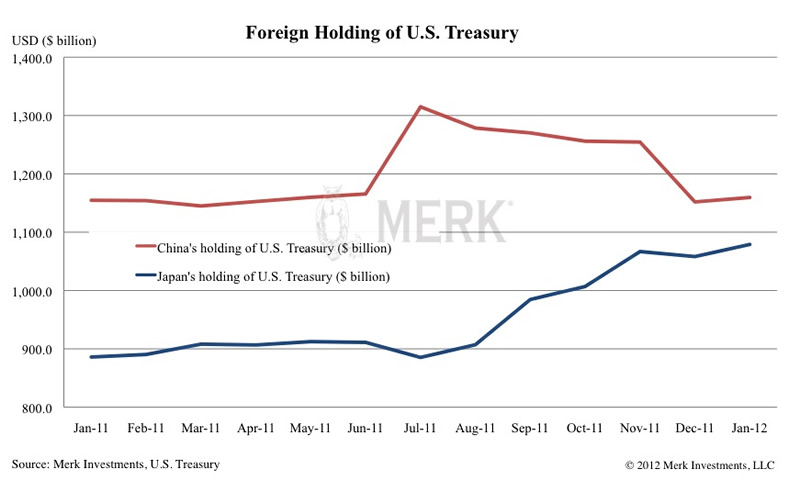
   But Romney too deserves a failing grade.  For over a year now,  China has been REDUCING its holdings of US Treasury bonds (see graph).  It is not China that is buying US government bonds but Japan! And the rest of the world.   Why?  Because US Treasuries are still perceived by the world as safer than, say, Greek sovereigns.  And, because Japan’s high-flying yen,  at around 78 per dollar, is ruining Japan’s economy (again!) and Japan is desperately trying to hold down its value by buying dollars and dollar assets. 

    Now, when a candidate for President is at least a whole year out of date, one must worry. 

     My conclusion:  Both candidates are incompetent to run the world’s largest economy, on which all of the world’s 7 billion inhabitants are dependent.  Cancel the election.  And find new candidates.  Hillary, say, matched against, well, who?   Anyone!

Schwarzenegger’s Secret

By Shlomo Maital      

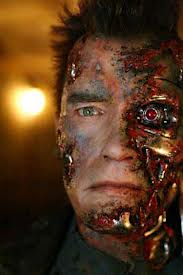
 Terminator… 

 Arnold Schwarzenegger has lived an amazing life (as his autobiography is subtitled: My Incredibly True Life).  As a child, in post WWI Austria, he made up his mind to emigrate to America. He did. He decided to become Mr. Universe. He did.  He decided to become a Hollywood star. He did. He decided to become Governor of California, 8th largest economy in the world. He did.   

   What is his secret?

   Interviewed on Canada’s CBC network, the modest Schwarzenegger revealed his secret.

    He literally “sees” himself, as what he aspires to and envisages. He sees himself as a movie star.  As a Governor.  As Mr. Universe.  He sees it, and that image spurs him to do whatever it takes to make it happen.

    This is a known and proven tool, for entrepreneurs and innovators, known as ‘photograph of the future’, applied in part by my friend and colleague Yoram Yahav.  

    Take a picture of yourself, five years from now, exactly as you see yourself after succeeding in achieving your image. Picture every single detail, as it will be.  Those concrete details will spur you to success. 

    Schwarzenegger is The Terminator, someone who ends life.  But in his own life, he made many new beginnings by imagining them.  As always, the truth is far stranger, and more interesting, than the fiction.

Innovator: Make Your Technology Human!

By Shlomo Maital     


   The 2012 annual Interbrand report on most valuable brand rankings is out.  There are some big surprises, and some major lessons. (Global NYT, Oct. 3, p. 19).  Coca Cola is first, for the 13th straight year. No-one manages a brand like Coke.

   The big winners are Apple, which rose to 2nd from 8th last year, and Apple’s rival, Samsung, which rose from 19th in 2010, 17th in 2011…to 9th in 2012, the biggest single-year gain of the top 20 brands.

   When I teach innovation to R&D engineers, I focus a lot on emotional and affective aspects of products.  Often, IT engineers ask me whether all this is relevant for technology-intensive products, like networking hardware.  I always reply that in the end, any product is sold to a human being, and human beings have feelings and make decisions based on them.  IBM built a major global business selling high-tech technology, with the slogan:  No-one ever lost their job buying IBM.  The point?  IBM’s stuff may be less advanced than more innovative firms, but it works, and we sell you peace of mind and security.  I often ask salespersons, who are also engineers, whether the emotional aspect of their products counts, and they always stress that it does. 

    Apple is not #2 because it sells features or technology. It is there because it sells ‘cool’.  Samsung is #9, not because of its Galaxy’s features, but because it is beautiful and easy to use.  Amazon made #20, from #26 last year, and #36 in 2010, because its Kindle is simple and user-friendly.  Disney dropped to #13, from #9, because it has totally lost the Disney brand – wholesome family stuff kids love.  HP dropped from #10 to #15 because nobody understands any more what HP stands for or what it is trying to sell.

   So – innovator!  Remember —  in the end, you never sell technology, even if your product is highly technology intensive.  In my book Innovation Management, 2nd edition, I have two tables asking innovators to identify, a) what precise need their product meets, in one word, and b) when that need is met, what precise feeling or emotion is generated?   This is a very hard exercise, especially because I force students to choose a single need and a single emotion. But this encourages focus and clear brand definition.  If you don’t know what feeling you’re trying to create, you haven’t yet fully understood your innovation.

       By the way the top 20 brands, in order, are:  Coke, Apple, IBM, Google, Microsoft, GE, McDonald’s, Intel, Samsung, Toyota, Mercedes, BMW, Disney, Cisco, HP, Gilette, Louis Vuitton, Oracle, Nokia, Amazon.

Would YOU Be Grateful for $5.6 m?

By Shlomo Maital    


    Do you regularly count your blessings?  We are all showered with them, but sometimes, take them for granted, especially the small ones, the ones that turn out to be actually really BIG.

   Psychologist Robert Emmons says America is in crisis, but not because of the economy. “We have lost a strong sense of gratitude about the freedoms we enjoy,” he says.  Emmons is editor of the Journal of Positive Psychology.  Positive Psychology is a branch of psychology developed by Martin Seligman, that tries to show how we can be happier, more content, and..well, more grateful. 

   Emmons himself is enormously grateful about gratitude. His application for a grant was accepted, and he was given $5.6 m. to research the subject by the John Templeton Foundation. I am certain he would win, hands down, a Golden Fleece award, awarded by the late Senator Proxmire, for weird money-wasting research.  (Here are a few projects that won the Golden Fleece:  * Office of Education for spending $219,592 in a “curriculum package” to teach college students how to watch television; United States Department of the Army for a 1981 study on how to buy Worcestershire sauce;  United States Department of Defense for a $3,000 study to determine if people in the military should carry umbrellas in the rain).

   But in fact, if more of us were more grateful, if more of us just said thanks, that simple act would reinforce our own feelings of wellbeing, and the acts of kindness done by others.  And the best part:  Saying thanks, to the Creator, and to those around us, is free.  It doesn’t even cost 5.6 cents. 

  So good luck Emmons.  Let’s hope you reveal enormously insightful new findings about gratitude, especially – why we take for granted massive blessings. 

Source: APA Monitor Sept. 2012, p. 13.

Kids are More Creative Than Ever – Some Adults, Less!

By Shlomo Maital   


    There is empirical evidence that our kids are more creative now than kids were, 25 years ago.  (Alas, I have a strong feeling, we adults are LESS creative, especially those of us working in large bureaucratic organizations, which is nearly all of us). 

Here is the evidence.  Case Western Reserve researchers Sandra Russ and her student Jessica Dillon compared 14 studies of child creativity, done in Russ’s lab between 1985 and 2008.  Each study used the same scale to evaluate children’s cognition and emotional expression during five minutes of unstructured play. **   Here is the method:

Affect in Play Scale:  (APS):  Each child was met with individually and given two neutral-looking puppets and three blocks with which to play however he or she would like. The task is appropriate for children ages 6–10, in grades 1 to 4. The play was videotaped and scored according to criteria in a scoring manual. The APS is relatively unstructured so that there is room for the child to structure the play and present affect themes that are habitual to him or her. The instructions for the task are: I am here to learn about how children play. I have here 2 puppets and would like you to play with them any way you like for 5 minutes. For example, you can have the puppets do something together. I also have some blocksthat you can use. Be sure to have the puppets talk out loud. The video camera will be on so that I can remember what you say and do. I will tell you when to stop. Go ahead. *

   According to the APA Monitor:  “The researchers found that over the 23-year stretch, children’s comfort and imagination scores improved, their organization and emotional expression numbers stayed the same, and their use of negative imagery decreased.  According to Russ, the increase in imagination underscores children’s resilience.  “They are finding other ways to develop their imaginative abilities”.  Perhaps, she suggests, kids are being deprived of time to play freely, with more of their time being structured, so when they are allowed to let their imaginations run wild, they “take more advantage of it”. 

    I think there are two main lessons here. First, let our kids have far more unstructured play time, to exercise their imaginations. Second, let us adults ALSO have more unstructured play time, idle time, time to let our imaginations roam free.  If kids are creative, and adults aren’t, perhaps we adults should be more like our kids.  Simple, no?   

……………………….

 *   Scoring:  The APS measures pretend play ability with five scores: 1. Organization rates the child’s play (1–5) on the quality and complexity of the plot, considering cause and effect and plot integration. 2. Imagination rates the child’s play (1–5) on its fantasy elements, block transformations, and number of novel ideas, characters, or events. 3. Comfort is a rating (1–5) of the child’s comfort, involvement in the play and enjoyment of the play. 4. Frequency of Affect is a tally count of the number of units of verbal and nonverbal emotion expressed during the play. A unit is defined as one expression by an individual puppet that can be scored. For example, every time one puppet said, ‘‘I like you’’ or ‘‘I hate this’’ a unit is coded. The total number of units expressed during the 5-minute period is the frequency of affect score. Frequency of positive affect units and negative affect units are also obtained. 5. Variety of Affect is a tally count of the number of affect categories that are expressed during the play, drawing from 11 categories: Anger= Aggression, Anxiety=Fear, Happiness=Pleasure, Frustration=Dislike=Disappointment, Sadness= Hurt, Oral, Oral Aggression, Anal, Competition, Sexual, and Nurturance=Affection. These categories can be combined into positive affect expressions and negative affect expressions.

**Changes in Children’s Pretend Play Over Two Decades. Sandra W. Russ and Jessica A. Dillon. Case Western Reserve University.  CREATIVITY RESEARCH JOURNAL, 23(4), 330–338, 2011

Innovator: Are You Agile?

By Shlomo Maital  


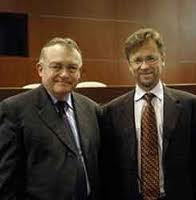
  Yves Doz & Mikko Kosonen

   I recently had the privilege of moderating an event featuring two of the world’s top experts on strategy, Prof. Yves Doz (INSEAD) and Mikko Kosonen (formerly head of strategy at Nokia, now head of Finland’s Sitra innovation fund).  Together they authored the recent book Fast Strategy *

  * Fast Strategy:    How strategic agility will help you stay ahead of the game.  Pearson Prentice Hall: 2008. 

   The book’s key point, in one short sentence:  In a world of rapid unpredictable change, organizations must be able to change and adapt their strategies, to turn on a dime.  In two words: Strategic agility!  The core dilemma is:  How do you at the same time build dogged persistence in pursuing a clear strategic goal, while at the same time fostering the ability to dump it when the business environment requires it? 

    Doz and Kosonen bring wisdom and experience to this tough core issue.

    I believe their work applies to individuals, not just to organizations.  So here is a kind of checklist for innovators, to see if you too as an individual have the required strategic agility.  Note:  Agility does NOT mean opportunism, which for entrepreneurs can be disastrous. (“Yes, I can supply THAT too, and THAT..and THAT….”). 

  1.  Are you strategically sensitive?  Do you spend time reading widely, tracking trends, and trying to identify trends that not everyone is talking about? Have you missed key trends?  (Facebook missed the shift of social networking to smartphones, for instance).
  2. Do you agree with yourself?  Organizations need a leadership team that is on the same page. But as an individual – are you internally conflicted, or do you know  exactly who you are, and where you want to go?  You can learn a lot about yourself while innovating – but it may be very expensive.
  3. Do you have fluid resources?  By that, Doz and Kosonen mean:  Strategic agility is worthless unless you have the ability to back your shift in strategy with adequate resources.  Do you have liquid reserves? Do you keep such reserves, in the event that a major opportunity arises?  If, like Mellanox, you need to do a major project and finish it in only weeks to enable the company to survive – as an individual, do you have the reserves of energy and drive to make this happen? 

These are the three key elements of fast strategy:  sensitivity, fluidity, consensus.

And now, here are Doz and Kosonen’s 13 “toxicities” – things that keep you from being strategically agile. Score yourself on each.  ‘3’ for bad,  ‘1’ for good.  If you score over 20, you’re in trouble:

– Tunnel vision – you just don’t see things you should.

– Tyranny of core business – you are hopelessly stuck on what you know and what you do and always have known and done.

– Strategic myopia –  you fail to look beyond next week.

– Dominance mindset – controlling others is more important to you than the truth.

– Snap judgment and intellectual laziness – you fail to do due diligence on your decisions.

– Imprisoned resources – you sunk your resources so deep it takes forever to dig them up and employ them.

– Business system rigidity – you do business one way, the “right” way, and never change.

– Ties that bind – you are stuck with bad people and are unable to dump them.

– Management mediocrity and competence gaps – there are things you need to learn and know, key things, you don’t know them, maybe you don’t even know you don’t know them.

– Management divergence – you are internally conflicted.

– Heady charm of fame and power –    you drink your own Kool-Aid.

– Expert management (making operational decisions instead of strategic) – you focus on day-to-day instead of on vision and long-term direction, for which you have no time.

– Emotional apathy – you’ve lost your passion, your fire, and those around you know it, and so lose theirs too.

Look deep inside, tell the truth, ask if you have what it takes to achieve strategic flexibility, as an innovator and entrepreneur.  Once you are aware of shortcomings, they can be fixed. But the first step, as with the 12-step method for curing addiction or alcoholism, is to admit that you are   rigid and inflexible.  From there, it’s all uphill.   

The Amazing Saga of Elon Musk

By Shlomo Maital    


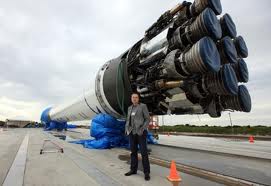
  This is the amazing story of Elon Musk, who was born in Pretoria, South Africa, 41 years ago.  His life story can teach us more about persistent visionary innovation than any textbook.   Musk and brother Kimbal left South Africa when Elon was 15; neither wanted to do compulsory army service for the apartheid regime.  Since his mother was originally Canadian (born in Saskatchewan, like me), Musk chose Canada, and studied at Queen’s University, in Kingston, Ontario, (my undergrad college), before transferring to Univ. of Pennsylvania. (Elon’s dream was always to reach America, where wild dreams can be made to come true).  He studied physics at Penn, then got a scholarship to study at Stanford. He dropped out to launch a Yellow Pages director company, Zip2, sold to Compaq for over $300 m. (Elon’s profit from the deal was $21 m.)  Elon saw, just a few years after the World Wide Web was born, how it could replace print city directories.   

Elon had big dreams, to tackle “important problems that would most affect the future of humanity”, as he said later —  ”  the Internet,   clean energy, and   space”

Internet:  He founded a company that was to become PayPal, with the insight that “money is just an entry in a database”. (How many of us are stuck in the rut of money being coins, paper or checks?).

He founded Space X,  (Space Exploration), to build commercial rockets.  Space X’s Falcon 9 rocket, after initial failures, now has a NASA contract to supply the Space Station, replacing the Space Shuttle.  Musk has a dream to create colonies on Mars and the Moon.  “I would like to die on Mars”, he has said, “just…not on impact”.

He founded Solar City, which provides photovoltaic cells to generate power, for the roofs of homes and businesses, and is one of the largest power companies in America.

He founded Tesla, the first new car company in decades, to create cool speedy all-electric cars.  The Tesla Model S (named after Henry Ford’s Model T) is a family sedan, aimed at a mass market.  To make it, Tesla has bought the NUMMI car plant, near San Francisco.

On several occasions, e.g. with Tesla, Musk has put up his own money, down to his last dollar, to keep his companies alive.  His $40 m. cash injection kept Tesla alive, after the global recession hit in late 2008, leaving Tesla without money.

What can we learn from this amazing man?  First, study physics.  The fact that Musk knows physics, as well as computer science and programming, is a big advantage. It enabled him to help guide Space Exploration toward creating a successful rocket, when nations with huge budgets have failed,  all this in only 6 years, and to guide Tesla.

Second, go to America. Despite all America’s woes, Silicon Valley (where Musk is based) is still the world’s center for innovation.  For example, when Musk decided to develop electric batteries for cars, he found all the expertise he needed not in Detroit, MI, but in Silicon Valley.

Third, one innovative creative daring person can help revitalize an entire industry.  GM went bankrupt.  Bob Lutz helped revive it, by emulating Musk and competing with Tesla to build the Chevy Volt.  He credits Musk with inspiring him and GM.  Volt, and some other innovations, have brought GM back from the dead.

De Tocqueville wrote 200 years ago: “Boldness of enterprise is the foremost cause of America’s rapid progress”.   Perhaps that is still true.    

The World According to Reuters, on Page 21:

 Romney’s 47 % vs. Romney’s 0.01 %

By Shlomo Maital   

    Sometimes, not often, the state of the world is reflected in a single page of a newspaper.   Today is such a day.  Page 21, Global New York Times, “environment, companies, business”, with “Reuters”.

*   “Risk calculation shouldn’t be left to banks”.  (This will be the subject of a separate blog).  European banks are allowed to do their own risk calculations (i.e. the weighted risk of their balance sheets)  by national regulators (instead of EU regulators).  Of course, they underestimate the risk. If they estimated risk accurately, they would have to set aside billions more in capital reserves; and if the banks lacked capital, then governments (and taxpayers) would have to foot the bill.  So, national regulators avoid forcing their banks to estimate risk correctly. Result: Undercapitalized European banks, that teeter and topple, only way out of our sight.

*  Asia’s most expensive cocktail: “The Jewel of Pangaea”.  Pangaea Lounge in Singapore has created a hugely expensive cocktail, for 32,000 Singapore dollars (about $26,000 US).  The ingredients are served in a stainless steel briefcase accompanied by security guards. They include: Richard Hennessy cognac infused with gold flakes (I’m NOT making this up!), smoke-infused raw sugar cube with Jerry Thomas bitters, and a…one-carat diamond. (Honest!).  Want one?  Get into the queue.

* American Airlines, restructuring after filing for bankruptcy last November, sent layoff notices to 11,100 workers.  They will not be buying “The Jewel of Pangaea”.

*  Global billionaires are lining up to buy apartments in One57, a 90-story tower under construction in Midtown Manhattan.  Each apartment is a full floor with views in four directions.  If you don’t have $50 m., don’t even bother to call.  American Airline mechanics might find some work building One57 for the very rich, if they’re lucky, at half the wages they got as mechanics.  A new tower, 130 stories tall, will be built soon at 432 Park Ave.  To buy a place there, all you need is all the money in southern Italy.

So, there you are.  All this on one page. Obscene conspicuous consumption, by the super-ultra-rich, and unemployment by the working middle class.

One day, this whole mess is going to explode.   The evidence?  The top blew off the frustration of the Arab masses, which no expert predicted.  The underlying cause there, and here, is the same.   

 As We Suspected: Bankers are Gamblers, Not Risk-Avoiders

By Shlomo Maital  


  Bank? Or Gambler?


  If you suspected that the world’s leading banks have excess appetite for risk, and behave like wanton gamblers, even after being bailed out – you were right.  A new study by the Bank for International Settlements (BIS), the Swiss-based bank for bankers, corroborates this.  It is cited in James Saft’s NYT “inside the markets” column today (Sept. 19). 

    Many addictive gamblers double down their bets, after sustaining big losses, hoping to recoup what they lost.  It rarely works.  It generally leads to disaster – to lacking even the taxi fare to get back to their hotel room.  Banks now appear to behave in the same disastrous way.

     According to the B.I.S. study, “bailed-out banks not only did not cut back on risk in their lending into the syndicated loan market [this is the market for loans that are highly leveraged, i.e. asset purchases nearly all funded by the loan, so that if asset prices fall, borrowers struggle to pay their debts].  …  after being ‘defibrillated by their governments, they actually increased the practice, relative to the market and to banks that had not been rescued.”    One of the key offenders is J.P. Morgan.   This bank chalked up huge profits by borrowing money (pumped in by the Fed) at near-zero rates, then seeking high-risk high-return channels to lend it.    Even though one of J.P. Morgan’s ‘roulette wheel’ deals brought billions in losses, the bank itself remains profitable.    But the problem is – this is the kind of behavior that caused global financial collapse.  Will we get “Act Two”?     Banks are supposed to use their low-cost borrowing, and low interest rates funded by the Central Bank, to spur borrowing and create jobs. Instead, it is funding speculation in proprietary activity (trading for ‘nostrum’, or the bank’s own, accounts).   The B.I.S. study covers 87 banks from wealthy nations, accounting for half of all global banking assets.

     Don’t look to the regulators for help. Another NYT article shows that the regulators are now shying away from prosecuting law-breaking banks, and instead go for plea bargains with minimal fines.  When the civil service regulators match their lawyers against high-priced Wall St. legal talent – it’s like Mohammed Ali against Grandma Moses. So the regulators choose not even to enter the ring.

    Saft concludes: “risky banking seems to be more a feature than a bug in the financial system.”  Translation: Irresponsibly risky big banks are here to stay.   Manage your funds and your investments accordingly.

Footnote:  Six of Israel’s tycoons, who took the kind of leveraged loans mentioned above, are in trouble and struggle to repay the loans.  Israeli banks have already written off big chunks of these loans, and pension funds stand to lose huge sums as a result. 

Blog entries written by Prof. Shlomo Maital

Shlomo Maital

Pages