Silicon Valley Is Up, Even When America Is Down

By Shlomo Maital 

 

  Silicon Valley is ‘up’, even when America as a whole is down.  That is the point of an article by two Associated Press technology writers. *  Even though Facebook and Zynga, its sidekick, have destroyed $60 b. in wealth, a sum larger than many countries’ GDP,  the Valley continues to hum.  “Companies catering to mobile devices, business software and data management products are thriving, while longtime Silicon Valley stalwarts such as Apple Inc. and Google Inc. remain among the most revered brands in the world,” the authors note.

  It is still possible to raise venture capital in the Valley.  “Silicon Valley startups raised $3.2 billion from venture capitalists during the April-June quarter, far more than in any other part of the U.S as tracked by the National Venture Capital Association. Venture capital flowing into Silicon Valley increased by 4 percent from the same time last year, while it dropped 12 percent nationwide.”

   Moreover, rents in San Francisco, the Valley’s hub city, are still strong, as are rents in San Jose.  “San Francisco apartments rented for an average of $2,734 in June, up 13 percent from a year ago and well above the average of $2,128 when technology stocks were at their peak before the dot-com bubble burst in 2001, according to the research firm RealFacts. Renting in San Jose — the region’s largest city — is less expensive than San Francisco, but even there the average lease cost $1,811 a month in June, a 10 percent increase from last year.”

  If you are a software engineer, you can earn top dollar in the Valley, because there is a shortage.  “Software engineers working in the San Francisco area are now paid an average of about $115,000, up from $106,000 in 2008, according to Glassdoor.com, which analyzed compensation figures collected from users. The average salary for software engineers in the Bay Area is about 17 percent higher than the national average for the same occupation, according to Glassdoor.   Google now pays its engineers an average of $142,000, up from just under $104,000 in 2008, Glassdoor calculated. During that time, Google’s workforce has swelled by 70 percent to about 34,000 employees, including thousands of engineers working at or near its headquarters in Mountain View, Calif. “

   Even Facebook and Zynga are hiring, say the authors.

   What is the secret of Silicon Valley’s success.  It is, I think, the fact that anyone who has been there for more than a year or two understands the principle of rapid change and cyclicality.  In high-tech, downs and ups happen rapidly.  If you are not prepared for them, if you are not resilient enough to ride the ups and endure the downs, the Valley sends you packing.    Some of the best examples of recent successes, note the two AP authors, “include Silicon Valley-based software companies Palo Alto Networks Inc., ServiceNow Inc. and Splunk Inc.  All have seen their value grow by more than half since their IPOs this year, even as IPOs of better-known companies such as Facebook proved to be a disappointment.  The difference? Rather than focusing on consumers whose tastes can be finicky and rise and fall with trends, these three court corporations and government agencies as customers. Palo Alto makes firewall technology that protects computer networks, ServiceNow’s software automates technology operations and Splunk’s analyzes massive amounts of data. “You can make a lot of money selling stuff that nobody understands,” jokes Ben Horowitz, who went through the first Internet boom as an executive at Web browser pioneer Netscape Communications during the late 1990s. He’s now a partner at the venture capital firm Andreessen Horowitz.  On average, the 60 technology companies that have gone public since the start of 2011 had seen their stock price increase by 11 percent through August, according to Dealogic. That was slightly better than the 9 percent gain posted by the Standard & Poor’s 500.

  Silicon Valley’s success is both good news and bad, for America.  Good, because it shows America still has a growth engine, somewhere!   Bad, because Silicon Valley is unique and in my view, cannot be replicated anywhere else.  Other nations have tried and failed.  It is a unique blend of money, risk, can-do culture, high-level engineers, Stanford research and start-up history.  We can admire it, but not recreate it elsewhere, even in America.  

* Silicon Valley isn’t sharing Facebook’s misery, By BARBARA ORTUTAY and MICHAEL LIEDTKE, AP Technology Writers, Sept. 10    

How Innovators Can Be Dreamers Without Fantasizing

By Shlomo Maital

   DreamCatcher


 Dreamcatcher (2003 movie)


 One of the hardest dilemmas for innovators and entrepreneurs, I’ve discovered over the years, is this:  How to be a visionary dreamer …without the dreams or fantasies. 

   What I mean is this:  Research by NYU psychologists Michael Sagristano and Yaakov Trope, along with Nira Liberman (J. of Experimental Psychology: General, vol 131, no. 3) reveals what we all know:  for events that are close to us in time (next month, next 3 months), we can clearly see the downside, pitfalls, problems, challenges.  But for events that are distant, we tend to see the upside (i.e. we imagine launching a successful startup) without seeing concretely all the myriad things that can and do go wrong.  Trope’s CLT (construal level theory) says, an activity is less attractive, the closer in time it is, when the concrete details are less pleasant than the abstract goals.

    I’ve seen this so many times with startup-ists.  They dream, they have a vision, both are vital – but they do not see the concrete details, what has to be done, day to day, and what might go wrong. That is why I insist that my students do two things: Describe concretely the vision, a kind of photograph of the future, to see themselves in five years running a highly successful startup,  but also:  List all the many things that can go wrong, in the most concrete imagineable terms. 

    CLT theory explains such behaviors as gambling (we envision winning, but not losing every cent we have), buying a TV, and getting engaged.  In general, optimism is a highly positive trait.  But somehow we must temper it with a dose of realism, without allowing the realism to kill the dreams and the vision. 

   Have you noticed that things we dream about, often are somewhat less wonderful when our dreams are fulfilled? 

   Trope says the ideal decision-maker takes into account both abstract and concrete aspects of distant-future courses of action.  The ‘concrete’ part is very difficult. That is why we need a structured method for launching an innovation or a business, that forces us to concretize it, even five years hence.    Innovators must dream…dream on, dream on,  but at the same  time, temper their dreaming with cold hard reality.  I call this ‘head in the clouds, feet on the ground’.  Combining the two is very very difficult, but it is essential.    

Men Drool, Women Rule…Here’s Why

By Shlomo Maital   


  In the 1993 Disney movie Homeward Bound: The Incredible Journey,  Chance the cat says memorably,  dogs drool, cats rule!

   According to David Brooks’ Op-Ed column in today’s New York Times, “Why men are failing”,  we need to alter that quote a bit to “men drool, women rule”.   Here are some data –    * in elementary and high school, boys get 75% of the D’s and F’s.  * in college, only 40% of bachelor’s and Master’s degrees go to men. * in 1954, 96% of men aged 25-54 worked; today it is only 80 %.  * male labor force participation reached an all-time low in the U.S. in May.  * annual earnings for median prime-age male fell 28% in the past 40 years. * 12 of the 15 fastest-growing professions are dominated by women.

   What is going on?  Brooks cites a new book by Hanna Rosin, “The End of Men”, that explains the decline of men and ascent of women by “adaptability”.  Women, she argues, are like immigrants who move to a new country. They flexibly adapt to new circumstances. Men are like immigrants who move to a new country but keep their minds in the old one.  Men are rigid; women are fluid. 

   Brooks cites a study by the National Federation of Independent Businesses, which found that small businesses owned by women outperformed male-owned small businesses, during the last recession.  And finally, the last straw, after a marital breakup, more women than men see their incomes rise by at least 25%. 

    Women are today like clean slates, Rosin says, abandoning both feminist and prefeminist preconceptions.  Men still adhere to masculinity rules, which limits their vision, movement and flexibility. 

   It’s just as Chance said about dogs and cats.  Women rule.  We men just haven’t realized it yet.   

William Moggridge (1943-2012): Interaction Design Pioneer

By Shlomo Maital


One of the world’s pioneer industrial designers, William Grant (“Bill”) Moggridge, has died.  Moggridge, who was British, became famous when his design company ID Two, located in Palo Alto, CA., acquired GRiD Systems as a client, in 1979.  GRiD Compass was the world’s first laptop computer, in 1981.  It was the first portable computer, that had a display that closed over the keyboard.  It cost $8,000.   GRiD patented the design and licensed it for many years. GRiD made trips on the NASA space shuttle, starting in 1983.   We take this simple design for granted today, but in its time it was a breakthrough. I once owned a Compaq “portable” computer, that weighed 25 pounds and was carried in a suitcase Schwarzenegger would have trouble lifting.  It was a wonderful computer, but very clumsy.  Moggridge solved that.    Moggridge says that when he tested the prototype GRiD in 1981, it was the first time he used a computer. In the digital era, he later said, the computer opened his mind to the idea that design should be more than just beautiful utilitarian objects, but rather should also be about the experience of the user.   Today this is elementary; in his day it was revolutionary.

   In 1991 Moggridge co-founded IDEO, together with David Kelley and Mike Nuttall.  He remained at IDEO until 2010, when he left to become head of the Cooper-Hewitt National Design Museum in New York.

   Moggridge pioneered ‘interactions design’.  In his book, Designing Interactions, Chapter 10, he summarizes this approach: 

    Bill Moggridge describes the process of interaction design as it is practiced at IDEO. He believes that if we think first about people and then try, try, and try again to prototype designs, we stand a good chance of creating innovative solutions that people will value and enjoy. He is helped by two of his colleagues in telling a more complete story about understanding people and using prototypes.

    It is so simple.  When designing your innovation, start with people.  Imagine people using it.  Do a prototype.  Let people try it.  Watch them as they use it. 

America’s Doomsday Scenario: Democrat President, Republican Congress

By Shlomo Maital  


   Want a really truly scary Doomsday scenario for troubled America, as it heads toward elections on Tuesday Nov. 6, and for the world? 

   Here it is.   Obama is re-elected by a narrow margin, allowing Republicans to challenge the legitimacy of his leadership. There may even be Supreme Court appeals or prolonged recounts in Ohio, Virginia, Pennsylvania or Florida. 

  Meanwhile, the Republicans retain control of the House, and win four Senate seats, to take control of the Senate. 

   Doomsday. Deadlock.  Obama is President, but he cannot get any decent legislation through Congress.  The Republicans can repeal Obamacare, and pass tons of laws, but Obama will veto many of them, and the Republicans cannot muster a 2/3 majority for an over-ride.

    If this sounds imaginary, well, remember the well-loved humanitarian Karl Rove?  Rove is back, with his American Crossroads SuperPAC and team of billionaires writing checks for candidates he likes.   Here is what Rove reportedly told a meeting of his SuperPAC, according to Bloomberg BusinessWeek:

   Rove said his total budget was $300 million, with $200 million intended for the presidential race, $70 million for the Senate, and $32 million for the House. “We should sink Todd Akin,” he said about the Republican Senate candidate from Missouri, who is under pressure to leave the race following his comments about “legitimate rape.” Rove joked, “If he’s found mysteriously murdered, don’t look for my whereabouts!” (Rove later apologized for the remark.)  The Republicans need four seats to gain a Senate majority, Rove continued. He felt “really good” about Nebraska and was optimistic about North Dakota, even though Democrats have a strong candidate in former state Attorney General Heidi Heitkamp. In Wisconsin, former Governor Tommy Thompson “has an excellent shot to win—he has a quirky, cross-party appeal.” Virginia is going to be tight. Of those, Rove declared, “we can win three.”  New Mexico, Hawaii, and Connecticut are “longer shots,” Rove went on, but “I think we’ve got a shot to take at least one of those three.” In Connecticut, Rove noted that Linda McMahon, the former head of World Wrestling Entertainment, whom he had once written off, was running a “really smart campaign.” And the state, he noted happily, had moved to the right. “Those affluent, socially liberal, economically conservative people in Fairfield County and the New York suburbs have finally figured out that their pocketbooks matter more than abortion.

  The only thing worse than bad leadership (e.g. Romney as President) is no leadership and deadlock. And that, alas, may be exactly what America gets on Nov. 6. 

  • Putting Innovation to Sleep: Once Upon a Mattress

    By Shlomo Maital 


     Here are two case studies about innovation related to mattresses, as related by my friend and colleague Arie R.

    *  A small Israeli mattress company had a miniscule market share. Then, an advertising company employee looking for ideas for copy spoke with a line worker at the company, and discovered that after receiving complaints from customers about back pain, the company was putting a piece of extra-firm foam into the mattress at the area of the lower back.  This became the focus of an ad and marketing campaign, touting the “Healthful Center” (the center of the mattress that supports the lower back and therefore contributes to our health and wellbeing).  At one stroke, this campaign shifted the focus in the mattress business from “comfortable sleep” to “healthful sleep” – from comfort, to health and healthy backs and straight spines.  The company became a market leader. Competitors first ignored the “healthful center”, then copied it.  But in copying it, they verified and validated the very idea, and further strengthened the originating company’s innovation.   Innovators: Get your competitors to copy you!  If you cannot nail them for patent infringement, you can use them to prove that you are the first, original and authentic source of the innovation. 

    * A New York City mattress salesperson made a small observation:  You do not have to go to a restaurant to buy pizza, it will be delivered to you.  Why not, he thought, have mattresses, too,  ordered and sold by phone?  Mattresses, like pizza, are standard. People usually know what they want: extra firm, extra soft, etc., and they know the size. Why not store the mattresses in Jersey, in inexpensive warehouses, and zip them across the Lincoln Tunnel to Manhattan to fill orders, while taking away the customers’ old mattress?  Why not save people the trouble of shopping, shipping, etc.?  The result was Dial-A-Mattress, a highly successful business for many years.  

       Innovation, as Dell Computers’ direct-order mass customized business proves, is not solely about gadgets or technology. It can also be about such mundane things, as, how do I fill an order?  Find a better way, and you can redefine an industry.

Open (Crowd-sourced) Innovation May Not Be Your Cup of Tea

By Shlomo Maital


   An article in McKinsey Quarterly *  warns that open, or crowd-sourced, innovation (in which customers generate the innovation, rather than just the R&D department), may not be ideal for you or your organization.

  But how do you when it is, and when it isn’t?

  Ask three questions, McKinsey experts counsel.

“Having studied the case of infrastructure software closely, we believe executives can gain some insight into this possibility by asking three questions that underpin the logic of competing by protecting the open space—open competition, as you might call it:

1. Do specialized firms offer proprietary solutions within certain layers of my industry’s value chain?  2.  Do integrated firms seek to cut development costs in my industry by drawing on open technologies to substitute for these proprietary solutions? 3.  Are the underlying technologies complex—consisting of so many bits and pieces that a significant number could inadvertently infringe on proprietary IP held by specialized firms?

The more affirmative the answers to these questions may be, the more likely it is that the interests of specialized vendors of proprietary solutions will collide with those of firms drawing on open innovation, which could involve any type of open good, from software to the genetic code to crowd-sourced designs for parts or tools.  

  The simple point here:  If some key parts of your product or service are protected by patents, or if your clients’ products are patent-protected, open technologies that are not protected may risk infringement.

   Systems where everything is patented, or where nothing is patented, are simple. Systems that mix the two are complex.  This is just another realm where the complexity of managing – in this case, managing innovation – is growing rapidly.

* Managing the Business Risks of  Open Innovation. McKinsey Quarterly, Jan. 2012.

How to Buy Innovation: The Case of Condé Nast and Reddit

By Shlomo Maital


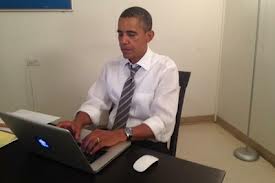
  Obama:  AMA

  Last Thursday, President Barack Obama signed up for an AMA (Ask Me Anything) session on Reddit, a social networking “aggregating” site.  (His favorite basketball player? Surprise – Michael Jordan.)

  What is Reddit and what can we learn from it?  Founders Steve Huffman and Alexis Ohanian, Univ. of Virginia graduates,  founded it in 2005, then sold it to the magazine publisher Condé Nast in 2006 for $20 m.  Reddit is very messy,  “like peering into a bowl of spaghetti”, writes David Carr in his Global New York Times media column (Sept. 3).  But it has defeated sites like Digg, has 40 m. subscribers, serves up over three billion page views monthly, and has only 20 employees. 

   Big organizations have immense trouble with innovation, almost by definition. Many of them try to buy innovation, by buying startups, like Reddit.  As they swallow the startup into their bureaucratic jaws, their gastric juices dissolve all the creativity, the founders leave, the creative people leave, and nothing is left. 

   But not in this case.  Condé Nast wisely decided, under its Chair Steve Newhouse, to spin off Reddit in 2011 as an operationally-independent subsidiary. This happened after it became clear Reddit was failing as an integral part of the Condé Nast bureaucracy, even though the two founders stayed on with the company for three years after they were acquired.  As one expert noted, “Condé gave it enough rope and left the people there to their own devices.  I don’t know whether it was a brilliant strategy or accidental neglect, but the founders did not leave, the community stayed intact and the site grew beyond anbody’s expectations.”

   Reddit is, well, weird.  Carr says it has the “retro graphic appeal of Craigslist”.   And it has miniscule revenues.  Condé Nast says that is OK, “there will be ample opportunities to monetize what they have built”.  Perhaps, perhaps not.  But the lesson is clear.  If you are big fish, and you swallow a very small one, best to leave it largely alone.  Recall that the IBM PC was born only because IBM made an independent unit out of it, way down in Boca Raton, Florida, and then ignored it, so it could not be infected by the stultifying IBM bureaucracy.  You can buy innovation, without killing it, provided you treat it with benign neglect.

Draghi vs. Weidmann: Our Futures are at Stake

By Shlomo Maital  

 Jens Weidmann

  A fierce  behind-the–scenes battle is underway in Europe. The future of all of us is at stake.

  The  head of the European Central Bank, Mario Draghi, an Italian economist, and the Prime Minister of Italy, Mario Monti, both want to implement more radical policy solutions for the euro.  Their idea?  Use the bailout fund, the ESM (European Stability Mechanism).  Give the ESM a license to act as a bank. Let it borrow low-interest money from the European Central Bank (ECB). Then the ESM could directly buy sovereign bonds of Spain, Italy, Portugal and Greece, lowering their borrowing costs. It could even issue its own bonds, using the money to support distressed euro-area governments whose borrowing costs are now excessively high. 

    Basically, Draghi wants to allow the ECB to act like the Fed and the Bank of England, injecting liquidity into a deflationary system that desperately needs it, using the ESM. Had the Fed and the Bank of England not acted thus, using QE (quantitative easing), both the US and UK would be in serious trouble.  The Fed may soon engage in a third round of QE, unless Romney wins in November and replaces Bernanke, as he has promised.

   The truth?  It’s the only solution for Europe’s fiscal woes.  But here’s the problem.  The head of Germany’s central bank, Jens Weidmann, is fiercely opposed. And Weidmann, before he ran the Bundesbank, was German Chancellor Angela Merkel’s chief economic advisor for five years. 

   Where does Merkel stand?  Firmly in between.  She is very smart and realizes much more must be done than is now being done. But as a politician, she seeks re-election, sees her party’s support declining, and realizes German voters hate the idea of giving more money to the bums in Greece, Spain and Italy. 

    The 27 nations that make up the European Single Market comprise, together, the world’s largest economy. 

    A German research institute, Ifo,  conducts a regular survey of world economic conditions. They then pinpoint the global economy in 2-dimension space, with the x-axis representing “current situation” and the y-axis representing “improving or worsening”.  Here are the results for the past few years:


   You can see that the world economy has done a loop-the-loop, getting worse, much worse, improving, strengthening…and then, back into another downward loop, as of  2010.  The second downward loop in large part reflects the European inability to deal with its euro troubles. 

    The solution is there.  But will Angela Merkel have the wisdom and strength to rein in her Central Bankers, Jens Weidmann, and do the right thing, even though she may lose at the ballot box?   Stay tuned.    As the Luxembourg Prime Minister once said, we politicians know what we have to do. But we don’t know how to do it and get re-elected.

 Selling Weapons to the Bad Guys:  How Money Drives Policy

By Shlomo Maital

 THAAD 


  Perhaps you have wondered why Russia supports the brutal murderous Bashar Assad, Syrian President?  Or why America treats the tyrannical King of Saudi Arabia with more than kid gloves?  Or why America looks the other way when Gulf States repress demonstrations for democracy? 

   Cherchez la femme, the French say.  But foreign policy experts say, cherchez l’argent…look for the money.

   A new report by the impartial Congressional Research Service (a part of the Library of Congress) reveals the following:  Global arms sales in 2011 reached a record high, $85.3 b., driven by major arms sales to Gulf countries worried about Iran.  And America sold fully 80 per cent of world arms, or $66.3 b., the highest annual arms sales ever.  But to whom? 

   A package of $33.4 b. to Saudi Arabia, including dozens of Apache and Blackhawk helicopters, 84 advanced F-15 fighters, upgrades for 70 existing F-15 fighters, and ammunition, missiles and logistics.

   A THAAD Terminal High Altitude Area Defense anti-missile shield to the United Arab Emirates for $3.49 b, as well as 16 Chinook helicopters for $939 m. 

    Tiny Oman bought F-16 fighters for $1.4 b.

    Taiwan bought $2 b. worth of Patriot anti-missile missiles.

    India bought $4.1 b. worth of C-17 transport planes.

Who was the world’s second biggest arms exporter?  Russia, a very very distant second, at $4.8 b, or less than 7 per cent of America’s arms sales.

 Ever since Shaw’s play Arms and the Man, about the folly of war and the hypocrisy of how we treat war,  people have complained about how nations and businesses have grown wealthy from war and weapons.  I recommend that Ayatollah Khamenei, Iran’s leader, buy stock in America’s defense companies (Lockheed, Boeing, etc.).  The more he threatens the world, the better is their business, the higher their profits.  You can’t lose.     

Blog entries written by Prof. Shlomo Maital

Shlomo Maital

Pages