Amazon: How To Reinvent Yourself, or

How to Fix It Long Before It Breaks

By Shlomo Maital    
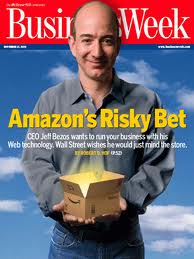


  Jeff Bezos is 48 years old. A graduate of Princeton Univ. he worked as a financial analyst before founding Amazon.  His creativity is worth close study, because Bezos has managed to retain Amazon’s exceptional innovative spirit, time and again reinventing it even though it is highly bottom-line successful. 

   First, he reinvented bookselling, by offering ten times more titles than a bookstore could. Next, he broadened his product range far beyond books, making Amazon into one of the world’s largest retailers. Next, he invented Kindle, and taught us how to carry whole libraries around in a tiny device, while shifting publishing from Gutenberg-era paper to 21st C. eInk.  And now?  He’s bidding to dominate the Cloud, offering businesses infinite computer power for rent.  

    In an article in today’s Global New York Times, (Active in Cloud, Amazon Reshapes Computing, by Quentin Hardy),  Amazon’s latest reinvention is revealed:  “Within a few years, Amazon.com’s creative destruction of both traditional book publishing and retailing may be footnotes to the company’s larger and more secretive goal: giving anyone on the planet access to an almost unimaginable amount of computing power.”

   According to Hardy,  “Every day, a start-up called the Climate Corporation performs over 10,000 simulations of the next two years’ weather for more than one million locations in the United States. It then combines that with data on root structure and soil porosity to write crop insurance for thousands of farmers.  Another start-up, called Cue, scans up to 500 million e-mails, Facebook updates and corporate documents to create a service that can outline the biography of a given person you meet, warn you to be home to receive a package or text a lunch guest that you are running late.   “I have 10 engineers, but without A.W.S. I guarantee I’d need 60,” said Daniel Gross, Cue’s 20-year-old co-founder. “It just gets cheaper, and cheaper, and cheaper.” He figures Cue spends something under $100,000 a month with Amazon but would spend “probably $2 million to do it ourselves, without the speed and flexibility.”  Each of these start-ups carries out computing tasks that a decade ago would have been impossible without a major investment in computers. Both of these companies, however, own little besides a few desktop computers. They and thousands of other companies now rent data storage and computer server time from Amazon, through its Amazon Web Services division, for what they say is a fraction of the cost of owning and running their own computers.”

   What Bezos has done is phenomenal:  He tells startup inventors, Imagine! Imagine you have infinite computing power, beyond what you could ever dream to afford. Now think of how you could use it.  And then – drop me a line, I’ll make it happen.

   According to Hardy, “Cloud computing has been around for years, but it is now powering all kinds of new businesses around the globe, quickly and with less capital. Instagram, a 12-person photo-sharing company that was sold to Facebook for an estimated $1 billion just 19 months after it opened, skipped the expenses and bother of setting up its own computer servers. EdX, a global online education program from the Massachusetts Institute of Technology and Harvard, had over 120,000 students taking a single class together on A.W.S. Over 185 United States government agencies run some part of their services on A.W.S. Millions of people in Africa shop for cars online, using cheap smartphones connected to A.W.S. servers located in California and Ireland. “

    A.W.S. is a powerful business, generating $1 b. in revenue. But it is also a reflection of Bezos’ vision, to empower innovators, and let them think big, be big, even when they are very small.  Hardy writes:  “Jeff thinks on a planetary level,” said David Risher, a former Amazon senior executive who now heads a charity called Worldreader, which uses A.W.S. to download books to thousands of computers in Africa. “A.W.S. is an opportunity, as a business. But it is also a philosophy of enabling other people to build big systems. That is how Amazon will make a dent in the universe.”

True Grit:  What We REALLY Should Teach Our Kids

By Shlomo Maital  


 The Joel Coen movie “True Grit” (2010), a remake of John Wayne’s 1969 version, features Marshall “Rooster” Cogburn (Jeff Bridges), who helps a young girl (with ‘true grit’) named Mattie Ross bring to justice Tom Chaney, a crook who killed her father and fled to “Indian Country”.  Mattie’s determination, against all odds, wins the day, even though she is tossed into a rattlesnake pit (by the recoil of her rifle) and loses her arm as a result.

    An appropriately named writer named Paul Tough has written a book, titled How Children Succeed: Grit, Curiosity and the Hidden Power of Character (Houghton Mifflin Harcourt), which answers the question, what is the most important thing we should teach our kids?  To study hard, to be smart?   Yes, but —  Tough frames the character hypothesis:  non-cognitive skills like “persistence, self-control, curiosity, conscientiousness, grit and self-confidence, are more crucial than sheer brainpower to achieving success.”

In 40 years of teaching innovation and entrepreneurship, I’ve known a lot of startup pioneers.  By far the most important character trait the successful ones had, in my view, is persistence and grit.  True grit gets you to the finish line far more often than Einsteinian genius.  Many of the geniuses just give up, because they’re so used to easy success, they can’t grapple with hardship.  So I agree with Tough.

How do you teach true grit to your kids?  Mainly, by encouraging them to try difficult things, and not be afraid to fail.  Failing, trying again, failing and overcoming big challenges is by definition true grit. And it can be learned.  It’s really hard for parents to do this, because we all want the best for our kids and want to protect them from stress, frustration, unhappiness and failure.  But you have to let them try, fall, skin their knees, get up, try again..and succeed.  On their own.

One of Tough’s points has to do with the poor and the rich. The rich give their kids everything, often, so the kids are never really challenged.  When they do face difficulties, they’ve never practiced overcoming them.    The poor tend to miss out on the true grit drama, not because they lack challenges but because the odds are so stacked against them, they are discouraged from the outset.  For example: Today’s Haaretz newspaper reports that over 60 per cent of schools in outlying areas of Israel do not even teach chemistry and physics.  What chance then do you have, living in these poorer areas, to become an engineer, even if you have true grit?  Study physics on your own?  Pretty hard.   And why should not the Minister of Education resign immediately, in view of this disastrous statistic?

So, the way to really help your children is not so much by sending them to expensive schools, but rather, by encouraging them to test the limits of their potential, in art, music, study, in everything, and celebrate with them failure as well as success.  Parents who do everything to protect their children from the frustration of not succeeding are doing them a huge disservice.

Tough himself proves his point. He dropped out of college as a freshman, bicycled alone from Atlanta to Halifax, Nova Scotia, then became an intern at Harper’s Magazine and began a great career as a writer and editor.

I think the best way to teach your kids True Grit is to practice it yourself.  Nothing is more powerful, in teaching, than doing.   

The Obscene Scandal of US Student Loans

By Shlomo Maital


         Americans owe about $800 b. in ‘revolving debt’ (nearly all of that is credit card debt).  At a time when 4 million Americans have been unemployed for over 99 weeks, losing their unemployment benefits, this debt is an enormous burden. 

     What few realize is that ‘student loans’ (money borrowed to pay for college) are far larger and more burdensome, totalling over $1 trillion.  And guess what?  You can escape credit card debt by declaring personal bankruptcy.  But student loans?  Even if you’re bankrupt, Sally Mae will pursue you to the grave. (Sally Mae, or SLM Corporation) is the largest student-loan lender, has lent to over 25 million students, and proudly declares that it is not in any way related to the US Government.  It is a public corporation, run aggressively for profit).   And indeed, they often do.      

     According to the bankruptcy act, “U.S. Federal student loans and some private student loans can be discharged in bankruptcy only with a showing of “undue hardship.””  And ‘undue hardhip’ is almost never recognized by the courts.   With mortgages, most states have a ‘no recourse’ law.  That means, all the mortgage holder (the bank) can do, if you fail to pay your mortgage payments, is to foreclose and take back the house.  But student loans?  No matter what, you will be hounded to pay every cent,  even if you are unemployed, working at a socially-positive low-wage job or working in a poor country as a volunteer. 

        “Sallie Mae turns education dreams into reality for its 25 million customers”, SLM’s website proclaims.  Really?   More like a nightmare.  I know students who have had to decline jobs they truly wanted, because they needed to find salaries high enough to enable them to pay off their student loans.  I know ‘students’ who are still paying back loans decades after finishing their degrees.  Why?   In part because Sallie Mae encourages minimum payments, and the deferred interest piles up into huge debts incredibly quickly.  I know students who have studied finance, and still find it nearly impossible to navigate the purposely-unfriendly website that facilitates early payback.   

    Student loans are disgraceful, because they take no account of the students’ major (including low-paying ones).  According to NY State official Andrew Cuomo, some universities steer students to ‘preferred lenders’ in return for kickbacks.   The Federal Government itself has sued Sallie Mae (!) for overcharging it, and won a large settlement.  So much for privatization.

   Increasingly, college students in the US are squeezed between the bad economy (which makes it hard for parents to pay their tuition) and rising tuition fees.  They are tempted into taking loans, which can total $250,000 for four years’ of study at an expensive private college.  That sum quickly doubles or triples, owing to compound interest.  Right off the bat, at the start of their careers, they are under water with a huge debt burden.  That debt drives their career decisions, not their passions or their interests.  And there is no way in the world to escape that debt, not even bankruptcy, not even fleeing America. (When you return home, they will nail you to the wall). 

     Europe has a lot of problems, heaven knows. But in most European countries, students go to college almost free. (The UK is an exception, where rising tuition fees are slashing college enrollment and damaging Britain’s future).  If you believe that the future of a nation depends on the quality of its human capital, then you have to believe America’s student loan fiasco is an absolute scandal.

   And the worst part?  Nobody seems to be protesting.  Because after graduating, the students scatter, and seem to have no way to organize a protest.

    Can someone organize at least a small protest, perhaps on Facebook, especially at a time when Republicans seem to want to slash higher education budgets even more?      

What the Irish Think of America’s Tea Party

By Shlomo Maital


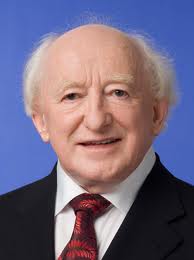
 Michael Higgins

  It is said that the Irish have the “gift of the gab”.  They do indeed.  They are wonderful story-tellers and have given the world great writers (James Joyce, for instance).  Now, comes the Irish President, who tears a strip off a Tea Party talk-show host.  I don’t know about you – but the empty self-contradictory no-evidence-based rhetoric of these people, now led by VP candidate Paul Ryan, is just infuriating.  Finally, someone gives it back to them.  Kudos to President Higgins.      

Michael D. Higgins, elected President of Ireland on Nov. 11, 2011,   on Tea-Party-advocate talk show host Michael Graham’s program in 2010, in a video that has gone viral, done at an Irish pub in Galway:   http://media.newstalk.ie/extra/1602/popup

    “ The idea that a person would not have one job but 2 or 3 and  work all the light hours, and still not be entitled to the basic protection of fundamental care, it’s so outrageous, …whether you agree with Obama or now,  the idea there is a social floor below which people cannot fall, that’s the future, even the poorest people in the US should be entitled to it, and I don’t think your or the Sara Palin look-alikes should be allowed to take it off…   Tea Party? You try to find the greatest fear, and work on that…   you don’t find anything wrong with Tea Party ignorance, which insults people who are democratically elected….   I lived in the US,   I lived in the Midwest, in Willie Nelson country, I was a professor at U. of Illinois at the end of the 70s, I know the magnificent generous people of the US, the difference between them and the tiny elite in charge of the war-mongering policy of the US,  when you go on your picnic around the country, you are not representing the people of the US, who are proud of (Obama), you have the impudence to say people like me that we are anti-Jewish , I am not anti Semitic, and unlike you I make my profession in politics, I favor human rights, so you   keep on ranting, but don’t suggest those of us working for peace are interested in murdering Jews…        The fact of the matter is, young people from the US are travelling the world again, they’re welcome in Europe, people talk to them, the image of the US is getting better…at least 47 million people that the likes of you condemn to no health care, they are going to have health care, because of Obama, so, be proud to be a decent American rather than just a wonk whipping up fear…!”

Innovator:  Don’t Punt!  Go For It!

What American Football Teaches About Risk-Taking

By Shlomo Maital


    This blog may be hard to understand if you are not familiar with American football.

    David Romer is a Univ. of California (Berkeley) economist, one of the most creative economists alive.  In his Journal of Political Economy article (vol. 114, no. 2, 2006, pp. 340-365), he uses the National Football League to show “overwhelmingly statistically significant departures from the decisions that would maximize teams’ chances of winning”, i.e. firms don’t maximize. 

    Here is the story.  In American football, teams have four ‘downs’ (or attempts) to make 10 offensive yards by passing or running the ball.  If they fail in the first three attempts, on fourth ‘down’ they can either kick the ball downfield, to the other team, or try again. If they fail again, the opposing team gets the ball on the spot.  The vast majority of football teams punt the ball on fourth down rather than  try again to make the 10 yards. 

    Romer analyzes actual game data to show there are “959 cases in which a team kicked [on 4th down] when the difference between the estimated values of going for it and kicking was positive” (i.e. it would have been better to go for it, rather than punt).

   Is anyone listening?  Well, yes.  Writing in today’s (Aug. 20) Global New York Times, Adam Himmelsbach notes that mostly, “coaches are hesitant to take plunge [risk going for it, instead of punting] because a string of failed fourth-down attempts could leave them vulnerable to criticism and affect their job security more than a conservative menu of punts ever could.”  

   Is this reminiscent of corporate behavior?  Remember IBM’s ad campaign: “Nobody ever lost their job buying IBM”.  Nobody ever lost their job playing it safe?   False. Nokia and Sony CEO’s, for example.  But many CEO’s THINK this is true.    Many companies think it is true.  Play it safe, nobody can blame you. Take a risk and fail – everyone will blame you. So why try it?  Panasonic, Sharp and Sony lost $20 b. last year playing it safe.

    Well, take a lesson from Kevin Kelley, head coach at Pulaski Academy, in Little Rock, Arkansas.  He was hired in 2003 as football coach of the high school team. His team never punts.  And last season, the Bruins were 14-0 and won the Class 4A state title.  Kelley’s offense thrives, notes Himmelsbach, because the possibilities are endless.  Third-and-7 is not a passing down, third-and-inches is not a running down.  And G-d help the defense on first and 10, Kelley says, because we can literally do anything.   But so far, no NFL coach has dared try it.

    So – innovators!  Think about never punting.  Don’t play it safe.  That old cliché, you can’t win the lottery if you never buy a ticket, is true.  Far too many big companies are playing it safe these days, avoiding all risk.  And, in the end, the biggest risk is avoiding all risk. 

Innovator: Put Your Imagination into a Straitjacket:

Measure your IIQ (Innovation Intelligence Quotient)

By Shlomo Maital


  The Nobel-winning physicist Richard Feynman once said, memorably, “Science is just imagination in a straitjacket”. 

   What in the world did he mean?  Why would you ever want to put imagination into a straitjacket?    Feynman himself surely never did that!  Straitjackets restrain those who are violently psychotic!  Yuk.

    Here is what I think he meant.   Imagination alone, that generates wild ideas, is just not enough.  Lots of people have imaginative ideas – but nothing ever comes of them.  Da Vinci himself was like that. His notebooks, written in left-handed mirror image, were full of amazingly imaginative ideas that were never implemented.  Da Vinci himself preferred this, because many of his inventions were weapons, designed to kill people, paid for by his patrons who as city-state warlords fought neighboring warlords; da Vinci didn’t want to kill people. 

    For imagination to be effective, to change the world, it needs to come with constraints.  For science, the constraint is the scientific method.  You may have a wild hypothesis, but you need to confirm it methodically, in ways that convince your peers that you are improbably right.  You need this, so others can replicate what you found. If they can’t – you have screwed up. 

    For innovators, the straitjacket is the set of business constraints – time to market, financial resources,   labor hours, management skill,  marketing channels – that cannot be ignored.  I call this: head in the clouds (imagination), and feet on the ground (business constraints, or the business ‘straitjacket’).   That is why successful innovation is imagination in a straitjacket.  The trick?  Knowing which straitjackets are needed, constructive and real, and which are needlessly self-imposed.

    So, innovator – let your imagination soar.  Create wild ideas.  Follow the rule that great ideas are often lost because those who originated them could not bear being laughed at.   Let laughter at your idea strengthen, not weaken, your resolve. 

   But as you do this, design the straitjacket for your innovation.  Make it answer to the necessary conditions for fast, cost-efficient implementation.   Make it live within the constraints of a sustained business.  

    F. Scott Fitzgerald once said that intelligence is the ability to entertain two conflicting ideas in your head without dumping either.   If you have both a soaring imagination and the ability to straitjacket it pragmatically, you have a very high Innovation Intelligence Quotient.    

If Germs and Animals Help One Another: Why Shouldn’t We?

By Shlomo Maital


  The world would be a thousand times better if only more of us helped each other.  Research has shown that even animals behave altruistically, i.e. help other animals even when they themselves do not benefit directly.  Now comes research by a Hebrew U. scientist, Prof. Hanna Engelberg-Kulka, which shows that even bacteria are altruistic.

   Prof. Engelberg-Kulka has shown that for some bacteria [specifically, one type with the name Escherichia coli], when their food supply falls sharply,  90 per cent of the bacteria spontaneously choose to die, so that the remaining 10 per cent can survive.  How does this happen?  (No, it’s not a Mother Teresa brain that recites, “it is a far far better thing I do…”, or “in my death, my life finds new meaning”).  Simply this – each bacterium has genes that produce a toxin (that kills it) and an anti-toxin (that neutralizes the toxin).  When the food supply declines, these genes stop working.  They turn off.  The anti-toxin deteriorates faster than the toxin.  So mostly the toxin remains, and kills the cell.

   It is, of course, evolution that is responsible.  An accidental mutation created this effect, and the bacteria who luckily had it survived while those who didn’t disappeared. 

   If bacteria find that they need to sacrifice for others in order to survive,  if our planet faces shrinking resources and food supply, and if we humans need to help one another to survive by sharing resources more equally – why don’t we?  Why aren’t we are smart as bacteria, that don’t even have a brain? 

      And is it still true that human societies that are more selfless, more altruistic, more giving, will prevail and endure over societies built around Wall St. avarice and greed?  The jury is still out on that one.     

Rise and Fall of Nations: Is China Next?

By Shlomo Maital

   The historian Arnold Joseph Toynbee wrote a monumental 12-volume history recounting the rise and fall of civilizations (A Study of History, 1934-61).  It took him 27 years.  Toynbee was also a consultant to the British government on the Mideast and was hostile, to say the least,  to the Jewish state.  

   Toynbee’s main themes were: a) all civilizations rise, flower and then decline, inevitably, and b) nationalism, modern statehood, is a ‘false god’. 

     The post-WWII period have proved Toynbee right.  America’s powerful economy, the only one still intact, dominated the world in the 1950’s and 1960’s.  Then, Japan took over, with its stranglehold on precision manufacturing, leveraging innovations America originated but could not manufacture.  As Clyde Prestowitz notes, in his Foreign Affairs blog,   “In the 1970s-80s, American industry often came out first with new technologies and products like transistors, color TV, and video recording. But it lost out to the Japanese in actually commercializing the products and especially in making and selling them. Over the past thirty years, the Japanese have been first with products like the Walkman, DVDs, advanced memory chips, and flat panel television, and they subsequently dominated these markets globally.”

 The Japanese property bubble burst in 1990 and ended Japan’s reign, beginning two decades of Japanese stagnation.   As Prestowitz notes, Amazon, Apple, Google and Samsung have pioneered the Kindle, iPhone, Android, Galaxy and advanced semiconductors, while Sony, Sharp and Panasonic lost $20 b. (together) last year. 

    There are signs South Korea has embraced Japan’s old winning model and used it to capture markets Japan once ruled.   While once-innovative Japanese companies like Sony now shun risk, Korean companies innovate boldly and challenge even Apple.  Samsung now sells more smartphones than Apple.  The decline of Japan was accelerated by the rise of the yen, from its once-cheap level of 360 yen per dollar to today’s 79.5 yen per dollar.  This, more than anything, sank Japan.  Note how China and Korea have learned this lesson and have aggressively bought dollars to keep their currency cheap. 

   The big question is, are we now seeing the beginning of the decline of  Europe, America and  China?  The financial crisis of 2007-11 continues; all America has done is shift bad debt from banks’ balance sheets to the government’s (and the taxpayers’) doorstep.    Europe’s dysfunctional leadership is incapable of meaningful action. And China – its perilous reinvention of itself, from export-driven to middle-class consumption-driven, has only now begun, and may well not succeed. 

   When the four largest economies of the world – America, Europe, China, and Japan   —  struggle, the rest of the world struggles, too.  Out of this mess, and out of all the countries in decline,  which countries will rise and flourish, according to Toynbee’s model?  Can any nation flourish when most of the world is stagnating?     

The (Second) Decline of Globalization

By Shlomo Maital    


  Thomas Friedman’s definition of globalization in The Lexus and the Olive Tree (2009, p. 9)  is this:   “…inexorable, integration of markets, nation-states, and technologies”, enabling the “individuals, corporations and nation-states to reach around the world farther, faster, deeper, and cheaper than ever before, and in a way that is enabling the world to reach into individuals, corporations and nation-states farther, faster, deeper, and cheaper than ever before.”

   Each of us can reach everyone else (to sell, inform, communicate, buy, invest), and everyone else can reach us.  This is globalization.  It has good points – doubtless, it made Asia wealthy.  It has bad points – those who were not able or willing to globalize were left behind, way behind. 

   But there are signs that globalization is declining. As more and more countries face rising unemployment and economic stagnation, they seek ways to export their troubles, by limiting imports and free trade. This is a doom loop, because the more countries limit trade, the worse the global economy becomes, and the worse unemployment becomes. 

   Harvard historian Niall Ferguson points out that all this has happened before.  In his Foreign Affairs (2005) article, “Sinking Globalization”, Ferguson notes that in the 19th C., the world was perhaps even more globalized than today, with the British Empire running huge flows of people, money and goods, across its colonies, and with free enterprise freer than today, because governments were tiny or non-existent.  Moreover, the global monetary system was stable because it was built on the gold standard, which prevented spendthrift nations like America from excessively printing paper money. 

   But all this ended when a German submarine sank the American ship Lucitania off the cost of Ireland, killing 1,000 (including 128 Americans).  “Between 1914 and 1918,” notes Ferguson, a horrendous war stopped [globalization]…  international trade, investment and migration all collapsed. Moreover the attempt to resuscitate the world economy after the war’s end failed.  The global economy effectively disintegrated with the onset of the Great Depression (1929-39).” 

   Globalization was revived, only when world leaders met at Bretton Woods, NH, in July 1944 and redesigned the architecture of the world economy.    There are calls for a new Bretton Woods conference. This is vital.   When each country tries to solve its own economic problems, in a narrow win-lose manner, all countries suffer.  Our problems are global. They need a global solution.  

    Let world leaders learn from Ferguson, and from history. The collapse of the first globalization episode was horrendous.  The second episode could be no less awful.  There is still time to prevent it.   

Huge New Trend:  Innovate the Ordinary

By Shlomo Maital   


   I believe a major new trend is emerging in innovation.  Increasingly entrepreneurs are looking for process innovations – ways to make the everyday things we do easier, faster, simpler, cheaper.  For example, how we pay for things.  Whip out cash, or a credit card, right?  Well, VISA takes a lot of money from us (from retailers, but, in the end, from us) for that simple act. 

    A startup called Square has innovated payment.  With a simple ‘dongle’ plugged in to a cell phone, Square’s mobile phone app enables us to pay for anything (at participating stores) with a cell phone.  Starbucks has invested $25 m. in Square and Starbuck’s CEO Howard Schultz has joined the Square board of directors. (So has former Treasury Secretary Larry Summers).  The co-founder of Square is Jack Dorsey, who also created Twitter. 

   The cost to stores of a Square transaction is 2.75 per cent, about half that of Visa.  And not only can you buy things with the Square dongle, you can also sell things – a similar dongle plugged into an iPad makes it into an instant cash register.

   Square was launched in Oct. 2010 and it already handles over $6 b. in payments yearly.

    Here is what Steven Davidoff writes about Square, in the Global NYT (Aug. 16):   “…it is not just your idea that matters, but being at the center of the innovation network. The founders of Square had their own good idea, but it was one that incrementally built on existing ones. It also merely tweaked an ordinary habit – how people pay for things. The difference is,  Mr. Dorsey knows the people to finance it, the designers to make it better, and the firms to market it.  He also kept things simple with the idea of returning to the time when there was only cash and it was easy to use and spend.”

   The ‘recipe’ for Square’s success is:   a) innovate the ordinary, the everyday.  And b) leverage your network to do so.   

Blog entries written by Prof. Shlomo Maital

Shlomo Maital

Pages