Innovation Blog

Where Good Ideas Come From:  “Bricolage”, Spare Parts

By Shlomo Maital



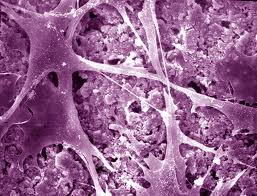
   coral polyps adjacent to

  bone cement


Author Steven Johnson’s new book about the origin of good ideas has many practical insights innovators can use.  His main point:

 “Big new ideas more often result from recycling and combining old ideas than from eureka moments.  Ideas are, almost inevitably, networks of other ideas. We take the ideas we’ve inherited or stumbled across, and we jigger them together into some new shape. We like to think of our ideas as a $40,000 incubator, shipped direct from the factory, but in reality they’ve been cobbled together with spare parts that happened to be sitting in the garage. People used extant stuff or ideas to produce a new bricolage [the construction or creation of a work from a diverse range of things that happen to be available]  and did so because of their immersion in open networks”.

  The model for ‘good idea invention’ is one of tinkering, using existing spare parts.  This is how life began, Johnson says. Imagine basic molecules —  ammonia, methane, water, carbon dioxide, a smattering of amino acids and other simple organic compounds – in a warm sea.  By spontaneously combining, aided perhaps by lightning, you get  “most of the building blocks of life: the proteins that form the boundaries of cells; sugar molecules crucial to the nucleic acids of our DNA.”  This ‘adjacent possible’ is a first-order innovation, leading to second- and third-order, in the same way. 

   Here are two of Johnson’s examples:    Double-entry accounting: “It was first codified by the Franciscan friar Luca Pacioli in 1494, but it had been used for at least two centuries by Italian bankers and merchants.”   Printing:  “The printing press is a classic combinatorial innovation. Each of its key elements—the movable type, the ink, the paper and the press itself—had been developed separately well before Johannes Gutenberg printed his first Bible in the 15th century.”  

  Johnson makes heavy use of the notion of the ‘adjacent possible’ developed by theoretical biologist Steven Kauffman:  “The strange and beautiful truth about the adjacent possible is that its boundaries grow as you explore them. Each new combination opens up the possibility of other new combinations. Think of it as a house that magically expands with each door you open. You begin in a room with four doors, each leading to a new room that you haven’t visited yet. Once you open one of those doors and stroll into that room, three new doors appear, each leading to a brand-new room that you couldn’t have reached from your original starting point. Keep opening new doors and eventually you’ll have built a palace.”

    Johnson stresses how “liquid networks” among people, with ideas flowing smoothly, rapidly and without barriers, create good ideas.  He attacks the patent system:  “The premise that innovation prospers when ideas can serendipitously connect and recombine with other ideas may seem logical enough, but the strange fact is that a great deal of the past two centuries of legal and folk wisdom about innovation has pursued the exact opposite argument, building walls between ideas.”  Patents are such walls.  He cites Nike’s experiment, which has made available, in a ‘liquid network’, 400 patents,

     “Earlier this year, Nike announced a new Web-based marketplace it calls the GreenXchange, where it has publicly released more than 400 of its patents that involve environmentally friendly materials or technologies. The marketplace is a kind of hybrid of commercial self-interest and civic good. This makes it possible for outside firms to improve on those innovations, creating new value that Nike might ultimately be able to put to use itself in its own products.”

Johnson’s advice to innovators can be summarized as follows:   Talk about your ideas with others.  Listen to what they say carefully.  Include creative people in your network.  Avoid secrecy. Seek to combine existing things in new ways.  Think of the ‘possible’ but be wildly imaginative.   And, as I’ve noted often in this blogspace, observe Nature.  Place “human bones” adjacent to “coral polyps”.  Johnson notes how “Brent Constantz, working on a Ph.D. that explored the techniques that coral polyps use to build amazingly durable reefs, realized that those same techniques could be harnessed to heal human bones. Several IPOs later, the cements that Mr. Constantz created are employed in most orthopedic operating rooms throughout the U.S. and Europe.”

* Steven Johnson, Where Good Ideas Come From, Riverhead: 2010.


Innovation Blog

Thumb, Gesturing Backward: Innovator, Can You Play 4th Trumpet

 Like Wynton Marsallis?

By Shlomo Maital

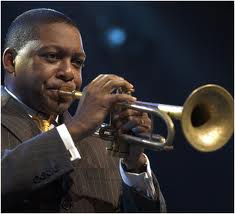
Wynton Marsallis 


“Founder’s Disease” – inability of entrepreneur/innovator to transfer the daily operation of his/her startup to a professional manager, often leading to collapse and failure.

   No catalog of diseases lists this one. But it is very very common. I’ve seen it often.  A gret deal of emotion accompanies the launching of a startup. For the founder(s), it is much like the birth of a baby. And who would put their baby up for adoption, unless absolutely necessary, by placing it in strange hands?  Yet this must happen, because the capabilities to run and build a global organization are far different from those needed to launch a startup. 

   Recently, on the CBS TV show 60 Minutes, Morley Safer interviewed jazz trumpeter and bandleader Wynton Marsallis.  Marsallis, who is 50, is regarded as perhaps the world leading jazz artist. His Big Band is regarded as the best of its kind in existence.  Marsallis travels the world with his band and is acclaimed everywhere.  The son of a musician, he grew up in New Orleans, and was trained in classical music.  He has an amazing work ethic, works harder than any of his band members, and travels the world, despite a deep fear of flying.

     Where is he, when his band plays? Out front, conducting and taking applause (like Duke Ellington)?  No. He plays 4th trumpet, in the back row.  Why?  When he tries conducting, one of his musician will “look down at the music and gesture backward with his thumb”, Marsallis says, meaning, “hey, man, you can’t conduct a paper bag, get back with the trumpeters where you belong!”.  And amazingly Marsallis listens.

    Innovator – remember this, when you launch your startup and you need to grow it into maturity.  Find someone to do it, unless you are a rare person gifted with managerial skills as well as creativity (rare as hounds’ teeth).  Remember the backward-thumb gesture, and Marsallis’ acceptance of it.   

Global Crisis/ Innovation Blog

Key Results of the Global Crisis: Martin Wolf’s Midstream Analysis

By Shlomo Maital


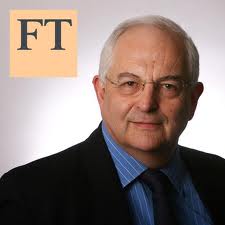
 Martin Wolf, FT

 Financial Times columnist Martin Wolf * runs the FT Economists’ Forum (www.ft.com/econforum), and his regular FT column is worth tracking carefully.  In his latest column, Wolf reviews the key results of the global crisis 2007-9.  Here is a brief summary.

1. Financial regulation has tightened. At last, the trend direction is toward tightened regulation, rather than loosened, for the first time in 30 years.

2. Private leverage declines. In America, private gross debt, as a per cent of GDP, rose from 123 per cent in 1981 to a peak of 293 per cent in 2009. (Why did we economists not treat this as a signal of looming crisis?).  That ratio has now fallen to 263 percent, a shedding of some $5 trillion in private debt in just a year. The financial sector also deleveraged debt worth 20 per cent of GDP in just a year. 

3. Global imbalance (saving in Asia, dissaving in mainly the U.S.) is being reversed, though very slowly.

4. Euro zone deleveraging is occurring, but slowly, imperfectly and bodes ill for the future.

5. G7 nations have taken on huge debt owing to fiscal deficits, their net govt. debt will soar from 52 percent of GDP in 2007 to 90 per cent in 2015.  So basically, private debt has become public debt, partly as governments bailed out failed banks and presented the bill to the public.

6. Global power shift from the West to the East, toward China and India, and toward Brazil. The IMF says the share of advanced countries in global GDP was 63 per cent in 2000, but will be less than 50 per cent in 2013; China and India account for 80 per cent of the rising share of the developing world.

   These six key trends all present major opportunities for investors, entrepreneurs and managers who are able to spot such opportunities, when others see only crisis and uncertainty.

* Martin Wolf, “How the crisis catapulted us into the future”.  FT, Feb. 2, 2011, p. 11.

Innovation Blog

The REAL Margin:  Customer Value Margin

By Shlomo Maital

  Innovators are taught to think about profit margins, even before they launch their businesses.  They are led to believe that to survive, they must make a profit and satisfy their shareholders.  The key is ‘margin’, can you make ‘margin’?,  operating margin (operating profit/revenue) or net margin (net profit/revenue).

   I believe this is wrong. In the next edition of our book Innovation Management, we will try to change this way of thinking.  The most important stakeholder for you, the innovator, is your customers, not your shareholders. If you satisfy them, you will also satisfy your shareholders.  And there is a way to measure customer value.  It is called ‘customer value margin’, and it is defined as the difference between the maximum your customer would pay for your product or service, and the price they actually pay.  As a rule of thumb, your customer value margin should be as large as your net margin.  MBA students insist this is dumb, that it is leaving ‘money on the table’.  I believe it is wise, the way to long-term sustainable profit.  And it is consistent with what CEO’s used to believe, that pleasing their customers came before pleasing their shareholders.

    Can you measure ‘customer value margin’?  You can.  Pick a typical customer.  By empathy, or direct questioning, find out the maximum they would pay for your product. Of course this varies across customers.  But it is powerfully influenced by differential value – the price of the closest substitute.  If you have no close substitutes, then you are generating strong customer margin. This is what you must shoot for.  Customer value margin is equal to V, the most the customer would pay, minus P, the price they actually pay.  Profit margin is equal to P, price, minus C, unit cost.  Total social value is the sum of customer value margin and profit margin, or V – C.  This is how innovation creates social value and divides it fairly between those who fund the innovation and those who buy it and benefit from it.  The bigger V-C, the bigger the social value. [See Figure]

    If you think in terms of customer value margin, primarily, you cannot go wrong.  In doing so, you are making meaning, not just money.  Innovators once thought that way.  They should do so once again.

   #……………………#…………………………..#

V                                P                                            C

.cust.marg…..   ………..prof marg…….

……  total social margin…………………

Innovation Blog

Innovation in Fifth Grade – Over My Dead Body: Literally!

By Shlomo Maital


 “crime scene”


  Singapore fifth grade

Writing in his regular New York Times column (Jan. 29),  Tom Friedman recounts an innovation he observed, in a fifth grade class in Singapore, in the Gan Eng Seng Primary School.  Here is what he writes:

All the 11-year-old boys and girls are wearing junior white lab coats with their names on them. Outside in the hall, yellow police tape has blocked off a “crime scene” and lying on a floor, bloodied, is a fake body that has been murdered. The class is learning about DNA through the use of fingerprints, and their science teacher has turned the students into little C.S.I. detectives. They have to collect fingerprints from the scene and then break them down. … When I asked the principal whether this was part of the national curriculum, she said no. She just had a great science teacher, she said, and was aware that Singapore was making a big push to expand its biotech industries and thought it would be good to push her students in the same direction early. A couple of them checked my fingerprints. I was innocent — but impressed. This was just an average public school, but the principal had made her own connections between “what world am I living in,” “where is my country trying to go in that world” and, therefore, “what should I teach in fifth-grade science.”

   All over the world, we hear rabble-rousing speeches from political and business leaders.  Most recently, we heard them at Davos, where Russian President Medvedev spoke about innovation.  This reminds me of how businesses shape competitive strategy – top down strategy “Bibles” written by the CEO and top management, which somehow are supposed to trickle down to the ‘foot soldiers’ in the field, who do the real work.  It never happens.

    Singapore has a national strategy to build up its biotech industry.  Somehow, a school teacher at a middle-class school listened, got it, and acted.  The result: A brilliant innovation for teaching genetics and DNA to fifth-graders, one that involves memorable action learning.

    We can learn much from Singapore.  As Friedman notes:  “Singapore has something to teach us about “attitude” — about taking governing seriously and thinking strategically. We [America] used to do that and must again because our little brick house with central heating is not going to be resistant to the storms much longer.”     

   How can we inspire fifth-grade teachers in America, Europe and Israel to do the same? What will it take?  How can we think strategically, and then see school teachers implement the strategic vision with their kids.  And why, if Singapore is so undemocratic, reviled by American politicians for that reason, does the essence of democracy happen there, more than elsewhere:    Ordinary working people get the message from the top, and put it into practice with creativity and energy somewhere near the bottom. 

Innovation Blog

 Benjamin Franklin, Innovator: Back of the Bus, da Vinci!

By Shlomo Maital


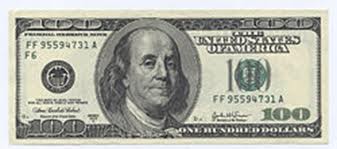
Ben Franklin bill

On a long flight, recently, I read Benjamin Franklin’s Autobiography on my Kindle.  I realized that while we attribute multidisciplinary creativity to da Vinci, in art, science, engineering, urban planning, etc.,  when it comes to practical needs-based innovation driven by a deep understanding of society, the Boston-born American innovator Benjamin Franklin (1709-1790) is far ahead. 

  Franklin was born and raised in Boston, on Milk St., but left at an early age to find his fortune.  He was self-educated and read widely.   Here are a few of his innovations, driven by an independent inquiring mind:

   He invented the lightning rod (flying a kite into an electrical storm that by all odds should have electrocuted him), the Franklin stove (highly efficient stove), bifocals (he wore them), the urinary catheter (none of his inventions were patented, he utterly opposed such wealth-creating monopolies).  He wrote,  “as we enjoy great advantages from the inventions of others, we should be glad of an opportunity to serve others by any invention of ours; and this we should do freely and generously”.  He charted and named the Gulf Stream ocean current.  Once doubting sea captains believed him, they cut two weeks off the voyage between North America and England.  He founded the American Philosophical Society, where scholars could present their research findings.  He first noted that electricity has positive and negative charges.  Franklin published ideas for sea anchors, catamaran hulls, watertight compartments, shipboard lightning rods and a soup bowl designed to stay stable in stormy weather.  He founded the University of Pennsylvania.  He invented the public library.  He innovated the post office and stamps.  He realized there was a shortage of printed money and, against the wishes of the wealthy oligarchs who controlled what little currency there was, printed currency to foster commerce.  To this day the Franklin Mint prints currency and mints coins, in Philadelphia.

  And finally, Franklin helped write that amazing document, the American Declaration of Independence.

   The fundamental difference between Leonardo da Vinci and Benjamin Franklin, was that da Vinci tried to keep his innovations secret by his mirror-writing, and most of them were thus never implemented. Franklin, in contrast, purposely sought to give away his ideas and implement them as rapidly and as widely as possible.  Generally he succeeded.   His method was one widely taught today: Identify a social need, build a business model to acquire resources (he liked to use a subscription model – pay a small regular fee and enjoy library services, or hospital, or education, or postal services).  

    It is worth re-reading his Autobiography; innovators will find much in it to emulate.

 Global Crisis Blog

Global Crisis:  Big Mess, Caused by Blunders, Not Mother Nature

By Shlomo Maital


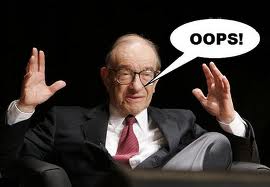
Alan Greenspan

The American Federal Commission established to investigate the underlying causes of the global financial collapse, 2007-8, has now reported its findings (this is breaking news, within the past few hours).  Here is what they found:

“The crisis was the result of human action and inaction, not of Mother Nature or computer models gone haywire. The captains of finance and the public stewards of our financial system ignored warnings and failed to question, understand and manage evolving risks within a system essential to the well-being of the American public. Theirs was a big miss, not a stumble.”    “The greatest tragedy would be to accept the refrain that no one could have seen this coming and thus nothing could have been done. If we accept this notion, it will happen again,” the report states.

    The major blame is placed on Fed Chairmen Alan Greenspan, as well as current Fed Chair Ben Bernanke.  Among those blamed:  Government regulators and policy makers; corporate mismanagement; two presidential administrations; two Fed chairmen; greed in several financial institutions; and unnecessary Wall Street risk taking.   The report is from the New York Times, which got a preliminary glimpse at the commission’s findings.

  According to C.B.S.,  “former Fed chairmen Alan Greenspan and his successor, Ben S. Bernanke. Greenspan are singled out for advocating financial deregulation and failing to stem the flow of toxic mortgages.”

  The 10-member commission was not unanimous.  Six members appointed by Democrats agreed with the findings.  Four members appointed by Republicans opposed them.  This is typical of the current fiercely partisan atmosphere in U.S. politics.   Republic minority members will soon issue their own report, blaming – you guessed it – the Democrats.

  The Report does not fail to blame the lobbyists as well. “Lobbying is also blamed, [including] the $2.7 billion spent between 1999 and 2008 by the financial sector on convincing politicians and federal officials to let them have their way.”

   “Overall, the report paints a grim picture of mismanagement, miscalculation and a general lack of will to tackle obvious flaws in the financial system by government officials, industry leaders and regulators.” 

    The 6-4 split in the Commission will effectively neutralize any possible policy changes arising from the Report, since Republicans now control the House of Representatives. 

Innovation Blog

Great Depression, Great Innovation: Will We See a New Wave of American Innovation?

By Shlomo Maital


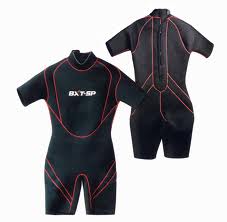
Neoprene wetsuits

 Recent scholarly research reveals a surprising fact about the Great Depression, 1929-1939.  It was an era of unprecedented innovation.  According to Alexander J. Field, *   “The years 1929-1941 were, in the aggregate, the most technologically progressive of any comparable period in U.S. economic history.”

   Examples?  (cited by Nabar and Nicholas) **:  Dupont scientist Wallace Carrothers invented synthetic rubber (neoprene), creating an entire new industry (tires, etc.) that created American jobs, rather than Malaysian rubber-tree plantation jobs.  Dupont scientists also invented rayon, enamels and cellulose, generating 40 per cent of Dupont revenues in 1937 from products that did not exist in pre-Depression 1929.  Automobile innovation forged ahead, especially in the improvement of internal-combustion engines, also creating a massive job-creating industry.  Television and FM radio were introduced by RCA (though their introduction was somewhat delayed by lack of money).  Catalytic cracking for complex hydrocarbons was introduced, creating huge refineries that employed many thousands.  And the early jet engines were developed, building on newly developed titanium alloys.

   What is it about hard times that spurs innovation?  Nabar and Nicholas, economists, offer a convoluted jargon-ridden theory:   “we show that firms with imprecise sector-level priors on payoffs to innovation updated their beliefs and responded stronger to sector-level signals than firms holding more precise priors. “  Translation: Firms less locked in to strategic plans (i.e. major cutbacks) could move faster to innovate and seize emerging opportunities”.

   I think the reasons lie elsewhere.  The legendary former mayor of the Brazilian city of Curitiba once said, “if you want true creativity, slash two zero’s off your budget”.  He meant that resource scarcity spurs innovation, rather than hampers it.  He was right.  Desperation, poverty, lack of funds, all these create a can-do creative atmosphere in which innovators seek ways to save resources and improve existing technologies, simply in order to survive.

   I do not see the same atmosphere in today’s America.  As an observer once said, “a crisis is a terrible thing to waste”.  The 2007-9 crisis was wasted.  By reassuring Americans that the crisis is over, America’s political leaders are a) wrong, and b) are wasting an opportunity to leverage the enormous energy that Depressions foster, as happened in 1929-39.  There ARE innovations.  iPads create jobs for Asians.  Facebook creates a few jobs but not industries, as happened in the 1930’s.   What is vitally needed are innovations that create breakthrough products spurring creation of massive new industries [synthetic rubber, refineries, car plants] with equally massive job creation, at home in America, not in Chungking or Nanjing. Here are some suggestions.  Cleantech: alternative energy breakthroughs. Medical devices: lowering soaring medical care costs. Transportation: New technologies for public transportation.  Education: ways to deliver high-quality education to the masses, using technology.   Alas, I see few signs this is a national objective.  It should be.  Wake up, America!  This Depression may end before you reap its potential benefits.

* Field,  Alexander J., “”The Most Technologically Progressive Decade of the Century,””American Economic Review, 2003, 93(4) 399-1413

** Malhar Nabar,  Tom Nicholas “Uncertainty and Innovation During the Great Depression” Harvard Business School, January 14, 2010

Innovation Blog

Nature Innovates #3: The Octopus & Jet Fuel, The iPad and Darwin

By Shlomo Maital


 Octopus: Jet Propulsion


Nature yet again inspires human innovation, to help save Nature itself.    A Georgia Tech researcher named Arie Glazer studied so-called “boundary layer” effects on the upper edges of aircraft wings.  As air passes over the wing, in flight, turbulence develops. This causes drag and reduces fuel efficiency greatly. And combustion of jet fuel is a major cause of carbon emissions and global warming.   Basically, the longer air molecules travel over the wing, the more they become ‘fatigued’, and began to ‘misbehave’.  Glazer thought that counter-intuitively, by disturbing the air flow somewhat, you could get the air molecules to ‘forget’ they’ve been smooth for too long, and begin the smooth flow again.  But, how to do this?

    Why not create tiny microjets that expel air onto the wing surface, especially near the trailing edge?  But this will use fuel, not save it!   What can we learn from Nature, Glazer asked?  Who inhales and exhales jet?  Octopi.  They suck in water, they expel it to propel themselves very rapidly through the water. Glazer (along with researchers at Australia’s University of New South Wales) designed tiny 1 mm. microjets that, like octopi, suck in air, and then expel it again.   The result dramatically reduces boundary layer effects and improves the smoothness of air flow over the wing, thus improving jet fuel mileage and reducing carbon emissions.

   And, while we’re praising Nature, why not use Nature to help save Nature itself?  Apple, after announcing Steve Jobs’ medical leave, now announces the 10 billionth (!) download of iPhone and iPad apps.  There are 350,000 such apps, created by a storm of innovative energy by enthusiastic users.   Did Apple learn its lessons well?  By closing its Mac operating system in the 1980’s, Apple managed to transform a winning product (the world’s best operating system and world’s best personal computer) into products defeated by inferior Microsoft and IBM products. By opening its software to all developers, IBM enlisted massive creative energy and made its PC the global standard. Apple lots tens of billions of dollars in market value.  But Steve Jobs learned.  Today the open Apple system enjoys the vigor, creativity and innovative skill of many thousands of developers.  In doing so, Apple emulates Nature.  Thousands of mutations, or “natural experiments”, occur in Nature, as Nature tries to improve.  Most of those experiments fail and disappear, because they do not help living things to survive to reproduce.  But a tiny fraction do succeed, and they prosper, procreate and eventually dominate.  Same with apps.  Most are not successful and sell very few copies. A few are highly successful and find wide use.  And the only way to find out which is which, is to toss 350,000 apps up into the air, put them into the apps stores, and see what happens – just like Nature’s evolutionary process. 

   Innovator:  Can you build an innovation system that emulates evolution?  If so, you can massively change the world for the better!

 Innovation Blog

 (Lack of) Innovation in B-Schools: Help!!!

By Shlomo Maital


Alan Brandt GMAC


Bloomberg Business Week reports on a contest for ideas to innovate business school programs.  There were some 650 entries.    Winner Alice Stewart conceived this idea:    She envisioned professors from different disciplines creating micro-curriculums, where they’d weave content together from business education, engineering, and the sciences.  Students who completed the classes, which she dubbed “stackable knowledge units,” would get a certificate.  Eventually, they could combine these certificates to earn a business degree, she wrote in her proposal, thereby allowing students to customize their education track.

   According to Alan Brandt, who heads the GMAC-funded contest, “This is essentially building your own degree based on creating stackable units. It is something that is different enough and could help you, as an individual student, in approaching a program in the way you want to do it without a wholesale change to the existing way a school is working.”

    As always, I am distressed by the lack of innovation in business schools that teach innovation (all do), because I live and work in a biz-school environment.   My former student B. Joseph Pine,  co-founder of Strategic Horizons, an innovative consulting firm,  published Mass Customization 12 years ago.  In it, he noted the strong trend of ‘markets of one’ – creating customized products for customers.  Many consumer products have done this for year,  for instance Dell Computer Co.’s customized design-it-yourself computers.  Yet MBA programs continue to offer a curriculum of standard functional stovepipe core courses and a few “electives” – mainly, one size fits all.  There is little integration, little cross-disciplinary teaching, little team-teaching (too expensive), little customization.

    When will we see Alice Stewart’s idea truly implemented? At the current snails pace of innovation in B-schools – I may not see true mass customization in MBA programs  in my lifetime.   

Blog entries written by Prof. Shlomo Maital

Shlomo Maital

Pages