Innovation Blog

Hu Jintao in America – U.S. vs. China

By Shlomo Maital 

 Here are a few brief observations about U.S.-China relations, as Chinese President Hu Jintao ends his U.s. visit, in Chicago.

  • President Obama is a lawyer.  Hu Jintao is an engineer.   So is Premier Wen Jiabao. Whom would you choose to lead a nation into new technologies and innovation, a lawyer or an engineer?  When was the last time America chose an engineer as President? (Answer: Jimmy Carter, 1976, but he was trained as a nuclear engineer, and never really practiced). 
  • What subject was studiously avoided during Hu’s visit?  The trade deficit.  America’s overall trade deficit shrank in October, last available data, to $38.4 b., but the trade deficit with China grew, to $25.6 b.  In other words,  two-thirds of America’s trade deficit is with China.  Why? Because the U.S. no longer produces stuff China really needs.  Containers from China return from Long Beach Harbor to Shanghai carrying…paper for recycling, or are simply empty.   
  • Look for China to be increasingly assertive, as its economy grows.  According to a recent McKinsey Report by Gordon OrrUs :     “China will step up its “invest out” program in the new five-year plan. The government may well seek to double the country’s cumulative outbound investment within the next five years. There will be resistance by governments in some countries (probably in Africa, Eastern Europe, and Latin America) where public opinion is not yet convinced that so much Chinese ownership of key assets is really attractive. This opposition will visibly upset China’s leaders, who may decide to sell the bonds of the reluctant governments and to increase the challenges that enterprises from these nations face in selling to Chinese state entities.”

   Herein is the answer to America’s reticence about its trade deficit with China. China can crash the dollar, simply by ceasing to buy U.S. Treasuries at the weekly auction, let alone sell a tiny fraction of its $2.8 b. worth of dollar assets.

  • A Times of India article [1] asks:  Did China overtake the US as the world’s biggest economy in 2010?  New numbers for the GDP of different countries at purchasing power parity (PPP) seem to suggest so.   When you correct China’s GDP, by dividing GDP measured in renminbi (yuan) by the appropriate exchange rate (that accurately reflects the high purchasing power of the yuan), some experts find China’s GDP exceeds America’s (though, of course, its population is four times greater, so its GDP is still only about a quarter that of America.  According to economic Arvind Subramanian, “the adjustments increase China’s GDP from the current estimate of $10.1 trillion to $14.8 trillion (an increase of 47%, of which 27% is due to the revision in the 2005 estimate, and the rest due to smaller-than assumed increases in the cost of living between 2005 and 2010. This $14.8 trillion figure exceeds US GDP of $14.6 trillion.”   There is psychological significance to this number.  The world’s largest economy conveys substantial geopolitical clout as well.

[1] 21 Jan, 2011, by Rukmini Shrinivasan.
Global Crisis

Guess Who’s Making Your Gasoline Bills Soar? Clue: Not OPEC

By Shlomo Maital


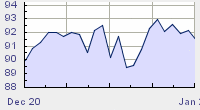
 crude oil price volatility 

A recent business commentary on Canada’s CBC radio made a great deal of sense.

  An expert from Enfo, an energy consulting firm, discussed the recent spikes in the price of oil and gasoline, as petroleum soars over $90/bbl.  Back in June 2010, oil was only $78/bbl.   

   Why?  Geopolitical instability?  OPEC?  None of the above.

   Speculators.

   The crude oil market has become a favorite sandbox for speculators. With huge amounts of liquidity floating around the world, with banks reverting to old habits of ‘nostrum’ speculation to generate huge profits, and with very few opportunities to earn high returns,  traders have put huge amounts of money into crude oil futures and options. 

    They are speculating that the global economic recovery, which will drive world GDP growth to 4.5 per cent this year (according to the IMF), will create demand for oil and hence drive up prices. 

   What is the problem with this?

   It creates a kind of doom loop.  The more speculative money that flows into petroleum trading, the higher the volatility.  The higher the volatility, the higher the potential speculative profit from guessing right.  The higher the potential profit, the more money this market attracts… and so on.    We have seen this before in other derivatives markets. 

   The problem with this doom loop, or feedback system, is that we USE oil, to run our cars, heat our homes, produce electricity.  So a relative handful of speculators can make energy more expensive, generate profits for Arab  despots and in general fuel global cost-push inflation.   The speculators and oil-producing countries, mostly non-democratic, share a common interest – make money, at our expense. 

    It appears that regulators are powerless to prevent it.  What ordinary people can do, one at a time, is conserve energy, as best they can, and press their elected officials to spearhead policies that do the same. 

Innovation Blog

How to Milk Goats for their Spider Webs –  Say That Again??!!

By Shlomo Maital


 Spider silk surpasses steel


In this blog, I often write about how Nature, with its ultimate patience that uses millions of years of evolution to create winning innovations, surpasses by far human ingenuity.  Here is a story about how human innovation partners successfully, and highly creatively, with Nature’s innovation.   You can learn more by watching the wonderful four-part Public Broadcasting System Nova series on “Making Stuff”.

    Spider silk is amazing. It has higher tensile strength than steel.  Nature has patiently, through evolution, enabled spiders to spin tough silk. Nothing humans make rivals it.

 . A thread of silk can resist more pull before breaking than a thread of most kinds of steel. It is also quite stretchy. In the spotlight recently has been the newly discovered Darwin’s bark spider of Madagascar, which builds one of the largest webs known. The silk of this spider is twice as strong as other spider silks, ranking it among biological materials with the highest tensile strength and toughness known. 

[At the American Museum of Natural History, you can see a large orange blanket, woven from spider silk.  It took four years to painstakingly collect enough thread, by ‘milking’ spiders into an alcohol bath, then retrieving the threads that coalesce in it.] 

   Univ. of Wyoming molecular biologist Randy Lewis asked himself, how can we create spider silk commercially (since humans cannot synthesize it)?  Here is what he does.

   First, he extracts one of the two key genes spiders have, that enable them to produce their silky threads.   Next, he inserts it into goats, creating baby goats that have the spider-silk DNA.

   Next, he milks the goats, and extracts the spider silk compound from their milk.  The level of spider silk in their milk is about 1 per cent (like low fat milk).  A quart of goats’ milk generates a tiny thimble of spider silk material, that can be used to produce ultra-strong threads.

    Here is how Lewis describes his thinking:  “We needed a way to produce large quantities of the spider silk proteins,” Prof Lewis said.  “Spiders can’t be farmed, so that route is out and since they make six different silks, even that would not work if you could.” Spiders also have a tendancy to eat each other, so milking one thread from six out of a solo spider was clearly never going to service the entire human race. Prof Lewis and his team singled out the “dragline” – the outer strand of the web – as the strongest of the six types of silk. They spliced the DNA that creates the silk into a female goat’s DNA, then waited for it to give birth and start lactating.”

   Lewis says he is thinking of inserting the gene into alfalfa, rather than goats.

   It is therefore time to begin thinking about uses.  What uses can you, reader, think of, for ultra-light  [a strand of spider silk that circles the world, 25,000 miles, weighs only one pound!] and ultra-strong, stronger-than-steel, thread?  Fishing line?  Bullet-proof vests (we use Kevlar today)?

Innovation Blog

Art as Common Stock: Will It Fly?

By Shlomo Maital


Vezzoli, Premiere of a play that will never run

The French company A&F Markets has come up with a venture called Art Exchange that will treat artworks as investment vehicles, opening them up to partial purchase by shareholders.  The first two works to be offered by Art Exchange are both owned by Paris’s Yvon Lambert Gallery.  Pierre Naquin, the founder and president of the investment venture, related that the initiative has just launched with an offer of shares in two pieces, one by Sol LeWitt and the other by Francesco Vezzoli.   Now 11,000 shares of LeWitt’s “Irregular Form” are available at €10 ($13) per share, for a total value of €110,000 ($142,000) and 13,500 shares of Vezzoli’s “The Premiere of a Play That Will Never Run” are also offered at the same rate, giving it a total price of €135,000 ($174,000).

    What is the basic idea of this innovation?  Suppose you are an investor, and believe that art is a good investment, as part of a diversified portfolio.  You can invest in it by buying a painting or a sculpture.  But the price is high, and you may lack expertise.  So why not offer ‘shares’ in a painting, so that when the value of the painting rises, you profit (and take the profit when the painting is sold).

   Apparently this art stock market is not the first.   China’s Shenzhen Artvip Cultural Corporation started selling shares last year on the Shenzhen Cultural Assets and Equity Exchange.  Instead of selling slices of an individual work, Artvip sold 1,000 shares in a collection of pieces by artist Yang Peijiang, which sold out immediately.

    Is this idea good for art?  I heard an expert criticize the idea.  But surely, by making art ‘liquid’, you attract resources to art and thus help both galleries and artists. 

    This art stock market is not for collectors.  They are well-heeled, and want to own paintings, so they can enjoy them while perhaps making capital gains.  This market is for ordinary people who feel that perhaps, the market for art is bullish and worthy of, say, a 10 per cent tranche of their total investments. 

    There are some open questions.  How is the decision made to sell a painting, and when?  By a ‘shareholders’ meeting’?  Majority of shares decides?  How are shareholders consulted?

   Like all innovations, the market will determine this one’s success.   I think it might just work. Stay tuned.

Innovation Blog

“I Have a Dream!” – Merging Spontaneity and Discipline in Innovation

By Shlomo Maital


Today America celebrates Martin Luther King Day.  We recall the remarkable “I Have a Dream” speech given on Aug. 28, 1963, for only 17 minutes, from the steps of the Lincoln Memorial – a speech that influenced millions and probably changed history.  But how did those memorable words at the very end of his talk happen?  Where did they come from?

  The particularly moving and dramatic segment, with the refrain “I Have a Dream”, almost didn’t happen.  King came to the end of his prepared speech.    And then, gospel singer Mahalia Jackson, on the stage with him, had an insight.  As a performer she realized that King had failed to energize and impassion his audience – which is what gospel singers do, and do it wonderfully.  And she also knew how King could do it.  She had appeared with him at various rallies, and recalled one particularly powerful speech King gave earlier that year in Detroit, when he marched at a demonstration with legendary labor leader Walter Reuther. 

    “Tell them about the dream, Martin!”  Mahalia Jackson said.  You can clearly hear her speaking these words on most of the YouTube versions of the speech.  “Tell them about the dream!”. 

    M.L. King listened.  He got it.  He understood.  He seized the moment.  He was able to improvise, turning an ordinary speech into one of the most extraordinary orations in history.  He did this with a combination of spontaneity – he probably made the decision to add the “I have a dream” segment in a split second – and discipline, because he had given the “dream” segment before, prepared it, thought about it, and it was like a perfectly designed suit of clothes ready to be taken out of its wrapping and worn immediately. 

    Spontaneity, and discipline – the oil-and-water combination that when combined, create history-making innovation.  This for me is one of the messages of M.L. King’s wonderful speech.

Global Crisis Blog

Ragged Recovery – Where’s Waldo?  by Shlomo Maital


Where’s Waldo (Recovery?)

A wonderful book titled  Where’s Waldo? challenges us to find Waldo in a hugely detailed graphic.  Today we play Where’s Waldo? with the American economy.  Where is the recovery?  Where is the opportunity?  The answer is:  It is there, but takes a powerful electronic microscope to spot it.

   The reason stems from the title of our new book Global Risk/Global Opportunity:  In every global crisis and downturn, there are opportunities; this requires managers and investors, first, to think in terms of finding opportunities, and second, to know where to find them.

    Here are the latest data for fourth quarter 2010 revenues per share, for key American economy sectors, showing the per cent change relative to the same quarter in 2009.  These data are from Howard Silverblatt’s blog in Bloomberg Business Week (Jan. 12). 

   Consumer discretionary   0.53 %

      Consumer staples              5.46

   Energy                                22.88

   Financials                     –    10.94

   Health Care                          6.5

   Industrials                            9.8

   IT                                         11.97

   Materials                             3.66

   Telecom                              1.64

   Utilities                            16.65        

  S&P 500 Av.                       5.96

    Some sectors are still doing terribly (financials), having failed to find replacements for the immensely profitable nostrum trading now very limited.  Consumer spending has not really recovered, but staples (the basics) are doing great, because consumers are spending mainly on ‘necessities’.  Energy, utilities, both are doing very well.  IT is doing well, I think mainly because companies desperately seek productivity tools.  Telecom is flat.  Health care is up, because, well, health gets high priority and has endemic cost inflation.     But my main Where’s Waldo? point is this: The standard deviation of  earnings per share growth is 9.33 per cent !   Look only at the simple average,  6.8 per cent,  or the S&P 500 average,  5.96 per cent, and miss the opportunities.

    So where are the opportunities?  In times of uncertainty and pessimism, what will people buy, where will they allocate spending to things they perceive as essential? How can you position your product as essential? How can you rebrand it with a value-for-money proposition?  Never believe the economists’ tales about a one-size-fits-all economy.  No single phrase describing the economy (“weak recovery”) ever fits any single industry.  Dig deeper, find the real story about each industry, and remember that there is exceptionally high variance in the year-to-year percent change in earnings per share, especially during transition periods.

Innovation Blog

No-Huddle Offense in Oregon: ‘Subtraction’ Wins Again

By Shlomo Maital

  Chip Kelly, Oregon Ducks Coach   


For years, in college football, University of Oregon was a laughingstock, playing in the tough Pac-10 conference against superior teams with winning records and even national championships.  Even its name arouses laughter:  The Ducks.  Ducks??? The fighting (quacking) ducks?  Pit a ‘duck’ mascot against, say, an Indian warrior mounted on a Palomino pony, or a bulldog? 

     What do you do to create a winning team?  Well – innovate. But how?  Football is a century-old game with a lot of proven rules.  Why not try breaking a rule? Perhaps a key one?  Let’s say – the rule that the quarterback calls the offensive plays in a ‘huddle’. 

      One of the proven principles of innovation is ‘subtraction’ – take the key ingredients of a product or service, then remove one of them, and see what happens.  OK – let’s take away the huddle and see what happens, said innovative Oregon Coach Chip Kelly.  Take away the huddle???  How then can the quarterback call plays?  Perhaps – just audibly, right at the line of scrimmage. 

Kelly’s innovative, spread-option, no-huddle offense thrives on speed.  Run a play. Race to the ball. Run another play. And so forth.  No huddle.  You only wait for the referee to ‘spot’ the ball…and off we go.  Give the opposition no time to gather their thoughts and organize defense.  Start the offensive play quickly, before the defenders can even figure out what play you’re likely to run. 

   At times Oregon takes only nine seconds from the end of the previous play to the snap of the new one.  National Football League teams have used no-huddle offense, mainly toward the end of the game, when they lack time-outs and have to race against the clock to score.  But Oregon, under coach Chip Kelly, uses it all the time, every time, every offensive play. It has even led opponents to feign injuries, just to stop the clock and slow down the superfast Oregon juggernaut. 

    According to USAToday:  “They are so good at it, and so fast at it, that a typical game sees them run about 80 plays and score about 50 points, which is the biggest reason the Ducks are playing for a national championship.”

    And play they did. Improbably, Oregon played in the Bowl Championship Game against Auburn, for the title of National US #1 College Team. 

    They lost.  But so what?  They made it to the championship for the first time, they played well in a hard-fought close game.  And they proved that creativity and innovation, through ‘subtraction’, can offset other disadvantages and create competitive advantages that can take you (almost) to the top.

    Look for Chip Kelly to make it to the NFL as head coach.  And look for other teams to emulate Oregon’s amazing innovation.

Innovation Blog

Wikipedia – 10 Years Old!   When Vision Defeats Greed

By Shlomo Maital


  Jimmy Wales


On Jan. 15, Wikipedia, the on-line encyclopedia whose entries are written by the users and readers themselves, celebrates its 10th anniversary.   What can we learn from Wikipedia’s decade of innovation?

  An entire new discipline known as wikinomics has sprung up, based on the notion of products and services created and developed by the users themselves.  Many companies, notably Procter & Gamble and Lego, have enlisted users successfully as an integral part of their product development, and MIT Professor Eric von Hippel has written a book about democratizing innovation (to be consistent, he offers free downloads).  Lately, IBM and other global firms have implemented versions of this idea.

  Founder (co-founder?) Jimmy Wales could have made a huge fortune from Wikipedia, because it is one of the websites that attracts the most eyeballs, and that could easily be transformed into advertising revenues.  But he refuses.  His vision is to retain the popular open flavor of Wikipedia and stay away from revenue, bottom-line and money-making and wealth creation.  I salute him.  There aren’t many entrepreneurs who willingly turn down a check for $1 billion. 

   Wikipedia has many many flaws.  Some of its material has clear biases, written by those pushing a special interest.  Some of its material is inaccurate.  Political wars are fought in Wikipedia.  Yet for sheer ease in getting basic facts about almost anything, Wikipedia is unrivalled.  It has changed the way I work and write, and I am sure has changed the world for millions of others.  

    Wikipedia has some 3.5 million articles in English alone. According to one of its principals, Susan Gardner, Wikipedia’s vision is  “to offer “the sum total of all human knowledge” in the native language of all of Wikipedia’s users.  This vision reminds me of Google.  Google’s founders, Larry Page and Sergei Brin, sought to bring all the information in any language to any person, at any time.  But Google took a commercial route, with advertising revenue and an IPO.   It reportedly has over $30 b. in cash stashed away, waiting for its next strategic play.   

    In contrast, Wikipedia relies on contributions, struggles to raise money, depends on hard-working volunteers, and steadfastly refuses to play the capitalist game.  Instead it wants to implement its vision, bringing all the knowledge to everyone, anywhere, in any language. 

    The big question is, can Wikipedia triumph and implement its vision without resources, without a true business model?  Would it serve its users better with an advertising business model?  Jimmy Wales is steadfast.  Let’s wish him well, and follow this wonderful experiment with interest and affection.


Global Crisis Blog

How to Distort History: Pohl Points Europe toward Fracture

 By Shlomo Maital

 A newsletter called CESifo (from IFO, a research institute in Munich, Germany) contains an interview with former Bundesbank head Karl Otto Pohl, at one time the dominant figure in European monetary policy. 

    Pohl blasts the European rescue program paid for in large measure by Germany, that bailed out Greece and Ireland, and perhaps, eventually Portugal and even Spain:  “I put no stock in the rescue programme for the euro area. It gives the countries the wrong incentives and violates the spirit and letter of the monetary union.”  Policy is often the choice of less-bad alternatives. Not bailing out nations in trouble could have led to a euro collapse.  Is this what Pohl thinks is desirable?

     Pohl thinks Greece should have been allowed to sink and leave the euro.    “Greece should never have been accepted into the monetary union. But it was. Now it must be possible to leave the union. Then, a haircut should have been carried out (partial debt forgiveness by the creditors), the Greeks would have devalued in order to improve their competitiveness.”

      America fought a bloody Civil War partly over states’ rights, the right to secede from the Union.  Pohl is unwilling to commit a small fraction of Germany’s resources to save the European Union.

     What would Pohl recommend? For starters, appoint Axel Weber head of the European Central Bank, when the current head Trichet retires.  Weber, of course, is a conservative, and also dislikes the bailout program.   Pohl recommends changing the voting rules,  weighting votes with the country’s size.  “It is not acceptable for the central banks of Malta or Cyprus to have the same voting power in the ECB as the Bundesbank. This waters down the decisions of the European Central Bank. Voting rights in the ECB should be changed and weighted votes should be assigned according to the strength of the countries. This would help the ECB manage future crises more convincingly.”  Such a voting scheme, of course, would also weaken or ruin the European Union, by telling small countries that they had no say in shaping key monetary policies. 

    Pohl was asked about Keynesianism and fiscal policy.  He responded:   “I don’t think that the return to Keynesianism in economic policy will be permanent. At least not to the simple state dirigisme of his time. Just image, in my final examination at the University of Göttingen in 1955 I defended the thesis that the amount of indebtedness is limited by tax revenue.” 

   The only thing holding up America’s economy at the moment is deficit spending – other demand components are very weak.  Many experts believe the U.S. is on a knife edge, growing at 2.5 per cent, just enough to keep unemployment from soaring, not enough to reduce it.  A radical cut in public spending would push the economy over the edge, perhaps toward renewed recession.   

    Pohl’s views are widely held in Europe.  Appointing  Weber as ECB head would push the central bank toward monetary conservatism and seriously weaken the European union.  This cannot be good news for the world.

Innovation Blog

Oh, Say, Can YOU See?  Innovating the EyeGym

By Shlomo Maital


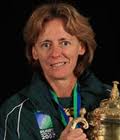
Sherylle Calder

   A former South African women’s hockey team member, Sherylle Calder, has made a breakthrough innovation in performance enhancement in sport.  She did it by introspection – by understanding her own special gift,  then developing methods to help others acquire it.  And she has proven results: She helped coach two World Cup rugby champions, South Africa and England to world titles. 

        The basic idea is simple.  Athletes need superb eye-hand coordination, and eye-feet coordination.  Training methods focus on the hands, the feet, the body – strengthening muscles, and making them quicker and more resilient and durable.  But what about the ‘eye’, a heretofore neglected aspect of physical ability?  Is vision simply a ‘given’, determined by DNA?  Nothing, in fact, is wholly determined by DNA – everything can be improved, by hard work.

       Calder developed a series of pathbreaking eye exercises, in what she calls the EyeGym, to improve what players see on the field.  I imagine she works on peripheral vision, and on quickening reaction time to what the eye sees, and in particular, to anticipating where the play will move to, on the field.  “You have eyes in the back of your head”, she was told, when she played field hockey.  And that is literally true.  The brain can cooperate with the eyes, to translate what the eyes see into a near-term scenario, what will happen a second from now, or a split-second.

     Introspection and empathy are powerful tools for innovators.  First introspection. What do you do well, or what do you know, or what skill do you have, that are distinct and special?  What is special about them?  Second, empathy.  How can you apply those skills, to help those who may not have them?  Can you teach them? Can they be developed?  How did YOU acquire them? Can others follow suit?  And can you apply Malcolm Gladwell’s approach – 10,000 hours – can you invest 10,000 hours to sharpen a skill, insight or competency, and transform it from something unusual to truly extraordinary? And, can you make a living doing it?

  •  Developing a better eye for the game, by Emma Stoney.  Global New York Times, Tuesday Jan. 11, 2011.

Blog entries written by Prof. Shlomo Maital

Shlomo Maital

Pages