The world’s central bankers are meeting in Jackson Hole, Wyoming, and are congratulating themselves on saving the world and on greeting the burgeoning global recovery, as France and Japan record positive GDP growth and America records less-than-expected GDP decline.

Beware. The crisis is not over yet, not by a long shot. Call this the ‘cry of the party pooper economist’ if you wish. But it ain’t over until the fat deficit sags. Here is my argument.

GDP rises when imports fall by more than exports. And imports in America fell rapidly, giving GDP a boost. GDP rises by governments pump demand into the economy. And governments in America, Japan and Europe have been doing this desperately. America’s $1.2 trillion deficit is enormous. 

Now, it follows that when imports in one country fall, exports in other countries also decline, because world imports equal world exports. Exports were the powerful engine of global growth during the 1995-2007 boom. It is not good news that imports have fallen, because it implies that the growth engine, exports, also is sputtering. 

Nor is it good news that government demand has injected metamphetamine into the US and European economies. At some point, governments will need to find an ‘exit strategy’ for their fiscal stimulus plans, as government debt balloons alarmingly and as creditors refuse to lend any more. Just as metamphetamine (“speed”) addicts suffer withdrawal, so do economies when governments cut spending. And eventually they have to.

It is quite possible we will see weak sputtering recoveries that turn into new, mild recessions at the end of 2010. Companies should at least make this one of the scenarios that they seriously consider.

So, congratulations,  Ben Bernanke. You’ve managed to persuade your President, Barak Obama, to reappoint you as FOMC Chair. But plan on at least another year or two of long worried nights in your office on “H” St. in Washington. Your plans to play your saxophone again may have to be deferred.

Jamaica’s Usain Bolt astounded the world by breaking world records in the 100 m. and 200 m. races at the World Athletic Championships in Berlin, each time by 11/100 of a second — a blink of an eye, yet a huge difference in the supersonic world of short races. So did his teammate Shelly Ann Fraser, who won the women’s 100 m. race. My nickname for her is Lady Blur. If you want to photograph when she hits her stride, better have a very fast camera. 

Interviewed on Eurosport, Fraser revealed some valuable lessons we can learn from the achievements of the Jamaican team. (The interview itself was an innovation — filmed as she rode in the back of an official car, on her way to the track, answering questions posed to her on a laptop). 

Where did she learn to run so fast?

“From my mother,” she laughed. “When I was impudent, she would chase me to punish me. I learned to outrun her when I was 10!”  

What did the Jamaican track team learn from Usain Bolt?  

He is an inspiration, she said. He is crazy. He encourages us to have fun, to enjoy the experience. And he teaches us to relax. You perform better when you are relaxed. Bolt, of course, is super-relaxed. He jokes, gestures and makes faces before and after races, and sometimes, in preliminaries, even during them. Make no mistake. Bolt and the team are driven by aspiration, and train very very hard. But they also know how to enjoy the moment, and their smiles light up TV screens as they are introduced just before the races begin. It is a joy to watch them, compared to the tight tense drawn expressions of other runners, who inevitably lose to the Jamaicans.

Innovation and achievement thrive in an atmosphere of fun and laughter. This is contrary to what many organizations believe. Shelly Ann Fraser confirms this, as does Bolt himself. 

Laugh! Enjoy! Savor the moment! And watch the ideas flow.

Can human beings create life? The very question seems sacrilege. Yet an August 20 BBC report (Victoria Gill, “A step closer to synthetic life”) indicates significant progress toward it.

At the J. Craig Venter Institute, in Rockville, MD., scientists have “successfully transferred the genome of one type of bacteria into a yeast cell, modified it, and then transplanted into another bacterium. This paves the way to the creation of a synthetic organism – inserting a human-made genome into a bacterial cell.” We are thus a step closer to altering and engineering the building block of life — the DNA inside our cells. The results were published in the journal SCIENCE.

Leading researcher Sanjay Vashee explained that:

…the work overcame a hurdle in the quest to create a fully synthetic organism. “Bacteria have ‘immune’ systems that protect them from foreign DNA such as those from viruses,” he explained. He and his colleagues managed to disable this immune system, which consists of proteins called restriction enzymes that home in on specific sections of DNA and chop up the genome at these points. Bacteria can shield their own genomes from this process by attaching chemical units called methyl groups at the points which the restriction enzymes attack. The scientists modified the original genome of the bacterium Mycoplasma mycoides, whilst it was inside the yeast cell. Then they either attached methyl groups to it, or inactivated the restriction enzyme of the recipient bacterium, before transplanting the genome into its new cell. 

In other words: Just as doctors use anti-rejection drugs on patients receiving organ transplants, so have the Venter scientists found ways to neutralize the cell’s own protection mechanism that rejects “foreign” DNA, by inactivating the appropriate protective enzymes. To do this, they first had to discover how cells reject foreign DNA.  

Venter remains a controversial figure. His work largely pioneered the decoding of the human genome, by mechanizing and automating the process, speeding it up by two orders of magnitude, at a time when conventional scientists doubted this approach and the government fought it or refused to fund it. 

Why do other scientists find the rather arrogant Venter so irritating? Perhaps, the BBC report notes, precisely because they cannot dispute the quality of his science or the creativity of his break-the-rules thinking. 

One of the Venter team’s ultimate aims is to transplant a fully synthetic genome into a bacterial cell – creating bacteria that can be programmed to carry out specific functions – for example, digesting biological material to produce fuel.

Is your value proposition authentic?

• For years, Intel sold its microprocessors on the basis of Mhz (megahertz, or speed), even though the vast majority of PC users needed only a small fraction of the Pentium’s Mhz. The value proposition was: more Mhz is better. For the most part this was not true.

•  For years, digital camera producers have sold cameras on the basis of megapixels — the equivalent of megahertz.    

More megapixels is better. This too is false.

Writing in the New York Times*, camera expert David Pogue notes:

For years now, the world’s camera companies have been taking the public for a ride. They’ve taught us to believe that what makes one camera better than another is the number of megapixels it has — when, in fact, the number of tiny colored dots making up a photo has very little to do with its color, clarity or even detail.  

How can a value proposition that lacks authenticity — or, more bluntly, a value proposition that is utterly false — survive for so many years? It’s a mystery. Or, perhaps a conspiracy — a kind of industry paradigm that all players find it convenient to adopt. 

Sooner or later, though, as Shakespeare observed in The Merchant of Venice,  “the truth will come out”.   

Slowly, though, the truth is getting out. Recently (at long last), camera companies have begun diverting their research efforts from “how to get more megapixels” to “how to get better photos.” They’re working on things that really do matter in a consumer camera, like sensor size, stabilization — and fixing low-light photography.

Sony and Canon have now each brought out digital cameras that have new value propositions — customer benefits that really do matter. They take great pictures in very low light — something ordinary digital cameras cannot do, megapixels or not. 

Earlier, Intel radically changed its business model, shifting from selling megapixels to selling longer battery life (with its Centrino chipset), so that we could “unwire our world”. It was a risky gamble, but in general paid off, because it was authentic. We consumers do like to unwire our world, do enjoy longer battery life through smaller cooler microprocessors, and really don’t care that much for Mhz. The Centrino concept and design originated in Israel.
 
An important management issue is illustrated here. Ask yourself these questions:
•  What technical parameter or parameters drive my value proposition?
•  How do these technical parameters translate into clear simple value creation and customer benefits?
•  Is this value proposition authentic, or synthetic?
•  If synthetic, how can I alter our value proposition, to link it more closely with true customer benefits, and how can I achieve competitive advantage by doing so?
 
Intel did it. Now Sony and Canon are trying. So  should you. Start with your customer. Ask what the customer really wants and needs. Translate that into a  technical parameter. Seek enabling technology, and when you achieve it,  communicate the benefits to your customers clearly and simply — and authentically.

* David Pogue. Low light becomes a highlight. New York Times, Aug. 19, 2009.

A flood of press reports has announced the end of the global recession, as economies in Germany and France show GDP growth for 2Q 2009, and the world’s largest economy, U.S., shows the 2nd Q GDP quarter-to-quarter decline was only 1 percent (compare with minus 6.4 percent in Q1). 

These reports are highly misleading. They prove that global managers must go well beyond reading these reports and ‘crunch’ the numbers themselves. A quick trip to the U.S. Bureau of Economic analysis website (www.bea.gov) reveals the composition of America’s GDP decline. The numbers (see below) show the recession is definitely not over.

The data reveal the following:
•  Neither business investment nor personal consumption has achieved positive growth, nor have exports
•  By far the biggest contributor to US economic growth was the decline in imports; this boosts GDP, because imports are deducted from GDP. Imports continued to decline sharply in Q2, because people spend less when they are jobless and impoverished. 
•  The much-touted fiscal stimulus package, which has spilled over $1 trillion into the US economy and created enormous deficits and debt burdens, contributed only 1.1 percent to US GDP growth, and in Q4 2008 and Q1 2009 actually caused GDP to decline. The vaunted ‘cash for clunkers’ program, in which Americans are paid thousands of dollars for trading in old cars to buy new ones, is hard to detect in the numbers. Motor vehicle sales caused GDP to decline in Q2.
•  Inventories continue to decline, meaning that companies are still selling off inventories instead of producing new goods, which reduces GDP. And they still have much more to sell.

To simplify: America’s GDP is falling more slowly mainly because people are too poor and too pessimistic to buy imports. Is that great news? This cannot fuel a recovery, because as is well known, America sent most of its production off-shore, so substituting local production for imports requires bringing home its offshore factories (back-sourcing) — a process that has barely begun.
———————-
United States:   Quarter-to-Quarter % Change in GDP 
                                            2008 Q4                 2009  Q1               2009  Q2
GDP                                  -5.4 %                      – 6.4 %                     -1.0 %
Of which:
Personal consumption        -2.2                          + 0.4                         – 0.9
Gross business investment   -3.9                           – 9.0                          – 2.6
Government consumption   +0.2                          -0.5                          + 1.1
Exports                                  – 2.7                           -4.0                          – 0.8
Imports                                  +3.2                         +6.7                          + 2.2
———————–

A close inspection of French and German data will reveal, I believe, that those countries too are far from out of the woods.

The tougher the constraints, and the more hostile the environment, often the more innovation and creativity flourish. This is certainly true of the Incas, whose empire in the Peruvean Andes was ended by the Spanish invasion and conquest in around 1530. The story of Incan innovation is nicely documented in a recent Discovery Channel program.

The Andes Mountains have peaks higher than the highest mountain in the American Rockies. The Incas lived at elevations of around 4,000 m. Their descendants today have larger hearts and lungs than Americans or Europeans as a result. 

How do you feed your people, in a cold mountainous region whose weather is notoriously unstable? By growing food.   But how, on steep mountain slopes? Answer — terraces. The Incas perfected terracing — creating flat stepped areas on steep mountain slopes that resisted erosion and on which crops could be grown. They brought the soil from afar and it remains fertile to this day. They used guano (bird droppings) for fertilizer and protected the birds that supplied the guano. They were the first to plant potatoes, a vegetable brought from Peru to Europe by the Spanish, and developed more than a hundred varieties. Agronomists claim as many as half the vegetables we cultivate and consume today originated with the Incas. The Incas developed many varieties of maize (corn), also imported later to Europe. The Incas used medicinal herbs. They knew, for instance, that quinine was effective against malaria.

How do you ensure an ample water supply? The Incas built irrigation channels, diverting and even straightening whole rivers. How do you know what plants to grow, and how to grow them? By experimenting. The Incas built a remarkable experimental farm, in the shape of a huge terraced bowl. The bowl covered several temperature and climate ranges, from bottom to top. The Incas, who had no written language, were skilled mathematicians nonetheless and had a system for recording data based on knots tied on ropes. They  placed water containers at various elevations in their experimental ‘bowl’ and then measured the rate at which the ice in the containers, frozen during the cold nights, thawed and became water. 

Machu Picchu, discovered by an American explorer, is known as the Lost City of the Incas. Its elevation is 2,430 m.   It was completed in the year 1462, then abandoned a century later, probably because its inhabitants were wiped out by smallpox brought by the Spanish, and to which the Incas had no natural resistance. Today Machu Picchu is a popular tourist site. Some of its buildings reflect the Incas’ amazing skill at building with enormous stones, transported across the mountains for huge distances.

“Hearts and minds”, the phrase goes. Reason and emotion. Logic and passion. Left brain is logic, and language, right brain is emotion and feeling.

New research by a Canadian doctor, Dr. J. Andrew Armour,* reveals a stunning new finding: our hearts actually have their own nervous system, packages of ‘neurons’ (nerve cells specially designed to conduct  nerve impulses), that have memories! This work gives new meaning to the phrase: “Listen to your heart!”. Armour’s recent monograph describes a controversial, newly emerging view of the heart as a “complex, self-organized system that maintains a continuous two-way dialogue with the brain and the rest of the body.”

Brandeis University researcher Susan Birren has studied the mechanisms of how sympathetic neurons in the heart and cholinergic neurons in the brain are regulated and communicate. Her work reveals “just how sympathetic these two entities are to each other.” “Using rats and mice as model organisms, neurobiologist Susan Birren’s research is helping to demystify the complex relationships that govern neuron development and function in the heart and the brain. The questions are fundamental: How do cells in the nervous system communicate with each other?” (Brandeis website).

Recent TV series have shown people who received heart transplants, and who have taken on some of the personalities and memories of their donors. Experts, of course, were skeptical. But now comes Dr. Armour’s findings, including microscope photographs of the neuron cells in the brain. Other evidence comes from heart-transplant surgeons.  When hearts are transplanted, the moment their blood supply is renewed they begin to beat.   How?  Apparently within the heart are neurons, including related memories, that help hearts “remember” how to beat and what they are supposed to do when blood begins to flow. It is a remarkable phenomenon. Could it be that those neurons contain other memories, of the person whose body they occupied?  

Hearts and minds? Well, apparently, hearts have their own minds. One more example of the wondrous human body, as it has evolved over tens of thousands of years. 

*Neurocardiology: Anatomical and Functional Principles. By J. Andrew Armour, M.D., Ph.D.

Professional golfer Phil Mickelson is one of golf’s great athletes. Recently, his wife Amy was diagnosed with cancer, and his mother as well. Mickelson took time off from the Professional Golfers’ Association tour to care for them. Lately he returned. He told the press:

I’ve always loved competing, whether it was for a soda, a golf ball, tees, or on the PGA TOUR for huge purses. I missed the competition. I also just miss being on the golf course. It’s where I’ve grown up, and I just love this game of golf.

It occurred to me, reading this, that often we learn about what we love most only when they are gone or missing. In everyday life, we simply act on habit and take those crucial parts of our lives for granted — activities, jobs, work, skills, professions and loved ones. 

Here is a mental action-learning exercise to try, based on this insight. Practice ‘mental subtraction’. Take away some things from your life — your profession, friends, people, possessions. Picture your life without one thing. How does it feel? We can improve our lives immensely by subtracting parts that are burdensome, unnecessary and unhappy. We can also improve our self-awareness by learning through ‘mental subtraction’ which parts of our lives bring us true happiness — like Phil Mickelson. 

What does ‘mental subtraction’ tell you? Listen to it — and then act. 

Phil Mickelson and wife Amy

Phil Mickelson and wife Amy

Having defeated prostate cancer, I have a strong personal interest in progress toward finding a cure for all types of cancer. Despite new drugs, 560,000 Americans died of cancer in 2006. Imagine the entire population of Helsinki, Finland, dying in one year.  

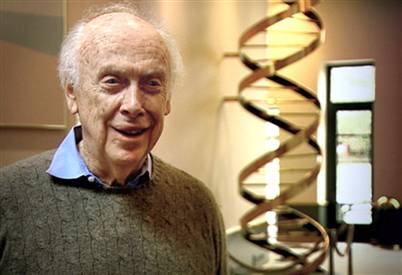
Writing in The New York Times, biologist and Nobel Laureate James Watson (co-discoverer of the double-helix structure of DNA) decries the current lack of strong leadership in cancer research. He proposes a Kennedy-like “we shall go to the moon in this decade” vision:

The National Cancer Institute, which has overseen American efforts on researching and combating cancers since 1971, should take on an ambitious new goal for the next decade: the development of new drugs that will provide lifelong cures for many, if not all, major cancers. Beating cancer now is a realistic ambition because, at long last, we largely know its true genetic and chemical characteristics.

But how should this be done? Watson notes that most cancers are caused not by a single gene but by combinations of them. And he has some interesting ideas.

The metabolism of cancer cells, and indeed of all proliferating cells, is largely directed toward the synthesis of cellular building blocks from the breakdown products of glucose. To make this glucose breakdown run even faster in growing cells than in differentiated cells (that is, cells that have stopped growing and taken on their specialized functions in the body), the growth-promoting signal molecules turn up the levels of the “transporter” proteins that move glucose molecules into cells. This discovery indicates that we need bold new efforts to see if drugs that specifically inhibit the key enzymes involved in this glucose breakdown have anti-cancer activity. 

In other words: find blocking molecules that empty the glucose ‘fuel tanks’ of cancer cells.

This makes a lot of sense.

Another researcher, Dr. Judah Folkman, had a similar idea to Watson’s. Why not deprive cancer tumors of their blood supplies? As a surgeon who removed many cancerous tumors, Folkman saw how those tumors employed ‘angiogenesis’ —  the process whereby cancer tumors pull blood supplies to themselves. Anti-angiogenesis drugs cut off this supply. Several cancer drugs that work in this fashion are now available. Cutting off glucose could be even more powerful.    

James Watson and the double helix

James Watson and the double helix

In a blog written months ago, “Innovation with Ten Zero’s”,  I discussed the LHC (Large Hadron Accelerator) built at a cost of $9 b. near Geneva. The device uses supercooled magnets to accelerate protons and smash them together, to learn about the inner structure of atoms, much as you break an egg to see the white and yolk inside.

Last September LHC was turned on for the first time — and quickly shut down, because one of the magnets failed, owing to a wiring mistake. Turns out, according to the International Herald Tribune, that “the biggest most expensive physics machine in the world is riddled with thousands of bad electrical connections”. It could be years, if ever, the report notes, before the LHC is operating at full strength. As a result, some physicists are deserting the European project to work on smaller (but functioning) accelerators and colliders in the United States. 

A basic principle of economics says that resources should be allocated to maximize returns, by equating returns at the margin, and to minimize opportunity costs (the results that are sacrificed, when resources are not invested in them). What is the marginal return on that $9 b.? What wonderful things and experiments could have been done with those funds? What amazing results could have been achieved had the $9 b. been used to fund 1,000 expensive experiments, each costing $9 m.?  

In innovation, poverty is sometimes highly productive, forcing us to be ingenious and to conserve scarce resources. When the checkbook is infinitely large, all that ingenuity disappears. Moreover, did the LHC experts forget that great design (the design of the LHC is truly amazing) must be matched by equally great construction and quality control?  When operations is orders of magnitude worse than design, the result is frustration, waste, bugs and delays.  

Fewer zero’s. More quality. More discipline. These are the key lessons of the LHC saga.

Blog entries written by Prof. Shlomo Maital

Shlomo Maital

Pages