A special Business Week Report on “Innovation in Recession” (July 22/2009) contains excellent tips for managers, and mini-case studies to support them, on how to sustain and strengthen innovation despite the global downturn. Here are a few excerpts:

• Realism: 60% of 1,430 global managers surveyed by Bain & Co. believe that the current recession will last through 2010. Be wary of pronouncements about ‘green shoots’ — those making them have an interest in persuading you to spend. Now is the time to prepare your product launches for the recovery, a crucial time when market leaders can lose ground to upstart incumbents. 

• Prioritize: Evaluate your innovation portfolio and prune it, slash what is not crucially necessary. Despite temptation, do not slash long-run projects for those that yield big first-year revenues. An avoid-this example: Vanilla Coke, a line extension that took sales away from other Coke products. A to-do example: Google, which used technology for long-run search engine leadership, then found ways to make money out of it.  

• NPV: Avoid it! Existing NPV (Net Present Value) templates use conventional assumptions about the organization’s business model. But the recession will certainly make many of those assumptions obsolete. Moreover, NPV ignores option value: Will the innovation build expertise in new fields, that can later be leveraged to open doors not even reached, were it not for the innovation? Option value of innovation is crucial during a recovery, because every industry features paradigm shifts.

• Employees: Drive Their Creativity! MasterCard has copied IBM’s Innovation Jam, which since 2006 uses 90-hour round-the-clock brainstorming sessions on-line. MasterCard CEO Robert Selander led a Webcast of his company’s 5,500 employees, down to the lowliest intern, based on a long search process done by seven senior executives who comprise an internal international task force. Recession is the perfect time for this — employees all understand the vital need for innovation, which could save their own jobs.

• Involve your customers: Caterpillar is launching its D7E this October, despite the downturn. Its price tag is $603,000, $100,000 more than the older D7R. It’s a hybrid, 30 % more fuel efficient and 10% less expensive to operate, meaning that the $100k price differential is paid back within 30 months. Caterpillar has in the past made many development mistakes; this time it involves its customers far earlier in the development process, to make sure what it brings to market meets their needs. Caterpillar thinks customers will pay higher prices if customers get superior products. 

• Five Questions: A new HBS book by Scott D. Anthony (The Silver Lining: An Innovation Playbook for Uncertain Times) suggests a five-question template for evaluating downturn innovations: What is the upside potential? How much risk remains? What resources are needed to reach the next learning milestone? How well does the idea fit important qualitative criteria (e.g. the value innovation profile)? How much does the idea contribute to the overall [innovation] portfolio’s balance?

Economists never were great communicators. As managers struggle to read the data and seek signs of the recovery, economists’ messages continue to baffle. Here are excerpts from the latest Business Week article on the subject, along with translation into simple English:

Real gross domestic product declined at a pace of just 1% in the second quarter, after a 6.4% decline in the first quarter, the Commerce Department said July 31. The Commerce Department also released multiyear revisions in the GDP that showed the recession was deeper in 2008 than originally reported. Here’s a selection from analyst reactions to the report:

GDP data are revised, often a year or more later. The 2008 US recession was, it seems far deeper than the original numbers showed.

Action Economics: The Q2 figures extend the pattern of a skewing in 2009 economic weakness toward the business from the consumer sector. 

Initially, lower consumer spending was the key cause of the recession. Now it is business investment, both in buildings and in machines. Consumer spending is making a slow recovery in the U.S.

Paul Ashworth, Capital Economics: We expect GDP to post a modest increase in the third quarter, as the pace of inventory liquidation slows and government spending enjoys another big fiscal-related surge.

In every recession, inventories grow when businesses sell less to consumers than they had planned and expected. So businesses cut back production, lay off workers and stop investing, to reduce inventories. Ashworth expects “the pace of inventory liquidation” to slow, a good sign, meaning that businesses may go back to producing for current sale.  Managers should watch inventories closely, they are an important indicator.

One other key indicator that managers should track: jobs. The early signs of some recovery in the US economy do not include unemployment, job creation and jobless numbers. Desperate cost-cutting on the part of most businesses means that even if GDP and spending numbers recover somewhat, this may not be reflected in the job market. There may be a ‘disconnect’ between the goods market and the jobs market, and this could lead to a scenario of ‘double dip’ — workers whose incomes and jobs are weak again slash spending, leading to a second round of inflation.

Exactly one hundred years ago, a French pilot named Louis Bleriot flew across the English Channel (or La Manche, as the French prefer to call it) for the first time. He flew in a rickety monoplane with a tiny engine, held together by spit and paste. Bleriot himself had been injured in an accident two weeks earlier and was limping. And he had no instruments, not even a compass.  

Clearly the attempt was foolhardly. Had he ditched in the cold choppy waters, he would not have lasted long, even if he had survived the crash. The plane was flimsy. Its axle was no thicker than a broomstick. Bleriot flew successfully from Calais to Dover. After that, orders for the planes he built poured in, mainly from countries’ armies. 

Many years later, Charles Lindbergh flew solo across the Atlantic Ocean, in the Spirit of St. Louis. It was a far longer and riskier flight. But Bleriot paved the way.   

There is a direct line from Bleriot the daring pilot to today’s innovators. Bleriot risked his life to do something no-one had done before. There was a reason. By stretching the limits of aviation, Bleriot encouraged innovators to stretch them even further. 

Today’s innovators also take bold risks. While they usually do not risk their lives, they risk years of effort and their careers, facing high odds of failure, just as Bleriot did. The same innovative spirit that drove Bleriot to fly across the English Channel drives today’s innovators, as they seek to identify unmet needs and satisfy them. As we celebrate the 100th anniversary of Bleriot’s daring flight, we can draw inspiration from him and others who pioneered and pushed the boundaries of human achievement.

An interesting lead article in USAToday (July 24-26), headed “Panera bakes a recipe for success”, discusses how Panera Bread CEO Ron Shaich successfully fought the downturn.

Panera is Latin for “time for bread”. Its 1264 restaurant/stores (80 more about to open) generate $2.6 b. in annual revenue, and offer medium-priced fresh food, with mainly a luncheon crowd.

The restaurant industry is, like all industries based on discretionary or luxury spending, in huge trouble in the U.S. Generating some $566 b. annually, the past quarter saw the worst decline in the industry’s history.

Shaich says he is a contrarian. When everyone else is slashing their prices, Shaich has raised his twice — both for bagels, and for soup. But he has also innovated new dishes, and insists, “this is the time to impove the food experience”…precisely when customers least expect it. He charges $7.59 for a new kind of salad — pricey, but apparently popular.

Face it — our customers expect, in these hard times, worse service, cheaper quality, and all the other bad things that go along with aggressive cost-cutting.

Can you surprise them? Can you give them better quality? Can you give them new and better products? Can you focus on the consumer experience, not just the consumer product?

Ron Shaich can. And he has proved it works. Panera’s stock is up 50 percent since last year.

Once economics was known as Political Economy; economics departments called themselves Department of Political Economy. Textbooks were titled Introduction to Political Economy. Then over a century ago economics became “Economic Science”. It was all downhill from then on. The result: as yesterday’s Financial Times noted, “There can be little doubt. The science of macroeconomics is in deep trouble. The best and the brightest in the field fight over the most basic problems.”

Recently in Singapore Deputy Secretary of the Ministry of Foreign Affairs Bilahari Kausikan gave a 30-minute overview of global geopolitics in the wake of the global crisis to a group of MBA students at Nanyang Business School. *He stressed how closely linked geopolitics and economics are. Here is a brief summary:

“Economics drives geopolitical change. We learned this in 1997, in the Asian crisis. Experts have been premature in saying that we now live in a multipolar age. U.S. power is still far ahead of any other country in the world. The lesson of the last eight years is not the decline in US power, as many have said. But rather: the Bush Administration learned how hard it is to translate power into influence. The current global financial crisis compounds the difficulties. This, notwithstanding the immense popularity of President Obama — he will experience difficulty, as Bush did, in translating American power into change and influence in the world. The crisis is punishing the American model of capitalism. So, we do not have a multipolar world, but the U.S. needs to act as if it were multipolar. This is not new. In the Cold War, we had a multipolar world. The Cold War was a time of relative stability, because nations had to join one club or the other, in view of the threat to them. Today there is no reason to ‘join’, and so nations pursue their own self-interest. 

There is no alternative model to a U.S.-led globalization. Autarky never succeeds. There may be disillusionment with globalization. But it is not going to go away. There is no alternative. Technologies that have enabled, facilitated and created globalization (e.g. the Web) will not be unlearned. They will not go away. 

The world needs to be led. But by whom? There is no leader at present except the U.S. There is disillusionment, protectionism, international tension, even conflict. But — who will stimulate global demand, to lead us out of the recession? It can only be the U.S. There will be no global recovery unless and until the U.S. economy recovers.

Europe? The EU is internally focused. They seek to protect their own way of life, and have internal problems in integrating the EU nations. China? Not yet ready for global leadership. Russia: a 3rd World economy, based solely on oil and gas, underinvesting in everything, including in oil and gas (because to invest in them would require intervention by American companies, which Russia does not want at any cost). India, too, has internal problems. Japan is the 2nd largest economy in the world, but also has found it very hard to translate economic power into global influence. The Japanese economy has underperformed economically.

China’s relative position has improved. There is talk of a G2, a bipolar world. A new model! This is premature. Neither the U.S. nor China seek this model. The U.S. interest is to preserve the status quo. China too has the same interest. To do otherwise would be to create competition between the U.S. and China, and conflict. Neither seek this, at the moment. 

In the long view, 10-20 years, U.S. – China relations are the key. But — if not G2, then what? We still need globalization. An axiom says: recognizing the problem does not necessarily mean we will find the solution. The world needs globalization. Globalization needs leadership. International bodies do not ‘fill the bill’. They are collections of sovereign states pursuing vested interests. So change will come slowly.

A curiosity: Why are the heads of the World Bank and IMF always, respectively an American (Robert Zoellick) and a European (Dominique Strauss-Kahn)? Why? 

We are in transition from the old system to a new one. Transitions are always painful. They require leadership. For 200 years we have had a Western-dominated system, based on the nation state, a Western invention. The East has had to adapt to Western modalities. Only a handful of countries in the East have made this adaptation successfully. China is one. Simply saying that the West has grown, and Asia declined, is far too simplistic. 

This is a period of greater flux and change, and countries will have to adapt to it. Change is and will be rapid and unpredictable. Countries will have to be nimble! And they will have to participate in a relentless global marathon race. 

One fact is key. U.S.-China relationships will be the most important, for many years. The key issue will be how to rebalance global saving and consumption. How to rebalance a situation where one country did the consumption (U.S.) and another (China) did the saving. 

A curious fact: one shoe factory in China can make one pair of shoes for every person on the face of the earth. There are some 1.2 billion people in China. Even if China shifts to domestic demand, this huge shoe factory will not have nearly enough demand for its output.

Will the U.S. change its behavior temporarily, toward saving more? Permanently? No one knows. In the short to medium term, 5 – 10 years, the world will have greater volatility and greater unpredictability. It will be a less governable world. Everything will be suboptimal. The solutions to problems will require collective globalization.  Climate change. Nuclear proliferation. There is need of leadership, which is sadly lacking. 

The unique nature of our global system, implies that transformation (which must happen) causes conflict, and in the past it has resulted from confict — often World War. Today, we have no such war, yet must create transformation. This has never happened before in history. There is much domestic disfunctionality. Most systems are becoming more pluralistic. National consensus has become more complicated. Electorates are more impatient with politicians, and impatient with public servants. This further reinforces the political volatility.

China and India went to war in 1962. After that, they ignored one another. They are now beginning to cooperate.    The European model is not applicable to Asia. Asia is diverse and multipolar. There will be ‘variable geometry’ in Asia.  Many different organizations, which will overlap, and to which some countries will belong, but not all. And indeed, globalization is a misnomer — a large part of the world is not part of the global system and has not benefited from it. 

The current need for transformative change is unprecedented. It will create instability and volatility in geopolitics.  There are major implications for global managers.   ”
________
* Mr Bilahari Kausikan graduated with a Bachelor of Social  Science degree in Political Science from the National University of Singapore in  1976. He obtained a Master of Arts degree in Political Science from Columbia University in 1980. Mr Kausikan first joined the Civil Service in 1981 as a Foreign Service Officer in the Ministry of Foreign Affairs.  He was absorbed into the  Administrative Service in 1983. He served in various appointments in the Ministry before he was appointed Singapore’s Ambassador to  Russia from 1994 to 1995 and Permanent Representative to the United  Nations in New York from 1995 to 1998. Mr Kausikan has been Deputy Secretary in the Ministry of Foreign Affairs since April 1998.

Global managers are religious about reading at least one financial daily every day. Miss an issue, and you miss key trends. Today’s issue of Financial Times is proof. In this one issue, once can find many of the key trends going on in the world today.

Pp. 1, 2. Solar power drive. “China plans to offer subsidies to solar power projects”. China has been behind the curve in clean/green tech, but is battling fast to catch up, and will offer subsidies of 50-70 % for solar projects, especially in Western regions. 

P.1. “Goodyear will not be Temasek’s chief”. Chip Goodyear ran BHP Billiton, and a year ago was hired, after a long wooing, to run Temasek, Singapore’s semi-Sovereign Fund. Today it was announced he is leaving, even before he really started. Why? This issue highlights the dramatically important new role sovereign funds will play in capital markets, as they recover, and the strategies they will follow. Goodyear probably wanted to invest in resources. But did Temasek’s Board?

P. 1. “Treasury yields fall on Fed strategy”. Exit strategies apply to VC investments — how do we get our money out? But they also apply to Federal Reserve strategies. How will the Fed turn around its low-interest-rate policy, and hike rates again, and when will the Fed do this? Bernanke’s recent pronouncement on this issue — perhaps to keep his job, as he is up for reappointment  next year and some Dinosaur Democrats want Larry Sommers instead — hints that an ‘exit’ and rising rates will not come soon. Treasuries reacted by seeing their yields fall. 

P. 1. “China to deploy forex reserves in push to speed overseas expansion”. Chinese Prime Minister Wen Jiabao said “we should hasten the implementation of our ‘going out’ strategy and combine the utilization of foreign exchange reserves with the ‘going out’ of our enterprises”. 

Say again? Pardon?

Loose translation: China should begin shifting its $2 trillion dollar asset reserves from paper assets into real assets (companies, resources), thus encouraging its enterprises in ‘going out’ (i.e. globalizing), using China’s vast resources to do so. This is a key trend. What companies will China seek to buy? Where? When? The answer will have vast impact on world markets.

P. 9 “Asia keeps the West’s betrayed faith”. While many Western populations are becoming wary of globalization (realizing, at last, that they have on the whole lost out from it), Asian societies continue to support it (because they have been the big winners). What will the final outcome be — more globalization, less, or the same?

P. 9. “Research conflict point way for ratings agencies.” Remember the ratings agency scandal — S&P or Moody’s rating toxic mortgage-backed securities as AAA when they are B minus?  Research now shows, if you pay analysts based on the accuracy of their recommendations, their research quality improves. Why not do the same for ratings agencies? 

P. 9. “Warring economists are carried along by the crowd.” “There can be little doubt. The science of macroeconomics is in deep trouble. The beset and the brightest in the field fight over the most basic problems.” Macro-economists disagree. Macroeconomists cannot agree on creative ideas regarding how to deal with the global downturn. I am a macroeconomist. My my. Why am I not surprised?….

…and we are only on page 9. 16 more pages to go….

A friend directed me to an interesting blog by Neil Wilkof, IP partner at Herzog Fox Neeman, a leading legal firm.   

Wilof’s blog is titled: “Will Jugaad” Lead the Way in Indian Technology and IP?”

What is Jugaad? Wilof cites Wikipedia:

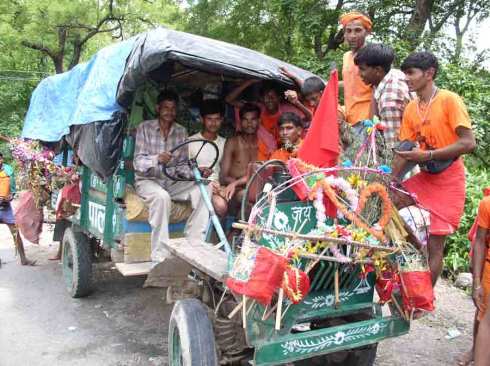
“Jugaad … are locally made motor vehicles that are used mostly in small villages as a means of low cost transportation in India. Jugaad literally means an arrangement or a work around, which have to be used because of lack of resources. This is a Hindi term also widely used by people speaking other Indian languages, and people of Indian origin around the world. The same term is still used for a type of vehicle, found in rural India. This vehicle is made by carpenters, by fitting a diesel engine on a cart. …. They are known for having poor brakes and cannot go beyond 60 km/h. They operate on diesel fuel and are just ordinary water pump sets converted into engine. The brakes of these vehicles very often fail and one of the passengers jumps down and applies a manual wooden block as a brake. ….

“Jugaad” is also colloquial Hindi word that can mean an innovative fix, often pejoratively used for solutions that bend rules, or a resource that can be used as such or a person who can solve a vexatious issue. It is used as much for enterprising street mechanics as for political fixers. In essence, though, it is a tribute to native genius, and lateral thinking…”

Wilof recounts his own “jugaad” experience in Bangalore, when his eyeglasses broke, and a cab driver stopped at a shop and fixed them with some adhesive. 

Does “jugaad” remind you of Israeli “chutzpah” and “iltur” (improvisation)?  

A perennial question is, should one bet on India or on China in the Great Innovation Race?

Jugaad suggests: Bet on India.

An Indian "jugaad" - improvised vehicle

An Indian "jugaad" - improvised vehicle

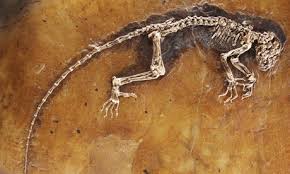
This is the oldest example of innovation I’ve ever encountered.

Jørn Harald Hurum (born November 4, 1967) is a Norwegian paleontologist and popularizer of science.  He is a vertebrate paleontologist and holds a position at the Geological Museum of the University of Oslo. He has studied dinosaurs, primitive mammals and plesiosaurs.

According to the BBC, on May 19, 2009 he announced the acquisition and scientific description of a 47 million year old, 95% complete skeleton of a primitive primate, Darwinius masillae, that had been in the private possession of an amateur fossil collector for 25 years. Hurum named the specimen “Ida”, after his daughter. The Latin name was in honor of Darwin’s 200th birthday. The fossil is the oldest complete fossil by far, of a primate.  Ida looks like a lemur, but in fact belongs to the monkey genus and may shed light on the evolution of humans. Hurum assembled a ‘dream team’ of 10 world-leading paleontologists. The result of their study of the fossil was published on 19 May in the online journal PLoS One. 

Hurum has aroused great controversy because he is also a populizer, and has made a BBC documentary, built an IDA website and appeared on the History Channel.   He rejects the extravagant claims that the fossil is ‘the missing link’ and an ‘extraordinary breakthrough’, but does think it will shed light on how humans evolved.  

How does one become a paleontologist?  Hurum recounts that when he was 6 years old, his mother read him a story about a little boy who picks up and throws stone. One stone, the  story recounts, spoke to the little boy. “Don’t throw me away!” it yells.  “I can tell you a story”. And the stone, containing a fossil, tells a story of a creature that lived millions of years ago.

That story led Jørn  Hurum to collect fossils and ultimately to become  a paleontologist.  I find this significant; by reading to our young children, we can plant passions and ideas that much later become powerful motivators.

Because he is also a ‘populizer’, and moderates a weekly TV program for children, Hurum has been attacked by other scientists. I believe this is unfair. Hurum published his article, along with his colleagues, in a reputable journal. The article was ’embargoed’ (i.e. forbidden for distribution prior to publication) as is common practice.  Nonetheless, as a result,  NATURE, a leading journal, attacked Hurum (even though NATURE does the same embargo).  Many scientists make their careers by acquiring pre-prints and attacking the article and its findings even before it appears. SCIENCE and NATURE did this with Hurum’s study. Scientists who take the trouble to explain, carefully and accurately, what they are doing and what it means to ordinary people should be praised, not attacked. 

Innovators should not find the attacks on Hurum unusual. If you cannot innovate yourself, you can attack others who do.   

                                                             
IDA – 47 million years young. She has fingernails, not claws, and the contents of her last meal (fruit and leaves) are still in her stomach! She has been preserved in polymer plastic. Hurum’s Institute paid something approaching $1 m. for her from a fossil dealer.

An interesting interview with Harvard Business School Professor Michel Anteby (Harvard Business School Working Knowledge) tackles the interesting issue of “moral gray zones” — areas where workers and managers break or bend rules.  Anteby recently published a book on the subject.   

As has been written often in this space,  innovation is about breaking the rules. Innovation leaders invest huge effort in teaching colleagues how first to identify the rules (mostly they are unwritten, and concern technology and business models), and second, how to become willing, even eager, to break them. 

Most companies have ethical codes. For example, Israel’s Elbit, a defense contractor, has a strict set of rules regarding employment of family relatives, which are crystal clear and strictly implemented (Nepotism is not uncommon in many Israeli firms).   Elbit also has strict rules regarding giving and accepting presents from clients (a highly common practice in the defense industry, where subcontractors and  government officials offer, or love, such presents, in many countries).

How then, can companies, on the one hand, teach everyone to break the rules, in one realm (innovation) and in another, ethics, to strictly observe them?

Civil engineers teach us that a structure that is too rigid will collapse under stress.  Earthquake-proof structures have the ability to sway and vibrate without being destroyed, thus absorbing and dissipating earthquake energy harmlessly. Ethics may be the same, Anteby writes;  “… to date I have not found a single person unable to articulate in his or her work context a moral gray zone.” Rigid rules, like rigid buildings, end up being broken. 

Just as with innovation, where some rules must be observed and others disregarded or smashed, so with ethics,  some rules must have the flexibility to permit intelligent workers and managers the freedom of ethical choice. Without this flexibility, chances are the rules will ultimately evaporate. 

Moral philosophers teach that there are two main schools of thought in ethics:  utilitarianism (judge an action by its consequences), and (an awful name) deontological intuitionism (ethical rules are intuitive and obvious, write them down and keep them).

Good companies combine these approaches.  Rules without exceptions tend to create impossible dilemmas.   

Companies that are straight and moral tend to have a culture that makes ethics vitally important. It is this culture, rather than long lists of rules, that keeps companies honest. Without this culture, rules will be of no use. With it, rules become much less necessary.

_________________
*Moral Gray Zones: Side Productions, Identity, and Regulation in an Aeronautic Plant (Princeton University Press 2009)

Isaac Newton formulated his Law of Universal Gravitation some 322 years ago, in 1687. According to French philosopher Voltaire, who first recounted (or invented?) the story, Newton sat under an apple tree in 1665, was bonked on the head by a falling apple − and presto! His theory of gravity!

Centuries later, along came the State of Israel − and utterly disproved Newton’s law. Israel’s economy defies gravity in at least two astonishing ways —  in real estate prices and in war and peace (the ability to defend herself,  at great expense,  while maintaining a viable economy).

According to Frank Knight, a company that tracks real estate prices globally, real estate prices have declined almost universally in the countries that it follows. The declines ranged from 18 percent in the U.S. to about 5 percent in France and Germany. In the global recession, people simply are not buying houses and companies are not buying or renting commercial real estate. 

A major exception is Israel. In the first quarter of 2009, housing prices in Israel rose by 12 percent, leading virtually every country. Even India, whose economy has fared relatively well in the downturn, saw housing prices rise only by 5 percent. 

Why do housing prices in Israel defy gravity? Apparently Israelis believe houses are a good store of value in the long term, and divert their cash into housing when capital markets slump. Moreover, conservative Israeli banks did not engage in risky adventures that later led to collapse of the mortgage market and foreclosures.

A second gravity-defying area is that of war and peace. The Global Peace Index (GPI) measures the rank of 144 countries in terms of both domestic and internal conflict, based on  23 indicators of peace, both outside borders and within them. The three main dimensions are: domestic and international conflict, safety and security in society and militarization. For every rise of 10 places on the GPI ladder, GDP climbs by $3000 on average. (The most peaceful country in the world is New Zealand, followed by Denmark, Norway, Iceland and Austria).  

Where is Israel? At the very bottom, just behind Sudan, just ahead of Somalia, Afghanistan and Iraq. #141!  What an awful ‘club’ to be a member of. (Note:  Somalia has had no government at all for 20 years). Surrounded by hostile nations, confronting Iran, Syria, the Palestinians (especially, Hamas), Israel spends 7.3  percent of its GDP on defense. 

According to the GPI data, and its GPI ranking,  Israel’s GDP should, by my calculation, be minus  $10,000. Yet in fact it is about $28,000– light years ahead of the failed nations of Somalia and Afghanistan. The gravity of war has failed to pull Israel down. 

Recently, with a group of friends over breakfast, we took turns saying what each thought was typically most Israeli.  I said, what was most Israeli was living in this incredibly beautiful, vibrant resilient country, battling terrorists with one hand and writing world-class software with the other, surmounting the fanatical hatred of 1.5 billion Moslems, all the while giving its citizens a high and growing standard of living, while people complain hourly about how awful it is and how bad its leaders are.   

Israel defies gravity. May it continue to do so forever.

Blog entries written by Prof. Shlomo Maital

Shlomo Maital

Pages