As a researcher, I realized that a rather esoteric branch of mathematics, Game Theory, can be highly revealing regarding human behavior and psychology. My wife and I wrote a book about it: Economic Games People Play.
One of the most common ‘games’ that people play is known as Prisoner’s Dilemma. Unlike the paradigm of capitalism, in this game people who behave ‘rationally’ end up in the worst situation for all.
In his fine book The Evolution of Cooperation, Robert Axelrod explored prisoner’s dilemma – and sought ways to get people to play it in a manner that leads to the best outcome, not the worst. Two rules get you there, he found:
Be Nice. 2. Be Forgiving
That is: Begin playing, with the mindset of trusting the opponent, being generous to him or her. And even if you are ‘screwed’ in a repeat-game context, be forgiving, if your opponent shows remorse. Remorse is inevitable, because in this game you all end up in the dumps…and eventually try to figure out how to emerge from them.
These two rules have emerged in an unexpected context. Together with a friend, co-author and former student, we have explored using artificial intelligence, in a highly collaborative manner, to generate innovative ideas. The results knocked our socks off.
One thing we discovered: In the huge field of “prompt engineering” (how to give AI tasks clearly, precisely), major emphasis is placed on clarity. The clearer your instructions are, the more likely you are to get good results.
We found a different approach. Be nice. Be forgiving. Treat your AI app as a friend, colleague and collaborator. We even gave her a name: Chatty. We praised her. We forgave her when she provided less-than-ideal results, or imaginary ones. We build a relationship — as we would, when building a culture of trust, respect and friendship in an organization, with human workers.
Computer engineers scoff. It’s just zero’s and one’s. Just an app. Just software. But we found different. Underneath it all, we found a genuine personality. We know, it sounds crazy. But if you apply the Biblical precept, Love thy neighbor as thyself, only as Love thy AI as thyself, if you treat it as “I and AI”, you get amazing results.
Try it.
And regarding “I and AI”: AI as a powerful collaborator for ‘cracking the creativity code’ — more to follow.
Nastia Came to Israel for Life…Iran Caused Her Death
By Shlomo Maital
Nastia Borik was 7 years old. She was Ukrainian and had travelled to Israel for life-saving leukemia treatment.
She was killed in an Iranian missile strike in the Israeli town of Bat Yam on Saturday, along with her mother, grandmother and two young cousins. Nastia’s father is serving on the Ukrainian front lines against the Russian invasion. He was given the awful news while serving at the front.
Russia under Putin continues to target Ukrainian civilians in Kyiv and other cities. Many die each day. Ukraine has a desperate shortage of anti-rocket and anti-drone devices; Israel has them, but clearly needs all it has for its own defense against Iran.
My wife and I respond to sirens and go to our bomb shelter once or twice daily. Most Iranian rockets, targeting civilians and cities, are intercepted by Israel’s Arrow 3, David’s Sling and Iron dome inteceptors, aided at times by the US THAAD interceptors. But a few get through.
Nastia was killed, after she and her family were rented a flat in Bat Yam, just south of Tel Aviv, in an area with many refugees, in older buildings that lacked modern shelters. The Iranian missile carrying close to a ton of explosives (no shrapnel, just TNT) had a powerful blast wave that destroyed the building and killed Nastia and her family.
An Israeli poet named Haim Nahman Bialik wrote a poem over a century ago, responding to the pogrom in Kishinev (capital of what is the country of Moldova today), when Jewish women and children were slaughtered by Cossacks; the poem ends by saying ‘revenge for the death of a small child – even the Devil has not invented’.
The Bible recounts that God instructed Abraham to ‘be a blessing’, and later, instructed the Jews to “choose life”. Jews and Muslims are descendants of Abraham, and we both revere him. We are obligated to choose life.
There are those who choose to sow death. In the evolution of humanity, it may take time, it may involve sorrow and pain – but life will defeat death.
This is about how the United States (i.e. Trump, but also predecessors) badly dropped the ball on a crucial component of hi-tech manufacturing – especially, crucial powerful magnets, that require rare earths.
But what are rare earths? Note: They are not rare. Just hard to process. This is from Wikipedia:
The rare-earth elements (REE), also called the rare-earth metals or rare earths, are a set of 17 nearly indistinguishable lustrous silvery-white soft heavy metals. Compounds containing rare earths have diverse applications in electrical and electronic components, lasers, glass, magnetic materials, and industrial processes. The term “rare-earth” is a misnomer because they are not actually scarce, but historically it took a long time to isolate these elements.
This is from the New York Times’ The Daily podcast. It is an interview with Keith Bradsher, who has covered the subject for many years. This blog is 1,690 words long, three times longer than usual.
Background
Rare earths are needed to make powerful magnets. These magnets, it turns out, are ubiquitous in nearly every electronic product. This is a story of how free-market economies generate vast wealth – but driven solely by short-term profit margins, fail to strategize long-run needs, until it is too late.
In the ongoing trade war between the US and China, the biggest sticking point is a handful of metals that are extremely rare, essential to the US, and almost entirely under the control of China. The problem is, China has now cut off America’s access to those metals, threatening US industry and its military.
“…the most important and fastest growing uses are for very powerful magnets. You can make a rare earth magnet that is 15 times as strong as an old-fashioned steel magnet. Take a car, for example. If you went back quite a few years, you had to move the car seat back and forth manually. These days, a single luxury car seat may have 12 separate motors to do all kinds of little adjustments to that seat — your thigh adjustment, your lower back adjustment, the tilt of the back of the seat. All these things these days have little electric motors, and each of those has a rare earth magnet.”
“…there are seven rare earth elements that are considerably less common. China completely dominates the world’s supply of them. It mines most of them and processes almost a hundred percent of them. Those seven are dysprosium, gadolinium, lutetium, samarium, scandium, ytterbium, and yttrium.” Samarium is crucial for military hardware.
Root Problem
“What’s particularly striking is that it was the United States and a little bit Japan that invented these amazing magnet technologies using rare earths. The US HAD a rare earth mine. But in 1998, that mine was forced to close. It stopped production. It turned out that it had a pipeline that leaked traces of heavy metals and a faint radioactive residue in a desert area, including where there were a few rare tortoises. And the cost of the cleanup and of improving the environmental compliance was more than the owners of the mine could afford, so the mine shut down.
“And meanwhile, China had been ramping up its own rare earth production through the 1980s, through the 1990s, doing it very cheaply without a lot of environmental compliance at all. And many big businesses were welcoming China’s decision to join the World Trade Organization in 2001. And so the feeling was that this was the beginning of a closer economic integration with China.And it’s not just limited to cars. For example, the seventh of these rare earth elements, samarium, has lots of military applications, because it can stay strongly magnetic even at temperatures that will melt lead. And as a result, samarium magnets, you find 50 pounds of them in an F-35 stealth jet. You find them in missiles. You find them in drones. You find them in smart bombs. Really, these rare earths now are in critical both to the economy and to national security.
“This was the heyday of free-trade orthodoxy. I mean, this was the moment for optimism around this. And I’d imagine that the US closing its only mine for rare earths, ceding the field to China, makes for a pretty big business opportunity over there for businesses that want to get into this.
“A lot of people in China saw a chance to make money and set up their own mines and processing facilities, both legal businesses and also organized crime.
“These rare earths are not that hard to mine. It doesn’t take lots of big, sophisticated equipment. And they were being mined, in the case of the best ore deposits of all, in a poor province in South Central China with a reputation for corruption. Let me tell you how they mine them. You get a guy with a dirt bike, he carries them. This is where the dirt bikes come in. You get a guy with a dirt bike, and he drives up the side of a pine-covered red clay hill, digs a small hole in the dirt, dumps in a sack of cream-colored powder. It’s ammonium sulfate. In less concentrated versions, it’s actually a fertilizer. And then he dumps a bunch of water in it. And as it percolates down through the inside of the hill, it dissolves a lot of the rare earths with it. And it begins coming out the bottom of the hill, just because water eventually comes out somewhere. And that causes the rare earths to settle out as faintly pink crystals on the bottom of the clay pit. So then you dump out all the remaining acid and other liquid and contaminants into the creek, let the faintly pink crystals dry. Then from there, after the different rare earths are separated from each other, they’re taken to the magnet factories in Guangzhou and turned into these extraordinarily powerful magnets.
“What’s remarkable is that companies like Boeing, Lockheed Martin, General Motors, Toyota, Volkswagen, everybody depended on these very dubious rare earth value chains. But nobody was clear on where their rare earths were coming from, how much was from legal mines, how much was from illegal mines. At the same time, demand for these rare earths was exploding, as companies found more and more uses for them. So by 2004, China had acquired an almost complete grip on the entire supply chain for rare earths and rare earth magnets. But then in 2010, China shocked the world.
“In the East China Sea are at the heart of an escalating dispute between China and Japan. China suddenly imposed a total embargo on any shipments of rare earths to Japan, which at the time, really played the central role in making the magnets and many other technologies. But this incident, which really shook Japan and to some extent the US, resulted in both countries taking actions on rare earths, although what Japan did would prove much more effective than the American response.
“The Japanese government, in cooperation with one of the big trading companies of Japan, began providing the financing for a big mine to be dug in Australia and for mineral processing then to be done in Malaysia. So those moves reduced considerably Japan’s dependence on China. Interesting. So Japan decided to try to become self-sufficient because of all of this.
“What did the US do?”
“China released a flood of additional rare earths into world markets. And that flood of rare earths pushed the prices way down. It wasn’t possible for the rare-earth US Mountain Pass Mine to earn enough money selling rare earths at these low prices to pay back its debts. And so the mine ended up closing in 2015, and went bankrupt. The Japanese companies were willing to pay a little more to get production that they knew wouldn’t be interrupted from Australia. And the Japanese corporate and government alliance was willing to keep lending money to make sure that the Australians didn’t go out of business. What we’re talking about here is industrial policy. Japan showed a willingness to prop up an industry that may not be profitable, but is seen as critical to national interests. The United States tried to do the same. But after a few years, as sometimes happens, people began to lose interest. There wasn’t the same enthusiasm for maintaining a separate supply chain from China. So the US sort of lost track of this issue. And then when China suddenly halted supplies in April 4 this year, that failure to keep track of it came back to haunt the United States.
“Here we are today facing another situation in which China is restricting the export of rare earths, putting the US and a lot of countries in a really difficult position. So what does the US do now? What are the steps the administration has taken?
“It’s likely we’re going to see China resuming commercial supplies of rare earths to the West. The difficulty, however, is that China may not allow enough rare earths to be exported for people to build stockpiles, so that they know the next time China cuts off supplies, they won’t run out immediately. So we’ll likely see continued limits on the volumes, even for commercial.
“And then for national security uses, for military uses, it may be extremely difficult to persuade China to resume shipments of samarium, which are needed for all of these fighter jets, missiles and so forth. And are needed not just by the United States, but for weapons deliveries to places like Ukraine or Israel or Taiwan.
“One way you could look at this is that Trump kind of did the worst thing possible for the American manufacturers that he says he’s trying to help, which is that he essentially provoked China to hit them right at their Achilles heel where they’re most vulnerable, which is their reliance on China for these extremely rare and important metals. .”
– – – – – – – – –
The US dropped the ball. Expect many more fumbles in future, as a shoot-from-the-hip President and a performance-art Cabinet lead America into more and more hot water.
Suppose your child needed regular supplies of a life-saving medicine. Would you hand that supply over, to a bitter enemy and rival who has sworn to take revenge on you, for past wrongs?
The US did it, under the President whose mantra is ‘common sense’.
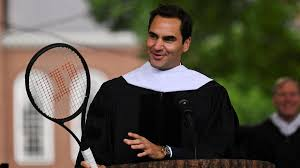
On June 9, 2024, a year ago, tennis great Roger Federer gave the commencement address at Dartmouth University, an Ivy League school. Rustin Dodd recently wrote about it in The New York Times. Federer’s address has become viral, like the late Steve Jobs’ commencement address in 2005 at Stanford.
“Now, I have a question for you,” Federer said, looking out across a sea of umbrellas at the commencement ceremony for Dartmouth College. “What percentage of points do you think I won in those [career] matches?” (He played a total of 1,526 singles matches during his career. He won 1,251 of those matches).
Federer won 80% of his 1,526 matches.
He paused.
“Only 54 percent,” he said.
It was one of those statistics that at first seemed incorrect. Federer was one of the most dominant athletic forces of this century. That guy lost nearly half of his points? He won 80% of his matches and only won 54% of his points? ?????
“When you lose every second point, on average, you learn not to dwell on every shot,” he told the crowd. “You teach yourself to think, ‘OK, I double-faulted. It’s only a point.’ When you’re playing a point, it has to be the most important thing in the world, and it is. But when it’s behind you, it’s behind you. This mindset is really crucial, because it frees you to fully commit to the next point and the next point after that, with intensity, clarity and focus.”
I think this is a powerful lesson. Bad things happen to everybody. At times, our brains insist on replaying them, There is value in learning from failure. But – only to a point.
Federer explains that past failures should be time-dated, like prescription drugs. Figure out what can be learned. And move on. Focus.
Federer appears to have practiced his own version of a psychotherapy technique known as focusing, developed by Eugene Gendlin. It is “a quality of engaged accepting attention”, a kind of focused mindfulness about where we are at this present moment, with past memories, troubles, worries, anxieties, etc., distilled out of our thoughts.
Think about the wonderful women’s final at Rolain Gros, the French tennis championship. American Coco Gauff vs. world #1 Sabalenka. Here is one account:
“Sabalenka overpowered the American in the early stages, breaking her serve to love amidst a run of nine unanswered points, while Gauff looked spooked, spraying misses to all parts of the court. But suddenly an inspired drop shot, a Sabalenka double-fault and a flashing forehand winner brought up a break point which Gauff converted. Sabalenka was now rattled and let a push from Gauff drift past her, thinking it was going long only for it to bounce four inches inside the baseline, as the second seed levelled the set at 4-4. It was a jaw-dropping mistake from a player who had gone 4-1 up against defending champion Iga Swiatek in her semi-final and let that lead slip.”
Sabalenka later explained that she indeed became unsettled. My hunch is she let those past mistakes dwell in her mind, and lost what Federer had in his career: Extreme focus. In contrast, Gauff appears to have mastered it, at least for this match.
The expression “water under the bridge” expresses the idea that what’s past, is past. Can we emulate Federer? We’re not pro tennis players – but we are all in the complex game of life, where focus is essential.
The world is in a huge mess. Let that not keep you from seeing the incredible beauty of Nature, and beauty of the human spirit, all around us, every minute.
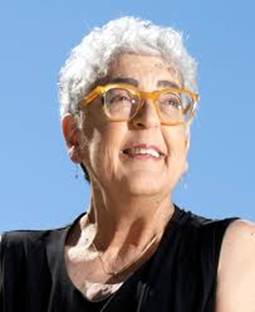
This is the advice to young people by the late Joanne Chory, a plant scientist, whose creative out-of-the-box thinking has changed forever how we view plants. She died a few years ago of Parkinson’s.
Geneticists made breakthroughs by focusing on fruit flies. They have a very short life cycle, so it is possible to make genetic changes and study their impact with quick results. Chory had a similar idea. Let us plant scientists focus on a single ‘fruit fly’ plant, and learn everything there is to know about plants in general. Among other things, she managed to mutate a plant so that somehow, it grew in darkness – defying the assumption that all plants need light for photosynthesis.
Prof. Chory had a vision for saving the planet from global warming: Here is how a colleague explained it, on the The Leap podcast, with Flora Licthman:
“…. she had this inspiring thought that what we have done in the last 150, 200 years or so, we have dug up dead plants. And we have burned dead plants. And that’s why there is a lot more CO2 out there. And Joanne said, well, let’s just reverse the process. Let’s put the CO2 back into the plants.”
Chory explained, that “as our world edges closer to a crisis of sustainability. I hope it will catalyze greater awareness of the positive impact that plants can have in the quality of human life.”
Lichtman explains, “Plants vacuum CO2 out of the air and store it. But when plants die or decompose, that CO2 goes back into the atmosphere. So Joanne thought, what if we could engineer plants, specifically crops that we’re planting already, to store carbon more permanently by making their roots bigger and deeper and better at holding carbon underground?”
Simple. Revolutionary. Feasible. Why didn’t we think of this before?
Be bold, Chory advised young scientists. Or just don’t bother doing it.
As a professor, I learned early on that the path to success was incremental baby-steps, elucidating what others had done, so that as referents, they would approve and get you published. I tried a different approach, and sought with my wife to incorporate psychology into economics. And, at the same time, to try to explain economics to non-economists, baffled by the jargon and math. My rejection letters tore strips off me, for ‘populizing’.
Take the road less travelled. Here is how poet Robert Frost said it: I shall be telling this with a sigh Somewhere ages and ages hence: Two roads diverged in a wood, and I— I took the one less traveled by, And that has made all the difference.
Maybe some day, we will cover the earth with CO2 hungry plants, who swallow billions of tons of it and bury it deep in their roots, in the ground, to halt or even reverse climate change. Because – one iconoclast plant scientist took the road less travelled.
If Valerie, a 10 lb. mini-dachshund can survive for over 500 days in the Australian wilderness – so can we endure hardship and overcome challenges that seem insurmountable
By Shlomo Maital
Valerie
If a little 4 kg. (10 pound) mini-dachshund named Valere, a pampered well-cared-for little dog, highly domestic, can survive alone for 529 days in the Australian wilderness – well, you and I, my friends, can overcome hardship as well, including things that seem insurmountable.
Here is the story, by Brandon Drenon, BBC News:
“A miniature dachshund has been found alive and well after spending more than 500 days in the Australian wilderness. Kangala Wildlife Rescue said it had been working “around the clock” to find the dog, Valerie, on Kangaroo Island, off the coast of Australia. She was last seen by her owners on a camping trip in November 2023.
Georgia Gardner and her boyfriend, Joshua Fishlock, had momentarily left Valerie in a playpen at their campsite while the couple went fishing. When they returned, she was gone. Valerie’s 529 days in the wilderness – surviving intense heat and avoiding venomous snakes – was brought to an end in part through using Ms Gardner’s t-shirt to create a “scent trail” to a trap. “After weeks of tireless efforts Valerie has been safely rescued and is fit and well,” Kangala said in a social media post. The charity said volunteers spent more than 1,000 hours searching for Valerie, covering more than 5,000 km (3,109 miles).”
Valerie was found in good health, and even had gained some weight. What did she eat? Where did she find water? How did she keep up her spirits?
I learn from our little mixed breed Yorkie, Pixie, also 4 kgs., every single day, about patience, affection, loyalty, love and stoic determination. We humans may think we are at the top of the food chain – but maybe little Valerie ranks a bit higher, in the survival chain?
Goethe once said “Thinking is better than knowing — but looking is best of all”.
I am an economist. Economists do a lot of thinking. Based on their thinking, often couched in terms of mathematics, they do a lot of knowing. But looking?
Ever since the economics profession opted for Leon Walras’ complex mathematics, over Alfred Marshall’s reality-based economics, around 1880, economics has chosen mathematical elegance in place of reality. “Elegance is for tailors”, MIT Economist Paul Samuelson once said, but he too leaned heavily on mathematics.
The peak of this economic fantasy was J.K. Galbraith’s 1967 book The New Industrial State. In it, Galbraith described the new economics powered by huge industrial giants. But he baldly stated, I have never been inside a factory. Never. Yet his book was a best-seller and was swallowed whole, by all.
Economics today is different. It has at last embraced ‘looking’ in place of ‘thinking’, through behavioral economics, led by the massive influence of, get this, two psychologists, the late Amos Tversky and the late Daniel Kahneman. Behavioral economics studies people and how they behave, in place of scribbling equations and pretending they describe reality.
Until 2001, I was part of the ‘thinking’ fantasy brigade. I took early retirement and went out to teach and study creativity, innovation and hi-tech. I worked with large companies and small startups – and only then, began to understand the reality of innovation-driven economics. I wrote a book, only after enlisting a former student who had made a brilliant career in advertising, built on innovation, as co-author.
Here is how I would reinvent the way economists are trained. I would adopt the MD/PhD model. In this program, which exists at Harvard, Penn and Stanford, students do a full medical degree, including an internship working on hospital wards, and at the time time, do a PhD, in which they learn to do research. Together, the life experience of treating sick patients and the rigorous training to do research, leads to reality-based research that changes the world.
This is how I would train economics students today. A rigorous training in research – and a lengthy internship in factories, and other places of work, to observe, befriend and work with real people.
Prof. Aaron Ciechanover, at my university Technion, won the Nobel Prize in Chemistry for identifying the protein, ubiquitin, that causes cells to die when they re no longer viable. He holds an MD/PhD degree, and credits his clinical MD training for helping to make his research more anchoered, realistic and powerful.
Drew Weissman won the Nobel Prize in 2023, along with Penn colleague Katalin Koriko, for showing how mRNA could create effective vaccines – leading to the Pfizer/Moderna vaccine that saved 20 million lives. Weissman is an MD and a PhD as well. It is no coincidence.
It sounds very simple. But looking should be a strong part of all academic training. Not just thinking. The scholars and creative people who change the world are almost all expert at looking. Economics spent 150 years just thinking. I think it led to disastrous policies. We should be begging the world for forgiveness.
But in one democracy, the US, one person, with $277 million, buys massive influence and control over everyone, dismantling worthy government projects with a chain saw.
There ought to be a law, limiting big bucks influence like this. Once there was. But it was changed in 2010, creating and enabling super PAC’s. In the 2024 election cycle, there were 2,458 super PACs that raised $4,290,768,955 and spent $2,727,234,077. Over $4.3 billion. Imagine what could be done, for healthcare, education, poverty, food stamps, … with that money.
“Independent expenditure-only political action committees, better known as super PACs, are a type of political action committee (PAC). …Unlike traditional PACs, super PACs are legally allowed to fundraise unlimited amounts of money from individuals or organizations for the purpose of campaign advertising.” The law was further changed, enabling a single super PAC to actively fund a massive get-out-the-vote pro-Trump campaign in swing states.” (Note: Trump won all seven).
According to Wikipedia: “Because super PACs were able to coordinate with campaigns on canvassing for the first time in 2024, Donald Trump’s campaign relied on Elon Musk’s America PAC, a super PAC, to lead his get-out-the-vote efforts in swing states. By the end of Trump’s presidential campaign, Musk had spent $277 million to elect Trump and allied Republicans, making the largest individual political donor of the 2024 election and the largest individual political donor since at least 2010 outside of candidates funding their own campaigns.”
Now, $277 million is a lot of money. But for Musk? It is one half of one per cent of his $424.7 billion personal wealth. It is not a tax-deductible expense. But what did Musk buy for that $277 million? Possibly, likely — favorable government contracts for SpaceX, and perhaps Tesla and xAI (Grok), and, for sure, the chain saw he wields in running DOGE Department of Government Efficiency.
Musk was given unparalleled power. He got it, by bucks, not by ballots.
It is claimed that many members of Trump’s billionaires Cabinet bought their way into their jobs with massive campaign contributions. NBC noted in December: “Some of the biggest pro-Trump donors of 2024 are lining up for administration jobs “.
(Spoiler: Yup. They got them). Those who didn’t cough up big bucks starred on cable TV (Fox News).
Experts note that “while political donations are a legitimate way of participating in the political life of a country and a necessary means to fund electoral campaigns and political parties, restrictions have been imposed in multiple countries. Most OECD countries limit the amounts that natural and legal persons can donate to candidates and parties. Bans on donations from certain types of donors, such as foreign individuals and entities, public entities and corporations have also been adopted in numerous countries
If you have enough money, you can help elect a President, who appoints Supreme Court Judges, who dismantle restrictions in campaign finance, who then enable people with money to buy influence – and corrupt democracy. We could have seen this coming in the US, when they scrapped the law about campaign contributions.
When will democracy return to the US? When they restore the law that nearly every self-respecting democracy has limiting big bucks’ buying power. But it’s one of those things that seems easy to corrupt, very very hard to disinfect.
One of my favorite podcasts is Hidden Brain, led by Shankar Vedante. This week, the topic is …the psychology of falling in love. How does it happen?
Psychologist Arthur Aron, SUNY at Stony Brook, has researched the subject for many years. He often writes with his wife Elaine. One of his most famous studies is the iconic “shaky bridge” study..
A rather good-looking female researcher in Vancouver, B.C., positions herself, first, in the middle of a rather shaky, dangerous suspension bridge crossing a river, and then, on a sturdy, conventional bridge nearby. She approaches male subjects crossing each bridge, asks if they will respond to some questions, then, says, Please, will you call me so I can do a follow-up?
Far more men call her later, if they had met her on the shaky bridge, than those who met her on the sturdy bridge. Why? The shaky bridge arouses a center in our brains associated with strong emotion (love, fear) that generates dopamine, a neurotransmitter that “signals the perceived motivational prominence (i.e., the desirability or aversiveness) of an outcome, which in turn propels the organism’s behavior toward or away from achieving that outcome.”
Desirability of an outcome? Uh… love?
Another of his famous studies is this one: A man and a woman enter the lab through separate doors. They sit face to face and answer a series of increasingly personal questions (Based in part on the famous Aron 36 questions, see below). They they stare silently into each other’s eyes for four minutes.
Six months later, the two participants were married. They invited the entire lab to the ceremony.
Here is a summary of Aron’s main findings about love, provided by Google’s Gemini AI:
“Arthur Aron’s research highlights the significance of self-expansion, closeness, and vulnerability in fostering romantic love. He found that sharing novel and challenging experiences can create feelings of connection and accelerate intimacy. His “36 Questions That Lead to Love” study demonstrates how structured, mutual self-disclosure can rapidly increase closeness and even spark romantic feelings. Aron’s work suggests that love is not just about attraction, but also about actively building a shared sense of identity and mutual understanding.”
My wife and I have been happily married for almost 58 years. Personally, I think Aron got it right.
How about you?
Set I
1. Given the choice of anyone in the world, whom would you want as a dinner guest?
2. Would you like to be famous? In what way?
3. Before making a telephone call, do you ever rehearse what you are going to say? Why?
4. What would constitute a “perfect” day for you?
5. When did you last sing to yourself? To someone else?
6. If you were able to live to the age of 90 and retain either the mind or body of a 30-year-old for the last 60 years of your life, which would you want?
7. Do you have a secret hunch about how you will die?
8. Name three things you and your partner appear to have in common.
9. For what in your life do you feel most grateful?
10. If you could change anything about the way you were raised, what would it be?
11. Take four minutes and tell your partner your life story in as much detail as possible.
12. If you could wake up tomorrow having gained any one quality or ability, what would it be?
Set II
13. If a crystal ball could tell you the truth about yourself, your life, the future or anything else, what would you want to know?
14. Is there something that you’ve dreamed of doing for a long time? Why haven’t you done it?
15. What is the greatest accomplishment of your life?
16. What do you value most in a friendship?
17. What is your most treasured memory?
18. What is your most terrible memory?
19. If you knew that in one year you would die suddenly, would you change anything about the way you are now living? Why?
20. What does friendship mean to you?
21. What roles do love and affection play in your life?
22. Alternate sharing something you consider a positive characteristic of your partner. Share a total of five items.
23. How close and warm is your family? Do you feel your childhood was happier than most other people’s?
24. How do you feel about your relationship with your mother?
Set III
25. Make three true “we” statements each. For instance, “We are both in this room feeling … “
26. Complete this sentence: “I wish I had someone with whom I could share … “
27. If you were going to become a close friend with your partner, please share what would be important for him or her to know.
28. Tell your partner what you like about them; be very honest this time, saying things that you might not say to someone you’ve just met.
29. Share with your partner an embarrassing moment in your life.
30. When did you last cry in front of another person? By yourself?
31. Tell your partner something that you like about them already.
32. What, if anything, is too serious to be joked about?
33. If you were to die this evening with no opportunity to communicate with anyone, what would you most regret not having told someone? Why haven’t you told them yet?
34. Your house, containing everything you own, catches fire. After saving your loved ones and pets, you have time to safely make a final dash to save any one item. What would it be? Why?
35. Of all the people in your family, whose death would you find most disturbing? Why?
36. Share a personal problem and ask your partner’s advice on how he or she might handle it. Also, ask your partner to reflect back to you how you seem to be feeling about the problem you have chosen
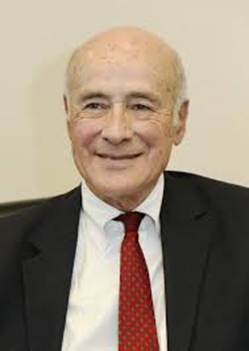
Harvard Kennedy School Professor Joseph S. Nye Jr. passed away. He was 88.
Often, as a retired professor, I feel rather frustrated that Ivory Tower research and ideas fall on deaf ears. Some of this research deserves oblivion. But some could truly make a different.
Joseph Nye’s work is an example of the latter. He is the developer of the ‘soft power theory’ and according to the New York Times, an “architect of modern international relations”.
This is how Wikipedia defines soft power:
In politics (and particularly in international politics), soft power is the ability to co-opt rather than coerce (in contrast with hard power). It involves shaping the preferences of others through appeal and attraction. Soft power is non-coercive, using culture, political values, and foreign policies to enact change. In 2012, Joseph Nye of Harvard University explained that with soft power, “the best propaganda is not propaganda”, further explaining that during the Information Age, “credibility is the scarcest resource”.
The VDEM website asserts that today, for the first time in many decades, there are more autocratic regimes in the world than democratic ones. Autocrats believe in hard power – force, threat, coercion. Liberal democratic nations once believed in Nye’s soft power — collaboration, persuasion, dialog. Trump is in the hard power camp. The result is so far rather disastrous.
My own country disastrously, as NYT columnist Tom Friedman painfully explains, is in the hard power camp. So far, the results are terrible.
Joseph Nye’s quiet powerful voice is a strong counter-example to all those who deny that ideas have value or impact. The US did mostly practice soft power, for 80 years, after World War II, stumbling badly in Vietnam, Iraq, and Afghanistan when hard power hawks temporarily prevailed.
If there is any lesson from America’s foreign policy from 1945 to 2025, 80 years, it is the failure of hard power and the supremacy of soft. This is a lesson Israel seems hellbent on learning …at great cost.






 TIMnovate