Will Paul Romer Be the Cat Among the World Bank Pigeons?

By Shlomo Maital  
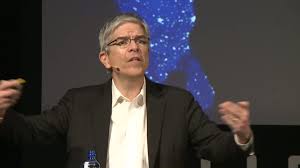
 Romer

Paul Romer – New World Bank Chief Economist

      The World Bank was created in July 1944, at Bretton Woods, NH, and has as its goal spurring growth among poorer countries by helping them  borrow capital for infrastructure projects. Repeatedly, the modern relevance of the World Bank has been questioned, when, in a globalized world, nations that run their economies well can access world capital markets by themselves – and nations that do not won’t get World Bank funding anyway.

     The relevance of the World Bank depends on understanding what are the underlying factors that drive growth. For years, economists simply did not know. Here is what The Economist says:

     Prevailing models of growth assigned an important role to technological change, but lacked a convincing explanation for how it came about. Instead, the models treated new ideas a bit like manna from heaven, arriving in a mysterious and unpredictable manner.

   Prof. Paul Romer had a different theory.  

   Mr Romer sought to change that. His work made the development of new ideas “endogenous”, meaning that it sought to account for them, rather than writing them off as “exogenous” surprises. In his “endogenous growth” theory, new ideas materialise as firms invest in physical capital or research and development, creating knowledge that spills over to the rest of the economy. That suggests that open economies, with institutions that encourage investment in physical and human capital, ought to do best.

   The importance of the quality of institutions and of the dissemination of innovation led Mr Romer to focus on urban areas, which are often hotbeds for the creation and transmission of ideas. That focus, in turn, sparked a radical notion of economic development oriented around “charter cities”. Poor countries, he argued, should create new cities and give them leeway to experiment with daring economic and political reforms.

I know Romer is right. Israel has startup cities, like Tel Aviv, that are vibrant entrepreneurship ecosystems. Berlin is one; so is Silicon Valley (a region, not a city); Research Triangle (N. Carolina); Cambridge, UK, and so on.

Will Paul Romer change the thinking of that Old Lady, World Bank, with its old-fashioned stodgy theories? Will he leverage the World Bank’s lending power to foster entrepreneurship in poorer nations?

Stay tuned!
 

Creativity Capital: We’re Destroying Billions of Dollars Worth!

By Shlomo Maital

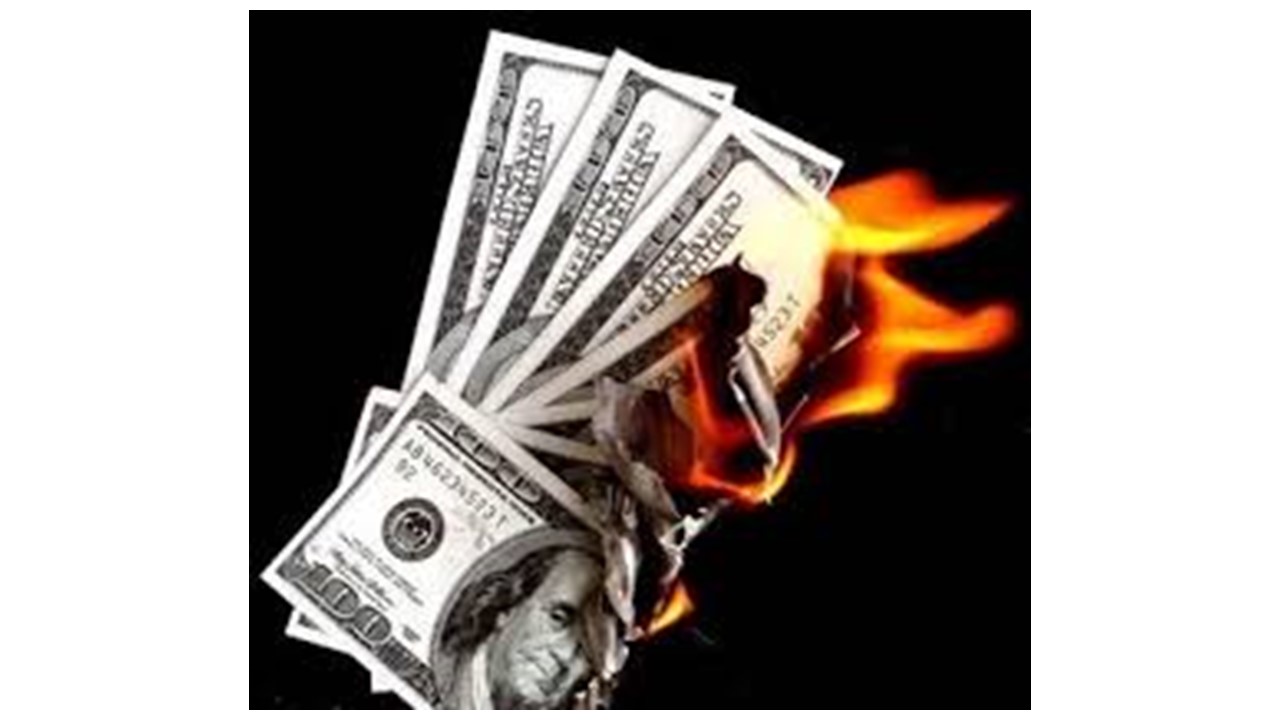
money burning

   What is “capital”? For most people, capital is something tangible, like money, houses, or other assets. But for economists, capital is somewhat abstract – it is the summed present value of a stream of future benefits.  

   For instance, a bond pays interest for 10 years or 25 years, and its value is the summed p.v. of those interest payments plus the principal.

   People, too, comprise capital. When you improve your skills, the summed present value of the added income from those added skills is also capital and can be calculated – this is “human capital”.

     I believe there is a kind of capital that we are constantly destroying, rather than building as we should. It is “creativity capital”.

     Here is a small story. The daughter of a close friend drew a picture in elementary school. The teacher said that it was utter rubbish. Even though the young girl’s mother was a skilled artist, and even though she herself had talent – she never again drew a picture.   Perhaps the world lost an important artist; but more important, she herself lost an activity that could have given her enormous pleasure.

     This one case is creativity capital that was destroyed, because a stupid teacher was insensitive and failed to understand that her role is to encourage and empower, not destroy. How many other such cases are there? How many readers have encountered similar massive destruction of their creativity capital?

     How do we get schools to stop destroying massive amounts of creativity capital? What if we tried to put some numbers on ‘creativity capital’ and more important, investment in it (the additions to Creativity Capital)?   What if we tried to measure schools not by students’ scores on stupid mechanical tests, but by the extent to which their students excel in, say, the Torrance Creativity Test?  

     What if teachers’ job definition changed radically, from teaching test-taking skills to fostering ability to come up with wild ideas and then implement them?  

     But – how in the world can we make this happen?  We need creative ideas to create Creativity Capital.

Stories: They CAN (and do) Change Lives

By Shlomo Maital

Michelle

As a Ph.D. student I was taught that serious academic research involves either a mass of mathematical equations (theory) or a database with at least 50 subjects, generating tables, T-tests, least-square regressions and other such stuff.

   It took me a long time to understand that truth often lies not in N=50 but in N equals one, or less than one – in a powerful story.   Here is an example.

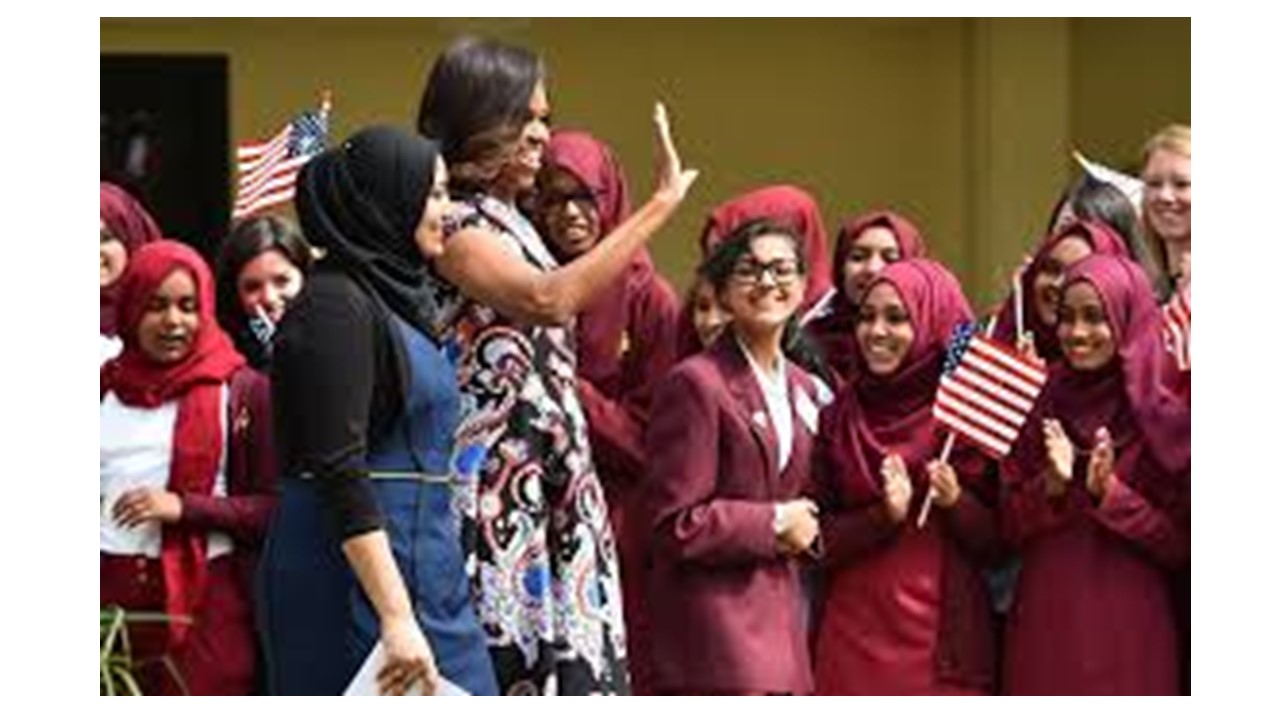
     In 2009 Michelle Obama, on her first trip as First Lady, visited London with Barak Obama. She visited Elizabeth Garrett Anderson School, a London state (or public) school for girls, about three-quarters of whom are eligible for free school meals.

   According to The Economist she told the girls:

“I’m standing here…because of education,” Mrs Obama said. “I thought being smart was cooler than anything in the world.” And unlike many luminaries asked to rouse pupils, the First Lady kept in touch. Mrs Obama invited the girls to see her again in 2011 when she visited Oxford University. There, she told pupils: “All of us believe that you belong here.” One year later a dozen pupils flew over to the White House.

       Her message seems to have worked. In a paper published on July 1st, Simon Burgess, an economist at the University of Bristol, analysed the school’s exam results in the years after Mrs Obama’s visits. The 15- or 16-year-olds sitting their GCSEs did much better than girls in the previous year. From 2011 to 2012, for example, the boost was equivalent to each pupil moving from 8 C to 8 A grades. Those improvements were much bigger than the average increases in performance across London state schools, suggesting that the effects were specific to Elizabeth Garrett Anderson.”

          So my advice to countries, school systems and even parents:   Tell stories. Find role models your kids admire. Tell their stories, if you can’t bring them in person. When people understand that the impossible is actually possible, because other ordinary people like them have done it, they become inspired.  

         Great aspirations begin with individuals believing that they can. Stories of others who did   are helpful in instilling this belief, as Michelle Obama and the London school show.

   And by the way – I (and many others?) have the strong feeling that Michelle should have been elected President, rather than her husband.

U.S. Has More Oil Than Saudi Arabia

By Shlomo Maital

oil

A Financial Times report today claims that for the first time, proven oil reserves in the United States exceed those in Saudi Arabia (and Russia).

     The US holds more oil reserves than Saudi Arabia and Russia, the first time it has surpassed those held by the world’s biggest exporting nations, according to a new study. Rystad Energy estimates recoverable oil in the US from existing fields, discoveries and yet undiscovered areas amounts to 264bn barrels. The figure surpasses Saudi Arabia’s 212bn and Russia’s 256bn in reserves.

Not surprisingly, Texas has almost a quarter of those 264 billlion barrels; Texas oil wealth will thus continue. According to the report, “three years ago the US was behind Russia, Canada and Saudi Arabia. ….More than half of the US’s remaining oil reserves are in unconventional shale oil.”

   What does this finding mean? First, at last, the decline of Saudi geopolitical influence. Saudi money has financed worldwide Wahabi Islam, an extreme form of Islam that has at times ‘inspired’ bad guys, as in 9/11. The Saudis may now have to keep more of their money at home, and already have issued an ambitious plan for weaning Saudi Arabia from oil, after its former oil minister purposely flooded the market, bashed the price of oil to historic lows – and was fired.

   Second, greater energy independence of the United States, and hence less pandering to oil-rich Mideast nations. And perhaps, less geopolitical influence on the part of Russia. Both Russia and Saudi Arabia have not been forces for good in the global arena, in the past.

   Those who have written off American global leadership, under a weak Obama administration, may have to think again. Oil and geopolitics are close syblings. One qualification, however. U.S. shale oil costs a lot to recover, perhaps as much as $50 /bbl. Saudi oil has a marginal production cost of just a few dollars, as it is pumped easily out of the desert sand. So Saudi still holds a few Trump cards.

Pittsburgh: Rises from the Ashes

By Shlomo Maital  

Pittsburgh

In today’s International New York Times (July 3), David Brooks makes an important observation. The political battleground in the U.S. and other countries has until now been: big government? Or small? Too much government? Or too little? This is changing, in the wake of Trump and right-wing nationalist parties in Europe.

   The core issue, he says, in the coming decade, will be: open or closed? Open society, to trade, ideas, immigrants, information? Or closed society, with a big wall, protectionism, tariffs, and ‘immigrants not welcome’ signs?  

     Globalization began with the fall of the Berlin Wall, Nov. 9 1989. The unification of the two Germanys accelerated the European Single Market and boosted global trade. But the benefits of free open trade, which have been enormous for Asia, accrued mainly to the wealthy and better off, who make money from money. Blue collar workers in the West lost their jobs, as manufacturing migrated. This silent majority is no longer silent. And their pain has become a central issue in politics, in the post-Trump era.

       Brooks, like all good columnists, leaves his office and goes out into the field, to see first-hand. He visited Pittsburgh. My sister lives in Pittsburgh, and I’ve been visiting her regularly since her marriage to Chuck, my late brother-in-law, a Pittsburgh optometrist, in 1952. I saw first-hand the smoky steel mills along the Monongahela River and saw the terrible pollution that coated Pittsburgh with a layer of dust. I saw them disappear, as Pittsburgh reinvented itself to become today’s modern high-tech city, financial center, healthcare center and home to a great university, Carnegie-Mellon. As Brooks observes, Pittsburgh today is amazing, with sparkling clean air, great restaurants, cultural events, an old train station rezoned into restaurants and shops…   a stark contrast to many other rust-belt cities, like Cleveland, OH and Gary, IN, which have not done the same.

     But nonetheless, Pittsburgh too has its community of losers, those who lost high-paying steel jobs in the heyday of U.S. Steel.   Globalization may have produced net gains for Asia, and even for the U.S., but those gains were very very unevenly distributed, and the winners did not in the least compensate the losers.   After a long delay, the losers are now generating a political reaction and near-counter-revolution.

     It would be a shame if the benefits of globalization were reversed, simply because our political system was too lazy, stupid and short-sighted to realize that somehow, we have to find a way to help those who lose from it.   Maybe a good place to start is Pittsburgh, as Brooks notes, which lost thousands of steel jobs and eventually created thousands more of service jobs.

     I think we should recall China and its amazing Great Wall, stretching for some 13,000 miles (21,000 kilometers),  completed around 1400-1600.   The Great Wall kept out the Manchus and kept China whole and safe, at least in part. But it also kept out the world and led to 500 years of stagnation in China’s economy.   Modern China has been a huge winner from globalization, because it has been smart enough to know how to reap the benefits.   We should challenge other countries, especially the U.S. and Europe, to state: What is your strategy for evening the playing field, NOT globally but WITHIN your own country, to help those who have lost well-paying jobs to free global trade?   Because if you don’t shape such a strategy quickly, you may find that politically globalization is no longer viable and is replaced by protectionism and modern Great Walls.   Trump’s “build a wall and make them pay for it” will replicate itself elsewhere, if we do not act soon and wisely.

Refugee Energy: Tap It!

By Shlomo Maital

 Zaatari

My friend and colleague Prof. Dan Shechtman (Nobel, Chemistry, 2011) has been tirelessly touring the world with a message: For poor and emerging countries, the way to a better life is technology-driven entrepreneurship and startups.

   Today’s Hebrew language newspaper Haaretz has some proof.

   Journalist Zvi Barel, who tracks events in countries bordering Israel, writes about startup energy in the midst of great misery – in refugee camps in Turkey and in Jordan, packed with Syrians fleeing the chaos and genocide in their country.

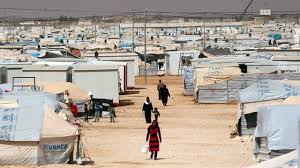
     Al-Zaatari Refugee Camp in Jordan and other camps have one million refugees, living in great squalor. Turkey has camps with even more refugees, 2.5 million.

     In Za’atari, recounts Barel, “Ra’shim” , from Aleppo, ravaged by war, fled his city three years ago. In the camp there are a great many shops opened by refugees. By one count – there are 3,000 small businesses (in the camp, and in nearby Jordanian cities) with monthly revenues of $13 million. I wrote about one such shop in an earlier blog – a shop that rents wedding dresses.   Aided by the Oasis 500 fund in Jordan, Ra’shim opened a website to enable these shops to sell on the Internet, and raised 3 million dollars. He now has branches in Dubai and Oman, employs many young Jordanians and Syrians and plans to expand.

     Some of the small shops and businesses in the camps in Turkey have been begun to employ local Turks, in significant numbers.

     Satellite photos show that nearly 60 per cent of Aleppo has been destroyed. It will take 7-8 billion dollars to rebuild it. Oil-rich Arab nations have the money, but will never contribute such sums. So when this awful Syrian civil war ends, it will be up to people like Ra’shim, with entrepreneurial energy, to rebuild their country, with minimal resources.

     And they will.

     The incompetent EU has now more or less decided to bribe Turkey to stop the flow of immigrants. Does anyone in the EU wonder, whether an injection of entrepreneurial energy like that of Ra’shim could revive Europe’s dead economy, and generate entrepreneurship where virtually none exists, like in France? Did anyone in the EU consider giving a small fraction of the $3 billion bribe to Turkey, directly to refugees and refugee entrepreneurs?  

     In Silicon Valley, a high percentage of startups are launched by Indians, Israelis, Chinese and others?   Precisely what the EU needs – but will now not get, because it cannot see its nose in front of its face.

Managing the Mill-Aliens: The Bright Side

By Shlomo Maital  

aliens

The Millennials (generation born between 1980 and 2000) were so named by Howe and Strauss, scholars who write about generation cohorts. If you re-arrange the last few letters, and drop an ‘n’, you get Mill-Aliens. For many of us in older generations, these young people are indeed aliens. Their values, behavior, and personality seem to utterly different from ours, as if they came from another planet.

     Of course, every generation feels that way about the younger people. In the year 1254 someone wrote this: “The young people of today think of nothing but themselves. They have no reverence for parents or old age. They are impatient of all restraint. They talk as if they knew everything, and what passes for wisdom with us is foolishness with them…”  

I’ve just written an article for an Indian management journal about the “bright side” – the positive qualities that Mill-Aliens possess. In it I argue:

Here are eight ways in which Millennials bring positive qualities to organizations. These include: Their comfort with digital technology, their creativity and innovativeness, their embrace of the environment, their search for meaning rather than money, and their perpetual connection with their peers.

   Let’s be honest. Gen X and the Boomers have left the Millennials with a planet in a huge mess. As one Millennial observed wryly,   “Sorry our generation sucks, it’s not like we jacked up college tuition prices, destroyed the manufacturing industry, started two quagmire wars, gutted the union, destroyed the global economy, and left our offspring with an environmentally-devasted planet stripped of its natural resources – but we do text too much.”

To fully capitalize on the qualities Millennials bring, we in older generations have to open our minds and accelerate turning over leadership to them. The current trend toward later retirement is a negative one, in this sense. Let’s keep working – but let’s give the Millennials leadership roles. They can’t do any worse than we did.

Jerome Bruner: Possible Worlds

By Shlomo Maital

Bruner

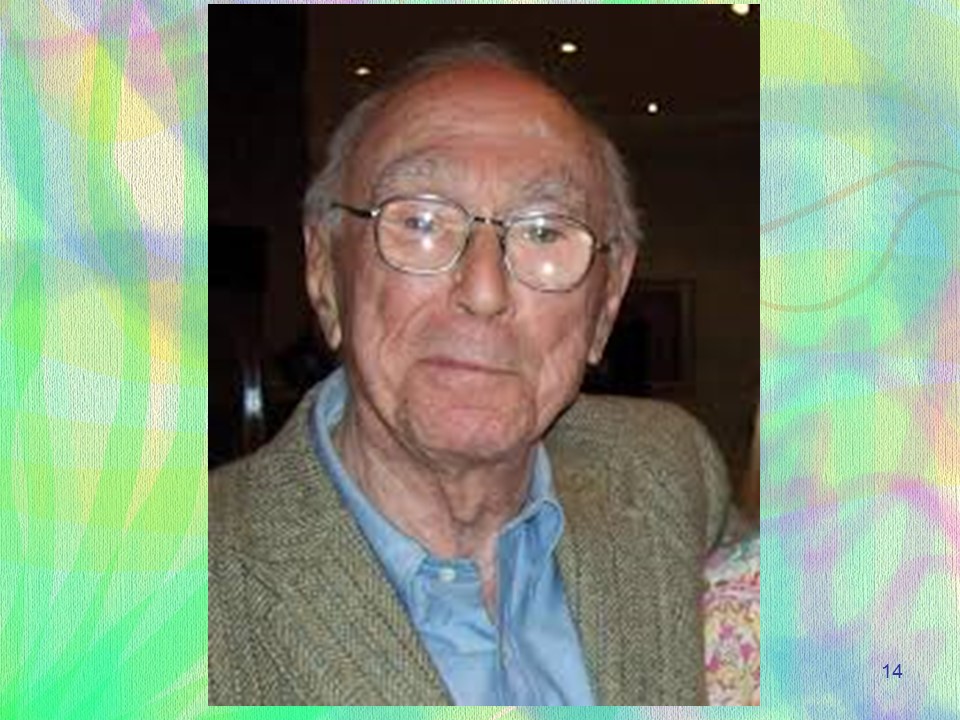
Jerome Bruner just passed away. He was 100 years old.

Bruner changed forever the way we see the world and the way we understand human thinking. As a pioneer cognitive psychologist, he helped us rethink the mind as what he calls a “hypothesis generator” – the human can envision “possible worlds” (the title of one of his most famous books.  

   As a child he recalls being influenced by one of his teachers, Ms McNamara, who taught him that “the world is an open question”. And that is how Bruner viewed psychology.   If you deal only with what exists, he noted, then psychology has nothing to do with life.   In giving advice to young psychologists, he urged them, “get out of your office and get into the real world.”  

   His older sister Alice influenced him strongly. She was smarter than me, he recalls, and asked him, “why are you always guessing?”   But Bruner saw the mind as a “hypothesis generator” – as something that asks questions, rather than spews out answers.

     He had a lifelong love of sailing. Sailing for him was a metaphor of life. You sail in an unpredictable environment, when the wind can change at any moment, and you have the illusion of control,   adjusting the sails, etc., but it’s only an illusion.

     I personally embrace Bruner’s landmark article The Narrative Construction of Reality (1991), because I’ve come to believe, as Bruner showed, that we understand reality by telling ourselves stories – about ourselves, about others, about how things work. And some of those stories are fiction, made-up, “possible worlds”, this is called creativity and entrepreneurship. Entrepreneurs make up a possible world and then make it happen.

   My colleague Arie Ruttenberg defines creativity as “widening the range of choices”. That is,   imaging new possibilities, possible worlds. Bruner supports this.

       From childhood, Bruner had limited vision. But it never hampered him.   He brought common sense and a spirit of rebellion to his discipline, and embraced all other disciplines that he felt were related.   We will miss him.

Coursera for Refugees

By Shlomo Maital

  Coursera

   Today, Monday June 20, is World Refugee Day.  According to the UN, 65 million refugees have been created this year — torn from their homes. 

      It has special meaning for me, because in a very real sense, my mother and father were refugees. My mother’s family fled from Bessarabia (now Moldova), following pogroms in 1904 and 1905 that killed many Jews, in Kishinev, and came to Saskatchewan.     My grandfather, after whom I am named, left in order to raise money to bring his family out to safety; he saved every penny, sent the money – and it was lost when World War I broke out. He died heartbroken, in Pittsburgh, during the global influenza epidemic, in 1918.   My father, a teenager, then struck out with his sister, Dora, who was only 12, to emulate his own father, and after a very very hard journey, and bitterly cold winter in Antwerp, made it as an immigrant to Canada, and brought his mother and siblings over. My father became a small-time builder, providing houses for lower middle income people at affordable prices.   Canada has always had an enlightened policy toward immigrants, more than its big southern neighbor, and immigrants in turn have built Canada with energy and ambition, like my mother and father did.

That is why I am so delighted with Coursera and its Coursera for Refugees, which launches today. Coursera has partnered with Technion, so that we can offer a four-course Startup Entrepreneurship specialization. We hope thousands of people all over the world will take our courses. Perhaps even a few refugees.

   Working with Coursera has been a delight. The Coursera team knows how to build MOOCs (massive open online courses) and helps those willing to provide them.  

   Here is Coursera’s program, which emerged from a two-day ‘hackathon’ ideation session:

   “On World Refugee Day (June 20), we will launch our new Coursera for Refugees program in partnership with the U.S. State Department on World Refugee Day. Coursera for Refugees will provide nonprofits serving refugees with group financial aid and organizational support – for more details, please refer to our Q2 Product Roadmap. This program represents a big step toward realizing our vision of a world in which anyone, anywhere can access a high-quality education, and we are very excited for this launch! Please note that Coursera for Refugees is under a press embargo until June 20. On or after June 20, we hope you will share this news and the Coursera for Refugees site with all of your professional and personal networks once it is live on June 20.”

       There is much hand-wringing over the heart-wrenching refugee problem, but little effective action. Kudos to Coursera for taking action. Now let’s see if we can help refugees get the education they need, just as Canada helped me, son of immigrants, get an excellent education and eventually, become a professor and author.  

Phonak: A Hearty Endorsement

By Shlomo Maital

Phonak

At last count, I’ve written 1,345 blogs over the past decade or so. In none of my blogs, have I endorsed a product. This one is an exception. This is a heartfelt endorsement, first of its kind for me, and probably the last.

   A month ago, a highly-trained and experienced clinician fitted me with two Phonak hearing aids. Phonak is a Swiss company that makes state-of-the-art hearing aids. For years I had known, after hearing tests, that I had lost hearing in the upper frequencies—the graph showing my hearing acuity dropped steeply at mid-to-high sounds.  

   I finally faced the problem and saw an expert. She fitted me with two high-tech Phonak hearing aids. They are small, barely visible. They are really tiny computers, with complex algorithms that filter out background noise while amplifying meaningful sounds. The two hearing aids, left and right, communicate with one another! And they store data – my clinician was able to download data from my first month of use and told me precisely how long I had used the devices each day, with the data recorded and later used by the company to constantly improve the algorithms.  

   Digital hearing aids are over a decade old. But I believe that there have been major breakthroughs recently in the hardware and algorithms.   I can now hear birds singing. I can hear my students’ questions. I can hear music – a concert by Joshua Bell, violinist, was amazing. I can hear my small grandchildren when they speak to me. I can hear the TV and radio. My Phonak hearing aids are life-changing.

     So, I want to inform readers who may have hearing loss or impairments, especially older ones — waste no time. These new high-tech devices are incredible. They will change your life. They changed mine.   Go for it!

Blog entries written by Prof. Shlomo Maital

Shlomo Maital

Pages