Guatemala: Poor…and Happy. Why?

They Count Their Blessings

By Shlomo Maital

Guatemala

   I am very troubled by the paradox of increasing wealth and income and stagnant or even decreasing (self-measured) happiness. If we THINK we are unhappy, or less happy, then of course we are.

   An unlikely source, Al Jazeera, sent to me by a friend, Einar Tangen, tells about Guatemala, a poor country riddled with problems – with happy RESILIENT people.   Here is an excerpt:

   Why is Guatemala one of the world’s happiest countries? Despite high rates of violence and poverty, Guatemala is consistently in the top 10 of happiest countries globally. For millions of people around the world, physical and social isolation are causing chronic loneliness.   As a result, many researchers today fear solitude could be the next big public health issue, cutting years off people’s lives . Perhaps people like Silvia Pablo have something to share with the world – and teach it.

     The 21-year-old Guatemalan in no stranger to loneliness. She was born with spina bifida and was shut inside her mother’s house for 10 years after her father left them. But Pablo says her faith kept her going and helped her overcome her daily struggles. Today she has own wheelchair and works at a factory.

   “I think my happiness comes from God,” she says. “Yes, there are difficult times. But with God’s help, we can overcome any obstacle or sad situation. We need to live the lives we’re born into … and try to be happy through our faith.”

And Pablo is not alone.   Despite high rates of violent crime, poverty and corruption, Guatemala is consistently in the top 10 of happiest countries in the world.   “Guatemala is often found near the top of the global list for inequality and violence; more than 50 per cent of the population lives in poverty and around 13 people are murdered every day,” Al Jazeera’s David Mercer said from Antigua.

“Yet some international polls report that people here are some of the happiest in the world.”   Psychologist Andres Pinto says that in addition to faith and family, resilience is key to helping people in the country fight off loneliness, anxiety and depression.   “Many Guatemalans have suffered a lot, and don’t have much to lose,” he says. “When they encounter problems they know they have to work hard to overcome them. Of course we’re not all like this, but resilient people can teach us a lot.”

But Pablo likes to put it a different way. Happy people are not those who have the most, she says, but those who are most grateful for what they have.

Remember that popular song? “When I’m worried and I can’t sleep, I count my blessings instead of sheep..and then I fall asleep, counting my blessings.”     Living in wealthy countries, most of us have a lot. Do we appreciate it? Or do we just want more and more and more….   When is “enough”?   And can we learn from Guatemala, and emulate Silvia Pablo?

 

Didi 10 Uber 0: Why?

By Shlomo Maital

Didi

Uber, the global ride-share company, has sold its China business to Didi, its Chinese counterpart. This, after Apple announced a major investment in Didi.

   Uber’s failure in China (it never had more than a 10% market share, compared with Didi’s 80 %) reminds me of eBay and its massive defeat by Alibaba, despite a huge $150 m. investment of eBay in its China operation.    Alibaba, by the way, along with Tencent, is a major owner of Didi.  

   We can learn a lot from the Uber-Didi battle. The head of Uber China, and of Didi, are cousins. Their uncle was a founder of Lenovo. Didi has been adding 400,000 drivers a day! It has been innovative, offering innovations like bus service and car pooling. Business in China is based on relationships, and the two cousins’ close relationship smoothed the deal.

     I am writing this blog in Pittsburgh, where I’m visiting my sister. Decades ago, I visited her and went to see the steel mills, in Braddock and along the rivers. They’re all gone. And the jobs have migrated (though not the same steelworker people) to health care. U. of Pittsburgh Medical Center, Montefiore Hospital and others now are the major employers, in Pittsburgh, and the city has undergone an amazing revival. This is not, however, true of other rust-belt cities like Gary Indiana and Cleveland, Ohio.

     China has a new program, or policy, Innovation Plus. The idea: Migrate steel jobs toward services, like Didi. America never did have any such plan. The free market is supposed to do the job. But it did it very very poorly or not at all. China’s government is actively encouraging Internet service businesses, like Alibaba’s Taobao villages which do e-commerce.

     I have written a case study of Alibaba, including how it triumphed over eBay, available to anyone who sends me an email: smaital@tx.technion.ac.il


Europe’s REAL Problem: Innovation!

By Shlomo Maital

EU Innovation

Innovation: Only the Dark Green is “Innovation leader”

The EU has a lot of headaches – more than an ocean-full of Tylenol can assuage. Brexit, and copycat exit movements (including Austria, Catalonia, parts of France, eastern Europe); Greek debts that can neither be paid off nor written off (owing to stubborn German banks); a banking system that has an EU central bank but fragmented country-level banks, that can neither be integrated nor freed and opened; and many more.

   Some of these headaches are being (badly) addressed. But one key issue is utterly ignored, as the Washing Post recently noted. *   In an EU report, EU Regional Innovation Scoreboard 2016, it is claimed that:

   The continent’s most creative and productive regions are in Germany, France, Britain and the Nordic countries. Southern England, northern Denmark, southern Germany and Paris are particularly successful — whereas Romania, Poland and Spain have disproportionately more regions that lack innovation. But as a political and economic union, all of Europe should be worried. Europe is becoming less innovative overall.

   Why is this worrisome?   One of the main points of a single market is that by creating a huge market, the world’s 2nd biggest economy, you open huge opportunities for entrepreneurs, whose path-breaking ideas can now reach 510 million people (EU), $20 trillion economy (2nd in the world) and per capita GDP of $37,000.   But the opposite has occurred. Europe is becoming less innovative, as the report shows.  

     In Belgium, Greece, Ireland, the Netherlands and Romania, performance declined in all regions,” the report’s authors note. Germany — often considered the economic powerhouse of the continent — was also unable to improve performance.

         I taught in France for many years.   France has some of the world’s most talented creative engineers. But they don’t start businesses! Why? There are a hundred reasons. Risk, bureaucracy, lack of finance, rigid labor markets…

           You can’t solve a problem until you face it. Europe is preoccupied with other problems, and is not even beginning to face its innovation problem.  Alas.

* Rick Noack “Where Europe is most and least innovative, in 6 maps,” Washington Post. 2016.

Break It Down – So YOU Don’t Break Down!

By Shlomo Maital

Dave Scott

Dave Scott

Dave Scott won the Hawaii Ironman Triathlon six times!   And at age 40, he came a close second! Nearly winning for a record 7th time.

How do you complete this near-impossible event: 2.4-mile (3.86 km) swim, a 112-mile (180.25 km) bicycle ride and a marathon 26.22-mile (42.20 km) run, raced in that order and without a break.   Hours and hours of non-stop effort?  

   Dave Scott has a recipe.

   Break it down. So that YOU don’t break down.

   Don’t think about the 8 or 10 or more hours of effort, some of it very painful, all of it utterly exhausting.

   Think about the next mile. I’m going to get to that next bend in the road. Break it down into pieces.  

   I think this is great wisdom for life. Tackle really big challenges. Don’t be afraid. Then break them down into pieces. And tackle them, and achieve them, piece by piece. If you think about 26 miles, 2.4 miles, 112 miles, well…it’s daunting. Arouses fear.

   But if you think about one more mile, …. One more step. You can do it. Writing a book? 100,000 words!! Impossible. But, one page a day, 3 hours a day? Do-able. I know of a crime writer who has written 52 books… by writing for 3 hours a day, EVERY day…

   Suppose you’re a careful writer, and you do only 500 words, or two pages, in those 3 hours.   Over a year, that adds up to 500 x   365 or    187,500 words – roughly two books worth.  

   Break it down. One step at a time. One page at a time. And… it’s done! I did it! I’m crossing the finish line.    


Words Do Matter!  Start Your Startup With A Story

By Shlomo Maital

Words

   Three on-line courses are currently ‘live’ on Coursera, that I and my Technion colleagues created, on startup entrepreneurship. I’m greatly enjoying the discussion forums. My student Antoni Baszczeski has drawn my attention to a framework by Chris Plachy, offered on Coursera:

  https://www.coursera.org/learn/managing-as-a-coach/lecture/78PWF/thought-model-part-1-circumstances-thoughts-and-feelings

   The discussion hinges on the importance of words. Antoni quoted G B Shaw, a great writer, who won the Nobel Prize for Literature in 1925, for his “idealism and humanity, his stimulating satire…”   I noted to Antoni that Shaw was a great creator, but in the end created just words. Antoni responded that words come between feelings and action, and perhaps spur action. And I certainly agreed.

     I’m currently developing a startup entrepreneurship module based on ‘narrative entrepreneurship’. The idea is simple. Entrepreneur:   Build your story!   Shape your story (events, timeline, conflict, people, characters, things, challenges, ups and downs), built around your startup, and how you create it…tell your story in past tense, even though it unfolds in the future.   Use your story to inspire others, and yourself, to aspire to greatness, and as a roadmap. Use all the powerful techniques of great fiction to shape it…and then make it come true.

     This, by the way, has strong foundations in cognitive psychology, developed by the late Jerome Bruner (see my blog on his narrative approach). We understand reality through stories.   Perhaps, then, we can SHAPE reality by creating stories…and then living them. The better the story, the closer you get to effective successful action!

   Perhaps, as Antoni notes, words are indeed a powerful bridge between feelings (the passion that drives startups) and the deeds and actions that make them happen.

     Thanks, Antoni!


Common Innovation: Ordinary People Have Ideas

By Shlomo Maital

Swann

Peter Swann is emeritus Professor of Industrial Economics at Nottingham University Business School.  Previously he was Professor of Economics and Management of Innovation at Manchester Business School.   He has been researching and teaching the economics of innovation since 1980 and is the author of 8 books and over 100 articles, chapters and reports.

   His latest book is about a wonderful subject: “Common Innovation”, or, innovation by ordinary people, in everyday life, far removed from the industrial R&D departments of huge companies. * The Wealth of Nations does not come solely from Apple, Google and Intel. It comes from you and me, claims Swann, and from our creative ideas.

   I have not read it. But I intend to very soon. Here is how his publisher, E. Elgar, describes it:

     Common innovation is the contribution of ordinary people to innovation and the wealth of nations. Innovation and wealth creation are not merely the monopoly of business. While Schumpeter described business innovation as a, ‘perennial gale of creative destruction’, common innovation is more a, ‘gentle and benign breeze’. This book analyses some illustrations of the destructive side of business innovation, and provides numerous examples of the ‘benign breeze’ of common innovation.  It builds on the pioneering work of von Hippel, but takes that a step further. In common innovation, the ordinary citizen is centre stage and business can be quite peripheral.

   Swann carried out many studies for government departments and international agencies including DTI, BIS, Cabinet Office, Home Office, OECD and EU.    He was awarded an OBE in the Queen’s Birthday Honours in 2005, “for services to business and economic policy”.

     * G. M.P. Swann. Common Innovation: How We Create the Wealth of Nations. Edward Elgar: UK, 2016.


Entrepreneurship: How to Overcome Barriers

By Shlomo Maital

barrier

     Antoni Baszczeski, from Poland, has been taking one of my courses on Coursera, the on-line platform. (3 courses are currently running there, comprising a Startup Entrepreneurship specialization). In one of the Discussion Forums, Antoni notes:

“Some time ago, I participated in a “Design New Learning Environment” (DNLE) course project at the Venture Lab Edu platfom (@ Stanford University) :   Rethinking Vocational Education in the State of Massachusetts:An Entrepreneurship Imperative for the 21st Century.   http://www.slideshare.net/Gribbenslide/final-rethinking-vocational-education-in-the-state-of-massachusetts-1569106

   We tried to identify Barriers to Entrepreneurship, and It looks that a majority of them are driven by cultural / mindset / attitude components. And they are root causes of the problems with creativity and innovation.

  1. Internal :
  • lack of self-confidence •lack of critical thinking skills •fear of failure •passivity•lack of experience with fundraising and managing money •ack of credibility among adults that would fund the venture, due to the young age of entrepreneur
  1. External : •education  •schools are providing exam preparation courses today and kill kids/students creativity and desire to innovate •entrepreneurship is not taught nor promoted in schools •there is a lack of understanding of the important role entrepreneurship has for future generations at the level of decision makers – Ministry of Education and Superintendents of Education •cultural – society (including parents and teachers) is not tolerant of young people who think differently than those that have gone before them. • bureaucratic and administrative – including lack of transparency •financing is difficult to acquire due to the lack of faith in the youths’ ability to execute the ideas

   Antoni asks Forum participants about their own countries, and the barriers they perceive to young people starting and growing businesses.

   So blog readers: What about your country? What do you think are the main 3 obstacles that keep young people from becoming startup entrepreneurs? What are the obstacles that keep YOU personally from doing so? How can these obstacles be overcome?

   Thank you Antoni!

Marucci as Bat Man: Great Oak (Bats)

From Little Acorns Grow

By Shlomo Maital

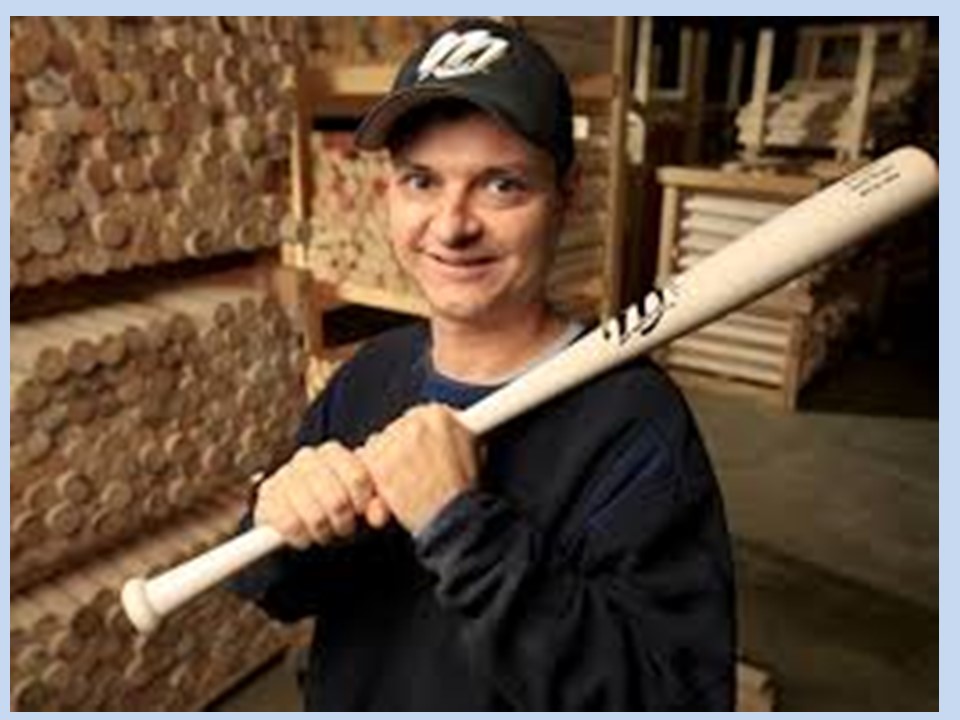
Marucci

   There are two major lessons we learn from the story of Jack Marucci and his sports equipment company. Lesson One: Just do it – start small, create value, make a prototype…and see what happens. Lesson Two: Even if you create a great huge global company – keep doing whatever you were doing in your day job, if you truly love it. You don’t HAVE to become a tycoon/manager.

     Lesson One: In 2002 Marucci’s little boy Gino, 8 years old, needed a baseball bat. He wanted a wood bat, but no company made wood bats for kids, only for adults. Kids’ bats were all aluminum. Marucci had learned how to use a wood lathe in high school. So he bought a used lathe, got some maple (best for bats) and made a bat for Gino. It took a few tries, but he soon got the idea. Soon Gino’s friends wanted wood bats too. So Marucci made them ones. Eduardo Perez, the son of Hall of Fame St. Louis Cardinal baseball player Tony Perez, got one. He told his dad. Perez in turn told Albert Pujols, future Hall of Famer, about the bats..and Pujols loved them!   Soon Marucci was in the bat business, producing high-quality maple bats, with obsessive attention to quality, for Major League baseball players. Eventually his company expanded into other types of equipment, with two retired ballplayers as partners. Marucci Maplewood bats are used today by more than 35 per cent of all the players in Major League Baseball!

     See a need? If you can – make a prototype. If it’s great, who knows what will happen.

     Lesson Two:   Marucci has a day job, as Director of Athletics at Louisiana State University (LSU), Baton Rouge, Louisiana.   He loves this job. Despite the success of Marucci’s bat company, he has decided to keep his day job, and still holds an interest in the sports equipment company.

       So, what do we learn?   If you see a need, see if you can satisfy it, preferably with your own two hands. Amazing things may follow if your product is truly great. And if you have a day job and truly love it, hang on to it and let your partners build and grow your business.  


Innovator: Learn from Fermi!

By Shlomo Maital

Fermi  

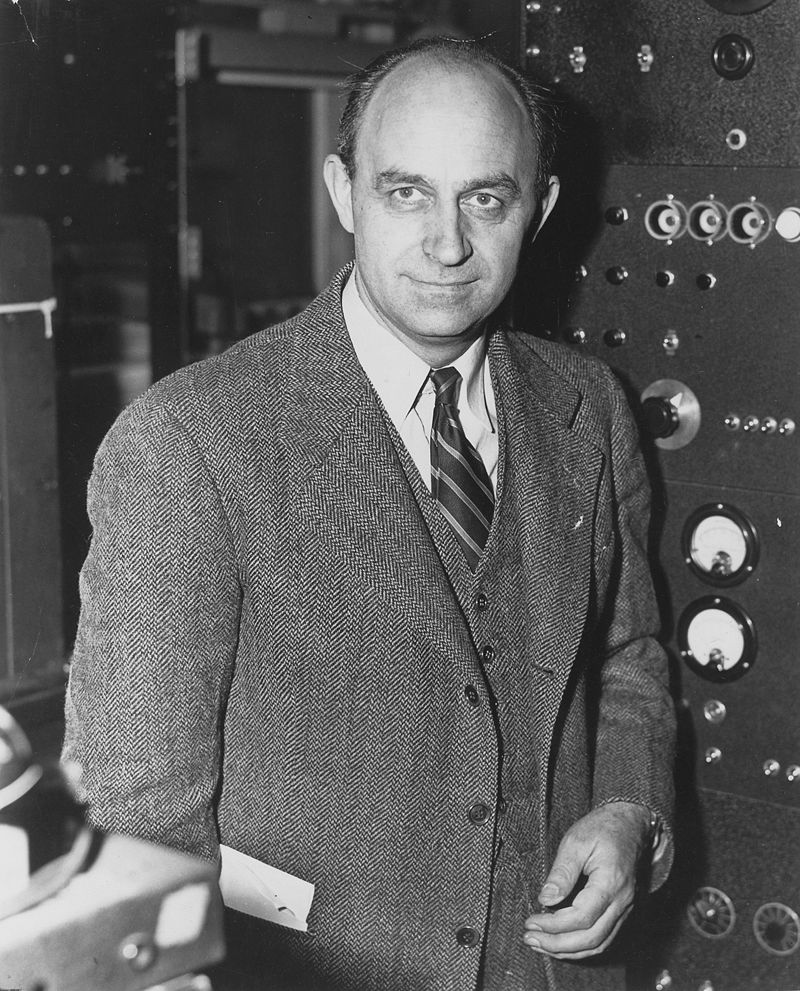
Enrico Fermi 1901-1954

   One of the key problems innovators encounter is validation. You have an idea. You love it! You’re full of passion to implement it. But, hold it. Take a moment or more, and make sure you’re meeting a real unmet need. Validate the need. Don’t be like so many entrepreneurs who “fill a much-needed gap”.

   But how? How to validate? Talk to people? Sure. But will chatting with 1, 2 or even 10 people do the trick?

   I’ve just learned about an interesting method that may help. (See: Philip Tetlock, Dan Gardner, Superforecasting: Crown, 2015; see Fermi-ize Your Problem). It comes from the Italian physicist Enrico Fermi, who died young at 53; he was an exceptional scholar, both a theoretical and experimental physicist (very rare to do both), and invented the first nuclear reactor, Chicago-Pile 1, in Chicago. He won the Nobel Prize in 1938, and has an element named after him. (Fermium, element 100, symbol Fm).

   Here is how Fermi taught his students to tackle tough problems. I’ve slightly changed the context.

   Suppose you want to create an Android app for tuning pianos. Suppose you want to sell it in Chicago. How can you validate the need? How can you predict how many you will sell?

   Size of market: How many piano tuners are there in Chicago?

   No possible way I can find that number on the Internet. Impossible task. Dead end.

     Not according to Fermi.   Take a hard question. Break it down into pieces. And this will enable you to come up with a very good guess that will be surprisingly accurate.

For instance: 1. How many pianos are there in Chicago?   Well, the population of Chicago is 2.5 million. Let’s say, one person in 100 has a piano. (about 1 household in 25 or 30). That means: 25,000 pianos. But schools, etc. also have pianos. That could be, say, another 25,000 pianos. So there are 50,000 pianos. 2. How often are pianos tuned? Let’s say, once a year. Reasonble, right? 3. How long does it take to tune a piano? Roughly, two hours. Remember: each note has to be played, tested, checked. And a piano has 88 keys, 52 white and 36 black. 4. How many hours per year does a piano tuner work? Let’s say, 40 hours a week, for 50 weeks, or 2,000 hours. But take off 20 per cent for travel time: so, 1,600 hours.

     Final calculation: Total piano tuning time: 50,000 pianos times 2 hours =   100,000 hours per year. Divide by 1,600 hours per tuner:   You get about 60 or so piano tuners.

     Does that comprise a sufficient market for your app? Chicago alone, no. So you need to be nationwide or global. Can you be? How will they know about your app?

     This is called Fermi-ize Your Problem. Take a really hard problem. Break it down into pieces. Tackle each piece.

     What if your assumptions are wrong? Well – if you’ve written them down, you can check them. So – instead of giving up from the outset when tackling a hard question, you break it into pieces and tackle each piece,   and when you solve each piece, you chalk up progress and gain momentum. And move one step closer to an answer.

     Innovator: Try to Fermi-ize your problem. Fermi did this regularly with his students. I think it helped him win a Nobel Prize. If you get good at Fermi-izing, you become more willing to tackle really tough problems..and change the world. And you may avoid investing years solving a problem no one really cares about.

Which Creative Idea Will Succeed? Can We Predict It?

By Shlomo Maital   

bad idea1

     Can you predict which creative ideas will succeed and which will fail?   There is a great deal of research on how to foster creative ideas – but much too little on implementation and choosing good ideas and dumping bad ones. A recent article in Administrative Science Quarterly, latest issue (2016),   the leading organizational behavior journal, sheds light on this. [1]

     Here are the main findings:

  • Using both a field study of 339 professionals in the circus arts industry and a lab experiment, I examine the conditions for accurate creative forecasting, focusing on the effect of creators’ and managers’ roles.
  • In the field study, creators and managers forecasted the success of new circus acts with audiences, and the accuracy of these forecasts was assessed using data from 13,248 audience members. Results suggest that creators were more accurate than managers when forecasting about others’ novel ideas, but not their own.

This is a crucial finding. Entrepreneur: You are NOT not good at forecasting the success of your own ideas.   Get help. Get feedback. Validate, validate, validate. Your own passion about your change-the-world idea is often misleading.   Check it out.

  • Results from the lab experiment show that creators’ advantage over managers in predicting success may be tied to the emphasis on both divergent thinking (idea generation) and convergent thinking (idea evaluation) in the creator role, while the manager role emphasizes only convergent thinking.

   In our (Ruttenberg and Maital) model of creativity, “zoom out” (divergent thinking) and “zoom in” (convergent thinking) must be used together, sequentially. Managers use mainly zoom-in. And hence, according to Berg, they often get it wrong. Creators use both.

     One conclusion?   Innovation managers must cultivate more zoom-out thinking. Open the windows, and the doors, managers!   The nature of your job is such that you tend to keep them closed, and lose crucial information and make bad decisions as a result.

   This helps explain why creative thinking is hard to sustain. As organizations grow, they become ‘convergent’…focused, narrowly.   And they lose innovative spark. Solution? Open the windows!

[1] Balancing on the Creative Highwire: Forecasting the Success of Novel Ideas in Organizations, by Justin M. Berg

Blog entries written by Prof. Shlomo Maital

Shlomo Maital

Pages