
You are currently browsing the tag archive for the ‘COVID-19’ tag.
COVID-19: AI to the rescue?
By Shlomo Maital

Today’s daily Haaretz * carries a brief report of how three brilliant Israeli scientists have tackled a pressing problem – the need to know where the COVID-19 hotspots are, in order to focus spatial separation without shutting down the economy of the entire country.
The three are Prof. Eran Segal, an expert in computational and systems biology, Weizmann Institute, Rehovot; Prof. Benny Geiger, also from Weizmann; and Prof. Yuval Dor, Hebrew University.
Segal notes that experience from studying previous epidemics, as well as knowledge about how COVID-19 spreads, show that the virus spreads through clusters of infection and that early identification of such clusters can help stop the virus from spreading, ot at least slow it considerably.
We have seen such clusters, or hot spots, in New Rochelle, NY, in Washington State (Seattle), and initially, in Wuhan, China.
Segal notes that one possibility is to use massive testing, as they did in South Korea. More than 10,000 persons are tested daily there for COVID-19.
Israel can’t do such extensive testing, at this stage, he notes. Hence, the solution the team found was to ask members of the public to fill out online daily questionnaires, which take less than two minutes to complete, that include details about various symptoms and place of residence, including street and zip code.
This information will be analyze, Segal notes, using machine learning algoithms that give researchers and the Health Ministry a variety of information. If enough data are collected, the tool will help give up-to-date assessment of the spread of the illness.
This ‘early warning’ system can help spot these clusters, long before other methods do. The AI algorithms could also determine the effectiveness of public health measures, such as self quarantine, to limit COVID-19’s spread.
The information, noted Segal, is collected using Google DOCS. No privacy is violated.
Segal says we need as many people as possible to fill out the questionnaire, in the initial pilot stage.
I wonder whether Israel can offer this approach to the US, where testing remains quite limited.
* Haaretz. “Israeli Researchers Hope AI Can Tame COVID-19, and They Want Our Help.” Asaf Ronel. March 17 2020.
Why Don’t Kids Get COVID-19?
By Shlomo Maital

Why does the COVID-19 virus afflict us seniors, but small children seem immune?
Today’s Haaretz daily has an interesting article by science writer Asaf Ronal, addressing this question.
First, the data, from Worldometers. The probability of death from COVID-19, by age group: 21.9% of those 80+, 8% for those 70-79, 3.6% for those 60-69, 1.3% for those 50-59, 0.4% for those 40-49, 0.2% for those 30-39, 0.2% for those 20-29, 0.2% for those 10-19….. and, amazingly, zero %, for those 0-9. (No known fatalities, among the world’s 180,000 cases, for young children)!.
Why?
Here are the five main hypotheses.
- Young kids have more flexible, adaptable immune systems, better able to adapt to new diseases, because this is what kids’ immune systems are learning to do from the start.
- Young kids have a much smaller number of ‘damaged’ immune cells…such cells are more susceptible to the invasion of COVID-19 clever viruses, whose spikes poke into cells and invade them.
- Young kids’ cells have far fewer ‘receptors’, that viruses use to penetrate them and reproduce inside them.
- Young kids’ lungs have surface membranes that are far less likely or susceptible to ‘housing’ the virus and enabling them to reproduce there.
- Young kids still do not have the sex hormones, that may induce proteins in human cells that help the viruses reproduce, when they get inside those cells.
We don’t know which, if any, of these theories is the right one. One day, maybe soon, we will find out – and perhaps that will help us old seniors as well.
Social Isolation? No! Spatial Separation: Yes!
By Shlomo Maital

My wife is a school psychologist, with long experience, including times of emergency, when Israel was under attack.
She has an important observation regarding the widespread calls for “social isolation”, to maintain distance among us and slow the spread of the coronavirus.
I want to share her observation.
Words matter. The last thing we need in times of crisis is “social isolation”. This is especially true of my country Israel. As Judy Meltz notes in today’s Haaretz daily, “In a country where personal space is virtually nonexistent, many Israelis are struggling”. We are a touchy-feely nation, in good times we fight like hell, and in hard times we pull together and help one another.
So how in the world are we to manage ‘social isolation’?
Answer: Words matter! This is NOT social isolation. We are still in close touch by social media. Our own family Whatsapp is feverishly active.
What we are called to do is simply spatial separation. Separate one another in space. That does not mean isolating one another socially.
Look, words do matter. I hope our leaders will embrace this term, spatial separation, which is precisely what it is, and abandon ‘social isolation’. Let’s support one another constantly, despite being physically separated.
Thank you, Sharona.
Love in the Time of COVID-19: Learning from Boston
By Shlomo Maital

Love in the Time of Cholera (in Spanish: El amor en los tiempos del cólera) is a novel by the Colombian Nobel prize winning author Gabriel García Márquez. First published in 1985, an English-language movie adaptation was released in 2007.
In the novel, a young national hero, Dr. Juvenal Urbino, meets Fermina and begins to court her. Despite her initial dislike of Urbino, Fermina gives in to her father’s persuasion and they marry. Urbino is a physician devoted to science, modernity, and “order and progress”. He is committed to the eradication of cholera and to the promotion of public works. He is a rational man whose life is organized precisely and who greatly values his importance and reputation in society. He is a herald of progress and modernization and the love of others.
It’s a good time, as many of us hang out at home, to reread this novel. Because, there is a great deal of love in the time of COVID-19.
Utah Jazz star Rudy Gobert, who has COVID-19, joked on-line about it, thrust microphones at journalists, purposely touched surfaces – the kind of bravado that athletes often show in the time of danger and fear. The public reaction was fiercely negative. Govert has apologized and donated $500,000 to COVID-19 victims.
Christiano Ronaldo, perhaps the world’s greatest football player, is at home, in Portugal (Madeira), in his incredible pad – but announced that he is converting the hotel chain he owns into hospitals, at his personal expense.
But these two are celebs. What about ordinary people?
I am very fond of Boston, MA., having taught 20 summers there, at MIT. “Boston strong” was the city’s reaction to the terrible bombing at the Boston Marathon.
Now, Boston radio station WBZ reports on these acts of kindness, by ordinary people:
* Norfolk/Worcester County restaurants feed kids for free It started with Goodstuff Smokehouse in Blackstone, MA announcing “any student that comes in during weekday lunchtime (parents or not) will be given a free kids meal togo. No questions asked. We will continue to do this until area schools are back to normal.”That generous idea has since caught on among several other local eateries, including PJ’s Smoke ‘N’ Grill in Medway, and 140 Pub N Club in Bellingham.
Many kids in the US are fed in schools…some, breakfast lunch and dinner. Closing the schools can bring hunger to these kids. Time for others to step up, including restaurants, that are empty anyway.
* The Greater Somerville Homeless Coalition is raising money to help some of the people who are at the highest risk for catching coronavirus; Boston’s homeless population. Since the outbreak of coronavirus forced them to cancel their Gala, the Somerville Coalition has taken their fundraiser online. As of Saturday afternoon the Coalition is more than $13,000 towards its $70,000 goal. To help support Boston’s homeless population during the COVID-19 outbreak, click here.
* A group called Violence In Boston Inc. is providing free meals for BPS kids, and is accepting donations to help low income families around Boston impacted by the coronavirus pandemic. Starting Sunday March 15 until Friday March 20, volunteers will be collecting supplies like soap, toilet paper, and hand sanitizer to donate to Boston’s families in need. They will be serving lunch and dinner for any BPS child in need of a meal.
* Thanks to the Charles River Mutual Aid Program, activists from various universities are mobilizing to provide mutual aid to students and other Boston-area residents who are in need of resources amid the COVID-19 outbreak. For students who have been kicked off their campuses, the organization will try to provide housing and storage space, although it is limited. They will be pooling funds in a Mutual Aid Fund to purchase food, medical supplies, and other necessities, and organizing to provide these resources to the community. When universities decreed hasty closing, and emptied the dorms, they have not given thought to students who have nowhere else to live.
* The Boston Music Maker Relief Fund has been set up by The Record Co. to help Boston-based musicians whose work has been impacted by the coronavirus outbreak. The organization will pay out $200 relief grants on a first come first serve basis.
* A Harvard Med Group Is Caring For The Senior Population. A group from Harvard Medical School says it is “making itself a hub for local efforts to care for the aged, isolated & needy during coronavirus.”
* The so-called Neighborhood Aid Network is helping people in need from Cambridge to Jamaica Plain by helping pick up groceries, giving rides to doctors appointments, and simply letting people know they are not alone.
There is a terrible paradox in how we must react to COVID-19: Social and individual resilience is driven by our network of love and support, among family friends and even strangers. Yet we are asked to maintain ‘social separation’ – the exact opposite. We will find ways to navigate this dilemma and come through it. Meanwhile, love in the time of COVID-19 will triumph over fear, panic and shelf-emptying hoarding.
Can each of us think of some small way to spread love (not virus) in the time of COVID-19?
COVID-19: Mitigate, Not Decimate
By Shlomo Maital

Professor Zvi Bentwich is an Israeli doctor, who teaches and researches at Ben Gurion University, in Beersheva. Before quoting his views on COVID-19, let me establish his credentials first.
Bentwich serves as the head of the Center for Emerging Tropical Diseases and AIDS at the Ben-Gurion University (BGU). He founded the first AIDS center in Israel in the mid 80’s. His groundbreaking research uncovered the link between Neglected Tropical Diseases (NTDs) , particularly intestinal worms, and immune system deficiencies, pioneering the concept that NTDs play a major role in the pathogenesis of HIV/AIDS. He is a leading advocate for public health and human rights.
So, this is a public health expert who is worth listening to, right? Here is his take, printed in today’s Haaretz daily newspaper:
The heading on his Op-Ed piece: “Tight border isn’t the answer to virus”. Today the Israeli government announced that EVERYone returning from abroad must undergo self-imposed quarantine for two weeks. Everyone? Yes, so that Prime Minister Netanyahu will not appear to be singling out the US, thus angering his friend and colleague Donald J. Trump. (Such quarantines were already in effect for most travellers incoming from Europe).
The main point: “Is there an alternative approach to fighting the disease right now? [alternative, to closing down the borders and shutting down the economy for weeks and weeks?]. …Yes, it’s clale mitigation. It involves using less drastic methods that are likely to yield similar results regarding the damage caused by the virus but that significantly reduce the negative social and econoic consequences of containment.”
Mitigation. Not decimation of our economy.
And this is coming from a distinguished physician, expert on virus containment.
Bentwich concludes: “The coronavirus too will pass and until it does the damage should be minimized as far as possible. We must accept the possibility that it won’t be the last viral epidemic and that it’s important to find the optimal way to cope with such epidemics, at a reasonable cost”.
COVID-19: Calibrate Your Risk Perception
By Shlomo Maital
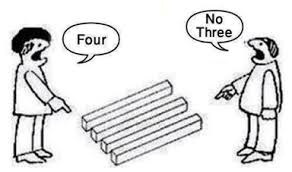
How risky is COVID-19 to me, personally? How do I process the news, numbers, fake news, and hysteria, to evaluate the seriousness of the threat to me, personally?
Behavioral economics knows a lot about risk perception. Many years ago, Kahneman and Tversky showed, with simple this-or-that choice experiments, that we humans overwhelmingly overestimate small probabilities.
This seems to be the case with COVID-19. Writing in the New York Times, medical doctor and psychiatrist Richard Friedman observes: *
Throughout the country, people are stockpiling food in anticipation of a shortage or a quarantine. Supplies of Purell hand sanitizer flew off the shelves in local pharmacies and are now hard to find or even unavailable online. I understand the impulse to secure one’s safety in the face of a threat. But the fact is that if I increase the supply of medication for my patients, I could well deprive other patients of needed medication, so I reluctantly declined those requests. As a psychiatrist, I frequently tell my patients that their anxieties and fears are out of proportion to reality, something that is often true and comforting for them to realize. But when the object of fear is a looming pandemic, all bets are off.
Friedman continues:
In this case, there is reason for alarm. The coronavirus is an uncertain and unpredictable danger. This really grabs our attention, because we have been hard-wired by evolution to respond aggressively to new threats. After all, it’s safer to overact to the unknown than to do too little. Unfortunately, that means we tend to overestimate the risk of novel dangers. I can cite you statistics until I am blue in the face demonstrating that your risk of dying from the coronavirus is minuscule compared with your risk of dying from everyday threats, but I doubt you’ll be reassured. For example, 169,000 Americans died by accident and 648,000 died of heart disease in 2017, according to the Centers for Disease Control and Prevention. As of Sunday morning 19 Americans had died from the coronavirus.
OK – so what SHOULD we be doing, then, in the face of panic that the objective risk does not justify?
Find ways to help and reassure others, notes the wise Dr. Friedman.
Researchers found that when subjects made selfish decisions, the brain’s reward center was activated, whereas when they made generous decisions, a region of the brain implicated in empathy lit up. This suggests that people are more likely to be altruistic if they are primed to think of others and to imagine how their behavior might benefit them.
The good news is that even in the face of fear, we do have the capacity to act in ways that would help limit contagion during an epidemic. Specifically, we can behave altruistically, which benefits everyone. For example, research shows that when people are told that it is possible — but not certain — that going to work while sick would infect a co-worker, people are less willing to stay home than when they are reminded of the certainty that going to work sick would expose vulnerable co-workers to a serious chance of illness. Stressing the certainty of risk, in other words, more effectively motivates altruism than stressing the possibility of harm The lesson for the real world is that health officials should be explicit in telling the public that selfish responses to an epidemic, such as going to work while sick or failing to wash your hands, threaten the health of the community.
And what should our great leaders do?
Specifically, public figures need to convey loudly and clearly that we should not go to work or travel when we’re sick and that we should not hoard food and medical supplies beyond our current need — not just give us health statistics or advise about how to wash our hands.
Let us all try to recalibrate our risk perceptions. COVID-19 will spread, it will afflict a lot of people, it IS NOT possible to put it back in Pandora’s box. But there are a lot of other scary things going on in this world that threaten each of us. Because we have known them for a long time (ordinary flu, traffic deaths, etc.), we are habituated. COVID-19 is new, scary and rather unknown. We will in time come to know it. We will overcome it. And in the meantime, help and reassure your family and your friends. Take it from Dr. Friedman.
* “The Best Response to the Coronavirus? Altruism, Not Panic. The impulse to secure your safety is understandable but counterproductive.” by Dr. Richard A. Friedman, NYT March 8/2020
The COVID-19 Crisis: How to Save Your Business and Protect Your Family
By Shlomo Maital

Israel’s national airline, El Al, just announced it is laying off 800 workers. That is a huge number. Many believe that El Al was in trouble well before the COVID-19 crisis and is just using it as an excuse to shed excess workers.
True or not – we are about to see a wave of layoffs, all over the world, in airlines, hotels, cruise ships and many other industries suffering from a parts shortage.
An article published on Feb. 27 in Harvard Business Review is timely. “Lead your business through the coronavirus crisis”, by Martin Reeves, Nikolaus Lang and Philipp Carlsson-Szlezak, of BCG Boston Consulting Group.
Here are 12 things the authors suggest that you do.
- Update intelligence. That is track the latest information. This is harder than it seems, because there is an enormous amount of hysteria, panic and false data. 2. Beware of hype. See #1 – “as you absorb the latest news, think critically about the source of the information before acting on it.” 3. Share information. “We have found that creating and widely sharing a regularly updated summary of facts and implications is invaluable”. 4. Use experts and forecasts carefully. “Each epidemic is unpredictable and unique, and we are still learning about the critical features of the current one.” 5. Reframe your understanding of what’s happening constnatly. “A Chinese general once said: Issue orders in the morning, change them in the evening”. 6. Beware of bureaucracy. Everybody will weigh in, about what to do — avoid the inertia and delay that may result. 7. Make sure your planned response is balanced, across: Communications, employee needs, travel, remote work, supply-chain, business tracking, and corporate responsibility. 8. Use resilience principles. Resilience requires ‘redundancy’ (2nd, 3rd sourcing of supplies), diversity (multiple approaches), modularity (assemble your business system in different ways), Evolvability (adapt and change, fast!), prudence (avoid hysteria), and embeddedness (live your values, don’t survive at others’ expense). 9. Prepare now for the next crisis (expect more troubles after COVID-19). 10. Intellectual preparation is not enough. (Set up a small war room, practice various scenarios). 11. Reflect on what you’ve learned. 12. Prepare for a changed world. We won’t be the same world after all this blows over.
It sounds trite, but – crises are opportunities. At the end of February 2003, when the SARS crisis broke out and Chinese businesses went into lockdown, Alibaba, under Jack Ma, organized the construction of its new on-line platform, with people working from home and communicating by phone and modem.
Alibaba’s market capitalization today is $547 billion.
Why COVID-19 Will Hurt the Global Economy
By Shlomo Maital

COVID-19 Map
The ‘new coronavirus’ dubbed boringly COVID-19 has brought to mind an insight of Charles Darwin:
It is not the species best adapted to their environments, that thrive and prosper, but rather, those who learn fastest to adapt to changes in their environment.
The reason? Environments are constantly changing. Living species have to adapt, and some do it far better than others.
Viruses are an example. Keep in mind- viruses are not actually living things, as cells are. A virus is a small infectious agent that reproduces only inside the living cells of an organism. It inserts its ribonucleic acid (RNA) into the DNA of the cell, reproduces, kills the cell, bursts out and continues with its marauding raid on the human body, like Genghis Khan’s pony-mounted fighters.
Viruses can infect all types of life forms. And they have learned, through evolution and mutation, to defeat the human body’s antibodies – soldier cells that attack and kill foreign invaders, or antigens. Viruses learn and adapt fast.
And we humans?
The damage to the global economy from the COVID-19 virus will be greater than we expect. World capital markets, down 10% and more, are now waking up to this fact. But why?
Most economic downturns occur on the demand side of the supply-demand nexus. Some shock occurs, people cut back, spend less, invest less, governments slash spending, exports fall – and the fall in demand slows the economy. This is standard, and it describes every single economic downturn.
When President Reagan implemented huge tax cuts in 1981 and then again in 1984, he ascribed them to ‘suppy side economics’ – desire to boost the supply of saving and capital, by putting more income in the hands of the wealthy. It worked – but not in the way Reagan thought. The rich spent the money, there was a huge demand boom, and America had a decade-long demand-side stimulus boom.
COVID-19 is unique, because it is the first major supply-side disaster, since the global economy’s architecture was redesigned and rebuilt at Bretton Woods, NH, in July 1944, 76 years ago. China produces a great many of the world’s manufactured goods and parts. Most of its factories have slowed or closed. This is a huge disruption to the intricate system of global supply chains.
What can be done? Very little, because we have neglected supply side policies, and have underestimated how fragile and delicate the global supply chain system is.
Central banks can slash interest rates, but interest rates are already rock bottom. Governments can spend money, but they already are running big deficits.
And anyway, these are demand-side policies. Yes, they can help soften the demand problems arising from the supply shocks – tourism is collapsing, airlines are in trouble, etc. But these are secondary symptoms.
How to restore the global supply chain? That’s the key issue. It requires a meeting of the world’s leading countries; meanwhile global companies like Apple are scrambling to find quick temporary fixes, and there are few good ones.
Darwin was right. Our environment changed, when a tiny virus originating in Wuhan, China, set out to spread itself. How fast we learn to adapt will determine how costly that little virus will be to the world.

 TIMnovate