
You are currently browsing the tag archive for the ‘history’ tag.
The 7 Rules of Trust
By Shlomo Maital

I am a very frequent visitor to Wikipedia, founded by Jimmy Wales and a colleague in 2001 – a generation ago. It is a largely reliable and up-to-date source of key information, right at your fingertips. And lately, it is being attacked by right-wing fanatics, as being ‘biased’. Meaning – it fails to support far-right insanity.
Wikipedia is a phenomenon. Wales could have leveraged it to become a billionaire. Most people would have. Instead, he has steadfastly kept it as non-profit, ad-free, and hence objective. (Note, for instance, that Google and Apple have now prevented people from uploading videos of ICE police attacks on innocent victims – lest the 47th President retaliate.
Wales has now written a book, The 7 Rules of Trust, zeroing in on a key issue, perhaps THE key issue facing humanity today – lack of trust in political systems, democracy, and leadership. We have lost trust, because it is now possible to disseminate conspiracy theories, lies, calumny, attacks, and fables, and have people who subscribe to the respective media believe them implicitly – including some of the most outrageous stupid vicious lies. (Example: The Jewish religious rite of circumcision is a cause of autism! By none other than the US Secretary of Health, no less!).
Wales writes common sense. Use the working hypothesis of trusting others, so they will trust you. It is reciprocal. Use critical thinking on everything you are told by leaders — verify and trust. Wikipedia, he argues, is a metaphor or method for restoring trust.
A colleague and I once challenged ChatGPT to find an innovate method for establishing greater trust in society. Fakepedia, it said. Establish a website where fake news is debunked and its author(s) exposed.
Jimmy? Fakepedia? In a sense, Wikipedia IS a kind of fakepedia, because it offers truth while other websites offer lurid lies.
Looking is Better Than Knowing
By Shlomo Maital

Goethe once said “Thinking is better than knowing — but looking is best of all”.
I am an economist. Economists do a lot of thinking. Based on their thinking, often couched in terms of mathematics, they do a lot of knowing. But looking?
Ever since the economics profession opted for Leon Walras’ complex mathematics, over Alfred Marshall’s reality-based economics, around 1880, economics has chosen mathematical elegance in place of reality. “Elegance is for tailors”, MIT Economist Paul Samuelson once said, but he too leaned heavily on mathematics.
The peak of this economic fantasy was J.K. Galbraith’s 1967 book The New Industrial State. In it, Galbraith described the new economics powered by huge industrial giants. But he baldly stated, I have never been inside a factory. Never. Yet his book was a best-seller and was swallowed whole, by all.
Economics today is different. It has at last embraced ‘looking’ in place of ‘thinking’, through behavioral economics, led by the massive influence of, get this, two psychologists, the late Amos Tversky and the late Daniel Kahneman. Behavioral economics studies people and how they behave, in place of scribbling equations and pretending they describe reality.
Until 2001, I was part of the ‘thinking’ fantasy brigade. I took early retirement and went out to teach and study creativity, innovation and hi-tech. I worked with large companies and small startups – and only then, began to understand the reality of innovation-driven economics. I wrote a book, only after enlisting a former student who had made a brilliant career in advertising, built on innovation, as co-author.
Here is how I would reinvent the way economists are trained. I would adopt the MD/PhD model. In this program, which exists at Harvard, Penn and Stanford, students do a full medical degree, including an internship working on hospital wards, and at the time time, do a PhD, in which they learn to do research. Together, the life experience of treating sick patients and the rigorous training to do research, leads to reality-based research that changes the world.
This is how I would train economics students today. A rigorous training in research – and a lengthy internship in factories, and other places of work, to observe, befriend and work with real people.
Prof. Aaron Ciechanover, at my university Technion, won the Nobel Prize in Chemistry for identifying the protein, ubiquitin, that causes cells to die when they re no longer viable. He holds an MD/PhD degree, and credits his clinical MD training for helping to make his research more anchoered, realistic and powerful.
Drew Weissman won the Nobel Prize in 2023, along with Penn colleague Katalin Koriko, for showing how mRNA could create effective vaccines – leading to the Pfizer/Moderna vaccine that saved 20 million lives. Weissman is an MD and a PhD as well. It is no coincidence.
It sounds very simple. But looking should be a strong part of all academic training. Not just thinking. The scholars and creative people who change the world are almost all expert at looking. Economics spent 150 years just thinking. I think it led to disastrous policies. We should be begging the world for forgiveness.
Joseph Nye: Father of Soft Power
By Shlomo Maital
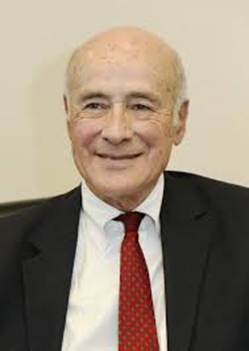
Joseph S. Nye Jr.
Harvard Kennedy School Professor Joseph S. Nye Jr. passed away. He was 88.
Often, as a retired professor, I feel rather frustrated that Ivory Tower research and ideas fall on deaf ears. Some of this research deserves oblivion. But some could truly make a different.
Joseph Nye’s work is an example of the latter. He is the developer of the ‘soft power theory’ and according to the New York Times, an “architect of modern international relations”.
This is how Wikipedia defines soft power:
In politics (and particularly in international politics), soft power is the ability to co-opt rather than coerce (in contrast with hard power). It involves shaping the preferences of others through appeal and attraction. Soft power is non-coercive, using culture, political values, and foreign policies to enact change. In 2012, Joseph Nye of Harvard University explained that with soft power, “the best propaganda is not propaganda”, further explaining that during the Information Age, “credibility is the scarcest resource”.
The VDEM website asserts that today, for the first time in many decades, there are more autocratic regimes in the world than democratic ones. Autocrats believe in hard power – force, threat, coercion. Liberal democratic nations once believed in Nye’s soft power — collaboration, persuasion, dialog. Trump is in the hard power camp. The result is so far rather disastrous.
My own country disastrously, as NYT columnist Tom Friedman painfully explains, is in the hard power camp. So far, the results are terrible.
Joseph Nye’s quiet powerful voice is a strong counter-example to all those who deny that ideas have value or impact. The US did mostly practice soft power, for 80 years, after World War II, stumbling badly in Vietnam, Iraq, and Afghanistan when hard power hawks temporarily prevailed.
If there is any lesson from America’s foreign policy from 1945 to 2025, 80 years, it is the failure of hard power and the supremacy of soft. This is a lesson Israel seems hellbent on learning …at great cost.
What We Jews Learned from Pope Francis
By Shlomo Maital
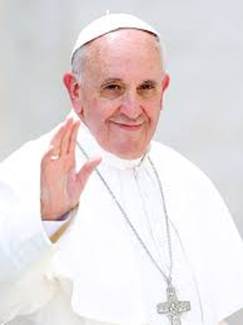
Pope Francis died on Monday. He was 88.
The Catholic Church has done the Jewish people considerable harm in the past. But this Pope was different.
As Cardinal of Buenos Aires, he daily took the bus to his headquarters. A master of the meaningful gesture, he wanted to show his flock that he was one of them, not above them. As New York Times Vatican correspondent Jason Horowitz (Jewish) noted, Francis hated ‘clericalism’ above all – defined as “the formal, church-based dominant leadership or opinion of ordained clergy in matters of the church”, or in other words, we the clergy are above you all.
We Jews learned – or should have learned – a lot from Francis. In Israel, our Ultra-Orthodox clerics, rabbis, cloistered in halls of study called ‘yeshivas’, instruct their students never to agree to do army service, as the law requires, even when our country is under attack and many reserve soldiers are serving for 200 or more days a year, ruining their businesses, away from their wives and children, and risking their lives.
This is clericalism. Religious leaders who do not live as Francis counseled among the people, listening to the people, empathic with them, feeling their pain and suffering.
Iran is led exclusively by an 85-year-old cleric. It will not end well.
The rabbis of the Talmud all had trades – carpenters, shoemakers, bakers – because they had to, to earn a living. They lived among the people and the 2,000 pages of the Talmud reflects this. They ‘took the bus’, as did Francis. (He used to drive around Rome in a Ford Focus. A meaningful gesture).
Today, the Ultra-Orthodox Jewish rabbis support an anti-democratic government, filch many many millions of shekels of taxpayer money to support their life of study, without jobs or army service, and now demand a law enabling them to legally evade what every other citizen must do, serve their country.
We Jews can learn from Pope Francis. In the Conclave of cardinals (only those under 80; if you’re over 80, you don’t get to vote), in 2013, Pope Francis like many other cardinals made a short speech. As Jason Horowitz reports, you are not allowed to campaign for yourself in the Conclave – but you can give a speech about the priorities you think are vital for the Church, which is of course a campaign speech. Francis spoke about getting the priests out of the cloistered churches and into the field, among the people, into the “periphery”, as his speech became known. It gained him the papacy.
Let us hope and pray the Conclave Cardinals choose a worthy successor to Pope Francis – one who in spirit and in mindset is one of the people, not one of the autocratic clerics who live in splendor and have no idea how the vast majority of their flock lives. The chances are good. Many of the current Cardinals were appointed by him and share his world view.
America! Open the Windows!
By Shlomo Maital

One of the most annoying things about MAGA Make America Great Again is this:
The basic premise of MAGA is, America is NOT great, at present. Understatement. Poor healthcare. Unaffordable housing. Poor schools. Wealth and income inequality. Racism. Antisemitism. Polarized paralyzed politics… just for a start.
So, how to make America great again? Place a Nazi sympathizer in charge of destroying public services. Smash alliances abroad, suck up to dictators, appoint incompetent loyalists to key positions, engage in vengeance, ….
There is another way. It is found in this new book, Another World Is Possible: Lessons for America from Around the Globe. – by Natasha Hakimi Zapata. 2025
The simple, obvious, key point – overlooked by the current Administration. Other countries, far less wealthy, have solutions to America’s problems. Right under our noses. But American exceptionalism means, that is not possible. Because .. well, just because.
Singapore (NOT a leftist socialist liberal country) has extraordinary affordable public housing. I’ve seen it first hand. Check it out, America.
Canada has national health insurance. I was born in Saskatchewan, the first province to implement it, in the 1950’s. Check it out, America. Canadians all have health insurance. So do the British – and most civilized European countries.
Estonia has income tax filing online. Fast, simple, easy. Check it out, America.
Most German public universities (and they are mostly outstanding) charge no tuition. America? Michigan has great state universities – but if you don’t live in the state, you pay $60,000 – $65,000 tuition yearly. Not including room and board.
Schools? America is not among the top scoring countries according to the PISA benchmark. Not even close. Way behind China.
Housing, healthcare, education, public services, ….things that drive our quality of life. America trails, despite high GDP per capita.
Why? Closed windows. Other countries have found wise, pragmatic solutions to key problems. The US refuses to learn from them. Costa Rica? Denmark? Learn from them? Get serious, American politicians spout.
In years of teaching managers, I taught them how to define their key operations (marketing, quality assurance, production, innovation) and benchmark which other companies did these things best, how they did them, and – learn from them, adapt and adopt. Pretty simple idea. Best practice benchmarking. Works for nations too. Yes, even for America.
Learn from others.
The most blatant stupidity is Trump’s desire to annex Canada. Why in the world would any Canadian choose to be part of a nation that is hopelessly divided politically and systematically destroying its public services? A country that blindly asserts its superiority, against all evidence, while refusing to learn from others wiser and smarter?
Natasha Hakimi Zapata’s book is MUST reading for MUSK. But don’t hold your breath.
Rosalind Franklin: DNA Pioneer
By Shlomo Maital

Photo 51: The Structure of DNA
Rosalind Franklin.
Rosalind …who?
This, below, is from King’s College, London:
“The discovery of the structure of DNA in 1953 was enabled by Dr Rosalind Franklin’s X-ray diffraction work at King’s. Dr Franklin joined the laboratory of John Randall at King’s in 1950 with a PhD from Cambridge and X-ray diffraction experience in Paris.
“At King’s, by controlling the water content of the DNA specimens, she showed that the molecule could exist in two forms (A and B). In May 1952 she and PhD student Ray Gosling captured the image of the B form that supported the modelling of DNA – ‘photo 51’.
“Photo 51 is one of the world’s most important photographs, demonstrating the double-helix structure of deoxyribonucleic acid: the molecule containing the genetic instructions for the development of all living organisms. Franklin’s image confirmed James Watson and Francis Crick of the University of Cambridge’s hypothesis that DNA had a double helical structure, enabling them to build the first correct model of the DNA molecule in 1953.”
“A paper by Franklin and Gosling, together with one by Dr Maurice Wilkins and colleagues from King’s, accompanied the announcement of Watson and Crick’s momentous discovery in Nature in May 1953.”
Franklin’s paper was largely ignored. Watson and Crick’s discovery was a sensation.
But it was Franklin’s amazing photograph that was crucial. Photo 51 showed a clear X-ray diffraction pattern of DNA, and revealed structural features of DNA vital for understanding DNA´s three-dimensional structure. She managed to produce the sharp photograph shown above by figuring out how to control the amount of water in the DNA sample – water blurred the photograph.
As a woman, as a very young woman, and as a scientist very early in her career, she was marginalized by the powerful male scientists who dominated the field. True, the Nobel citation for Crick and Watson mentioned her contribution – but she died of ovarian cancer four years before Watson/Crick’s Nobel. And it is Watson and Crick who have reaped the glory.
In the history of the Nobel Prize, 894 men have won it and 64 women. Even though women are half the population. Women are 50% of the population, and won 6% of the Nobels.
Science is a demanding field of research, largely dominated by men. Fewer women choose this field, and those that do are often marginalized by the men who run and rule the labs. Like Rosalind Franklin.
Things are changing… but not fast enough.
When Oligarchs Rule
By Shlomo Maital
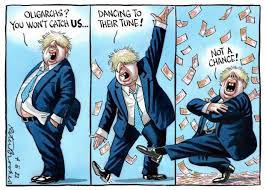
From “X”
Oligarchs? A small cabal of wealthy people who run the country, control its wealth, and dominate its leadership?
Let’s run the numbers.
The US has 813 billionaires. One of them, Elon Musk, has net worth of $359.4 billion. Musk gave Trump an estimated $270 million for his campaign. That is less than one tenth of one per cent of his wealth. It bought him control of the US political system and dominance over Trump. Good deal.
Other US billionaires have shifted rapidly from supporting honesty, truth, and fairness, and equality and inclusion, to the opposite, e.g. Zuckerberg and Bezos.
It has happened before in history. In Russia. After the collapse of the Soviet Union, in 1990/91, the Russian leadership distributed shares to the people, as part of a plan to privatize and revitalize the economy. Oligarchs bought up the shares for pennies, using bank loans – and quickly gained control of Russia’s oil, gas, nickel, steel and other industries. Putin co-opted them, terrorized them – and together, they did a deal – Putin became a dictator, for life, in return for letting the oligarchs retain their wealth – and sharing a big share of it (in secret) with Putin.
India has 200 billionaires. India is said to be the world’s biggest democracy. India does hold elections, free and fair, regularly. But india’s Prime Minister Modi has shown autocratic tendencies, and the amount of abysmal poverty and income and wealth inequality in India is enormous.
China has 400 billionaires. China! The country run by the Chinese Communist Party. As in Russia, the Chinese billionaires are on a tight leash. Alibaba’s founder Jack Ma was reined in by China’s dictator, a chunk of his wealth confiscated, and since then he has almost disappeared. The remaining billionaires are compliant and acquiescent.
How come so many billionaires? The system the US built after WWII, the Bretton Woods Agreement, opened the world to the free flow of money, goods, ideas, people, everything. IT created huge wealth – and enormous abysmal poverty for those unable to participate in the party. This led to a wave of migration – and the rise of far right politics in the West, including, now, in Germany.
The Bible calls for a Jubilee Year – in the 50th year, debts are forgiven, and assets return to their original owners. Restart. We desperately need a Jubilee Year in the world. But, even asking billinaires to pay their fair share of income taxes is today impossible – and Trump is about to gift them with a huge tax cut, ballooning the US deficit that is already alarming. The US already pays more in interest payments on its debt than it spends on defense ($1 trillion!).
You could see this coming. Nothing good can ever come out of extremes of wealth and poverty. It seems that the system has to crash before it can be rebuilt.
Financial markets are already very nervous. I advise carefully weighing how a financial collapse might affect your income and savings – and take steps to protect them.
Abduction: How AI Thinks: Like We Do!
By Shlomo Maital
How does AI think? Until now, we haven’t really understood this; AI is often referred to as a ‘black box’ even by its inventors and developers.
Now, in a New York Times article (Dec. 16), Peter Coy explains some research, in which researchers did a brilliant and rather obvious thing – They asked AI to tell us how it is thinking! And here is the result:
AI thinks as we do. By abductive reasoning!
What is that? So, naturally, I asked ChatGPT to explain it:
“Abductive reasoning is a logical process in which an explanation is inferred from the available evidence, even though it may not be the only possible explanation. It’s often described as “inference to the best explanation” because it seeks to identify the most likely cause or reason for a set of observations, even if all the facts are not known.
“Unlike deductive reasoning, which moves from general principles to specific conclusions (certain), and inductive reasoning, which involves drawing broad generalizations from specific instances (probable), abductive reasoning aims to find the most plausible explanation given incomplete information.
In other words: Hey? Don’t know the answer?! Well – take a shot at it. Take a guess.
ChatGPT’s example of abductive reasoning:
You walk into a room and see a puddle of water on the floor. Possible explanations (hypotheses): 1. Someone spilled water 2. The roof is leaking. 3. The window was left open and rain came in. Using abductive reasoning, you consider the available evidence (the puddle of water) and evaluate the most plausible cause. If you know that there was a heavy rainstorm earlier, and the window is slightly open, you might conclude that the rain came in through the open window, even though you can’t see the exact cause. Based on the best explanation, you might infer that the open window is the most likely reason for the puddle of water, even though there could be other potential causes.”
AI is often lambasted, criticized, because it fantasizes – makes wild guesses when it doesn’t know the answer. Well, so do we humans! Abductive reasoning, connecting the dots that seem unconnected, often generates powerful innovative ideas. AI makes inferences, sometimes wild ones. Programmers are striving to ‘cleanse’ AI from this – when it may be one of its most powerful advantages!
So — the one thing we thought AI lacked, creativity, is actually something it does have. Abduction, linking X with Y.
Holy smoke!
Bernie Knows
By Shlomo Maital
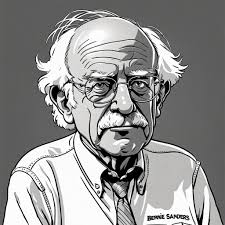
I am as tired as you all, of reading the Democrats’ weary post-mortems of why they lost decisively. This blog is the last about this topic, quoting someone who gets it.
Senator Bernie Sanders, Vermont, former mayor of Burlington.
Why are the Democrats surprised that the working class did not support them? He asks. When — for years, the Democrats have not supported the working class. He said this to Michael Barbaro, on the New York Times” The Daily podcast.
Go back to the Clinton administration, when NAFTA shipped America’s factories to Mexico and Canada, $5 an hour labor rather than $25, and free trade brought a flood of cheap Chinese goods into the US, throwing many Midwest factory workers out of a job.
What specifically did the Dems offer working people in this election? Did they propose $18/hr. minimum wage legislation? Uh, no. National health care for all? No. Support for day care? No. Make groceries more affordable? Uh uh.
Virtually every ethnic, racial, and demographic group voted in the majority for Trump. And for the first time in a long time, the Republicans won the majority of votes for President. The Dems warned Trump would bash democracy. Well, he will, and has. But most Americans say, hold on. What did democracy do for me in the past 20 years? Put power in the hands of the educated elites, while I was shut out of a college education, unable to afford the tuition or the steep interest rates on student loans.
Unless the Dems (who spent a billion dollars in ads in the three blue-wall states, Michigan, Wisconsin, Pennsylvania, ineffectively) start listening to working Americans, and speaking to them in their language, look for J.D. Vance to become President in 2028.
Yikes.
Who Best Predicts the Future? Historians – Here’s Proof
By Shlomo Maital

Which discipline best equips people for predicting the future?
Economics? That’s a joke. Sociology? Psychology?
History! Precisely those who study, record and analyze our past history, are, I think, best equipped to predict our near-term future. And here is proof.
Arthur Schlesinger Jr. was a primary speechwriter and adviser to the Democratic presidential nominee both times, Adlai Stevenson in the 1952 and 1956 presidential campaigns. Schlesinger served as special assistant and “court historian” to President Kennedy from 1961 to 1963. He was a Harvard history professor and wrote many wonderful books, following in the footsteps of his father, Arthur Schlesinger Sr., a decorated historian. He died in Feb. 2007, at 89.
In 1992 he published a short little book, The Disuniting of America: Reflections on a Multicultural Society. In it Schlesinger said this:
“Instead of a transforming nation with an identity all its own, America increasingly sees itself in this new light as preservative of diverse alien identities. Instead of a nation composed of individuals making their own unhampered choices, America increasingly sees itself as composed of groups more or less ineradicable in their ethnic characteristics.
Will the center hold? Or will the melting pot give way to the Tower of Babel? …the historical idea of a unifying American identity is now in peril in many arenas…”
The US Presidential election of Nov. 2016 provided the answer. It’s Tower of Babel, or as Senator Corker from Tennessee described it, the White House is a “day care center”.
We are in the era of identity politics. My identity is determined not by the nation in which I live and sometimes serve, but by the specific ethnic, racial, social, economic, educational, and religious group to which I belong. The “we” of “me” has become very very narrow. This is true not only in the US but all over the world – former Yugoslavia, Kurdistan, Catalonia….
With identity politics, nations split apart. When the supreme value becomes the celebration of diversity, rather than the cohesive force of national pride and identity, nations fall apart. Electing a leader who leverages this split, like Trump, for political gain is inevitable. And it’s happening all over the world.
Schlesinger called it. The unifying American identity is gone. He saw this coming 25 years ago, in 1992. But nobody listened.
“The genius of America,” Schlesinger concluded, “lies in its capacity to forge a single nation from peoples of remarkably diverse racial, religious and ethnic origins.”
That genius seems to be gone, mortally wounded by a learning-disabled attention-deficit President who is unable to read a half-page briefing document. The glue that once bonded a redneck gun-toting blue collar worker from Chattanooga to a Harvard-educated Wall St. bond dealer with a summer cottage in the Hamptons is gone.
Only when that glue disappeared do we realize how vital it was to America and to the world.
 TIMnovate