
You are currently browsing the tag archive for the ‘life’ tag.
Joyspan: Enjoying Life, Not Just Living It
By Shlomo Maital

Today’s New York Times brings an interesting piece by Jancee Dunn, on “Joyspan”. Joyspan is about living long, but not just counting the years but doing so in a manner that is enjoyable, fruitful, happy, productive and meaningful. Joy Span, not just Life Span.
Chase suggests four key elements of a Joy Span:
Grow. Keep doing new things, learning new things. Trying new things. Welcome change. Become smarter, wiser, and yes, fitter. It is possible. I gave up running, after a long span of running daily, two marathons, and a pure love of jogging. Instead, I walk, often uphill, to boost fitness. It came in handy recently, during a conference in a hilly city in Portugal.
Adapt. If you can’t run, walk. If you have trouble walking, do chair exercises. If you have trouble reading fine print, buy large print books or listen to podcasts. As we grow older, many parts of our bodies don’t work that well. Fix what you can, or what the doctors can, and move on….
Give. Often, we seniors focus on ourselves, our needs, our pains, our difficulties. That does not contribute to a Joy Span. Focus on others. Family, grandchildren, loved ones, friends, even strangers. And give to them, whenever and whatever you can. That is a real joy.
And Connect. Connect with others. It is pretty easy as a senior to let the walls close in. As best you can, connect with others. The storekeeper. The cashier. The cab driver. Even fleeting connections bring joy. Maybe, a little extra tip to the cab driver…and a big thank you.
Here is the mnemonic: G A G C. Try it. Probably you’re already doing it. And even 2 out of 4 is a big help.
Sharks Don’t Sink – Neither Must We!
By Shlomo Maital
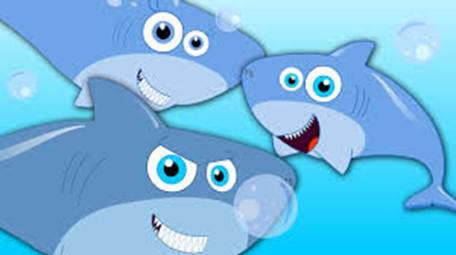
Consider sharks. They have been around on this earth for 400 million years – far older than dinosaurs, older than even trees. And evolution has made them superbly adapted to their environment, to survive and thrive. Sharks have survived five mass extinctions — and are currently struggling with their sixth, as humans kill sharks with fishing nets and overfishing, depriving them of food.
We can learn a lot from them – despite Steven Spielberg’s 1975 film Jaws, which inspired enormous fear of sharks.
First, consider fish. They have swim bladders — gas-filled organs that provide them with buoyancy without having to expend energy by swimming. Fish can sleep, thanks to swim bladders – watch your goldfish do it sometime. Darwin wrote that lungs of some fish evolved from these swim bladders.
Sharks, in contrast, have no swim bladders. If they stop swimming, they sink – because they have negative buoyancy. So, sharks cannot, may not, stop swimming. Ever. Sharks don’t sink – because they are continually moving forward. They even sleep while swimming – though never with closed eyes.
What does this have to do with people?
Sometimes, people sink. They sink into despondency and depression. And they don’t have mental ‘swim bladders’ to keep them afloat.
We can perhaps avoid this – by learning from sharks. Keep moving forward.
Keep learning new things. Keep making new friends. Keep trying to bring value, create value, by helping friends and families and strangers. Keep being curious. Keep trying new skills. New foods. New music. Stagnate – and you sink. All too common among us seniors.
Sharks don’t sink. Neither must we. Human beings have been around for 50,000 years. Sharks survived – and mostly thrived — around 80 times longer! Maybe they know something we can use?!
I recommend Jasmin Graham’s new book Sharks Don’t Sink: Adventures of a Rogue Shark Scientist, just out – subject of an On Point podcast episode.
Learn Life, Live Life: The Dilemma
By Shlomo Maital

The brilliant Danish philosopher Soren Kirkegaard once wrote in his diary: “life can only be understood backwards [learning life] but life must be lived forwards.”
This appears in Chapter 6 of his book Either/Or. Kirkegaard explains that life at any given moment cannot be fully understood. Time never stops. We never have time to fully stop and reflect on what we do and what is done to us. And as time passes, more and more experiences accumulate… so, we have a ‘life learning’ debt almost from birth.
Kirkegaard, ever a practical philosopher, tells how to resolve the dilemma. We should approach our lives not as problems to be solved, but as realities to be experienced. He wrote this around 1843. He is known as the father of existentialism — life lived as experienced realities.
I spent some 10 years working with senior hi-tech management. One tool I taught them was the art of the debrief – learning especially from a failure, something the military does especially well. I think we can all embrace the debrief. Follow Kirkegaard. Take a moment, maybe as your head hits the pillow. Debrief your day. First – what are you super-grateful for? Second – what have you learned? What could you not have done or said, or done better, or done differently?
I am 82. I learned the art of learning life (the art of the daily debrief) far too late. For you, dear readers, there is still time. It is possible to learn life more or less while we are living it. And when you do, you benefit hugely.
And about the image above? Llama llama? “Lama” in Hebrew is ..why? A key question in our daily debrief.
Nastia Came to Israel for Life…Iran Caused Her Death
By Shlomo Maital

Nastia Borik was 7 years old. She was Ukrainian and had travelled to Israel for life-saving leukemia treatment.
She was killed in an Iranian missile strike in the Israeli town of Bat Yam on Saturday, along with her mother, grandmother and two young cousins. Nastia’s father is serving on the Ukrainian front lines against the Russian invasion. He was given the awful news while serving at the front.
Russia under Putin continues to target Ukrainian civilians in Kyiv and other cities. Many die each day. Ukraine has a desperate shortage of anti-rocket and anti-drone devices; Israel has them, but clearly needs all it has for its own defense against Iran.
My wife and I respond to sirens and go to our bomb shelter once or twice daily. Most Iranian rockets, targeting civilians and cities, are intercepted by Israel’s Arrow 3, David’s Sling and Iron dome inteceptors, aided at times by the US THAAD interceptors. But a few get through.
Nastia was killed, after she and her family were rented a flat in Bat Yam, just south of Tel Aviv, in an area with many refugees, in older buildings that lacked modern shelters. The Iranian missile carrying close to a ton of explosives (no shrapnel, just TNT) had a powerful blast wave that destroyed the building and killed Nastia and her family.
An Israeli poet named Haim Nahman Bialik wrote a poem over a century ago, responding to the pogrom in Kishinev (capital of what is the country of Moldova today), when Jewish women and children were slaughtered by Cossacks; the poem ends by saying ‘revenge for the death of a small child – even the Devil has not invented’.
The Bible recounts that God instructed Abraham to ‘be a blessing’, and later, instructed the Jews to “choose life”. Jews and Muslims are descendants of Abraham, and we both revere him. We are obligated to choose life.
There are those who choose to sow death. In the evolution of humanity, it may take time, it may involve sorrow and pain – but life will defeat death.
How to Fall in Love
By Shlomo Maital

One of my favorite podcasts is Hidden Brain, led by Shankar Vedante. This week, the topic is …the psychology of falling in love. How does it happen?
Psychologist Arthur Aron, SUNY at Stony Brook, has researched the subject for many years. He often writes with his wife Elaine. One of his most famous studies is the iconic “shaky bridge” study..
A rather good-looking female researcher in Vancouver, B.C., positions herself, first, in the middle of a rather shaky, dangerous suspension bridge crossing a river, and then, on a sturdy, conventional bridge nearby. She approaches male subjects crossing each bridge, asks if they will respond to some questions, then, says, Please, will you call me so I can do a follow-up?
Far more men call her later, if they had met her on the shaky bridge, than those who met her on the sturdy bridge. Why? The shaky bridge arouses a center in our brains associated with strong emotion (love, fear) that generates dopamine, a neurotransmitter that “signals the perceived motivational prominence (i.e., the desirability or aversiveness) of an outcome, which in turn propels the organism’s behavior toward or away from achieving that outcome.”
Desirability of an outcome? Uh… love?
Another of his famous studies is this one: A man and a woman enter the lab through separate doors. They sit face to face and answer a series of increasingly personal questions (Based in part on the famous Aron 36 questions, see below). They they stare silently into each other’s eyes for four minutes.
Six months later, the two participants were married. They invited the entire lab to the ceremony.
Here is a summary of Aron’s main findings about love, provided by Google’s Gemini AI:
“Arthur Aron’s research highlights the significance of self-expansion, closeness, and vulnerability in fostering romantic love. He found that sharing novel and challenging experiences can create feelings of connection and accelerate intimacy. His “36 Questions That Lead to Love” study demonstrates how structured, mutual self-disclosure can rapidly increase closeness and even spark romantic feelings. Aron’s work suggests that love is not just about attraction, but also about actively building a shared sense of identity and mutual understanding.”
My wife and I have been happily married for almost 58 years. Personally, I think Aron got it right.
How about you?
Set I
1. Given the choice of anyone in the world, whom would you want as a dinner guest?
2. Would you like to be famous? In what way?
3. Before making a telephone call, do you ever rehearse what you are going to say? Why?
4. What would constitute a “perfect” day for you?
5. When did you last sing to yourself? To someone else?
6. If you were able to live to the age of 90 and retain either the mind or body of a 30-year-old for the last 60 years of your life, which would you want?
7. Do you have a secret hunch about how you will die?
8. Name three things you and your partner appear to have in common.
9. For what in your life do you feel most grateful?
10. If you could change anything about the way you were raised, what would it be?
11. Take four minutes and tell your partner your life story in as much detail as possible.
12. If you could wake up tomorrow having gained any one quality or ability, what would it be?
Set II
13. If a crystal ball could tell you the truth about yourself, your life, the future or anything else, what would you want to know?
14. Is there something that you’ve dreamed of doing for a long time? Why haven’t you done it?
15. What is the greatest accomplishment of your life?
16. What do you value most in a friendship?
17. What is your most treasured memory?
18. What is your most terrible memory?
19. If you knew that in one year you would die suddenly, would you change anything about the way you are now living? Why?
20. What does friendship mean to you?
21. What roles do love and affection play in your life?
22. Alternate sharing something you consider a positive characteristic of your partner. Share a total of five items.
23. How close and warm is your family? Do you feel your childhood was happier than most other people’s?
24. How do you feel about your relationship with your mother?
Set III
25. Make three true “we” statements each. For instance, “We are both in this room feeling … “
26. Complete this sentence: “I wish I had someone with whom I could share … “
27. If you were going to become a close friend with your partner, please share what would be important for him or her to know.
28. Tell your partner what you like about them; be very honest this time, saying things that you might not say to someone you’ve just met.
29. Share with your partner an embarrassing moment in your life.
30. When did you last cry in front of another person? By yourself?
31. Tell your partner something that you like about them already.
32. What, if anything, is too serious to be joked about?
33. If you were to die this evening with no opportunity to communicate with anyone, what would you most regret not having told someone? Why haven’t you told them yet?
34. Your house, containing everything you own, catches fire. After saving your loved ones and pets, you have time to safely make a final dash to save any one item. What would it be? Why?
35. Of all the people in your family, whose death would you find most disturbing? Why?
36. Share a personal problem and ask your partner’s advice on how he or she might handle it. Also, ask your partner to reflect back to you how you seem to be feeling about the problem you have chosen
Stuck: A Root Cause Analysis
By Shlomo Maital
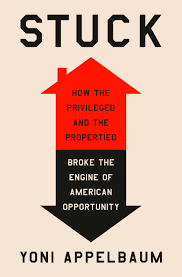
Stuck: How the Privileged and the Propertied Broke the Engine of American Opportunity. by Yoni Appelbaum. Feb. 2025.
In Root Cause Analysis (RCA), you keep asking questions, until you get to the bottom of the problem.
How did Trump gain a (small) majority of voters to support his crackpot ideas – now weaking havoc on America and the world?
Yoni Applebaum is deputy executive editor of The Atlantic, a leading magazine. His new book offers a root cause explanation.
The problem is costly housing, which limited mobility, which was the traditional way low-income Americans made more money.
Here is how it worked.
Under the Democrats, America off-shored its manufacturing to Southeast Asia, mainly China. This hurt the industrial heartland and manufacturing workers, in the Midwest, the South, and elsewhere.
In the past, a US worker thrown out of work picked up, packed up, and moved to where there were jobs.
But because housing became super-expensive, and hard to find (try to find a rental in Boston!), moving for this group was not an option, because while their wages would rise, they would be more than eaten up by hugely expensive housing.
Not so for the elites. A lawyer could leave Alabama, and earn fortunes in New York City, more than enough to cover the housing costs.
Hence, Americans, who once were highly mobile, are far less so today. They are stuck – Stuck in backwater places like Flint, Michigan, once a manufacturing hub, now a slum with water full of lead.
The elites (who vote Democrat) have escaped long ago. The working class are stuck and left behind.
Hello, Dems? Are you listening? Did you see the problem of housing? Did you do anything? NO?
In November 2024, you paid the piper.
Great Leaders Are Like Orchestra Conductors
By Shlomo Maital

My wife and I recently enjoyed a Jerusalem Camerata concert, with a British guest conductor named Paul Goodwin. The last piece was Josef Haydn’s Symphony #83 in G minor. It was brilliant. The orchestra played its heart out. The conductor’s leadership was spirited, energetic, and his body language interpreted the music, for his orchestra and for his audience.
It occurred to me that quality leadership in strong leaders resembles conducting an orchestra. For some conductors, who use distracting histrionics, it is all about them. Just like egoistic leaders, who generally fail.
Because – strong leadership is about getting your followers to excel – to do amazing things way beyond what they think they can, what they are generally capable of, what they believe. Great conductors make their orchestra members want to play beautifully, at the top of their games. That was what we saw on Monday evening. An orchestra in top form, because they were motivated to be so by the conductor Paul Goodsin. Even though it was the fifth time they were playing this concert (concerts in Israel are often played six times, in different cities, in order to pay for the guest soloists and conductors). They played it, with excellence, and freshness, as if it was the first time.
Great leaders are like conductors. At the end, with rapt applause, the conductor made sure to focus on the orchestra members, asking groups to stand (concert master, violins, percussion, woodwinds, bass violins….) for applause. It is pretty easy to tell which conductors have the love and respect of their musicians, who play their hearts out for them, and which have their players going through the motions, for this egomaniac jumping around on stage to gain all the attention.
How many world leaders are there, who resemble great orchestra conductors? And, is it my imagination, or are the egomaniac leaders mainly men, and the ‘it’s about you not me’ leaders are mainly women? Not to mention names, but, Trump, Trudeau, Putin, Xi Jin Ping, Kim Jong Un, Viktor Mihály Orbán….Netanyahu….
When Stuff Happens: Try Plan B
By Shlomo Maital

Stuff happens. You miss your flight. Or it is cancelled. You have a doctor’s appointment and can’t get a taxi to save your life. You prepare a great supper – and burn the rice.
Stuff happens. These days, a whole lot of stuff happens. Some of it is small stuff, personal or family things, some of it is big stuff, national and global politics. Not much can be done about the latter – but you can use Plan B on the small stuff.
Lacking a taxi I used Plan B – a 2 kms. (1.2 miles) walk uphill to the doctor. I had that in my mind from the start. In case stuff happens – plan B. It helped toward fitness, and felt good. A good walk.
If you have a Plan B mentality, you never need to sweat the small stuff, which can accumulate and cause big-time stress. If stuff happens, have a plan B in the back of your mind. Just having it reduces stress. You usually don’t need it. But when you do, it can come in handy. And remember – there is ALWAYS a Plan B. The more you use it, the better you get at it.
And guess what. Sometimes, Plan B is a lot better than Plan A. So you don’t need stuff to happen, you can embrace Plan B and make it Plan A.
Sound reasonable?
If You Want To Be Happy For the Rest of Your Life…
By Shlomo Maital

The 1963 hit song by Jimmy Soul (“If you wanta be happy for the rest of your life, never make a pretty woman your wife…”) is so offensive and politically incorrect, it would die today long before reaching the airwaves.
Moreover, it is dead wrong…as I will explain later.
But there is research that DOES complete the sentence, “if you want to be happy for the rest of your life…”… and it says: find a soul mate. Find a GOOD wife. And yes, she CAN be pretty.
Massive research just published in Nature – Human Behavior [1] finds this:
“Depression represents a significant global public health challenge, and marital status has been recognized as a potential risk factor. However, previous investigations of this association have primarily focused on Western samples with substantial heterogeneity. Our study aimed to examine the association between marital status and depressive symptoms across countries with diverse cultural backgrounds using a large-scale, two-stage, cross-country analysis.
“We used nationally representative, de-identified individual-level data from seven countries, including the USA, the UK, Mexico, Ireland, Korea, China and Indonesia (106,556 cross-sectional and 20,865 longitudinal participants), representing approximately 541 million adults.
“The follow-up duration ranged from 4 to 18 years. Our analysis revealed that unmarried individuals had a higher risk of depressive symptoms than their married counterparts across all countries.”
The other day, I saw a dentist (periodontist). She asked my age. I said 81.98 (five days to my birthday). She noted that I looked healthy and happy. I am. I said, unprompted, I have a secret. I have a good wife.
Indeed I do. My wife of 57 years is beautiful, interesting, supportive, and keeps me in line. There are reasons to be unhappy these days in our little country Israel – but at home, none at all. Having a spouse to love and care for is a major blessing and a significant reason to get out of bed in the morning.
The research I cited involved N=541,000,000! My life is N=1. But that N=1 is for me significant. How about you?
[1] Xiaobing Zhai, Henry H. Y. Tong, Chi Kin Lam, Abao Xing, Yuyang Sha, Gang Luo, Weiyu Meng, Junfeng Li, Miao Zhou, Yangxi Huang, Ling Shing Wong, Cuicui Wang & Kefeng Li. ” Association and causal mediation between marital status and depression in seven countries”. Nature — Human Behaviour. (2024)
Six Questions: Toward a Mindful Life
By Shlomo Maital
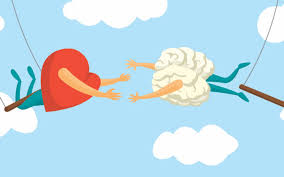
I found this wise advice at a website called mindfulentrepreneur:
How to re-examine the story of your life – and rewrite it(?)
- What is it that you’re truly good at?
- What do you know or do at least a bit better than the others around?
- What type of issues do people approach you with?
- In what areas are you usually able to provide meaningful help?
- What are you known for?
- What activities give you pleasure even if you’re not rewarded for them in any way?
The website goes on: “Try to identify that one special ability you have and cherish it. Use it whenever you can, despite not being seen. And don’t forget to remind yourself that the boomerang of positive energy you’re sending out to the universe will one day, sooner or later, come back to you, with multiplied force.
And it ends:
“You’re the sole author of the story of your life. Make it an inspiring one to read.
In teaching creativity, I’ve challenged a great many young people to search deep inside themselves and find their true passions — and then pursue them. For some it has worked. And it gives me a lot of satisfaction. I plan to keep doing it.
If by a huge cosmic error I reach the gates of heaven and am challenged there, I plan to say, I tried to help people write their own life stories, rather than let other people write them on their behalf. It just might work.

 TIMnovate