
You are currently browsing the tag archive for the ‘mental health’ tag.
TB Vaccine Prevents Alzheimers
By Shlomo Maital
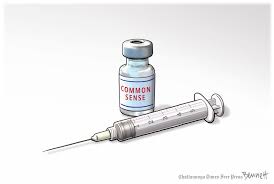
Science reporter Ruth Schuster, writing in the daily Haaretz, reports on new research, showing that a Tuberculosis vaccine – an old one – may prevent dementia! This is promising, hopeful – and crucial, because we don’t know how to reverse Alzheimer’s, or cure it, nor even diagnose it for certain until autopsy (after death).
What is the vaccine? It is called BCG – Bacillus Calmette-Guerin, developed to fight tuberculosis in the early 1900’s! It is a live vaccine, a weakened strain of bovine (non-human) TB. The vaccine has generalized immune-system-stimulating characteristics and is even used today for treating superficial bladder cancer. Researchers have found that bladder cancer survivors treated with BCG had lower rates of Alzheimer’s and even Parkinson’s.
Dementia is a huge problem. The WHO says 55 million people were diagnosed with dementia as of 2020 – and that’s a huge underestimate. It may double by 2050.
Two researchers – Prof. emeritus Charles Greenblatt, Hebrew University of Jerusalem, and Prof. Richard Lathe, Univ. of Edinburgh Medical School, have published two key papers in the Journal of Alzheimer’s Disease (so far, just the abstracts have been in print).
The authors review research and state: “Once one gets a BCG shot against TB as a kiddie, one has diminished risk of Alzheimer’s in old age”.
Think prevention! the authors state. Apparently, the weakened bacillus sticks around in our brains, from childhood, and helps the body fight off the amyloid plaque that gums up our brains and causes dementia. A small piece of evidence: Alzheimer’s rates are lower in the developing world, where the BCG vaccine is still widely used, than in the developed world, where BCG has been replaced by more modern TB vaccines.
Mental Health Impact of COVID-19: A Survey of 59 Countries
By Shlomo Maital

We are approaching almost a year of the coronavirus pandemic – and in virtually every country (except perhaps New Zealand, where fans are filling stadiums to watch the All-Blacks), it is beginning to wear people down. Here are the results of large-scale study of the mental health impact, based on a sample of 6,882 individuals in 59 countries. *
- Elisabet Alzueta et al., “How the COVID-19 Pandemic has changed our lives: A study of psychological correlates across 59 countries”. J. of Clinical Psychology 2020: 1-15.
Of the nearly 7,000 participants, 25.4 % reported moderate-to-severe depression, while 19.5% reported anxiety symptoms.
What caused the depression? A variety of factors: Among them,
* the country’s income level (higher income correlated with higher depression), * exposure to COVID-19 (e.g. unconfirmed symptoms), * government lockdowns, * life changes (e.g. working from home); and * conflicts with other adults at home. However, all these factors ‘explained’ (in a statistical sense) only about one-fifth of the variance in depression.
A major battle is underway between the “the cure (of the pandemic) is worse than the disease, let’s open at once” camp, and the “you cannot heal the economy until you stamp out the damned virus” camp. I think the latter are more right – better to severely lock down, like taking a very bitter medicine to cure an illness, to shorten the prolonged impact on mental health by failing to do so.
It is surreal that American voters are basically being asked to choose between these two camps, Trump vs. Biden — when the issue is really rooted in complex epidemiology and shrouded in massive uncertainty. It is clear, however, that the science and the scientists overwhelmingly favor the “end the virus first, clamp down hard” policy.

 TIMnovate