
You are currently browsing the tag archive for the ‘news’ tag.
The 7 Rules of Trust
By Shlomo Maital

I am a very frequent visitor to Wikipedia, founded by Jimmy Wales and a colleague in 2001 – a generation ago. It is a largely reliable and up-to-date source of key information, right at your fingertips. And lately, it is being attacked by right-wing fanatics, as being ‘biased’. Meaning – it fails to support far-right insanity.
Wikipedia is a phenomenon. Wales could have leveraged it to become a billionaire. Most people would have. Instead, he has steadfastly kept it as non-profit, ad-free, and hence objective. (Note, for instance, that Google and Apple have now prevented people from uploading videos of ICE police attacks on innocent victims – lest the 47th President retaliate.
Wales has now written a book, The 7 Rules of Trust, zeroing in on a key issue, perhaps THE key issue facing humanity today – lack of trust in political systems, democracy, and leadership. We have lost trust, because it is now possible to disseminate conspiracy theories, lies, calumny, attacks, and fables, and have people who subscribe to the respective media believe them implicitly – including some of the most outrageous stupid vicious lies. (Example: The Jewish religious rite of circumcision is a cause of autism! By none other than the US Secretary of Health, no less!).
Wales writes common sense. Use the working hypothesis of trusting others, so they will trust you. It is reciprocal. Use critical thinking on everything you are told by leaders — verify and trust. Wikipedia, he argues, is a metaphor or method for restoring trust.
A colleague and I once challenged ChatGPT to find an innovate method for establishing greater trust in society. Fakepedia, it said. Establish a website where fake news is debunked and its author(s) exposed.
Jimmy? Fakepedia? In a sense, Wikipedia IS a kind of fakepedia, because it offers truth while other websites offer lurid lies.
Life Lessons from Roger Federer
By Shlomo Maital
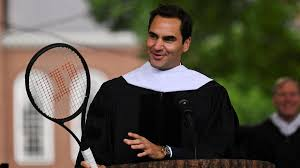
On June 9, 2024, a year ago, tennis great Roger Federer gave the commencement address at Dartmouth University, an Ivy League school. Rustin Dodd recently wrote about it in The New York Times. Federer’s address has become viral, like the late Steve Jobs’ commencement address in 2005 at Stanford.
“Now, I have a question for you,” Federer said, looking out across a sea of umbrellas at the commencement ceremony for Dartmouth College. “What percentage of points do you think I won in those [career] matches?” (He played a total of 1,526 singles matches during his career. He won 1,251 of those matches).
Federer won 80% of his 1,526 matches.
He paused.
“Only 54 percent,” he said.
It was one of those statistics that at first seemed incorrect. Federer was one of the most dominant athletic forces of this century. That guy lost nearly half of his points? He won 80% of his matches and only won 54% of his points? ?????
“When you lose every second point, on average, you learn not to dwell on every shot,” he told the crowd. “You teach yourself to think, ‘OK, I double-faulted. It’s only a point.’ When you’re playing a point, it has to be the most important thing in the world, and it is. But when it’s behind you, it’s behind you. This mindset is really crucial, because it frees you to fully commit to the next point and the next point after that, with intensity, clarity and focus.”
I think this is a powerful lesson. Bad things happen to everybody. At times, our brains insist on replaying them, There is value in learning from failure. But – only to a point.
Federer explains that past failures should be time-dated, like prescription drugs. Figure out what can be learned. And move on. Focus.
Federer appears to have practiced his own version of a psychotherapy technique known as focusing, developed by Eugene Gendlin. It is “a quality of engaged accepting attention”, a kind of focused mindfulness about where we are at this present moment, with past memories, troubles, worries, anxieties, etc., distilled out of our thoughts.
Think about the wonderful women’s final at Rolain Gros, the French tennis championship. American Coco Gauff vs. world #1 Sabalenka. Here is one account:
“Sabalenka overpowered the American in the early stages, breaking her serve to love amidst a run of nine unanswered points, while Gauff looked spooked, spraying misses to all parts of the court. But suddenly an inspired drop shot, a Sabalenka double-fault and a flashing forehand winner brought up a break point which Gauff converted. Sabalenka was now rattled and let a push from Gauff drift past her, thinking it was going long only for it to bounce four inches inside the baseline, as the second seed levelled the set at 4-4. It was a jaw-dropping mistake from a player who had gone 4-1 up against defending champion Iga Swiatek in her semi-final and let that lead slip.”
Sabalenka later explained that she indeed became unsettled. My hunch is she let those past mistakes dwell in her mind, and lost what Federer had in his career: Extreme focus. In contrast, Gauff appears to have mastered it, at least for this match.
The expression “water under the bridge” expresses the idea that what’s past, is past. Can we emulate Federer? We’re not pro tennis players – but we are all in the complex game of life, where focus is essential.
The world is in a huge mess. Let that not keep you from seeing the incredible beauty of Nature, and beauty of the human spirit, all around us, every minute.
Looking is Better Than Knowing
By Shlomo Maital

Goethe once said “Thinking is better than knowing — but looking is best of all”.
I am an economist. Economists do a lot of thinking. Based on their thinking, often couched in terms of mathematics, they do a lot of knowing. But looking?
Ever since the economics profession opted for Leon Walras’ complex mathematics, over Alfred Marshall’s reality-based economics, around 1880, economics has chosen mathematical elegance in place of reality. “Elegance is for tailors”, MIT Economist Paul Samuelson once said, but he too leaned heavily on mathematics.
The peak of this economic fantasy was J.K. Galbraith’s 1967 book The New Industrial State. In it, Galbraith described the new economics powered by huge industrial giants. But he baldly stated, I have never been inside a factory. Never. Yet his book was a best-seller and was swallowed whole, by all.
Economics today is different. It has at last embraced ‘looking’ in place of ‘thinking’, through behavioral economics, led by the massive influence of, get this, two psychologists, the late Amos Tversky and the late Daniel Kahneman. Behavioral economics studies people and how they behave, in place of scribbling equations and pretending they describe reality.
Until 2001, I was part of the ‘thinking’ fantasy brigade. I took early retirement and went out to teach and study creativity, innovation and hi-tech. I worked with large companies and small startups – and only then, began to understand the reality of innovation-driven economics. I wrote a book, only after enlisting a former student who had made a brilliant career in advertising, built on innovation, as co-author.
Here is how I would reinvent the way economists are trained. I would adopt the MD/PhD model. In this program, which exists at Harvard, Penn and Stanford, students do a full medical degree, including an internship working on hospital wards, and at the time time, do a PhD, in which they learn to do research. Together, the life experience of treating sick patients and the rigorous training to do research, leads to reality-based research that changes the world.
This is how I would train economics students today. A rigorous training in research – and a lengthy internship in factories, and other places of work, to observe, befriend and work with real people.
Prof. Aaron Ciechanover, at my university Technion, won the Nobel Prize in Chemistry for identifying the protein, ubiquitin, that causes cells to die when they re no longer viable. He holds an MD/PhD degree, and credits his clinical MD training for helping to make his research more anchoered, realistic and powerful.
Drew Weissman won the Nobel Prize in 2023, along with Penn colleague Katalin Koriko, for showing how mRNA could create effective vaccines – leading to the Pfizer/Moderna vaccine that saved 20 million lives. Weissman is an MD and a PhD as well. It is no coincidence.
It sounds very simple. But looking should be a strong part of all academic training. Not just thinking. The scholars and creative people who change the world are almost all expert at looking. Economics spent 150 years just thinking. I think it led to disastrous policies. We should be begging the world for forgiveness.
How Big Bucks Destroy Democracy
By Shlomo Maital
In democracy, one person, one vote. That’s fair.
But in one democracy, the US, one person, with $277 million, buys massive influence and control over everyone, dismantling worthy government projects with a chain saw.
There ought to be a law, limiting big bucks influence like this. Once there was. But it was changed in 2010, creating and enabling super PAC’s. In the 2024 election cycle, there were 2,458 super PACs that raised $4,290,768,955 and spent $2,727,234,077. Over $4.3 billion. Imagine what could be done, for healthcare, education, poverty, food stamps, … with that money.
“Independent expenditure-only political action committees, better known as super PACs, are a type of political action committee (PAC). …Unlike traditional PACs, super PACs are legally allowed to fundraise unlimited amounts of money from individuals or organizations for the purpose of campaign advertising.” The law was further changed, enabling a single super PAC to actively fund a massive get-out-the-vote pro-Trump campaign in swing states.” (Note: Trump won all seven).
According to Wikipedia: “Because super PACs were able to coordinate with campaigns on canvassing for the first time in 2024, Donald Trump’s campaign relied on Elon Musk’s America PAC, a super PAC, to lead his get-out-the-vote efforts in swing states. By the end of Trump’s presidential campaign, Musk had spent $277 million to elect Trump and allied Republicans, making the largest individual political donor of the 2024 election and the largest individual political donor since at least 2010 outside of candidates funding their own campaigns.”
Now, $277 million is a lot of money. But for Musk? It is one half of one per cent of his $424.7 billion personal wealth. It is not a tax-deductible expense. But what did Musk buy for that $277 million? Possibly, likely — favorable government contracts for SpaceX, and perhaps Tesla and xAI (Grok), and, for sure, the chain saw he wields in running DOGE Department of Government Efficiency.
Musk was given unparalleled power. He got it, by bucks, not by ballots.
It is claimed that many members of Trump’s billionaires Cabinet bought their way into their jobs with massive campaign contributions. NBC noted in December: “Some of the biggest pro-Trump donors of 2024 are lining up for administration jobs “.
(Spoiler: Yup. They got them). Those who didn’t cough up big bucks starred on cable TV (Fox News).
Experts note that “while political donations are a legitimate way of participating in the political life of a country and a necessary means to fund electoral campaigns and political parties, restrictions have been imposed in multiple countries. Most OECD countries limit the amounts that natural and legal persons can donate to candidates and parties. Bans on donations from certain types of donors, such as foreign individuals and entities, public entities and corporations have also been adopted in numerous countries
If you have enough money, you can help elect a President, who appoints Supreme Court Judges, who dismantle restrictions in campaign finance, who then enable people with money to buy influence – and corrupt democracy. We could have seen this coming in the US, when they scrapped the law about campaign contributions.
When will democracy return to the US? When they restore the law that nearly every self-respecting democracy has limiting big bucks’ buying power. But it’s one of those things that seems easy to corrupt, very very hard to disinfect.
Joseph Nye: Father of Soft Power
By Shlomo Maital
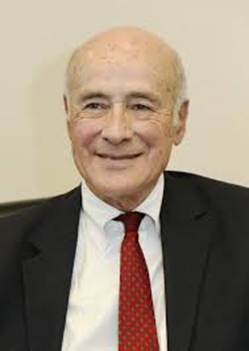
Joseph S. Nye Jr.
Harvard Kennedy School Professor Joseph S. Nye Jr. passed away. He was 88.
Often, as a retired professor, I feel rather frustrated that Ivory Tower research and ideas fall on deaf ears. Some of this research deserves oblivion. But some could truly make a different.
Joseph Nye’s work is an example of the latter. He is the developer of the ‘soft power theory’ and according to the New York Times, an “architect of modern international relations”.
This is how Wikipedia defines soft power:
In politics (and particularly in international politics), soft power is the ability to co-opt rather than coerce (in contrast with hard power). It involves shaping the preferences of others through appeal and attraction. Soft power is non-coercive, using culture, political values, and foreign policies to enact change. In 2012, Joseph Nye of Harvard University explained that with soft power, “the best propaganda is not propaganda”, further explaining that during the Information Age, “credibility is the scarcest resource”.
The VDEM website asserts that today, for the first time in many decades, there are more autocratic regimes in the world than democratic ones. Autocrats believe in hard power – force, threat, coercion. Liberal democratic nations once believed in Nye’s soft power — collaboration, persuasion, dialog. Trump is in the hard power camp. The result is so far rather disastrous.
My own country disastrously, as NYT columnist Tom Friedman painfully explains, is in the hard power camp. So far, the results are terrible.
Joseph Nye’s quiet powerful voice is a strong counter-example to all those who deny that ideas have value or impact. The US did mostly practice soft power, for 80 years, after World War II, stumbling badly in Vietnam, Iraq, and Afghanistan when hard power hawks temporarily prevailed.
If there is any lesson from America’s foreign policy from 1945 to 2025, 80 years, it is the failure of hard power and the supremacy of soft. This is a lesson Israel seems hellbent on learning …at great cost.
The Man Who Saved 2.4 Million Lives
By Shlomo Maital

James Harrison
In the Old Testament, Book of Genesis, God gives instructions to Abraham: “Leave your country, your people and your father’s household and go to the land I will show you. I will make you into a great nation and I will bless you; I will make your name great, and you will be a blessing.”
Jewish people interpret this to be a general commandment for all humanity – to live to be a blessing for others. Many of us do find ways to make others happy, among friends and family and neighbors.
But think of James Harrison, an Australian who recently passed away at age 88. He was a blessing on an unimaginable scale – he saved the lives of 2.4 million babies. I found this in a report on the BBC.
How did he do it? It started when Harrison received a massive blood transfusion at age 14, when he fell ill. He decided then he would pass it on.
Background: Blood types can be Rh positive or Rh negative. Rh stands for Rhesus factor. It indicates whether the Rhesus protein is present on the surface of blood cells (Rh positive) or whether it is not present (Rh negative).
When the blood of a pregnant woman’s fetus is Rh-positive and it gets into the bloodstream of an Rh-negative woman, her body will recognize that the Rh-positive blood is not hers. Her body will try to destroy it by making anti-Rh antibodies. These antibodies can cross the placenta and attack the fetus’s blood cells. Data show that Rh negative occurs in 6% of all women, or one in 16. Blood tests are regularly done for pregnant women, to alert doctors to the problem.
Harrison’s blood happens to be rich in a rare antibody, Anti-D, that is crucial for mothers and their babies. The BBC explains:
“Anti-D jabs protect unborn babies from a deadly blood disorder called haemolytic disease of the foetus and newborn, or HDFN. The condition occurs at pregnancy when the mother’s red blood cells are incompatible with that of their growing baby. The mother’s immune system then sees the baby’s blood cells as a threat and produces antibodies to attack them. This can seriously harm the baby, causing severe anaemia, heart failure, or even death. [Anti-D destroys the offending antibodies].
“Before anti-D interventions were developed in the mid-1960s, one in two babies diagnosed with HDFN died. There are fewer than 200 anti-D donors in Australia, but they help an estimated 45,000 mothers and their babies every year, according to the Australian Red Cross Blood Service, also known as Lifeblood.”
Harris contributed blood plasma every week or 10 days for his entire life, for 70 years. Note: Not his red cells, just the plasma. In a plasma-only donation, the liquid portion of the donor’s blood is separated from the cells. Blood is drawn from one arm and sent through a high-tech machine that collects the plasma. The donor’s red blood cells and platelets are then returned to the donor along with some saline.] The Anti-D antibody was processed from Harris’s plasma.
The infant death problem stemming from the hemolytic condition was noted in print as early as 1609. It took sleuthing by researchers in the UK, Canada and the US to figure out the cause and to find a solution. They too are a blessing, saving millions of precious tiny lives.
Elon Musk and the Trump Administration, strongly supported by Bible-believing Christian groups, are using a chain saw to decimate medical research, of the kind that brings blessings. Like Anti-D.
There will be no forgiveness.
When Oligarchs Rule
By Shlomo Maital
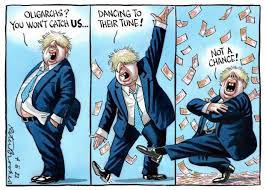
From “X”
Oligarchs? A small cabal of wealthy people who run the country, control its wealth, and dominate its leadership?
Let’s run the numbers.
The US has 813 billionaires. One of them, Elon Musk, has net worth of $359.4 billion. Musk gave Trump an estimated $270 million for his campaign. That is less than one tenth of one per cent of his wealth. It bought him control of the US political system and dominance over Trump. Good deal.
Other US billionaires have shifted rapidly from supporting honesty, truth, and fairness, and equality and inclusion, to the opposite, e.g. Zuckerberg and Bezos.
It has happened before in history. In Russia. After the collapse of the Soviet Union, in 1990/91, the Russian leadership distributed shares to the people, as part of a plan to privatize and revitalize the economy. Oligarchs bought up the shares for pennies, using bank loans – and quickly gained control of Russia’s oil, gas, nickel, steel and other industries. Putin co-opted them, terrorized them – and together, they did a deal – Putin became a dictator, for life, in return for letting the oligarchs retain their wealth – and sharing a big share of it (in secret) with Putin.
India has 200 billionaires. India is said to be the world’s biggest democracy. India does hold elections, free and fair, regularly. But india’s Prime Minister Modi has shown autocratic tendencies, and the amount of abysmal poverty and income and wealth inequality in India is enormous.
China has 400 billionaires. China! The country run by the Chinese Communist Party. As in Russia, the Chinese billionaires are on a tight leash. Alibaba’s founder Jack Ma was reined in by China’s dictator, a chunk of his wealth confiscated, and since then he has almost disappeared. The remaining billionaires are compliant and acquiescent.
How come so many billionaires? The system the US built after WWII, the Bretton Woods Agreement, opened the world to the free flow of money, goods, ideas, people, everything. IT created huge wealth – and enormous abysmal poverty for those unable to participate in the party. This led to a wave of migration – and the rise of far right politics in the West, including, now, in Germany.
The Bible calls for a Jubilee Year – in the 50th year, debts are forgiven, and assets return to their original owners. Restart. We desperately need a Jubilee Year in the world. But, even asking billinaires to pay their fair share of income taxes is today impossible – and Trump is about to gift them with a huge tax cut, ballooning the US deficit that is already alarming. The US already pays more in interest payments on its debt than it spends on defense ($1 trillion!).
You could see this coming. Nothing good can ever come out of extremes of wealth and poverty. It seems that the system has to crash before it can be rebuilt.
Financial markets are already very nervous. I advise carefully weighing how a financial collapse might affect your income and savings – and take steps to protect them.
Great Leaders Are Like Orchestra Conductors
By Shlomo Maital

My wife and I recently enjoyed a Jerusalem Camerata concert, with a British guest conductor named Paul Goodwin. The last piece was Josef Haydn’s Symphony #83 in G minor. It was brilliant. The orchestra played its heart out. The conductor’s leadership was spirited, energetic, and his body language interpreted the music, for his orchestra and for his audience.
It occurred to me that quality leadership in strong leaders resembles conducting an orchestra. For some conductors, who use distracting histrionics, it is all about them. Just like egoistic leaders, who generally fail.
Because – strong leadership is about getting your followers to excel – to do amazing things way beyond what they think they can, what they are generally capable of, what they believe. Great conductors make their orchestra members want to play beautifully, at the top of their games. That was what we saw on Monday evening. An orchestra in top form, because they were motivated to be so by the conductor Paul Goodsin. Even though it was the fifth time they were playing this concert (concerts in Israel are often played six times, in different cities, in order to pay for the guest soloists and conductors). They played it, with excellence, and freshness, as if it was the first time.
Great leaders are like conductors. At the end, with rapt applause, the conductor made sure to focus on the orchestra members, asking groups to stand (concert master, violins, percussion, woodwinds, bass violins….) for applause. It is pretty easy to tell which conductors have the love and respect of their musicians, who play their hearts out for them, and which have their players going through the motions, for this egomaniac jumping around on stage to gain all the attention.
How many world leaders are there, who resemble great orchestra conductors? And, is it my imagination, or are the egomaniac leaders mainly men, and the ‘it’s about you not me’ leaders are mainly women? Not to mention names, but, Trump, Trudeau, Putin, Xi Jin Ping, Kim Jong Un, Viktor Mihály Orbán….Netanyahu….
Global Chaos – Without Precedent. Why?
By Shlomo Maital

All this has happened in just a month:
Nov. 5 Trump-led Republicans win the US Presidency, House and Senate majority. Trump nominees seek to overturn the existing order. Expect chaos.
Nov. 6. BERLIN — Germany’s governing coalition collapsed Wednesday, as Chancellor Olaf Scholz fired his finance minister and announced a confidence vote that is widely expected to fail and to pave the way to early elections in the spring.
Dec 4 (Reuters) – Romanians vote in a presidential election runoff on Sunday that could see Calin Georgescu, a far-right critic of NATO, defeat pro-European centrist Elena Lasconi, an outcome that might isolate Romania in the West and erode its support for Ukraine.
Dec. 5 In an event unprecedented in the last 60 years, the French National Assembly approved a motion of censure against Michel Barnier’s government on Wednesday, which has only been in office for three months. This motion, initiated by the radical left, received crucial support from Marine Le Pen’s National Front party, triggering a major political crisis. French Prime Minister Michel Barnier has resigned. President Macro will try to cobble together a new government, a Mission Impossible given the split between far right and far left in the French Parliament.
Dec. 5. South Korea’s president, Yoon Suk Yeol, on Tuesday declared martial law, blasting the opposition as “anti-state forces” threatening the country’s democracy. The unexpected move from Yoon, marking the first time martial law has been declared in South Korea in more than four decades, alarmed the US and other allies. Six hours later he backed down, lifting the order in the face of united opposition.
Dec. 5 Brussels –Violence returns to the streets of Tbilisi following the official announcement by the ruling Georgian Dream party to stop the process of joining the European Union, leading to thousands of citizens pouring into the capital to protest what they see as the country sliding toward the Russian orbit. While tensions resurfaced after seemingly subsiding in recent weeks, the European Parliament in Strasbourg recognized as illegitimate last month’s elections and called on Georgian authorities to repeat the vote
…Shall I go on?
Is there a short clear explanation for this chaos? There is. Migration leads to backlash among those opposing it and who perceive they are hurt by it. Leading to far-right electoral gains. Autocratic leaders riding a wave of right-wing popularity seek to sow chaos in their neighbors, to overturn democratic forces.
This could have been prevented, had the obscene gap between very rich, rich, and poor within countries and among countries been addressed properly — helping migrants in their home countries, and low-wage workers domestically.
Liberals might say, who knew?
It was handwriting on the wall.
Getting to the Bottom of Things With 7 Why’s
By Shlomo Maital

There is a method for getting to the bottom of sticky problems. It’s called the method of the seven why’s. It is discovered and rediscovered by six-year-olds – many parents don’t have the patience to get beyond the first four!
Ask why? Get an answer. The answer raises questions. Ask why again, digging deeper. Answer. Why? Answer…. Few sticky problems can endure the seventh why? Without revealing an insightful answer.
Why is the world in such a horrendous mess? Seven why’s. Here goes. That was the first.
Because – of globalization.
Why? Because globalization generated massive wealth, 2,781 billionaires, to be precise.
Why did globalization create billionaires? (#3) By freeing the flow of capital, goods and information, it became possible to scale up (blitzscale, it is called) globally.
Why is this a problem? (#4). Because countries competed for capital by slashing taxes, luring billionaires’ money. Ireland: prime example.
Why are low taxes a problem? (#5) The huge wealth created by globalization could have been shared with the billions of people left behind, through the tax system. But—tax cuts and the billionaires’ purchase of political influence stymied it. (cf. Elon Musk’s massive gift to Trump’s PAC).
Why is the billionaires’ support of far-right politicians and their promised tax cuts such a problem – and such a conundrum? (#6) Because those whom this mess hurts most, low-wage working people, are precisely the ones voting for the far-right politicians and their billionaire backers. (cf. Zuckerberg’s pilgrimate to Mara Lago!).
Why do the low-wage working class people vote for those who harm them? (#7) Because the elitist centre-left, Harvard grads, ignored and denigrated them, impoverished them by exporting factories to China; their votes are protests, and the psychic benefit they gain from bashing the elite Ivy grads is what really matters most.
Every step in this seven-step chain of reasoning could be wrong. Any one wrong answer invalidates the whole syllogism.
So – where did I get it wrong?
 TIMnovate