
You are currently browsing the tag archive for the ‘science’ tag.
Scientists Who Endanger Their Lives: The Case of Ebola
By Shlomo Maital
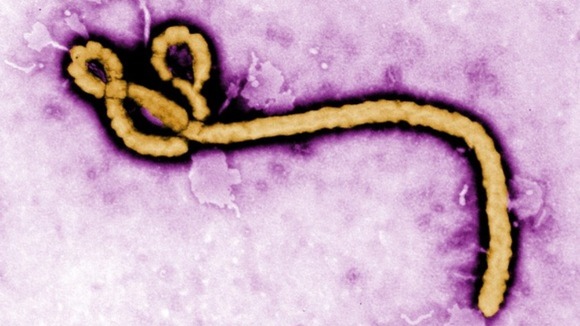
Scientific papers published in Science rarely involve heroism, drama, and life-threatening courage. This one does:
Gire, SK, Goba, A et al. Genomic surveillance elucidates Ebola virus origin and transmission during the 2014 outbreak. Science, 2014, online.
Here is the story, as described in a dry press release by Harvard:
“ n response to an ongoing, unprecedented outbreak of Ebola virus disease (EVD) in West Africa, a team of researchers from the Broad Institute and Harvard University, (MIT-Harvard), in collaboration with the Sierra Leone Ministry of Health and Sanitation and researchers across institutions and continents, has rapidly sequenced and analyzed more than 99 Ebola virus genomes. Their findings could have important implications for rapid field diagnostic tests. The team reports its results online in the journal Science.”
The research was led by Broad Institute researcher Pardis Sabeti, Augustine Goba, Director of the Lassa Laboratory at the Kenema Government Hospital in Sierra Leone, and Stephen Gire, first author, a research scientist in the Sabeti lab at the Broad Institute and Harvard. The team shipped samples back to Boston, and then 20 people worked around the clock. In one week: they decoded gene sequences from 99 Ebola samples! This is truly amazing.
What the team did was to act rapidly to collect samples of Ebola from a Sierra Leone hospital last April, when the outbreak began, and then gathered additional samples as the virus spread and mutated. They did this under life-threatening conditions, especially those on the ground on-site, because at the time there was insufficient protective gear for hospital workers, and some indeed died.
They gathered 99 samples of Ebola in all. Then they decoded the genome of each sample. This was unprecedented in its speed. What they found was important. The Ebola virus has only 7 genes (!) compared to the human genome, comprising more than 20,000 genes. Like all viruses, Ebola penetrates the human cell and commandeers its DNA mechanism, to make more viruses rather than human DNA. Ebola is fatal in 52 per cent of all cases.
The Broad Institute researchers found that Ebola initially spread from an animal to a human. BUT — from then on, it ONLY spread among humans. The initial call to avoid mangos and meat was uncalled for. And like all viruses, they found that the virus evolved and mutated very quickly in humans. So, we are in a race, between ‘brilliant’ humans with huge brains, and ‘stupid’ viruses with only 7 genes ..and at the moment, the viruses seem to be winning.
I salute the courageous scientists and their assistants on-site, for risking their lives to help save the lives of others. Sometimes, not often, science is life-threatening, and quickly, life-saving.
In this space, I’ve been fiercely critical of Big Pharma, which rips us off by charging scandalously high prices for drugs with minimal impact. But for once, Big Pharma is doing the right thing. GSK Glaxo Smith Kline is helping the U.S. National Institutes of Health to develop an Ebola vaccine. Only GSK’s huge productive capacity can do this quickly enough to combat the spread of Ebola.
By Shlomo Maital
Scientific papers published in Science rarely involve heroism, drama, and life-threatening courage. This one does:
Gire, SK, Goba, A et al. Genomic surveillance elucidates Ebola virus origin and transmission during the 2014 outbreak. Science, 2014, online.
Here is the story, as described in a dry press release by Harvard:
“ n response to an ongoing, unprecedented outbreak of Ebola virus disease (EVD) in West Africa, a team of researchers from the Broad Institute and Harvard University, (MIT-Harvard), in collaboration with the Sierra Leone Ministry of Health and Sanitation and researchers across institutions and continents, has rapidly sequenced and analyzed more than 99 Ebola virus genomes. Their findings could have important implications for rapid field diagnostic tests. The team reports its results online in the journal Science.”
The research was led by Broad Institute researcher Pardis Sabeti, Augustine Goba, Director of the Lassa Laboratory at the Kenema Government Hospital in Sierra Leone, and Stephen Gire, first author, a research scientist in the Sabeti lab at the Broad Institute and Harvard. The team shipped samples back to Boston, and then 20 people worked around the clock. In one week: they decoded gene sequences from 99 Ebola samples! This is truly amazing.
What the team did was to act rapidly to collect samples of Ebola from a Sierra Leone hospital last April, when the outbreak began, and then gathered additional samples as the virus spread and mutated. They did this under life-threatening conditions, especially those on the ground on-site, because at the time there was insufficient protective gear for hospital workers, and some indeed died.
They gathered 99 samples of Ebola in all. Then they decoded the genome of each sample. This was unprecedented in its speed. What they found was important. The Ebola virus has only 7 genes (!) compared to the human genome, comprising more than 20,000 genes. Like all viruses, Ebola penetrates the human cell and commandeers its DNA mechanism, to make more viruses rather than human DNA. Ebola is fatal in 52 per cent of all cases.
The Broad Institute researchers found that Ebola initially spread from an animal to a human. BUT — from then on, it ONLY spread among humans. The initial call to avoid mangos and meat was uncalled for. And like all viruses, they found that the virus evolved and mutated very quickly in humans. So, we are in a race, between ‘brilliant’ humans with huge brains, and ‘stupid’ viruses with only 7 genes ..and at the moment, the viruses seem to be winning.
I salute the courageous scientists and their assistants on-site, for risking their lives to help save the lives of others. Sometimes, not often, science is life-threatening, and quickly, life-saving.
In this space, I’ve been fiercely critical of Big Pharma, which rips us off by charging scandalously high prices for drugs with minimal impact. But for once, Big Pharma is doing the right thing. GSK Glaxo Smith Kline is helping the U.S. National Institutes of Health to develop an Ebola vaccine. Only GSK’s huge productive capacity can do this quickly enough to combat the spread of Ebola.
Can We Believe Scientific Results?
By Shlomo Maital

The Oct. 19 issue of The Economist has “How Science Goes Wrong” on its cover. It contains a worrisome article that leads off with a quote from Nobel Economics Laureate Daniel Kahneman: “I see a train wreck coming”. The article deals with the very foundation of credible scientific research: The ability to replicate (repeat) scientific experiments, to verify that the results are true. It turns out, most scientific publications cannot be replicated. The Economist reports:
An American drug company Amgen tried to replicate 53 studies that they considered landmarks in the basic science of cancer. They were able to replicate the original results in just six.
What is the problem? Why can results be reproduced?
Here is a rather difficult explanation, by The Economist, based on work by Stanford statistician John Ioannidis, an epidemiologist. Suppose 1 in 10 hypotheses are true. Consider tests of 1,000 hypotheses, of which 100 are true. These tests have a 5% false positive rate (5 times in 100, a test says a hypothesis is true when it is false). So of 900 false hypotheses, 5% x 900 = 45 are proved true.
Most tests have a statistical ‘power’ of 0.8, meaning 8 of 10 true hypotheses are proven true. So only 80 of the 100 true hypotheses are proven true. This means there are 20 false negatives (true hypotheses proven false).
Summary: 80 true hypotheses are proven true; 45 false hypotheses are also proven true. So 45/120 false hypotheses are said to be true, fully one third.
Ironically: the negative results are far more reliable. But journals hate to publish negative results (i.e. no, broccoli is NOT great for your prostate).
At a festive dinner here in Paris for Technion I sat next to a researcher who runs a medical research lab with a one billion euro budget. He told me of rising pressure to attain results, and collapsing budgets. There is huge pressure on scientists to publish results, under the threat of grant cancellation. One of this year’s Nobel Chemistry Laureates said he got no results at all for five years, and if he were repeating this work today, he would have lost his NSF grant long ago.
Many journalists report scientific research, especially related to food, and many of us take it seriously. We drink more or less coffee, eat more or less broccoli, based on it. Perhaps we should stop and just eat and drink what we like. Why forego coffee for twenty years just to learn the original research was erroneous?

 TIMnovate