
You are currently browsing the tag archive for the ‘Trump’ tag.
Rare Earths: How America Dropped the Ball
By Shlomo Maital

This is about how the United States (i.e. Trump, but also predecessors) badly dropped the ball on a crucial component of hi-tech manufacturing – especially, crucial powerful magnets, that require rare earths.
But what are rare earths? Note: They are not rare. Just hard to process. This is from Wikipedia:
The rare-earth elements (REE), also called the rare-earth metals or rare earths, are a set of 17 nearly indistinguishable lustrous silvery-white soft heavy metals. Compounds containing rare earths have diverse applications in electrical and electronic components, lasers, glass, magnetic materials, and industrial processes. The term “rare-earth” is a misnomer because they are not actually scarce, but historically it took a long time to isolate these elements.
This is from the New York Times’ The Daily podcast. It is an interview with Keith Bradsher, who has covered the subject for many years. This blog is 1,690 words long, three times longer than usual.
Background
Rare earths are needed to make powerful magnets. These magnets, it turns out, are ubiquitous in nearly every electronic product. This is a story of how free-market economies generate vast wealth – but driven solely by short-term profit margins, fail to strategize long-run needs, until it is too late.
In the ongoing trade war between the US and China, the biggest sticking point is a handful of metals that are extremely rare, essential to the US, and almost entirely under the control of China. The problem is, China has now cut off America’s access to those metals, threatening US industry and its military.
“…the most important and fastest growing uses are for very powerful magnets. You can make a rare earth magnet that is 15 times as strong as an old-fashioned steel magnet. Take a car, for example. If you went back quite a few years, you had to move the car seat back and forth manually. These days, a single luxury car seat may have 12 separate motors to do all kinds of little adjustments to that seat — your thigh adjustment, your lower back adjustment, the tilt of the back of the seat. All these things these days have little electric motors, and each of those has a rare earth magnet.”
“…there are seven rare earth elements that are considerably less common. China completely dominates the world’s supply of them. It mines most of them and processes almost a hundred percent of them. Those seven are dysprosium, gadolinium, lutetium, samarium, scandium, ytterbium, and yttrium.” Samarium is crucial for military hardware.
Root Problem
“What’s particularly striking is that it was the United States and a little bit Japan that invented these amazing magnet technologies using rare earths. The US HAD a rare earth mine. But in 1998, that mine was forced to close. It stopped production. It turned out that it had a pipeline that leaked traces of heavy metals and a faint radioactive residue in a desert area, including where there were a few rare tortoises. And the cost of the cleanup and of improving the environmental compliance was more than the owners of the mine could afford, so the mine shut down.
“And meanwhile, China had been ramping up its own rare earth production through the 1980s, through the 1990s, doing it very cheaply without a lot of environmental compliance at all. And many big businesses were welcoming China’s decision to join the World Trade Organization in 2001. And so the feeling was that this was the beginning of a closer economic integration with China.And it’s not just limited to cars. For example, the seventh of these rare earth elements, samarium, has lots of military applications, because it can stay strongly magnetic even at temperatures that will melt lead. And as a result, samarium magnets, you find 50 pounds of them in an F-35 stealth jet. You find them in missiles. You find them in drones. You find them in smart bombs. Really, these rare earths now are in critical both to the economy and to national security.
“This was the heyday of free-trade orthodoxy. I mean, this was the moment for optimism around this. And I’d imagine that the US closing its only mine for rare earths, ceding the field to China, makes for a pretty big business opportunity over there for businesses that want to get into this.
“A lot of people in China saw a chance to make money and set up their own mines and processing facilities, both legal businesses and also organized crime.
“These rare earths are not that hard to mine. It doesn’t take lots of big, sophisticated equipment. And they were being mined, in the case of the best ore deposits of all, in a poor province in South Central China with a reputation for corruption. Let me tell you how they mine them. You get a guy with a dirt bike, he carries them. This is where the dirt bikes come in. You get a guy with a dirt bike, and he drives up the side of a pine-covered red clay hill, digs a small hole in the dirt, dumps in a sack of cream-colored powder. It’s ammonium sulfate. In less concentrated versions, it’s actually a fertilizer. And then he dumps a bunch of water in it. And as it percolates down through the inside of the hill, it dissolves a lot of the rare earths with it. And it begins coming out the bottom of the hill, just because water eventually comes out somewhere. And that causes the rare earths to settle out as faintly pink crystals on the bottom of the clay pit. So then you dump out all the remaining acid and other liquid and contaminants into the creek, let the faintly pink crystals dry. Then from there, after the different rare earths are separated from each other, they’re taken to the magnet factories in Guangzhou and turned into these extraordinarily powerful magnets.
“What’s remarkable is that companies like Boeing, Lockheed Martin, General Motors, Toyota, Volkswagen, everybody depended on these very dubious rare earth value chains. But nobody was clear on where their rare earths were coming from, how much was from legal mines, how much was from illegal mines. At the same time, demand for these rare earths was exploding, as companies found more and more uses for them. So by 2004, China had acquired an almost complete grip on the entire supply chain for rare earths and rare earth magnets. But then in 2010, China shocked the world.
“In the East China Sea are at the heart of an escalating dispute between China and Japan. China suddenly imposed a total embargo on any shipments of rare earths to Japan, which at the time, really played the central role in making the magnets and many other technologies. But this incident, which really shook Japan and to some extent the US, resulted in both countries taking actions on rare earths, although what Japan did would prove much more effective than the American response.
“The Japanese government, in cooperation with one of the big trading companies of Japan, began providing the financing for a big mine to be dug in Australia and for mineral processing then to be done in Malaysia. So those moves reduced considerably Japan’s dependence on China. Interesting. So Japan decided to try to become self-sufficient because of all of this.
“What did the US do?”
“China released a flood of additional rare earths into world markets. And that flood of rare earths pushed the prices way down. It wasn’t possible for the rare-earth US Mountain Pass Mine to earn enough money selling rare earths at these low prices to pay back its debts. And so the mine ended up closing in 2015, and went bankrupt. The Japanese companies were willing to pay a little more to get production that they knew wouldn’t be interrupted from Australia. And the Japanese corporate and government alliance was willing to keep lending money to make sure that the Australians didn’t go out of business. What we’re talking about here is industrial policy. Japan showed a willingness to prop up an industry that may not be profitable, but is seen as critical to national interests. The United States tried to do the same. But after a few years, as sometimes happens, people began to lose interest. There wasn’t the same enthusiasm for maintaining a separate supply chain from China. So the US sort of lost track of this issue. And then when China suddenly halted supplies in April 4 this year, that failure to keep track of it came back to haunt the United States.
“Here we are today facing another situation in which China is restricting the export of rare earths, putting the US and a lot of countries in a really difficult position. So what does the US do now? What are the steps the administration has taken?
“It’s likely we’re going to see China resuming commercial supplies of rare earths to the West. The difficulty, however, is that China may not allow enough rare earths to be exported for people to build stockpiles, so that they know the next time China cuts off supplies, they won’t run out immediately. So we’ll likely see continued limits on the volumes, even for commercial.
“And then for national security uses, for military uses, it may be extremely difficult to persuade China to resume shipments of samarium, which are needed for all of these fighter jets, missiles and so forth. And are needed not just by the United States, but for weapons deliveries to places like Ukraine or Israel or Taiwan.
“One way you could look at this is that Trump kind of did the worst thing possible for the American manufacturers that he says he’s trying to help, which is that he essentially provoked China to hit them right at their Achilles heel where they’re most vulnerable, which is their reliance on China for these extremely rare and important metals. .”
- – – – – – – – – –
The US dropped the ball. Expect many more fumbles in future, as a shoot-from-the-hip President and a performance-art Cabinet lead America into more and more hot water.
Suppose your child needed regular supplies of a life-saving medicine. Would you hand that supply over, to a bitter enemy and rival who has sworn to take revenge on you, for past wrongs?
The US did it, under the President whose mantra is ‘common sense’.
How Big Bucks Destroy Democracy
By Shlomo Maital
In democracy, one person, one vote. That’s fair.
But in one democracy, the US, one person, with $277 million, buys massive influence and control over everyone, dismantling worthy government projects with a chain saw.
There ought to be a law, limiting big bucks influence like this. Once there was. But it was changed in 2010, creating and enabling super PAC’s. In the 2024 election cycle, there were 2,458 super PACs that raised $4,290,768,955 and spent $2,727,234,077. Over $4.3 billion. Imagine what could be done, for healthcare, education, poverty, food stamps, … with that money.
“Independent expenditure-only political action committees, better known as super PACs, are a type of political action committee (PAC). …Unlike traditional PACs, super PACs are legally allowed to fundraise unlimited amounts of money from individuals or organizations for the purpose of campaign advertising.” The law was further changed, enabling a single super PAC to actively fund a massive get-out-the-vote pro-Trump campaign in swing states.” (Note: Trump won all seven).
According to Wikipedia: “Because super PACs were able to coordinate with campaigns on canvassing for the first time in 2024, Donald Trump’s campaign relied on Elon Musk’s America PAC, a super PAC, to lead his get-out-the-vote efforts in swing states. By the end of Trump’s presidential campaign, Musk had spent $277 million to elect Trump and allied Republicans, making the largest individual political donor of the 2024 election and the largest individual political donor since at least 2010 outside of candidates funding their own campaigns.”
Now, $277 million is a lot of money. But for Musk? It is one half of one per cent of his $424.7 billion personal wealth. It is not a tax-deductible expense. But what did Musk buy for that $277 million? Possibly, likely — favorable government contracts for SpaceX, and perhaps Tesla and xAI (Grok), and, for sure, the chain saw he wields in running DOGE Department of Government Efficiency.
Musk was given unparalleled power. He got it, by bucks, not by ballots.
It is claimed that many members of Trump’s billionaires Cabinet bought their way into their jobs with massive campaign contributions. NBC noted in December: “Some of the biggest pro-Trump donors of 2024 are lining up for administration jobs “.
(Spoiler: Yup. They got them). Those who didn’t cough up big bucks starred on cable TV (Fox News).
Experts note that “while political donations are a legitimate way of participating in the political life of a country and a necessary means to fund electoral campaigns and political parties, restrictions have been imposed in multiple countries. Most OECD countries limit the amounts that natural and legal persons can donate to candidates and parties. Bans on donations from certain types of donors, such as foreign individuals and entities, public entities and corporations have also been adopted in numerous countries
If you have enough money, you can help elect a President, who appoints Supreme Court Judges, who dismantle restrictions in campaign finance, who then enable people with money to buy influence – and corrupt democracy. We could have seen this coming in the US, when they scrapped the law about campaign contributions.
When will democracy return to the US? When they restore the law that nearly every self-respecting democracy has limiting big bucks’ buying power. But it’s one of those things that seems easy to corrupt, very very hard to disinfect.
Joseph Nye: Father of Soft Power
By Shlomo Maital
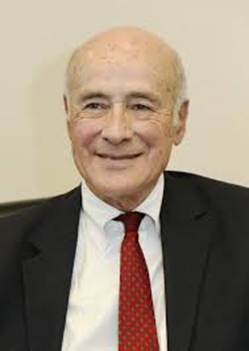
Joseph S. Nye Jr.
Harvard Kennedy School Professor Joseph S. Nye Jr. passed away. He was 88.
Often, as a retired professor, I feel rather frustrated that Ivory Tower research and ideas fall on deaf ears. Some of this research deserves oblivion. But some could truly make a different.
Joseph Nye’s work is an example of the latter. He is the developer of the ‘soft power theory’ and according to the New York Times, an “architect of modern international relations”.
This is how Wikipedia defines soft power:
In politics (and particularly in international politics), soft power is the ability to co-opt rather than coerce (in contrast with hard power). It involves shaping the preferences of others through appeal and attraction. Soft power is non-coercive, using culture, political values, and foreign policies to enact change. In 2012, Joseph Nye of Harvard University explained that with soft power, “the best propaganda is not propaganda”, further explaining that during the Information Age, “credibility is the scarcest resource”.
The VDEM website asserts that today, for the first time in many decades, there are more autocratic regimes in the world than democratic ones. Autocrats believe in hard power – force, threat, coercion. Liberal democratic nations once believed in Nye’s soft power — collaboration, persuasion, dialog. Trump is in the hard power camp. The result is so far rather disastrous.
My own country disastrously, as NYT columnist Tom Friedman painfully explains, is in the hard power camp. So far, the results are terrible.
Joseph Nye’s quiet powerful voice is a strong counter-example to all those who deny that ideas have value or impact. The US did mostly practice soft power, for 80 years, after World War II, stumbling badly in Vietnam, Iraq, and Afghanistan when hard power hawks temporarily prevailed.
If there is any lesson from America’s foreign policy from 1945 to 2025, 80 years, it is the failure of hard power and the supremacy of soft. This is a lesson Israel seems hellbent on learning …at great cost.
Stuck: A Root Cause Analysis
By Shlomo Maital
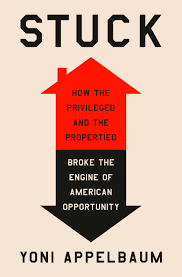
Stuck: How the Privileged and the Propertied Broke the Engine of American Opportunity. by Yoni Appelbaum. Feb. 2025.
In Root Cause Analysis (RCA), you keep asking questions, until you get to the bottom of the problem.
How did Trump gain a (small) majority of voters to support his crackpot ideas – now weaking havoc on America and the world?
Yoni Applebaum is deputy executive editor of The Atlantic, a leading magazine. His new book offers a root cause explanation.
The problem is costly housing, which limited mobility, which was the traditional way low-income Americans made more money.
Here is how it worked.
Under the Democrats, America off-shored its manufacturing to Southeast Asia, mainly China. This hurt the industrial heartland and manufacturing workers, in the Midwest, the South, and elsewhere.
In the past, a US worker thrown out of work picked up, packed up, and moved to where there were jobs.
But because housing became super-expensive, and hard to find (try to find a rental in Boston!), moving for this group was not an option, because while their wages would rise, they would be more than eaten up by hugely expensive housing.
Not so for the elites. A lawyer could leave Alabama, and earn fortunes in New York City, more than enough to cover the housing costs.
Hence, Americans, who once were highly mobile, are far less so today. They are stuck – Stuck in backwater places like Flint, Michigan, once a manufacturing hub, now a slum with water full of lead.
The elites (who vote Democrat) have escaped long ago. The working class are stuck and left behind.
Hello, Dems? Are you listening? Did you see the problem of housing? Did you do anything? NO?
In November 2024, you paid the piper.
America! Open the Windows!
By Shlomo Maital

One of the most annoying things about MAGA Make America Great Again is this:
The basic premise of MAGA is, America is NOT great, at present. Understatement. Poor healthcare. Unaffordable housing. Poor schools. Wealth and income inequality. Racism. Antisemitism. Polarized paralyzed politics… just for a start.
So, how to make America great again? Place a Nazi sympathizer in charge of destroying public services. Smash alliances abroad, suck up to dictators, appoint incompetent loyalists to key positions, engage in vengeance, ….
There is another way. It is found in this new book, Another World Is Possible: Lessons for America from Around the Globe. – by Natasha Hakimi Zapata. 2025
The simple, obvious, key point – overlooked by the current Administration. Other countries, far less wealthy, have solutions to America’s problems. Right under our noses. But American exceptionalism means, that is not possible. Because .. well, just because.
Singapore (NOT a leftist socialist liberal country) has extraordinary affordable public housing. I’ve seen it first hand. Check it out, America.
Canada has national health insurance. I was born in Saskatchewan, the first province to implement it, in the 1950’s. Check it out, America. Canadians all have health insurance. So do the British – and most civilized European countries.
Estonia has income tax filing online. Fast, simple, easy. Check it out, America.
Most German public universities (and they are mostly outstanding) charge no tuition. America? Michigan has great state universities – but if you don’t live in the state, you pay $60,000 – $65,000 tuition yearly. Not including room and board.
Schools? America is not among the top scoring countries according to the PISA benchmark. Not even close. Way behind China.
Housing, healthcare, education, public services, ….things that drive our quality of life. America trails, despite high GDP per capita.
Why? Closed windows. Other countries have found wise, pragmatic solutions to key problems. The US refuses to learn from them. Costa Rica? Denmark? Learn from them? Get serious, American politicians spout.
In years of teaching managers, I taught them how to define their key operations (marketing, quality assurance, production, innovation) and benchmark which other companies did these things best, how they did them, and – learn from them, adapt and adopt. Pretty simple idea. Best practice benchmarking. Works for nations too. Yes, even for America.
Learn from others.
The most blatant stupidity is Trump’s desire to annex Canada. Why in the world would any Canadian choose to be part of a nation that is hopelessly divided politically and systematically destroying its public services? A country that blindly asserts its superiority, against all evidence, while refusing to learn from others wiser and smarter?
Natasha Hakimi Zapata’s book is MUST reading for MUSK. But don’t hold your breath.
Trudeau Socks It To Trump
By Shlomo Maital

I just watched Canadian Prime Minister Justin Trudeau sock it to Trump, a week before he leaves office. “Very smart”, Trudeau described Trump – but “ very dumb” to slap 25% tariffs on Canadian goods. Dumb, because the US and Canadian economies are highly integrated, through a trade agreement negotiated by Trump himself, in his first term. This is especially true of the automobile industry; a US car exec said this 25% US tariff on Canadian imports will “blow a big hole” in the US industry.
Trudeau is retaliating with 25% tariffs on a wide range of US imports.
Let’s face it. The US has a problem. It has imported about $50 b. more in goods per month than it exported, up to 2020. Since then, that monthly deficit has doubled, to about $100 b. a month. The US now has a $1.2 annual trillion trade deficit. Only the US can live so far beyond its means – because it pays in dollars, the international money, and it can create dollars (through credit) and borrow dollars by selling bonds to foreigners, who accumulate dollars through trade surpluses (e.g. China).
The US exports $349 b. yearly to the US, and iimports $412.7 b. That is a deficit of about $63 b., or just over 5% of America’s overall deficit. Mexico exports $505.3 b. to the US, and imports $334 b. That is a US trade deficit of $171 b., or just under 15% of America’s overall trade deficit.
China and the European Union are the big ones. China’s trade surplus with the US is $295.4 b., or 25% of the total US deficit, and the EU has a $235 b. trade surplus with the US, or roughly 20%.
What do these numbers mean? The US has leveraged the fact that the dollar is the world’s currency, to live beyond its means, buy much more than it sells abroad, and borrows to pay for it. America spends more in interest on its national debt than it spends on defense — $1 trillion!
Trump has a quick fix. Tariffs. Why won’t this work? Why is it dumb? He tariffs Canada at 25%. Canada responds in the same way. So nothing changes – US exports and Canadian exports each get 25% more costly, meaning their relative prices remain the same. So all that happens, is that US exports to Canada and Canadian exports to the US both decline, because they are more expensive – but no advantage accrues to either country. Trade declines. Both countries lose. Prices go up in each country.
There is a way to deal with the fact that the US has lived far beyond its means for years. Invest in education. In infrastructure. In productivity. In modernizing factories. In becoming more efficient and competitive. That takes government investment and smart policies, and a long run policy. Biden began, with an infrastructure bill that brought semiconductor factories to the US (Trump took credit on TV for bringing Taiwan’s powerhouse TSMC to the US, but that was done under Biden).
Tonight, in his speech to Congress, Trump will blame everybody else but the US for its trade deficit. But it is the US itself that is responsible. It has fallen far behind, by building a consumption society (70% of GDP), while China built an investment economy (nearly a third of GDP).
China is an ant. America is the grasshopper. It’s pretty simple. And pretty obvious. But – expect half of Americans to buy Trump’s snake oil pitch tonight and applaud him.
It’s a shame.
When Oligarchs Rule
By Shlomo Maital
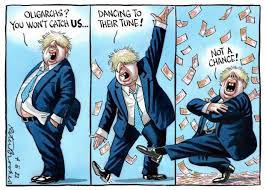
From “X”
Oligarchs? A small cabal of wealthy people who run the country, control its wealth, and dominate its leadership?
Let’s run the numbers.
The US has 813 billionaires. One of them, Elon Musk, has net worth of $359.4 billion. Musk gave Trump an estimated $270 million for his campaign. That is less than one tenth of one per cent of his wealth. It bought him control of the US political system and dominance over Trump. Good deal.
Other US billionaires have shifted rapidly from supporting honesty, truth, and fairness, and equality and inclusion, to the opposite, e.g. Zuckerberg and Bezos.
It has happened before in history. In Russia. After the collapse of the Soviet Union, in 1990/91, the Russian leadership distributed shares to the people, as part of a plan to privatize and revitalize the economy. Oligarchs bought up the shares for pennies, using bank loans – and quickly gained control of Russia’s oil, gas, nickel, steel and other industries. Putin co-opted them, terrorized them – and together, they did a deal – Putin became a dictator, for life, in return for letting the oligarchs retain their wealth – and sharing a big share of it (in secret) with Putin.
India has 200 billionaires. India is said to be the world’s biggest democracy. India does hold elections, free and fair, regularly. But india’s Prime Minister Modi has shown autocratic tendencies, and the amount of abysmal poverty and income and wealth inequality in India is enormous.
China has 400 billionaires. China! The country run by the Chinese Communist Party. As in Russia, the Chinese billionaires are on a tight leash. Alibaba’s founder Jack Ma was reined in by China’s dictator, a chunk of his wealth confiscated, and since then he has almost disappeared. The remaining billionaires are compliant and acquiescent.
How come so many billionaires? The system the US built after WWII, the Bretton Woods Agreement, opened the world to the free flow of money, goods, ideas, people, everything. IT created huge wealth – and enormous abysmal poverty for those unable to participate in the party. This led to a wave of migration – and the rise of far right politics in the West, including, now, in Germany.
The Bible calls for a Jubilee Year – in the 50th year, debts are forgiven, and assets return to their original owners. Restart. We desperately need a Jubilee Year in the world. But, even asking billinaires to pay their fair share of income taxes is today impossible – and Trump is about to gift them with a huge tax cut, ballooning the US deficit that is already alarming. The US already pays more in interest payments on its debt than it spends on defense ($1 trillion!).
You could see this coming. Nothing good can ever come out of extremes of wealth and poverty. It seems that the system has to crash before it can be rebuilt.
Financial markets are already very nervous. I advise carefully weighing how a financial collapse might affect your income and savings – and take steps to protect them.
Trumponomics
By Shlomo Maital

(from The Economist)
“Trumponomics” is the economic theory that drives President Donald Trump’s planned economic policies. It includes low interest rates; tariffs on China, Mexico and Canada, and anyone else that sells more to the US than it buys; expelling immigrant workers; slashing taxes; removing renewable energy subsidies.
What can we expect? Here is Olivier Blanchard’s ‘take’. He is an MIT economics professor, former chief economist of the IMF.
“….perhaps the most crucial issue is what the Fed will do. If it sticks to its mandate, it will stand in the way of some of Trump’s hopes from the use of tariffs, deportation, and tax cuts. It will have to limit economic overheating, increase rates, and cause the dollar to appreciate. The big question is thus whether Trump can force the Fed to abandon its mandate and maintain low rates in the face of higher inflation.”
To explain: The US already has a huge federal budget deficit, some 7% of GDP. US public debt exceeds its annual GDP. Trumponomics tax cuts and gifts to the wealthy will further hamper revenues and increase the deficit. Tariffs will make goods and services more expensive for consumers (no, people, it is not the Chinese or Canadians who will pay the tariffs, it is us). The result will be more inflation, rather than, as promised, less.
Enter the Fed: Higher inflation brings tighter interest rates. Trumponomics is in love with low interest rates. Result: A cataclysmic conflict with Fed Chair Jerome Powell, who remains in his post until 2026. At that time, Trump may try to appoint a non-mainstream new Fed Chair, who will maintain low rates in the face of inflation – leading to more inflation.
The US has been successful since 1776, mostly, because its Judiciary (Supreme Court) and its money people (Federal Reserve) have been constitutionally isolated from political influence, in general. The judiciary now has a Trump majority. When the Fed too falls into Trumponomics – yikes. Risk premiums on US bonds rise, as capital markets start to wonder whether the US may, like Nicaragua or South Africa, fall into fiscal decay.
Here is Blanchard’s conclusion: “Fed Chair Jay Powell has made clear he remains committed to the mandate and to staying at the Fed as chair until his term as chair expires in May 2026 (his term as board member ends in 2028). Current Fed board members are unlikely to follow a different line. But one board position opens in January 2026, and Trump could seek to name a more docile board member to the seat. If this is the case, and the board goes along (which is unlikely), the result will be low rates, overheating, and higher inflation. Given the unpopularity of high inflation, not to mention the reaction of financial markets to the loss of Fed independence, this prospect may be enough to make Trump hesitate to pursue this option.”
Stay tuned! We are headed for interesting times.
Getting to the Bottom of Things With 7 Why’s
By Shlomo Maital

There is a method for getting to the bottom of sticky problems. It’s called the method of the seven why’s. It is discovered and rediscovered by six-year-olds – many parents don’t have the patience to get beyond the first four!
Ask why? Get an answer. The answer raises questions. Ask why again, digging deeper. Answer. Why? Answer…. Few sticky problems can endure the seventh why? Without revealing an insightful answer.
Why is the world in such a horrendous mess? Seven why’s. Here goes. That was the first.
Because – of globalization.
Why? Because globalization generated massive wealth, 2,781 billionaires, to be precise.
Why did globalization create billionaires? (#3) By freeing the flow of capital, goods and information, it became possible to scale up (blitzscale, it is called) globally.
Why is this a problem? (#4). Because countries competed for capital by slashing taxes, luring billionaires’ money. Ireland: prime example.
Why are low taxes a problem? (#5) The huge wealth created by globalization could have been shared with the billions of people left behind, through the tax system. But—tax cuts and the billionaires’ purchase of political influence stymied it. (cf. Elon Musk’s massive gift to Trump’s PAC).
Why is the billionaires’ support of far-right politicians and their promised tax cuts such a problem – and such a conundrum? (#6) Because those whom this mess hurts most, low-wage working people, are precisely the ones voting for the far-right politicians and their billionaire backers. (cf. Zuckerberg’s pilgrimate to Mara Lago!).
Why do the low-wage working class people vote for those who harm them? (#7) Because the elitist centre-left, Harvard grads, ignored and denigrated them, impoverished them by exporting factories to China; their votes are protests, and the psychic benefit they gain from bashing the elite Ivy grads is what really matters most.
Every step in this seven-step chain of reasoning could be wrong. Any one wrong answer invalidates the whole syllogism.
So – where did I get it wrong?
On the Nov. 5 Election
By Shlomo Maital

David French is a near life-long Republican, person of faith, Christian, who writes in today’s on-line New York Times about his “Nine Years of Being Never Trump”.
He makes a simple point. I find it worth repeating. As an Israeli, I am reluctant to write about US politics and elections. But French’s insight applies to my own country – and virtually every democratic country.
Basically: When you vote, what is the question?
Is it, hmmm, whom do I hate? Trump hates the Democrats. They are the enemy within. Maybe if he is elected he will sic the US military on them, arrest them all. If you hate Democrats, you must love Republicans. All of them. Including the deranged. And vote for them.
But maybe the question is, whom do I love? Do you love your country, and the people who live in it? Do you love the people of the world, including the poor, the ill, the downtrodden, the oppressed – and are willing to share you incredible good fortune with them? If so, vote for those who share your value.
I belong to a Conservative congregation here in Israel. Our name is drawn from the Bible precept, love thy neighbor as thyself. We try to practice it. It works pretty well. But, I admit, in my country, it is having a rather hard time at present. Hard to love those who want to kill you, even if they are neighbors.
Whom do you hate? Or – whom do you love? I think this is a simple guide to how to vote. Love trumps hate. Always. On Nov. 5, too.

 TIMnovate