
You are currently browsing the tag archive for the ‘writing’ tag.
We Think Too Fast
By Shlomo Maital
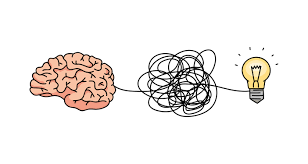
We think too slow. This is a conclusion of a lovely article in the New York Times by Carl Zimmer. *
Streaming a high-definition video takes about 25 million bps (a ‘bps’ is bit per second, and ‘bib’ is a unit of information, say, zero or one). The typical download rate, engineers have found, in a US household is 262 million bps.
OK, that’s the Internet. Now, how fast is the ‘download’ rate in the human brain? How fast does information flow from our brain to our bodies?
Caltech neuroscientist Markus Meister has published a study in Neuron, according to Zimmer, and speaks about the endless hyperbole about how incredibly complex and powerful the human brain.
Actually, it’s pretty slow, Meister says. He and colleagues estimate the flow of information ‘downloaded’ from the brain to the body is…. “just 10 bps”. Ten bits per second. The title of their article? “The unbearable slowness of being”. This is a clever play on the 1984 novel by Czech writer Milan Kundera, The unbearable lightness of being. At 10 bps, you couldn’t begin to download even a silent black and white movie from 1920.
Just 10 bps. Not even enough to download a high definition vide. Huh!
Let me make an opposing argument. Even 10 bps is far too fast. Have you ever said things you wish you hadn’t? Yes? Many times? Reacted too fast?
Radio stations have a kill button. What you hear is delayed by a second or two, before it is aired. This is just in case someone calling in uses a profanity, not allowed by FCC rules, and the host hits the kill button to avoid broadcasting it.
I find I need a delay/kill button. Think something. Think if it really needs to be said. Is it hurtful? False? Emotionally disturbing? Hit the delay before you send it out into the air. I wish I had done this more often – before I invented my own ‘kill button’ — think it, listen to it as if you are saying it, and only then, actually say it.
No, scientists, the brain is not too slow. If anything, it may be too fast. Slow it down a bit. Believe me – it will keep you out of hot water, especially with your partner or spouse.
- Carl Zimmer. “The speed of human thought lags far behind your internet connection, study finds”. New York Times, December 26, 2024.
When Stuff Happens: Try Plan B
By Shlomo Maital

Stuff happens. You miss your flight. Or it is cancelled. You have a doctor’s appointment and can’t get a taxi to save your life. You prepare a great supper – and burn the rice.
Stuff happens. These days, a whole lot of stuff happens. Some of it is small stuff, personal or family things, some of it is big stuff, national and global politics. Not much can be done about the latter – but you can use Plan B on the small stuff.
Lacking a taxi I used Plan B – a 2 kms. (1.2 miles) walk uphill to the doctor. I had that in my mind from the start. In case stuff happens – plan B. It helped toward fitness, and felt good. A good walk.
If you have a Plan B mentality, you never need to sweat the small stuff, which can accumulate and cause big-time stress. If stuff happens, have a plan B in the back of your mind. Just having it reduces stress. You usually don’t need it. But when you do, it can come in handy. And remember – there is ALWAYS a Plan B. The more you use it, the better you get at it.
And guess what. Sometimes, Plan B is a lot better than Plan A. So you don’t need stuff to happen, you can embrace Plan B and make it Plan A.
Sound reasonable?
If You Want To Be Happy For the Rest of Your Life…
By Shlomo Maital

The 1963 hit song by Jimmy Soul (“If you wanta be happy for the rest of your life, never make a pretty woman your wife…”) is so offensive and politically incorrect, it would die today long before reaching the airwaves.
Moreover, it is dead wrong…as I will explain later.
But there is research that DOES complete the sentence, “if you want to be happy for the rest of your life…”… and it says: find a soul mate. Find a GOOD wife. And yes, she CAN be pretty.
Massive research just published in Nature – Human Behavior [1] finds this:
“Depression represents a significant global public health challenge, and marital status has been recognized as a potential risk factor. However, previous investigations of this association have primarily focused on Western samples with substantial heterogeneity. Our study aimed to examine the association between marital status and depressive symptoms across countries with diverse cultural backgrounds using a large-scale, two-stage, cross-country analysis.
“We used nationally representative, de-identified individual-level data from seven countries, including the USA, the UK, Mexico, Ireland, Korea, China and Indonesia (106,556 cross-sectional and 20,865 longitudinal participants), representing approximately 541 million adults.
“The follow-up duration ranged from 4 to 18 years. Our analysis revealed that unmarried individuals had a higher risk of depressive symptoms than their married counterparts across all countries.”
The other day, I saw a dentist (periodontist). She asked my age. I said 81.98 (five days to my birthday). She noted that I looked healthy and happy. I am. I said, unprompted, I have a secret. I have a good wife.
Indeed I do. My wife of 57 years is beautiful, interesting, supportive, and keeps me in line. There are reasons to be unhappy these days in our little country Israel – but at home, none at all. Having a spouse to love and care for is a major blessing and a significant reason to get out of bed in the morning.
The research I cited involved N=541,000,000! My life is N=1. But that N=1 is for me significant. How about you?
[1] Xiaobing Zhai, Henry H. Y. Tong, Chi Kin Lam, Abao Xing, Yuyang Sha, Gang Luo, Weiyu Meng, Junfeng Li, Miao Zhou, Yangxi Huang, Ling Shing Wong, Cuicui Wang & Kefeng Li. ” Association and causal mediation between marital status and depression in seven countries”. Nature — Human Behaviour. (2024)
Teach Preschoolers to Write: The Evidence
By Shlomo Maital
“Preschoolers should be encouraged to write at a young age — even before they make their first step into a classroom.” This is the finding of a new study, published in Early Childhood Research Quarterly, by Tel Aviv Univ. Professor Dorit Aram and her colleagues. According to a Tel Aviv U. Press Release:
“Parents in the U.S. are obsessed with teaching their kids the ABCs,” said Prof. Aram. “Probably because English is an ‘opaque’ language. Words do not sound the way they are spelled, unlike ‘transparent’ Spanish or Italian. Parents are using letters as their main resource of teaching early literacy, but what they should be doing is ‘scaffolding’ their children’s writing, helping their children relate sounds to letters on the page even though the letters are not transparent.”
According to the Press Release, Prof. Aram spent the last 15 years studying adult support of young children’s writing. A major component of this support is a method, in which a caregiver (i.e. parent) is actively involved in helping a child break down a word into segments to connect sounds to corresponding letters. For example, parents using a high level will assist their children by asking them to “sound out” a word as they put it to paper. This contradicts the traditional model of telling children precisely which letters to print on a page, spelling it out for them as they go.
“Early writing is an important but understudied skill set,” said Prof. Aram. “Adults tend to view writing as associated with school, as ‘torture.’ My experience in the field indicates that it’s quite the opposite — children are very interested in written language. Writing, unlike reading, is a real activity. Children watch their parents writing and typing, and they want to imitate them. It is my goal to assist adults in helping their children enter the world of writing by showing them all the lovely things they can communicate through writing, whether it’s ‘mommy, I love you’ or even just ‘I want chocolate.'”
In the study, 135 preschool children (72 girls and 63 boys) and their parents (primarily mothers) in an ethnically-diverse, middle-income US community were observed writing a semi-structured invitation for a birthday party. The researchers analyzed the degree of parental support and assessed the children’s phonological awareness, alphabet knowledge, word decoding, vocabulary, and fine motor skills. Overall support was most positively linked to children’s decoding and fine motor skills.
Prof. Aram and her counterparts found that “scaffolding,” or parental support, was most useful in developing early literacy skills. “The thing is to encourage children to write, but to remember that in writing, there is a right and a wrong,” said Prof. Aram. “We have found that scaffolding is a particularly beneficial activity, because the parent guides the child. And, if that parent guides the child and also demands precision in a sensitive and thoughtful way — i.e. ‘what did you mean to write here? Let me help you’ — this definitely develops the child’s literary skill set.
So, bottom line: Sit down with your very young pre-schoolers as parents or grandparents. Work with them on writing. “Sound it out” is the message…not “Here is how you spell a word precisely”. It makes sense to me.

 TIMnovate