
Global Crisis/Innovation Blog
Happy Birth Day, South Sudan!
By Shlomo Maital
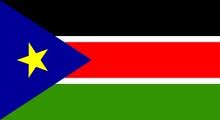
Flag of South Sudan
Today, a new nation was born, South Sudan, joining 195 other independent countries. There were joyous celebrations in the capital city, Juba. The birth of South Sudan marks the end of a long and bitter civil war with the North, primarily Muslim, in which 2 million civilians were killed.
South Sudan has a flag, an army, a leader (President Salva Kiir), an anthem, all the trappings of a nation. No doubt these symbols are hugely important for the dignity of the South Sudanese people. But there is also desperate poverty. The life expectancy in South Sudan is a desperately-low 42 years. The infant mortality rate is 112 out of 1,000, among the highest in the world. Most of the country lives on a dollar or two a day; perhaps as many as 6 or 7 million out of the 8 million population.
The importance of South Sudan’s independence lies in the fact that at long last, the United Nations has shown it has at least minimal competence in bringing to an end bitter civil wars and conflicts. UN Secretary-General Ban Ki Moon was present at the independence day festivities and look especially happy. The real test comes now. As the euphoria of independence fades, the new nation faces immense difficulties. It has oil wealth, but apparently its wells are beginning to dwindle. It pumps oil, but the ports, refineries and pipelines all are in the North. So South Sudan will have to rely on, and collaborate with, its more populous, more powerful neighbor Sudan and its leader, Omar al Bashir, declared a war criminal by UN Human Rights officials. Sudan has about 30 million people, and a well-equipped well-trained army of over 200,000 soldiers. Its economy is growing, partly due to oil, but the people of Sudan are still desperately poor. Sudan is the 3rd largest country in Africa, after Algeria and the Democratic Republic of Congo, with nearly 2 million kilometers of land.
South Sudan has a highly capable Finance Ministry. It will face two key issues: infrastructure and foreign investment. There has been a huge rush by oil companies to grab land and oil rights in South Sudan. But pulling oil out of the ground does not help ordinary South Sudanese, any more than it does in oil-producing Arab nations in the Mideast and North Africa. Will wealthy nations come to the aid of South Sudan? Will South Sudan use its oil wealth to build roads, schools, communications? There are now 55 nations in Africa, and most face drought, poverty and internal corruption. We all wish South Sudan well. We wish wealthy Arab nations (South Sudan has been invited to join the Arab League, even though it is largely Christian) would donate generously. South Sudan has declared it will exchange ambassadors with Israel. Israel knows a lot about arid-land agriculture and can help South Sudan a lot. A small increase in the productivity of its subsistence agriculture can make a huge difference to its people.
Today is euphoric. Tomorrow, reality dawns. Let us hope South Sudan and its leader Kiir will have the wisdom to educate its people and build a future of hope and peace for them. Like people everywhere, they have earned it.



Leave a comment
Comments feed for this article