You are currently browsing the category archive for the ‘Global Crisis Blog’ category.
Global Crisis/Innovation Blog
You Must Be From Philadelphia, If Your Budget is Balanced:
How Mayor Michael Nutter Tackled the Deficit, And What Obama Could Learn
By Shlomo Maital
Philly Mayor Michael Nutter
There is a huge number of Philadelphia jokes: “You must be from Philadelphia, if… you can sleep soundly through gunshots in the neighborhood; … you visit New York and notice how clean it is… you can’t eat fries without Cheeze Whiz….you find street people greet you by first name.”
Here is a new one. You must be from Philadelphia…if your city budget balances. It’s no joke. Mayor Michael Nutter, elected a few months before the US economy crashed in 2008, has done what President Obama, the Governor of Wisconsin California and other states, and many mayors, have failed to do – achieve budget balance.
How? Simple. Read the numbers, diagnose the problem, and take prompt action before the problem becomes unmanageable. Accept the political pain and protest, and do what is right.
Here is the Mayor’s story, in his own words, as told to the BBC World Service’s Adam Brooks (“Americana” program): “In August 2008, my chief of staff and finance director, told me, “Mayor, we have a problem, noticing that all of our revenue sources are starting to decline”. We knew we had to take immediate action, to make sure we did not run out of money, so we took immediate steps to slow down spending. People were shocked. We acted on the Thursday, before the weekend Lehman Brothers collapsed. In the following week, every day, a major financial institution went out of business or showed signs of weakness. There was fear and uncertainty. Nobody knew what was going on. In October we announced a projected deficit number: $650-$850 m. and growing! We needed to close the gap between income and spending immediately. We moved early and fast. We did layoffs. We eliminated some services. In the interim, we had 8 town hall meetings, each with 400-500 people, they screamed at us for 2.5 hours, how bad we were, how stupid we were, cutting services, raising fees, people losing jobs… it was a very bad environment. People were angry and scared, that is a toxic combination. People love service, they hate paying for it. Irrationality? Sure. We found ourselves: raising taxes, cutting services, this was a double hit, doubly toxic. Worked? Yes! Popularity has suffered. The moment you try to change things, your popularity erodes. What we’ve done can be done by other US cities. Be strategic, be willing to take a lot of grief, but you also have to lay out your vision for where you’re trying to go. Where there is no vision, people perish. (The Book of Proverbs). We made hard choices, strategic investments, showed where we can go: it worked. A City has to be run like a business. We have 22,000 employees, $4 b. budget! I lose sleep over Washington, what they’re doing, what they’re not going, I want to see more civility, more reality, less political rhetoric, because after you get elected, you have the responsibility of governing…I want people to be more serious about their responsibilities as elected leaders, to take on the tough challenges, stop playing to the crowd, make hard decisions, and move on.!”
Barack Obama, are you listening?
Global Crisis/Innovation Blog
Trade with China: The Economists Still Don’t Get It! Will They Ever?
By Shlomo Maital

David Ricardo: 200 year old theory
J.M. Keynes was once accused by opponents of frequently changing his views. His acerbic response: “When the facts change, I change. What do YOU do?!”
I am reading Harvard Prof. N. Gregory Mankiw’s New York Times piece, “Emerging markets as partners, not rivals”, in disbelief. Mankiw is one of the leading economists of his generation. He authored the leading Principles of Economics textbook and served as President George W. Bush’s chief economic advisor. In his piece, he attacks President Obama’s phrase “winning the future”, used three times in Obama’s State of the Union address. Mankiw’s claim: Trade is win-win, not about ‘winning’. Everyone gains. This is what David Ricardo taught over two centuries ago.
Here are some data for America’s 2010 trade. For all of 2010, the US trade deficit of $497.8 billion was sharply bigger than the prior year’s $374.9 billion. America’s trade gap with China for 2010 swelled to $273.1 billion, topping the 2008 record of $268.0 billion. In other words, some 54 per cent of America’s total huge trade deficit is generated by unbalanced trade with China.
China now holds some $3 trillion in reserve dollar assets, a strategic weapon China uses, and will use, aggressively to further its interests around the world.
If America produced those $273 b. worth of goods and services it now buys from China at home (imports less exports), in America, it would gain 5 to 8 million new jobs, halving its unemployment rate.
Here is Mankiw’s take on this situation, straight from the old-fashioned outmoded ideas of Econ 101: “a voluntary economic transaction between consenting consumers and producers typically benefits both parties”.
What about this ‘voluntary’ transaction between consenting partners: China uses a grossly-undervalued currency and under-the-table subsidies to grab America’s manufacturing, then moves to usurp America’s innovation lead as well by leveraging the link between R&D and production.
Free trade a la Econ 101? Nothing at all ‘free’ about it. It’s free only on the American, buyer side. And America rolls over and plays dead, led by the outmoded economics of economists like Mankiw – even though MIT Economist Paul Samuelson proved long ago that in a dynamic world, the static win-win idea of comparative advantage does not hold, when your trading ‘partner’ swallows the productivity gains inherent in its export specialties.
When will America stop acting like a pacifist Quaker in the boxing ring with Mike Tyson? I love Quakers, but they tend not to do well in head-to-head battles. America is now head-to-head with China. Only the American head is led by economists like Mankiw. It seems hopeless.
The facts have changed. America is losing in its trade with China. It has been at least since 2000, when China was America’s #8 source of imports; it is now #1 ! Keynes would have changed his views. When will his fellow economists in America see the light and do the same?
* N. Gregory Mankiw. “Emerging markets as partners, not rivals”. New York Times Feb. 12, 2011.
Global Crisis/Innovation Blog
The Economists Still Don’t Get It! Will They Ever?
By Shlomo Maital
J.M. Keynes was once accused by opponents of frequently changing his views. His acerbic response: “When the facts change, I change. What do YOU do?!”
I am reading Harvard Prof. N. Gregory Mankiw’s New York Times piece, “Emerging markets as partners, not rivals”, in disbelief. Mankiw is one of the leading economists of his generation. He authored the leading Principles of Economics textbook and served as President George W. Bush’s chief economic advisor. In his piece, he attacks President Obama’s phrase “winning the future”, used three times in Obama’s State of the Union address. Mankiw’s claim: Trade is win-win, not about ‘winning’. Everyone gains.
Here are some data for America’s 2010 trade. For all of 2010, the US trade deficit of $497.8 billion was sharply bigger than the prior year’s $374.9 billion. America’s trade gap with China for 2010 swelled to $273.1 billion, topping the 2008 record of $268.0 billion. In other words, some 54 per cent of America’s total huge trade deficit is generated by unbalanced trade with China.
China now holds some $3 trillion in reserve dollar assets, a strategic weapon China uses, and will use, aggressively to further its interests around the world.
If America produced those $273 b. worth of goods and services it now buys from China at home, in America, it would gain 5 to 8 million new jobs, halving its unemployment rate.
Here is Mankiw’s take on this situation, straight from the old-fashioned outmoded ideas of Econ 101: “a voluntary economic transaction between consenting consumers and producers typically benefits both parties”.
What about this ‘voluntary’ transaction between consenting partners: China uses a grossly-undervalued currency and under-the-table subsidies to grab America’s manufacturing, then moves to usurp America’s innovation lead as well by leveraging the link between R&D and production.
Free trade a la Econ 101? Nothing at all ‘free’ about it. It’s free only on the American, buyer side. And America rolls over and plays dead, led by the outmoded economics of economists like Mankiw – even though MIT Economist Paul Samuelson proved long ago that in a dynamic world, the static win-win idea of comparative advantage does not hold, when your trading ‘partner’ swallows the productivity gains inherent in its export specialties.
When will America stop acting like a pacifist Quaker in the boxing ring with Mike Tyson? I love Quakers, but they tend not to do well in head-to-head battles. America is now head-to-head with China. Only the American head is led by economists like Mankiw. It seems hopeless.
The facts have changed. America is losing in its trade with China. It has been at least since 2000, when China was America’s #8 source of imports; it is now #1 ! Keynes would have changed his views. When will his fellow economists in America see the light and do the same?
* N. Gregory Mankiw. “Emerging markets as partners, not rivals”. New York Times Feb. 12, 2011.
Innovation Blog
Stop the Waste! Fight Famine! Eat the Soy, Don’t Feed it to Cows!
By Shlomo Maital

Soy veggie burger
The world faces an urgent crisis. It hasn’t yet reached the media and headlines, because nobody is dying, starving, killing or being killed. But it may happen, unless we act. Here is why.
Worldwide climate change and economic growth have created a large excess demand for wheat. The world will produce 674 million tons of wheat this year, down 100 million tons from last year owing to drought and climatic change. China’s production will drop precipitously, and China will now enter world markets to buy grain rather than export it. We are already seeing significant food inflation worldwide. It will hurt the poor, who already live on the edge. Part of the cause of the Egyptian riots was a precipitous rise in the price of bread.
There is a solution. It is called soy. Soy is a wonderful nutritious food, with high vegetable protein content. You can make veggie burgers out of it, and other foods, that are very tasty. An Israeli firm Tivall has done this for many years and has marketed it successfully to Israeli mothers, who want to feed their children healthy nutritious meals.
Did you know that 98 per cent of the soybeans grown in the world are fed to animals? Eating meat is incredibly inefficient. It takes seven vegetable calories fed to cows to generate one meat calorie. What a waste. And the world is eating more and more meat, as the meat-eating middle class grows in Asia. Moreover, food experts tell us that one calorie of protein (soy) is more satisfying to the body than one calorie of carbohydrate (grain or rice) because it takes longer to digest.
Let us see a concerted combined effort by innovators and marketers, to create soy-based protein foods, that are delicious, and to market them to people who traditionally are highly conservative and loathe to change in their eating habits. Let us see McDonald’s create a soy-based veggie burger and market it! Let us tackle the worldwide food shortage before people begin to starve and die.
Global Crisis/Innovation Blog
Capitalism for the Long Term: The View from McKinsey
By Shlomo Maital

Dominic Barton, McKinsey
Writing in the March issue of Harvard Business Review, McKinsey global managing director Dominic Barton addresses “Capitalism for the Long Term”. Few people are better equipped to write about how capitalism should be reformed than the peripatetic consultants of McKinsey. Barton’s main point: Business leaders — rewire the way you govern, manage, and lead corporations to restore the public’s trust in a capitalist system jeopardized by the financial crisis and ongoing social anxiety. If you don’t, the political system will reinvent capitalism, and you will not like the result at all.
Barton says the business leaders of capitalism must implement three major reforms in the way they think and act.
First, “business must jettison its short-term orientation in favor of a longer-term focus.” The short-term focus that led to financial collapse did major harm to almost everyone, including those who committed the ‘crimes’. “
Second, “executives must also infuse organizations with the perspective that serving all major stakeholders is not at odds with maximizing corporate value.“ In an earlier blog, published on Aug. 6, 2010 (timnovate.wordpress.com), I noted the credo of Scott Paper magnate Tom McCabe, who insisted his managers seek the wellbeing of customers, workers, the community, thee nation, and finally, the shareholders – an old-fashioned credo that seems to be making a comeback.
Finally, companies must bolster the power of boards to cure the ills stemming from dispersed and disengaged ownership. The purpose of the Board of Directors is to give the CEO and top management a hard time, track everything they do and say, and challenge their decisions, making them provide hard data and clear rationales. Failure of many boards to do this led to the fatal crashes of Fannie Mae, Lehman Bros., Citigroup, GM, and many other companies.
Investor – check your portfolio of stocks. Do the companies whose shares you hold understand these three ‘new capitalist’ principles? If not, perhaps it is well to find companies who do.
http://e.mckinseyquarterly.com/10742fd80layfousubktwfcyaaaaaa2bdqgjshi2w4ayaaaaa
Innovation Blog
Innovations That Don’t Create Jobs: A Global Social Dilemma
By Shlomo Maital
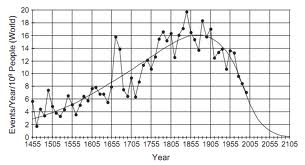
Tyler Cowen: The Great Stagnation
Innovations have been declining!
Here is the list of the world’s top 20 innovating organizations, from the magazine Fast Company, for the year 2010. (See below).
Company Rank* Revenue Profit ($ billion) *rank in Global Fortune 1000, 2010
1. Facebook –
2. Amazon #340 $24.5 $0.901
3. Apple #197 $36.5 $5.7
4. Google #355 $23.7 $ 6.5
5. Huawei #397 $21.8 $2.7
6. First Solar –
7. PG&E –
8. Novartis #160 $45.1 $8.4
9. Walmart #1 $408 $14.3
10. HP #26 $115 $ 7.7
11. Hulu –
12. Netflix –
13. Nike #453 $19.2 $ 1.5
14. Intel #209 $35 $ 4.4
15. Spotify –
16. BYD –
17. Cisco #200 $36.1 $ 6.1
18. IBM #48 $96 $13.4
19. GE #13 $157 $11.0
20. Disney #199 $36.1 $ 3.3
Several interesting conclusions emerge.
* First, very few of the great innovators are big, in global size (ranked by revenues, from the Global Fortune 1000, 2010). Walmart is an exception (#1). So is GE (#13) and HP (#26).
* Second, the hottest of the new innovators are pure Internet companies (Facebook, Hulu, Netflix, Spotify) that create massive amounts of wealth but very few jobs, because when your product is bits and bytes, you do not need assembly-line workers.
* Third, the list of Top 20 innovators from 2005 (Bloomberg/Business Week) is very different. A great many innovators have fallen off the list,
In his best-selling new eBook, The Great Stagnation, Tyler Cowen notes that the automobile industry generated millions of good-paying jobs, but Facebook employs 2,000, Twitter 300 and eBay about 17,000. Only 14,000 people make and sell iPods, but iPods eliminate other jobs (CD manufacturing, etc.) and anyway most of those iPod-based jobs are outside the U.S. Cowen notes that this current era’s technological breakthroughs generate great gains for society but very little added economic activity.
Can we imagine a futuristic economy, in which a majority of the population does not work at all, and in which the privilege of working goes to only an elite handful with high-level skills? A society in which innovation benefits humanity, takes brains, but requires no hands to generate those benefits?
Recall that Henry Ford complained he got an (un-needed) brain every time he hired a pair of hands. Perhaps in future, his innovative industrial descendants will complain that they get (un-needed) hands along with the brain. Perhaps that future is already here.
Global Crisis/Innovation Blog
Wake Up, America! To Innovate, You Have to Make What You Invent!
By Shlomo Maital
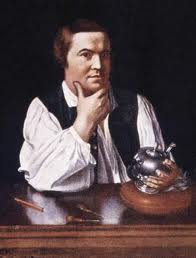
Paul Revere: when America still made stuff!
Veteran New York Times reporter Louis Uchitelle is helping to wake up America. * His point: When you no longer manufacture, dumping everything off to China, you also cease innovating.
To make this point, he studies the flatware industry. Since America’s colonial times and Paul Revere (silversmith), America has made knives, forks and spoons. The last such plant closed recently, in Sherrill, NY. Some 80 workers lost their jobs. Nobody seems to notice.
But, Uchitelle notes, the local value-added component of the remaining manufacturing plants is also declining, as more and more components are imported, mainly from China.
“The imported portion has risen to more than 25 percent from 17 percent in 1997, according to Susan Houseman, a senior economist at the W.E. Upjohn Institute in Kalamazoo, Mich. The Boeing Company, to consider one striking example, once bought all of its components from American suppliers, or made them in its factories here. Now the wings of several of its airliners are manufactured by Japanese subcontractors and shipped across the Pacific in giant cargo planes.”
Economist Houseman says an accurate measure of America’s manufacturing would give it no more than 10.5 per cent of GDP, down from over 30 per cent in the 1950’s.
“How did the nation get into this situation?” Uchitelle asks. “America gambled, in effect, that by importing more from foreign suppliers and from American companies that had set up shop abroad, consumer prices for manufactured products would fall, without any sacrifice in product quality. Low-wage workers abroad would make that happen. American manufacturers, on the other hand, would be the world’s best innovators, developing sophisticated new products here at home and producing them, at least initially, in their domestic factories. The first part of the arrangement worked very well. Consumer prices did fall as imports flooded in. The second part of the arrangement, however, has been more problematic. As it turns out, the United States is not the only path-breaker. The Toyota Prius, the first hybrid, shines as an example of Japanese ingenuity, and more than a decade after that car was developed it is still being exported from Japanese factories, marrying innovation to production and jobs”.
“The big debate today is whether we can continue to be competitive in R&D when we are not making the stuff that we innovate,” Houseman says. “I think not; the two can’t be separated.”
The point is simple. You have to make the stuff you innovate. If you don’t, you lose the value added from innovation, and you lose the vital information that production brings.
Wake up, America! Get your manufacturing back. If you don’t, you will lose your innovation as well.
* Louis Uchitelle, “When Factories Vanish, So Can Innovators”, Global NYT February 12, 2011
Global Crisis/ Innovation Blog
More Stuff, Less Happiness – Something Is Very Wrong!
By Shlomo Maital

Tammy and Logan Strobel: Live on Less!
For years, as an economist, I taught students about something called a “utility function”. The inputs were material things or income. The output was “utility” or happiness. And of course, the more stuff, the more income, the more happiness. It was always, everywhere, a rising function.
Wrong.
U.S. per capita income went from $24,079 in 1980 to $40,454 today. This is a steep rise of 100 per cent (double), despite the global 2007-9 crisis. Did Americans’ happiness double too? Or even rise? I doubt it.
Economists (quoted in USA Today, “Is our standard of living better than ever?” , Feb. 4-6, 2011, p. 1) say, “people grossly underestimate our progress over time because of technology”. Ohio State economist Richard Steckel urges people to shut off their electricity and plumbing, to see just how great things are now, relative to the past.
In other words, we’re just dumb. We’re way better off, but we just don’t realize it.
“People earning $200,000 a year are feeling and behaving like those with half that income,” says the CEO of First Command Financial Services.
The USAToday article describes an Oregon couple, that asked themselves seven years ago, how much does it take to live comfortably these days? Their answer: $20,000 – $25,000. Result: Tammy Strobel gave up a job in an investment firm, cut her income in half and chose to live cheaper and simpler. She and her husband limited themselves to 100 “things” (possessions) each. “Taking a step back from materialism helped me understand the big picture”, she says.
According to a USAToday poll, only 3 per cent of people think it is possible to be comfortable on less than $20,000 a year. Nearly two-thirds think $50,000 a year is the minimum, and 25 per cent think $100,000 is required. Ten per cent think $150,000 a year is the minimum!
There are two strategies in life. One is to constantly boost one’s income to match rising spending. A great many people find this is not the road to happiness, because the added ‘stuff’ the income brings is not the source of wellbeing. A second route is to spend less and less, to adjust spending to income, and to treat non-work time as ‘income’ by giving it a value, often very high. Very few people even consider this option. No sane business or politician would encourage it. But it may be the route to true sustained happiness, for individuals and for our planet.
Global Crisis/ Innovation Blog
Key Results of the Global Crisis: Martin Wolf’s Midstream Analysis
By Shlomo Maital
Martin Wolf, FT
Financial Times columnist Martin Wolf * runs the FT Economists’ Forum (www.ft.com/econforum), and his regular FT column is worth tracking carefully. In his latest column, Wolf reviews the key results of the global crisis 2007-9. Here is a brief summary.
1. Financial regulation has tightened. At last, the trend direction is toward tightened regulation, rather than loosened, for the first time in 30 years.
2. Private leverage declines. In America, private gross debt, as a per cent of GDP, rose from 123 per cent in 1981 to a peak of 293 per cent in 2009. (Why did we economists not treat this as a signal of looming crisis?). That ratio has now fallen to 263 percent, a shedding of some $5 trillion in private debt in just a year. The financial sector also deleveraged debt worth 20 per cent of GDP in just a year.
3. Global imbalance (saving in Asia, dissaving in mainly the U.S.) is being reversed, though very slowly.
4. Euro zone deleveraging is occurring, but slowly, imperfectly and bodes ill for the future.
5. G7 nations have taken on huge debt owing to fiscal deficits, their net govt. debt will soar from 52 percent of GDP in 2007 to 90 per cent in 2015. So basically, private debt has become public debt, partly as governments bailed out failed banks and presented the bill to the public.
6. Global power shift from the West to the East, toward China and India, and toward Brazil. The IMF says the share of advanced countries in global GDP was 63 per cent in 2000, but will be less than 50 per cent in 2013; China and India account for 80 per cent of the rising share of the developing world.
These six key trends all present major opportunities for investors, entrepreneurs and managers who are able to spot such opportunities, when others see only crisis and uncertainty.
* Martin Wolf, “How the crisis catapulted us into the future”. FT, Feb. 2, 2011, p. 11.
Global Crisis Blog
Global Crisis: Big Mess, Caused by Blu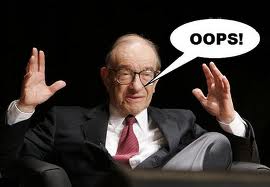 nders, Not Mother Nature
By Shlomo Maital
Alan Greenspan
The American Federal Commission established to investigate the underlying causes of the global financial collapse, 2007-8, has now reported its findings (this is breaking news, within the past few hours). Here is what they found:
“The crisis was the result of human action and inaction, not of Mother Nature or computer models gone haywire. The captains of finance and the public stewards of our financial system ignored warnings and failed to question, understand and manage evolving risks within a system essential to the well-being of the American public. Theirs was a big miss, not a stumble.” “The greatest tragedy would be to accept the refrain that no one could have seen this coming and thus nothing could have been done. If we accept this notion, it will happen again,” the report states.
The major blame is placed on Fed Chairmen Alan Greenspan, as well as current Fed Chair Ben Bernanke. Among those blamed: Government regulators and policy makers; corporate mismanagement; two presidential administrations; two Fed chairmen; greed in several financial institutions; and unnecessary Wall Street risk taking. The report is from the New York Times, which got a preliminary glimpse at the commission’s findings.
According to C.B.S., “former Fed chairmen Alan Greenspan and his successor, Ben S. Bernanke. Greenspan are singled out for advocating financial deregulation and failing to stem the flow of toxic mortgages.”
The 10-member commission was not unanimous. Six members appointed by Democrats agreed with the findings. Four members appointed by Republicans opposed them. This is typical of the current fiercely partisan atmosphere in U.S. politics. Republic minority members will soon issue their own report, blaming – you guessed it – the Democrats.
The Report does not fail to blame the lobbyists as well. “Lobbying is also blamed, [including] the $2.7 billion spent between 1999 and 2008 by the financial sector on convincing politicians and federal officials to let them have their way.”
“Overall, the report paints a grim picture of mismanagement, miscalculation and a general lack of will to tackle obvious flaws in the financial system by government officials, industry leaders and regulators.”
The 6-4 split in the Commission will effectively neutralize any possible policy changes arising from the Report, since Republicans now control the House of Representatives.
Innovation Blog
Great Depression, Great Innovation: Will We See a New Wave of American Innovation?
By Shlomo Maital

Neoprene wetsuits
Recent scholarly research reveals a surprising fact about the Great Depression, 1929-1939. It was an era of unprecedented innovation. According to Alexander J. Field, * “The years 1929-1941 were, in the aggregate, the most technologically progressive of any comparable period in U.S. economic history.”
Examples? (cited by Nabar and Nicholas) **: Dupont scientist Wallace Carrothers invented synthetic rubber (neoprene), creating an entire new industry (tires, etc.) that created American jobs, rather than Malaysian rubber-tree plantation jobs. Dupont scientists also invented rayon, enamels and cellulose, generating 40 per cent of Dupont revenues in 1937 from products that did not exist in pre-Depression 1929. Automobile innovation forged ahead, especially in the improvement of internal-combustion engines, also creating a massive job-creating industry. Television and FM radio were introduced by RCA (though their introduction was somewhat delayed by lack of money). Catalytic cracking for complex hydrocarbons was introduced, creating huge refineries that employed many thousands. And the early jet engines were developed, building on newly developed titanium alloys.
What is it about hard times that spurs innovation? Nabar and Nicholas, economists, offer a convoluted jargon-ridden theory: “we show that firms with imprecise sector-level priors on payoffs to innovation updated their beliefs and responded stronger to sector-level signals than firms holding more precise priors. “ Translation: Firms less locked in to strategic plans (i.e. major cutbacks) could move faster to innovate and seize emerging opportunities”.
I think the reasons lie elsewhere. The legendary former mayor of the Brazilian city of Curitiba once said, “if you want true creativity, slash two zero’s off your budget”. He meant that resource scarcity spurs innovation, rather than hampers it. He was right. Desperation, poverty, lack of funds, all these create a can-do creative atmosphere in which innovators seek ways to save resources and improve existing technologies, simply in order to survive.
I do not see the same atmosphere in today’s America. As an observer once said, “a crisis is a terrible thing to waste”. The 2007-9 crisis was wasted. By reassuring Americans that the crisis is over, America’s political leaders are a) wrong, and b) are wasting an opportunity to leverage the enormous energy that Depressions foster, as happened in 1929-39. There ARE innovations. iPads create jobs for Asians. Facebook creates a few jobs but not industries, as happened in the 1930’s. What is vitally needed are innovations that create breakthrough products spurring creation of massive new industries [synthetic rubber, refineries, car plants] with equally massive job creation, at home in America, not in Chungking or Nanjing. Here are some suggestions. Cleantech: alternative energy breakthroughs. Medical devices: lowering soaring medical care costs. Transportation: New technologies for public transportation. Education: ways to deliver high-quality education to the masses, using technology. Alas, I see few signs this is a national objective. It should be. Wake up, America! This Depression may end before you reap its potential benefits.
* Field, Alexander J., ”The Most Technologically Progressive Decade of the Century,”American Economic Review, 2003, 93(4) 399-1413
** Malhar Nabar, Tom Nicholas “Uncertainty and Innovation During the Great Depression” Harvard Business School, January 14, 2010