
You are currently browsing the category archive for the ‘Innovation Blog’ category.
Innovation Blog
“Ignite 2.0” Fizzles: The Unreality Show of the Competitiveness Council
By Shlomo Maital
America’s Council on Competitiveness has issued a report, called Ignite 2.0, prepared by Deloitte, about how to boost America’s manufacturing capability. The report is based on the views of distinguished U.S. college presidents and heads of National Research Labs. It contains some 40 detailed recommendations. And the clash between the theory of the recommendations and the reality on the ground is stark. Here, in italics, are a few of the recommendations, along with the reality that contradicts them. Ignite 2.0 is an “UnReality” Show.
* Benchmark best practices from other countries and reform immigration policies to better attract the world’s most advanced workforce, and retain foreign talent educated in American universities upon graduation.
“The UK has now upstaged America as the most preferred campus destination for Indians. Blame it on the declining job opportunities in the US which is battling the worst downturn in decades or it could as well be that America is still more expensive to study in than Europe.” “The Indian students are finding their chances bleak to be associated with the dream US destination universities like the Harvards, Michigans, Yale and Stanford – which no longer guarantee the top-dollar jobs – and are increasingly mending their way towards top UK-based universities such as London Business School, Oxford, Cambridge and Imperials among others.” Source: www.trak.in
Paul Almeda, AFL-CIO: “Last year,690,000 foreign students came to study in U.S. universities. Foreign students now earn more than half of all PhDs in math, computer science, and engineering. Fewer of these students say they want to stay in the U.S. after graduation. They are more likely to leave the U.S. because the economies are improving in their home countries, namely China and India. We have created a system that makes us dependent on foreign students and discourages U.S. students from entering STEM (science, technology, engineering, manufacturing) fields. This is not sound education or economic policy.”
* Fuel private investment by ensuring globally competitive corporate tax rates and strengthening and making permanent research and development tax credits, especially for U.S.- based innovation.
“Massachusetts Sen. John F. Kerry and former North Carolina Sen. John Edwards have said tax law rewards corporate expansion overseas. Both would cut taxes for domestic manufacturing and offer temporary tax credits for hiring manufacturing workers in the U.S.” Nothing has been done in this regard so far.
* Implement university programs that promote student interest in math, science and manufacturing.
“In many states, vocational training is available to workers who have been previously laid off or whose previous employer is defunct; such training was expanded under the American Recovery and Reinvestment Act of 2009. The success of these programs has been questioned, and a 2009 study by the United States Department of Labor showed that the difference in earnings and chances of being re-hired between those who had been trained and those who had not been was small.” Wikipedia, “vocational education in the US”. In the early 20th C., America tried to implement the German system of vocational education, but failed and dropped the attempt.
Great report, team. Problem is, it probably isn’t worth the paper it’s written on.
Global Crisis/Innovation Blog
The Rich Grow Richer, or…Crisis? What Crisis?
By Shlomo Maital
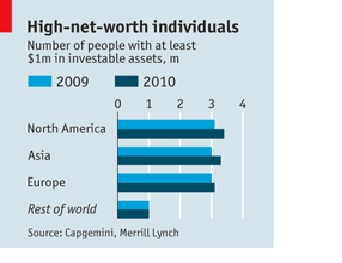
no. of people with $1 m in investable assets
The Bible says, you will always have the poor among you, meaning poverty is perpetual. This is true, because of how we define poverty in relative terms – say, half the average income or less.
The Bible does NOT say, the rich you will always have with you, and they will constantly grow richer. But they do. Somehow, even though financial markets globally remain unstable and volatile, even though real estate still declines, somehow the wealthy continue to grow wealthier, while ordinary people struggle just to find a job.
According to The Economist (June 23, 2011),
An annual survey estimated that the combined wealth of the world’s 10.9m rich people (27% of whom are women) stood at $42.7 trillion in 2010, more than in 2007, the year the financial crisis was brewing. More than half of the monied classes live in the United States, Japan and Germany, though Asia has more in total than Europe for the first time.
There are 10.9 million people with at least $1 m. in investable assets. Their wealth, $42.7 trillion, is staggering. Suppose, just suppose, these 10 million people, the population of New York City, decided to give one tenth of their wealth to those in need, to help them study, go to college, learn to read, pay for crop seeds or start a business. That comes to $4.27 trillion! Suppose there are a billion poor people on this planet, who earn about $1 a day. That gift would give each of the poor $4,000 ! Would that change their lives forever? And it would leave the millionaires with 90 per cent of their wealth, for most enough to remain millionaires, comfortably.
Okay, if that is impractical, what about this? Ask the world’s 10.9 millionaires to contribute just the increment, the increase in their wealth, between 2009 and 2010, so they remain as wealthy now as they were a year ago. I think that alone would amount to several trillion dollars.
It won’t happen. And in America, the Republicans have placed a poison-pill requirement on their approval of raising the debt ceiling – no new taxes, not on millionaires, not even on billionaires. The Democrats are unhappy, but I bet they swallow it. Good work, Republicans. You might even win the Presidency in 2012. Let’s watch the rich grow richer – and the poor grow poorer, in America, the world’s “greatest country”.
Innovation Blog
Pro-Bono: What We All Can Learn from U-2
By Shlomo Maital
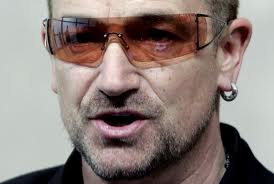 U-2’s BONO
A new case study by Harvard Business School Professor Nancy Koehn (with Katharine Miller and Rachel Wilcox) analyzes the remarkable sustained success of the Irish rock band U-2 and its phenomenal leader Bono. She discusses her case in the latest on-line issue of Harvard Business School’s Working Knowledge.
Here are some of the key points that underlie U-2’s success:
* Make meaning, not money. “U2’s appeal has always been about our common humanity and the yearning we all experience to follow a higher path. People are looking for the light, and U2’s music has spoken to that search since the band started recording more than two decades ago.”
* Built to last. “In an industry notorious for its focus on short-term hits and for taking control of an artist’s work and profits, the band members and their long-time manager Paul McGuiness always looked to build an enterprise that would have a long life.”
* Innovate, not just the music, but also the business. “U2 was always innovative, understanding from the get go that technological change and the creative destruction it unleashed would have a big impact on the business of making and distributing music. In 1981, for example, U2 made a video for the song “Gloria,” which was one of the first videos to slide into constant MTV rotation. Some two decades later, in 2004, Bono connected with Apple for an early release on iTunes of the single “Vertigo,” and the video was featured in an Apple ad campaign. “We turned advertising into a rock video,” Bono said at the time. That’s not selling out, he said. “It’s exciting.” “
* Embrace change constantly. “A leader’s mission is not static; it evolves. Bono continuously sets new goals around several related global challenges. For example, he started advocating for famine relief in Africa in the mid-1980s, and then in the early 1990s began raising awareness of the conflict in Sarajevo, playing live footage of the war during U2’s Zooropa tour. After working to get eight industrialized nations in 1999 to agree to $100 million in African debt relief, he continued with a campaign to cancel debt owed by Third World nations to the World Bank and the International Monetary Fund. Then he began lobbying the administration of George W. Bush for additional funding to fight AIDS (in 2003, the US government pledged $15 billion toward the disease).
* People don’t buy what you make, they buy why you make it. “Who you are and what you stand for as an organization have great relevance to the people who buy your product. Many of U2’s supporters embrace the band because the causes the four members work to address—from social injustice to hunger—are issues the fans themselves are concerned about. The backstory of organizations is now part of the value proposition for consumers. The lads from Dublin understood that early on and they still understand it.”
In 2009 U-2 made more profit than any other rock group in the rich U.S. market. They did very well – and they also did a lot of good. Doing good and doing well are tightly linked in today’s age. Any CEO who thinks it is still all about maximizing shareholder value should first listen to any U-2 album, and then visit a shrink.
Global Crisis/Innovation Blog
Greek Tragedy: Why Argentina Can Provide a Happy End
By Shlomo Maital
For those of us who love the history, culture and beauty of Greece, it is immensely painful to watch the suffering of the Greek people, doubly so because it is caused by economists and bankers driven by greed and folly. And it is unnecessary. About 25 mainly French and German banks hold the majority of Greek government debt. They will be seriously hurt if Greece defaults. But their governments can afford to help them. Why are Greece’s 11 m. people being held hostage by the relative handful of bank shareholders? It is unjust, and worse, stupid.
There IS a solution. Greek PM Papandreou, who is an expert on history, should study the modern history of Argentina and its crisis, 1999-2002.
* Like Greece, Argentina fixed its exchange rate, only, one-to-one with the dollar, rather than the euro. Like Greece, this led Argentina to overspend, when in the 1990’s Argentina made the Argentina peso identical to a U.S. dollar, to halt rampant inflation, just as Greece embraced the euro when joining the EU and euro bloc. The inflation stopped, but predictable trouble ensued.
* This led the government and people of Argentina to overspend and over-borrow, when imports became very cheap (in terms of local currency). Argentina’s provincial governments, central government, banks and businesses all over-borrowed, accumulating huge dollar debts, just like Greece’s government and people did. They borrowed, because they could.
* In 1999-2000, Argentina lost its export markets in Brazil and elsewhere, when Brazil devalued its real from one per dollar to two, making Argentinan products costly. Moreover, the strengthened dollar worldwide also meant the Argentina peso strengthened (because of the rigid one-to-one rate), and similarly with the rising euro. Same with Greece. Greece is locked into the euro, and hence cannot stimulate its exports, tourism and competitiveness by a currency devaluation. Nor can it slash interest rates; those are set by the European Central Bank. Nor can it boost deficit spending, deficits are already too large. Greece has no bullets in its policy rifle. As long as it is in the euro, it never will have bullets either.
* In 2001, there was a flight of money from Argentina, led by locals, as they saw the looming crisis and bailed out. Banks closed their doors, depositors banged on the door to get their money out, but it was too late; when Argentina floated its currency in 2002, the dollar-denominated debt of Argentina’s government, banks and businesses, doubled overnight, meaning everybody, EVERYbody, was bankrupt. Argentina defaulted on its debt.
Greece is in the same hot water. Greece’s government, with debt of 1.5 times GDP, cannot redeem maturing debt without new borrowing, and banks are reluctant to buy Greek bonds. Without continuous bailouts, Greece is bankrupt, like Argentina was. Let’s admit it. Greece is bankrupt. When you go bust, you get debt relief, and you start fresh. That is how enlightened capitalism works. Why does everyone understand this except Germany?
* In Jan. 2002 President Duhalde abandoned the 1-to-1 exchange rate, and quickly, the Argentine peso fell to four-to-one! Dollar debts were four times greater, in pesos. The economy totally collapsed. The IMF offered aid—with its usual draconian terms (“we’ll help kill the crisis, but in return, we want you to agree to let us kill you – or at least your economy”). This is what Germany and its banks are proposing now for Greece, and what Greece has partly implemented. Why have Greek leaders not said, thanks but no thanks!
* Argentina’s new new president Kirchner appointed an economist Roberto Lavagna, who knew what to do. Argentina turned down IMF aid and defaulted on debt payments. The IMF and banks said Argentina would sit in the penalty box for life. But against all odds Argentina’s economy bounced back rapidly. Exports grew. Foreign money poured in. Lavagna acted to keep the strengthening peso from hurting Argentina’s “re-industrialization”.
And this is where Greece’s story departs from Argentina’s. Greek’s weak leaders are seeking EU bailout money, rather than rejecting it. They are stuck on remaining within the euro, rather than dumping it and restoring the drachma, as they should. Greece and Europe are like two warring people, man and wife, stuck in a Catholic marriage forever, rather than seeking a divorce that would liberate each.
And here is the key fact. Argentina’s economy has grown by an average of 7.4 per cent since its 2002 trough! Argentina’s output was above its previous peak within three years of its default. So much for IMF doom and gloom.
If you don’t believe me, believe respected Financial Times columnist Alen Mattich, who says “Greeks might well decide an Argentine solution is the only real option”. (FT, June 19). Believe respected Wall Street Journal blogger David Marsh, who says “very likely France and Germany have purchased extra time [for Greece, with a bailout] for what will turn out ultimately to be a heroic but fruitless exercise.” (WSJ Marketwatch June 19).
The question is not whether Greece will leave the euro, but how long will its people be made to suffer until it does. The question is, when will a Greek leader step up, who knows what to do, as happened in Argentina? Will it be new Finance Minister Evangelos Venizelos, a tough Socialist? Will he have the guts to send Germany and its banks, France and its banks, packing, and rescue his nation?
Greece seriously mismanaged its economy and continues to do so. Germany wants to punish it, so other nations won’t follow suit. This is ironic, because Greece suffered terribly at the hands of Nazi Germany in WWII. Germany is destroying Greece for the second time.
Eventually, Greece will have no choice but to default on its debt, leave the euro and start from scratch and begin rebuilding. A deep crisis will follow, but it will be shorter than many believe. And there is just no way to avoid it. Let Greece stop prolonging the agony and act as Argentina did. There is no time to waste.
Innovation Blog
Run of the Red Queen: The Real Truth About China’s Growth Engine
By Shlomo Maital

Helen Bonham-Carter as The Red Queen
In Alice in Wonderland, the Red queen organizes a race.
“Well, in our country,” said Alice, still panting a little, “you’d generally get to somewhere else — if you run very fast for a long time, as we’ve been doing. ”
“A slow sort of country!” said the Queen. “Now, here, you see, it takes all the running you can do, to keep in the same place. If you want to get somewhere else, you must run at least twice as fast as that!
This passage inspired the title of Prof. Dan Breznitz’s new book Run of the Red Queen,* about China’s phenomenal growth engine and its innovation strategy. He debunks numerous myths, based on his (and co-author Michael Murphree’s) three years of field work, about China’s technology companies. They run as fast as they can, to remain in the same spot – right at the global technology frontier, without actually advancing it. The result has been to give China 10 per cent growth for two decades – unprecedented in history. Cutting-edge innovation of sophisticated products is not, Breznitz shows, either sufficient or necessary for sustained economic growth. Moreover, according to Breznitz, China’s success may be in spite of central government policy, rather than because of it. He thinks that the government’s thirst for huge state-directed projects may undermine China’s privately-owned companies, who at times act contrary to government policy, with great success.
Take, for instance, the iPhone. Apple, an American firm, invented it in the U.S. But its components are produced mainly in China. Weeks after the design was completed, Chinese production experts told Apple the antenna for the phone was problematic. Apple didn’t listen. They should have. Breznitz says that within three weeks of a new product emerging (such as smartphones) in America, China knows how to produce them better and cheaper than anyone. Is that innovation? Of course it is. It is process innovation. And research shows process and production innovation pays a far higher return than product innovation. China has legions of pirate firms able to product knockoffs of smartphones that are cheap and effective. America, in contrast, does not seem to understand that if America invents products that only the Chinese can produce, America is planting fruit trees whose cherries are picked by Chinese workers, and only by them. How smart is that? China’s R&D budget is large, but it is doubled by the fact that it also benefits from America’s R&D spending, since China ends up making the things that emerge from it.
Can China’s growth engine sputter and die? It can, Breznitz thinks. China’s government is now funding an enormously ambitious R&D program (R&D spending in ITC is doubling every three years) to foster Chinese product innovation. This could well fail. It would be ironic if China abandoned a successful, rather diverse and chaotic innovation model based on process excellence, that works wonderfully, in favor of an American-style model of innovation that shoots blanks.
——-
Dan Breznitz and Michael Murphree, Run of the Red Queen: Government, Innovation, Globalization and Economic Growth in China. Yale Univ. Press: May 31, 2011.
Innovation Blog
Happy Bloomsday! How James Joyce Changed Novels Forever
By Shlomo Maital
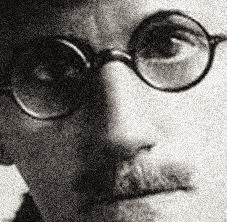
James Joyce, Bloomsday June 16
Happy birthday, everyone! Today is Bloomsday, celebrated worldwide, June 16, because June 16, 1904, is the single day that is recounted in detail in the life of Leopold Bloom and Molly Bloom, in Dublin, in James Joyce’s amazing novel Ulysses, which everyone loves but very few have read end-to-end.
Joyce picked June 16 for Ulysses, because on that day he and his future wife Nora Barnacle, whom he loved deeply, met, and went for a long walk.
Until Joyce, novels were conventional, and had plots that unfolded over time. In Ulysses, there is really no plot, and what happens is what is known today as stream of consciousness, what goes on in Leopold’s mind. Moreover, the language is not literary, but the language and cadences of ordinary Dublin speech, including some that is very profane. (That got Ulysses banned in many places, explicitly some of the sex scenes).
It is still a mystery to me, why some people choose to carefully follow the rules, in art, literature, poetry, sailing, tiddlywinks or ballroom dancing, and excel, and create works of beauty, while others choose to blow the rules up, all of them, with a ton of TNT, and put years of work into their creation without being certain whether their work will be seen, read and enjoyed by anyone. (Then, and now, you need someone to publish your work, and the more radical it is, the harder it is to get a publisher). It is these radical innovators, the ones with the TNT, who exert lasting impact on their world and on their discipline.
What was it that made James Joyce disregard all the rules of novel-writing, to create a masterpiece?
Ulysses’ last line, yes I said yes I will, is very famous. Innovators: say it! Yes I said yes I will… disregard the ‘rules’, break the rules, try things, yes I said yes I will. After all, Joyce did it – and look what happened!
Innovation Blog
When REAL Writers Write the News: Innovating the Newspaper
By Shlomo Maital
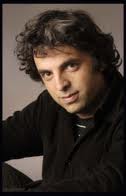
Etgar Keret, journalist
I read the Hebrew daily newspaper Haaretz every morning, along with the International Herald Tribune. Usually something in Haaretz makes me angry, because it is very left-wing and highly critical of Israel’s government, army and society.
But today, I am in awe of what landed on my doorstep. In honor of Israel Book Week, Haaretz’s editors had a brilliant idea. What would happen if the newspaper were written by real writers, not journalists? What if you got the best novelists and poets to write the news, editorials and even the weather?
The result is truly astonishing. Writer Etgar Keret flew to Italy with Prime Minister Benjamin Netanyahu on a state visit there, and came home with a scoop. “Bibi” finally let the cat out of the bag. “There’s no solution to the Israeli-Palestinian conflict,” he revealed. No solution – ever? Permanent state of war, forever? Pretty depressing. Perhaps we need to find a new Prime Minister who can find a solution to the conflict that has no solution, and that in itself will be a solution. Thanks, Etgar!
Here is part of poet Ronny Someck’s weather forecast, translated from Hebrew by superb translator Vivien Eden: Drops in rain language/have not yet begun to stutter in the cloud throat/ the thunder mouth is toothless/and lighting has not yet flicked the spotlights on/ in the pupil of the eye/ until the stoves are lit, sleeves will be rolled up/on the arms of the sun…..
Maya Arad, from New York, offers a vivid and telling description of what went wrong for Dominique Strauss-Kahn: “She (the maid) refused to accept the money”. Historical novelist Yochi Brandes, one of my favorite authors (Book of Kings 3), asks the Education Minister, “have you given up on the Bible?” The Minister lamely puts the focus on the teachers. And finally, Israel’s greatest living poet, Nathan Zach, writes an editorial: Gilad (Shalit) will not return. He reminds us, “I was born in the land of the Nazis and my father committed suicide there.” He claims, “Gilad Shalit will not return, at least not as long as our prime minister believes he has a strong majority in the coalition.”
What an amazing, insightful, trenchant, biting, satirical, depressing, slashing, innovative, unique, and above all superbly written newspaper! How in the world will we go back to reading the dull, confusing stuff written by journalists, tomorrow and every day?
Hey, Haaretz. Good job! As the song goes, though – how ya’ gonna’ keep ‘em down on the farm, after they’ve seen Paree?!
Innovation Blog
Dogs Are Man’s Best Friend, and Cancer’s Worst Enemy: How Fido May Get Hossam Haick a Nobel Prize
By Shlomo Maital

Fido: Cancer Fighter???
Hossam Haick is an associate professor chemical engineering at Technion-Israel Institute of Technology. He is an Israeli Arab who comes from the city of Nazareth. Haick recounts how he read about dogs who apparently were capable of sniffing cancer – detecting cancer in people where no such cancer had been detected before by conventional means. Dogs, of course, have super-sensitive noses. Still the fact that the presence of cancerous tumors led to a distinctive, though faint, odor, was surprising. A segment of the CBS program 60 Minutes documented, and demonstrated, how dogs could sniff out bladder cancer, in 2009.
Haick set to work (with associates Abassi and Nakhoul) to see if he could develop a sensor “nose”, like that of a dog, capable of sniffing cancer and perhaps other illnesses. And he succeeded. He recently won an award for his project on “a nanosensor array for easy detection of volatile biomarkers at early stages of lung cancer and related genetic mutations”. Haick has built a highly sensitive, inexpensive, portable and fast-response array of nanosensors for detecting molecules that indicate increased risk of lung cancer, or the presence of lung cancer. Of course, it is well known that advanced lung cancer is nearly always fatal. So Haick’s “nose” could save many lives, when it is proven and available.
I don’t know if Prof. Haick will win a Nobel for his breakthrough, or when his ‘cancer nose’ will be widely available. I think the lesson for innovators here is clear. Millions of people watched 60 Minutes in amazement, as doggies Biddie and Tangle, Oak and Dill, Bee, and a couple of pre-med rookies, Briar and Daisy, did their thing. Other scholars replicated the study with other dogs. Haick, in contrast, sought to improve on the dog’s cancer-sniffing noses with nano-technology. Pushing a finding higher and farther is what creative people seek. Dogs’ noses are truly incredible things. They have 100 times more receptors than human noses, and are hence probably 1,000 times more sensitive. A tough act to follow – or duplicate? Haick tried, and apparently succeeded.
So if you are a smoker, pat that stray dog you see on the street and perhaps give him a treat or a drink of water. Even if you choose not to save his or her life, indirectly he may save yours.
Innovation Blog
Innovating Hiring: Prior Experience Will Disqualify You!
By Shlomo Maital
My friend and colleague Y. has no college degree. Yet he held high-level positions as a software engineer with market-leading Check Point, started a website-building company and sold it for a good price, and is now involved with two additional startups.
Here is his secret for success: Hire people with no prior experience or qualifications.
How precisely does that work?
Y. himself is what is known as an auto-didact (self-taught). He loved computers and taught himself programming and programming languages. He did this out of passion and because he did not like formal classroom learning. He then realized that there is a whole population of people like him, who are given no chance because HR officials play it by the book, hire only those who fit perfectly into the square holes of degrees, experience and training. So Y. set out to hire ONLY people like him, with fire in their bellies, dying for an opportunity to prove themselves, rejected everywhere and grateful for a chance. And it works wonders. In his successful startup, he hired ONLY such people. And the results were startling.
So, innovators, HR managers, startup hopefuls – when you begin to hire people and build your organization, scrap your 800-page HR manual and instead, look for people who are truly passionate about what they do, who for various reasons have not acquired formal degrees and experience, who seek only a chance to prove themselves, give them a probationary period and try them. Some may fail. Many will not. You will save money – they’re willing to work for a lot less than MIT graduates. Do not hire people who expect YOU to be grateful to have them, and demand company cars, perks, and on-the-job massages, but instead, hire those who are truly grateful you gave them a chance when others wouldn’t and return that gratitude in creative hard work.
Innovation Blog
Tchaikovsky’s Pathétique: The Delight of Surprise in Innovation
By Shlomo Maital
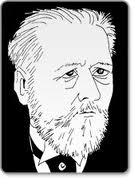
Pyotr Tchaikovsky
Last night, my wife and I heard the Israeli Philharmonic, led by conductor Yoel Levi, play Tchaikovsky’s Symphony no. 6 in B minor (Pathétique). We observed a tiny lesson for innovators.
There are four movements in this wonderful work. The third movement is labeled “allegro molto vivace” which means “very lively”. And very loud! The movement ends with a flourish of timpani and bass drum, with the orchestra playing at top volume, in a closing crescendo… and the audience bursts into applause (including me – and I know the piece quite well), thinking it is the final movement.
The conductor and orchestra waited patiently for the applause to die down, as we looked at one another sheepishly, and then began the fourth movement.
The fourth movement of the symphony is labeled “adagio lamentoso” (which means plaintive, sad), and it is very soft, quiet, somber, an elegy, with a huge gong sounding like a death knell. And the movement, and the symphony, end, like no other symphony I know, with pianissimo (very very soft), almost inaudible ….and the conductor holds the movement, stands motionless, the auditorium is absolutely silent, you can hear a pin drop, nobody applauds, nobody moves, the moment of utter silence is held, held, held….. and then, applause!
The rule is, you end symphonies like Beethoven’s Fifth, with a loud bang. Why? said Tchaikovsky. Why not end it almost inaudibly? Why not surprise the audience? Why not break the rules?
Innovators – try to surprise. Try to put at least something in your creation that is aimed at surprising and delighting, something unexpected. Listen again to the Pathetique…if you wish, just to the end of the third movement, and then the end of the fourth and last movement..and find inspiration. If everyone follows Rule #27, do the precise opposite.
Tchaikovsky died a few days after the premiere of Pathetique. The audience and critics received it coolly (hard to believe?). But Tchaikovsky himself thought it was one of his greatest works – and it was. The symphony takes 40 minutes to play – but those closing few seconds of near-silence are insightful, impressive and unforgettable.

 TIMnovate