You are currently browsing the category archive for the ‘Innovation Blog’ category.
Innovation Blog
A Cure for Alzheimer’s? From the Bible to the Drugstore Shelf
By Shlomo Maital
A new study led by Prof. Michael Ovadia, Dept. of Zoology, Tel Aviv U., isolated an ingredient of cinnamon (CEppt) and used it on mice raised with five aggressive strains of Alzheimer’s-inducing genes.
The results, published in PLoS ONE scientific journal, were impressive. “Fed drinking water containing a CEppt solution over four months, researchers found that the disease’s development was delayed, with additional trials showing that existing amyloids has been dissolved.” (Amyloids are the sticky proteins that gum up the brain, in those who have Alzheimer’s). This may eventually result in an Alzheimer’s drug.
Speaking today on Israeli television (Channel 1), Professor Ovadia revealed the source of his idea that cinnamon could be therapeutic.
“As a youth I took part in a Bible quiz. One of the questions nearly stumped me. The question was, what spices were used by the High Priests in the Holy Temple? That was tough. I finally remembered, one of them was cinnamon. And then, ever since, I kept wondering – why cinnamon? What properties does cinnamon have that made it suitable for use by the High Priests? I tried to grasp the logic. I thought, well, the High Priests do the sacrifices of animals, animals have many pathogens, maybe the cinnamon protects them from the pathogens of animals. So we tested cinnamon, but it did not prove anti-pathogenic. But as we continued our research, we did find it has anti-Alzheimer’s properties!”
By the way, the Bible passage about cinnamon is Exodus 30:23: “Take the following fine spices: 500 shekels of liquid myrrh, half as much (that is, 250 shekels) of fragrant cinnamon, 250 shekels of fragrant cane…”
Prof. Ovadia says he and his students now drink a cup of tea daily, with a cinnamon stick inside.
Innovation Blog
A Car That Runs on Air – Tata Pioneers Again!
By Shlomo Maital
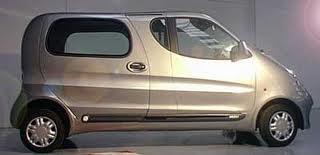
TATA Air Car
My friend and co-author Prof. D.V.R. Seshadri relayed this information to me, which has not yet resonated in major global news sources. Tata, global Indian conglomerate, which bought Jaguar/Land Rover and then built the world’s cheapest car, has now innovated a car that runs on air. Really! Here are the details.
India’s largest automaker, Tata Motors, is set to start producing the world’s first commercial air-powered vehicle. The Air Car, developed by ex-Formula One engineer Guy N’gre for Luxembourg-based MDI, uses compressed air, as opposed to the gas-and-oxygen explosions of internal-combustion models, to push its engine’s pistons. Some 6000 zero-emissions Air Cars are scheduled to hit Indian streets by August 2011. The Air Car, called the “MiniCAT” could cost around Rs.. 347,523/- ($8,177.00) in India and would have a range of around 300 km between refuels. The cost of a refill would be about Rs. 85 ($2.00) The MiniCAT which is a simple, light urban car, with a tubular chassis that is glued, not welded, and a body of fiberglass powered by compressed air. Microcontrollers are used in every device in the car, so one tiny radio transmitter sends instructions to the lights, indicators,etc. There are no keys – just an access card which can be read by the car from your pocket. According to the designers, it costs less than 50 rupees (US$ 1) per 100 Km (about a tenth that of a petrol car). Its mileage is about double that of the most advanced electric car (200 to 300 km or 10 hours of driving), a factor which makes a perfect choice in cities where 80% of motorists drive at less than 60 Km. The car has a top speed of 105 Kmph.
Refilling the car will, once the market develops, take place at adapted petrol stations to administer compressed air. In two or three minutes, and at a cost of approximately 100 rupees (US$ 2), the car will be ready to go another 200-300 kilometers. As a viable alternative, the car carries a small compressor which can be connected to the mains (220V or 380V) and refill the tank in 3-4 hours. Due to the absence of combustion and, consequently, of residues, changing the oil (1 litre of vegetable oil) is necessary only every 50,000 Km). The temperature of the clean air expelled by the exhaust pipe is between 0-15 degrees below zero, which makes it suitable for use by the internal air conditioning system with no need for gases or loss of power.
Tata Motors has struggled with its Nano car. But as an innovator it is not deterred. Look for the Air Car to enjoy greater success.
Innovation Blog
Innovative Way to Pay for College: Human Capital Contracts
By Shlomo Maital

Student in Debtors’ Prison: Let Them Out!
Growing numbers of Americans are either giving up dreams of college, or finding themselves drowning in massive debts through student loans, as the U.S. economy continues to struggle. Meanwhile, Britain’s austerity program includes tuition hikes, causing major unrest among students and concern among those who aspire to become students. [In continental Europe, tuition is free, in Belgium, Holland, France, and Germany, though some fees are charged, especially for business students.]
America’s student loan program is bankrupt. The Student Loan Administration (“Sallie Mae”) has doggedly and fiercely pursued students, to repay their loans, whatever their reasons and circumstances. Unlike mortgages, where home-owners can default, there is no defaulting on a student loan, even for students who are working for low pay in a developing country.
Is there a solution? With America’s budget deficit of 9 per cent of GDP, in the near future there is no possibility the government will come to the aid of young people wanting to go to college but unable to, and deterred by the debts it might entail. The irony is, it has been proven beyond doubt that no public investment pays anything close to the high return paid by human capital investment, and MIT Nobel Laureate Bob Solow proved nations grow wealthy by investing in human capital, not physical capital.
Here is a new idea proposed by New York Times blogger (“Opinionator”) David Bornstein, called a Human Capital Contract (HCC):
If you were a student looking for financing to pursue a degree in social science, would you accept an offer of $16,000, in exchange for paying 4.5 percent of your income for 10 years after you graduate? … I wrote about a social enterprise called Lumni, which helps predominately low-income students in Colombia, Mexico, Chile and the United States finance their college educations through “human capital contracts.” In exchange for the financing they receive, the students commit to repayment schemes along the lines of the one outlined above (the terms vary). After the time period elapses — it’s always 10 years or less — the obligation expires, no matter how much has been repaid.
Reader reaction was sometimes fiercely opposed. After all, it sounds a bit like slavery, some readers said. The real test should be in the marketplace. Offer it to potential students, ensure they understand the terms – and see their reaction. After all, an HC contract does not impose a large absolute debt burden, but only a bearable proportional one, in proportion to income. For students who choose low-income jobs (such as teaching), the repayment burden remains bearable. For students who get high-paying jobs in finance or consulting, they return proportionally more, but retain 95 per cent of the benefits their education made possible. It’s a fair deal. If you graduate and are unemployed, and thus have zero income, you pay nothing. An HC contract is similar to a reverse mortgage. Take the money now, live in your house, when you die the lender gets it. Only: take the money now, use it to build human capital, and pay back part, a small part, of your gains, to the lender.
It’s time to think creatively about how to avoid losing a generation of college students to the American economic downturn. An HC contract is worth careful thought.
Innovation Blog
Innovation CAN Create Jobs: Pratt & Whitney Shows How!
By Shlomo Maital

Pratt & Whitney’s PurePower 1000G: “This Changes Everything”
In a recent blog, I quoted Nobel Laureate Michael Spence, who explained why America’s innovation ecosystem has overall brought zero benefit to America’s middle-class workers. Now, in a case study, I can show how innovation, in a very specific case, did indeed create a lot of well-paying U.S. jobs – the case of jet engine maker Pratt & Whitney’s geared turbofan engine. *
Here is the essence of this best-practice benchmark:
Over two decades ago, Pratt & Whitney, a $12.9 b. U.S. jet-engine maker and a division of United Technologies Corp., which had sales of $54.3 b. in 2010, began to develop new engine technology known as geared turbo fan, GTF. Despite several economic downturns (1991/2 recession, 2000/1 dot-com bubble, 2007-9 global crisis), Pratt & Whitney doggedly moved the GTF project ahead. Before it had a single customer for the new engine, it invested $1.5 billion in R&D. Its proponents within the company used “guerilla funding” to scrounge R&D money and keep the project alive – not unlike the passionate developers of the Macintosh computer. Today the GTF is winning rich beauty contests. Facing formidable rivals GE and Rolls-Royce in three tender contests, Pratt & Whitney won all three, gaining orders from three Airbus 320neo customers, including Lufthansa, as well as from Canada’s Bombardier (regional jets) and Mitsubishi. The GTF engine was a “bet the company” proposition for Bombardier, President David Hess admits. After losing market share in commercial aviation for years, because of tepid innovation, the new engine may well restore technological market leadership for Pratt. As it does so, skilled American workers and engineers will find secure employment for decades. Pratt & Whitney expects GTF to double its business (including the after-market, for maintenance). Pratt now has orders for 1,200 engines and expects to sell – and of course, maintain — as many as 10,000. Assembly will be done in the U.S. and Canada, as well as elsewhere. Some 450 jobs were created by the GTF project in the past year in the United States, and 1,000 jobs were created worldwide. Turbine blades are a key element of any jet engine. They are very high-precision products. Pratt has a cadre of highly talented shop workers in its Middletown, Conn., operation. They make exotic turbine blades that combine titanium and aluminum. It takes 20 years to train a skilled worker, who can earn as much as $100,000. Since these jobs are a key element of Pratt’s innovation, they are not moved abroad, but retained in the U.S. Some of the lower-value-added jobs have indeed been moved overseas, to Singapore, Turkey and China. And Pratt has shifted some production from high-cost union plants in the Northeast to Georgia. But it has found major advantages in linking its R&D to manufacturing, since jet engines need constant redesign to meet airline companies’ specifications, and constant redesign means constant retooling and changes to the manufacturing process. When R&D and manufacturing are adjacent, at least in the same region, the innovation-production link is strong and productive.
The Bush Administration criminally gave tax incentives to U.S. firms to produce abroad, where taxes are low. The Obama administration, typically, has done nothing to reverse this insanity.
The question is – why?
- S. Maital. Case study: Make what you invent, invent what you make. S. Neaman Institute, 2011. Available from: smaital@mit.edu
Global Crisis/Innovation Blog
Greece, The Movie: If You Liked Lehman Bros., You’ll LOVE This One!
By Shlomo Maital
If you enjoyed the dramatic movie featuring Lehman Bros.’ failed rescue and bankruptcy, starring Barclay’s, Treasury Secretary Paulson, Fed expert Geitner, and a cast of thousands, you must not miss the latest version. It’s called Greece – the Latest Bailout. Here are the details, according to the New York Times ‘systemic risk’ reviewer Liz Alderman (June 5/2011):
“A year after providing an aid package of 110 billion euros, or $161 billion at current exchange rates, officials are considering whether to lend Greece an additional 50 billion or 60 billion euros as the country struggles with a deep economic downturn. Even if Greece is pulled from immediate danger again, economists say, European leaders face the prospect of providing still more aid over the next several years if Greece cannot revive its economy. “I don’t see how Greece can eventually avoid some kind of default,” said Martin N. Baily, a senior fellow at the Brookings Institution, who served as chairman of Council of Economic Advisers under the Clinton administration. “It’s hard to see how you can avoid the need to finance this over the next five to 10 years.” ” (NYT
Greece can’t redeem its bonds without new borrowing and without extra tax revenues. Taxes are down, because the economy is down, because there is deep distrust of the government’s ability to manage the country. New borrowing is tough, because markets are becoming increasingly fearful. And interest rates are rising, increasing the debt burden even more. Greece is heading toward a debt burden of 160 per cent of its GDP, which is unsustainable.
But here is what nobody is saying openly. If Greece falls, like Lehman Bros. it will take down many other players far away from Greek shores. American and Chinese banks apparently have very large exposure to Greek debt and will lose heavily in the event of a Greek debt default, even a partial one. (The word used is “restructuring”, which in simple language means, wiping out a major part of the debt). This is partly why there is heavy external pressure on Europe to bail Greece out again..and again, and again. There is serious systemic risk here, because a Greek default would shake the system and cause severe shock waves, just like Lehman Bros.
The rescue of Greece depends on Germany’s OK, and for the moment Germany is not cooperating. Germany is fed up with bailing out those incompetent Greeks, as they see it.
I’m certain Greece will eventually leave the euro and restore its currency, the drachma. There will be a major short-term crisis, because Greece’s euro debt will largely be in default. There will be inflation, a serious devaluation – and a new beginning for Greece. This may be the model for Portugal and Ireland as well. The question is, how long will it take before serious leaders bite the bullet and do the inevitable? How much systemic risk will we have to endure, until someone steps up to the plate and takes charge and tells the truth? And how many more times will American banks have to be bailed out, at the expense of ordinary working people? The people of Greece deserve better.
Innovation Management
We Missed Towel Day! So – Reread the Hitchhiker’s Guide to the Galaxy!
By Shlomo Maital

Adams’ favorite phrase on his book’s cover: Don’t Panic!
Yikes! Innovators! We missed Towel Day in this blog! Towel Day is May 25. It was launched by fans of Douglas Adams, author of the wildly imaginative five-book trilogy, The Hitchhiker’s Guide to the Galaxy, by Douglas Adams. Adams died suddenly of a heart attack on May 11, 2001. Once he stayed at a friend’s
beach house. He realized each day that he could never remember where he had
left his towel, the day before. One of his friends then came up with a saying to define competent people: “someone who knows where his towel is”. Adam uses
this phrase in his first book.
Adams believed in an aleatoric (random) universe. In one of the most creative passages, you may recall, a super-super computer Deep Thought (a la Deep Throat) works for 7.5 million years (far longer than it took to produce humans) to find the Ultimate Answer (to an Ultimate Question, which remains forever unknown). At least Deep Thought gets it! The answer is… 42. Adams was utterly uninhibited in all of the five Hitchhiker books. He was fearless. He wrote whatever he felt like, he never wrote for critics, he never feared ridicule, he never sought fame, fortune and bestseller-dom, he never wrote to a formula, and he never repeated himself in any of the five books. All are wildly imaginative, in different ways, inventing characters so impossible they are believable. For instance, the Babel fish, a tiny leech thing that you put in your ear, that translates the brain-wave words of any creature in the Galaxy directly into your brain, undoing the punishment G-d gave us for the Tower of Babel.
This creature, Adams writes, by facilitating seamless communication between different races and cultures, “caused more and bloodier wars than anything else in the history of creation.” Imagine if our enemies and foes could know instantly what we thought of them. Or, for that matter, our significant others….!?
Innovator, if you feel the creative juices ebbing, pick up one of the Hitchhiker books at random, read a few passages, anywhere in the book – and then take chances, like Adams. And keep a towel around, a small one, as a reminder. But on second thought – don’t bother, you’ll probably forget where you put it.
Innovation Management
The Best Way to Predict the Future: Read The Dynamics
By Shlomo Maital

EURO ECG terminal doom loop
Peter Drucker’s famous quote, the best way to predict the future is to create it, has become a worn cliché. And it’s probably one of his least pragmatic sayings – very few of us can truly create the future, or even shape it significantly.
Yet, we still can predict the future – by ‘reading’ its dynamics. Here is what I mean.
Europe, led by Germany, has been doing a long and futile dance with debt-ridden countries like Ireland, Greece, Portugal, even Spain. Greece and Ireland got bail-outs that really bailed out major EU banks and put ordinary citizens into deeper debt. Where is this heading? What is the future of the euro?
Let us ask, what is the key dynamic at work here? It is this. Interest rates all over the world are rising. They have to, after years at rock-bottom, and as inflation gains. Against the background of rising rates, bond markets are becoming more and more panicky about Greece’s ability to avoid defaulting on its bonds as they mature. When this happens, the interest rate on Greek borrowing rises. This, in turn, makes it even harder for Greece to pay back bondholders by borrowing new money – which is the only way Greece can avoid default. So this makes the bond market even more nervous. …and so on. In system dynamics, this is known as a doom loop. And it is driving events as we speak. Higher interest rates increase fears of default, leading to higher interest rates, leading to more fears of default, leading to even higher interest rates…and so on.
Ireland’s Transport Minister let the cat out of the bag, by saying Ireland would probably need another bailout. (The Finance Minister quickly denied it, but it was too late – Ireland’s doom loop was set in play). Greece obviously needs a second bailout – and then a third. At some point, Germany is going to say, enough! And at last, when Greece restores its drachma and its sanity, the doom loop will end. When Ireland stops scalping its citizens to reward greedy bankers, the doom loop will end.
When we read its dynamics clearly, the future can tell us now, in the present, where it is heading, or at least where it is heading if current trends persist. Ask, what is the dominant driving dynamic ‘loop’ now at play? Is it doom or boom? If boom, is it sustainable? If gloom, how does it end?
These words are turning my hair white, because the driving ‘loop’ here in the Mideast is definitely not a serene one.
Innovation Management
New Way to Keep Warm: Love Those Penguins!
Collaborating Beats Competing
By Shlomo Maital

Emperor Penguins huddling in a fierce blizzard
ABC On-line and BBC World Service both report on an amazing new study of Emperor penguins and how they stay warm in frigid tornado-speed winds. A team of scientists set up cameras that took pictures of them every 1.3 seconds. We all know the penguins huddle together to save energy. But what about the losers on the outside? Isn’t it “survival of the fittest”? The weakest get shoved to the outside and don’t survive, thus ensuring that the gene pool sorts itself out on strength and ‘sharp elbows’? This is how things work in capitalism, right? That’s how Wall St. works.
Well, apparently not. That’s not how these penguins think.
Problem is, explains Daniel Zitterbart, from the Univ. of Erlangen-Nuremberg, Germany, “if the huddle is too loose, the penguins freeze. If the huddle is too tight, you can’t move at all.”
Solution? Collaborate.
“The cameras revealed that every 30 to 60 seconds, a penguin or group of penguins would start to move a little. This sets off a chain reaction, with surrounding penguins moving as well. The movement spreads quickly, much like a wave, Zitterbart was quoted as saying. The wave is nigh-on invisible to the naked eye in real-time, but allows smaller groups to merge into larger huddles. The cameras also revealed that as the wave hit the front of the colony, a few penguins there would work their way to the back of the pack. As a result, the warmth would be shared as the penguins travel through the colony.”
Now, here is the major question. If a group of relatively dumb Emperor penguins can find an ingenious way to collaborate and keep everyone warm and alive in impossibly frigid conditions – why can we genius human beings not do the same?
What about putting a group of the Wall Street maniacs who destroyed the world in 2007-8 out on an Antarctic ice flow and see what their massive brains come up with, in the 30 seconds before their toes and fingers freeze?
Global Crisis/Innovation Management
When Management Becomes Feminine: Lessons from Medicine
By Shlomo Maital

Meg Whitman who as CEO built eBay, 1998-2008
This blog space has often made the case, supported by evidence, that women are more suited to become business leaders and entrepreneurs than men, because evolution has given them superior skills in communication and collaboration. I’ve even proposed launching an investment fund that invests in businesses led principally by women.
Today a modest, page 5 Global New York Times article * gives me added fuel. Apparently, more and more doctors are women, in the U.S., especially among young doctors; “half of all younger doctors are women and that share is likely to grow”, notes the author, Gardiner Harris. Why? Having a private practice in medicine in the U.S. has become a huge hassle, with enormous medical liability insurance bills, endless paperwork and other obstacles. Little time is left to practice real medicine. Moreover, running a practice is like running a demanding business, and saps energy and time that should be spent with the family. Women skip this from the outset, so they can be mothers and wives as well as doctors. The result has been to greatly strengthen hospitals and health care providers (HMO’s), where more and more women doctors choose to work. For the first time, the powerful AMA American Medical Association supported the Obama health care reforms, when in the past the AMA has fiercely opposed any such reform. Women seem to be the reason.
Let us hope that the same phenomenon revitalizes entrepreneurship and management. Let’s hope more women are promoted to become senior managers. As this happens, working hours will become normal, as women choose to balance work and family. This will benefit male managers, too. And we will also see more women entrepreneurs, as female role models show how it is entirely possible to start a business and start a family, at the same time. This, in turn, will have an echo effect, permitting more men to balance work and life.
Generation Y is reluctant to follow in the ruts created by the baby-boomers, who sought wealth at all cost and were left, in many cases, without friends or family. Generation Y wants to have a life, not just a job. That creates opportunities for women. Now, all that is needed is the recognition among the dominant men that women are a key resource.
Women are different from men. Vive la différence. It’s time we stopped wasting the valuable resources that difference embodies.
* Gardiner Harris, “As doctors’ jobs change, their priorities do as well”. Global NYT May 31, p. 5.
Innovation Management
Are We Crippling Our Kids’ Creativity? The Dilemma and a Solution
By Shlomo Maital
Everybody knows the most creative nation in the world is the nation of five-year-olds. Small children have not yet learned the ‘rules’, what is possible and real, and what is not. So in their world, everything is real, everything is possible. As a result, their imaginations run wild. Then we send them to Grade One – and methodically we stamp out their imaginative powers. And we buy them games and toys and show them TV shows and movies where everything is incredibly real, in each detail, leaving no room for the imagination.
Here is what one of my blog readers, Anne Marie, from Singapore, notes about her own childhood:
I actually grew up in the Philippines, and growing up with just the basics, as a child I didn’t have the privilege to have so many toys and technology before in a third world country is not even starting. But I am glad I did (and not even spoiled by my parents with all these toys) – it is because, I could clearly recall that I was only given a ball, a stick and some elastic bands, and from these three I was able to create hundreds of games with my playmates. I remember my childhood was so much fun. Now, I can see my nieces and nephews stuck in their computers, playing in a virtual world, but not an ounce of creativity at all! I sometimes shut their computers to test, and give them the basics… but how very minimum is the number of games that they can think of! But I am not giving up. A young mind is easier to train, so we will wait and see….
Thanks Anne Marie! There is a solution. Purposefully choose your children’s toys and games and spare-time
activities, to foster imagination. There are still many such games available. If you wish, make your own toys, out of cardboard and paper and sticks. Challenge them to create things, rather than prefer things that are already created. And when your child comes home and says he or she solves an arithmetic problem in an unusual way, and got a big red X on it from a rigid teacher – tear a strip off the teacher and the teacher’s principal, and tell them about why you think children should be encouraged to be creative, rather than have their creativity doused by thoughtless in-the-box taskmasters.
It is not inevitable that kids should lose their creativity in school. This process can be stopped. But to do so it not easy. Take up your responsibility as a parent, and spring into action, before it is too late.