
You are currently browsing the category archive for the ‘Innovation Blog’ category.
Global Crisis/Innovation Blog
The Euro Crisis for the Fifth Grade
By Shlomo Maital

In Europe, the answer is definitely, No!
Are you smarter than a fifth grader? This is the name of a popular US TV show, that matches adults’ knowledge against that of kids. More often than not, the kids win. Today, in Europe, we can ask the leaders of Europe – European Central Bank, the leaders of France and Germany, and others – whether they are as smart as fifth grader. The answer is a resounding no!
Here is my effort to explain the current euro crisis to fifth graders. If you’re i12 years old, n fifth grade and want to rescue the euro (and the world) from spineless scoundrels, please, contact me. If you cannot explain something well enough so a 12-year-old can understand it, you probably don’t understand it well enough yourself.
Every country has its own kind of money. Europe’s money is called the ‘euro’. A lot of people are worried about the euro. Here is why. Some countries in Europe are in trouble. This is because a country, even though it is big, is just like you and me. When you spend more than your weekly allowance, sometimes you can borrow from your mom or dad. But then you owe money. Because they keep track. And next week, when you get your allowance, you have to pay back what you owe. That leaves you with a lot less money for movies or treats. Sometimes you might not have ANY money that week. That is real trouble. Countries, too, borrow money. Then they have to pay it back. To pay back what they owe, they often borrow more. But, what if nobody wants to lend them money? Like, what if your mom and dad refused to lend you money against next week’s allowance? Countries can’t get along without borrowing money. In Europe, countries like Ireland, Portugal, Italy, Spain and now Greece have borrowed too much. Some of what they owe has to be paid back soon. To pay it back, because they have no money, they have to borrow more. But what if nobody will lend to them? What if people are afraid that if they lend to them, they won’t get their money back? What if there are rumors that these countries are broke and can’t pay back what they owe? The rumors themselves worsen the problem, because they make it even harder for countries to borrow. When you borrow too much, your mom and dad say, hey, get real. Stop wasting money. When countries borrow too much, they have to say to themselves, too, hey, get real – stop spending and borrowing so much. But this is really hard. Nobody likes to hear those words, and sometimes the country’s leaders don’t want to say them, because people get mad and don’t vote for them. So in Europe some countries have to go to their ‘mom and dad’ (the bigger countries in Europe that do have lots and lots of money, like Germany and France) and ask for emergency help. Like mom and dad, the rich countries in Europe say, sure, but first, get real! Cut your spending! And then the people of these countries in trouble get real upset, because they can’t buy all the great stuff they used to buy, with the borrowing. Now, your mom and dad can tell you what to do, more or less. But in Europe, the rich countries don’t seem to be very good at telling the countries in trouble what to do. Just like you may say to your mom and dad, come on folks, you have oodles of money, why don’t you give me some of it? — so these poor countries in Europe say, hey, rich countries, help me out! Just forget I owe you all that money, or at least some of it. And the rich countries say, uh uh! No way! If we do that, you’ll never change, you’ll never learn to handle money properly – just like your mom and dad. Grow up! So that’s where things stand. And the real problem is, nobody seems to have enough brains, like a fifth-grader, to realize that the problem has to be solved once and for all, it cannot go on like this. Neither the rich countries (the moms and dads), nor the poor countries (the fifth-graders who borrowed too much against their allowances) seem very good at discussing things and reaching a deal that is fair for both sides. Maybe we should send some real fifth-graders to knock sense into both sides. They can’t do any worse than the bunglers who are running things today.
Global Crisis/Innovation Blog
Happy Birth Day, South Sudan!
By Shlomo Maital

Flag of South Sudan
Today, a new nation was born, South Sudan, joining 195 other independent countries. There were joyous celebrations in the capital city, Juba. The birth of South Sudan marks the end of a long and bitter civil war with the North, primarily Muslim, in which 2 million civilians were killed.
South Sudan has a flag, an army, a leader (President Salva Kiir), an anthem, all the trappings of a nation. No doubt these symbols are hugely important for the dignity of the South Sudanese people. But there is also desperate poverty. The life expectancy in South Sudan is a desperately-low 42 years. The infant mortality rate is 112 out of 1,000, among the highest in the world. Most of the country lives on a dollar or two a day; perhaps as many as 6 or 7 million out of the 8 million population.
The importance of South Sudan’s independence lies in the fact that at long last, the United Nations has shown it has at least minimal competence in bringing to an end bitter civil wars and conflicts. UN Secretary-General Ban Ki Moon was present at the independence day festivities and look especially happy. The real test comes now. As the euphoria of independence fades, the new nation faces immense difficulties. It has oil wealth, but apparently its wells are beginning to dwindle. It pumps oil, but the ports, refineries and pipelines all are in the North. So South Sudan will have to rely on, and collaborate with, its more populous, more powerful neighbor Sudan and its leader, Omar al Bashir, declared a war criminal by UN Human Rights officials. Sudan has about 30 million people, and a well-equipped well-trained army of over 200,000 soldiers. Its economy is growing, partly due to oil, but the people of Sudan are still desperately poor. Sudan is the 3rd largest country in Africa, after Algeria and the Democratic Republic of Congo, with nearly 2 million kilometers of land.
South Sudan has a highly capable Finance Ministry. It will face two key issues: infrastructure and foreign investment. There has been a huge rush by oil companies to grab land and oil rights in South Sudan. But pulling oil out of the ground does not help ordinary South Sudanese, any more than it does in oil-producing Arab nations in the Mideast and North Africa. Will wealthy nations come to the aid of South Sudan? Will South Sudan use its oil wealth to build roads, schools, communications? There are now 55 nations in Africa, and most face drought, poverty and internal corruption. We all wish South Sudan well. We wish wealthy Arab nations (South Sudan has been invited to join the Arab League, even though it is largely Christian) would donate generously. South Sudan has declared it will exchange ambassadors with Israel. Israel knows a lot about arid-land agriculture and can help South Sudan a lot. A small increase in the productivity of its subsistence agriculture can make a huge difference to its people.
Today is euphoric. Tomorrow, reality dawns. Let us hope South Sudan and its leader Kiir will have the wisdom to educate its people and build a future of hope and peace for them. Like people everywhere, they have earned it.
Global Crisis/Innovation Blog
Robert Reich Connects the Dots: What’s Wrong with America in 200 Simple Words
By Shlomo Maital

Robert B. Reich was a Harvard U. professor and Secretary of Labor under President Bill Clinton. He is a liberal. Here is his ‘take’ on what’s wrong with America, in clear simple language, and in 200 words. You can view his short talk on YouTube *. Here is the text:
“What’s the problem with the economy? Let me connect the dots in less than 2 minutes.
● Since 1980 the US economy has doubled in size, but most people’s wages have barely increased.
● Almost all the gains have gone to the super-rich. The top 1% used to take hom 10% of total income, before 1980, now it takes home more than 20%, and holds 40% of the nation’s entire wealth.
● All this money at the top has given the super-rich political power, especially to lower their tax rates [and to keep Congress from restoring the “temporary” Bush tax cuts on the wealthy]. Before 1980, the top marginal income tax rate was 70%, now it is down to 35%, and much of the income of the wealthy is capital gains, 15% tax. The Internal Revenue Service reports that the richest 400 Americans pay only a 17% tax rate.
● Total tax revenues are down to 15% of the economy, the lowest in 60 years, so public services are being cut. Kids are crowded into classrooms, roads, bridges, health care, all are sacrificed.
●Instead of joining together for better wages and jobs, people are so scared, they compete with others for the remaining scraps. Public workers fight private sector workers, native Americans fight immigrants, etc. No longer does the middle class have the purchasing power to get the economy going, so we have high unemployment and an anemic recovery.
The only way to have a strong economy is to have a strong middle class. “
And, Reich might have added, a militant united fighting middle class, one able to stand up for its rights and vote out of office the scoundrels who deprive them of those rights.
* http://front.moveon.org/scribbling-sharpie-illustrates-the-truth-about-our-economy/#.TfreVdij6mH
OR http://www.youtube.com/watch?feature=player_embedded&v=JTzMqm2TwgE
Global Crisis/Innovation Blog
Why the iPod is Not the Apple of America’s Eye: And Why America’s Rich Don’t Care
By Shlomo Maital

Apple’s iPod
I’m a big fan of Chrystia Freeland, Reuters correspondent and NYT columnist. In a recent column she supplies a set of data regarding the jobs and wealth created by Apple’s iPod, derived from an excellent study by three economists. * My friend Paul drew my attention to it.
Here is why iPod, and Apple in general, cannot be the Apple of America’s job creation eye. The numbers speak for themselves.
- In 2006, the iPod employed nearly twice as many people outside the United States as it did in the country where it was invented – 13,920 in the United States and 27,250 abroad.
- Fewer than half of the foreign iPod jobs – 12,270 – are in China. An additional 4,750 are in the Philippines.
- Even though most of the iPod jobs are outside the United States, the lion’s share of the iPod salaries are in America. Those 13,920 American workers earned nearly $750-million (U.S.). By contrast, the 27,250 non-American Apple employees took home less than $320-million.
- However, more than half the U.S. jobs – 7,789 – went to retail and other non-professional workers, like office support staff and freight and distribution workers. But those workers earned just $220 million. More than half the American iPod jobs are relatively poorly paid and low-skilled.
- The big winners from Apple’s innovation were the 6,101 engineers and other professional workers in the United States who made more than $525-million. That’s more than double what the U.S. non-professionals made, and significantly more than the total earnings of all of Apple’s foreign employees.
- Most of the wealth accruing from iPod went to Apple’s American shareholders, who benefited from the cheap foreign labor and the cheap American labor.
In a poignant p.s., Freeland quotes Keith Banks, president of U.S. Trust, the private wealth management arm of Bank of America, who has said that for his millionaire and billionaire clients, the recession was over. Nor, Mr. Banks told her, were they overly worried by the lackluster U.S. economy or Europe’s even weaker performance. That’s because the global economy over all – powered by the emerging markets – continues to grow strongly, and Mr. Banks’s American “high-net-worth individuals” are not just U.S. citizens, but global capitalists. My own translation: America’s “global capitalists” love screwing American workers, provided they continue to grow wealthy as a result. I’ll bet Mr. Banks’ clients sing The Star Spangled Banner with tremendous fervor and patriotism. And, at every opportunity, they insist that America is the greatest country in the world [for them!].
_____
Greg Linden, Jason Dedrick and Kenneth Kraemer, “Innovation and Job Creation in a Global Economy: The Case of Apple’s iPod,” The Journal of International Commerce and Economics, May 2011.
Innovation Blog
The Seven Innovation Secrets of Steve Jobs
By Shlomo Maital
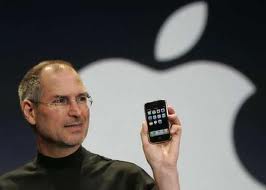 Steve Jobs
Carmine Gallo is a consultant who has specialized in a close study of Steve Jobs and what innovators can learn from this remarkable man. His latest book is: The Innovation Secrets of Steve Jobs, and it’s already a best-seller. Here are the seven things we can learn from Steve Jobs, excerpted from Gallo’s book. My own comments are in italics.
Principle One: Do what you love. Steve Jobs once told a group of employees, “People with passion can change the world for the better.” Jobs has followed his heart his entire life and that passion, he says, has made all the difference. It’s very difficult to come up with new, creative, and novel ideas unless you are passionate about moving society forward. This has become a cliché, but I meet people daily who continue to violate it.
Principle Two: Put a dent in the universe. Passion fuels the rocket, but vision directs the rocket to its ultimate destination. In 1976, when Jobs and Steve Wozniak co-founded Apple, Jobs’ vision was to put a computer in the hands of everyday people. Many of us aim far too low. Aim so high you need an oxygen mask. The act of aiming high will itself create a powerful dynamic that helps you.
Principle Three: Kick start your brain. Steve Jobs once said “Creativity is connecting things.” Connecting things means seeking inspiration from other industries. It’s amazing how you can ‘import’ ideas from other industries, when other people fail to do so. Henry Ford imported the idea of an assembly line from a Chicago meat packing plant!
Principle Four: Sell dreams, not products. To Steve Jobs, people who buy Apple products are not “consumers.” They are people with hopes, dreams and ambitions. In other words: We buy, because we like why Apple does things, not just what it does.
Principle Five: Say no to 1,000 things. Steve Jobs once said, “I’m as proud of what we don’t do as I am of what we do.” He is committed to building products with simple, uncluttered design. And that commitment extends beyond products. From the design of the iPod to the iPad, from the packaging of Apple’s products, to the functionality of the Web site, in Apple’s world, innovation means eliminating the unnecessary so that the necessary may speak. Innovate by subtracting, not by adding. Simplify, simplify! Apply this to your life, too!
Principle Six: Create insanely great experiences. The Apple store has become the world’s best retailer by introducing simple innovations any business can adopt to create deeper, more emotional connections with their customers. There are no cashiers in the Apple store! Create not a store, not a business, not a product – create a customer experience!!
Principle Seven: Master the message. Steve Jobs is the world’s greatest corporate storyteller, turning product launches into an art form. You can have the most innovative idea in the world, but if you can’t get people excited about it, it doesn’t matter. Start your business with a powerful mantra, three words. Disney: “We make people happy!”. The mantra is not for your customers, it is for you and your fellow workers. If you work at Apple, and you learn “think different”, how likely is it you will come up with a dull conventional design?
Global Crisis/Innovation Blog
Iowa Is The Answer: What is the Question?
By Shlomo Maital

NOT Iowa’s Strength!
In the Kennedy administration, intellectual staffers liked to play this game. Someone gave an ‘answer’. Then the group had to come up with an appropriate question.
Here’s an example. “Iowa”. What is the question?
The question is: What state has the solution to American’s current economic woes: unemployment, lack of jobs, recession?
Here are the numbers. Iowa’s rate of unemployment is about 6 per cent, 3 percentage points lower than America’s average. Some 30 per cent of Iowa workers are employed in manufacturing (not in agriculture, as many people familiar with the term “Corn Belt” believe), double the American average. Iowa has some of America’s most advanced factories. At the moment, President Obama is in Iowa, visiting factories and touting the Iowa solution. It was here that he began his campaign for the Democratic nomination for the Presidency.
According to Teresa Wahlert, director of Iowa Workforce Development, “Manufacturing continues to be the driving force in the Iowa recovery.” Manufacturing employment was up 1,400 jobs from March, the highest of any employment sector. Growth was concentrated in the wood product and machinery manufacturing sectors, as well as beverage and food production.
Indeed, Iowa is the answer. Bring back manufacturing. Bring it home from China. Why don’t the other 49 states in America benchmark Iowa, visit its factories, speak to its governor, and act to develop manufacturing? America’s House of Representatives and Senate are a write-off, stuck in the quagmire of partisan politics. It is up to the people and to the states. State governments have the authority to offer tax incentives to companies willing to locate factories in the state. They have the authority to initiate vocational schools, training programs and college programs focused on lean manufacturing.
Here is what Iowa’s Economic Development agency says:
Iowa’s success in advanced manufacturing supplies cutting-edge, innovative products in a myriad of industries – agricultural and construction machinery, chemicals, food manufacturing, aerospace engineering, aluminum, and steel– and is building the world’s diversified manufacturing economy of the future. Some of the world’s leading companies manufacture in Iowa, reinforcing the state’s position as a center for advanced manufacturing. Companies that have manufacturing operations in Iowa include: Rockwell Collins, John Deere, Alcoa, HNI Corporation, Winnebago and Vermeer. Iowa has approximately 4,100 manufacturing establishments, employing over 198,000 people. The state’s manufacturing sector contributes the largest share of state gross domestic product (GDP) of any major sector with $23 billion contributed in 2009. Iowa ranks seventh among all states in the percentage of total GDP derived from the manufacturing sector.
Iowa is the answer. Why don’t other states realize this?
Global Crisis/Innovation Blog
America in Crisis: Political Gridlock, Leadership Vacuum, and an Accident Waiting to Happen
By Shlomo Maital
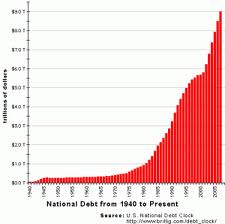 America’s Debt Mountain
America’s government has run out of money. Unless Congress passes legislation to increase the legal ceiling on the debt the U.S. govt. can owe, by August 2, parts of the federal government will shut down. At a time when the economy is teetering already on the brink of a double-dip recession, this will be disastrous.
The Democrats and the Republicans are deadlocked. The Republicans want massive spending cuts. The Democrats want higher taxes on millionaires. Neither side will budge.
Somehow, America’s budget deficit must be cut. According to The Economist, the deficit is 9.1 per cent of GDP. In contrast, Greece’s budget deficit is only 8.4 per cent of GDP – and Greece is deep in crisis. America’s trade balance in April was (at annual rate) $681 b. (the gap between goods exports and goods imports). These two deficits are massive and endanger not only America and the world. Yet there is political gridlock.
It gets worse. With Asian economies recovering, there is growing demand for capital and this is leading to higher interest rates. A year from now, short-term interest rates in the U.S. will be two per cent higher. America does a lot of short-term borrowing. On its total national debt of $15 trillion, a rise of two basis points in interest costs amounts to $300 b. in added spending! The historical average interest rate on America’s debt is 6 per cent. At present, the U.S. is paying two percent. So if you factor in the higher cost of borrowing, America’s deficit is getting worse, not better. And as expert Eugene Bowles notes: This (debt crisis) is the most predictable crisis in history – yet the politicians in Congress cannot sit down and agree on a plan of action. Obama and the Democrats are as much to blame as the Republicans. It is an accident waiting to happen.
When Greece is in crisis, the euro becomes shaky. When America is in crisis, the whole world becomes shaky, because the American dollar is still the only global currency. Contrast America’s political gridlock with China, whose Premier Wen Jiao Bao, on a visit to Europe, has pledged China’s resources to buy Greek bonds. He realizes it is not in China’s interest to have a euro crisis, or indeed a crisis of any kind. Imagine the irony – China is acting to bail out the euro, while Germany’s narrow self-interest is endangering it.
China gets it. America’s politicians do not. And all we ordinary citizens of the world can do is sit and watch America and the world fall of the cliff….
Global Crisis/Innovation Blog
How to Get Health Care in America: Rob a Bank
By Shlomo Maital

This is a true story, reported on CNN.
James Verone, from Gaston County, North Carolina, is 59. He has serious medical problems (a growth on his chest, two ruptured disks and a problem with his left foot). He has no job, no money and no health insurance.
So – how do you get urgent health care in America, one of the wealthiest nations in the world?
You get creative.
Gaston walks into a bank and slips a note to the teller: “This is a bank robbery. Please only give me one dollar.” He then tells the bank employees, “I’ll be sitting right over there in the chair waiting for the police.” He then perches himself on a chair just outside the bank and awaits the police.
He hopes for a 3-year sentence, so he could reach 62 in jail and then get Social Security.
CNN reports, “The police charged him with larceny, not bank robbery, because of the $1 amount he demanded at the bank. Verone told his hometown paper, if the jail penalty isn’t great enough, the crime will happen again.”
In jail, Verone says, the prison doctor who treated him accused him of “manipulation”.
In America, you get health care by committing a crime and going to jail. It seems there is no other way.
America. The country only a mother could love. Or could she?
Innovation Blog
How to Transform Crisis into Opportunity: Big Time Brands, Big Time Innovation
By Shlomo Maital



Zanybandz SLAP watch Splash Watch
Big Time Brands is a company founded only about a year ago in Tulsa Oklahoma. It has three enormously successful products: SLAP Watch, Zanybandz, and Splash Watch. Each is a hip product, totally cool, have-to-have, with very low price tags, and we can learn much from this incredible company.
First, the products:
* Zanybandz, a silicone rubber band bracelet that became an international success almost overnight. Big Time Brands gets 800 calls a day for this product, and others.
* Splash Watch. Unique packaging and bright vibrant colors.
* SLAP Watch is a twist on the spring coil bracelets popular in the 80’s and 90’s, created by combining the mechanisms with a watch. Available in 9 colors with interchangeable faces
Now, the lesson.
All these products are bright, colorful, eye-catching, and above all, really cheap. They are all based on silicon plastic. The founders say (on CNN): our business was created by the economic downturn. People have stopped buying expensive gifts, and instead buy the Big Time Brand products, which are attractive and unusual enough to be appealing, yet cost very little. When an economic crisis makes consumers very price-sensitive, innovators seek the low end of the market, and use clever design to make cheap products look great. Some small businesses tell Big Time Brands these hot products have saved their business.
Check out Zanybandz, Splash Watch and SLAP Watch. What do these products tell you about your own product innovation? And how much do you invest in, and believe in, great design?
Innovation Blog
A Startup on $32,000 – And Zero VC’s!
By Shlomo Maital
Today’s new issue of Bloomberg Business Week recounts, according to Vivek Wadwha, how David Park and partner Eric Bahn launched a startup Web-based business for a total of $32,000. There are valuable lessons here. It is no longer necessary to pursue a Venture Capitalist with a big check for a humiliating and often frustrating year or more. Instead put your valuable time into building your business. Here is the story:
“Earlier this year David Park shifted gears, embarking on a new version of the site that he describes as a social network for business school applicants. It includes new features such as aggregated GMAT prep and MBA admissions news, a way for members to connect with one another, and social gaming elements to keep members motivated. It makes money advertising test prep services. Amazingly, the new site took only four months and cost just $32,000 in total.
No one says they can build their products for less than the cost of a BMW 328. But Park and Bahn did. How? To start with, they crowdsourced the design. Instead of hiring a bunch of marketing people, as tech companies usually do, they asked their user community for volunteers to help conceive a new site. Then they selected a handful of the most eager users and trained them on the basics of Silicon Valley-style product management. Next, Park and Bahn needed to find a designer. They used 99designs.com, which hosts design competitions, for a two-week contest that attracted hundreds of designers, yielding a design they used as the theme for the new site. The contest, prize, and designer’s time cost $9,200. They broke up Web development into two tasks: front-end engineering (turning design artwork into code) and back-end engineering (making the code actually function). They built their technology on top of WordPress, phpBB, and Drupal—which are free, open-source platforms. Front-end engineering usually requires sophisticated coding done by contractors who earn as much as $100 an hour. Instead, the Beat The GMAT team turned to a service called PSD2HTML.com—which converts Photoshop design files into HTML and CSS code. This service costs $160 to $220 per Web page, totaling $4,500. For back-end engineering, they hired four developers from Hungary and Ukraine on the outsourcing website oDesk. They paid $15 to $20 per hour. The entire back-end engineering cost $18,000.”
” In software development, things don’t usually go as planned. Park and Bahn had their share of missed deadlines, buggy code, and product problems. Outsourcing always makes things more difficult, because developers are in different time zones, speak different languages, and don’t always understand what is expected of them. It took many sleepless nights and lots of caffeine to surmount these obstacles.”
And here is the punch line. You do NOT need, or want, a venture capitalist.
” If entrepreneurs can build sophisticated technologies so cheaply in the Web world, who needs venture capitalists any more? Software startups often spend the first few months of their existence polishing business plans and pitching investors. They can instead be working with smart people all over the world and focus their energy on perfecting their technologies. When law school grads can build successful technology companies—Park says his site has been profitable since its inception, with annual revenue close to $1 million—the notion that website founders need computer programming backgrounds is outdated. “


