
You are currently browsing the category archive for the ‘Innovation Blog’ category.
Global Crisis/Innovation Blog
All-American, but – Made In China: America is #2, First Time in 110 Years!
By Shlomo Maital

American Barbie, “Made in China”
Writing in The Financial Times (March 18), Gillian Tett notes that despite the lower dollar, slightly appreciating yuan, and deep understanding that America must repatriate its manufacturing from offshore sites, to create well-paying jobs – many things that are labeled “American” are in fact still Chinese-made.
- At the American Girl store in Manhattan, the ‘all-American” dolls and clothes are Made in China. Including Barbies.
- Apple is American; however, according to Tett, “components for the iPhone are variously assembled in China, Korea, Taipei, Germany and the US, involving almost a dozen companies which are hard to pigeonhole with any ethnic label”.
According to Tett, “the economics consultancy IHS Global Insight calculated that in 2010 China displaced America as the largest manufacturer in the world – the first time that the US has lost this top slot for 110 years”.
The head of the World Trade Organization, Pascal Lamy, has recently (according to Tett) said that economists should stop paying attention to “imports” and “exports”, because so many goods have imported components that “made in China” or “made in America” has no meaning any more. There is a simple solution. Measure “net export value added” (the value added to imported components for export goods). Trade statistics are not arbitrary; it DOES make a huge difference where things are made, whether in China or America, to workers who make a living in factories. And for buyers, it should also make a difference whether American Barbie dolls are made in Shanghai or in Peoria.
Innovation Blog
Beatles’ Hard Years’ Night: It Takes Much More Than Talent
By Shlomo Maital

The Young Beatles
Here is the Beatles’ success story. They made a demo tape of “I Wanna Hold Your Hand”. They sent it to America’s Capitol Records. Capitol executives loved it, grabbed it, the album became a smash hit, the Beatles were invited to appear on Ed Sullivan (hit TV show)..and the rest is hysterical groupie history.
Very little of this is true. Here is how it really happened, according to a fine new book.* “Love Me Do” was a big hit in Britain for EMI, but the American affiliate of EMI, Capital Records, refused to issue it, or any of the album’s singles, including “Please Please Me”.
Were the Beatles upset, angry, hurt? Did their egos lead them to tell Capitol to …@#$^%&*?
No. They used the Saroyan Syndrome. Innovators should remember it. Young William Saroyan, a budding writer, sent a short story to Saturday Evening Post, then the leading market for such work. They rejected it. He then wrote them, “I will send you one new story every single day, until you accept one”. And it took a year, but they finally did. The rest is history – he became one of America’s best fiction writers.
The Beatles continued toinnovate, to record new material and sent it to Capitol – for one solid year. At long last, in 1964, Capitol released “I Wanna Hold Your Hand” which quickly became Beatles’ first #1 hit in the U.S. and made Capitol Records a serious fortune. Note that the Beatles did not continue to pitch the same material to Capitol. Instead, their producer, George Martin, sent something to Capitol “only when he had something new and improved”.
Stubborn persistence – which my research has found is a top quality of successful entrepreneurs, second only to (and very similar to) resilience.
It takes a lot more than raw talent to break through.
* Richard Courtney and George Cassidy, Come Together: The Business Wisdom of the Beatles. 2011. Reviewed in Global New York Times, March 21, p. 18.
Innovation Blog
Bipolar Issues: Is Self-Confidence or Humility A Better Motivator?
By Shlomo Maital
If you are an innovator, is it better to be supremely confident, even arrogant? Or is it better to be humble, self-effacing, modest?
The answer is: Yes. There appears to be a bipolar aspect to the underlying psychological attitudes that drive innovation. This emerges from research on self-esteem, noted in David Brooks’ recent NYT column, and led by psychologist David Schmidt, of Bradley University, in Peoria, Illinois. This research measures national self-esteem: Confidence in our ability to think, to cope with the basic challenges of life and confidence in our right to be successful and happy. His team measured self-esteem in a large number of countries.
The top six are:
• Serbia: 33.59
• Chile: 33.12
• Israel: 33.03
• Peru: 33.01
• Estonia: 32.63
• United States: 32.21
Note that among these, Israel, Estonia and the U.S. are highly innovative nations, whose entrepreneurs are endowed with great self-confidence and willingness to undertake risk. One might assume that innovation and entrepreneurship correlates strongly and positively with self-esteem.
However, consider also the bottom-ranked nations, with Japan the lowest of all:
• Taiwan: 28.77
• Czech Republic: 28.47
• Bangladesh: 27.80
• Hong Kong: 27.54
• Japan: 25.50
Among these nations, Taiwan and Hong Kong are highly entrepreneurial and innovative. But Japan is not. Taiwan and Hong Kong appear to have entrepreneurial drive arising from ‘worst-case scenarios’ – bad things may happen, if they do you will have only yourself and your own wealth and savings to rely on. Japan’s self-effacing culture of modesty and understatement does not seem to boost innovation.
In general, I believe that innovation is highly dependent on national culture, but each nation that excels in innovation does so, in its own way, unique and distinctive. This is why nations that have tried to emulate other nations’ innovation ecosystems have generally failed. The message for nations that seek to become more innovate is: You can do it, either through supreme self-confidence, or utter lack of self-confidence and self-esteem – but you can do it.
* Who’s No. 1 in Self-Esteem? Serbia Is Tops, Japan Ranks Lowest, U.S. Is No. 6 in Global Survey, by Miranda Hitti, WebMD Health News, Sept. 27, 2005
Global Crisis/Innovation Blog
“Deleveraging”: It’s Really Happening! But: A Long Way to Go
By Shlomo Maital
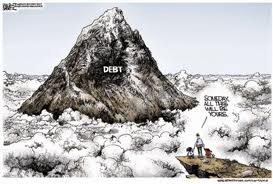
“Someday, children, all this will be yours!”
Earlier, in this blog, I noted why we should all read economist Martin Wolf, Financial Times columnist, carefully and regularly. To that, I would like to add New York Times business columnist Floyd Norris, who writes “Off the Chart”. Unlike most of us journalists, Norris does his homework thoroughly. He crunches data most of us shun.
In his March 19-20 column, Norris documents the remarkable deleveraging (debt reduction) process now going on in America. He does this by digging through Federal Reserve “Flow of Funds” statements going back to 1990.
He finds that the debt of the financial services sector, which grew by 600 per cent between 1990 ($2.6 trillion) and 2008 ($16 trillion), has fallen sharply, to about $14.2 trillion in 2010. Household debt also soared from 1990-2008, but has fallen sharply as well, for two reasons: a) debt holders are writing off bad loans, and b) households are borrowing less and are paying off old loans. The only institution that is still ‘leveraging’ is the federal government, whose outstanding debt is now $9.4 trillion.
Here are the underlying figures: (Total outstanding debt at year end, $ trillion)
1990 2010
Fed. Govt. 2.5 9.4
Households 3.6 13.4
Nonfinancial bus. 3.8 11.1
Financial 2.6 14.2
State & Local Govt. 1.0 2.5
TOTAL: 13.5 50 .6
% of GDP 169 % 385 %
Deleveraging still has a long way to go. Total debt in America in 2010 is nearly four times GDP, compared with less than twice GDP in 1990.
Had we tracked the Fed Flow of Funds data carefully, and observed the ballooning amounts of debt (especially in financial services), we would have realized that systemic risk has ballooned as well, and that the system is headed for a crash.
For brave souls willing to try crunching the numbers (they are presented simply and clearly), the URL is: http://www.federalreserve.gov/releases/z1/Current/z1.pdf
The data are updated every quarter.
Global Crisis/Innovation Blog
China’s Social Engineering 2011-15: The Mind Boggles
By Shlomo Maital

Affordable Housing in China
China’s 11th National People’s Congress has just ended, after approving a new Five Year Plan (2011-15). According to Alan Wheatley, a Reuters correspondent, * the Plan will build 10 million affordable homes this year, 36 million total over the entire period. This, Wheatley notes, is enough to house the whole population of France, Australia and Canada: Over 100 million people!
“It will spark the greatest consumption story in modern history”, says Stephen Roach, chair, Morgan Stanley Asia.
What is China up to?
China realizes that its three-decade-old growth model, built on making stuff and selling it mainly to America (about a $25 b. export surplus every month), is running out of steam. The solution is easy to define, but very hard to implement: Shift its growth engine away from exports and related capital investment, toward domestic consumption.
But how do you get the high-saving Chinese culture to change its ways and spend like Americans rather than save like Chinese?
Read Pearl buck’s wonderful 1931 best-selling novel The Good Earth, about pre-1949 Chinese peasants and their struggle to save to acquire land. You will understand how deeply rooted is the Chinese need to own a home and to save in order to buy one (rather than borrow to buy one, American style, and then struggle to pay off the debt).
China’s government will fight the housing and real estate bubble and at the same time re-engineer Chinese society and culture by providing affordable housing – apartments that middle-class workers can afford, so that they can divert more of their disposable income toward spending.
Will it work? Much depends on China’s success. If we believe the world needs rebalancing, with Asia doing more spending and the West doing more saving, China holds the key. Don’t count on America for any social engineering – the message “lower your standard of living, stop spending, start saving” is the last thing U.S. politicians will campaign on. Many people mock China’s Five Year Plans as outmoded socialist planning. In this case, by 2015, China may have the last laugh.
* Alan Wheatley. “China’s plan for creating consumers”, Global New York Times, March 15, 2011, p. 22
Innovation Blog
The Greatest Innovation Of All: Your Life — We Can All Be Bill Gates
By Shlomo Maital

Bill & Melinda Gates (Foundation)
In an amusing Op-Ed piece this morning (March 15) in NYT, Zick Rubin writes about how a psychology website wikia.com reported his death (“Zick Rubin, 1944-1997”) – prematurely, recalling Mark Twain’s famous comment to a journalist “reports of my death are greatly exaggerated” (usually misstated as “..reports of my death are premature”). Rubin had to struggle to correct this. But what is most interesting is that Rubin writes of how he ended a great career as Harvard psychology professor and in midlife became a media lawyer! He was literally reborn.
The greatest innovation many of us will face is within our own lives. We will need to reinvent ourselves in midlife, at least once. But how? According to Strenger and Ruttenberg *: Avoid two extremes. Myth One: “the myth that midlife marks the onset of decline”. It doesn’t. Your cumulative wisdom will far outweigh your physical decline. Myth Two: “the myth of magical transformation through vision and willpower”. You probably cannot become a concert pianist, even if you do practice 20,000 hours.
Use the ‘adjacent possible’. What do I know now that could be useful in a new but related activity (adjacent to what I do now, but far enough to be interesting and challenging)? And what am I passionate about, to drive the energy I need for this transformation?
I know a great many successful managers and entrepreneurs who find new meaning in their second lives, through social activities – using their skills and wisdom to tackle social ills and problems, after building global companies and shaping world-changing innovations. Social entrepreneurship is ‘adjacent’, it is ‘possible’, but also new and challenging enough to energize. Bill Gates is an example. He is using his wealth and his Foundation, along with organizational and innovative skills, to tackle such problems as malaria, child immunization and developing a TB vaccine.
* Carlo Strenger & Arie Ruttenberg, “The Existential Necessity of Midlife Change”, Harvard Business Review, Feb. 2008
Innovation Blog
The Bigger the Bonus (Reward), The Lower the Performance:
Why Innovators Can “Choke” When Stakes are High
By Shlomo Maital
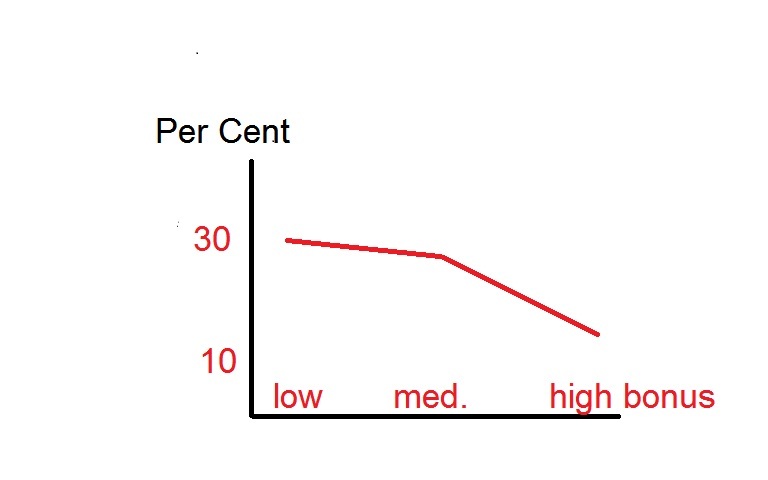
High bonuses cause lower % to attain
“very good” performance
Dan Ariely’s wonderful new sequel to Predictably Irrational is called The Upside of Rationality: The Unexpected Benefits of Defying Logic at Work and at Home.
As the title suggests, Ariely describes a variety of ingenious experiments he and his colleagues and students ran, to explore how we can actually gain from non-rational behavior.
In one of his experiments, conducted in India (because to do so in America would have been prohibitively expensive), he gave groups of villagers challenging tasks (Packing Quarters, Recall Last Three Numbers, Labyrinth, Dart Ball, Roll-Up), offering them low, medium and high bonuses for performance. In “Recall”, for instance, participants were given random numbers, stopped randomly and asked to recall the last three. Participants were given bonuses based on performance. The high bonus amounted to 2,400 rupees, a sum equal to about five months of the villagers’ regular pay. Medium bonuses were 240 rupees, and small ones, 24 rupees.
The graph shows the per cent of participants who reached “very good” performance levels, for each type of bonus.
It is interesting that performance dropped significantly for those who got the “high bonus”. Why? “The experience was so stressful to those in the very-large-bonus condition that they choked under the pressure”, note the researchers.
Bankers insist they have to have super bonuses in order to perform well. Ariely does not agree. All the bonuses seem to do is create risky short-term-profit seeking behavior, inimical to the bank and to society.
Economists are rational, Ariely notes wryly (and ironically); they know which incentives help improve performance and which do not. So do boards of directors and shareholders. Do they really? Are these super-bonuses truly rational? Or are they irrational? When you watch your favorite sport and team, do they play better when the stakes are super-high? Or do they get tense and play worse? And do wise coaches try to relax their players, rather than stress them out, in the dressing room? Innovators would do well to avoid over-stressing themselves and their colleagues, and avoid stressing how high the stakes are – focus on the task, on the process, and keep people laughing. You don’t want to be on the negative slope in Ariely’s curve.
Innovation Blog
Innovator: Think With Your Gut!
Why Sherlock Holmes Failed to Solve the Greatest Mystery of All
By Shlomo Maital

Sherlock Holmes: all head, no heart!
Here is how Arthur Conan Doyle, creator of Sherlock Holmes, describes his hero in “A scandal in Bohemia”:
“All emotions…were abhorrent to his cold, precise but admirably balanced mind. He was, I take it, the most perfect reasoning and observing machine that the world has seen…he never spoke of softer passions…admirable things for the observer, but for the trained reason to admit such intrusions into his own delicate and finely adjusted temperament was to introduce a distracting factor which might throw a doubt upon all his mental results…grit in a sensitive instrument”.
I’m pretty sure most of us agree, believing that emotions cloud decision-making. Good thinking, we believe, is left brain (logic), messed up by right brain feelings and passion.
Fortunately, New York Times columnist David Brooks has written a brilliant new book The Social Animal: The Hidden Sources of Love, Character and Achievement (Random House, 2010), which cleverly reviews neuro-science research through two fictional characters’ lives, and which shows that emotion, and our inner voices, actually strengthen reasoning, rather than weaken it. Much of this research is based on FMRI (functional magnetic resonance imaging), which maps the areas of the brain that control reason and emotion.
Here is a great passage from the book: “The unconscious mind is like a million little scouts [that] careen across the landscape, sending back a constant flow of signals…they maintain no distance from the environment around them but are immersed in it. These scouts coat things with emotional significance. …they guide us like a spiritual GPS, as we chart our courses.”
I believe Brooks’ book powerfully shows that great innovators must harness, and carefully listen to, their intuition and their deepest passion. It is why I always counsel my students to look deep into themselves and find what they truly care about – and why I believe there is no such thing as ‘left’ brain and ‘right’ brain, but simply brain, a whole brain, linking emotion tightly with reasoning.
Sherlock – get with it, man! You may be the world’s greatest detective. But if Conan Doyle had let you use your gut, as well as your deductive powers, well, maybe you could have done more than just solve murders. Maybe you could have figured out what the true source of creativity is!
Here, by the way, is David Brooks’ tip, a practical way to improve your decision-making. Suppose you are torn between two choices. Say, Cherry Garcia and Chunky Monkey ice cream. Can’t decide? So, flip a coin. Heads, Cherry, tails, Monkey. Now, after you flip the coin, ask yourself, how do I feel about this? If you feel sorry, pick what you wanted in the first place. If you feel happy, well, the coin toss validated your choice.
Innovation Blog
Lobsters Are Not Stupid, But Maybe We Humans Are!
By Shlomo Maital
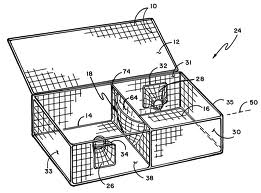
A Lobster Trap
The widespread practice of boiling lobsters alive has always seemed to me barbaric. Who cares? People say, lobsters don’t have consciousness or intelligence anyway.
Now comes evidence that lobsters are smart, intelligent, clever, and even cute. They deserve far better than boiling alive.
Lobsters are caught in lobster traps, which are mesh boxes with ‘one way’ entrances and bait. Once in the trap, lobsters have their final meal before execution, are too dumb to know how to escape, and are pulled up into boats by lobster fishermen.
Or, so we thought for a century.
Researchers and students at University of New Hampshire decided to test this well-worn assumption noted above and lower video cameras into lobster traps, to see precisely what happens inside one. And here is their surprising finding, based on 24-28 continuous hours of time-lapse shooting:
- A large number of lobsters approach and enter a trap, but only 1-3 are caught, because THE VAST MAJORITY ESCAPE! Only 10 per cent of lobsters that approach a trap actually enter, despite the tempting bait inside, and of those, only 6 per cent are caught. Over three-fourths of the lobsters who escape do so through the entrance.
It is interesting that the huge (and so far, misunderstood) inefficiency of lobster traps have inadvertently kept the lobster population from being overfished. If we could, we would have trapped every possible big lobster, thus endangering them.
So who is the dumb one here, lobsters? Or us humans? And who, if any, deserves to be boiled alive?
Innovators: Any time you encounter something EVERYbody believes implicitly, it’s true because it’s always been true, we all know it’s true, question it! Check it out! You may get a lobster-like surprise.
Source: http://www.lobsters.unh.edu/lobster_tv/lobster_tv.html
Global Crisis / Innovation Blog
S**T HAPPENS! Resilience: We Have True Grit, in Spades!
By Shlomo Maital

Dung bettle: knows how to leverage S–T. So do we all.
Media have stressed the suffering, hardship and pain people suffered, and continue to suffer, during the global economic crisis 2007 – 9. They fail to stress the upside: People have showed tremendous resilience in bouncing back from great hardship, and always have, throughout history. People have “true grit”, just like the drunken, hard-nosed U.S. Marshal and a Texas Ranger in the 1969 John Wayne movie (and 2010 Coen Bros. remake) who help a stubborn young woman track down her father’s murderer in Indian territory. Even those born with silver spoons in their mouths show resilience, more often than not.
I asked a large sample of Israeli innovators what is the key driver of Israeli entrepreneurship. “Resilience” was #1 ! Israel has a culture of resilience, living in a bad neighborhood with frequent unexpected crises, wars, terrorism and hardship. People have learned to bounce back.
Research by Columbia U. Teachers College scholar George Bonanno has documented how people adapt surprisingly well to whatever the world presents – grief, loss, terror, war, disease. In his experiments, he and colleagues found that the Freudian notion that loss of a friend or relative left indelible scars and required therapy was untrue. Bonanno has a clipping posted on his inner door, from a German newspaper item about his work, headlined: S**T HAPPENS! It does indeed. And we clean it up, mostly.
In my trips to India, I found the people of India spectacularly resilient, because they get to practice resilience so often. Even high-income financial workers in Mumbai’s financial district are resilient – a flood there left waist-deep water, suspended transportation – so many of them simply walked home for miles through the waist-deep flood.
As Gary Stix observes in his March 2011 Scientific American article: “The new science of resilience shows that one size does not fit all in coming to terms with what befalls us. Sometimes the worst does happen, but our innate capacity to bounce back means that most of the time things turn out all right.” And by the way, belief in this sentence can often become a self-fulfilling prophecy. Hope is the world’s most powerful remedy, not penicillin.

 TIMnovate