You are currently browsing the category archive for the ‘Innovation Blog’ category.
Global Crisis / Innovation Blog
Hedgehogs vs. Foxes: Why Economic Experts Flunk Forecasting 101
By Shlomo Maital
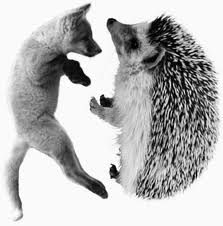
The Fox and the Hedgehog: Which are You?
The famed philosopher Isaiah Berlin once wrote an essay, “The Hedgehog and the Fox”, which quoted ancient Greek poet Archilochus: (“the fox knows many little things, but the hedgehog knows one big thing”).
Turns out this explains why economists’ forecasts (and those of other experts) are so dreadful!
Writing in Scientific American (March 2011), Michael Shermer cites a study by U. Cal (Berkeley) Professor Philip Tetlock, who examined 284 experts and 82,361 predictions about the future. “They did little better than a dart-throwing chimpanzee”, notes Tetlock.
But why?
Cognitive style. Foxes, who know a little about a great many things, did far better in prediction than hedgehogs, who know a lot about one area of expertise.
Academic training, and doctoral research, makes scholars highly specialized and narrow – pure hedgehogs. Economists know about free markets. They tend not to know about sociology, politics, psychology, history and other disciplines. Result: Narrow wrong forecasts that miss the complexity of economic systems.
Want to become a great forecaster? Become a fox. Develop your curiosity about everything. And, at the same time, listen to forecasts of experts who you know are hedgehogs with wide interests.
Diseases in a Dish: George Bush, Hero of Stem Cell Breakthrough, or
How Reframing Spurs Creativity
By Shlomo Maital
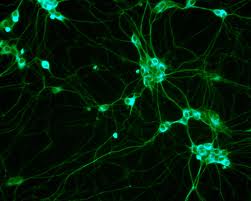
induced pluripotent stem cells
In August 2001 President George Bush, then in office for about six months, announced that the National Institutes of Health would no longer fund creation of additional embryonic stem cell lines. This effectively blocked research, because existing lines were insufficient.
This was perhaps one of ex-President Bush’s greatest decisions. Sometimes, you create breakthroughs by making life harder (rather than easier) for creative people.
A fascinating article in Scientific American * recounts how James Thompson, a dozen years ago, created stem cells in a dish at Univ. of Wisconsin. After Bush’s decree, and despite Obama’s relaxation of it, and because of a Federal judge’s reaffirmation banning NIH funding of embryonic stem cell research in 2010, researchers redoubled efforts to create stem cells rather than harvest them from embryos.
In 2002, three Columbia U. scholars published a paper showing how to transform embryonic stem cells into motor neurons (nerve cells). Lee Rubin, a biotech veteran who then headed Harvard’s stem cell research institute, then had a great idea, a transformative idea. Others want to use stem cells to cure disease. Hey, why not use them to CREATE disease? If you can create an illness, maybe you can find faster ways to cure it. Why not CREATE stem cells, then use them to produce diseased cells, then see how to treat them? This REFRAMING approach originally led to the multiple sclerosis (MS) drug Copaxone, when Weizman Institute researcher Ruth Arnon sought ways to induce MS and came up with a co-polymer molecule that was successful in treating it.
Result? Columbia U. researcher Wendy Chung took skin cell samples from two Croatian sisters suffering from ALS (amyotrophic lateral sclerosis, or Lou Gehrig’s disease). Those cells were transformed into stem cells, or what was called induced pluripotent stem cells (IPSC), using a technique developed in japan. Those stem cells were persuaded to become nerve cells, and as such, they had the genetic predisposition to ALS. Now, researchers are using the test-tube ALS nerve cells to see whether existing FDA-approved drugs can cure ALS. Trays of dishes with the ALS cells are used to test thousands of drugs for anti-ALS potency. This is far far faster, than other methods for developing drugs that require three-phase clinical trials that take forever.
Rubin, Chung, Thompson may get Nobel Prizes. I hope they acknowledge George Bush’s assistance. By making stem cell research harder, he probably speeded it up by light years. Versatile stem cells made from adult cells and with induced diseases may now serve as disease simulators, in Petri dishes, for drug trials. This comes at the perfect moment, when Big Pharma is abandoning earlier attempts to use the ‘target molecule’ approach (find good proteins that shut down bad proteins turned on by genes, that cause illness).
When you seek a solution to a problem, try reframing the question. Ask it in different ways. Turn it on its head. Reverse it. Hold it up to the light, and turn it around and view different angles. Sometimes, it is CREATIVE QUESTIONS that generate breakthroughs, rather than the answers.
* Stephen Hall, “Diseases in a dish”, Scientific American March 2011.
Innovation Blog
HAIR! Why Do Humans Lack It? How Lice Reveal the Secrets
By Shlomo Maital

A Head Louse – Real One!
The 1968 Broadway musical Hair! is about long-haired hippies. Perhaps a more appropriate title would be Skin! Humans are almost the only mammals without a thick covering of fur or hair. It turns out that this conveys a huge evolutionary advantage. But how? And when did humans lose their furry hair (we know a branch of homo sapiens evolved from chimpanzees some 6 million years ago). And since human hair does not exist in million-year-old human fossils, how can we ever know the answer? Writing in Scientific American * Mark Pagel notes:
“We humans are conspicuous among the 5,000 or so mammal species in that we are effectively naked. Just consider what your pet dog or cat (or, for that matter, a polar bear) would look like, and how it might feel, if its furry coat were shorn. Scientists have suggested three main explanations for why humans lack fur. All revolve around the idea that it may have been advantageous for our evolving lineage to have become less and less hairy during the six million years since we shared a common ancestor with our closest living relative, the chimpanzee.”
The main advantage of no hair? Skin. Humans can sweat, and their sweat glands produce a liter of sweat an hour. This helps cool the brain, which generates 20 watts of energy and heat! (Try putting a 20 watt light bulb in a closed box, and see what happens!). The human body’s skin and pores make possible a larger brain because it can be cooled. (Three degrees of extra body heat destroys the brain).
An innovative researcher at the University of Florida has used the DNA of lice to discover when humans lost their hairy covering. He discovered that by studying the DNA of human lice that live in hair, humans lost their body fur about 3 million years ago! Somehow, lice moved from gorillas to humans, then evolved and adapted to human hair. He has also discovered, by analyzing the DNA of clothes lice (human lice that live only in clothing), that humans first put on clothes about 170,000 years ago. This enabled humans to move out of Africa and migrate to Asia. This also means that ancestral humans, descended from apes, went naked for over 2 million years.
Who is the brilliant researcher who figured out how to study human evolution through studying the DNA of lice? His name is David Reed, associate curator of mammals at the Florida Museum of Natural History on the University of Florida campus. His study appears in the January print edition of Molecular Biology and Evolution.
* http://www.scientificamerican.com/article.cfm?id=latest-theory-human-body-hair
Global Crisis/Innovation Blog
Would You Buy a Used America from This Man?
Or, Is America Bankrupt?
By Shlomo Maital
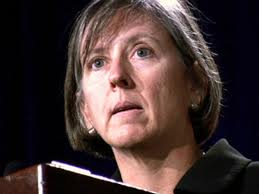
Mary Meeker
In our book Global Risk/Global Opportunity, my colleague Seshadri and I argue that a country is a business, and should be evaluated on the same basis used to do due diligence prior to an acquisition. A new 468-page study by Mary Meeker, from the leading venture capital firm Kleiner Perkins, claims that as a business, well, you would not want to invest in America. *
“Our review finds serious challenges in USA Inc.’s financials,” she writes. “The ‘management team’ has created incentives to spend on healthcare, housing, and current consumption. At the margin, investing in productive capital, education, and technology – the very tools needed to compete in the global marketplace – has stagnated.” “In effect, USA Inc. is maxing out its credit card. It has fallen into a pattern of spending more than it earns and is issuing debt at nearly every turn.”
Using standard business tools for evaluating businesses, Meeker finds that America’s current net worth is minus 44 trillion dollars (three times its GDP). Negative net worth means you owe more than you own. When the amount is huge, it means you are broke.
The introduction to Meeker’s report is signed by such knowledgeable, luminary economists and business leaders as George Schultz, Paul Volcker and Michael Blumberg.
Meeker does not simply claim America is broke. She offers a solution. “Technology plus infrastructure plus education investments drove 90% of labor productivity growth for past 30 years,” she writes. America will emerge from bankruptcy when it returns to investing in those three areas that proved so productive in the past. But where will the resources come from?
A tiny item from Associated Press today notes that last month’s tax cut gave U.S. consumers the biggest jump in their incomes in nearly two years. What did the American people do with the tax cut? Did they spend it, as they did the Reagan tax cut (1981-85)? No, they mostly saved it. Consumer spending adjusted for inflation actually declined 0.1 per cent in January. The American people get it. They realize the road out of bankruptcy is paved with savings that fund investment.
But do their leaders understand? And, by the way, would you buy a used economy from Obama?
* http://www.businessinsider.com/mary-meeker-usa-inc-tech-2011-2#ixzz1FL5sQ06w
Innovation Blog
Please sink my rubber duckies, so I can understand the oceans!
By Shlomo Maital

My friend Michael Neugarten sent me this item, published in Britain’s The Independent, by journalist Guy Adams, today, Feb. 27:
A new book by Donovan Hohn, titled Moby Duck, chronicles the journey of thousands of plastic duckies lost from a container ship some 20 years ago. This “flotilla of yellow plastic ducks, made only for bathtub use, has been hailed for revolutionizing mankind’s knowledge of ocean science”. According to Hohn,
They were in a crate that fell off the deck of a container ship during a journey
across the Pacific from Hong Kong in January 1992. Since that moment, they have bobbed tens of thousands of miles. Some washed up on the shores of Hawaii and Alaska; others have been stuck in Arctic ice. A few crossed the site near Newfoundland where the Titanic sank, and at
least one is believed to have been found on a beach in Scotland. Now the creatures, nicknamed the “Friendly Floatees” by various broadcasters who have followed their progress over the years, have been immortalized in a book. It not only chronicles their extraordinary odyssey, and what it has taught us about currents, but also lays bare a largely ignored threat to the marine environment: the vast numbers of containers that fall off the world’s cargo ships.
According to Adam’s account, Curtis Ebbesmeyer, “a retired oceanographer and enthusiastic beachcomber who lives in Seattle, used records held by First Years Inc to trace the ship they had been carried on. By interviewing its captain, he was able to locate
the exact point at which their journey began. He was able to track their
rate of progress on the constantly circulating current, or “gyre”, which
runs between Japan, south-east Alaska, Kodiak and the Aleutian Islands. ‘We always knew that this gyre existed. But until the ducks came along, we didn’t know how long it took to complete a circuit,’ he says. ‘It was like knowing that a planet is in the solar system but not being able to say how long it takes to orbit. Well, now we know exactly how long it takes: about three years.’
Woody Allen once said, “my wife is so immature – she used to sink my rubber duckies in the bathtub”. Today, 20 years after a container of rubber duckies fell overboard, we now better understand how the world’s currents work. I wonder why no innovative researcher thought about sinking rubber duckies on purpose, to study currents. Actually they did. On Dec. 21, 2008, I wrote a blog about this: “A while ago, NASA researchers dropped 90 rubber duckies onto a Greenland glacier, in an effort to trace where the glacier melt water went, as it disappeared under Greenland’s ice shelf. The duckies disappeared without a trace.”
Could they have joined the Moby Ducks?
Innovation Blog
“The Adjacent Possible” – Why One Step Sideways Can Become a Giant Leap Forward
By Shlomo Maital

Kiran Mazumdar Shaw
Steven Johnson’s book “Where Good Ideas Come From: The Natural History of Innovation”, Oct. 2010, and his recent Wall St. Journal article, are both worth reading. The title of the article summarizes its main point. The secret to innovation is combining odds and ends. This approach is developed by scientist Stuart Kauffman, whose novel theory of evolution departs from Darwin and uses the brilliant notion of “the adjacent possible” – innovative possibilities that develop from existing products and ideas, that are close enough to be feasible and far enough to be considered creative. The ‘adjacent possible’ is a powerful notion, because it embodies the notion of options – innovative in ways that create the widest possible variety of options, or ‘adjacent possible’s. Your innovation may fail, yet ultimately succeed if it opens a door to a powerful innovative adjacent possible.
Here are two examples, from Finland and India.
* Finland has a huge paper business, using pulp from its massive forests to make paper for Europe. But paper production generates environmentally-unfriendly waste. So Finland found ways to mitigate the damage such waste does. Some of this research involved leveraging biotechnology. As a result Finland now has a major biotechnology industry. Its ‘adjacent possible’ was the industry adjacent to purifying waste-water effluents from paper mills.
* India’s Kiran Mazumdar-Shaw’s father was a brewmaster at India’s United Breweries, who helped develop Kingfisher beer. Kiran wanted to study zoology. Her father asked her to consider beer-making instead. Why in the world would I do that? She asked. Because, he said, it is a science. From a brewing enzyme business, Mazumdar-Shaw has built Biocon, a global biotech firm. According to Bloomberg/Business Week*:
“Today the brewing enzyme business Mazumdar-Shaw started in her Bangalore garage in 1978 with 10,000 rupees ($1,200 then) has grown into Biocon, India’s largest biotech company and Asia’s biggest producer of insulin. Biocon is poised to ramp up competition in the $14 billion global insulin market, which is dominated by Novo Nordisk, Sanofi-Aventis, and Eli Lilly. Demand for insulin is expected to increase 20 percent a year through 2015 as the number of diabetics tops 285 million globally, according to market researcher RNCOS.
“In India’s biggest drug supply deal so far, Biocon and Pfizer (PFE) in October agreed that the Bangalore-based company will produce insulin for the U.S. drug giant, which abandoned that business more than three years ago after taking a $2.8 billion charge on its Exubera inhalable insulin. Biocon will supply four generic insulin products to be sold initially in emerging markets, including India and Brazil.”
“Today Biocon employs more than 5,300 people. Mazumdar-Shaw, 57, is India’s fourth-richest woman, with a net worth of $900 million, according to Forbes magazine.”
* Wall Street Journal, Steven Johnson, Sept. 25, 2010, “The Genius of the Tinkerer
** Bloomberg/Business Week, “From brewing, an Indian biotech firm”, Feb. 25, article by Adi Narayan.
Global Crisis/Global Innovation
Are Exports Really China’s Growth Engine? A Response to McKinsey
By Shlomo Maital
Writing in McKinsey Quarterly, Sept. 2010, * three experts in McKinsey’s strategy practice argue that if you measure China’s NET exports (exports minus imports of components used to reassembly), you find that domestic value-added exports account for only a third of China’s economic growth, not two-thirds as previously believed. The point is simple. Like Singapore, China imports components from other countries. This important demand is of huge importance to other Asian nations, who form part of China’s export ecosystem. But imports reduce China’s GDP, not increase it. So if you measure exports as ‘net’, not ‘gross’, you get a far different picture.
I would like to refute this argument. Exports still account for MORE than two-thirds of China’s growth. This is why China must cling to its undervalued currency and export subsidies fiercely in future, because they are the foundations of its economic growth.
Here is why. GDP is an ecosystem. Picture a flow chart. Capital formation (investment) is driven by exports, because much of investment goes either to infrastructure, to support export industries, or to investment, to build new plants and expand existing ones. Also, personal consumption is largely driven by exports, because export demand creates millions of jobs, high wages and enables the consumption spending that in turn drives GDP growth. So, if you take into account indirect contributions of exports to growth, using a systems dynamics approach, you find, again, that exports are the key to China’s continuing rapid growth. Take away exports, and you slash investment and consumption.
Don’t expect China to easily give up its export-driven model. The true picture shows that our original assumption, that China’s growth is principally driven by its export engine, is still valid.
* John Horn, Vivien Singer, Jonathan Woetzel, “a truer picture of China’s export machine”, McKinsey Quarterly Sept. 2010.
Innovation Blog
Milkshake Marketing: How a ‘jobs-to-be-done’ perspective spurs innovation
By Shlomo Maital

In our book Innovation Management, D.V.R. Seshadri and I suggest that innovators should listen to four ‘voices’ – those of the product, the organization, the customer/client and your internal intuitive voice. All these voices ‘speak’ – except the product. How can products make their voice heard?
Now comes Harvard Business School Professor Clay Christensen’s “milkshake marketing” perspective to reinforce this point. Readers will know Christensen from his famous ‘disruptive technology’ work. Here is my ‘take’ on Christensen’s approach, which says products are simply things that do a job. Find what that job is, and you can innovate successfully. I write as if I were a milkshake.
Hi! I’m a milkshake. My mom is a fast-food chain. She wants to sell more of me. So she did everything the MBA marketing texts say to do. And nothing worked. Then, she did the obvious – she asked me, the milkshake itself. So I asked my buyers. Turns out I’m bought mainly in the morning by commuters, who want something they can hold in one hand and relieve the boredom of the long commute to work. So we made the ‘morning milkshake’ thicker, so it lasts the whole trip, and more interesting, with chunks of fruit. Also kids like milkshakes. But it takes them forever to finish them, because they are so thick, so parents balk. So I told mom to make thinner milkshakes for kids. It worked! Sales doubled!”
Christensen says, “Looking at the market from the function of a product really originates from your competitors or your own employees deciding what you need, whereas the jobs-to-be-done point of view causes you to CRAWL INTO THE SKIN OF YOUR CUSTOMER and go with her as she goes about her day, always asking the question as she does something, ‘ why did she do it that way?’ “.
See: “Clay Christensen’s Milkshake Marketing”, Carmen Nobel, HBS Working Knowledge, Feb. 14, 2011.
Global Crisis/Innovation Blog
You Must Be From Philadelphia, If Your Budget is Balanced:
How Mayor Michael Nutter Tackled the Deficit, And What Obama Could Learn
By Shlomo Maital
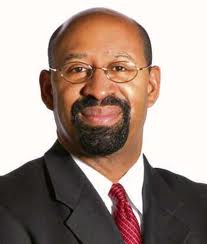
Philly Mayor Michael Nutter
There is a huge number of Philadelphia jokes: “You must be from Philadelphia, if… you can sleep soundly through gunshots in the neighborhood; … you visit New York and notice how clean it is… you can’t eat fries without Cheeze Whiz….you find street people greet you by first name.”
Here is a new one. You must be from Philadelphia…if your city budget balances. It’s no joke. Mayor Michael Nutter, elected a few months before the US economy crashed in 2008, has done what President Obama, the Governor of Wisconsin California and other states, and many mayors, have failed to do – achieve budget balance.
How? Simple. Read the numbers, diagnose the problem, and take prompt action before the problem becomes unmanageable. Accept the political pain and protest, and do what is right.
Here is the Mayor’s story, in his own words, as told to the BBC World Service’s Adam Brooks (“Americana” program): “In August 2008, my chief of staff and finance director, told me, “Mayor, we have a problem, noticing that all of our revenue sources are starting to decline”. We knew we had to take immediate action, to make sure we did not run out of money, so we took immediate steps to slow down spending. People were shocked. We acted on the Thursday, before the weekend Lehman Brothers collapsed. In the following week, every day, a major financial institution went out of business or showed signs of weakness. There was fear and uncertainty. Nobody knew what was going on. In October we announced a projected deficit number: $650-$850 m. and growing! We needed to close the gap between income and spending immediately. We moved early and fast. We did layoffs. We eliminated some services. In the interim, we had 8 town hall meetings, each with 400-500 people, they screamed at us for 2.5 hours, how bad we were, how stupid we were, cutting services, raising fees, people losing jobs… it was a very bad environment. People were angry and scared, that is a toxic combination. People love service, they hate paying for it. Irrationality? Sure. We found ourselves: raising taxes, cutting services, this was a double hit, doubly toxic. Worked? Yes! Popularity has suffered. The moment you try to change things, your popularity erodes. What we’ve done can be done by other US cities. Be strategic, be willing to take a lot of grief, but you also have to lay out your vision for where you’re trying to go. Where there is no vision, people perish. (The Book of Proverbs). We made hard choices, strategic investments, showed where we can go: it worked. A City has to be run like a business. We have 22,000 employees, $4 b. budget! I lose sleep over Washington, what they’re doing, what they’re not going, I want to see more civility, more reality, less political rhetoric, because after you get elected, you have the responsibility of governing…I want people to be more serious about their responsibilities as elected leaders, to take on the tough challenges, stop playing to the crowd, make hard decisions, and move on.!”
Barack Obama, are you listening?
Global Crisis/Innovation Blog
Trade with China: The Economists Still Don’t Get It! Will They Ever?
By Shlomo Maital

David Ricardo: 200 year old theory
J.M. Keynes was once accused by opponents of frequently changing his views. His acerbic response: “When the facts change, I change. What do YOU do?!”
I am reading Harvard Prof. N. Gregory Mankiw’s New York Times piece, “Emerging markets as partners, not rivals”, in disbelief. Mankiw is one of the leading economists of his generation. He authored the leading Principles of Economics textbook and served as President George W. Bush’s chief economic advisor. In his piece, he attacks President Obama’s phrase “winning the future”, used three times in Obama’s State of the Union address. Mankiw’s claim: Trade is win-win, not about ‘winning’. Everyone gains. This is what David Ricardo taught over two centuries ago.
Here are some data for America’s 2010 trade. For all of 2010, the US trade deficit of $497.8 billion was sharply bigger than the prior year’s $374.9 billion. America’s trade gap with China for 2010 swelled to $273.1 billion, topping the 2008 record of $268.0 billion. In other words, some 54 per cent of America’s total huge trade deficit is generated by unbalanced trade with China.
China now holds some $3 trillion in reserve dollar assets, a strategic weapon China uses, and will use, aggressively to further its interests around the world.
If America produced those $273 b. worth of goods and services it now buys from China at home (imports less exports), in America, it would gain 5 to 8 million new jobs, halving its unemployment rate.
Here is Mankiw’s take on this situation, straight from the old-fashioned outmoded ideas of Econ 101: “a voluntary economic transaction between consenting consumers and producers typically benefits both parties”.
What about this ‘voluntary’ transaction between consenting partners: China uses a grossly-undervalued currency and under-the-table subsidies to grab America’s manufacturing, then moves to usurp America’s innovation lead as well by leveraging the link between R&D and production.
Free trade a la Econ 101? Nothing at all ‘free’ about it. It’s free only on the American, buyer side. And America rolls over and plays dead, led by the outmoded economics of economists like Mankiw – even though MIT Economist Paul Samuelson proved long ago that in a dynamic world, the static win-win idea of comparative advantage does not hold, when your trading ‘partner’ swallows the productivity gains inherent in its export specialties.
When will America stop acting like a pacifist Quaker in the boxing ring with Mike Tyson? I love Quakers, but they tend not to do well in head-to-head battles. America is now head-to-head with China. Only the American head is led by economists like Mankiw. It seems hopeless.
The facts have changed. America is losing in its trade with China. It has been at least since 2000, when China was America’s #8 source of imports; it is now #1 ! Keynes would have changed his views. When will his fellow economists in America see the light and do the same?
* N. Gregory Mankiw. “Emerging markets as partners, not rivals”. New York Times Feb. 12, 2011.
Global Crisis/Innovation Blog
The Economists Still Don’t Get It! Will They Ever?
By Shlomo Maital
J.M. Keynes was once accused by opponents of frequently changing his views. His acerbic response: “When the facts change, I change. What do YOU do?!”
I am reading Harvard Prof. N. Gregory Mankiw’s New York Times piece, “Emerging markets as partners, not rivals”, in disbelief. Mankiw is one of the leading economists of his generation. He authored the leading Principles of Economics textbook and served as President George W. Bush’s chief economic advisor. In his piece, he attacks President Obama’s phrase “winning the future”, used three times in Obama’s State of the Union address. Mankiw’s claim: Trade is win-win, not about ‘winning’. Everyone gains.
Here are some data for America’s 2010 trade. For all of 2010, the US trade deficit of $497.8 billion was sharply bigger than the prior year’s $374.9 billion. America’s trade gap with China for 2010 swelled to $273.1 billion, topping the 2008 record of $268.0 billion. In other words, some 54 per cent of America’s total huge trade deficit is generated by unbalanced trade with China.
China now holds some $3 trillion in reserve dollar assets, a strategic weapon China uses, and will use, aggressively to further its interests around the world.
If America produced those $273 b. worth of goods and services it now buys from China at home, in America, it would gain 5 to 8 million new jobs, halving its unemployment rate.
Here is Mankiw’s take on this situation, straight from the old-fashioned outmoded ideas of Econ 101: “a voluntary economic transaction between consenting consumers and producers typically benefits both parties”.
What about this ‘voluntary’ transaction between consenting partners: China uses a grossly-undervalued currency and under-the-table subsidies to grab America’s manufacturing, then moves to usurp America’s innovation lead as well by leveraging the link between R&D and production.
Free trade a la Econ 101? Nothing at all ‘free’ about it. It’s free only on the American, buyer side. And America rolls over and plays dead, led by the outmoded economics of economists like Mankiw – even though MIT Economist Paul Samuelson proved long ago that in a dynamic world, the static win-win idea of comparative advantage does not hold, when your trading ‘partner’ swallows the productivity gains inherent in its export specialties.
When will America stop acting like a pacifist Quaker in the boxing ring with Mike Tyson? I love Quakers, but they tend not to do well in head-to-head battles. America is now head-to-head with China. Only the American head is led by economists like Mankiw. It seems hopeless.
The facts have changed. America is losing in its trade with China. It has been at least since 2000, when China was America’s #8 source of imports; it is now #1 ! Keynes would have changed his views. When will his fellow economists in America see the light and do the same?
* N. Gregory Mankiw. “Emerging markets as partners, not rivals”. New York Times Feb. 12, 2011.