
You are currently browsing the category archive for the ‘Innovation Blog’ category.
Innovation Blog
Religion, Meaning and Innovation: The God Factor
By Shlomo Maital
“Make meaning, not money,” says Guy Kawasaki, former Apple and garage.com guru and an entrepreneurial educator. What he means is this: Find people with unmet needs, find an innovative way to satisfy those needs, create meaning for your life and your work – and chances are, you will make money. If you focus solely on making money, without making meaning – chances are, says Kawasaki, you will fail. Ever heard of Lehman Brothers?
Now comes interesting evidence that religion can play a role in innovation. A cover article in APA Monitor by Beth Azar * reviews evidence that believing in God can strongly contribute to ‘making meaning’, by making us more caring toward others. She cites a study from Science (vol. 327, March), by Joseph Henrich, who found that across 15 diverse societies, people who participated in a world religion were more fair toward strangers (when playing economic games) than those who were not religious.
In other words, belief in God, whether or not in the framework of an organized religion, can help us focus on helping others, which in turn is crucial to successful innovation. Contrary to the often-quoted passage from Adam Smith’s Wealth of Nations (about how selfishness drives behavior), it is this quality of empathy, sensitivity to others, that drives innovation and entrepreneurial success.
This principle is not always true. There are world religions that foster hatred to those who are not co-religionists. Check it out – those religions that build on hate have zero entrepreneurship or innovative activity.
Azar cites studies showing that one key purpose of religion is to allow people to live in large cooperative societies – in other words, to get along well with others. “Religion is one of the big ways that human societies have hit on as a solution to induce unrelated individuals to be nice to one other,” notes researcher Ara Norenzayan. And a great way to be nice to others is to find innovative ways to meet their often-unspoken needs. As our planet becomes increasingly crowded, and as we compete with increasing ferocity for scarce resources (fossil fuels, water), this aspect of religion will become increasingly important.
It is often assumed that great innovations come from science and engineering, and that scientists and engineers tend to be agnostics or non-believers, since rational science contradicts the tenets of faith. I think this is simply not true. Many great scientists are deeply religious. And even those innovators who eschew organized religion are in my view religious, because in battling stiff odds with heroic persistence to develop new ideas, they seek to help others in meaningful ways – in other words, to chance the world for the better, which is the ultimate goal of those who believe in a Divine Presence.
- Beth Azar, “A Reason to Believe”, APA Monitor, December 2010.
Innovation Blog
By Shlomo Maital
 Innovation, Absolute Truth and The Broken Workings of Scientific Research
After 40 years of academic research, writing and publishing close to 100 papers published in refereed journals, I believe I know something about the ‘scientific method’. Here are two things I’ve learned – a) the ‘scientific method’ is seriously flawed, and b) it is not appropriate for research on companies, management, leadership and organizations.
A recent article by Jonah Lehrer in The New Yorker supports my (a) claim.* Lehrer documents how even rigidly-run scientific clinical studies that ‘proved’ a drug was effective, now show that similarly rigid studies show the drug is ineffective. This is happening increasingly often. And it is hard to explain. What is very easy to explain is the ‘paradigm bias’ Lehrer mentions, in refereed scientific journals, the journals whose ‘yes’ or ‘no’ is a matter of life and death for young researchers. If you write an article attacking an ‘old’ scientific paradigm or theory, you increase your chances of getting it accepted. But if you write an article attacking a relatively new paradigm, chances are it will be rejected. And worst of all, researchers ignore negative results (“this drug doesn’t work”) and report only favorable results (smoking was correlated with alcoholism, at a 95% significance level), often with correlations that are statistically significant but in practice meaningless. (A large sample, which many journals favor, can generate “significant” correlation coefficients that are only 0.05). So researchers dig, and dig, and dig, until they find something ‘significant’, and with enough digging you always find something…even though failure to report negative results indicates what you found is really just random noise (enough monkeys typing on typewriters will….)
But what about (b)? I have argued, after long experience, that survey data, statistics, correlations, all the social science voodoo methodology, are effective in obscuring the truth about organizations and management, rather than revealing it. Rather than build hypotheses and models in advance, why not get out into the field, work with companies and managers, ask them a ton of questions, and only then, when you think you really know what is going on, sit down and build a theory or framework. This is known as grounded theory, and it is the only effective way to research issues that are highly complex, with interactions among the players.** It is why business schools must liberate themselves from the terrible tyranny of the scientific method, and build their own integrated approach, which links consulting with research and teaching. (“I consulted in project management at Hi-Teck Inc., and here, students, is what I learned, in this and other companies, about the role of stage-gate planning in project management”). Alas, qualitative research is very hard to publish, and very very few journals accept such work. So, in future, I fear management faculty will continue to play by the rules of the scientific method, as set by the science faculties, and management research will continue to be of little value, for this reason.
* Jonah Lehrer, “The Truth Wears Off”, The New Yorker, Dec. 13, 2010.
** Shlomo Maital, Srinivas Prakhya, and DVR Seshadri, “Bridging the Chasm between Management Education, Research, and Practice: Moving Towards the Grounded Theory Approach”. Vikalpa-Indian Management Journal, Jan-March 2008.
Global Crisis/Innovation Blog
Estonia, the Euro, and National Contrarian Thinking
By Shlomo Maital
A few years ago, I visited Estonia, a small Baltic country with only 1.3 m. people, once a part of the USSR and now a dynamic and creative nation with strong political leadership. We were impressed by its commitment to innovation, not just at the level of startups (Skype was founded and developed by ethnic Estonians) but at the national or government level. For instance, Estonians file taxes on-line, usually submitting their annual tax report in 20 minutes or so, and it also votes on-line, the first nation to do so. Estonia’s Government meets on-line, often, with travelling ministers joining sessions by videoconference, dialing in to a start-of-the-art wired Cabinet room. Estonia has very low tax rates and is singlemindedly weaving its economy into the fabric of the European Union.
Now, as of Jan. 1, Estonia has happily, wholeheartedly, embraced the euro. Prime Minister Andrus Ansip slid a bank card into an ATM and withdrew some euros, at an ATM specially set up in front of the opera house in the capital city Talinn. With this, Estonia became the 17th member of the Euro zone. “Being inside is better than being outside” [the Euro zone], said a leading Estonian banker.
Why would Estonia want to join the Euro zone, when the euro has been so unstable, so troubled, its future in doubt? The answer is simple. It is a matter of alternatives. Which do you prefer, as a foreign investor, as the head of Estonia’s Central Bank, or as Estonia’s finance minister – the kroon, weak and unstable, with high risk, or the euro, known, and relatively more stable?
Estonia suffered a deep drop in its 2009 GDP. Part of this was self-inflicted. In order to defend the fixed kroon-euro exchange rate (part of the condition for officially adopting the euro), Estonia slashed its government budget and reduced its deficit by fully 9 per cent of GDP – a huge cut, one that other larger governments have been unable to even contemplate.
Estonia remains a poor country, with GDP per capita only two-thirds of the OECD average. But it has vision and determination, and sees Ireland 1987-2007 as its model. Estonians are ethnic Finns. They share the Finnish stoicism and toughness. Estonia endured centuries of foreign domination, and many now see the Euro as a key to future independence.
Estonia has a long road to travel. One in ten Estonians are unemployed, a fifth of the population lives in poverty and it is by far the poorest country in Euro zone. But it perceives of itself as the anti-Greece: the opposite of the profligate irresponsibly heavy-spending Socialist nation that took to the streets to fight necessary fiscal cuts.
“There is no reason to be afraid,” said one leading Estonian. “We have had worse experiences.” For Estonia, everything is relative. The tribulations of embracing the euro, however bad, cannot come close to what Estonia endured under the Soviets and other colonial powers. While other nations ponder leaving the Euro, Estonia practices contrarian thinking and embraces it with vigor. We wish Estonia well.
* based on: Jack Ewing, “As euro struggles, Estonia readies for entry in currency”, Global NYT, Dec. 30, 2010.
Global Crisis/Innovation Blog
China Patents A New Direction in Patents
By Shlomo Maital
In this blog, I have consistently argued that China is fiercely determined to move up the value-chain ladder into the realm of innovation-intensive products and services, and is acting aggressively to implement this policy.
Writing in today’s International Herald Tribune, Steve Lohr [“Building a more innovative society by government decree”, IHT Jan 3/2011, p. 14] reports on a Chinese government document defining goals for drastically raising China’s production of patents. US PTO’s David J. Kappos, the Director, says the Chinese targets for 2015 are ‘mind blowing numbers’.
China’s goal for annual patent filings by 2015 is … two million, including ‘utility-model patents’ or design patents, which cover items like engineering features and are less ambitious than invention patents. In contrast, in 2009, there were about 300,000 applications filed for utility patents, about equal to the total of invention patents.
Patent filings in the U.S. totaled about 480,000 in the year up to September 30.
China’s patent surge has been evident for many years. China has been expected to overtake the U.S. in patents this year, but it has happened faster than expected, Lohr reports.
China is not only ambitious for Chinese patents. It wants to double the number of patents that its residents and companies file in other countries. Chinese filings in the US PTO are soaring, and are focused on strategic areas China finds crucial, such as solar and wind energy, information technology, telecommunications, battery and manufacturing technologies for automobiles.
China’s government is offering incentives, including cash bonuses, better housing for individual filers, and tax breaks for companies that are prolific patent appliers.
Creativity expert John Kao told Lohr that “one day China will have the Chinese entrepreneurial equivalent of Steven P. Jobs of Apple and Mark Zuckerberg of Facebook.”
Kao takes comfort in the fact that American culture, more than any other, forgives failure, tolerates risk and embraces democracy. I wonder when America will begin taking seriously the ominous challenge “Made in China” poses for America’s wealth and wellbeing.
Innovation Blog
How Old Do You Need to Be To Become an Entrepreneur?
By Shlomo Maital 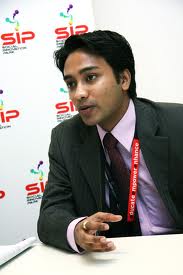
Suhas Gopinath
How old do you need to be to become an entrepreneur and launch a successful global company? Would you believe – 14? That’s how old Suhas Gopinath was, when he launched Globals Inc in Bengaluru, India, ten years ago, from an internet café. Here is the story, relayed to me by my close friend and co-author D.V.R. Seshadri:
When 14-year-old Suhas Gopinath started Globals Inc ten years ago from a cyber cafe in Bangalore, he didn’t know that he had become the youngest CEO in the world. Today, Globals is a multi-million dollar company with offices in the United States, India, Canada, Germany, Italy, the United Kingdom, Spain, Australia, Singapore and the Middle East and has 100 employees in India and 56 abroad. Among the several honors that have been bestowed upon this young man, the most prestigious is the invitation to be a member of the Board of the ICT Advisory Council of the World Bank. He is also recognised as one of the ‘Young Global Leaders’ for 2008-2009 by the prestigious World Economic Forum. Suhas is the youngest member ever in the World Economic Forum’s history. The other members include the Louisiana governor Bobby Jindal, Hollywood star Leonardo Di Caprio, musician A R Rahman, Prince of Brunei, etc.
Globals Inc. has grown rapidly from a small home office to a globally recognized multinational company offering world class quality solutions in Web, e-Commerce, and Mobile. Today “Globals develops mission critical applications on the web for various industries including Education, Finance, and Governments”.
Gopinath taught himself how to build websites and sold portals to bricks-and-mortar firms in the US. He was the youngest certified website-builder in the world. He originally called his company CoolHindustan.
Global Crisis/Innovation Blog
“Beware of Greeks Bearing Gifts”: Michael Lewis’ Insights”
By Shlomo Maital
Michael Lewis is perhaps the leading writer able to expose the deepest darkest inner secrets of the financial services world, dating from his book Liar’s Poker. New York Times columnist David Brooks, in his annual “Sidney Awards” column, draws our attention to Lewis’ essay in Vanity Fair (Oct. 1), titled “Beware of Greeks Bearing Gifts”.
To show how financial bungling leads to moral rot, Lewis takes us to a 1,000 year old monastery, cut off from the world, in remote northern Greece near Mount Athos, accessible only by boat.
Greece’s banks and government conspired to plunder the public treasury. The Greek national railroad, lewis notes, earned 100 m. euros in revenues, but had a wage bill of 400 m. euros (!) plus 300 m. euros in other expenses. The country reported a budget deficit of 3.7 per cent of GDP, to gain EU entry, but in fact its deficit was really 14 per cent of GDP. But the real cause of Greece’s crisis was the remote monastery known as Vatopaidi.
“In late 2008, news broke that Vatopaidi had somehow acquired a fairly worthless lake and swapped it for far more valuable government-owned land. How the monks did this was unclear—paid some enormous bribe to some government official, it was assumed. No bribe could be found, however. It didn’t matter: the furor that followed drove Greek politics for the next year. The Vatopaidi scandal registered in Greek public opinion like nothing in memory. “We’ve never seen a movement in the polls like we saw after the scandal broke,” the editor of one of Greece’s leading newspapers told me. Without Vatopaidi, Karamanlis is still the prime minister, and everything is still going on as it was before.” *
The Vatopaidi scandal brought a Socialist government to power, headed by George Papandreou, son of an eminent economist and former Prime Minister. Papandreou’s government squandered money, in ways Karamanlis would never have dreamed. Had it not been for the moral rot that touched Vatopaidi’s monastery, Lewis explains, Greece would have avoided its virtual bankruptcy.
Remember the parable of how “a butterfly’s wings flap in a remote forest, and the result changes the world totally”? There is a strong similarity.
* Source: http://www.vanityfair.com/business/features/2010/10/greeks-bearing-bonds-201010?printable=true#ixzz19OUDR5T7
Global Crisis/Innovation Blog
Handling Freak Weather: The Wisdom of a New York Cabbie
By Shlomo Maital
An enterprising BBC reporter covered New York City’s blizzard, which dumped 75 cms. of snow (30 inches) on the city, by chatting with a New York cabbie (taxi driver). I’ve found that if you want to really know what is going on in a country, regarding its business energy and economic performance, ask a taxi driver. The same appears to be true about snow removal.
Former New York Mayor John Lindsay lost his job after the Feb. 15, 1969, snowstorm dumped 15 inches of snow on New York City and paralyzed it; Lindsay was widely perceived as incompetent. Today, twice as much snow fell on New York City and within a day the city was back to normal.
Cabbie Peter Franklin told BBC that Mayor Michael Blumberg reflected the spirit of New Yorkers. “The cost of snow clearance,” Franklin said, is “$1 m. per inch of snow”, or $30 m. for the 30 inches. But, he noted, “Mayor Bloomberg said, so what? So what if it costs $30 m.? Let’s just do it.” Bloomberg realized that you cannot shut down a city, and the cost of doing so, as Mayor Lindsay learned, is a thousand times more than the cost of clearing the snow.
New York City simply has a method – it takes all its thousands of garbage trucks, and puts snow shovels on the front, and sends them out to clear the snow, then hires day laborers at $14/hr. and has them shovel the snow from intersections. These two simple ideas together put New York City back into commission after a very short shutdown.
“To deal with problems,” cabbie Franklin says, “you need two things: Will and money. We in New York have both. So we did it.” He expressed price in the resilience of New Yorkers, and likened the snow removal to a “war” – enlisting money and energy, defining the goal (keep things functioning), and then…as the Nike mantra goes, Just Do It!
Other cities would do well to benchmark New York City. Meanwhile, cities in snowy climates treat blizzards as ho-hum – Helsinki, and Toronto, and Winnipeg, Canada, for example, while a few inches in London shuts everything down and sows panic.
Global Crisis/Innovation Blog
If We Have Global Warming, Why Do We Have Global Cooling?
By Shlomo Maital
Count on the global warming deniers to ask: if we have global warming, why do we have global cooling (freezing snowy winters in America and in Europe, closing airports, stranding travellers, and causing chaos)? And count on journalists to cover the results of the blizzards, but never to ask the core question, how are global cooling and global warming related?
Fortunately, Judah Cohen, a meteorologist who works for a weather forecasting company, has written a short essay answering this question. Here is a short summary of Cohen’s explanation.
1. Even as frozen areas like the polar caps shrink, seasonal snow cover has increased, across the high latitudes of the northern Hemisphere, especially in Siberia, and the Himalayas. As global temperatures warm, Arctic sea ice melts, creating more moisture available to fall as snow.
2. The sun’s energy reflects off the snow and escapes back to space, cooling the air; this creates an “unusually large dome of cold air next to the mountains”, amplifying the standing waves in the atmosphere.
3. The increased wave energy disturbs the jet stream, which, instead of flowing mainly west to east, as it does normally, meanders more north and south. In winter, this change in snow sends warm air north, but also pushes cold air south from the arctic and from Siberia.
4. “This is why Eastern US, Northern Europe and East Asia have experienced extraordinarily snowy and cold winters since the year 2000.”
Why did forecasts fail to predict them? “Because the primary drivers in meteorological models are the oceans, which have been warming…. They have ignored the snow in Siberia!”.
It’s all a “snow job”, concludes Cohen. We’re freezing not in spite of climate change but because of it. Looks like the meteorologists’ forecast models were as wrong as the financial experts’ models.
* Judah Cohen, Global New York Times, Dec. 25, 2010
Global Risk/ Innovation Blog
Piercing the Geopolitical Fog: The Wisdom of Bilahari Kausikan
By Shlomo Maital

Bilahari Kausikan is Singapore’s Deputy Foreign Minister. Singapore is unique, because it attracts the very best and the brightest to its public service; most other countries practice ‘adverse selection’, which means that the best and brightest avoid poorly-paid underappreciated public service like the plague. And the realm of politics and civil service is in most countries a wasteland as a result. Singapore selects and develops its future civil servants the way Barcelona builds its stars with a youth team, starting from age 8. Kausikan has long years of experience, knows several languages, has been posted in many parts of the world, and brings a knowledge of both theory and practice to his analysis of geopolitics. He trains his own team by bringing them along on field trips to many countries. Here are a few of his insights, in an address he gave earlier this month.
The U.S. has learned that it cannot, if it ever could, effectively exercise power alone. It must negotiate coalitions. These can’t be created solely by the national charm of its leaders. Unlike during the Cold War, there is no reason for nations to subordinate their national interests to U.S. leadership. So America cannot insist, but only persuade. U.S. global leadership is still irreplaceable, but is increasingly questioned. The result: A prolonged period of messiness in international relations. There will be periodic crises.
The key factor that will determine whether global ‘messiness’ can be kept within manageable limits is U.S.-China relations. China is becoming more assertive in the pursuit of its interests.
Global macro-economic imbalances and exchange rates are not really the core issues. The root of all crises is always political failure. US and western economies allowed their economies to deindustrialize, over 30 years, and let their financial sectors grow too big. So, for the first time, Americans and others in the West contemplate a future where living standards will probably fall. No Western government has been entirely candid with their electorates. Their tendency is to demonize an external cause. In America, this ‘demon’ is becoming China. The slightest short-term improvement of the economy in the US or Europe will be seized upon to declare permanent victory, leading a slow slide back to old bad habits. For the EU, it will be a very long time before it becomes more than a rhetorical global geopolitical force. The key players will be the US and China. All other players will be side shows.
In Asia, all the major powers (India, China, Japan) are seeking a new modus vivendi with each other. None of this is easy. The outcome of Asian architecture will profoundly influence future global architecture. Southeast Asia has little to unite it; its only intrinsic characteristic is diversity. And the emerging East Asia architecture will affect US-China relations, which in turn drive future global architecture.
The bottom line of this analysis? Asia is crucial globally, not solely because of its growing economic muscle, but also because of its rising geopolitical power. Of course, economic and political power are closely interconnected. I think the crucial question is: Will Asia look inward and create its own Single Market, as the EU did, or will it seek to create an Asia-oriented global architecture? No-one knows the answer. The result will impact all of our lives.
Innovation Management
Reinventing (Retroventing) Capitalism: Michael Porter on “Shared Value”
By Shlomo Maital
Harvard Business School Professor Michael Porter invented the discipline of competitive strategy, in his book by that name published in 1980 (The Free Press). Now, in an article in the latest issue of Harvard Business Review (Jan-Feb. 2011), Porter (together with co-author Mark Kramer) seeks to redefine capitalism through the concept of shared value. Here is a brief excerpt:
A growing number of companies known for their hard-nosed approach to business—such as GE, Google, IBM, Intel, Johnson & Johnson, Nestlé, Unilever, and Wal-Mart—have already embarked on important efforts to create shared value by reconceiving the intersection between society and corporate performance. Yet our recognition of the transformative power of shared value is still in its genesis. Realizing it will require leaders and managers to develop new skills and knowledge—such as a far deeper appreciation of societal needs, a greater understanding of the true bases of company productivity, and the ability to collaborate across profit/nonprofit boundaries. And government must learn how to regulate in ways that enable shared value rather than work against it.
Capitalism is an unparalleled vehicle for meeting human needs, improving efficiency, creating jobs, and building wealth. But a narrow conception of capitalism has prevented business from harnessing its full potential to meet society’s broader challenges. The opportunities have been there all along but have been overlooked. Businesses acting as businesses, not as charitable donors, are the most powerful force for addressing the pressing issues we face. The moment for a new conception of capitalism is now; society’s needs are large and growing, while customers, employees, and a new generation of young people are asking business to step up.
Porter’s “shared value” is in fact not innovation, but ‘retrovation’. It is how capitalism used to be run, before the narrow-minded selfish financial wizards of Wall St. shanghaied it. See my blog about Scott Paper’s CEO Thomas McCabe [“McCabe’s Credo”, Aug. 6 2010]. It is high time we reverted to it, as capitalism once was. Perhaps thought leaders like Porter can accelerate this process.
Here is Porter’s checklist, to determine how your organization can create shared value.
- Could our product design incorporate greater social benefits?
- Are we serving all the communities that would benefit from our products?
- Do our processes and logistical approaches maximize efficiencies in energy and water use?
- Could our new plant be constructed in a way that achieves greater community impact?
- How are gaps in our cluster holding back our efficiency and speed of innovation?
- How could we enhance our community as a business location?
- If sites are comparable economically, at which one will the local community benefit the most?


