
You are currently browsing the category archive for the ‘Innovation Blog’ category.
This is the first in a series of blogs about “Humble Masterpieces”*. The curator of architecture and design at MoMA (Museum of Modern Art) in New York City, Paola Antonelli, has written a fine book about 100 innovative products and designs of small, inconsequential products. Together they add up to this conclusion: “Design can act as a bridge between the abstraction of strategy and the complex details of the real world.” In this, Ms. Antonelli echoes the well-known principle of world-changing innovation: Head in the clouds, feet on the ground. And she affirms the brilliance of Univ. of Toronto’s Rotman School of Business, in choosing industrial design as the paradigm for its management courses. Designing great businesses can leverage the same principles as designing great products. Simplicity.
……………….
Bar Code
The invention of bar codes illustrates many of the key principles of winning innovation. And with the award of the Nobel Prize for Physics to the inventors of CCD – charge coupled devices — bar codes are back in the news: The black stripes of the bar code are read by CCD’s.
In 1948, the head of a local Philadelphia food chain asked a dean at Drexel Institute of Technology to develop a system for automatically reading product information during checkout. A graduate student, Bernard Silver, overhead the conversation. He and his friend Norman Woodland tackled the problem.
(First principle: Start with a real demonstrated proven need, not with a vague idea).
They tried using ink that would glow under ultraviolet light. Dead end — didn’t work.
(Second principle: Technology is always an enabler; but it is never truly certain which technology will best answer the need and enable the solution. Fail often to succeed early).
Then they used a series of concentric black circles, close to today’s bar codes. They applied for a patent on Oct. 20, 1949. But the first scanner did not emerge until 1974, when Marsh’s supermarket in Troy Ohio used a scanner with the UPC Universal Product Code.
(Why did it take so long? It was necessary for Willard Boyle and George Smith at Bell Labs to invent the CCD, so that the bar codes could be read rapidly and accurately; their discovery was made in 1969. Often, breakthrough ‘humble masterpieces’ are a portfolio of ideas and technologies, not just a single one).
The first product scanned at the checkout counter was a ten pack of Wrigley’s Juicy Fruit chewing gum. It is exhibited at the Smithsonian Museum of American History, becoming the world’s first Immortal Chewing Gum.
(Humble masterpieces require patience. The barcode inventors waited for twenty years until crucial additional enabling technology (CCD) came along. Timing is everything — your invention may be far ahead of its time, or, perhaps, just enough ahead of its time. Engineers at GE Ultrasound invented a PC-based ultrasound machine for cardiology diagnostics. At the time the PC was not nearly powerful enough for this; but the engineers knew that in two years it might be. They designed to a ‘future trajectory’ of the PC, rather than today’s existing technology. Most humble masterpieces do this.)
* Paola Antonelli, Humble Masterpieces: Everyday Marvels of Design. Harper Collins: 2005.
The leading candidate for this year’s Nobel Prize in Physics, to be announced today (Tuesday) is 77-year-old Tel Aviv Univ. Emeritus Professor Yakir Aharonov. Thomson Reuters lists him as the leading candidate.
What was his discovery?
In 1953, Aharonov proposed the Aharonov-Bohm Effect, named after him and his Doctorate mentor, David Bohm. “The most elementary thing in Physics is to predict the future of the particle; the change in the particle’s speed” Aharonov told Ynet. “In order to do so, one must know where the particle is and what forces control it. In classical physics the particle ‘feels’ the forces that are in control of it. “That is to say, in order for the particle to be effected, the forces must exist at the same place as the particle. What we proved is that quantum physics is wrong; a particle moving in a vacuum outside of a magnetic field will still be affected by the magnetic field.”
What led you to the discovery of the Effect? asked a journalist.
“I looked at all the equations everyone was looking at for years, until I suddenly saw something else. As soon as I told Bohm about the idea, we found a physicist that began conducting experiments to prove the theory.”
Innovators often look at something everything else look at — but they see it differently. Humans have 46 chromosomes. It was long believed that number was 48 – until someone took a closer look at the evidence.
If you want to innovate, look at what everyone is looking at. Try to see it differently. The results may be surprising.
=======
Postscript: Aharonov did not win. This year’s Physics Nobel was won by three other worthy physicists. The Nobel Committee announced:
Charles K. Kao, who worked at Standard Telecommunications Laboratories in Harlow, U.K., and taught at the Chinese University in Hong Kong, will share the 10 million-kronor ($1.4 million) prize with Willard S. Boyle and George E. Smith of Bell Laboratories in Murray Hill, New Jersey, the Nobel Assembly said today in Stockholm. Kao will get half of the amount while Boyle and Smith split the remainder. Kao, 75, in 1966 calculated how to transmit light over long distances through optical glass fibers, a breakthrough that means people today can exchange text, music and images around the world within seconds. Three years later, Boyle, 85, and Smith designed the first imaging technology using a digital sensor, leading to the creation of the digital camera.
As noted earlier in this blog, when management guru Peter Drucker taught innovation at New York University Business School in the 1950’s, he taught it as “innovation and abandonment” — the title of an excellent chapter in The Essential Drucker*, a biography of his ideas. His key point: There is no birth without death. You cannot bring new things into the world without old things disappearing, because new things need resources, freed only when old things stop using up resources and disappear.
Dell Computer Co. expanded rapidly in the 1990’s, mainly because it could hire talented engineers dumped by IBM, which at the time was downsizing. Israel’s high-tech industry boomed in the 1990’s, when it absorbed a million Russians, many of them highly educated, as they left the sinking ex-USSR economy.
A fine book by historian Dava Sobel, Galileo’s Daughter, reveals that innovators’ birth and death occur simultaneously, not just those of innovations. Her appendix shows that:
* Galileo Galilei, whose telescope proved the earth revolved around the sun, was born in Pisa, on Feb. 15, 1564. On Feb. 18, 3 days later, sculptor and artist Michaelangelo Buonarroti died in Florence. And two months later, on April 23, William Shakespeare was born in England.
* On Jan. 8, 1642, Galileo died. That same year, Isaac Newton, discoverer of the laws of gravity, was born (on Christmas Day, Dec. 25).
Sobel, who also wrote the fascinating book Longitude, about how John Harrison invented the concept of longitude, notes another interesting fact about Galileo. At the time, all scholars wrote in Latin, so that other scholars could understand their work, in other countries. Galileo wrote his books in Italian. Why? He wanted them understood not by other scholars, but by the shipbuilders at the Venetian Arsenale, and the glassblowers of Murano, and the lens grinders and instrument makers. He wanted his ideas known, understood — and used to change the world.
“I wrote it in the colloquial tongue because I must have everyone able to read it,” Galileo wrote. “I am induced to do this by seeing how the young men are sent through the universities at random, to be made into physicians, philosophers, and so on; thus many of them are committed to professions to which they are unsuited…..I want them to see that just as Nature has given them…eyes with which to see her works, so she has also given them brains capable of penetrating and understanding them.”
Henry Ford once complained that each time he hired a pair of hands, they came attached to a brain. Galileo wrote in colloquial Italian, precisely because each pair of eyes that read his work came attached to a brain.
Even though he lived four centuries ago, innovators can learn much from Galileo’s wisdom.
*By Elizabeth Edersheim.
This is a photograph of a remarkable human being, an inventor, named Forrest Bird. He’s in his late 80’s, still working 12 hour days, still inventing, and still flying his 21 planes. Chances are, you never heard of him. Neither had I until I watched a CBS 60 Minutes segment. But odds are good that you know someone whose life he saved. Bird invented the respirator — the device that keeps people breathing when they cannot themselves. His BabyBird respirator has saved numerous babies’ lives, including the lives of two of his neighbors in Idaho, now strapping young men.
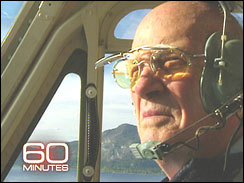
Forrest Bird
What is Bird’s story? As with all inventor stories: he identified a need, and satisfied it, using his skills, inventiveness, creativity and determination.
Here is what the 60 Minutes segment revealed about his respirator, that helps lungs breath, based on his knowledge of aviation:
“In the lung are rudimentary air foils. It’s like a million airplane wings all down through the lungs. In and out, all the way through, that facilitate your normal, spontaneous breathing. So it was just applying all this,” Bird explains. “Taking it from aviation.” It sounds simple enough, a concept even school kids can grasp. But in reality, the human lung works with mind-numbing complexity. For his own education, the military sent Bird to medical school. And though his studies took him to the outer limits of science, his next respirator was still definitely low tech.
For example, he used strawberry shortcake tins to construct one of his early machines. “And what I did was, I put a diaphragm in here so that when you did that, it would drop the pressure and this magnet would grab it and hold it off,” he explains. Back then, there weren’t many options for people with respiratory problems. The worst cases required iron lungs, which were big, primitive, expensive and confining. So Bird kept on trying to develop a small, affordable device that could automatically help people breathe. His breakthrough came in the late 1950s with the “Bird Mark 7” respirator, a device so effective the Air Force made a training film about it, with Hollywood music and all. “We were able to assist your respiration. We could control it,” Bird explains.
Bird’s respirator kept his first wife, who suffered from advanced emphysema (lung disease), alive for many years. Ultimately she died of the disease, when her lungs were simply destroyed.
Bird makes his respirators in Idaho, in the complex in which he has his home and lab. They are used all over the world.
Is it safe for someone his age to fly? Of course, Bird says.
Matter of fact, he says, in some air emergencies, like pulling out of a dive without blacking out, it’s the old guy you want at the controls. “We have arterial sclerosis. Now, our young fellow, at 25, will black out faster than we will because our arteries are harder and they’re less expansive. So we maintain our blood pressure better.”
What can innovators learn from Forrest Bird?
* Build prototypes. Use what you have. They can be crude — but they are essential. Paper business plans are just not enough.
* Use what you know. Bird understood aviation, air foils, aerodynamics, and transferred this knowledge from airplane wings to lungs. Find knowledge in “X” and transfer to “Y”, when no-one else has thought of doing it or has seen the connection.
* Keep innovating. Bird is still coming up with inventions and improvements. Creativity is not the sole province of the very young. Older people may have harder arteries, and poorer memories, but they have the wisdom of age and ages.
* Accept huge challenges. When Bird invented his respirator, many people, including children, were doomed to huge Iron Lungs — breathing machines that were expensive, confining and very non-portable. Most people just accepted the fact that those constraints were a necessary part of survival, especially for children who had polio. Bird did not. His first model was patched together, and was operated by a door knob — push on it, and air streams into your lungs.
* Make it yourself, if you can. You don’t have to assume automatically that you can only make your device in China. There are huge advantages to making it right next to your development lab. If it’s in Idaho, you can have your home next to your plant, right next to amazing mountains and a sparkling clear lake (where you land your seaplane), like Forrest Bird.
This week the Group of 20 leading countries, G20, met in Pittsburgh on Sept. 24-25, to address two key issues: climate change and the fledgling global recovery. This meeting is important, because on Sept. 25, this forum announced that it will be the main one in which global business and economic policies are shaped, replacing the G8.
The G20 comprises the finance ministers and central bank heads of countries that account for 85 percent of world GDP, 80 percent of world trade and two-thirds of world population. The countries are: Argentina, Australia, Brazil, Canada, China, France, Germany, India, Indonesia, Italy, Japan, Mexico, Russia, Saudi Arabia, South Africa, South Korea, Turkey, UK, U.S. The European Union is also represented, hence the “G20”. Last April the group met at heads-of-government level in London — recall the TV shots of each Prime Minister entering 10 Downing St. with his gowned wife, one by one, in a fashion parade. Next year G20 will meet in Muskoka (a resort north of Toronto) and in South Korea.
Politicians, economists, pundits and others all proclaim the crisis is over and the recovery has begun. But managers are not so certain. And it is managers who are in the field, daily, producing and selling the goods and dealing with clients. Here is what McKinsey Global Research found in their recent survey of managers worldwide:
In early September, McKinsey surveyed more than 1,600 business executives around the world about their current views on and hopes for the economy. Only 20 percent believed that a “normal” recovery starting in late 2009 would be the most probable outcome. Some 42 percent thought that 2010 would be a year of flat economic activity. About a third believe that an extended period of anemic global economic growth (below 1 percent per annum) is likely for the next several years. The remaining 7 percent felt that something akin to a double-dip recession was probable.
I think the real story of the Pittsburgh G20 is Pittsburgh, not G20. My sister and brother-in-law live there and I have been visiting Pittsburgh regularly for 55 years. I watched Pittsburgh transform itself from a dirty steel town (I recall touring the steel mills along the Allegheny River), permanently coated in soot, to a sparkling clean modern high-tech city with great universities (University of Pittsburgh and Carnegie Mellon), entrepreneurial energy and excellent mayoral leadership. Located at the confluence of two great rivers, the Allegheny and the Monongahela, Pittsburgh has escaped the decay and decline other cities experienced when their heavy industry disappeared. As a city that successfully reinvented itself — one of very few — Pittsburgh merits careful study by innovators and deserves a visit by tourists. Come especially to see what they’ve done to the old Union Station — it’s amazing.
Today’s BBC Business Daily reports on new and fascinating research by Professor Priya Raghubir Stern School of Business, NYU. Prof. Raghubir has found, in her research, that contrary to the economists’ assumption of rationality, how much money people spend depends on what jingles, or rustles, in their pockets. $50 in small notes and coins? We spend it freely. One big note, like $50? We hesitate to break it to spend it.
Professor Raghubir notes:
We spend more in small denominations than with single large bill. Why? People fear, if they break large bill, they will have no control over it, it will go away. If they hold on to large denominations, they are more likely to maintain self-control.
This is only one of many mechanisms that we develop to control our own selves, and protect ourselves against ourselves.
Is this finding robust across different cultures?
We found it in 3 different countries: First, in the U.S., where we replicated it with children. Pre-schoolers were not prone to this effect, they think that lots of little coins is more money than paper…something called “numerosity.” But for older children, as with adults, five $1 bills, or coins were far more likely to be spent than one $5 bill. Second, we showed this in India, with a 500 rupee note vs. smaller notes. Third, I’ve shown it in China, with a group of housewives in Shiangtan, the effects were spectacular. There, people were far less likely to spend 100 yuan given in one banknote than when given 100 yuan in small denominations.
All of us who travel know there is what Prof. Raghubir calls a foreign currency effect:
If I’m used to spending 1 dollar for cup of coffee, I will tend to spend 1 dollar for it in Canada, (worth only 67 U.S. cents), one pound in the UK, worth about $1.50, or one euro in Europe (also worth about $1.50). People inadequately adjust for exchange rates.
So, does this mean we are dopes, and dupes? Not at all. Quite the opposite. It means that people are clever in devising ways to guard themselves against short-termitis, the tendency to spend and enjoy now rather than in the future.
Do you also behave in this way? asked the BBC interviewer of Prof. Rughabir.
Of course, she said.
Conclusion: In your business model, do sweat the small stuff. Because people do sweat (spend) it. Nickel and dime your business model, and you can boost your revenues.
Malaria is an infectious parasitic disease carried mainly by mosquitoes, in tropical and subtropical regions, including parts of the Americas, Asia, and Africa. According to Wikipedia, each year there are approximately 350–500 million cases of malaria worldwide, killing between one and three million people, most of them young children in Sub-Saharan Africa.
Had 3 million persons, mainly children, died in the West from anything, there would be massive investment to combat it. But for Merck, Pfizer, Novartis and other Big Pharma firms, there is no margin in innovative cures for malaria. Meanwhile, the mosquitoes are gaining — the parasites they carry are developing resistance to the current leading anti-malaria drugs.
Now, a $3 b. program to combat malaria has been announced, led by 59-year-old Tanzanian President Jakaya Kikwete. The program is beautifully ultra-simple. Provide 250 m. mosquito nets (treated with insecticide) for Africans. Organize logistics to bring them (and related educational efforts) to the remotest of African villages.
Kikwete is one of Africa’s lesser known but more effective leaders, mainly because he is not involved in scandals or notoriety. In general Tanzania has had enlightened leaders, dating from its first President, Julius Nyerere.
Let us wish Kikwete and his program success. Let us also ask: In our innovation efforts, why do we value some lives far less than others? Is not a life, a life?
The Jewish world celebrated its New Year on Saturday and Sunday, Sept. 19 and 20. By the Jewish calendar, the year 5770 began. In our tradition, Rosh HaShanah marks the day on which the world was created and the time when human beings were created.
Ask 100 people about the Biblical account of how and when people were created, and 99 will tell you about Adam and about how Eve was created from Adam’s rib. This of course is accurate. But few know that there are two rather different accounts of Man’s creation, one in Genesis chapter one and the second in Genesis chapter two. The key differences between the two are explained clearly by the late Rabbi Joseph B. Soloveichik, the American prophet of modern Orthodox Judaism, in his 1956 article, “The Lonely Man of Faith”, published in Tradition, vol. 7, 1965. The two accounts are relevant for innovators and entrepreneurs.
The first account of mankind, Soloveichik notes, in Genesis 1, states that human beings were created in God’s image. “And God created man in his image; in his image God created man, male and female He created, and God blessed them…”. What does this mean, “in his image”? It means, the learned Rabbi says, that just as God is the Supreme Creator, so are human beings creative, just like their Creator. This first version of humanity speaks of how human beings — men and women, created together, jointly — seek to master their environment, by constantly asking the question “how?”, and come up with ideas that answer it in ways that make life better. This is the ‘feet on the ground’ aspect of innovation and entrepreneurship, whose roots are in Genesis 1. What are our needs? How can we meet them? Here, mankind is commanded “to fill the Earth and conquer it” creatively.
But the second version of human beings’ creation is “significantly different”, Soloveichik writes. In Genesis 2, man is created by God out of the earth. Women are then created out of Man’s rib. And mankind is commanded by God not to conquer the Garden of Eden, but rather to preserve and enhance it. (In no time, we manage to mess up that mission badly). No mention is made here of God’s image. So, says Soloveichik, in this version, mankind asks metaphysical questions: Why? For what purpose? This version of mankind is “head in the clouds”, the thinkers, the questioners, the dreamers. Mankind questions everything.
Innovators and entrepreneurs fulfill both versions of mankind’s Creation. They are feet-on-the-ground innovators, creators. And they are head-in-the-clouds dreamers, questioners, who challenge every assumption and who break the rules.
Both qualities of mankind are vital if we are to endure and prevail on this earth. And both qualities are vital, if innovators and entrepreneurs are to succeed in changing the world by meeting real pressing human needs.
*This blog was inspired by a brilliant lesson led by our Rabbi, Dov Hayun, Rabbi of Moriah Synagogue, Haifa.
An interesting article in Business Week by Peter Coy, asks “can we protect consumers (from financial innovation) and still be creative?” [Incidentally — Business Week was put up for sale by McGraw Hill last week. There were few buyers. Business Week’s famed investigative reporting has reportedly been hamstrung…].
His answer?
In spite of the public’s mistrust, entrepreneurs and academics are plunging ahead. They’re working on ideas they hope will help the consumer borrow more safely and build wealth more reliably. Some are ambitious, like reducing homeowners’ exposure to declines in local housing prices. Others are fanciful, like an electronically rigged wallet that becomes harder to open when your bank account is low, an idea from the Massachusetts Institute of Technology.
Let us remember Joseph Schumpeter’s memorable phrase: Creative destruction. All creation involves destruction. Old things have to die in order for new ones to be born. That is one interpretation. Another is: All creative things can be used destructively. It is not inherent in the innovations, but in the people who use them.
Sub-prime mortgages in principle made housing affordable even for low-income people. A great idea, if used properly. But it was used to enrich unscrupulous thieves. It is not the fault of the innovation, but of those who misused it.
Financial innovation will continue. As it does, hopefully those who pioneer in it will remember that the foundation of capitalism is in creating long-run sustainable value for people, in creating customer margin as well as company profit margin. The “I’ll be gone, you’ll be gone [before the earthquake we created happens]” principle that drove much financial innovation in the past is hopefully dead and buried.
TIM managers have just completed a remarkable benchmarking week in Britain, visiting 13 organizations, including LandRover, BT, BP, Virgin, Rolls Royce, RBS and Manchester United.
Our visit included a trip to the Prince of Wales Theatre in London’s West End, where we met with Richard Pulford, CEO of the Society of London Theatre, a trade association of theatrical producers.
We learned many things about the business of producing plays and musicals. The main lesson: It is not enough to create value. (London plays and musicals create enormous value, and memorable customer experiences, for 14 m. theatre visits annually!) Some shows have run for decades — Agatha Christie’s The Mouse Trap ran for 57 years, Phantom of the Opera for 27 years, Cats for 21 years!.
But you have to capture that value in order to sustain the business. London theatres are sustained only by the fact that producers tend to be wealthy and can afford to lose money. Only one play or musical in 10 makes money, two break even and 7 lose! Why? Market failure — inability to capture value. Here is how Richard Pulford explains it:
West End theatres are crucial for London. They bring in many tourists, who spend on restaurants, cabs and hotels. For instance, total hotel revenue is £ 415 m. yearly. Much of this comes from theatre-goers. Perhaps £ 1 b. in tourist revenues is directly related to the theatres. Yet, the theatres cannot capture this revenue, it is an ‘externality’. [Perhaps they could, if they practiced market segmentation, like Manchester United…but they do not, and have not apparently benchmarked Man Utd.]. A rare strike in the theatres drastically cuts tourism.
We were convinced that with market segmentation, with the techniques used by Manchester United, BT and other businesses we visited, London theatres could be profitable. They could capture more of the value they create. Yet they appear to avoid benchmarking other businesses, because theatre is, well, theatre is artistic, not business. But why? In social entrepreneurship, powerful business principles are used to do good in the world and to help people. Why not do the same in theatres?
Every business begins and ends with creating value for its clients. But every business must also know how to capture a large portion of that value. Businesses that do not are doomed to lose money. They will disappear, unless, like the theatre, they have wealthy backers willing to lose money forever.


