
You are currently browsing the category archive for the ‘Innovation Blog’ category.
Learning from Federer: Just Go For It
By Shlomo Maital

At the ripe old age of 36, Roger Federer has again won Wimbledon. Not only that – he won it without losing a single set — a feat last done decades ago by Bjorn Borg.
What’s his secret? He’s happy to reveal it. From his teens, he says he was careful to take care of his body. Fitness, eating right…. Pro tennis puts enormous strain on the body, and it has to be given tender loving care except when you’re on the court, when the start-stop violence rips ligaments, tendons, muscles and everything else.
This year, Federer was careful to ration the events in which he competed, pacing himself and his body. He may well regain his #1 position this year.
But Chris Clarey, who covers tennis for the New York Times, reveals another Federer secret. Federer plays it safe when it is wise to do so, regarding fitness, scheduling, and lifestyle. But on court? He’s a risk-taker.
“I wish we’d see more players and coaches taking chances at net [i.e., rushing to the net, and volleying], because good things happen at net, but you have to spend time up there to feel confident up there,” Federer said. At Wimbledon, Federer did ‘serve and volley’ (serve and then rush to the net) 16% of his service points – in other words one serve in six – and that doesn’t seem like much, but in fact it is more than double the 7% tournament average (i.e. servers rush the net one time out of every 14 serves].
A key point here is: You have to serve and volley a lot, to get good at it. And you might lose points initially as a result. But – take risks, stick to it – and you will win.
Now, I admit – Federer has totally out-of-this-world eye-hand coordination. And this is vital at the net. But his wisdom applies to us in life. Practice taking calculated risks, as General George S. Patton once said, especially when everyone else is playing it safe. Over time, you get better at it. Nothing ventured, nothing gained.
Time for 10 Things, by Janusz Korczak
By Shlomo Maital

Korczak
Janusz Korczak was the pen name of Henryk Goldszmit (1878-1942), a Polish educator, author, medical doctor and teacher known as “Mr. Doctor”. He wrote wonderful children’s books. He spent many years working as director of an orphanage in Warsaw. He was offered sanctuary repeatedly – but refused it, and stayed with his orphans when the entire population of the institution was sent from the Warsaw Ghetto to Treblinka extermination camp, where he and his children died. Here is how an eyewitness in the Ghetto described the roundup:
Janusz Korczak was marching, his head bent forward, holding the hand of a child, without a hat, a leather belt around his waist, and wearing high boots. A few nurses were followed by two hundred children, dressed in clean and meticulously cared for clothes, as they were being carried to the altar. ….When the group of orphans finally reached the Umschlagplatz, an SS officer recognized Korczak as the author of one of his favorite children’s books and offered to help him escape. By another version, the officer was acting officially, as the Nazi authorities had in mind some kind of “special treatment” for Korczak (some prominent Jews with international reputations were sent to Theresienstadt). Whatever the offer, Korczak once again refused. He boarded the trains with the children and was never heard from again.
On my wall at work, I have a small plaque with these words written by Mr. Doctor. Perhaps they are worth sharing.
= = = = =
Time for 10 Things
- Take time for work – it’s the price of success.
- Take time for thought – it’s the price of your power.
- Take time for playing – it’s the secret of your youthfulness.
- Take time for reading – it’s the foundation of your knowledge
- Take time for serenity – it will help you wash the dust from your eyes
- Take time for friendship and friends – it’s the fountain of your happiness
- Take time for fraternal love – friendship with someone nearby will ensure you contribute meaningfully to others.
- Take time for dreaming – it will pull your soul up to the stars.
- Take time for laughter and playfulness — it will ease the burdens of life
- Take time for making plans — then you will have time to do the other nine.
Rest in peace, Mr. Doctor.
New Hope for Treating Alzheimer’s
By Shlomo Maital

I have a very personal interest in Alzheimer’s and in general age-related dementia, for two reasons. First, my own age: At 74, I am moving into the dementia-prone zone. Second, family – like nearly everyone, I have known people who suffered and are suffering from it.
Here are some facts about Alzheimer’s:
One in eight older Americans has Alzheimer’s disease. Alzheimer’s disease is the sixth-leading cause of death in the United States. over 15 million Americans provide unpaid care for a person with Alzheimer’s or other dementias.
These figures apply equally to all societies that are aging, which is essentially all countries in the West, and even China.
Today’s New York Times has an Op-Ed by Pagan Kennedy, about new breakthroughs in Alzheimer research, disastrously underfunded (8,000 research papers every day are published on cancer! Frankly, the results are meager).
For years, researchers asked, how can we stop or dissolve the amyloid plaque that gums up the brain’s neurons and brings on dementia? That proved ineffective. Now, they are redefining the question (that is always a good approach when you cannot solve a problem): How come many older people die with their brains gummed up with amyloids, yet they show no sign of dementia?????
Answer: Must be the immune system. The body has proteins generated by the immune system that protect neurons from being damaged by those amyloids. Sometimes they are effective. Sometimes they are not. Why?
Initial results are promising. I wish they had framed this question much earlier. And I’m proud that Israeli researchers appear to be leading the way in this new avenue of research. A leading researcher in the US, Dr. Liddelow, at New York University, reports the new focus “will lead to a rapid production of effective treatments”.
I am hopeful that this is true. This, for me, is personal. I and those I love might well need it. So press on, Dr. Liddelow!
How to Explain Global Warming to Donald Trump
By Shlomo Maital

Ocean Temperature 1880-2017
Dear President Donald Trump,
Donald, sir, I have a problem. How do I explain global warming and climate change to someone like yourself, with the attention span just a bit less than a goldfish ? Who does not read anything, and gets information from Fox News? To someone with untreated attention deficit disorder from childhood ?
Hmmm.
Here is my best shot.
Suppose this next sentence is a Tweet, Donald. Read it as such. I mean no disrespect.
93 per cent of the added heat generated by global warming is absorbed by the oceans; only 7 per cent, by the air.
That’s only 23 words. Well within 140 characters.
Don’t believe it? Please, look at the graph. OK?
Why is warmer ocean temperature a problem? Why do we care that up to 30% of the Great Barrier Reef has already disappeared, because the coral can’t stand the warmer temperatures?
Well, Donald, let’s take your own body. Uh, rephrase that. YOU take your own body. Suppose you are running a temperature. Say, two degrees. Instead of 98.6 F., 100.6 F.? Would you go to a doctor? Feel ill? Take medicine?
Well, the ocean is like our human bodies. It is feeling unwell. And it has been running a fever for quite a while. And it is getting worse. Your decision to leave the Paris Agreement made the oceans feel sicker.
So while we think global warming is about, say, heat waves, it is really about destroying the ecology of our oceans and melting the ice caps. The oceans are huge heat sinks. And they just don’t like it all, nor do the creatures who live there.
Oops. 286 words. Too long. I’ve lost your interest.
Can anyone help? Maybe – the Russian spooks you seem to love?
Sugar Kills
By Shlomo Maital

The Price of Sugar, 2016-2017
The excessive consumption of sugar kills people. That’s a fact. Here is what I found on a website:
Sugar is just empty and quickly digested calories that actually pull minerals from the body during digestion. It creates a hormone cascade when consumed that starts a positive feedback loop in the body to encourage more consumption. In a time when food was scarce and needed to be contained in large amounts in the summer when available to survive the winter, this was a good thing. In today’s world of constant access to processed foods, this natural biological purpose highlights one of the negative effects of sugar. Here’s why:
“Dr. David Reuben, author of Everything You Always Wanted to Know About Nutrition says, “white refined sugar-is not a food. It is a pure chemical extracted from plant sources, purer in fact than cocaine, which it resembles in many ways. Its true name is sucrose and its chemical formula is C12H22O11. It has 12 carbon atoms, 22 hydrogen atoms, 11 oxygen atoms, and absolutely nothing else to offer.” …The chemical formula for cocaine is C17H21NO4. Sugar’s formula again is C12H22O11. For all practical purposes, the difference is that sugar is missing the “N”, or nitrogen atom.”
A 16 ounce bottle of Coke contains 52 grams of sugar. According to the American Heart Association, men should consume no more than 37.5 grams of sugar daily, total (9 teaspoons) and women, 25 grams (6 teaspoons). The epidemic of Type 2 diabetes must surely be related to the consumption of sugar beverages. One bottle of Coke exceeds the daily limit by nearly half.
Guess what! People are beginning to get it. Sugar consumption is down, and with the drop in demand, the price of sugar has plummeted! Good news? Not really. The cheap sugar simply boosts profits of Coke and other beverage companies, and enables them to market aggressively – and deceitfully.
Here is a personal example. I attended a Food Innovation conference here in Israel. The keynote speaker was an American food scientist, who presented research “proving” the obesity problem of Americans (one person in three is obese) was not related to sugar foods and drinks but — lack of exercise. Before him, the Coca Cola VP for marketing spoke. Of course, the scientist’s research was funded by …Coke. And so was much of the conference. Few people understand how powerful the sugar lobby is, all over the world, fueled by massive profits. Coke earned $6.5 b. in net income in 2016, down from nearly $10 b. in 2012. Why down? Despite Coke’s efforts, people finally are getting it.
But there is a problem – naturally, an economic problem. Falling demand for sugar leads to lower prices. The price of sugar has dropped by almost a third since March. Today sugar is ridiculously cheap. And that, of course, encourages even more use of sugar. And generates even higher profits for Coke. (See Graph).
Sugar is addictive. The more you eat, the more insulin your body produces to digest it – and the more you crave. Here in Israel, the Ministry of Health has a plan to require food companies to put red labels on foods that have high sugar content. The food lobby has fought this fiercely, and still is.
Let’s fight back. Cut back on your sugar. And react with anger at the efforts of high-sugar beverage companies to manipulate you. This is a tough fight – free-market economics means that the less we consume, the cheaper the stuff gets and hence the higher the incentive to use more of it.
There has to be a role here for the govt. regulator. If the government pays for the health costs of excess sugar consumption (that means, WE pay for it), then there should be some form of regulation – even a warning label, like tobacco. Why not?
Vaccines – Without the Ouch!
By Shlomo Maital

I regularly listen to Science Friday, a National Public Radio program on WBUR (you can download their app easily). Some 2 million people listen every week. The host Ira Flatow explains complex scientific breakthroughs with a light touch, clear language and a sense of humor.
This week’s edition included a segment on a novel pathbreaking way to administer vaccines, without the long needles or the ouch. Scientists at George Teach (Faculty of Chemical and Biomolecular engineering) developed a kind of patch (like the kind used to administer heart medicine) – only this patch has micro-needles, that contain the vaccine, e.g. flu vaccine. You simply slap it on your upper arm….and the micro-needles penetrate the skin and administer the vaccine. No ouch, no needle, and – most important, no need for a doctor or a trained nurse to administer the needle. You can do it yourself. And you don’t need to refrigerate the patches, either.
Once the vaccine has been delivered to the blood stream, the micro-needles, which are water soluble, simply dissolve. You pull off the patch – and discard it. This is a huge breakthrough. Why? Because in poor countries, like Africa, getting vaccine into rural areas, and keeping it refrigerated, then having nurses or doctors administer it – this is a real challenge. These new patches could solve the problem.
The Georgia Tech experts say they have tested the flu vaccine’s effectiveness, when administered with the patch, and it is equal to the vaccine injected by needle.
What does the patch feel like? Flatow asked. Like….a piece of Velcro on your skin, came the answer.
How soon will this be available? Ira Flatow asked.
About five years, came the answer.
I sure wish they would speed it up!
This is a great example, for innovators, of uncovering hidden assumptions and smashing them. Assumption: Vaccines are administered invariably by needles. Right? Always have been.
Well, why? Maybe here is another way.
I just wonder why it took researchers so long to get rid of those needles, that frighten so many people, including grown men….. and make vaccination so expensive. It’s those insidious hidden assumptions!
One-Armed Nobel Candidate Economist Is Fired
By Shlomo Maital

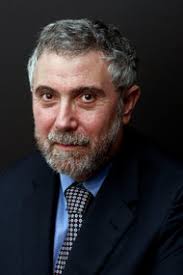
Paul Romer Paul Krugman
Every day, members of my profession, economists, find new ways to make me deeply regret I ever became one. The latest episode is a story of two economists named Paul.
President Harry Truman, the US President who suddenly and unexpectedly took office when President Roosevelt died in 1944, once said famously: “Give me a one-handed economist! All my economists say, ‘on the one hand…and, on the other’”.
Economists respond: “Give me a break, Truman! We are objective professionals. Our job is to offer alternatives and explain the implications of each. YOU are an elected official. We are your servants. YOU are the one elected by the democratic process to choose and decide, not us! We simply show you the choices.”
I myself used to repeat that mantra, during a year as head of an Israeli government planning body. But I soon learned – reality is different. When economics is a value-free zone, it is useless to political leaders. State your values, state your position, clean up the jargon, speak in ordinary language, and keep one hand anchored deeply in your pocket.
The Guardian now brings us a shocking, infuriating episode in which a future Nobel economist is fired for demanding clarity and truth. The economist is Paul Romer. In his Ph.D. dissertation, he built a powerful new theory now widely accepted, called “endogenous growth theory”. But another Paul, Paul Krugman, a Nobel laureate, has for over two decades been a beacon of clarity and one-armed economics.
In brief: Since MIT economist Robert Solow, we’ve known that half or more of all economic growth is caused by technological change. But Solow treated it as ‘exogenous’, outside the system. Romer observed that technological change is endogenous – it is created by what we do, in education, innovation, and R&D, etc. His two Journal of Political Economy articles published in 1986 and 1990, respectively, started endogenous growth theory and changed the world. He will win a Nobel Prize soon for this. It has changed the way everyone thinks about pro-growth policies and plans.
The Guardian: “The chief economist at the World Bank has stepped down from its research arm after staff were vexed by demands to write succinctly, including cutting superfluous uses of the word “and” in reports or emails. Paul Romer, 61, will leave the Development Economics Group (DEC), according to a staff announcement reported by Bloomberg. He had asked for shorter emails, while also cutting staff off if they talked for too long during presentations, it said. In response to press inquiries about internal “objections to my insistence on clearer writing,” Romer published writing guidance he had issued to DEC staff on a blog on Thursday. He said he suffered from dyslexia, making writing hard, but added “everyone in the Bank should work toward producing prose that is clear and concise. This will save time and effort for a reader. Thinking about the reader is an example of what I mean when I say that we should develop our sense of empathy.” Romer cut more US$1 million in annual expenses from the DEC budget, a body of more than 600 economists. But it appeared to be his attacks on convoluted, lengthy reports of that researchers took cause with. In an email to staff, Romer argued that the bank’s flagship publication, World Development Report, would not be published “if the frequency of ‘and’ exceeds 2.6 percent,” according to Bloomberg. He reportedly cancelled a regular publication that did not have a clear purpose.”
“Romer is credited with the quote “A crisis is a terrible thing to waste,” which he said during a November 2004 venture-capitalist meeting in California. Although he was referring to the rapidly rising education levels in other countries compared to the United States, the quote became a sounding horn by economists and consultants looking for a positive take away from the economic downturn of 2007–2009.”
Paul Romer wanted one-handed economists, who speak clearly, and paid the price. But is there a role-model for clear-thinking clear-speaking economics? There is. New York Times columnist Paul Krugman.
The Economist: “From a mono-manual perspective, at least, Harry Truman would have loved Paul Krugman, an economist who rarely hesitates to take a bold position—even when the subject is himself. In recounting the transformation of his twice-weekly New York Times column from a genial discussion of the “New Economy” into a widely read broadside against the Bush administration, the Princeton professor recently described himself as “a lonely voice of truth in a sea of corruption.”
Krugman has blasted Trump and the Republicans, and identified their scorn for economic truth.
In the 1930’s economics took a wrong turn. Influenced by the London School of Economics, economists decided to become like physicists and deal with only ‘pure science’, without ethical value judgments. At that moment, economics became irrelevant. And it remains so.
I hope Romer wins the Nobel Prize later this year. In his acceptance speech, I hope he tears several strips off the moribund walking-zombie economists there, hundreds of them, a whole building full of them at 1818 H Street in downtown Washington. That building is a wasteland desert, even though it is in the heart of Washington.
How to Solve US Political Gridlock: Dual Survival
By Shlomo Maital

Senators Flake and Heinrich
An Amazon Reality show, Dual Survival, shown as well on Discovery Channel, features two sitting U.S. Senators, Jeff Flake (Republican, Arizona) and Martin Heinrich (Democrat, New Mexico), dumped on a deserted island in the Marshall Islands, and required to survive for 7 days. They have to find water, make shelter, find food, and in general work closely together.
They do succeed, and together build a raft that takes them beyond the surf and the coral reef to their extraction ship.
While on the island, they commiserate about Americans’ low opinion of the Senate, about who is to blame (“Americans blame both parties”, they say), and note that Republicans and Democrats simply do not meet and talk together, but rather, within each party, talk only to each other.
They vow to have lunch together once a week.
So here we have a solution to the toxic political atmosphere in the US, which allows a leading Republican senator (Senate Majority Leader Mitch McConnell) to say, we will do everything to make Obama a one-term president, rather than we will do everything to improve the wellbeing of ordinary Americans. (He failed – but apparently, aggressive partisanship beats legislative productivity).
Send the 52 Republican senators off to desert islands, with the 48 Democrat senators, in pairs. Give them knives and an (empty) water bottle. Work together, or starve and dehydrate. Come back and tell us if you can work together.
Hey, it worked for Flack and Heinrich. And as for the catastrophic McConnell Health Bill — Republicans barely talked about it with Republicans, let alone with Democrats. One of the strongest arguments Republicans put forward, for the Bill: If we don’t pass it, we will (horrors!!) have to talk to the Democrats on a compromise. Talk to Democrats????!!!!! Only on a desert island….
Costs and Benefits: A Disastrous Asymmetry
By Shlomo Maital
An economist, it is said (and I am one), is one who knows the cost of everything – and the value of nothing. There is much truth to this saying.
Costs are pretty easy to measure. You add up the numbers in financial statements or government budgets.
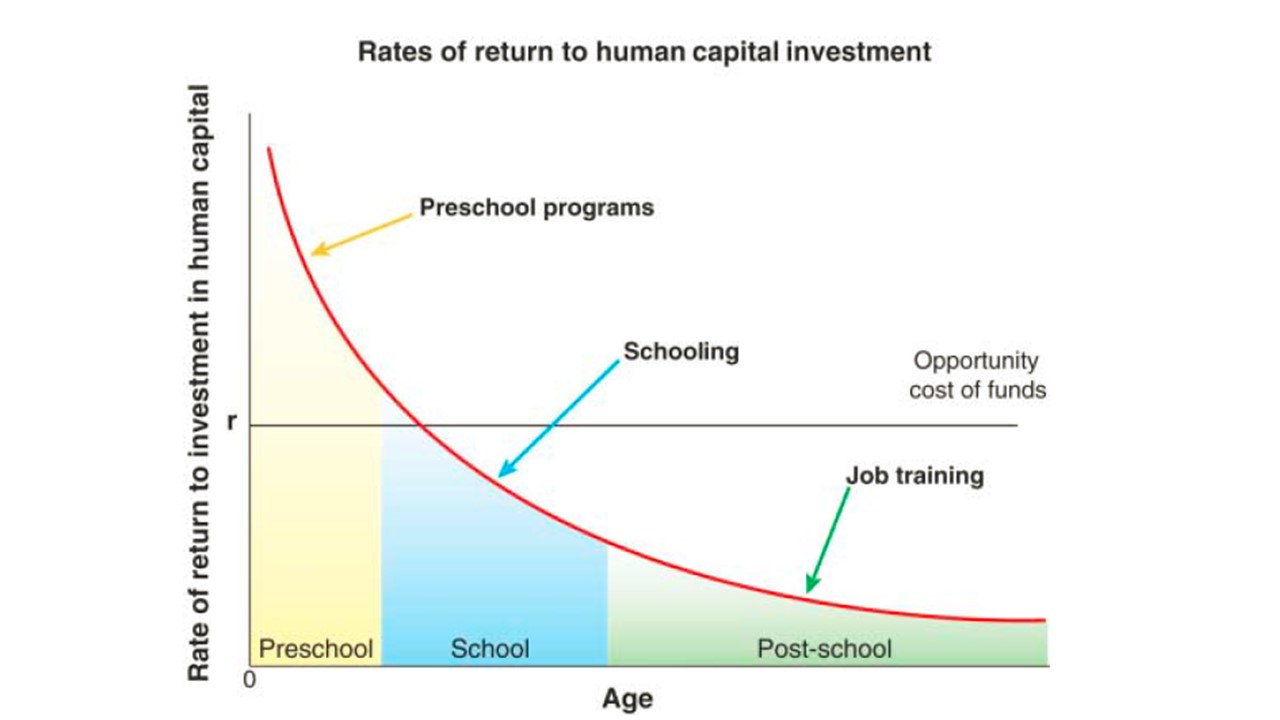
But benefits? Fruits? Now that’s another story. Because many social benefits are long-term and indirect. There is a famous study by Nobel Laureate James Heckman of the pre-school program known as Head Start, where funding has been drastically cut.
Heckman writes in SCIENCE, 2006: “at current levels of funding, we overinvest in most schooling programs, and underinvest in pre-school programs for disadvantaged children”. The diagram above shows this. Pre-school investment has a social return above the opportunity cost of the money. Other programs for older children fall short. Why?
Because the benefits we reap from pre-school (mainly the Head Start program) are long-term, accruing in adulthood, hard to measure, hard to track – and beyond the myopic vision of political leaders, especially Republicans.
Here is another example of this dreadful cost-benefit asymmetry:[1]
The study shows that, under plausible scenarios, the societal cost savings generated from fewer evictions and foreclosures could equal half of the cost of subsidizing coverage for the near-poor.
Low-income people who gain health insurance are much more likely to make their rent and mortgage payments, according to a new Washington University study of families living near the poverty line. Lower delinquencies mean fewer foreclosures and evictions. Researchers found that near-poor households that enroll in subsidized Marketplace insurance are 41 percentage points less likely to become delinquent on home payments compared to similar uninsured households. As a likely consequence, the rate of home delinquency for households without access to employer insurance fell by 31 percent at the income eligibility threshold to receive Marketplace subsidies during the 2015-2016 period. The study, performed at the Center for Social Development at the Brown School of Social Work and the Olin Business School, is one of the first to show the effect of the Affordable Care Act on family finances and the first to show the financial impact of the Marketplace component of the program, in particular. “Our results indicate that lower home payment delinquency may be an important benefit from subsidized Marketplace insurance,” the authors write.
“The spin-off benefits to the community may offset a substantial share of the cost of the subsidy program,” said lead researcher Emily Gallagher. “Not only do the banks and landlords benefit, but the entire community gains through lower rates of homelessness and abandoned property. There are fewer vacant homes dragging down housing values in the neighborhood.”
Republicans in the Senate are about to kill Obamacare (the Affordable Health Care Act) and deprive 23 million people of health insurance. The main motive is cost saving. The result will be to again increase defaults on home mortgage payments, eviction, decaying neighborhoods and vast human suffering. And all, because of cost-benefit asymmetry, and blindness to long-term indirect social benefits.
By the way – many Senate Republicans have not yet seen the actual proposed legislative bill. Senate Majority Leader Mitch McConnell has kept it a state secret. Thus does calumny thrive in the dark, like mold.
CHOBANI – An Immigrant’s Tale
By Shlomo Maital
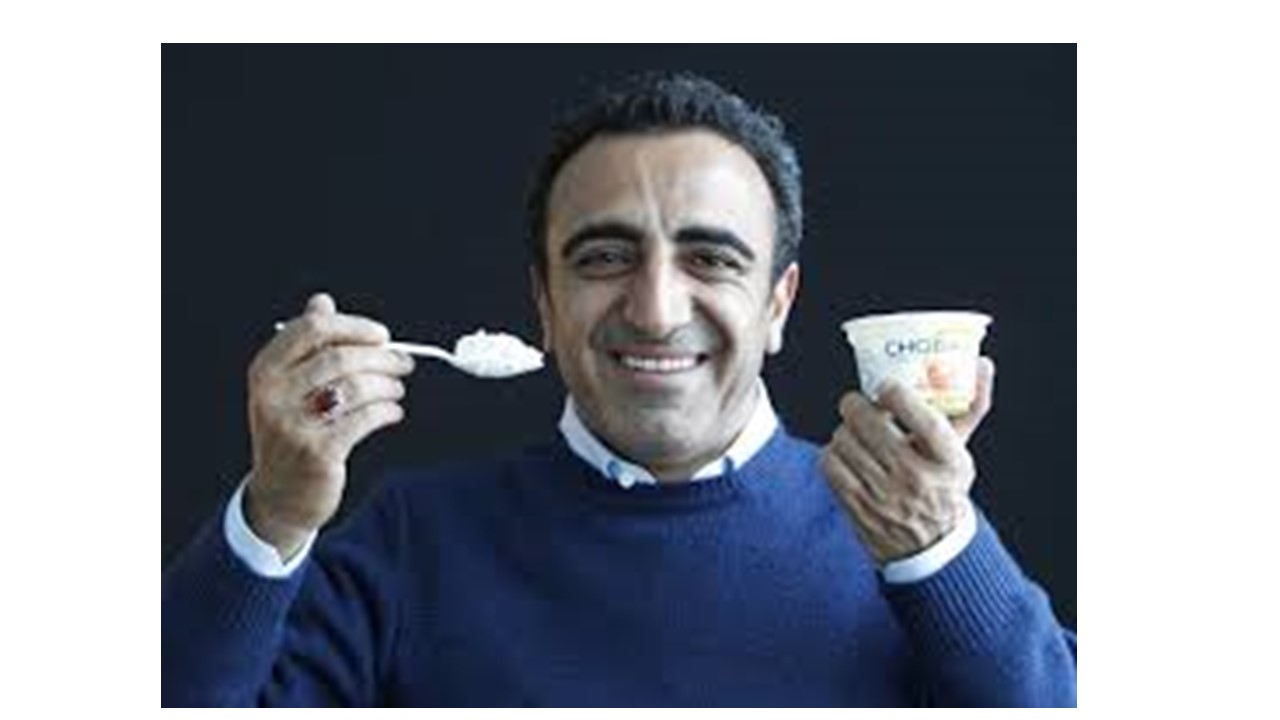
Hamdi Ulukaya was born on October 26, 1972. He was originally Kurdish, from a dairy-farming and shepherd family in a small village in the Kurdish part of Turkey. In Turkey Kurds are persecuted, in part because Turkey fears the long-standing Kurdish dream of an independent country, Kurdistan. (Kurds have already carved themselves an autonomous region in northern Syria). Hamdi was active in promoting Kurdish rights and had to leave Turkey as a result. He came to the U.S. as a legal immigrant, ironically a political refugee and hence eligible for entry. Today? I doubt he would have been granted entry.
Ulukaya is the owner, founder, Chairman, and CEO of Chobani, the #1-selling strained yogurt (Greek-style) brand in the United States. Here is how he did it. It truly does depict the classic American/immigrant dream.
In the U.S. Hamdi took some English courses and business courses. At his father’s suggestion he started a small feta cheese factory.
Hamdi Ulukaya heard of a plant in the town of New Berlin, New York, that was being closed by Kraft Foods, in 2006. It was for sale. Kraft had decided to get out of the unprofitable yogurt business. The plant was priced at $700,000. Ulukaya called to verify the bargain-basement price. “One fermentation tank costs that!” he thought. He got a $1 million loan from the Small Business Administration and from a local bank, hired several of the former Kraft employees as well as a “yogurt master” and launched his brand in 2007. It took him a year to perfect the smooth Greek-style yogurt. He made a point of hiring mainly local people.
Ulukaya chose the name Chobani as a variation of the Turkish word çoban, itself derived from Persian čupân meaning “shepherd”.
Chobani yogurt really is the best. If you haven’t tried it… do so.
Chobani has approximately 2,000 employees and is the top-selling brand of Greek yogurt in the United States. The company is worth billions.
On December 17, 2012 Chobani opened the world’s largest yogurt-processing plants in Twin Falls, Idaho. The one million square-foot facility cost $450 million and employs 300 people. Hamdi said, “The state expects the total economic impact of our business there to be $1.3 billion.” This was very unusual – Idaho is a highly conservative state, with a extreme right wing Governor. But he loves former immigrant Hamdi, who has brought jobs and prosperity to Idaho. Despite this, some of the locals have made racist remarks.
In April, 2016, Chobani announced it was giving 10 percent of its $ 3 billion ownership stake to its employees. Considering there are 2000 employees, this would be on average $150,000 per employee, or $300 million! Some employees became instant millionaires as a result of this action, because share awards were based on tenure at the company. Hamdi does not believe this is philanthropy. It is good business – creating motivated loyal and creative employees.
Hamdi has been active in Europe, helping refugees with money and moral support.
My question is: Does President Donald J. Trump eat yogurt? Does he eat Greek yogurt? Does he favor CHOBANI Greek yogurt? And when he does eat it, does he think of the Kurdish immigrant who brought jobs, wealth and good yogurt to America? And..can he spell Chobani? C-H-O-B-A-N-I . Long live Kurdistan.

 TIMnovate