
You are currently browsing the category archive for the ‘Innovation Blog’ category.
Gifts from the Gifted: Richard Branson (Virgin)
By Shlomo Maital
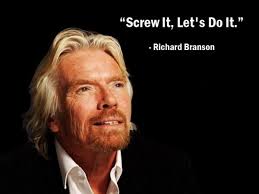
I just finished a magazine column about a gifted young woman who is 27. She has a Ph.D., is married, created software that can predict the future, has a black belt in karate, won a coveted prize, interned at Microsoft, did Army service, and is now launching a startup. Interviewing her led me to reflect how many wonderful gifts humanity receives from such gifted people. But what is special about them?
I came across a study of a very gifted entrepreneur, Richard Branson, of Virgin fame (I counted over 40 Virgin companies, ranging from travel agencies to music to mobile to…everything; the name ‘Virgin’ happened because Branson and partners felt they were ‘virgins’ in business when they started their first company]. The study is by Larisa V. Shavinina, of the University of Quebec.* (Branson is the 6th richest individual in Britain. ) She lists the causes of Branson’s entrepreneurial giftedness. Here are just a few:
# “rule breaking”. I always enjoyed breaking the rules, Branson says; e.g. ‘no 17-year-old can edit a national magazine’, so he chose to do so.
# “initiative”: He broke rules to do things better, not just to rebel. At school, he wrote the headmaster, making concrete suggestions regarding school meals, etc.
# “create value”: “I never went into business purely to make money. A business has to exercise your creative instincts.”
# “fierce independence”: I never enjoyed being accountable to anyone else or not in control of my own destiny, he notes.
# “love of challenges and adventure”: Balloon flights and the Virgin companies form a seamless series of challenges I can date from my childhood, he writes.
Shavinina notes that Branson’s parents supported his entrepreneurial instincts strongly, and his grandmother holds two British records: Oldest person to hit a hole in one in golf (90), and oldest to pass the advanced Latin-American ballroom-dancing examination. ‘You’ve got one go in life,” she told Branson, “so make the most of it.” He listened. Branson’s aunt Joyce lent him the money to set up his music company, when he was 20, when the banks refused. His Aunt Clare was an entrepreneur who built a business on an endangered species of Welsh Mountain sheep. Clare flew a biplane and liked to parachute. Branson named his first child after her.
* Larisa V. Shavinina, “Early Development of Entrepreneurial Giftedness”, ASAC 2007.
Keynes? Or Friedman? We Now Have an Answer
By Shlomo Maital

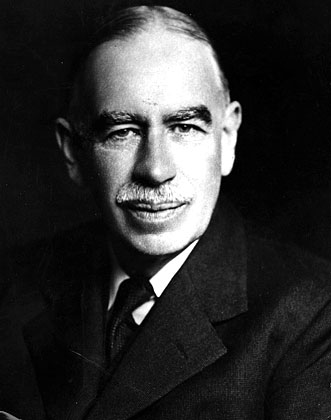
Milton Friedman J. M. Keynes
The two leading economists of the 20th C., Milton Friedman and J.M. Keynes, utterly disagreed. Friedman said that it is money that drives economic demand and prices. Keynes said, no, it is the aggregate demand driven by government spending that, in bad times, drives the economy. Recession? Cure it with money, Friedman believed. Recession? Cure it with fiscal policy (deficit spending), Keynes said.
Nature has now conspired to resolve the debate. After the Lehman Bros. bankruptcy on Sept. 17, 2008, the U.S. (and the world) went into a global financial crisis. Political deadlock in the U.S. Congress has now forced sharp budget cuts, curtailing Keynesian stimulus. But the Fed, under Bernanke, continues to pump huge amounts of money into the system. This is a massive natural experiment. Heavy monetary policy, reverse fiscal policy. Let’s see what happens.
If Friedman is right, it will work. If Keynes is right, it won’t work.
Keynes is right. Here is the evidence, taken from today’s Financial Times: “According to the Census Bureau, the median household income fell from $51,100 to $51,017 in 2012, and is now 8.3 per cent below its pre-recession peak in 2007. The annual Census Bureau figures demonstrate what has gradually become a lost generation for the American middle class. “Poverty is higher today than it was in 2000 and household incomes are lower,” said Sheldon Danziger, president of the Russell Sage Foundation, which funds social science research. That is reflected in continued high unemployment, which is currently at 7.3 per cent. Many more people are underemployed or sitting out of the jobs market. “We just haven’t seen enough job growth,” said Justin King, policy director at the New America Foundation in Washington. “There’s so much unemployment and so much slack that it’s a buyers’ market for labour: people haven’t been able to get wage rises or move to better jobs.” There’s so much unemployment and so much slack that it’s a buyers’ market for labour: people haven’t been able to get wage rises or move to better jobs
OK, so now we know the truth. All the heavy money printing, and zero interest rates, have done is enable the fat cats to borrow cheap and invest high. It hasn’t helped with jobs, or family incomes. Meanwhile, budget cuts are keeping the economy in stagnation.
If you disbelieve me, ask Paul Krugman, Nobel Prize laureate. Or Stan Fisher, until recently Israel’s central banker and formerly deputy MD of the IMF. Or, better yet, just look at reality.
Now that the evidence is clear, if we are rational thinking human beings, why is the policy not being changed? Ask the Republicans, locked into their Neanderthal Obamaphobia. Who pays the price? The American people, and to some degree, the rest of the world.
Bethlehem Alemu: Doing Good, Doing Well, in Ethiopia
The story of soleRebels
By Shlomo Maital

Bethlehem Alemu – soleRebels
Bethlehem Alemu is a young Ethiopian woman whose business soleRebels creates beautiful shoes, made entirely in her village and surrounding region (including the materials). She can tell her story far better than I. So, in her own words, here it is. It is a bit lengthy, but worth reading to the end.
“My name is Bethlehem Tilahun Alemu and I am the founder and Managing Director of soleRebels here in Addis Ababa, Ethiopia. It is my immense pleasure to introduce myself and soleRebels to you. For us here at soleRebels, creating great footwear is also a means of creating hope. This is the concept behind soleRebels.
soleRebels began in 2004 as an idea: to bring jobs to our community, Zenabwork, a small village in Addis Ababa, Ethiopia, a place where there literally were none. Having grown up watching our family and neighbors struggling, we decided to create the “better life” we were all waiting for by harnessing our community’s incredible artisan skills and channeling them into a sustainable, global, fair trade footwear business. We have done that and more and we are proud to say that the soleRebels brand is being enjoyed by people in over 30 countries around the world.
We selected shoes because we saw that footwear was an excellent platform to begin to share many of the indigenous eco-sensible craft heritages and artisan talents that we have here in Ethiopia with the world! It also meant that based on the approach we were taking to footwear creation – that being hand crafted and eco-sensible – that we could source and make almost ALL our materials locally, thereby creating an export product from 100% local inputs. This allowed us to riff, recreate, and re-imagine the traditional “selate” and “barabasso” shoes, a recycled car tire soled shoe that has existed in Ethiopia for a LONG time (in fact, it was THE footwear from back in the day when the ORIGINAL “soleRebels” fought off the invading forces and kept Ethiopia as the only African nation to never be colonized!). We took this wonderful indigenous age-old recycling tradition and fused it with fantastic Ethiopian artisan crafts and excellent modern design sensibilities and turned it into footwear that has universal flavor + appeal that is now a market beating export brand being enjoyed by people around the globe!!!!
We carry on that original riff everyday growing the styles, the product range, the quality and the brand. soleRebels features collections of superFresh, comfy + cool sandals, flip flops and shoes featuring recycled car tire soles and an array of recycled and sustainable ingredients like hand spun + hand loomed organic fabrics and a pallete of unique natural fibers including organic pure abyssinian jutes and PURE Abyssinian KOBA. So have fun, help others and be proud that you are making the world a better place. one step at a time. and really, what more could you ask from your shoes… ”
Support Bethlehem Alemu. Buy her shoes; ask your shoe store to stock them. It will do more good than buying Nike’s or Adidas.
Exporting the Bubble to Asia
By Shlomo Maital

Suppose, just suppose, you have a bad cold or a case of the flu. Do you cough into your elbow, avoiding infecting others, or do you blast your germs right into their faces? Obvious, right?
Why then are U.S. and European banks doing the latter – infecting emerging markets (e.g. Asia) with their financial crisis, after ruining their own economies?
In today’s Financial Times, Claire Jones reports that bank lending to emerging markets has reached record levels. She reports:
“Banks piled into emerging markets at a record pace earlier this year, highlighting the scale of the global search for yield that has partially reversed since the US Federal Reserve said it intended to slow its bond buying. Cross-border lending to emerging markets surged by $267bn, to an estimated $3.4tn, in the first quarter of 2013, the Bank for International Settlements said on Sunday. The Bank for International Settlements (the central banks’ central bank) said the 8.4 per cent increase was by far the highest recorded, with the amount of interbank lending rising by almost $200bn, or 12 per cent. … 85 per cent of the rise was accounted for by more lending to China, Brazil and Russia. The publication of the figures comes as the US Federal Open Market Committee gears up for its policy meeting, ending on Wednesday, when it could decide the timing and pace at which it will slow its $85bn worth of monthly bond purchases. “
Jones adds: “With interest rates close to zero across advanced economies and liquidity abundant as a result of their central banks’ mass bond-buying sprees, credit has flowed into emerging markets in recent years as lenders and investors sought higher returns. According to the BIS data, interbank lending to emerging markets in the Asia-Pacific region alone has doubled since the investment bank Lehman Brothers collapsed five years ago.”
What is going on?
Simple. America’s Fed, under Greenspan, purposely created a housing bubble by bashing interest rates down to near zero and flooding the market with cheap credit. That led to the global financial collapse. To fight the recession, the Fed has pumped $85 b. in new credit in the markets every single month (by buying bonds). But what to do with the money? Banks are cautious about lending it and financial returns are miniscule. So, why not export the money to emerging markets, where rates are higher?
The result has been to help foster a housing bubble in China, in Singapore and in other countries.
This is just one more example, though an extreme one, of how the U.S. Fed runs its monetary policy solely for the interest of the United States, while generating major collateral damage to other nations.
It’s time to create a global currency, and run it through a global Central Bank. The U.S. dollar long ago lost all claim or right to its role as the world’s money. It is far too selfish.
Bypassing the Banks: Good News, Bad News
By Shlomo Maital

A new Israeli website called e-loan will open for business in the next few days. It will import an idea proven abroad — Web surfers can borrow up to NIS 50,000 (about $12,500) at 8% – 10% interest, with a 2% commission to the website, from funds invested by surfer-investors with spare funds. Background checks will on would-be borrowers will be done by the website but investors are urged to diversify their loans, and spread the risk.
This is a trend toward what economists typically, in their impossible jargon, call financial disintermediation. That means, we no longer need the banks to intermediate between those who have money and those who need it and want to borrow it. We can bypass the banks. We can do this on the Web. Banks are hoarding their cash anyway, fearful of lending it. So we need to find our own solutions.
Financial disintermediation is already a strong trend, as large corporations access capital markets directly by issuing bonds. This has not proven successful in Israel; tycoons are now struggling to redeem the bonds and ask for ‘haircuts’ (reductions of half or more in the principal of the debt). Will it work better for ordinary small investors and small borrowers? Will they have higher standards than the tycoons?
I think the e-loan phenomenon, bypassing banks, is both good news and bad. Good news, because it provides access to credit when none would be available otherwise. Bad news, because, look at the price! Interest of 8% to 10%, plus 2%, is very high, hard to pay back, hard to find investments that make such debt worthwhile. It is high, because of the risk premium. And because ordinary citizens, and small businesspersons, do not have the privileges that the fat cats have, of borrowing at low interest, without full collateral, or any collateral at all, from banks.
Let’s wish e-loan well. Above all, let’s wish for new alternatives to the banks, disintermediation, to lower their power and to lower our dependence on them. The less power they have, the less they can scalp us.
The World is “Pareto”, Not “Bell Curve”
By Shlomo Maital

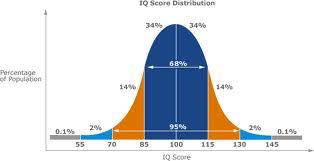
Bell Curve
Writing in the GIBS (Gordon Institute of Business Science) magazine Acumen, entrepreneur and leader Adrian Gore * makes an important point.
“Most things are incredibly skewed in their distribution and follow the Pareto principle, the 80/20 rule”.
We’ve been led to believe that human beings are distributed according to a bell curve, or Normal distribution. True, height is a bell curve. But nothing else is. (IQ is a bell curve, only because that is how it is defined and measured). Nearly everything else is skewed – a “Pareto” distribution. 60% of Twitter messages come from just 2% of users. 20% of the world’s nations won 75% of the gold medals at the London Olympics.
In business, 80% of revenue and profits come from 20% of products and services.
In health care, the sickest 20% generate 79% of health care costs. And within this 20%, the sickest 20% generate 60% of total costs.
What this means, says Gore, is this: To shift a bell curve is very very difficult. You have to shift the whole thing. But to shift a ‘long tail’, in a Pareto world, “a shift of the tail drags the average with it and modifies the system.” And you can shift the tail with just a few remarkable creative individuals.
This poses a huge challenge. To maintain social cohesion, fairness and justice, societies must treat everyone equally and must try to offer everyone equal opportunities. At the same time, society must try hard to identify truly gifted individuals and give them free scope to deploy their talents and pull us all toward that wonderful ‘long tail’. Gore notes that if Steve Jobs were South African and launched Apple in South Africa, he alone would have increased South Africa’s GDP by 20 per cent. And here is the key point: By trying very hard to give everyone equal opportunities, many gifted people whose gifts would otherwise remain unknown and undiscovered, will emerge to change the world.
It takes an average of 250 tons of mined ore to produce one carat of finished diamond ! If we are willing to process so much ore for just one diamond, surely we can also find ways to discover the diamond minds among our disadvantaged children. I wonder how many such undiscovered gifted minds exist, among the South African miners who mine the ore to discover the diamonds – and how much more valuable those minds are than the diamonds they seek.
* GIBS is Africa’s leading business school, located in Johannesburg. Acumen is its periodical. Adrian Gore is CEO of Discovery Holdings, which owns Discovery Health, a healthcare provider for 2.5 million South Africans. He pioneered the Vitality program, which rewards people for maintaining good health.
Finding the Courage to be Creative
By Shlomo Maital

In two days, on the evening of Wednesday Sept. 4, the Jewish New Year 5774 begins. Many of us will use this time to ponder how to make our lives richer and more meaningful to ourselves and to others.
Here is one small suggestion.
My friend Arie Ruttenberg and I have written a small book on creativity, called The Imagination Elevator. Arie has invented a wonderful simple definition of creativity: “widening the range of choices”. We ALL have an infinite number of choices in our lives. But often we imprison ourselves, simply by believing we don’t, that we have no choice, that we have to live tomorrow as we lived today and yesterday.
I’ve been reflecting why so many of us are fearful of trying new things. The answer is simple. Old familiar choices are comfortable, even though they are boring, frustrating, or tiresome, precisely because they are familiar. New choices are scary, BECAUSE they are new and unfamiliar. So by definition, creativity requires some courage. It requires us to move out of our safe, comfort zone and temporarily, move into the discomfort zone, into the zone of risk and uncertainty.
Many people never make it. They never have the courage to try. But if they had, they would learn that the discomfort associated with trying new things, with sawing through the bars of our self-made prisons and escaping to freedom, is very temporary. Soon, the discomfort we associate with uncertainty becomes energizing novelty. We learn to love trying new things, even when they don’t work out as we expected. And our lives are richer, more meaningful for ourselves and often for others too, who benefit from our creativity.
As Nike says, Just do it. Try it. Start with small things. Food, clothing, hobbies, music, movies. Expand to bigger things. Use the New Year to break out of your self-imposed chains. You DO have infinite choice. But only if you believe you do.
Charles de Gaulle once said, we may well travel to the moon, but the greatest distance we have to travel lies within us.
He was so right. Let’s begin this journey now.
Falling Creativity: Not Just Kids!
By Shlomo Maital

With so many bad things happening the world today, it seems rather strange to be so worried about the decline of creativity. But I am. I work with talented managers who consistently report that their ideas are unwelcome in their organizations. And I observe lock-step linear schools that seem obsessed by erasing any shred of independent thinking among their children.
The reason declining creativity should worry us so much is this: The magnitude and number of problems in the world today are growing; but the resources to deal with them are shrinking. (It’s called ‘austerity’). So the only way we are going to make a difference and change the world is through creativity – creating something from nothing, widening the range of choices without using resources. But if creativity itself is being degraded – we are in deep trouble.
Here is the essence of an interview found on Britannica website with Kyung Hee Kim, a professor at College of William & Mary in Williamsburg, Va., a scholar whose research revealed the depth and extent of falling creativity.
* Children in the US, especially those in kindergarten through third grade, are becoming less creative (measured by the widely accepted TTCT Torrance Tests of Creative Thinking). There is no real explanation for this yet.
* For kids: Prof. Kyung thinks the cause may be in their homes, not in their schools; kids spend most of their time in front of TV, computers, video games, and far less time engaged in creative activities and play.
* Kids are spending far more time interfacing with machines, rather than with people and paper.
* Video games are a growing part of kids’ play. Prof. Kyung does not believe playing video games fosters creativity. Creativity is widening the range of choices. But video games are programmed and offer limited choices.
* “Contemporary parenting styles” may create overly programmed lives for children, over-protecting them and denying them opportunities to discover for themselves.
* Dramatic increases in ADHD diagnoses and over-prescription of medication necessarily “decrease creativity, as creative kids and ADHD kids share common characteristics: rebellious, emotionally expressive, spontaneous, impulsive, energetic, excitable kids. “We are unwittingly doping our creative children in a misguided attempt to control undesirable and inconvenient behaviors!”.
* Creativity scores are falling because “society is less receptive and encouraging of creativity, creative people, creative ideas.”
I myself encounter frequently companies that pay lip service to innovation but do everything they can to destroy any wayward, creative disruptive new idea.
* No Child Left Behind Act (NCLB) has teachers teaching to an annual test in reading and math, “which discourages purposeful creativity development”.
Prof. Kyung concludes, disturbingly: “….countries such as China, Japan, Korea, and Taiwan have modeled their educational systems after the earlier American education system because of America’s previous success in encouraging creativity in children. Ironically, in the U.S., NCLB now mandates standardized testing and national educational standards, fosters rote memorization, and chokes creativity in children.”
Fix Our Schools? Ask the Kids!
By Shlomo Maital

It is widely understood that schools (primary and secondary) in the U.S., and in Israel, are broken. They persist in teaching, and measuring, mainly memory skills, when the Third Industrial Revolution needs creative thinking. It is a miracle that somehow, a handful of creative kids survive the system with their creative juices more or less intact. But how many do not?
Amanda Ripley, an American scholar, has written a new book that sheds new light on the subject.* She chose the clever method of asking the ‘horse’s mouth’ – the kids. She enlisted field agents, three American high school students studying abroad (in Finland, Poland and South Korea). Here are the ‘secrets’ she discovered.
Finland: “Rather than try to reverse engineer a high-performance teaching culture through dazzlingly complex performance evaluations andvalue-added data analysis (!), they allow only top students to enroll in teacher-training programs [tougher to get in to them than to get in to engineering], more demanding than those in America. Better-prepared better-trained teachers can be given more autonomy, leading to more satisfied teachers who are also more likely to stay on.”
South Korea: Notes Ripley: “In an automated global economy, kids need to be driven; they need a culture of rigor.” And “Rigor on steroids is what [one] finds in South Korea. Her field agent Eric is shocked to find students dozing in class in Busan, only to realize why – they spend all night studying at hagwons, cram schools where Korean kids get their real education. True, the Korean “hamster wheel” creates as many problems as it solves. Ripley says “it is relentless, excessive – but it felt more honest”.
Poland: Poland scaled the heights of international test score rankings in record time by following the formula common to Finland and South Korea: “well-trained teachers, a rigorous curriculum and a challenging exam required of all graduating seniors.” Field agent Tom notes that in his hometown, in Pennsylvania, sports were the core culture. In Wroclaw, Poland, there was no confusion about what school was for — or what mattered to kids’ life chances.
Reviewing this book, Annie Murphy Paul asks whether America [and, I add, Israel] “can generate the will to make changes.” The answer is, no. In both nations, entrenched mediocre educational bureaucracies perpetuate mediocrity. This is a doom loop. Bad teachers fear good ones. So bad teachers lead to even worse ones.
Good teachers love better ones, because they help them get better. So good teachers generate even better ones.
Which loop does your country enjoy? Which would you prefer? And how in the world do you change a doom loop into a genius loop? And, what future do your kids have if they go to schools driven by the doom loop?
* Amanda Ripley. The Smartest Kids in the World. And How They Got That Way. Simon & Schuster, 2013. Reviewed in the Global New York Times, Aug. 24-25, 2013, p. 19, by Anne Murphy Paul.
Rose-Colored Glasses? Get a Pair and Wear Them!
By Shlomo Maital

There is a condition psychologists have discovered and long known about, known as ‘depressive realism’: the proposition that people who are depressed actually have a more accurate perception of reality. For instance, they are less affected by positive illusions of superiority (depressed people see themselves accurately as others see them; most of us think others see us far more favorably than they really do). * Most students, for instance, when asked, say they think they will get a grade “higher than average” in the course they’re taking, even though in reality it is impossible that everyone is above average (as they are in Garrison Keillor’s Lake Wobegon).
Writing in his Psychology Today blog, Dr. Ben Hayden quotes a song by Kurt Cobain: “I think I’m dumb, or maybe just happy.” Cobain was seriously depressed. The lead singer, writer and guitarist for the grunge band Nirvana, Cobain killed himself on April 5, 1994. He seemed to believe that to be happy, you had to be dumb or ignore reality.
What depressive realism suggests is that if you see the world as it is, with war, hunger, deprivation, poverty, homelessness, disease, and now, people gassed to death with Sarin, well, the only reasonable condition is depression. But if you wear rose-colored glasses, and are hopelessly optimistic, you are far less likely to be depressed. Incurable optimism creates energy, serenity, and above all, hope for a better future, without which it is difficult to surmount daily difficulties.
Voltaire mocked optimism, in Candide, in his character Dr. Pangloss (“all is for the best in this, the best of all possible worlds”). Well, Voltaire, I’ve known pessimists and I’ve known optimists. I prefer the latter.
Hayden disagrees with the concept of depressive realism. He thinks that it somehow justifies being depressed and hence keeps those with depression from being treated. He thinks that if you accept depressive realism, then you accept being depressed rather than battle it.
Accept it or not, it does seem there are strong reasons for erring on the side of optimism. As psychologists affirm, perception sometimes is reality. If you perceive the world as a great place, then you are more likely to act to make it so. Imagine if we all wore rose-colored glasses. Soon, we wouldn’t need them.
Alloy, L.B., Abramson, L.Y. (1979). “Judgment of contingency in depressed and nondepressed students: Sadder but wiser?”. Journal of Experimental Psychology: General 108: 441–485. doi:10.1037/0096-3445.108.4.441.


