
You are currently browsing the category archive for the ‘Innovation Blog’ category.
Why Japan’s ‘Solution’ is Win-Lose – and In the End, Lose-Lose
By Shlomo Maital

In his Foreign Policy blog, my friend Clyde Prestowitz [President Reagan’s chief trade negotiator and an expert on Japan] draws attention to Central Bank of Japan Governor Kuroda’s drastic new policy:
[Kuroda] and the bank are going for broke by buying as much government debt as necessary to create an inflation rate of 2 percent. The initial move will have the BOJ buying twice as much as the U.S. Federal Reserve has been buying in its quantitative easing campaign to get the U.S. unemployment rate down to 6.5 percent. But the BOJ has also promised to go far beyond even this uncharted territory if necessary to get to the targeted 2 percent inflation rate. The major question now is whether this will work or whether the country will just wind up broke. Already the move has pushed the value of the yen against the dollar down from Y76/$ to Y96/$ for a devaluation of a little more than 25 percent over the past few weeks.
Great news when the world’s 3rd largest economy (it lost #2 to China) gets its motor running again? Perhaps. But there is a catch. When Japan devalues its currency to boost exports, somebody loses THEIR exports, because THEIR currency gets more expensive. What if EVERY nation tried this? We’d be back in the 1930’s, when competitive devaluations destroyed world trade.
Job creation is the chronic disease left in the wake of the 2008-12 global financial crisis. Many governments are trying to export their unemployment, like Japan. This is short-term win-lose, which ultimately becomes lose-lose when every nation tries it. The only solution is to spur trade with a globally coordinated policy, win-win.
Is what Japan is doing LEGAL, according to free trade agreements? It is indeed. Those agreements, Prestowitz notes (and he should know) do NOT deal with currency fluctuations. This is a huge loophole that Japan is driving its truck through.
Social Equality? Schooling Holds the Key
By Shlomo Maital

A brilliant Princeton University economics undergrad, and blogger, named Evan Soltas, has at last provided some economics research that both make sense and makes a difference.
What he found is this: The most powerful force for improving social equality and social justice is not income but schooling. In other words: Whether kids stay in school and finish high school, and go on to college, is not necessarily related to family income but rather, family history and family educational values. To quote him:
The high school dropout rate among people whose fathers were dropouts is 22.2 percent. The dropout rate with high-school-grad fathers is 2.9 percent. Let’s assume that the social value of a high school degree is $30,000 per graduate; that’s roughly the difference in average income between non-grads and grads.
The point is, there is ‘generational echo’. If a kid drops out, then his kids are far more likely too to drop out. The gap between a high-school finisher and non-finisher is $30,000 in income. But if you add up the many pieces of $30,000 across numerous generations, (if you drop out, your kids likely will too, and their kids, and their kids, and so on)…you get a present value of $1 m. That means – it is almost infinitely value to invest public money and effort to keep kids in school. More powerful than redistributing income.
The Bible says, rather cruelly, that the sins of parents are visited down to the 3rd and 4th generations of children. According to Soltas, that happens to be true, regarding schooling. A just society is one where everyone finishes high school, at least. That should be the key focus of public policy. It’s so simple. Kudos to a young economist who finally asks good questions and answers them in a clear and relevant way. [Check out his blog – Evan Soltas].
Why Israel Is Not Upset by Anonymous Hackers
By Shlomo Maital

A faceless group known as Anonymous (hackers) are attacking some of Israel’s websites. Here is why:
“You have shown that you do not respect international law,” said the group in a video released online addressing the Israeli government. “This is why that on April 7, elite cyber-squadrons from around the world have decided to unite in solidarity with the Palestinian people against Israel as one entity to disrupt and erase Israel from cyberspace,” it added.
April 7 ? The eve of Holocaust Memorial Day? On this day we remember what another group of “elite squadrons” did to us. They tried to erase the entire Jewish people. They nearly succeeded.
This time, Anonymous is erasing bits and bytes. There are probably those who would love to do much more (like Iran). But this time, the Jewish people have their own country, true a tiny one, but with lots of capabilities. So Anonymous, you can take down some websites, but you will soon understand why we aren’t sweating it. Everything is relative. You make a huge virtue of being anonymous, but it’s simply another word for cowardly. If you identified yourselves, you might get some of your own medicine.
So, tomorrow, at 10 a.m., when the sirens sound and the entire country of Israel stops to recall the Holocaust, we will not be thinking about Anonymous at all, or even concerned by it.
And by the way, Anonymous, 85 miles, or 148 kilometers, from my home city Haifa, just over an hour’s drive, Syrian elite squadrons have killed over 70,000 Syrians, with rockets, bombs, and perhaps even chemicals. The most basic human right is the right to life. How do you like Syria’s version of respect for international law?
Why Dreams Make You Happy…Until They Come True
By Shlomo Maital

The lovely blog called Babbage, on science and technology, in The Economist, wrote on April 5 about a neat piece of behavioral research. It is by a team led by Eugene Caruso, Univ. of Chicago, and will appear in Psychological Science.
Here is the experiment: “323 volunteers [recruited through Mechanical Turk, amazon’s micro-job portal] were divided into two groups. For one group, a week before Valentine’s Day (Feb. 14), they were asked how they planned to celebrate it. A week after Feb. 14, the second group reported how they HAD celebrated. “
Both groups had to describe how near the day they felt, on a scale of one to seven.
Those describing future plans were far more likely to report it as “a short time from now”. Those who already experienced it tended to report “a long time ago”.
Conclusion: “Something happening in one month feels psychological closer than something that happened a month ago”.
Does this jibe with YOUR experience? Do you get much enjoyment out of anticipating future pleasures, like vacations, purchases, family events? Do past events, purchases, etc., somehow feel distant and perhaps a bit ho-hum?
Caruso speculates that depression may occur because people who feel the past as being closer may ruminate about the bad things that occurred to them. Babbage thinks politicians should talk more about future plans than about the past. (I think they already do this, but boringly).
For individuals: Perhaps we should emulate the Japanese. Americans, when they buy something on-line, want it NOW! Japanese don’t mind waiting two weeks, because they like to anticipate the purchase’s arrival during the waiting period. It’s pretty simple. Keep a host of pleasant future events lined up in your mind, and replenish the list from time to time; take the list out when you’re a bit down, and go over it in your mind. Reap the sunshine it brings. Don’t count on all the old stuff you bought to keep you happy; it fades quickly. Dreams themselves make us happy; once they come true, well — perhaps they fade a little. So—dream on!
When Is Less Personal Freedom Better than More?
By Shlomo Maital
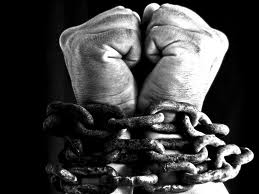
Personal freedom – the right, nay the OBLIGATION, to find personal fulfillment, pleasure and happiness – is a dominant social trend – on a “nearly uninterrupted 40 year winning streak”, as NYT columnist David Brooks notes (April 3/2013). We have seen enormous expansions of social and lifestyle freedom, in the 1960s, and economic freedom, in the 1980’s. Personal freedom has become the highest ideal. In undemocratic nations, where people are enslaved, this remains true. But Brooks asks, have we overdone the value of personal freedom [in democratic nations]? Has it actually begun to make us less happy rather than more?
His brilliant perspective on the gay marriage firestorm in America, involving the Supreme Court, is this – Gays are abandoning personal freedom (the right to make and dissolve unions, at will, instantly) for ‘chains’ of marriage. They are fighting hard for those chains, and they believe it will make them happier. And it will.
Things that constrain our freedom sometimes help, rather than hinder. Brooks quotes Edmund Burke: “…men are qualified for civil liberty in exact proportion to their disposition to put moral chains upon their own appetites…society cannot exist unless a controlling power upon will and appetite be placed somewhere, and the less there is within, the more there must be without”. Our own internal constraints on our need for instant gratification (“within”) have become greatly weakened. Result: obesity, divorce, drugs, etc. We need more “do without”, “do with less”, “give it up”.
In the past 45 years, I wrote and published many academic research papers. Very few of them are worth anything. But perhaps one of them is. Economists claim that the more choice we have, the better. I provided theory and evidence, in a rather obscure journal, that sometimes, we are better off when we constrain ourselves, put chains on ourself. As, when I make myself finish revising a chapter, before going for a pleasant run along the beach. No-one paid attention to the article, but I kind of like it. Here is the reference, on the off chance someone might want to dig it up [“Prometheus Rebound: On welfare-improving constraints”, Eastern Economic Journal, XII (3), July 1986, 337-344.]
If people have a psychological tendency to prefer instant immediate gratification over deferred gratification, then things that constrain this ‘quick buck’ appetite can be very helpful and make us better off. If society doesn’t provide these ‘chains’, perhaps we can invent our own. We should understand, if Brooks is right, that “the balance between freedom and restraint has been thrown out of whack”.
What Is Your Own Personal “Exodus”?
By Shlomo Maital
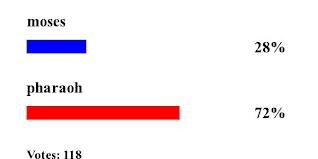
Survey of the Children of Israel, 3000 years ago: +/- 3% random error,
“Should we leave or stay?”
Today is the seventh and last day of the Jewish religious festival, Passover. It coincides with Easter, because the Jewish religious calendar is lunar and Easter too is determined by the lunar calendar (The Last Supper was the Passover Seder).
During Passover, we recount the story of the Jews’ Exodus from Egypt. Today, in synagogue, we read the Song of the Sea, a Biblical passage that extols how G-d saved the Jews by parting the Red Sea, then drowning the Egyptian King and his soldiers. My wife and I struggle with that passage (which is also read in daily prayers), because we do not think Jewish values condone exulting when people die, even if it’s your fiercest enemy sworn to kill you. So, here is how I deal with it.
Every nation has a legend about how it was born. The Exodus from Egypt, from slavery to freedom in our own land, is that of the Jewish people. This story, about defying impossible odds, confronting Pharaoh, persuading the majority of doubters, and making a 40-year dry-as-dust sojourn through the Sinai Desert to reach the Promised Land, is seminal. It led Israel’s leaders to declare statehood, in 1948, when every sane advisor advised not to and when the entire population of Israel was less than the rounding error of surrounding Arab nations. It leads young Israelis to launch startups, against impossible odds. The story of the Exodus had to be dramatic enough to burn itself into the culture and consciousness of a people and to stick there for 3,000 years. And it doesn’t matter if it happened or if it didn’t. It achieved its goal – to shape and sustain a people, even through the Holocaust.
Every person has a legend. A personal legend is about what happened to you in the past, what is happening to you now, and what will happen to you in the future. You own your legend. You have EVERY right to interpret the past, as you wish, to alter it, to shape your consciousness and behavior. And for sure, you have the right to make an Exodus – to examine where you are, coldly and objectively, and if you are not where you wish to be, make your own Exodus, lead yourself out of bondage, and into the freedom you seek. Make your own legend. And do it now!
I did. After prostate cancer, I chose to take early retirement (Exodus) from an uncomfortable university professorship (comfortable in every way except the useless research I was churning out), and since then have produced books and textbooks that I hope are useful for managers and students of management. My latest book, due out soon, is about creativity and how to strengthen it. I have my own personal legend – breaking the invisible chains of tenure to do only what is productive and useful and meaningful, to find meaning.
What is your Exodus? What is your personal legend? What will you tell yourself, ten years from now, about what you are living today? Is it a legend you love? If not, what will you do about it? What excuses are you making to avoid your Exodus, and will you be Moses or Dumbo? Are you making meaning? Or money?
Don’t listen to your internal pro-Pharaoh voice. Defy it.
Tiger Woods: Perseverance Through Adversity
By Shlomo Maital

At the peak of his career, Tiger Woods crashed, when sordid details of his marriage and family life emerged. In November 2011, he hit bottom – he dropped to #58 in the world professional golf rankings, from a former #1.
But on Monday, with a victory at the Arnold Palmer Invitational, Woods returned to the #1 slot, for the first time since 2010. With his win, Woods supplanted Brandt Snedeker, as the favorite for the upcoming Master’s.
Woods is now 37 years old. He passed Jack Nicklaus, last year, with his 74th title, and he is only five titles from equaling Sam Snead’s career victory total of 82. It took Snead almost 30 years to achieve that.
Woods has suffered injuries, had to retool his stroke, been attacked viciously in the media for his philandering, went through a tough divorce, and at times played terribly. Many of his ‘wounds’ were self-inflicted. Perhaps we can forgive him, because as a star athlete from an early age, he may not have had the time nor the opportunity to learn how to live; he was too busy playing golf, learning to drive and putt. He is not the first, nor the last athlete, to screw up his personal life. But through it all, he never gave up.
Tiger Woods is back. Let’s all of us learn from his perseverance. If you love what you’re doing, keep at it, no matter what, eventually, if you persist, you will triumph. Character and determination play a far bigger role in achievement than does genius.
And, p.s. Nike – no, “winning does not take care of everything”. Sometimes winning takes care of nothing. Being a decent human being takes care of most things. Tiger learned this the hard way. Too bad his sponsor hasn’t.
At Passover: We Empathize With the Exodus of Eritreans
By Shlomo Maital

At our Passover Seder, we basked in the warm glow of our family, grandchildren and guests. We enjoyed our two sons’ gourmet cooking (leg of lamb, done to a turn), and our youngest granddaughter Eliana’s wonderful smile and disposition. We told the story of the Exodus, how the Jewish people became free from the bondage of Egyptian slavery some 3,000 years ago.
But we also heard about a new Exodus, from Eritrea, from our two Eritrean guests, who some years ago made their way at great danger and difficulty across Sudan to Egypt, across the Sinai Desert, to an unwelcoming Israel. One of them just completed his degree in psychology at a leading Israeli college. I had the pleasure of eating at his restaurant in South Tel Aviv, which he owns together with an Israeli partner. Our outgoing Interior Minister Eli Yishai (who leads the Sefardi Haredi party Shas) has determinedly tried to expel the Eritreans, illegally; good that he is now replaced with Likud Minister Gideon Saar.
One of our guests told us how today, the Eritrean refugees have become an industry, much like the Somalis treat passing ships. As Eritreans flee their country from a murderous dictator, a modern Hitler, many are captured in Sudan, almost at once, then passed on like chattel from one criminal gang to another, sold each time, ending up in Sinai in the hands of Bedouin, who demand tens of thousands of dollars in ransom (to recoup their ‘investment’). (Recently an 8-year-old Eritrean child was held for ransom; the Eritrean Diaspora somehow raised the money to free her). There are worse horror stories that I cannot even recount here in this blog, related to body parts for organ transplants.
All this goes on, with utterly no concern in the world and no press coverage. At our Seder, I remember Edmund Burke’s adage: All that it takes for evil to triumph, is for good people to do nothing. And we are good people. And we are doing nothing. So the evil in Eritrea is triumphing. Very very sad, very very angering.
How Viruses Can Make Batteries, Instead of Colds and Flu
By Shlomo Maital

Angela Belcher is an MIT professor of engineering and she has had an amazingly creative idea – and made it happen. And she is young…she only completed her chemistry Ph.D. in 1997. Also – she’s one of those genius MacArthur Fellows.
Here’s what she has done: Created new virus-produced batteries that have the same energy capacity and power performance as state-of-the-art rechargeable batteries being considered to power plug-in hybrid cars, also usable to power a range of personal electronic devices –and, these batteries are manufactured by—viruses!
After studying abalone shells, which know how to extract calcium from the sea, to build their shells, she worked with several colleagues at MIT and engineered a virus, known as the M13 bacteriophage whose target is usually E-coli. M13 can be made to latch onto and coat itself with inorganic materials including gold and cobalt oxide. The long tubular virus (coated in cobalt oxide) now acts as a minuscule length of wire called a nanowire. Belcher’s group coaxed many of these nanowires together and found that they resemble the basic components of a potentially very powerful and compact battery. Her startup, Cambrios, with Evelyn L. Hu of (at the time) University of California, Santa Barbara, now sells such batteries. Their vision relied upon the use of nanostructured inorganic materials, fabricated and shaped by biological molecules to create novel materials and processes for a variety of industries.
Her research breakthrough happened because she figured out how to harness Darwin – she manages, in her lab, to run a billion experiments, in which pieces of virus DNA are snipped away and replaced with something else, using genetic engineering and enzymes. Then the results are tested in a chemical bath, to see if they work. Most don’t. A few do. They are retested. Out of the billion ‘enzyme snipping’ experiments, resembling Darwinian mutations in nature, one works. And it becomes the battery factory.
This is one of those ideas that is easy to describe, but really murder to implement. Kudos to Angela. Her batteries are made by viruses without toxic chemicals. At last – viruses that work FOR us, instead of giving us colds and flu.
Are YOUR Windows Open? Are You Sure?
By Shlomo Maital

This morning I took part in a superbly-organized charity run, in which runners earned money for charity by completing a 2 km. route as many times as they can – about $5 went to the charity for each route completion. I did 6 km. The route began at the Central Park in Upper Haifa, ran along the beautiful Promenade overlooking the sea, and circled back. Afterward, I went nearby for a haircut. The barber shop was perhaps 200 yards from the finish line. My barber asked me about my ID number, still pinned to my T-shirt. I told him about the run. He was unaware – despite the hubbub, crowds, noise, DJ’s, etc. He just hadn’t opened his windows.
I thought about how many of us keep our windows closed, figuratively. How many amazing things are going on in the world, but we are missing them, because our windows are closed? And we keep them closed, because to open them might let in wind and rain. But they might also let in, say, a shooting star.
So, how do we go about opening our windows? Talk to people. I wear unusual ties, just to start conversations. Give some change to a street musician or a homeless person. Talk to them. Ask them about their lives. Make eye contact with people and you might get a reaction.
So, are your windows open? Are you sure? If not – open them. You’ll be amazed how much more fun life is. A chance encounter might just create a new friend, or even change your life. It’s happened to me more than once.


