
You are currently browsing the category archive for the ‘Innovation Blog’ category.
Shame on the EU – Would You Do to Your Country What You Did to Cyprus?
By Shlomo Maital

Here is how the Economist describes the scandalous theft the EU has committed, against the savings of ordinary Cypriots:
” IT IS not a fudge, but it is still a failure. The euro zone’s bail-out of Cyprus, which was sealed in the early hours of Saturday, did get the bill for creditor countries down from €17 billion to €10 billion, as had been rumoured. But the way it did so was somewhat unexpected. Almost €6 billion of the savings for taxpayers in euro-zone countries came from losses imposed on depositors in Cyprus’s outsize banks. A one-off 9.9% levy will be imposed on all deposits over the insurance threshold of €100,000 before banks reopen after a bank holiday on Monday. That idea had been in the air for a while, not least because a lot of those uninsured deposits came from outside Cyprus, and from Russia in particular. The politics of saving wealthy Russians with money loaned by thrifty Germans were always going to be tricky. “
Cyprus has only about 750,000 people. The people of Cyprus do not understand, nor do I, why the EU geniuses are imposing an enormous 6 billion euro tax on their savings, including even the poor, at a time when no major EU nation has even dreamed of
doing the same thing to their own citizens!
The Biblical rule is, don’t do to others what is hateful to you. Let Germany first impose a 10 per cent tax on ITS citizens’ life savings in the bank, THEN let them dump it on Cyprus. I’d love to see the election results should Angela Merkel try this. Reader, how would YOU react, if tomorrow they announced that you were 10 percent poorer – for no real fault of your own, because YOU did not make the decisions that led to the crisis. This is scandalous, unacceptable, and it will not fly. Just when we thought the EU was out of trouble, the EU puts itself back into hot water again by its own stupidity and cupidity.
Despite the Hype: Innovation Is Not Working
By Shlomo Maital
 Innovation is flopping, like this cake
My blog, and dozens of others, plus magazines, websites, newspapers, all hype innovation. We read endlessly about how innovative people are changing the world.
But there is another view. The world has run out of ideas. We may be entering a permanent era of non-growth and stagnation. I hate pessimistic views, but this one is serious enough to deserve deep thought.
In his widely-discussed 2012 paper, and forthcoming book, economist Robert J. Gordon argues alarmingly that “future growth in consumption per capita” [for 99 per cent of the US population] could fall below 0.5 per cent a year for an extended period of decades” (p. 1).* He cites six headwinds that afflict the U.S. (and, by extension, many other Western economies): demography (aging poulations), education (declines in the quality and quantity of human capital), inequality in the distribution of wealth and income, globalization, energy/ environment and the overhang of consumer and government debt.” These ‘headwinds’ are in fact global in nature, as shown by the 2013 World Economic Forum Global Risk Report.
Gordon claims that “…the rapid [economic] progress made over the past 250 years could well turn out to be a unique episode in human history. …Growth in the frontier [the technology-leading country – UK until 1906, US afterward] accelerated after 1750, reached a peak in the middle of the 20th century and has been slowing down since.” Gordon explains that the Third Industrial Revolution, 1960 to now, featuring computers, the web, mobile phones, created only a “short lived growth revival between 1996 and 2004”, and was weak compared with the First (steam, railroads) and Second (electricity, internal combustion engines, communications, chemicals) Industrial Revolutions. Underlying this bleak picture is the secular decline of innovation – new products and services that change and enrich our lives.
Gordon’s arguments are supported by the findings of Prof. Tyler Cowen, who argues that the global financial crisis is making a deeper and more disturbing “Great Stagnation” ; as The Economist summarizes, “for all its flat-screen dazzle and high-bandwidth pizzazz, it seemed that the world had run out of ideas”.
The co-founder of PayPal, Peter Thiel, sums it up best: “… instead of having flying cars, we have 140 characters (Twitter). “
Are these tiny ideas that create big bucks crowding out big ideas that may make only small bucks?
—-
* “Is US Economic Growth Over? Faltering Innovation Confronts the Six Headwinds”, NBER, working paper 18315, August 2012, http://www.nber.org/papers/w18315
How to Have Your Cake…and Eat it Too – Twice!
By Shlomo Maital

I’ve written a new book, with a co-author, on creativity. Its title is: The Imagination Elevator: How Structured Creativity Can Enrich Your Life and Change the World. I hope it will be available in a few months.
The key message of the book: Creativity is widening the range of choices. By widening the range of choice, we can change our own lives and those of others. It takes practice. But the results can be amazing.
Here is a tiny example, one in which I used the method on myself.
I committed to giving a talk to a group of women, on April 23. I then learned that an annual 10k run that I love takes place at precisely the same time. What to do?
You have to give up one, or the other, right?
Why? Why not have your cake and eat it too.
Who says I have to do the Haifa 10km. run at 3 pm on April 23? Why not do it the day before?
Widen your choices. And avoid constraints that others impose on you, often related to time and place.
Here is a small experiment you can try. Desert is always served after the main course. My wife and I recently had a great meal, but by far the best part was the crème brule and cheesecake for desert. I wish we had STARTED with desert. Next time, we will. Try it. Have your desert first. THEN your main course. Why not? You could have your cake and eat it too (eat half, take home the rest in your doggy bag).
The key to creativity is the question, why? Use it often. When people say, you HAVE to do this, do it this way, ask, Why?
How China Is Eating Our Lunch – Not What You Think
By Shlomo Maital

The Innovation Efficiency Lunch: China is #1
INSEAD’s Global lnnovation Index is out for 2012. It’s a rich source of insights into comparative innovation across nations. One such insight: the GII ranks countries according to “innovation inputs” (R&D spending, etc.) and “innovation outputs” (patents, creative goods and services, online creativity). The ratio between them defines innovation efficiency. Here is how leading countries rate, in converting ‘inputs’ into ‘outputs’ for innovation:
Country Innovation Efficiency ($) Rank in World
China 110 % #1
Canada 70 % #74
U.S. 70% #70
U.K. 80% #44
Germany 90% #11
What makes China (and to some degree, Germany) so efficient in converting innovation inputs (investment, resources, etc.) into innovation outputs? There are many reasons. But here is the main one, I believe. China focuses on process innovation. Give a Chinese factory a set of blueprints for making a product, and they will find a way to make the product, while continually improving the process (and often the product as well). It is well know that process innovation pays a far higher rate of return on investment than product innovation. And Germany’s mittelstand mid-size manufacturers too are very good at this.
Many nations are focused on increasing their R&D spending to spur innovation. (China too has this goal). Perhaps a better approach might be to focus on how efficiently the existing innovation resources are being used. Improve existing processes with creative ideas. China does. And look what it has brought them.
How LED Lighting Can Save Our Planet – And Why It’s Not Happening
By Shlomo Maital
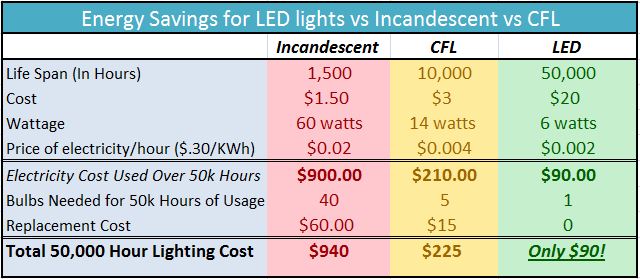
I recently spent considerable time with a group of dedicated entrepreneurs trying to change how Israelis light their homes and businesses. LED bulbs cut electricity consumption by an order of magnitude. That is, by 10 times. (See Table). And LED bulbs last virtually forever (more than 30 times longer in life span than a conventional incandescent bulb, 50,000 hours vs. 1,500 hours). Problem is, LED bulbs are expensive. They cost $20 per bulb, compared to $1.50 for an ordinary bulb.
So here’s the deal. Replace your incandescent 60 watt bulb with an LED bulb. Spend $20, instead of $1.50. (Ouch! You say). Over a 50,000 hour lifetime, (68 months, or 5 2/3 years) you spend (on bulbs and on electricity) only $90, compared to $940 for incandescent bulbs. You save $850!
It should be a no-brainer. Yet a constellation of forces (people’s unwillingness to spend $20 on a bulb, the local Electric Co.’s resistance, etc.) keep LED bulbs from replacing regular ones.
LED means light emitting diode. Instead of an incandescent filament, a light emitting diode creates the light, within an aluminum-and-glass frame. It lasts forever. It is bright. And it is ecological.
So how in the world to convince the system to embrace LED?
How Sharath Jeevan Is Making a Difference to Kids In India
By Shlomo Maital
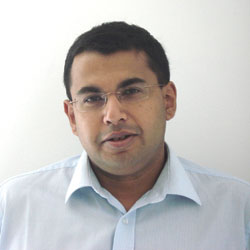 Sharath Jeevan
“Ninety-five percent of kids in India have access to free government schools within a half-mile of where they live,” says Sharath Jeevan, “a distance of 800 meters. The problem is that many of these schools offer poor-quality education. The average Indian fifth grader reads like a second grader in Britain or the U.S. Two-thirds of them can’t read a paragraph or do simple fractions.”
I’ve found that a key differentiator between innovators and those who just have ideas is that the former, innovators, act, while the latter, ideators, just gripe.
Jeevan, originally from India, got a superb education abroad, then worked with a top consultancy and now with eBay in London. Each time he visited Mumbai, his home town, he became upset. Free public education is great. But it has to educate. So here is what he did. *
Schools and Teachers Innovating for Results will be officially introduced on Monday in Delhi. Backed by funding from the British Department for International Development and a number of British charities, STIR has spent the past 15 months researching the most successful “micro-innovations” — small, inexpensive, easy-to-implement changes — in classrooms across India. “We visited 300 schools and conducted 600 face-to-face meetings, speaking to over 3,000 teachers,” Jeevan said in an interview at the STIR office in London. “Indian teachers are used to thinking of themselves as instruments of a ministry or of government policy,” Mr. Jeevan said. “It was the first time many of them had been asked about anything.”
“Through innovation, we wanted to get teachers to think of themselves more seriously — as professionals,” he said. “The idea is to create a platform to collect the best of these micro-innovations, test them to see if they work, and then take them to scale. There are 1.3 million schools in India, so scale is a huge problem.”
Some of the ideas, recounted in STIR materials, will sound familiar to parents in wealthier countries.
* At Majeediya Madarsa-e-Jadeed, a school catering to a predominantly Muslim community in Seelampur, Iram Mumshad, a teacher, noticed that parents, many of whom worked as day laborers, seemed unaware of how to support their children’s education. To engage parents, the school started incorporating their feedback on children’s behavior at home into school reports, building relationships between teachers and parents, and underlining the importance of parental support.
* At Babul Uloom, a public school in one of the poorest neighborhoods in East Delhi, Sajid Hasan realized that his students started school with fewer learning skills than students from wealthier parts of the city — a gap that seemed to increase with each passing month. So Mr. Hasan, a member of the Teach for India program that puts young, highly motivated teachers in some of the country’s toughest schools, decided to give his students extra time to catch up by extending the school day for two hours.
“India normally has one of the shortest school days in the world,” Mr. Jeevan said. Most schools finish by 1 p.m. The two extra hours, he said, “gives the children more time to learn and also more structure in their lives. It also helps the teachers to focus on the students’ current level to help get them to where they need to be.”
* Students at the S.R. Capital School in Shahadra struggled with the poetry included in the curriculum, yet they all seemed well versed in the latest Bollywood hits. So Bindu Bhatia, their teacher, fit the words of the texts studied in class to the tune of popular songs, then encouraged the students to perform the poems, making classes more fun and giving students added confidence in approaching potentially daunting material.
STIR is designed to allow innovative teachers to feel like they are part of a network. “Small changes in practice can make a big difference in the classroom,” Mr. Jeevan said. “But what matters more in the long term is the change in how teachers think of themselves.”
I think STIR can easily be adapted to every country in the world. Let’s stimulate innovation at the ground floor, at the level of the classroom teacher. Who can do it better than they?
* “In India, Making Small Changes on a Large Scale” By D. D. GUTTENPLAN, Global New York Times, March 3, 2013.
Restoring Sight to the Blind
By Shlomo Maital

Researchers at my university, Technion, have developed a process that may help restore sight to many of those who are currently sightless.
Here is how it works: (described in Nature Communications): Stem cells are adapted, using gene transplants, to make them sensitive to light, and are then introduced into the retina of those whose retinas are damaged. Then holography is used to stimulate those cells, to transmit images to the brain. (See diagram).
Blindness is often caused by conditions like retinitis pigmentosa, an inherited disease in which degrading light-sensing cells in the retina cause blindness. One in 4,000 people in the United States are affected by retinitis pigmentosa, and research on restoring vision can potentially help tens of thousands of Americans see again. “The basic idea of optogenetics is to take a light-sensitive protein from another organism, typically from algae or bacteria, and insert it into a target cell, and that photosensitizes the cell,” explained Dr. Shy Shoham, who led the study. If retinal nerve cells are primed by gene therapy that uses these light-sensitive proteins, they can then be gradually activated by rapid bursts of light In a paper published in the Feb. 26 issue of Nature Communications, the researchers led by Dr. Shoham explain how light from computer-generated holography can be used to stimulate genetically repaired cells in mouse retinas. They say that the key is to use a light stimulus that is intense, precise, and can trigger activity across a variety of cells at the same time. “Holography, what we’re using, has the advantage of being relatively precise and intense,” Shoham said. “And you need those two things to see.”
Arthur Clarke, the science fiction writer, once wrote that truly advanced technology is indistinguishable from magic. Bringing sight to millions of blind persons is truly magic. I can’t imagine a more worthy pursuit, or one that is more technically challenging. Kudos to Dr. Shoham and his ambitious team.
Rwanda: Literally, Back from the Dead
By Shlomo Maital
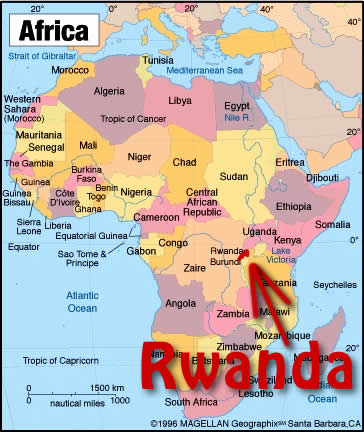
The horrendous Rwanda genocide was a mass slaughter that happened in 1994. In 100 days over 500,000 people were killed, according to a Human Rights Watch estimate. But some estimates put the death toll at as much as 1 million, or 20 per cent of the entire population.
According to CNN’s Fareed Zakaria, “Most people assumed that Rwanda was broken and, like Somalia, another country wracked by violence, would become a poster child for Africa’s failed states. It’s now a poster child for success.” Much of the credit goes to its President, Paul Kagame. Zakaria notes, “Average incomes have tripled; the health care system is good enough that the Gates Foundation cites them as a model, education levels are rising. The government is widely seen as one of the more efficient and honest ones in Africa. Fortune magazine published an article recently titled “Why CEOs Love Rwanda.” “
Kagame was the leader of the forces that came in and ended the genocide. He has led the country since then and implemented controversial programs to help build stability in the country. Zakaria: “The only way President Kagame could see to make peace was to reintegrate these communities. He came up with a specially crafted solution — using local courts called Gacacas. In each village, the killers stood before their neighbors and confessed, and in turn were offered forgiveness — part court, and part community council. It has made for a fascinating historical experiment that seems to be working.”
I know that Kagame is highly controversial. It is said Rwandan military forces have meddled in the Congo. He is said to be undemocratic and repressive. But look at the data. They include IMF projections for 2013-17.

Rwanda is now one of Africa’s great economic success stories. Kagame has created a highly entrepreneurial economy. Tutsi’s and Hutu’s live and work together to build their country. Who would have thought this possible in 1994?
BAM! Mapping the brain – A great adventure
By Shlomo Maital

Reid Hoffman, the founder of LinkedIn, a widely used business-driven social network, once defined entrepreneurship as a process in which “you jump off a cliff and you assemble an airplane on the way down.” Some of the greatest large-scale scientific projects in history are much like what Hoffman describes. President Obama will announce next month its intention to build a comprehensive map of the brain’s activity. It will take a decade, and nobody knows quite how it will be done. The project may be more ambitious than the human genome project. America indeed is leaping off a cliff – and building the plane on the way down. The project has the humdrum name of BAM! (Brain Activity Mapping).
Why is this project so difficult? Simple – the human brain contains between 85 and 100 billion neurons (nerve cells) and several trillion connections. So far, the only animal for which a full brain map exists is the famous C elegans worm, whose brain has a measly 302 neurons and 7,000 connections.
What may be the benefits of a brain map? If you know precisely what each part of the brain can do, perhaps there will be ways to replace or strengthen those parts of the brain that are disfunctional or are damaged. Perhaps adult stem cells will be able to replace damaged neurons that cause paralysis, or loss of the ability to speak. Or even, to halt or cure Alzheimer’s – once we know precisely which cells are damaged and what they do.
The human brain is an absolutely incredible organ. Every year, the brain generates 300,000 petabytes of data. In contrast, the Large Hadron Collider (which creates massive amounts of data that take years to analyze) creates 10 petabytes annually, only 1/30,000th of the brain.
Let’s applaud America and Obama for its leap off the cliff. At the least, the project may inspire a generation of young people to study biology. At the most, the project may yield fruits that reduce the immense human suffering related to dementia, and other brain-related illnesses.
Source for this: John Markoff, “In charting map of brain, a quest for signposts”, Global NYT, Feb. 27/2013, p. 10.
Finding Opportunities in Emerging Market Cities
By Shlomo Maital

The above table is from a McKinsey Quarterly article, “Unlocking the potential of emerging market cities”, by Dobbs, Remes and Schaer, Sept. 2012. The main point:
“Urbanization will create an over-four-billion-strong global “consumer class” by 2025, up from around one billion in 1990. And nearly two billion will be in emerging-market cities. These cities will inject nearly $25 trillion into the global economy through a combination of consumption and investment in physical capital”. During 2013-25, 440 emerging market cities will account for half of global GDP growth.
So, what can forward-looking global managers do with this information? Use a city-specific lens, advise the McKinsey consultants. The Exhibit above suggests five different sets of focuses: elderly, youth, laundry care, commercial office space and municipal water. Some of the cities in Exhibit 2 may be unfamiliar to some readers. Ouagadougou is the capital of Burkina Faso (which excelled in the recent African Cup competition in football). Ghaziabad is the capital of the Indian province of Uttar Pradesh.
For years I have taught that a manager with a truly global mindset treats the entire world as his or her playing field. But this is no longer sufficient. Today, ‘think global’ means: Identify the cities that are the best sites for the products your company enjoys competitive advantage in, and that at the same time have the best prospects of continued urban growth. Find locals who can help you and who are well connected. And keep in mind that nearly all the 50 cities in Exhibit 2 (all but 6) are in emerging markets. (The six exceptions are LA, Osaka, NYC, Tokyo, Washington DC and Dallas).


