
You are currently browsing the category archive for the ‘Uncategorized’ category.
Chaos Is the New World Order
By Shlomo Maital

Thomas Friedman’s latest New York Times column helps us understand what is going on in the world. In a word: Chaos. Chaos is the new world order. Here is what he means.
Quoting a high-tech executive, Tom Goodwin, Friedman notes: Uber is the world’s biggest taxi company but has no taxis. Facebook is the world’s most popular media owner but has no content. Alibaba is the world’s most valuable retailer but has no inventory. Airbnb is the world’s biggest accommodation provider but has no real estate.
So what is going on? More and more businesses are simply doing global matchmaking (someone needs something, someone else has it), without owning assets. More and more businesses are digitally creating markets where none existed before. (You have a seat in your car? Why not use it to make some spare cash?)
This trend is highly disruptive, because it disorganizes and reinvents whole industries, in no time. The existing players (taxi drivers, hotels) have little time to adapt.
It’s pretty clear, out of this chaos will emerge some order, and the chaos is actually creating value. But the implications are huge. A whole range of job skills will disappear. New patterns of markets and ownership will emerge.
For now, chaos is the new world order. How are YOU adjusting and adapting? Do you have a job skill that will be needed in a year or two, or do you need to reinvent yourself and your skills? If so, how will you do it?
These are interesting times indeed.
Cool Idea? What ELSE Can You Do With It?
By Shlomo Maital
In my previous blog, I wrote about how entrepreneur John Osher invented a lollipop that spins in your mouth, created a huge hit, and then, tireless, asked, what else can I do with a cheap tiny electric motor that spins things? His answer was: an inexpensive electric toothbrush. Result: a half billion dollar (acquisition by P&G).
Here is another example. Elon Musk succeeded against all odds in building and selling Tesla electric cars. His cars are cool, beautiful, fast, expensive, green and in demand. They are not hybrids. They run solely on electric power. The core technology is the rechargeable electric car battery.
Like Osher, Musk asked, what else can I do with what I know about batteries that store electricity? Answer – build batteries that can store solar power, so that at night, when the sun doesn’t shine, you can still have power. Storage is a crucial element to the success of solar power, because people consume electricity not only in daylight but also at night. And so far, the storage element is missing.
According to Diane Cardwell, (New York Times, Sunday May 2-3), Tesla Motors is initiating a “fleet of battery systems aimed at homeowners, businesses and utilities”. One of the products will be a lithium ion rechargeable battery pack, four feet by three feet, that can be mounted on a home garage wall. The battery will be called the Powerwall, and will sell for $3,500. It was derived from the car batteries that power the Model S vehicles.
The proposed batteries will be connected to the Internet and can be managed by Tesla from afar.
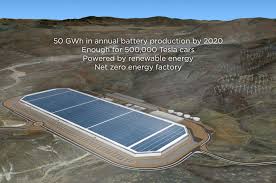
The key to this idea? Tesla is building a $5 billion battery production plant, called the Gigafactory, in Reno, Nevada. (See photo).
This story reminds me of the 9-word capsule description of successful entrepreneurship. First to imagine. (Musk did). First to move. (Musk did). And first to scale. (Musk is). And, add to that – first to platform (take one good product and transform it into another).
Meet John Osher: What We Learn from SpinPop & SpinBrush
By Shlomo Maital

As a retired Technion professor, with silver hair and lots of stories, I get to meet and greet many visitors. Yesterday I had lunch with one of the most interesting ones – an American entrepreneur named John Osher. Here is his story.
Osher grew up in Ohio; he took 7 years to finish college. He worked as a plumber, carpenter and cabdriver. He was an entrepreneur from age 5, he tells me. He started and sold a vintage clothing store, and an earring outlet, while still in college. HBR Professor William Sahlman, who wrote a lengthy case about Osher, says, “he’s a street-smart guy and he has this observational power. He hated having to manage employees, so he built a big company with very few employees.”
Dr. John’s was Osher’s 3rd major venture built from the ground up and ending in a lucrative exit. He produced the uniquely American (and ‘insanely popular’) SpinPop battery-powered lollipop, which later led to SpinBrush. SpinPop is a lollipop that spins in your mouth (using a tiny battery-powered motor), enhancing the flavour, and creating a new market category of “interactive candy”. In developing the product, Osher focused laser-like on cost, setting cost targets and determining that if they were not met, the product would not be produced.
I teach, “don’t fall in love too soon with your product”, I told Osher.
Osher answered: NEVER! (Never fall in love with your product.). Easy to say, hard to do.
After SpinPop’s success, Osher simply walked up and down the aisles of Wal-Mart, and looked for product ideas that could build on the cheap-battery technology of SpinPop. He came up with 100 of them. Then he narrowed them down, to an inexpensive electric toothbrugh, to become SpinBrush. Here was his plan: Produce an electric toothbrush that would have battery life of at least 3 months, and cost only $1.49 to manufacture! Sell it retail at $5.00.
I told him that what he did fits 2 of our models, in our book Cracking the Creativity Code. First, zoom in, zoom out. Zoom in on “SpinPop” and what you learned from it; Zoom out to find ideas that can leverage it. Then Zoom in again, to implement the idea. Second, Price Cost Value. Start with high value (electric toothbrushes that create value, because people are willing to pay $50 for a Braun, e.g.). Make it at very very low cost. Then charge a reasonable price, to share the value between profit margin (for the company, price minus cost) and client margin (for the buyer, value minus price). (You get, say, a $50 electric toothbrush for $5 – that’s value!).
Osher is very modest, quiet-spoken, and very very wealthy – he sold SpinBrush to Procter & Gamble for nearly half a billion dollars. He achieved this with soaring head in the clouds imagination (Lollipops that spin???? Give me a break!) and hard-nosed hard-headed feet-on-the-ground pragmatism.
Anyone can do this. All you need is imagination, experience, objectivity, pragmatism, leadership, drive, energy, hard work, and persistence.
Thanks, John, for showing the way.
How to be an Evangelist:
From Guy Kawasaki
By Shlomo Maital

Guy Kawasaki is the legendary marketing guru for the Macintosh computer. Apple hired him, even though he was in the jewellery business at the time, had a psychology degree from Stanford, and knew next to nothing about personal computers.
Why did Apple hire him? Because – he believed. He felt that MS-DOS, and Microsoft in general, were “crimes against humanity”. He felt that “Bill Gates brought darkness to the world.” He set out “to right a wrong”. He was in his words – an evangelist.
The Greek roots of the word evangelist mean “one who brings or proclaims good news”. The word has come to mean someone who preaches the Christian gospels.
Kawasaki became a VC (garage.com), and how is Chief Evangelist for Canva, a startup whose mission is to democratize design. In the latest issue of Harvard Business Review, Kawasaki sets out the rules for becoming an evangelist. Here they are:
- Schmooz. Build social connections. It’s easier to evangelize people you know.
- Get out of your cubicle. Network. Talk to people.
- Ask questions. Initiate a conversation, then – shut up and listen.
- Follow up. Make sure that you follow up on a meeting, within a day.
- E-mail effectively: Optimize your subject lines, and shorten your text. Always respond quickly.
- Make it easy to get in touch.
- Do favors. If you do things for others, they are more receptive to listen to you.
- Public speaking: An evangelist must master the art of public speaking. Kawasaki says it took him 20 years to master the art and get comfortable.
- Deliver quality content. 80% of the battle is having something worthwhile, interesting, perhaps novel, certainly meaningful, to say. It is NOT just about how you say it, but what you say.
- Omit the sales pitch. If people think you are pitching, you’re dead. Don’t.
- Customize. Use the first few minutes to directly address the audience, show them you’ve done your homework, know who they are and what they seek.
- Focus on entertaining. If people are entertained, they are more receptive to the information you bring.
- Tell stories. Make it personal. Tell stories about yourself and others, that support your message.
- Circulate in the audience beforehand. Make contact with them, especially with those in the front rows.
- Control what you can. Try to speak at the beginning of an event; choose a small room, if you can. A packed room is better than a half-empty one.
- Practice. You need to give a speech 20 times to get good at it.
Rules for Social Media:
- Offer value. Share good stuff – of four kinds: information, analysis, assistance, entertainment.
- Be interesting.
- Take chances. Don’t be afraid to take strong stands, express feelings.
- Keep it brief.
- Be a mensch.
- Add drama.
- Tempt with headlines. How to… top 10, etc.
- Use hashtags.
- Stay active: 3-20 different posts a day.
“Evangelism is not about self-promotion. It’s aobut sharing the best of what you, your team and your organization produce with others who can benefit. “
Reinventing the Automobile: GM & Ford vs. Startup Guy
By Shlomo Maital
“In the ring, weighing in at about four ounces, is Silicon Valey startup guy Paul Elio. Facing him, weighing in at 24,382 tons, is …General Motors, Ford, and VW. 12 rounds for the innovation championship in motor cars.”
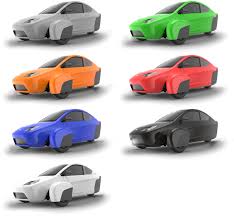
No contest. A startup to make cars? Non-starter, right? Well, Paul Elio has done it. There is a long LONG waiting list to buy the Elio automobile, a 3-wheeler, that gets…84 miles per gallon! (Beats even the hybrids!). The car is American made! And its cost? $6800. (About the cost of 2.5 high-end Armani backpacks). Here is what the Elio website says:
“A few short years ago, automotive enthusiast Paul Elio sized up the prevailing status quo of personal transportation. He saw the soaring costs of the vehicles we drive. He saw fuel prices spike to record highs almost daily. He saw Americans struggling with an economy that was taking too much and giving back too little. Paul Elio decided that the world was ready for something radically new. The result? A three-wheeled masterpiece of automotive brilliance that bears his name.” Elio’s vision? “To provide a fun-to-drive, super-economical personal transportation alternative, that’s affordable, safe, and environmentally friendly. We are committed to the American dream, creating American jobs, and bringing American automotive ingenuity to every vehicle we build. This is, and will remain our mission at Elio.”
The boxing match has begun. It ends as soon as it begins. Elio knocks out the automobile giants. Why? Big companies cannot innovate. By definition. They would never let a car like the Elio get past the drawing board. Low margins. Etc.
Elio Motors might yet fail. But like Tesla, it could spur the car companies to actually try something innovative. Innovation comes from rebels. And rebellion is the last thing big companies seek or even allow.
Kudos to Paul Elio! And Big Oil? Think about trying another business.
Stock Prices Plummet in October
By Shlomo Maital
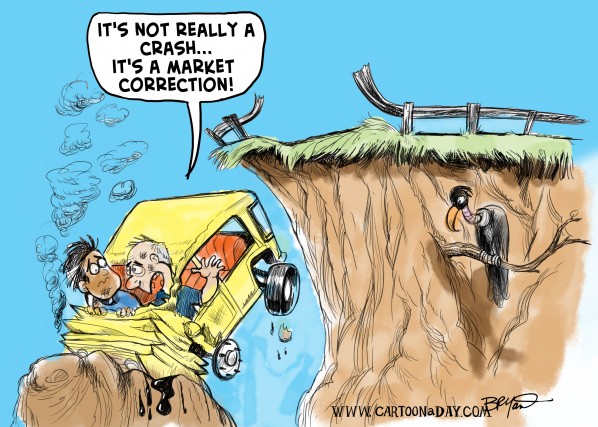
On Sept. 13, in a blog titled “the coming meltdown”, I noted signs that the world economy was weakening.
Now, in this the middle of October, stocks have declined sharply. For the month, U.S. stocks are down 5 per cent, German stocks are down 9 per cent and French stocks are down 11 per cent. There are a number of causes. Believe it or not, Ebola has created a negative mindset. Oil prices are down, slashing profits for many big companies and nations. Demand appears to be weakening in Europe, raising fears of a third recession since 2009. Geopolitics are highly unstable, with problems in Ukraine, the Mideast and elsewhere.
At the same time, there is a flight to ‘safety’. Bond prices are up, as demand increases, with investors willing and even eager to take low yields in return for safety.
The bright spot is the U.S. economy. Falling gasoline prices, often below $3 a gallon, have put money into working people’s pockets and they are spending it. This is a natural experiment. It amazes me how economists and policymakers are ignoring this simple evidence — spurring demand helps the economy! America’s economy is doing better than Europe’s as a result.
October is an awful month for stock prices, for some reason. In October 1987, the market fell 20 per cent on a single day, but that was due to computer trading and a doom loop link between spot and future prices.
The mindset of global investors continues to be shaky. In the end, it is the confidence, or lack of it, of global investors that drives equity and bond prices. When world headlines are terrible, as they are now, investors run for cover.
Scientists Who Endanger Their Lives: The Case of Ebola
By Shlomo Maital

Scientific papers published in Science rarely involve heroism, drama, and life-threatening courage. This one does:
Gire, SK, Goba, A et al. Genomic surveillance elucidates Ebola virus origin and transmission during the 2014 outbreak. Science, 2014, online.
Here is the story, as described in a dry press release by Harvard:
“ n response to an ongoing, unprecedented outbreak of Ebola virus disease (EVD) in West Africa, a team of researchers from the Broad Institute and Harvard University, (MIT-Harvard), in collaboration with the Sierra Leone Ministry of Health and Sanitation and researchers across institutions and continents, has rapidly sequenced and analyzed more than 99 Ebola virus genomes. Their findings could have important implications for rapid field diagnostic tests. The team reports its results online in the journal Science.”
The research was led by Broad Institute researcher Pardis Sabeti, Augustine Goba, Director of the Lassa Laboratory at the Kenema Government Hospital in Sierra Leone, and Stephen Gire, first author, a research scientist in the Sabeti lab at the Broad Institute and Harvard. The team shipped samples back to Boston, and then 20 people worked around the clock. In one week: they decoded gene sequences from 99 Ebola samples! This is truly amazing.
What the team did was to act rapidly to collect samples of Ebola from a Sierra Leone hospital last April, when the outbreak began, and then gathered additional samples as the virus spread and mutated. They did this under life-threatening conditions, especially those on the ground on-site, because at the time there was insufficient protective gear for hospital workers, and some indeed died.
They gathered 99 samples of Ebola in all. Then they decoded the genome of each sample. This was unprecedented in its speed. What they found was important. The Ebola virus has only 7 genes (!) compared to the human genome, comprising more than 20,000 genes. Like all viruses, Ebola penetrates the human cell and commandeers its DNA mechanism, to make more viruses rather than human DNA. Ebola is fatal in 52 per cent of all cases.
The Broad Institute researchers found that Ebola initially spread from an animal to a human. BUT — from then on, it ONLY spread among humans. The initial call to avoid mangos and meat was uncalled for. And like all viruses, they found that the virus evolved and mutated very quickly in humans. So, we are in a race, between ‘brilliant’ humans with huge brains, and ‘stupid’ viruses with only 7 genes ..and at the moment, the viruses seem to be winning.
I salute the courageous scientists and their assistants on-site, for risking their lives to help save the lives of others. Sometimes, not often, science is life-threatening, and quickly, life-saving.
In this space, I’ve been fiercely critical of Big Pharma, which rips us off by charging scandalously high prices for drugs with minimal impact. But for once, Big Pharma is doing the right thing. GSK Glaxo Smith Kline is helping the U.S. National Institutes of Health to develop an Ebola vaccine. Only GSK’s huge productive capacity can do this quickly enough to combat the spread of Ebola.
By Shlomo Maital
Scientific papers published in Science rarely involve heroism, drama, and life-threatening courage. This one does:
Gire, SK, Goba, A et al. Genomic surveillance elucidates Ebola virus origin and transmission during the 2014 outbreak. Science, 2014, online.
Here is the story, as described in a dry press release by Harvard:
“ n response to an ongoing, unprecedented outbreak of Ebola virus disease (EVD) in West Africa, a team of researchers from the Broad Institute and Harvard University, (MIT-Harvard), in collaboration with the Sierra Leone Ministry of Health and Sanitation and researchers across institutions and continents, has rapidly sequenced and analyzed more than 99 Ebola virus genomes. Their findings could have important implications for rapid field diagnostic tests. The team reports its results online in the journal Science.”
The research was led by Broad Institute researcher Pardis Sabeti, Augustine Goba, Director of the Lassa Laboratory at the Kenema Government Hospital in Sierra Leone, and Stephen Gire, first author, a research scientist in the Sabeti lab at the Broad Institute and Harvard. The team shipped samples back to Boston, and then 20 people worked around the clock. In one week: they decoded gene sequences from 99 Ebola samples! This is truly amazing.
What the team did was to act rapidly to collect samples of Ebola from a Sierra Leone hospital last April, when the outbreak began, and then gathered additional samples as the virus spread and mutated. They did this under life-threatening conditions, especially those on the ground on-site, because at the time there was insufficient protective gear for hospital workers, and some indeed died.
They gathered 99 samples of Ebola in all. Then they decoded the genome of each sample. This was unprecedented in its speed. What they found was important. The Ebola virus has only 7 genes (!) compared to the human genome, comprising more than 20,000 genes. Like all viruses, Ebola penetrates the human cell and commandeers its DNA mechanism, to make more viruses rather than human DNA. Ebola is fatal in 52 per cent of all cases.
The Broad Institute researchers found that Ebola initially spread from an animal to a human. BUT — from then on, it ONLY spread among humans. The initial call to avoid mangos and meat was uncalled for. And like all viruses, they found that the virus evolved and mutated very quickly in humans. So, we are in a race, between ‘brilliant’ humans with huge brains, and ‘stupid’ viruses with only 7 genes ..and at the moment, the viruses seem to be winning.
I salute the courageous scientists and their assistants on-site, for risking their lives to help save the lives of others. Sometimes, not often, science is life-threatening, and quickly, life-saving.
In this space, I’ve been fiercely critical of Big Pharma, which rips us off by charging scandalously high prices for drugs with minimal impact. But for once, Big Pharma is doing the right thing. GSK Glaxo Smith Kline is helping the U.S. National Institutes of Health to develop an Ebola vaccine. Only GSK’s huge productive capacity can do this quickly enough to combat the spread of Ebola.
Geopolitics: The enemy of my enemy is my enemy? My friend? Both?
By Shlomo Maital

Are you having trouble understanding what’s going on in the world today? Global geopolitics? You’re not alone. Most of us are out to sea.
Writing in the International New York Times today, Peter Baker explains why.
● America battles Russia over the Ukraine, but joins with Russia to get Iran to de-nuke.
● America tangles with Iran over its nukes, but supports Iran in its battle against the Sunni ISIS insurgency in Iraq.
● America battles Egypt over its lack of democracy, but John Kerry flies to Cairo to get Egypt’s help in arranging a Hamas-Israel cease-fire.
● Israel bashes Hamas, but, not TOO much, because removing Hamas would bring Salafi or Sunni ISIS extremists, who might be worse.
● America spies on Germany, but seeks Germany’s help in battling Russia in the Ukraine.
The list is endless. Is the enemy of my enemy my friend? Well, sometimes – that’s an Arab proverb, it is said, and it doesn’t always work. Who is my enemy anyway? My enemy is sometimes my friend, on some occasions. And my friend is sometimes my enemy. As Tom Lehrer once sang, the Letts hate the Latts, and…I don’t like ANYone very much…
How in the world do you run a coherent foreign policy in this jumbled complex confusing world?
If you think President Obama looks rather tired and perplexed these days, perhaps you can understand why.
Two more years, Barack. And then, you can REALLY improve your golf game.
Do human beings still evolve?
By Shlomo Maital
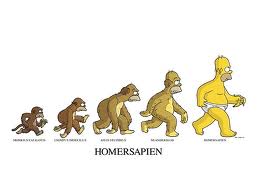
Pick up a 2-week-old copy of TIME magazine, and it’s worse than stale, like week-old fish. Pick up a 4-year-old copy of Scientific American, as I did recently, and it’s still fresh as a daisy. In the October 2010 issue, Jonathan Pritchard writes about human evolution. The question is, are humans still evolving, through survival of the fittest, as plants and animals are? The answer is: Yes, but very very slowly.
Pritchard cites a gene that exists in Tibetans, that took 3,000 years to entrench itself. This gene adjusts red blood cell production and helps Tibetans survive and thrive in the low oxygen levels of the Tibetan plateau. But this seems to be an example that disproves the rule. “The classic natural selection scenario in which a single beneficial mutation spreads like wildfire through a population has occurred relatively rarely in humans in the past 60,000 years.”
Want to believe, for instance, that gene implants can give you NBA-tall babies? Studies show that there are over 50 different genes that influence human height. Even if tall people procreated more than short ones, natural selection would take a long time to muster all those genes and spread them.
The bad news? Viruses, like HIV, evolve far far faster than humans do. We stand no chance of having natural selection evolve HIV-immune humans, before the HIV virus itself evolves to counteract such resistance. Vaccines are the only hope.
The good news? There is also ‘social selection’, the competition for survival among different prototypes of social organization. We have America, with its dysfunctional Republican-vs.-Democrat paralyzed government. We have Europe, with its dysfunctional can’t-agree-on-anything ‘unity’; we have Russia, with its corrupt oligarchic dictatorship and a newly born Cold War relic at its head. And so on… They are all in competition. So, out of all this vast variety of dysfunctional social and political systems, one of them will evolve to endure and prevail, and lead the other systems to imitate it?
Won’t it???
Unemployment – It’s How You Measure It!
By Shlomo Maital


Writing in the Los Angeles Times, my friend Clyde Prestowitz, formerly senior trade policy advisor to President Reagan, explains the mystery of unemployment rates – if the U.S. job market is so bad, why is the unemployment rate so low? (6.7 per cent)?
Here is the answer, according to Clyde:
“ Although the Federal Reserve Bank says we’re in the midst of a recovery, and the official unemployment rate has fallen below 7%, the economy is far from being out of the woods. That official rate – technically known as U-3 – doesn’t begin to tell the real story. It is only one of six unemployment measures kept by the U.S. government and counts all those who say they are unemployed and looking for work.
But it does not include those discouraged unemployed workers who have given up looking for a job or those who would like to work full time but are only able to find part-time work. The rate that includes all those people – U-6 – is about 13%. Granted, that is below the 17% of 2010, but it is still far above the 8% of 2007, as we navigate what is being called a recovery – albeit an abnormally slow one.”
Americans who have a job, the fortunate ones, but fear they could lose it, and those who lack a job, and are seeking one or who have given up [discouraged workers], should be defined as “unemployed or at risk of unemployment”. THAT rate is over 50 per cent. And that is the relevant measure, and it is not included in U1 through U6.
U.S. President Barack Obama has just given his State of the Union address. He mentioned the job problem, but gave no specifics. This should become his top priority. It’s a tough nut to crack. Companies like Facebook, with a stock market cap of some $160 b., generate relatively little employment. Companies like Apple create jobs in China. Small businesses face impossible competition from shopping centers and chain stories like Wal-Mart. So, President Obama, start with the SME’s, small and medium-size enterprises. Help them a bit. Nothing could help create jobs more. And silence the big lobbyists, who drown out the weak voices of those SME’s.

 TIMnovate