An interesting article in the latest issue of Business Week by its resident economist, Michael Mandel, makes the case that the Great Recession, as it is known, reflects not only excessive borrowing and financial collapse, but inadequate innovation in previous decades.

Mandel argues persuasively,

 “…there’s growing evidence that the innovation shortfall of the past decade is not only real but may also have contributed to today’s financial crisis. Think back to 1998, the early days of the dot-com bubble. At the time, the news was filled with reports of startling breakthroughs in science and medicine, from new cancer treatments and gene therapies that promised to cure intractable diseases to high-speed satellite Internet, cars powered by fuel cells, micromachines on chips, and even cloning. These technologies seemed to be commercializing at “Internet speed,” creating companies and drawing in enormous investments from profit-seeking venture capitalists—and ordinarily cautious corporate giants”. 

“…one thing is abundantly clear… The commercial impact of most of those breakthroughs fell far short of expectations—not just in the U.S. but around the world. No gene therapy has yet been approved for sale in the U.S. Rural dwellers can get satellite Internet, but it’s far slower, with longer lag times, than the ambitious satellite services that were being developed a decade ago. The economics of alternative energy haven’t changed much. And while the biotech industry has continued to grow and produce important drugs—such as Avastin and Gleevec, which are used to fight cancer—the gains in health as a whole have been disappointing, given the enormous sums invested in research. As Gary P. Pisano, a Harvard Business School expert on the biotech business, observes: ‘It was a much harder road commercially than anyone believed.’ If the reality of innovation was less than the perception, that helps explain why America’s apparent boom was built on borrowing.'”

When pieces of paper, and the fortunes they created, attracted the best brains, rather than the tough road of technological innovation, and when those pieces of papers became detached from the underlying innovation that drives profits, the collapse was inevitable.

When will see see ‘green shoots’, in America and the world?  Perhaps, when powerful new innovations reach the market, driving new waves of consumer spending and investing — a result that followed after every major Depression, and will likely follow after this one as well. Perhaps America will rediscover, and reinvent, its innovative energy.

Weizman, Darwin and the Birth of Israel

By: Shlomo Maital*

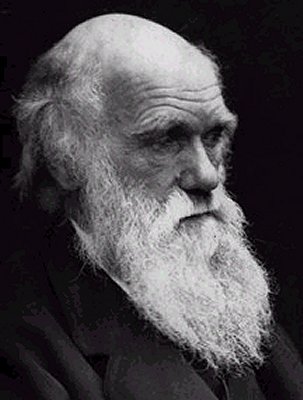
Can you find a connection between the following: Chaim Weizmann, U.S. Patent No. 1315585, the bacterium Clostridium acetobutylicum, Louis Pasteur, Arthur Balfour, Winston Churchill, the global biotechnology industry, the birth of Israel, and Charles Darwin, whose 200th birthday was celebrated last Feb. 12?

Here is the story in full. Chaim Weizmann was born in 1874 in the tiny shtetl of Motol, near Pinsk, in Western Russia (today, Belarus). He wanted to study science but as a Jew, was not allowed. He studied chemistry at the University of Fribourg, in  Switzerland, then taught at the Univ. of Geneva. He  emigrated to England in 1904. There, he joined the staff of the University of Manchester. In 1910 the U.K. Home Secretary named Winston Churchill signed Weizmann’s citizenship papers.

Not long after arriving in Manchester, in 1906, Weizmann met a dynamic politician named Arthur Balfour while Balfour was politicking in Manchester for his Unionist  Party. It was shortly after Uganda had been mooted as a possible homeland for the displaced Jews. Balfour asked Weizmann why Palestine—and Palestine alone—could be the basis for Zionism.        

“Anything else would be idolatry”, Weizmann protested, adding: “Mr. Balfour, supposing I were to offer you Paris instead of London, would you take it?”

“But Dr. Weizmann”, Balfour retorted, “we have London”, to which Weizmann rejoined, “That is true, but we had Jerusalem when London was a marsh.”

Balfour was visibly surprised. 

‘Are there many Jews who think like you?’ he asked.

‘I believe I speak for millions of Jews,’ replied Weizmann.  

‘It is curious’ Balfour remarked, ‘The Jews I meet are quite different.’

”Mr Balfour” said Weizmann, ‘You meet the wrong kind of Jews.”  **  

Weizmann and Balfour were later to meet again, with fateful results.

In World War I Britain was battling Germany. The British needed an explosive known as cordite to propel shells for the 12-inch guns of its fearsome Dreadnought battleship. Cordite was made of nitroglycerine mixed with acetone. When the acetone dried, it formed explosive ‘cords’. 

Acetone was very scarce. It was feared that the lack of acetone would force the British to modify the Dreadnought’s guns.   
  
In August 1914, Weizman writes, he found a circular on his desk from the War Office, inviting scientists to report any discovery of military value. Perhaps, Weizmann thought, I can ‘ferment’ acetone. Weizmann offered the War Office his fermentation processes. There was no response. But later, the editor of the Manchester Guardian, C.P. Scott, who had heard of Weizmann’s scientific prowess, contacted a Welsh politician, David Lloyd George, then Minister of Munitions. Weizmann and Lloyd George met.

Perhaps I can find a microbe in nature, able to synthesize acetone, Weizmann theorized. In a few weeks, he found it, after studying bacteria occurring in soils, able to turn cereal starch into acetone and butyl alcohol. It was Clostridium acetobutylicum.

A young politician named Winston Churchill, then First Lord of the Admiralty, summoned Weizman and spoke with Churchillian bluntness.   

As Weizmann relates in his autobiography, “[Churchill’s first words were]  Well, Dr. Weizmann, we need 30,000 tons of acetone. Can you make it?”   

“I was so terrified by this lordly request that I almost turned tail,” Weizmann wrote later. But fortunately, he did not.  

“Once the bacteriology of the process is established,” he said, “it is only a question of brewing.”

A huge acetone plant was soon set up, using Weizmann’s bacterial fermentation process. There was a wartime shortage of grain. So Weizmann and the Ministry of Munitions had schoolchildren collect horse chestnuts instead, fermented in six huge silos. United States Patent Office lists patent number 1315585, filed Dec. 26, 1916, issued to “Charles Weizmann” on Sept. 1919, for the acetone process. Weizmann’s process was replicated in huge plants in Canada and in America. New versions of Weizmann’s original process are used today to produce biofuels, making Weizmann arguably one of the fathers of biotechnology.

David Lloyd George became Prime Minister of Great Britain late in 1916. When he asked Weizmann what payment he chose for his crucial wartime synthesis of acetone, Weizmann declined any payment, just asking for (according to Lloyd George) “the rights to Palestine.” As a result, Arthur Balfour (who was then Foreign Minister) issued the famous Declaration on Nov. 2, 1917, stating that “His Majesty’s government view with favour the establishment in Palestine of a national home for the Jewish people”, in a letter to Baron Rothschild. It is plausible, therefore, to argue that the birth of Israel arose directly from Balfour’s declaration, and the little bacterium Clostridium acetobutylicum directly responsible for it.

And Charles Darwin? Where does he enter our story? Trial and error is, of course, a capsule description of Darwin’s theory of natural selection. Nature does millions of trial-and-error ‘experiments’ — accidental mutations that create new traits (“trials”). Most are unsuccessful  (“errors”). A few help the species survive to procreate, and hence endure.

Weizmann’s biography is titled Trial and Error***. Trial and error describes how Weizmann, as a scientist, sought a way to harness fermentation to synthesize acetone, finally hitting upon Clostridium acetobutylicum.   

Weizmann himself has the last word. “From the beginning,” he writes in Trial and Error, “I looked upon Zionism as  a force for life and creativeness residing in the Jewish masses, [not solely] the blind need of an exiled people for a home of its own.” He got his wish. Weizmann would have been pleased to see how, in the 21st C.,  the creativity of Israel’s scientists and engineers — including several hundred biotechnology startups — have made Israel a world high-tech power. 

And it all started with a clever little bacterium.

_______
*Prof.(emeritus) and Academic Director, Technion Institute of Management.
**See Geoffrey Lewis, The Zionist, the Zealot and the Declaration Which Changed the World  (Hambledon, London: 2009).
***Chaim Weizmann. Trial and Error. Hamish Hamilton: London, 1949.

                                                     

Clostridium acetobutylicum
Clostridium acetobutylicum

Charles Darwin

Charles Darwin

Weizmann & Balfour

Weizmann & Balfour

Like my fellow economists, I am good at dripping Doom and Gloom. No, it’s not a recession, I’ve been writing — it’s a Global Depression. World stock prices have fallen much faster and steeper than in 1929. GDP is collapsing in Japan, U.S. and Europe. Unemployment  is soaring. Israel is plunging into a deep recession.

But, if the economy is so depressed, why aren’t people depressed? During a recent visit to London, I found this amazing city bursting with energy and vitality. Same for Toronto. Same for downtown Tel Aviv. Of course, I know many people who are suffering — high tech engineers who lost their job and can’t find another, retired people who lost half their savings in declining capital markets —  but I also know people whose lives and wellbeing show no evidence of the global crisis or its impact, even though they have suffered losses. 

Why?

I found the explanation in the work of a brilliant Harvard University cognitive and social psychologist, Daniel Gilbert.  To sum up his findings, in a single phrase: Synthetic happiness is real. 

What does that mean?

Natural happiness is what happens when we get what we want. We want cars, houses, TV’s, clothes — and when we get them, we are allegedly happy. 

Synthetic happiness, according to Gilbert (in his wonderful new book Stumbling on Happiness: Knopf, New York, 2008) is how we adapt and adjust, when we do not get what we want, when we get, sometimes, the worst outcome rather than the best.  

Natural happiness is what life gives us. Synthetic happiness is what we make of it. Guess which is more important?

Natural happiness generally disappoints. We tend, Gilbert shows, to exaggerate the happiness that ‘stuff’ will bring us.  A huge costly mechanism —  the foundation of capitalism, known as ‘marketing’ — exists, only to persuade us that more new ‘stuff’ will make us happy when deep down we know it will not, and inevitably find it out does not. I think this is the fundamental fallacy of economics — that more is better than less. Often it is not. 

Synthetic happiness is real. That is, people have incredible abilities to adapt to their circumstances, even awful ones,  and to make the best of what they have. We have the ability to make ourselves happy, ‘synthetically’, even when we should be miserable. 

The most striking research in this area, cited by Gilbert, was done over 30 years ago, by Brickman, Coates and Janoff-Bulman*. They showed that a year after winning,  lottery winners are no happier than paraplegics (those whose limbs are paralyzed), a year after the paralysis. Why? Natural happiness disappoints. Lottery winners take less pleasure in ‘ordinary’ daily pleasures because they pale compared to the ‘high’ of the lottery win, and because of habituation — the pleasure of buying new stuff quickly dissipates. Paraplegics learn to accept their circumstance and adapt to it, taking pleasures in ‘mundane’ daily life.

A key part of synthetic happiness is what I call the Stalinist brain. Under Stalin, history was rewritten in U.S.S.R. encyclopedias to conform with Communist doctrine. Our brains do the same. Suppose I  ask you to rank your preferences for six Monet prints, best to worst. Then I give you your worst choice. A day or two later, when asked again to rank the paintings, guess what? The one you got, ranked worst, comes up as your first choice. We have rewritten history. We have adapted.   

What emerges from Gilbert’s work is a powerful conclusion — the secret to happiness. Not, accumulate more wealth, clothes, assets, houses, cars, and stuff. But rather, build your skill at synthesizing happiness — allowing what you have to make you happy in new and wonderful ways.  

Gross Domestic Happiness, it seems, may easily move up though Gross Domestic Product moves down.

*”Lottery winners and accident victims: Is Happiness relative?”, P. Brickman, D. Coates, R. Janoff-Bulman, J. of Personality and Social Psychology, 1978 (36, 8, pp. 917-927).

Iceland suffered by far the worst financial and economic collapse of any European country, because of its banking system’s disastrous risk management and credit policies. Recently, BBC journalist Peter Day, who spearheads the BBC program Global Business, interviewed two remarkable Icelandic women, Halla Tomasdottir, Chairwoman, and Kristin Petursdottir, Chief executive officer, Audur Capital, who founded a private investment firm in Reykjavik, Iceland, at the precise moment the global financial markets collapsed. Here is what they told him, in their own words.     
 
We founded our company to incorporate feminine values in the world of finance. Women will represent a formidable financial force in the future. We want to unlock the potential value in women. This opportunity is too good to miss. 

We did not  like the bonus culture of modern financial institutions. Regulation should come from within, from the internal ethical values of the business. We believe in market forces tempered by humanity. Women will have a big role in restoring balance to the wreckage of the financial system. Much of the credit crunch crisis came from masculine attitudes. Men were responsible because they sold things they did not understand.

Overwhelmingly, it’s been men at the decision-making tables. If it had been women, the troubles would not have been as big. Token women have no choice but to behave as the rest of the group. If you had several women in senior management, with greater diversity, the decision-making quality would have been better. Women think differently.   We are not the same as men. We bring different things. They should be valued. A business that does not take advantage of women in boardrooms or key executive teams is missing an opportunity. A world with only women would be equally imbalanced. We need the balance, it brings healthier debates and decisions.    

It’s not the role of women to clean up the mess. We are saying, it’s so important to have a system where men and women work together. Women tend to bring a lot of things to the table. They are risk aware, not risk averse. Men tend to be risk takers. Women think more long term. They think about the team, not only themselves. They think more about the people. Women see other business opportunities than men do. I’m saying that women on the Board will look at more things than just financial profits. They will ask different questions, they will consider more stakeholders.  It’s about the wellbeing of the employees. It’s not about the narrow definition of shareholder value. Women are ready to ask stupid questions.  That was not allowed any more. Risk awareness means you won’t take risk you don’t understand. So you will ask questions. Tokenism isn’t helping. One woman on a 10-person board is not helpful. As tokens, you can either belong by behaving like men, or be marginalized. Behave like men, women are told. But to be yourself? You need the support of one or two more women. Three is a critical number. Three women is much better.  

In Iceland, banks were taken over by people with little experience in banking. There was a great influx of people seeking higher returns, there was an orgy of extravagant lending, at home and abroad.

It was a group of alpha males that caused this crisis. In general, most women in Iceland work outside the home, over 80 %. We have well-educated women, but on an executive or Board level, we are male-dominated. It is slowly changing, but not fast enough.  

I don’t think it is right that women should clean up the mess. The men should clean up the mess after themselves. We will take part. But it’s not our job to clean up, and then they come back and start the party all over again. It has to be balanced, we have to do it with the men. 

Career vs. family: There is a stage in women’s life where they take a break in their career. But now we have paternity leave, where the fathers take up to 3 months leave. That has changed a lot. It is equal: 3 months for men, 3 for women, and they can choose. That made a huge difference.

The crisis we are going through now can be an eye-opener, men will understand we need something else. It is such a good example of when you have homogeneous decision-making, a group of only alpha males, city bankers, men on Wall St., — business have to realize the value of diversity. I hope this crisis will make people come to their senses. 

In a way women have gained authority because men have messed up. We are listened to. We have a stronger voice.  What we are saying makes a lot of sense. Men told us, we were nuts, when we started a company. Why would we choose to be in the world of women? Here we are, 6 months after the crash, and we are one of two companies alive and doing well, and not accepting government aid. I am worried that it will be a glass cliff situation for women. A trap. It can break off so easily, and then she will never rise again. Look at all the men that went belly-up, and they will rise back to glory after too long, many are still in complete denial about the need to change the ways of doing business, they are scrambling to get back into the game just as the played it before.

Peter Day: “The fantastic talent of women is not being properly used, it is being wasted”. Halla and Kristin: We should tell women, they are OK the way they are, we should tell men their demands for pay packages and bonuses are excessive. Women should not adopt male ways of doing things to advance. We should talk to men and women how to create healthier organizations, with a broader definition of bottom line that benefits society and the world, to build a capitalist system that will not fail the way this one did.

Auder Capital: What was it like to launch a new financial services company so close to disaster? We founded the company two years ago. It took time to get shareholders in. We didn’t get our license until May 2008. The cracks were beginning to show. The system was about to tumble. We were risk aware. We saw the risks. Everywhere you look, assets are being shredded. But this is a buying opportunity. We can buy at the rock-bottom prices you are seeing. If you are risk-aware, and wait out the situation, we are careful when we enter into investments, at a slow pace.

Our values are indeed different. Human financial services provider – we are more human, we value different things than typical financial services. For instance, we do not due typical due diligence. We do an emotional due diligence.  You can present anything in Excel. It is down to the people, their culture, their values. What is a good investor? Just money? A good investor brings more than money. Also, emotional capital. You can squeeze the blood out of a turnip, but it is better if you can make something flourish. We use both our rational minds and our EQ, to release value from our investments. It is smarter, and more long-term. The soft side of the business is actually the hard side of the business.

We find investment opportunities based on our emotional due diligence.  

Female values: Our values got us through the crisis. We tripled our wealth management business during the crisis, when others were losing business. One of our values is straight talk. We told our clients things that were not spoken honestly elsewhere. We believe in being authentic. It is in our DNA. Some will love it. Others will not. We are not worried. We are the place for those who want that kind of value-driven business that will build relationships on long-term thinking. 

P.S. Iceland has now chosen a female Prime Minister to lead it out of the crisis.

The utter bankruptcy of Economics, during the current global crisis, is as obvious as the crash and bankruptcy (virtual or real) of AIG, Lloyd’s, Citigroup or Lehman Brothers. Economists, including Nobel Laureates, are unable to say when the global recovery will begin, nor devise innovative policies to initiate it. 

Why?  

It is not because of a lack of historical evidence. According to the National Bureau of Economic Research, based in Cambridge, MA., since 1854, there have been 32 recessions, or  boom-bust cycles. We have a great many cycles to study.

The average peak-to-peak duration of the cycle was 55 months. But in recent years, the duration of ‘boom’ periods has lengthened.  

• The boom period from the trough in November 2001 to the peak in December 2007 lasted 73 months, or more than six years. 

• Before that, the previous boom period lasted 120 months, or ten years, from March 1991 to March 2001.  

Perhaps, for this reason, managers were lulled into a false sense of security, and economists lost interest in the business cycle. 

Whatever the reason, the current global downturn is unique, unlike any other, and vastly different from the Great Depression of 1929-1939, in the severity of the decline, its global nature and its speed.   

Woody Allen once joked: The world faces two alternatives: we can destroy the world in a nuclear holocaust, or we can ruin the world with pollution and environmental collapse. May we choose wisely!  

Today the world faces a rather similar dilemma, and it’s not funny. The key question policymakers now face is, I believe, the choice between fiscal suicide, or criminal complacency:

Fiscal suicide: Excessive irresponsible spending programs to stimulate collapsing economies, creating enormous debt burdens that cripple future generations,  or

Criminal complacency: Trimming budget deficits and slashing spending, in the face of declining tax revenues, to avoid future debts, thus failing to create jobs and allowing unemployment to reach levels above 10 per cent that destabilize society and create enormous human suffering.

Can policymakers steer the ship of state between these two disastrous reefs?

I do not know the answer. Nor do my fellow economists. The best I can do is to try to define the issue clearly.

* Fiscal suicide: America’s Obama administration inherited a $1.2 trillion deficit, quickly added $600 b. to it, and now runs a deficit equal to $1.8 trillion, or 13 per cent of America’s GDP! This requires America to sell huge sums of Treasury Bonds to China, creating a national debt of $11 trillion, almost as large as GDP.  Future interest payments alone on the national debt are projected to be $806 b. yearly. Future generations of Americans will pay dearly for this fiscal irresponsibility. 

* Criminal complacency: With world trade declining faster than it did in 1929, the world is no longer ‘flat’. Countries are adopting measures to keep jobs at home, restrict imports and favor domestic production. As consumer spending declines,  and business investment disappears, the only demand component left to drive growth is public consumption. This makes it absolutely essential that the government ignore its deficits and pump demand into the economy to prevent disastrous unemployment of 10 per cent or more of the labor force. To do otherwise is criminal complacency. Yet many governments plead ‘fiscal responsibility’ and ‘what will the bond-grading agencies say?’, and avoid such programs. 

Israel’s budget deficit is projected at 6 per cent in 2009. Unemployment will exceed 10 per cent by year’s end. Is the Netanyahu Government’s fiscal stimulus sufficient? Suicidal? Or criminally complacent? How can we know in advance?  

Somewhere between the two extremes of fiscal suicide and criminal complacency, there is a reasonable, optimal tradeoff. But where? My own preference is more toward ‘fiscal suicide’ than ‘criminal complacency’. But I can’t prove this is optimal. 

Perhaps in a decade, a new generation of young economists will create tools that provide answers. Right now, when answers are needed, we have no such tools. Members of my profession are fiercely divided on this issue, right at the point in time when politicians seek answers.

What can innovators learn from country music icon Dolly Parton? For the uninitiated, Parton comes from a poorer-than-poor home in East Tennessee. Today, she is 63 and is a huge brand. She has made 80 albums, had 25 number-one singles, published over 3,000 of her own songs, made great movies (Nine to Five; Steel Magnolias), and has her own record label. She owns a highly profitable entertainment theme park called Dollywood, in the Great Smoky Mountains foothills. Her net worth is estimated at $250 m. She has a children’s book coming out soon, and a line of clothing and accessories.  

I think we can learn one small thing, and one big thing, from Dolly Parton. 

The small thing: It seems to me that because the South tends to be less advanced, in business and education, we tend to stereotype and downgrade those with a southern accent. Dolly has made powerful use of this. With her Tennessee twang, she told CBS 60-Minutes interviewer Mike Wallace that “people (in business deals) think I’m dumb, and I let them, and then before they know it I walk off with their money”.  

The big thing: Be real. Use your own life as your innovative material. Here are  the words to Dolly’s latest hit,  Backwoods Barbie. (She filmed the video clip in Los Angeles, at Fredricks of Hollywood, which makes outrageous lingerie). Every one is true. Dolly has had numerous plastic-surgery operations. She admits it and jokes about it. But, she sings, “I’m just a backwoods Barbie in a push-up bra and heels. I might look artificial, but where it counts I’m real.”

Dolly   

Backwoods Barbie

I grew up poor and ragged, just a simple country girl.
I wanted to be pretty more than anything in the world,
like Barbie or the models in the Fredricks’ catalog.
From rags to wishes in my dreams I could have it all.
I’m just a backwoods Barbie, too much makeup, too much hair.
Don’t be fooled by thinkin’ that the goods are not all there.
Don’t let these false eyelashes lead you to believe that
I’m as shallow as I look ’cause I run true and deep.

I’ve always been misunderstood because of how I look.
Don’t judge me by the cover ’cause I’m a real good book.
So read into it what you will, but see me as I am.
The way I look is just a country girl’s idea of glam.

I’m just a backwoods Barbie in a push-up bra and heels.
I might look artificial, but where it counts I’m real.
And I’m all dolled up and hopin’ for a chance to prove my worth,
And even backwoods Barbie’s get their feelings hurt.

I’m just a backwoods Barbie, too much makeup, too much hair.
Don’t be fooled by thinkin’ that the goods are not all there.
Yes, I can see where I could be misjudged upon first glance;
But even backwoods Barbie’s deserve a second chance.
I’m just a backwoods Barbie just asking for a chance,
just a backwoods Barbie.

Celebrating my 100th Blog Entry!

celebrate

Suppose, just suppose, I gave you, innovative reader — a mission. Design an innovation that instead of meeting a need or want within a given culture, changes that culture massively, creates a new need and only then meets it.

Meet Webkinz.

Webkinz pets are lovable plush pets that each come with a unique Secret Code. With it, you enter Webkinz World where you care for your virtual pet, answer trivia, earn KinzCash, and play the best kids games on the net!

So – where is the culture change?

One of my friend told me that in one of Haifa’s leading  schools, BOYS come to school with plush toys (perhaps, a little cat or dog) —  yes, macho 12-year-old boys with skinned knees and a broken front tooth — that embody their Webkinz pet. During the lunch break,  the boys feed their toy cats, because the Webkinz website says they have to feed it, or it will be unhappy. Or play with it, sing to it, put it to sleep or pet it. 

As every parent knows, the culture of young boys is fiercely resistant to all efforts to civilize or tame it. The peer pressure of their friends provides a powerful magnetic shield against all parental efforts to penetrate it. 

Webkinz_dog_23Aug08
Let’s tip our hats to Webkinz. They create demand for plush toys by literally bringing them to life, through a magical website. If they can change the culture of 12-year-old boys, perhaps it is possible to change, with innovations,  the culture of adolescents, senior citizens, terrorists, bond traders or politicians.

In my lifetime, I’ve read a great many speeches by CEO/Chairpersons, given to annual shareholders meetings and printed in Annual Reports. They are generally tedious and overly rosy.  But recently I read GE CEO Jeffrey Immelt’s talk to GE’s annual meeting on April 27. It was exceptional, with a strong message for innovators.  

Summarized in one word: RESET!

reset-button

In Immelt’s own words:

I believe we are going through more than a cycle. The global economy, and capitalism, will be “reset” in several important ways.

• The interaction between government and business will change forever. In a reset economy, the government will be a regulator; and also an industry policy champion, a financier, and a key partner.
•  The financial industry will radically restructure. There will be less leverage, fewer competitors, and a fundamental repricing of risk. It will remain an important industry, just different.
•  There are other resets as well: the diminished role of the automotive industry; a prolonged downturn in housing; a decline in the prominence of alternative investments; and the nature of executive responsibility and compensation. You get the point. 

Successful companies won’t just “hunker down”; they will seek out the new opportunities in a reset world.
 
The ‘reset’ button initiates a restart. This is exactly what is happening in global markets. It is a source of enormous opportunities.

Have you pressed your own reset button? If not, why not? If you did — what happened? What emerged?

True capitalism is based on generosity, not greed.

DURING A RECENT VISIT TO DAVOS AND LONDON, Chinese Prime Minister Wen Jiabao brandished his favorite book. It isn’t Mao Zedong’s Little Red Book, of course. This other book is one that Wen regards as the Bible of capitalism. He carries it everywhere and quotes from it often.

It isn’t Adam Smith’s The Wealth of Nations, either. It is Smith’s earlier book, The Theory of Moral Sentiments, read by few these days but providing to many who do read it the definitive statement of what drives free markets.

Wen’s China is no paragon of economic and political freedom. Wen does, however, grasp a basic truth that many in the West fail to see. The core principle of capitalism isn’t the greedy pursuit of self-interest, as The Wealth of Nations implies, but the opposite. As Smith describes in The Theory of Moral Sentiments, the single-minded effort to create value for others is at the center of capitalism.

Never Really Tried
The current global crisis, which is an episode of what John Kenneth Galbraith described as capitalism’s “recurrent descent into insanity,” doesn’t signal that capitalism has failed. It means instead that genuine capitalism was abandoned, or never really tried, by its modern adherents.

Socialism, too, was never tried, or so its adherents say. When the Berlin Wall fell nearly 20 years ago, socialism was declared a failure. But was it really socialism when the murderous dictator Josef Stalin hijacked Russia and killed at least 18 million people in the Gulag prison camps? Was it socialism to designate street maps and the price of tomatoes as state secrets? Or to make starting a business a criminal offense? When Mao Zedong exiled scientists and scholars to the countryside to do hard labor, and drove China deeper into poverty, was that socialism?

Mao’s Little Red Book says “a communist must be selfless, with the interest of the masses at heart.” Mao and his system flunked that test badly. It remains to be seen if some new socialists can live up to those empty words.

Or capitalists: Mao’s definition is very close to Adam Smith’s definition of a capitalist. The first 30 words of Moral Sentiments state: “How selfish soever man may be supposed, there are evidently some principles in his nature, which interest him in the fortune of others, and render their happiness necessary to him.”

Creating Value
Consider Henry Ford, the quintessential entrepreneur. Capitalism, Ford said, is this: If you want to make a buck, try. If you succeed, you can keep it. And Ford made a lot of bucks and kept most of them. But he also had another powerful vision, not of his own wealth and well-being, but rather the wealth and well-being of others. He built cars so efficiently and so cheaply that nearly everyone could afford one, at a time when only bankers had wheels.

By his skill and capitalist acumen, Ford reduced the price of his Model T from an unaffordable $5,000, in 1909, to an affordable $500 in 1927. His method of mass production was justly heralded as the Second Industrial Revolution.
Ford’s true aim was to satisfy his customers. “I will build a car for the multitude…everyone will be able to own one and enjoy with his family the blessing of hours of pleasure in God’s great open spaces,” he said. He founded an industry that employed millions at good wages and built 15 million Model Ts.

Only when capitalists create real long-term value for the mass of customers do they succeed and become sustainably wealthy. Such wealth accumulation in turn is crucial for two reasons:

It is the best, indeed the only, signal that value is being created for the masses, as people vote for products with dollars. And it is accumulated wealth, reinvested, that drives innovation, growth and more value creation.

Without the rigorous market-based test of profit, how could Mao or anyone know what the masses wanted or needed? Without substantial profits and retained earnings, where would the resources for innovation come from?

So why did the global capitalism of recent vintage fail? Because it was never genuine capitalism at all, because it was distorted and misused for personal gain by a handful of misguided individuals and because it was based on insane incentives to seek short-term gain.

The individuals who pursued huge bonuses as traders and speculators by taking on unacceptable risks-were they really capitalists? Were they capitalists when they appropriated for themselves half their investment bank’s profits as bonuses, even as the bank transmuted from partnership to public company? Or were they practitioners of “IBG YBG,” in the memorable phrase of author Jonathan Knee in The Accidental Investment Banker — “I’ll Be Gone, You’ll Be Gone, before the disaster we will cause occurs.” That isn’t capitalism. It is suicide, except that the banker jumps off the cliff and the clients die, too.

Customer’s Margin
When capitalists build businesses that create enormous value for people far beyond the cost of the resources they use, they prosper. But they can only do this if they have empathy for other people and their needs, as Henry Ford did, and if they seek with energy and creativity to provide what people want and need.

Capitalists thrive only when their profit margin generates a “customer’s margin.” That is when the capitalist’s reward for producing roughly matches the value of the customer’s satisfaction beyond the price paid. In these difficult times we should try genuine capitalism, as Adam Smith explained it in The Theory of Moral Sentiments.

The capitalists who create value for enough people by truly and sustainably enhancing their well-being will be rewarded. The next generation of managers, entrepreneurs and political leaders must embrace and apply this principle when they rebuild the damaged economies of the world. 

This article was originally published in the Barron’s [financial weekly of the Wall St. Journal], Editorial Commentary, May 11, 2009). 

The answers are: Yes! And…Yes!

In Harvard Business School’s Working Knowledge newsletter, Jim Heskett writes about a new book by Matthew S. Olson and Derek van Bever, Stall PointsTheir book uses a large database of companies to examine failure of 50 companies in the Fortune 100, since 1955, and 90 non-US companies, that ‘stalled’ — i.e. their revenues that grew, then dropped precipitously in a single year and did not recover for a long time, if at all. Fewer than half the companies were able to return to pre-stall growth rates within a decade. 

Why? What causes the stall?

It is not the case that all large organizations are devoid of innovation. Three examples of innovative elephants are Apple, Virgin and Tata, the Indian conglomerate. Apple’s innovation engine appears to be the fertile brain of its founder Steve Jobs, who returned to rescue Apple and appears to have a knack for serial innovation. Virgin, similarly, is driven by the questing mind of Richard Branson, who has made innovation and intrapreneurship part of Virgin’s DNA. And Tata? Its founder Jamsetji Tata imbued Tata, from its first day, with an unceasing energy for developing new products and new businesses, without fear of taking on industry leaders. The latest example is Tata’s $2,000 car.

The key lessons seems to be that large-company innovation needs a senior champion, at the CEO level or close to it.  That leadership, combined with the organization’s muscle and resources, generates winning innovation. Without that leadership, the large organization ends up “doing the [same] things right”, as Peter Drucker noted, instead of “doing the right things”.

M.S.Olson, Derek van Bever, STALL POINTS: Most Companies Stop Growing – Yours Doesn’t Have To. Yale Univ. Press: New Haven, CO 2008.

Blog entries written by Prof. Shlomo Maital

Shlomo Maital

Pages