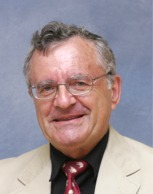
From yesterday’s press:

Professor Amina Wadud is to give the sermon at a centre in Oxford today in what is being called a “leap forward” for equality in Islam. But there are expected to be objections to the sermon at the Oxford Centre in Banbury Road, with opponents understood to be planning protests. The move is controversial as the tradition is that Imams – always men – hold mixed services, with some believing it to be against Islam for a woman to do so. Mokhtar Badri, vice-president of the Muslim Association of Britain is opposed to the sermon. “With all respect to sister Amina, prayer is something we perform in accordance to the teachings of our Lord,” he said.

Much can be learned from the courageous Professor Amina. “Nothing in the Qu-ran bans women leading mosque prayers”, she says. But the weight of tradition is against her. It is a 1,400 – year – old tradition that only men lead prayers in mosques. The power of tradition in Islam is known as ij’ma – do what has always been done. In Jewish halachic law there is an equivalent concept: “Minhag”, custom, can be more powerful than law and becomes law. 

Innovation requires many characteristics: creativity, boldness, new thinking. But a sometimes-underestimated element is simply courage. Amina is endangering herself with her bold innovation.  

How many great new innovations are never born, because the innovator realizes that he or she will pay a heavy price for even presenting them? 

Do you have the courage to innovate? And can we all learn from the courageous Amina Wadud, taking on the entire male establishment of the 1.4 billion Muslims?

I am currently in Washington, DC, attending the annual convention of the Association of the U.S. Army (A-USA) and presenting our newly launched book.*

I was privileged to meet Maj. Gen. (ret.) David T. Zabecki, a military historian who had a distinguished career in Artillery and was part of an American contingent visiting Israel in 2001-3, working on the Road Map. His convoy was targeted by Hamas, but they got the wrong convoy, blowing up a convoy with diplomats instead.
 
Zabecki now lives in Freiburg, Germany, close to the archives of the German military. He has edited a book, Chiefs of Staff: The Principal Officers Behind History’s Great Commanders (Praeger Security, vol. 1 and 2, 2008).

Zabecki’s book includes brief accounts of the chiefs of staff who ran operations for the great military commanders, like Napoleon and Patton. These brilliant managers have names few have heard of (Gneisenau, Moltke, Berthier, Kuhl). They implemented the bold, innovative plans devised by such leaders as Patton.  And they are the reasons these leaders were successful. Their excellence was in planning and in executing – often, areas where the Commanding General was not strong. 

I asked Zabecki what the secret of these successful teams – leader, manager – was. He told me that the key to the best teams of Commanding General and his Chief of Staff was complementarity – each had skills that complemented, rather than duplicated, the other. 

I believe that this applies equally to the roles of CEO and COO. Strong CEO leaders need excellent COO’s (Chief Operation Officers), who complement them, who are great at planning and at execution, and who implement the ideas, innovations and initiatives of the CEO, in the same way that General Patton needed Maj. Gen. Hugh Gaffey, his chief of staff.

As CEO, avoid the temptation to pick a COO who is like you. This never works; it failed in the military, and fails in business. Pick a COO who is different from you, who fills in your blank spaces. And be cautious in promoting your COO as your successor. According to Zabecki, many great Chiefs of Staff who served under daring Generals never became great military leaders themselves. Apparently, skill in operational excellence is not matched by equal boldness and daring in creativity and innovation.  

_______________________________________________
*Brig. Gen. (ret.) Robert L. Dilworth and Shlomo Maital. Fogs of War and Peace: A Midstream Analysis of World War Three. Praeger Security: 2008.

Fire all the males! They suffer from testosterone poisoning. Hire the women! They don’t.

This is Financial Times writer Tim Harris’ advice for preventing a future financial crisis, like the one we are now suffering. He is the author of a new book The Logic of Life, in which his theory is presented. He was interviewed on America’s National Public Radio on Oct. 6.

Here is the basic idea.

The financial services industry is driven by fund managers, traders, brokers, analysts, investment advisors,  who are largely male. They are incentivized by bonus schemes based on outperforming competitors. So the system itself is biased toward taking risk (you do not lose a $10 m. bonus if you take excessive risk; so the incentive payment scheme is really like a huge option, take the upside, forget the downside, especially after the huge ‘bailout’ was put into place).

When the males succeed, in good times, and make millions in bonuses, there is a ‘high’, a surge of the male hormone testosterone. This happens among male animals (gorillas), who succeed in defending their ‘harem’ and their family group, and it happens among human males, who take risks, survive and succeed. The testosterone tends to push these same males toward taking even more risk in future, until those risks become excessive – and ultimately, the risk-takers push themselves and their organizations to the edge…and then over the edge. So crisis is built into the system, as long as the system is run largely by males and as long as the male body generates testosterone.

Women do not suffer from testosterone poisoning.

Why not, then, urges Harris, turn the financial services and banking industry over to the women?    

Harris is not speaking tongue-in-cheek. I believe he is at least partly serious. For years I have urged high-tech companies to expand the role of women in senior management, because they bring powerful skills of collaboration and communication. Now, this advice is extended to investment banks. 

Bring in the women. What we need is a bit less ‘balls’.


A typical male investment banker

When I bake bread, the key ingredient is the yeast. Without yeast, or when the yeast is old and does not work, there are no bubbles inside the dough and the bread comes out as a hard, inedible lump.

What is the key ingredient when we bake an innovation cake? Creativity? Ideas? 

No. TIME! Time to think. Time to reflect. Time to meditate.

Time that most of us simply do not have, and do not allocate.

Here are two examples.

* Isaac Newton was a brilliant student and thinker at Cambridge Univ. During the Plague, all students were sent home to prevent its spread. At his home in the English countryside, Newton had time to reflect. He invented his great laws (including the law of gravity), the law linking mass, gravity and distance, and what Leibniz later called the Calculus, during this time. Would he have achieved such innovation without the time to reflect?

* Deng Xiao Peng was sent home to house arrest during the Cultural Revolution in China. There, he had much time to reflect on why China’s economy was failing. His insights led to China’s turning toward free markets, when he returned to power. Would China be the economic powerhouse it is today, had Deng not had the time to reflect at home?

Innovators – make yourself time and space for reflection. It should be unstructured time, without a specific purpose. You will be amazed at how many ideas flood into your mind – ideas based on questions and problems generated during periods when we are under fierce time pressure, questions that percolate in our subconscious, in our ‘blink’ brains, and for which solutions emerge only if there is time to reflect on them.

A recent segment on BBC’s Business Today reports that Japanese cell companies, e.g. DoCoMo, have failed to make headway in emerging markets, simply because they design and innovate state-of-the-art complex and expensive cell phones for the demanding and lucrative high-end Japanese markets, which insist on the absolute latest in features and technology, and hence fail to compete in emerging markets, where customers seek cheaper, simpler cell phones.

According to Michael Porter’s model of global competitiveness, companies first learn to compete in their domestic markets, then seek markets abroad.  But for Japan, at least for cell phones, this has failed. The focus on high-end at home has cost Japanese firms the low-end markets abroad.

This is somewhat surprising. Nissan (which began as Datsun), Toyota, Honda and other automobile and motorcycle companies began with low-end products sold in America,  to younger people, who loved them, then moved up the value chain and sold increasingly higher-end products as their markets matured and grew wealthy.   

Sometimes, “There’s no place like home” can be a fierce enemy of innovation, when local markets demand products unsuitable for foreign markets.  

The solution: Separate company divisions, with independence and agility, whose bottom line comes solely from emerging-markets sales. Ensure that knowledge travels between home and foreign divisions, by doing many horizontal shifts of engineers and managers, but make the emerging-markets division highly customer-centric and focused on foreign markets’ needs.

What does Nobel Prize Laureate Robert Merton, professor of finance at Harvard Business School, think about the financial mess America has created, and is trying to clean up?

Here are some of his views, as told to Harvard Business School’s on-line magazine Working Knowledge:

University Professor Robert Merton, who received the Nobel Prize winner in economics in 1997, began his remarks by noting that in the current turmoil a large amount of wealth—between $3 and $4 trillion—has been lost without any offset in gains. Loss in wealth will be borne by house owners, those who finance them, and the general population to the extent that the government becomes engaged. “This is not simply a liquidity crisis or simply a problem of a messed-up financial system,” said Merton. Standard financial models remove some of the mystery about what has happened and make the financial crisis comprehensible, he continued. But his larger message to students in the audience was to highlight the relation between financial innovation and crisis. •“Is there a structural relation between innovation and crisis? I think there has to be,” Merton said. “Successful innovation will always outstrip the infrastructure to support it, at least for some considerable time. That’s true because most innovations fail, so it’s not practical to build a new infrastructure to support every innovation until you find out they succeed. So it’s inevitable they will be mismatched for some time. We have to have oversight. But if it is too strict we’ll never get innovation. There really is a tradeoff, and we have to be prepared for that.” Merton expressed concern about potential unintended consequences of efforts to confront the crisis. He reminded the audience that banks and insurance companies, the sources of some of these problems, are among the most regulated entities other than hospitals in the United States. While regulation is important and needed, “it’s not magic,” he said. Poorly done regulation could have a long-term negative effect. “I hope we’ll have careful analysis and pathology before we start to set the regulations,” Merton continued, suggesting the creation of the equivalent of the National Transportation Safety Board for examining financial crises in a technical, determined way. •Finance as a profession does not look bright, he acknowledged. It will be tough to get jobs on Wall Street. But the good news is that innovation will continue. 

“The financial functions of the system, whether providing for retirement or transactions, still have to be performed. This is a global and growing business, and it’s one that can have very significant impact on economic development and growth. •“Some commenters say, ‘We have to get financially sophisticated people out of the system.’ The worst is to say ‘financial engineer.’ I suggest it’s just the opposite. The problem, in part, is that senior managers, regulatory overseers, and members of boards of these financial institutions don’t have a good understanding of all of this. And it would be perverse if the solution was to dumb down or limit what the institutions can do in terms of what they develop, to fit the existing managers. I think the longer-run solution is that general managers have to become far savvier.”  The finance job market is global, and there remains a strong need for talent. People skilled in general management combined with highly technical training to develop a functional perspective are best equipped to navigate the changes ahead, Merton concluded.

Several brief comments on Merton’s views.

* History: remember Long Term Capital Management in 1998? The perfect storm (Asia collapse, Russian default) that at one point created potential losses of a trillion dollars? Only Alan Grenspan’s rapid bailout saved the world at that time. Merton was a co-founder of LTCM, together with Myron Scholes and John W. Merriweather. By gaining time, much of LTCM’s debts were unwound quietly. But an enormous financial collapse, like today’s, was very close. Greenspan had no authority for a bailout, because LTCM was registered as a hedge fund in the Cayman Islands. But he did it anyway. Today’s bailout engineers seem far less savvy than Greenspan was. (Incidentally Merriweather is now running a new fund, JWM, following precisely the same model that LTCM followed – and may again be in some trouble).

* The next crisis: As America struggles to clean up the current crisis, the seeds of the next crisis are sown.   Merton says so. In high-tech startups, a sophisticated technological innovation usually fails, with damage done only to the psyche of the founder. In finance, sophisticated financial innovations can destroy the world.  Merton wants financial innovation to continue. It will. I am already trying to puzzle out, what will the anatomy of the next financial crisis, in 5-10 years, be like?  

* More sophistication, not less: And Merton is right that the core problem is not the high level of sophistication in financial markets, that spawned complex hard-to-understand financial assets, but too little such sophistication. Even fund managers, even managers of huge pension funds, did not understand what they were investing in. They did not properly evaluate the risk entailed, only the return. Will we find ways to educate our financial leaders in the wild and wonderful ways of financial innovation – so that they at least partially understand the cat-in-the-sack they bought during 2001-7? And yes, we do need a far deeper level of financial education. Every general manager needs to know what today, only his or her CFO knows. Same for the board of directors and audit committee.


America’s ship is sinking. But not because of what you think – the financial crisis, the $700 b. (5 % of US GDP), Lehman Bros. etc.

The real reason lies elsewhere, I believe.

Data in the American Psychological Association MONITOR (June 2008, p. 11) shows that for in the U.S., 311,600 undergraduate degrees were conferred on business majors; second was social sciences and history, then education, then psychology. Engineering was a very distant 7th, with only 78,600 graduates.  

Who will be America’s innovators in the future? The business majors, who invent such winning ideas as mortgage-backed securities, credit default swaps, auction based securities and contractual debt obligations?

Or the engineers, who combine empathetic insights into social needs with technology skills?

China’s top three universities alone match America’s total output of engineers. And India is a close second.  

NYT Columnist Tom Friedman says we have had too much American intervention in the world, which was bad, and now, in the future, we will have too little, which will be equally bad. I think America’s future is endangered less by its financial mess than by its inability to interest young people in technology. Remember Kennedy’s Aug. 1963 challenge: “We shall go the moon by the end of the decade”? The vision pulled many thousands of young people into science and engineering, whatever else the moon shot accomplished. 

Nothing parallel exists today. I think this is the real long-term threat to America.

By Rabbi Yochanan
By Prof. Shlomo Maital

Rabbi Yochanan asks, in the Talmud, “what is the right path for a person to follow? Who walks in this path?”

His terse answer, rather surprising:

(in Hebrew) “ha-roeh et hanolad”.  

Translation: He who sees the future.

“Hanolad” means, literally, “what will transpire”.

But it can also mean, “what is happening – now”. Because if the learned Rabbi Yochanan meant “what will happen in the future”, he would have said, “ha-roeh et mah she’yivaled” (what will transpire in the future),  future tense. 

One interpretation of Rabbi Yochanan’s terse, puzzling statement is this:

To live well, to do right, and of course, to innovate, what is needed is to really see what is happening now,  right at this moment, under our noses.  

Most of use look at things but we do not really see them. We hear people talk, but we do not really listen.    What we need is truly sharp vision, sight that becomes insight. I believe this is what the Rabbi meant. And to achieve such sight, to see what transpires now, at this moment, requires us to:

a) care about other people around us, b) be empathetic toward them, and c) really see them as they are and understand their needs, so that we can meet them, as innovators and simply as good people who want to improve the world.

Innovators begin with deep insight into what people need, what their wants and needs are, and then produce goods and services that meet those needs. Above all, they have very sharp vision. They see what is transpiring. They have insight, while others simply look.

A new business known as Jet Republic just announced a $1.5 b. order for new aircraft, on Sept. 23.

Run that by me again? An airline is buying $1.5 b. in planes, when all the other airlines are cutting back and cancelling flights and grounding planes? (Even Ryanair just announced it would ground more planes than planned during the winter off-season). 

Well, it is not exactly an airline. Jet Republic bought 110 LearJets. These are small private planes that carry about 7 people. Businesses who don’t want to buy their own plane, perhaps because this is seen as a luxury expense, can buy as little as 1/16 of a LearJet, or book 25 hours of flight time a month. The LearJets of Jet Republic fly point to point, mainly in Europe, wherever the client wishes to go, without queues or changing planes at hubs. A flight hour costs about $7,000. But for each of seven people that works out to about $1,000. Not far from business class fares. But the service is far far better. 

We teach that global managers see opportunity where others see crisis. Jet Republic (based in Portugal) CEO Jonathan Breeze, a former Royal Air Force pilot, says that the “crisis in financial markets even strengthens the proposition”.   

We also teach that innovation often lies in the business model, not in the technology. Jet Republic has built a new business model. It looks very powerful indeed, because it meets a real need. Senior executives work 80 hours a week, and every hour is precious. Save them an hour, you save them much money and more important, you give them time with their family. “Time with family” is a key feature that Jet Republic offers, rather than “time in the queue and at the hub waiting for the next plane”. 

There are nay-sayers. Analyst Chris Tarry says that “at a time when corporate are cutting back their travel policies and the European economy is weakening, it is hard to see why they are doing this now.” Well, Chris,  as TIM Chair Lester Thurow wrote, in his recent book title: Fortune Favors the Bold. We wish Jonathan and Jet Republic success.    

* source: Times Online, Sept. 23, 2008.

A question to our blog readers:

When you begin to transform your organization or your team, or yourself and your own life:

What is the very first step toward transformation through innovation?

In other words: What must you do first, to implement innovative change?

I get a lot of answers to this question. But the best answer comes from the ‘horse’s mouth’ itself, the global guru of change management, Harvard Business School Business Professor John Kotter, author of The Heart of Change (HBS 2002).

The very first step in transformation is: URGENCY! Develop a sense of urgency – within yourself, within your team, within your organization. Without that, you will lack the necessary energy and speed to move forward and pull people with you.

Unless you yourself believe that you MUST, NOW, TODAY, THIS MINUTE, change your life and transform what you are doing… it just may not happen or may drag on and you will lose enthusiasm. If your organization believes all is well, the important transformations will be shoved to the back burner by the daily press of operations. 

How do you create this urgency? Within yourself – by simply believing it. Within your team – by persuading other team members, perhaps by the scenario method: Painting possible scenarios that could happen, that would endanger the team. (“What could happen that might hurt us and our company?” Foreign exchange traders ask this question every hour, in examining their positions). For the organization: Persuade senior people that a crisis may loom. Some companies like Intel actually create such mini-crises, and of course Intel’s “only the paranoid survive” is well known.

Just for interest the other 7 steps of Kotter’s method are: Build the guiding team; Get the vision right; Communicate for buy-in; Empower action; Create short-term wins; Don’t let up; and Make change stick.

Blog entries written by Prof. Shlomo Maital

Shlomo Maital

Pages