The Creativity of Nature:

How One Creative Scientist Harnessed It

By   Shlomo Maital
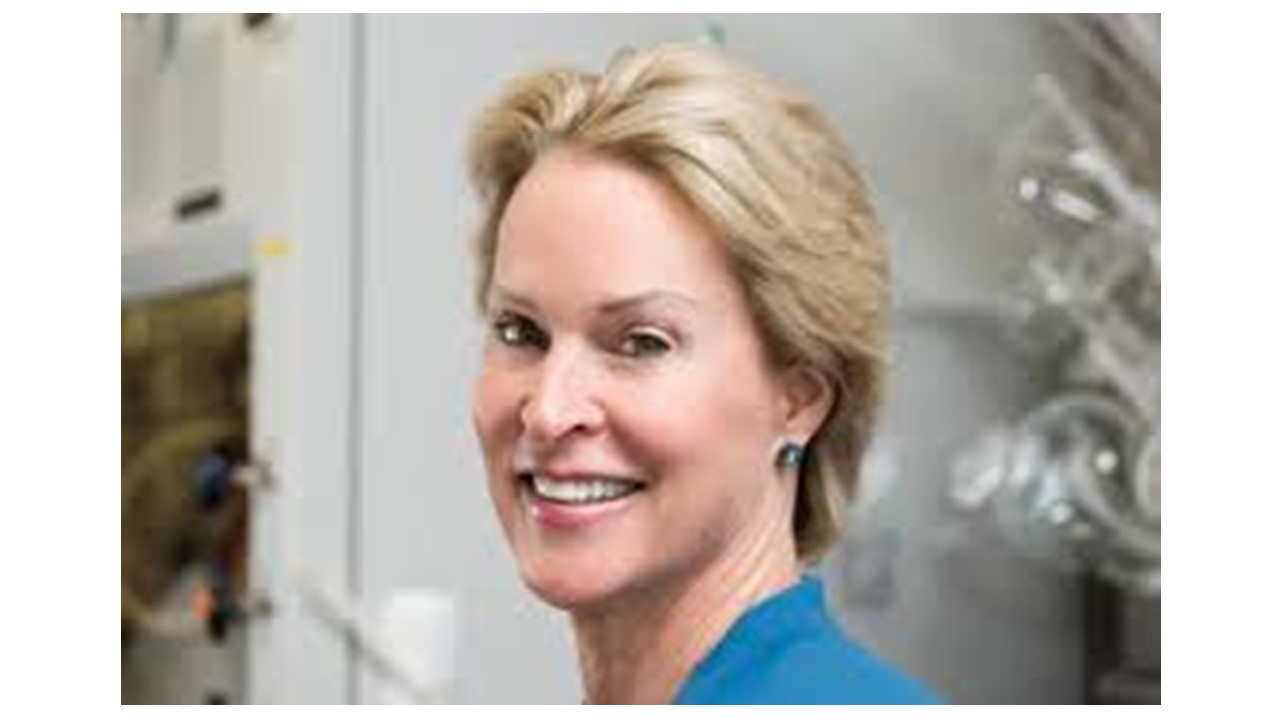
Prof. Frances Arnold, Caltech

   Frances Arnold is a professor of chemical engineering at California Institute of Technology, in Pasadena, CA. She won the 2018 Nobel Prize for chemistry, along with two others. She is only the fifth woman in history to win the Chemistry Nobel.

   Prof. Arnold has had numerous personal tragedies. She has overcome all the grief – and not a small amount of gender discrimination. UK border police interrogated her for over two hours, when she told them she was “coming to meet the Queen” (she was – but a lot of nutty people say that, apparently).

     Prof. Arnold won the Nobel for finding a creative way to leverage the powerful creative force of evolution. Instead of designing new chemicals from scratch, to fight crop-eating pests, remove laundry stains or clean up oil spills, Arnold figured out how to get Nature to do it.

     “You start with a protein that already has some features you’re interested in”, she said, “ and use standard lab techniques to randomly mutate the gene that encodes the protein. Then you look for slight improvement in the resulting protein, in the direction you seek. You mutate the improved version again and again and screen the output. You do this with a bacterial workhorse, like E. coli….. you encourage the microbes to rise to the challenge, adapt, survive.”

       In Dr. Arnold’s lab, organisms have been ‘mutated’ to stitch together carbon and silicon, or carbon and boron. “We’re discovering that nature can do chemistry, in the lab, we never dreamed was possible”, Dr. Arnold said.    Arnold has invented the new field of evolutionary chemistry – using Nature’s incredibly creative system known as evolution and ‘survival of the fittest’, to create random mutations, select the ones that work, perfect them – and change the world. Nature is creative, in much the same way that humans are – try things, fail, try again, find something that does work and run with it. That is how we humans were created – and according to Darwin, all the millions of species on earth.    

   Arnold has launched a number of startups, including one that synthesizes insect pheromones and fends off agricultural pests by simply driving them crazy and confusing them.

   Much of Dr. Arnold’s pioneering research was done while she fought breast cancer that had spread to her lymph nodes. She underwent surgery, radiation and chemo, all while raising three young boys and working day and night in her lab.   And in 2010 her husband Andrew Lange killed himself; her middle son William, 20, died in an accident in 2016.  

     “Why would I give up?” said Arnold. “First you learn you have no control. Then you straighten up, fetch your invitation and go to meet the Queen.”    

       [This is based on an excellent New York Times article, by Natalie Angier, who writes for the Science Times].


Jacob, age 12, Comforts the Bereaved

By   Shlomo Maital


   When a close relative dies, there is a wise, tried and tested Jewish ritual of mourning known as shiva, from the Hebrew word “shiv’ah” which means the number 7.

       For 7 days, the mourners sit at home, on low benches, and receive visits of comfort from friends and family. They reminisce about the departed, prepare no food (food is brought to them) and grieve.   They then “rise” from the shiva and resume their lives, with some other limitations during the “shloshim” (the next 30 days).   In synagogue, mourners say the kaddish prayer, for 11 months, which has not a single word about death but simply praises God and his creation and greatness.

     This mourning ritual has proven itself over the ages to comfort and strengthen. I experienced it myself, after the deaths of my mother and father.

   I recently was privileged to meet Jacob, age 12. Jacob is the son of relatives. He will be bar mitzvah soon, at age 13. Like many other young men about to celebrate their bar mitzvah (the equivalent of confirmation), Jacob is doing a public service project.   But his is very special – his idea. He told me about it.

     Jacob, together with his mother and stepfather, visits the homes of mourners and pays “shiva calls”. Some think exposing children to death is wrong. I disagree. This is not exposure to death, but to comforting the grieving. Jacob brings his youth, his hope, and the future, to the home of the bereaved. I know that his presence brings hope and comfort to the bereaved.

     I believe Jacob’s wonderful idea deserves scale-up – spreading widely. The idea of comforting those who have lost loved ones is brilliant – and who can comfort better than a sensitive caring young man or woman (this is for girls too, of course), who brings with him or her the perpetual idea of continuity of life, of hope, of renewal and of meaning.  

       Jacob – well done!


US GDP Growth: NOT What It Seems!

By   Shlomo Maital

I recently wrote a column titled: Why Can’t Economists Talk Straight?, in the Jerusalem Report. It was a book review of a book by a friend, an expert on behavioral economics. It explains why economists befuddle, use impenetrable jargon, and in general confuse and obfuscate.

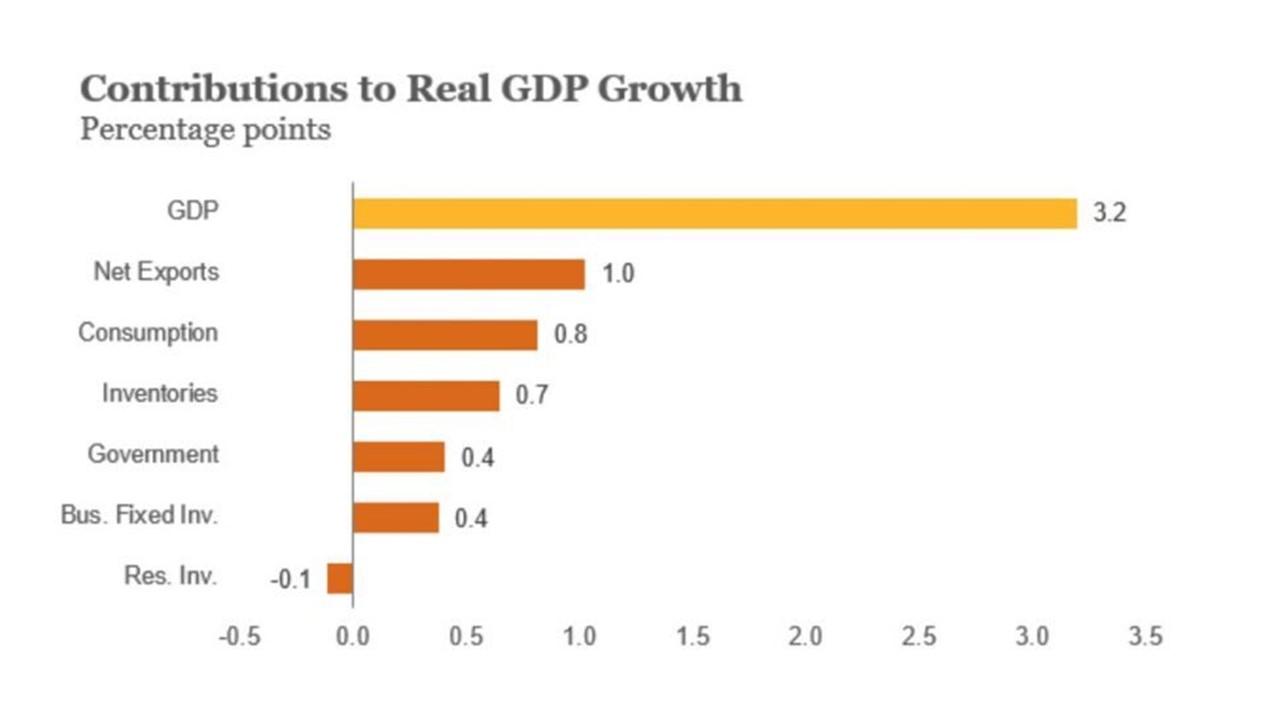
     Here is a recent example.   US First Quarter GDP figures were headlined as: US economy growth surprises!   3.2% growth. Way above what was expected. It was predicted that a recession was on the way. But it’s not!   Yeeayyy!    This is what journalists wrote. I can understand that. They are not trained to read the economic X-Ray data. But economists?   Where ARE they?   Nowhere.

     The first quarter GDP news is BAD BAD BAD! Not good.   Here is why.

       A large part of that 3.2%   growth was “inventories”. Nearly a quarter. Without that, growth would have been 2.5%. Much worse ….. But what IS that inventory thing???

        Here is the straight talk.   GDP growth reflects what is PRODUCED   — not what is SOLD.   Some of GDP is sold. Some is NOT. So it is put into warehouses. This is then called ‘inventories’ or ‘inventory change’.  

       A whole lot of stuff was produced in the first quarter – but companies couldn’t sell it.   So cars, fridges, computers, motorcycles, appliances, etc. went into warehouses.  

       That is bad news. Because in the 2nd quarter, companies will sell off that inventory rather than produce new stuff. That will greatly reduce GDP growth rate.   In 2nd quarter, we will see numbers that begin to herald a recession. Trust me.   Set aside some money – we ARE heading for a slowdown.

      Now, is that bad news? Or good?     As we head toward elections in November 2020, a recession will help defeat Donald Trump.   People DO vote their pockets, to some degree. And the likely Democratic candidate Joe Biden is running a campaign to enlist support of working people.   Trump has not even begun to deliver on his promises to them. And they are beginning to get it. Moreover, Biden has pulled Trump’s chain, and got Trump to attack unions (dues-sucking!).  

       So bottom line:   NOT 3.2% growth, but 2.5% growth (subtracting inventories), to reflect what people actually BOUGHT. They are buying less. This is a slowdown signal.   I can find nowhere where this is widely and clearly reported. A great shame.


Make It Smaller, Cheaper, Better:

Democratizing Ultrasound  


By   Shlomo Maital

     Take a useful product. Make it smaller, cheaper. MUCH smaller and cheaper. In doing so you make it accessible to those in poorer countries.

     A lot of world-changing innovation works that way.   Take for instance Butterfly (New York Times, front page, April 18 2019).   “Hope in the palm of a hand”.   Butterfly Network is a Connecticut company that makes a hand-held ultrasound scanner called the Butterfly iQ.   It is about the size of an electric shaver. It is battery-powered, and is based not on piezoelectric crystals (used in nearly all ultrasound devices) but instead on microchips, far more durable. Butterly iQ won’t break if dropped. The target market: doctors and nurses who can afford a $2,000 device that “fits in a coat pocket and is as portable as a stethoscope”.

     The NYT article, by Donald McNeil Jr. and Esther Ruth Mbabazi, shows how this device has vast potential in Africa, Asia and Latin America, where conventional X-ray machines are miles and miles away and are often inaccessible. The article shows how Dr. Michael Cherniak counselled Rodgers Ssekawoko Muhumuza, a Ugandan clinical officer he was training, in using the device, to diagnose early-stage pneumonia in a six-year-old.   Rodgers prescribed antibiotics, and Dr. Cherniak approved.

       I was privileged to work with GE Ultrasound, in Haifa Israel, which began as an Israeli startup acquired by GE.   The entrepreneurs initially developed a PC-based ultrasound device, cheaper and smaller by far than the existing device.    They did this based on faith, that PC computing power would ultimately be sufficient – and it was. The key was image-processing software, that sharpened the ultrasound image a lot, developed by a genius software engineer.   Next, the development team converted the device to work on a laptop.   And now, in the US, Butterfly has slimmed it all down to the size of a mobile phone.

         Innovation is often not just about new inventions, but about making existing inventions accessible to those with low income, and low accessibility to urban medical care and devices. Almost by definition, things that are smaller are often also cheaper, and of course easier to transport.

     Kudos to Butterfly and founder   Jonathan Rothberg. He pursued the goal initially, because one of his daughters had kidney cysts that required regular ultrasound scans. One of his backers was the Bill and Melinda Gates Foundation.   “Two-thirds of the world gets no imaging at all,” Rothberg noted. “When you put something on a chip, the price goes down and you democratize it.”

When Democracy Breaks: Understanding Brakes-It (Brexit)
By   Shlomo Maital

    Are you puzzled by the Brexit fiasco? As are the Brits themselves – and the rest of the world?

   I spent a year in Manchester, UK, studying economics, many years ago, and came to like and understand the British people. Here is my ‘take’ on Brexit.

   British democracy is built around its Parliament. There are 650 members of Parliament, elected by parliamentary district. There are two main parties: Labor and Conservatives. Liberals were strong for a while, then disappeared – now there is DUP (Northern Ireland) and SNP Scottish Nationalists. So there has been fragmentation, as there is in nearly all democracies, and above all, splits WITHIN the two major parties, Labor and Conservatives.

     I love watching question session in the British Parliament. “The right honorable member from Dipsy-Doopsy has clearly failed to understand the essential elements of this issue”.   Polite debate, sometimes raucous, but real intelligent debate, unlike in many Parliaments, and strongly contrasting with, say, Israel’s Knesset.

     But here is the problem. British democracy is adversarial.   Labor vs. Conservative. Them against us.   Usually this works. People vote, and choose between them decisively.

     Until now.  The governing Conservatives had a bare majority, with the help of DUP — and then basically lost DUP support. So they lack a majority.

     The Brexit referendum was very close, 51% for. The slogan of the “for” was: Take Back Control. That made stopping migrants the key issue. People wanted to stop the flow of migrants across the English Channel. But what about the other stuff that came with leaving the EU?   Northern Ireland-Ireland border? Trade/ auto plants? Investment? Foreign workers? Foreign residents? British living in Spain?

     PM David Cameron, at the time, OK’d the referendum because he was sure it would be defeated. He opposed Brexit. He lost. And the chaos began.  Because Cameron had no plan for leaving the EU.  None.  People voted for leaving, without knowing how it would be done.

     What is needed now is compromise, collaboration. WITHIN the Conservative Party, the two wings – hard Brexit and soft Brexit – have to join together and agree. WITHIN the Labor Party, the two wings, ‘stay’ and ‘leave soft’ , have to agree.

     Finally, at the 12th hour, PM Theresa May has offered to sit down seriously with opposition leader Jeremy Corbyn. To bargain.   But in an adversarial system, them against us, and at a time when both of the major parties are internally divided, the chances of an agreement are slim.  The two leaders deeply despise each other. What are the odds they can agree on anything, even the time of day?

     We’ve had a dozen votes or more in Parliament – and not a SINGLE one has generated a majority for anything! Except, perhaps, not leaving without some kind of agreement.

     So the odds now are Britain will crash out of the EU in early May, or before, without any real orderly agreement. It will be less chaotic than many warn, but very very harmful to Britain’s economy and future. Because there is no Parliamentary majority for Anything. 

    And most of all, Britain’s image as a paragon of democracy, a good place to invest, and London above all as the world’s financial capital, all have suffered irreparable damage.

   Democracy is great. Until it breaks. British democracy broke, because an adversarial system seemed unable to adapt to become a collaborative one – let’s get together and solve this. Even when the cost is infinite – collaboration seems well beyond the current Parliament.

   Brexit? Or Breaks-It?   Very sad. And just watch the dictators – Putin, Trump and others – rub their hands in glee as the EU comes apart.

Six Questions: Toward a Mindful Life

By   Shlomo Maital

I found this wise advice at a website called mindfulentrepreneur:

How to re-examine the story of your life – and rewrite it(?)

  • What is it that you’re truly good at?
  • What do you know or do at least a bit better than the others around?
  • What type of issues do people approach you with?
  • In what areas are you usually able to provide meaningful help?
  • What are you known for?
  • What activities give you pleasure even if you’re not rewarded for them in any way?  


The website goes on: “Try to identify that one special ability you have and cherish it. Use it whenever you can, despite not being seen. And don’t forget to remind yourself that the boomerang of positive energy you’re sending out to the universe will one day, sooner or later, come back to you, with multiplied force.

And it ends:

   “You’re the sole author of the story of your life. Make it an inspiring one to read.

In teaching creativity, I’ve challenged a great many young people to search deep inside themselves and find their true passions — and then pursue them.  For some it has worked.  And it gives me a lot of satisfaction.  I plan to keep doing it.  

    If by a huge cosmic error I reach the gates of heaven and am challenged there, I plan to say,  I tried to help people write their own life stories, rather than let other people write them on their behalf.   It just might work. 

Life as Math: Break Your Problem Into Pieces
By   Shlomo Maital

   How do you solve real-world problems? Hard ones?   Not, say, partial differential equations…. But life problems, relationships, dilemmas, work, career, kids.

   Let’s turn to a new and wonderful book by Cornell University mathematician Steven Strogatz *.   His book is about calculus. Remember your college course Calculus 101? One you may have struggled with? Can you believe calculus can solve real-world problems, not just math problems?

     Start with differential calculus and derivatives. This technique takes a hard problem and breaks it down into very very small pieces. Try the same with life. Problem? Insoluble? Break it down. Take it apart. Use the method of seven why’s… why?, response, why?, response, until you get down to the infinitely small level..and the core of the problem.

     Next take integral calculus. Start small and build it up. Build the big picture. Take your seven why’s…   zoom out, then put the pieces together and ‘integrate’….add it all up.

        Strogatz shows how a geneticist combined with a mathematical expert to crack the HIV    problem. Drugs were developed to combat HIV and keep it from becoming AIDS. But there was a dilemma. Using the drugs prematurely might cause the body to develop immunity and endanger the patient. The mathematician plotted the curve of HIV virus in the body, over time, and how the body destroyed the virus…. And came up with the strategy, eventually, of the HIV cocktail – the combination of three drugs that has proved so effective and life-saving. This was done, using calculus, plotting the computing the curve of HIV virus ‘kills’ by the body’s immune system over time.

     Bottom line — tackle problems like a calculus expert. Break them down. Take a small piece. Work on it.   Understand the whole problem by understanding a small part of it.

* Steven Strogatz. Infinite Powers: How Calculus Reveals the Secrets of the Universe. 384 pages. Houghton Mifflin Harcourt 2019.


Greta Thunberg – Tells It Like It Is
By   Shlomo Maital

   Three years ago, Greta Thunberg, a Swedish schoolgirl, skipped school on Friday and with a home-made sign, demonstrated outside the Swedish Parliament. Her request: Get Sweden back on track with the Paris Agreement to mitigate greenhouse gases and halt climate change.

   One young schoolgirl – what could she possibly do?   Every Friday, she showed up again at the Swedish Parliament.

   Now, three years later, her single act has snowballed into a massive strike-from-school movement among school children all over the world, on March 15.

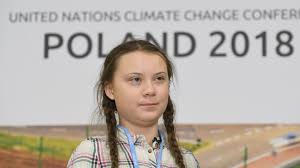
     Greta spoke to a climate change conference in Poland last year. She really stuck it to the old guys there. She got a tiny smattering of applause, showing their disapproval. She was far more warmly received when she spoke to the European Parliament later.

       Take a moment and read what she said in Poland. Believe me – it’s a wow!

     “My name is Greta Thunberg. I am 15 years old. I am from Sweden. I speak on behalf of Climate Justice Now. Many people say that Sweden is just a small country and it doesn’t matter what we do. But I’ve learned you are never too small to make a difference. And if a few children can get headlines all over the world just by not going to school, then imagine what we could all do together if we really wanted to.

   “But to do that, we have to speak clearly, no matter how uncomfortable that may be. You only speak of green eternal economic growth because you are too scared of being unpopular. You only talk about moving forward with the same bad ideas that got us into this mess, even when the only sensible thing to do is pull the emergency brake. You are not mature enough to tell it like is. Even that burden you leave to us children. But I don’t care about being popular. I care about climate justice and the living planet. Our civilization is being sacrificed for the opportunity of a very small number of people to continue making enormous amounts of money. Our biosphere is being sacrificed so that rich people in countries like mine can live in luxury. It is the sufferings of the many which pay for the luxuries of the few.

   “The year 2078, I will celebrate my 75th birthday. If I have children maybe they will spend that day with me. Maybe they will ask me about you. Maybe they will ask why you didn’t do anything while there still was time to act. You say you love your children above all else, and yet you are stealing their future in front of their very eyes.

   “Until you start focusing on what needs to be done rather than what is politically possible, there is no hope. We can’t solve a crisis without treating it as a crisis. We need to keep the fossil fuels in the ground, and we need to focus on equity. And if solutions within the system are so impossible to find, maybe we should change the system itself. We have not come here to beg world leaders to care. You have ignored us in the past and you will ignore us again. We have run out of excuses and we are running out of time. We have come here to let you know that change is coming, whether you like it or not. The real power belongs to the people. Thank you”.

Geopolitical Danger: The New Cold War

By   Shlomo Maital

   Remember the good old Cold War? The nuclear standoff between the US and Soviet Union?   In the 1950’s American schoolchildren did regular drills for the possibility of nuclear war. It was not fun. Then in 1989-91 the USSR collapsed, and the US dominated for two decades.

   Well, the Cold War is back. And the new version is a whole lot worse than the old one. Don’t believe me – believe Thomas Friedman, veteran New York Times columnist, citing a new book by Michael Mandelbaum. *

     Here are three key geopolitical trends Friedman describes. Together they are scary.

     First, in this new Cold War, three powers have been in resurgence: Russia, Iran, and China. China claims the Western Pacific and spreads its reach throughout the world, with its Belt and Road project. Iran spreads its tentacles through the Mideast, in Yemen, Lebanon, Syria and Iraq. Russia engages in mischief throughout the world, including within the US, supporting bloody dictators like Maduro and Assad. Meanwhile the US retreats, spending more and more on defense while doing less and less to keep world peace.

     Second, more and more weak states are failing. Countries are collapsing, owing to corrupt dictators – Libya, Guatemala, Venezuela, El Savador, and elsewhere. This creates a flood of migrants which has destabilized European union and threatens the US.   Reassembing those weak states is almost impossible – their dictators bribe the military and keep control against popular uprisings.

     Third, there are super-empowered small groups. These are hidden secret groups that make huge mischief, hacking elections, stealing, destabilizing, some government-sponsored, using cell phones and simple cyber tools.   “Some guy in Moldova with a cell phone and some cyber tools can shut off power in Montana”, Friedman explains. This threat has been vastly underestimated by the US and Europe. Even without mischief, social media have destabilized politics, blurring the line between truth and lies and giving everybody the power to say whatever they wish and be believed.

     For some 30 years, after 1989, there was more or less a new world order, in which the US kept things under control, with some huge mistakes (Iraq, Afghanistan). This is now ending. It is not clear what kind of new world order will emerge from this mess, nor the price we will pay in the process and how long it will take.

­­­­­­­­­­_____________

* Michael Mandelbaum.   The Rise and Fall of Peace on Earth. Feb. 2019.

Why Do We Sleep?

By   Shlomo Maital

   Why do people sleep? For evolutionary biologists, it’s a bit of a mystery. Sleep makes us vulnerable to predators. How come people and animals did not evolve without the need for sleep?

     A new research study, just published in Nature Communications, reveals an answer. The study is by Bar Ilan University doctoral student David Zada, along with professorial co-authors.

     Until now, we did know that lack of sleep affects brain functioning. Could sleep be a biochemical process essential for life?

     The answer is yes.   Zada studied zebrafish. When they are young, they are transparent – even their skulls.   Zada could look directly into their brains.

       Here is what he found. Every human cell (except for one exception – red blood cells) has DNA. DNA gets damaged over time and needs repair within the cell. There are enzymes that do this.

         Zada found that when zebrafish sleep, their neural cells no longer need energy for waking purposes, and this frees energy for their cells to repair their damaged DNA. He used time lapse photography to show this. When fish are awake, their chromosomes have far fewer resources to engage in repairs.

         Apparently we sleep in order to engage in crucial maintenance for our neurons – nerve cells – in particular, just as my Toyota needs regular maintenance from time to time in the garage.

         So – let’s get some sleep and let our amazing bodies fix their neural cells. It is well known that teenagers in particular do not sleep enough. Maybe we can learn from the zebrafish?  


Blog entries written by Prof. Shlomo Maital

Shlomo Maital

Pages