
You are currently browsing the tag archive for the ‘COVID-19’ tag.
How Warsaw Ghetto Jews Controlled a Typhus Epidemic:
Lessons for Today
By Shlomo Maital

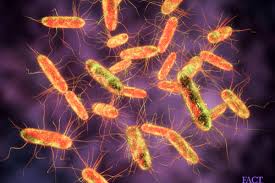
Typhus bacteria
This is the story of how 450,000 Warsaw Jews, crammed by the Nazis into a tiny ghetto 3.2 km. sq. (about 2 miles square, roughly Central Park) – starting in Nov. 1940 — and saw a typhus epidemic spread, with several thousand cases.. and then, by July 1942, totally flattened the curve and eradicated the epidemic. Right at that time, late 1942, the Nazis assaulted the ghetto, and despite valiant but futile resistance, destroyed the ghetto and transported its residents to Treblinka extermination camp, where more than 280,000 were killed.
So – what exactly is typhus, and how did the Warsaw Ghetto Jews flatten the curve?
Typhus is a group of infectious diseases — Common symptoms include fever, headache, and a rash. Typically these begin one to two weeks after exposure. The diseases are caused by specific types of bacterial infection. Epidemic typhus is due to Rickettsia prowazekii spread by body lice.
In a just-published article in Science Advances, theoretical biologist Lewi Stone and colleagues describe the Warsaw ghetto typhus epidemic, and how it was flattened (see graph above).
In brief: Among the Jewish doctors imprisoned by the Nazis in the ghetto were several distinguished epidemiologists, including one nominated for a Nobel Prize. The doctors told inhabitants to keep apart, and as far as possible practice body hygiene (the human body louse spreads the disease).
The ghetto inhabitants respected and trusted the doctors and did what they said. Authors of the study conclude: “Strangely, the epidemic was curtailed and was brought to a sudden halt before winter, when typhus normally accelerates. A far more massive epidemic outbreak was prevented through the antiepidemic efforts by the often considered incompetent and corrupt ghetto leadership and the Herculean efforts of ghetto doctors.
So – the starving inhabitants, weakened by hunger, lacking water, packed into housing like sardines — did manage to ‘flatten the curve’, almost to zero, at a time when typhus epidemics had ravaged and killed many, in other locations.
The question arises: If they could, if they did – why in the world can’t we? Why aren’t we?
- Extraordinary curtailment of massive typhus epidemic in the Warsaw Ghetto Lewi Stone, Daihai He, Stephan Lehnstaedt and Yael Artzy-Randrup. Science Advances, ci Adv 6 (30), eabc0927. DOI: 10.1126/sciadv.abc0927 Feb 2020
Economic Recovery: We All Should Prepare for a Long Convalescence
By Shlomo Maital

How quickly will economies in the US, Canada, Japan and Europe bounce back? Will it be fast, like China, or very slow, like the US?
Bloomberg has been tracking this key issue, using a wide variety of indicators; the visual track for 10 countries is shown in the diagram.
It has been 5 months since these economies bottomed out, with 60% – 80% decline in the economy, owing to lockdown, in a very short period of a month or six weeks.
So far, no matter what the national strategy (or lack of one, as in the US) — herd immunity (Sweden), local lockdown (Italy), school-opening and back-to-normal prematurely (US) — economies are plateau-ing, at 60% to 80% of their previous pre-pandemic level. And in most of the 10, COVID-19 is making a comeback, in a second or third wave — with the age of those infected declining sharply, as young people emerge, head to bars, and parties, and colleges – and become ill.
And, if that isn’t bad enough, a new forecast from the leading pandemic prediction institution, at Univ. of Washington, reports this: A new long-term forecast predicts a significant acceleration in Covid-19 deaths in the U.S. as colder weather takes hold. Under the latest projections from the Institute for Health Metrics and Evaluation at the University of Washington’s School of Medicine, deaths could rise to 410,000 by the end of 2020. In a worst-case scenario, there could be 620,000 fatalities, more than three times the number of Americans who have died over the past eight months. The difference between the projected and worst-case scenarios comes down to how diligent authorities are in mandating masks and social distancing, according to the report.
Readers, fasten your seat belts. Many of us yearn for the good old days, like, those we have 6 months ago. It does not seem likely any time soon. Prepare yourself and your family for a rocky road to recovery. It will be a marathon, not a sprint. Even optimistists believe an effective vaccine won’t be available for many months – and then, how many vaccine-deniers will turn it down, lacking trust in leaders who follow politics rather than science?
Managing COVID-19 Tradeoffs: An Economic Lesson by a Pediatrician
By Shlomo Maital

Well, it took a pediatrician to teach everyone a simple, powerful lesson in Economics. The pediatrician is Aaron E. Carroll, and he is Professor of Pediatrics at the Indiana University School of Medicine. His Op-Ed in today’s global New York Times * makes an important point.
“…as we loosen restrictions in some areas, we should be increasing restrictions in others.”
Simple? Obvious? As kids go back to school today, and joyously huddle with their friends, whom they haven’t seen for ages, the assumption is, if we’re clustering together in school, it’s OK to cluster together everywhere.
It’s a free lunch. The logic is “both-and”. Both at school, and at home, and at parties, and …everywhere. Both-and is today’s social norm. We want it all.
But there is a tradeoff at play here. If you take more risk in school, then you have to take less risk elsewhere, because – we cannot let risk rise infinitely, it is a kind of resource that is fixed in amount, and if we use too much of it, it will for sure come back and bite us hard…
This is a very hard lesson for everyone to swallow, especially when the feeling is: We’ve quarantined, social-distanced for so long – now it’s over, time to huddle and cluster and gather.
Not so. The second wave of COVID-19 has occurred mainly because of this false assumption.
So let us each of us take responsibility and manage our risk tradeoffs. The question should be: what am I doing, that increases the risk of infecting myself and others? What can I do to reduce that, so that when I do join 10 others for prayer or socializing, my risk allocation is not excessive.
Long ago, I taught managers a useful tool for managing business tradeoffs, known as “Even Swaps”, co-invented by Harvard Professor Howard Raiffa, a game-theory expert.** The idea here is simple. List all your options. Discard those that are ‘dominated’, that is – all other options are better in every way. This is easy.
Next part is hard. For the remaining options, list the six common things for each that bring you joy. Score each 1 to 5, with 5 being “most joy”. Now — a short cut (Raiffa’s approach is more complex): Imagine yourself choosing each option: A, B, C…. and ask which– brings more joy? (Note: joy is not happiness…it is less ephemeral, less transient, deeper, with more meaning).
And a supplemental tool. Of all the things I am now doing – ask yourself, which can I stop doing, totally, and as a result, find greater joy? In new product development, ‘addition’ (what feature can we add?) creates cluttered, costly, complicated, unfriendly devices. Best to start with subtraction: What can I REMOVE from this device, to make it better, friendlier, simpler, cheaper? The same works in life. What can I stop doing? Specifically, what can I stop doing, that reduces risk of becoming infected and infecting others?
The notion of giving up things we like is a tough one for modern society. Climate change policy, and its failures, are proof. But in a pandemic, as Dr. Carroll points out, recognizing trade-offs and managing them are vital. Thanks, Doc! It took an MD to explain some basic Economics.
* “Most of us have the risk of COVID-19 exactly backwards”. Sept. 1, P. 11
** J S Hammond, R I Keeney, Howard Raiffa. “Even swaps: A rational method for making trade-offs”. Harvard Business Review, March-April 1998.
How One Conference Spread the Virus to Thousands
By Shlomo Maital
We have consistently underestimated the degree to which the novel coronavirus is contagious and able to spread rapidly. And we keep waking up to bars, schools, universities, etc. creating new hotspots.
Now, Angus Chen, a WBUR Boston radio reporter, reports on a new study by experts at Harvard-MIT’s Broad Institute, about how an innocent conference sponsored by biotech giant Biogen, in Cambridge MA., led to thousands of infections.
“Early in the pandemic, state health officials counted 99 coronavirus cases stemming from a fateful Biogen meeting that turned into a superspreading event. Now, new genetic evidence suggests the infections unleashed at the Cambridge biotech company’s gathering in February washed through the Boston area and rippled across the world. Overall, the data suggests the event led to 40% of all COVID-19 infections in the Boston area as of July 1, says Bronwyn MacInnis, a viral genomicist at the Broad Institute of MIT and Harvard and the senior author of a new, pre-publication study that attempts to trace the viral descendants of that outbreak. That translates to tens of thousands of cases. “It’s fair to say it’s striking. [The conference] certainly has had an impact on the trajectory of the pandemic domestically and abroad,” MacInnis says. “It’s a great example of how connected we all are, and how viruses are agnostic to how they move and who they may infect. The activities that happen in one corner of a society can have far-reaching effects on others.” “
Is there a positive message in this super-spread episode? There is.
President Trump’s mantra, America First, revives selfish narcissistic world views, that has alienated allies abroad. And there are significant groups outside of America who embrace this me-only view.
Along comes the virus, and recites John Donne’s 1633 poem, and teaches us anew its message:
Each is a piece of the continent,
A part of the main.
If a clod be washed away by the sea,
Europe is the less.
As well as if a promontory were.
As well as if a manor of thine own
Or of thine friend’s were.
Each man’s death diminishes me,
For I am involved in mankind
If the virus is not contained in California, Massachusetts will be at risk. If the virus is not contained in the US, then Germany is at risk. If the virus is not contained anywhere, then everywhere else is at risk.
Each person’s infection diminishes everyone else. For we are all involved and connected, in humankind. Nature has conspired to teach us this lesson, in a most painful and costly manner.
You CAN get COVID-19 twice—and that’s good news!
By Shlomo Maital

Can you get the novel coronavirus twice? Get it, recover, and later get it again?
The answer is yes! And experts tell us, unexpectedly, against the odds, this is good news.
First the evidence, from Hong Kong and South Korea:
A Hong Kong man has been infected with the novel coronavirus for a second time, researchers at the University of Hong Kong have found. The patient had been cleared of Covid-19 and was released from hospital in April but tested positive for the virus when he returned from Spain earlier this month. The research team said the findings suggest that Covid-19 immunity does not last for long and “there is evidence that some patients have waning antibody level after a few months.” The researchers also noted that the two virus strains contracted by the man in April and August were “clearly different.”
A similar report came from South Korea. A patient in South Korea had the virus, recovered, and four months later caught it again. This was verified.
So this sounds AWFUL, right? Immunity is rather short-lived!
An Israeli epidemiologist, Dr. Levi, explained on TV why this is actually good news.
The Korean who got it again was asymptomatic. He was not ill at all. The virus CAN return – but when it does, it meets the body’s defenses, and while they are not air tight, they are strong enough to keep people from getting really sick. Kind of like the common cold, also a corona-type virus. We get colds all the time. There is no vaccine. And we recover fairly quickly.
The Korean had the virus, twice, and it was detected. But the second time, it did not have much of a punch – not even a weak left jab.
What we do learn from this, is that this novel coronavirus is going to be part of our lives for a rather long time, maybe forever. We will learn to adapt and live with it. Darwin said that it is not the species best suited for survival that thrive, but the species best able to adapt to rapid unexpected changes in the environment.
We humans fit that bill. And we will adapt faster than the virus can mutate.
Infected? Or Infectious? The HUGE Difference!
By Shlomo Maital
There is a basic problem with COVID-19 testing. And it’s NOT the number of tests alone. It’s the kind of test. It rests on a simple distinction between ‘infectious’ and ‘infected’.
Current tests that are FDA approved use PCR – polymerase chain reaction [ a method to rapidly make millions to billions of copies of a specific DNA sample, allowing scientists to take a very small sample of DNA and amplify it to a large enough amount to study in detail. For COVID-19 tests, PCR multiples the RNA comprising the virus, if there is any, so it can be detected by a rather complex machine and its operator.] The PCR tests test for the presence of coronavirus and the results often take a long time to produce. THESE TESTS ONLY DETERMINE IF THE PERSON IS INFECTED. But they may notv be INFECTIOUS. Why? Because the viral load in their bodies may be so small, that they are really not likely to spread it. PCR tests cannot tell the difference between infectious and infected.
New tests are on the way. They CAN test if the person has such a high load of virus, that he or she is INFECTIOUS. These tests, developed among others by epidemiologists at Yale University, can be done at home, using a saliva test not unlike a pregnancy test. They do measure viral load, and signal whether the person is infectious.
This is what we need. A cheap $1 test, done at home, mass produced, done daily, so each of us can tell whether we have the virus AND ARE LIKELY TO SPREAD IT TO OTHERS IF WE LEAVE OUR HOME OR POSSIBLY EVEN INFECT OTHERS AT HOME. These tests need to be done daily.
This distinction was explained on an excellent podcast, Ira Flatow’s Science Friday.
Why haven’t we gotten such tests sooner? Money. These tests are developed mainly by startups and small labs. They lack the resources to accelerate development and then scale them up. And governments, like the US government, have put billions into vaccines…Operation Warp Speed – and virtually nothing into developing the kind of tests that are needed. The US Admiral who heads Operation Warp Speed keeps telling the media that “we are doing everything possible” – but he is not, and the government is not.
Infectious? Or just Infected. Help spread the word that the difference is hugely important!
p.s. CIDD is the Center for Infectious Disease Dynamics, at Penn State Univ.
No, Larry Kudlow, The Recovery Is NOT V-Shaped
By Shlomo Maital

Economic Activity in the World’s Major Economies
ImPOTUS (Trump) has surrounded himself with a battery of sycophants, including his chief economic advisor Larry Kudlow, who continues to insist the economic recovery will be V-shaped – sharp drop, and sharp recovery. The reason this is so destructive, is that much more stimulus is needed for the US economy – but the wrong-headed view that full recovery is imminent will prevent it. It is so painful to see crackpot economists running economic policy, when the US has stadiums full of truly brilliant economists, many of them Nobel Prize winners. The price for this folly will be heavy.
According to Bloomberg, the economic recovery – after a disastrous 40-80% decline in economic activity — has stalled, and is plateau-ing at around 80% of pre-pandemic levels.
“The recovery has stalled in major advanced economies, with some countries hitting a ceiling on activity that is below their pre-crisis levels, according to Bloomberg Economics gauges that integrate high-frequency data such as credit-card use, travel and location information. Euro-area economies such as Germany, France and Italy, along with Norway and Japan, are closest to their pre-pandemic readings, with Spain falling behind slightly. The U.K., U.S. and Canada are still far below their levels of activity at the start of the year”.
That is actually terrible — because it means we are in a deep recession and are remaining there. Historically, when the world economy fell into recession, the US economy was the locomotive that pulled it out of the mud, with large demand on the part of American consumers. Today, the US is run by those who reject any idea that the US has a responsibility for other nations’ wellbeing – and even if they believed they did, they are impotent.
What is the reason? There are two. First, governments, especially in the US, do not understand that in the absence of consumer demand, only government can fill the gap, and massive amounts of spending are required to rescue the economy. Debt-phobia (fear of public debt) is still alive and well — but if we remain stuck at 80%, even the existing debt will be tough to service, and if we can get back to 100%, the higher debt will be repaid from new revenues generated. Second, people are scared, uncertain (justifiably so), and are not spending.
People are not stupid. They see the weak government policies, and the US political deadlock – and hang on to their money. Even when restaurants do open, people are simply not going to eat in them. They understand that 80% far better than many economists and leaders. They fell it on their flesh.
The message here is – if you are fortunate enough to have current income, and not everyone does, set aside a portion of it, because you will need it in future. I have been telling people this for years, in good times, and now, in bad times, it is still valid, because the bad times can persist or get even worse.
The End of Everything – But…Not For Several Billion Years!
By Shlomo Maital

Katie Mack, North Carolina State U
For many, the current pandemic does seem like the end of the world, at least as we know it. In both Israel and the US, a distressingly high proportion of people suffer from some form of post-trauma.
It is not the end of the world, of course — but it is still interesting to read what an expert, a cosmologist, thinks about the universe, of which our world is a tiny part, will end someday. Prof. Katie Mack has written a fine book about, The End of Everything (Scribner, 2020). She was interviewed on Ira Flatow’s fine podcast Science Friday (NPR).
So here are a few ways the universe will end. In several billion years.
- Expand into nothingness: We now know the universe is expanding outward, faster and faster, thanks to ‘dark energy’ (an energy source which we do not understand…yet). [“Wendy Freedman determined space to expand, so that for every 3.3 million light years further away from the earth you are, matter is moving away from earth 72 kilometers a second faster.] If it continues to expand forever…then in billions of years, the universe will expand into….nothingness.
- Implode into a new Big Bang. Some 13.6 billion years ago, the universe imploded into a tiny space smaller than an atom, much smaller: and then exploded, becoming the Big Bang. This could happen again. At some point, the universe may stop expanding, we’re not sure why or how – and then stop expanding, and start contracting, moving inward…and…. Wham, another Big Bang. Perhaps there has been an infinite number of such Big Bangs….explosion, implosion…. Etc.
- A voracious bubble: We do not understand why, in the Big Bang, there was not the creation of equal amounts of matter and anti-matter. (There is far far more matter than anti-matter – e.g. an electron is ‘matter’, a positron, with a plus charge, is anti-matter. And there are huge amounts of dark matter, matter we cannot see or explain, because otherwise the forces of gravity cannot be explained). The laws of physics are thus violated. Somewhere there may be a ‘Hungry Bubble’ – a tiny place in the universe where the laws of physics are different… and this bubble may begin swallowing matter, sucking matter into the bubble and destroying it….
In this pandemic, humankind has learned a great deal of humility. We have been defeated so far by a few strands of RNA. Another dose of humility comes from cosmology. We humans on Planet Earth are just the tiniest of inconsequential specks, in this enormous universe, which grows larger and larger every second, as it expands. Life on Earth (if any remains) will end when our sun explodes in a few billion years. And long long after that, as Katie Mack shows, the entire universe will end…
…but we don’t know how.
And: a small excerpt from one of the many sterling reviews:
“ Astrophysicist Katie Mack provides insight into the myriad ways in which the world could end, extinguishing life in the process, and despite the topic being a morbid and sobering one I found it absolutely riveting, extensively researched and accessible throughout; it really is a rarity that a science book can have you so enthralled by what you are reading. It explores five different ways the universe could end and the wondrous physics, big questions, and mind-blowing lessons underlying them with each being discussed thoroughly and all being deeply interesting concepts to read about, if not a little scary.”
Coronavirus Hits Black & Hispanic Children
By Shlomo Maital

“It is what it is”. That statement by President Trump, about America’s massive death toll from COVID-19, [160,000 persons so far and rising by 1,000 or more a day, every day since April 1] raised the blood pressure of a lot of people. So did his blatantly false statement that children are “totally immune”, modified to “virtually immune”.
But what was truly upsetting was not Trump’s lies, but medical facts, reported in the journal Pediatrics, and described in a CNN report. Black children, Hispanic children, poor children – all suffer far far more from the virus than others. The virus has swept over society like a tsunami, but it has hit hardest the racial and income groups who always get hit hardest by everything. It is unfair, immoral, unacceptable. Black lives matter. Hispanic lives matter. Children’s lives matter. ALL lives matter. And no, it is NOT what it is. What it is, is – White House officials and the President are tested daily, and get the results within hours. For the rest of America – the wait can be many days. The inequality starts right at the very top. So does the moral rot.
Here is a summary of the report in Pediatrics:
* Coronavirus infection rates in the United States are significantly higher among children of minority race and those from lower socioeconomic backgrounds, according to a new study
* The study examined 1,000 child patients tested between March 21 and April 28 in Washington DC. Only 7.3% of White children tested positive for coronavirus, in contrast to 30% of Black children and 46.4% of Hispanic children, the study found.
* Three times as many Black children reported known exposure to the virus as White children, the researchers reported.
* The test site collected basic demographic information for all patients; the research team then used survey data to estimate family income based on home addresses.
Of the 1,000 people tested, 207 were positive for coronavirus. About 9.7% of those in the highest income quartile were infected, while 37.7% in the lowest quartile tested positive, the team found.
* Of the patients tested, about one third were Black and about a quarter were Hispanic. The team found that the inequities existed even after they adjusted for age, sex and median family income.
The data speak for themselves. Blacks, Hispanics, the poor, lower-income groups, all suffer disproportionately. Why? They have to go to jobs with little social distancing, just to survive, and they have far poorer medical care and far less access to quality care.
I hope we will NOT go back to the good old days. They weren’t so good. A great many things need fixing, and the virus has swept away the topsoil and revealed all the rot beneath. Any society that accepts “it is what it is”, among children of color, is unworthy. And its leaders are criminals.
How Soap Kills Corona
By Shlomo Maital
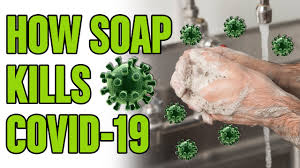
Political leaders, public health officials, doctors, talk show hosts, even Donald J. Trump, they all exhort us to wash our hands. Masks, distance, hygiene.
But those of us who are curious may wonder: If the novel coronavirus is able to survive inside our hostile bodies, even when the immune system tosses fragmentation grenades at it, and T-cells and antibodies and who knows what — why does soap kill virus? Simple soap? Really?
I follow cable news closely, but have not heard anybody, including doctors, explain why soap kills virus. This is just a tiny symptom of the truly awful manner in which we the public are given information, or in fact, NOT given it. We are told what to do, endlessly – but we are not told clearly, carefully, exactly why, based on science. I guess the assumption is, the public is dumb, dumber, dumbest. And that’s just not true.
So here, from a back-page article in the New York Times, printed in March, is the explanation. It is by Ferris Jabr, March 13, 2020.:
“People typically think of soap as gentle and soothing, but from the perspective of microorganisms, it is often extremely destructive. A drop of ordinary soap diluted in water is sufficient to rupture and kill many types of bacteria and viruses, including the new coronavirus that is currently circling the globe. The secret to soap’s impressive might is its hybrid structure. Soap is made of pin-shaped molecules, each of which has a hydrophilic head — it readily bonds with water — and a hydrophobic tail, which shuns water and prefers to link up with oils and fats. These molecules, when suspended in water, alternately float about as solitary units, interact with other molecules in the solution and assemble themselves into little bubbles called micelles, with heads pointing outward and tails tucked inside.
“Some bacteria and viruses have lipid membranes that resemble double-layered micelles with two bands of hydrophobic tails sandwiched between two rings of hydrophilic heads. These membranes are studded with important proteins that allow viruses to infect cells and perform vital tasks that keep bacteria alive. Pathogens wrapped in lipid membranes include coronaviruses, H.I.V., the viruses that cause hepatitis B and C, herpes, Ebola, Zika, dengue, and numerous bacteria that attack the intestines and respiratory tract. When you wash your hands with soap and water, you surround any microorganisms on your skin with soap molecules. The hydrophobic tails of the free-floating soap molecules attempt to evade water; in the process, they wedge themselves into the lipid envelopes of certain microbes and viruses, prying them apart.
“ “They act like crowbars and destabilize the whole system,” said Prof. Pall Thordarson, acting head of chemistry at the University of New South Wales. Essential proteins spill from the ruptured membranes into the surrounding water, killing the bacteria and rendering the viruses useless.”
Mankind has used soap for 4,000 years. Now we know why it works. If only we could find a therapeutic drug that works as well INSIDE our bodies, as soap does on our hands.

 TIMnovate